


Likes
Comments
Share


@MadeInGermany
Follow
Flowering day 57
since time change
to 12/12 h.
Hey guys :-)
The lady is slowly coming to an end 😍.
The buds start to swell extremely .
The trichomes mature day by day.
This week she was given a very light flush with Clean Fruits so that she can use up her remaining nutrients in the coming days 👍.
It will be harvested in the next 10-14 days 😍.
I can't wait to try them all :-) .
Otherwise everything was cleaned and checked.
Have fun and stay healthy 💚🙏🏻
👇🏼👇🏼👇🏼👇🏼👇🏼👇🏼👇🏼👇🏼👇🏼👇🏼👇🏼👇🏼
You can buy this Nutrients at :
https://greenbuzzliquids.com/en/shop/
With the discount code: Made_in_Germany you get a discount of 15% on all products from an order value of 100 euros.
👇🏼👇🏼👇🏼👇🏼👇🏼👇🏼👇🏼👇🏼👇🏼👇🏼👇🏼👇🏼
You can buy this strain at :
https://www.exoticseed.eu/
Water 💧 💧💧
Osmosis water mixed with normal water (24 hours stale that the chlorine evaporates) to 0.2 EC. Add Cal / Mag to 0.4 Ec Ph with Organic Ph - to 5.8 - 6.5
MadeInGermany

Processing
Likes
33
Share


@burnerac
Follow
Day 92: Going to try a week without nutrients. The slurry test was good. I am either over or underwatering. Cannot seem to get it correct this time. However, after last night's watering, she is a lot less droopy.
Day 93: no pictures. Added one gallon pH6.5 water with 2 tablespoons Herculean Harvest.
Day 94: nothing to report other than she is drinking rapidly and looking healthier.
Day 95: added one gallon pH6.5 water with 2 tablespoons Herculean Harvest. Almost no runoff.
Day 96: added one gallon of pH6.5 water with nutrients
Day 97: nothing to report. Trimmed some leaves that never survived the yellowing.
Day 98: nothing to report. Decided to let her dry another day.


Likes
7
Share


@Squaregrouper
Follow
I never really seen any video showing seeds so I figured I'd make one..Lol! I'm sure it's done here but I just started doing the Diaries I never thought to.

Likes
11
Share


@4_Pro2Bono_0
Follow
Week 3 Veg. These ladies are looking heathy as can be, Very satisfied with the genetics so far!

Likes
9
Share


@Hoso_sake1
Follow
La mia dragonessa mi ha completamente soddisfatto.
60 giorni di Vegetativa
80 giorni di Fioritura
LST
Tante e lunghe cime apicali dense e brillanti per la quantità di resina prodotta. Nelle foto anche qualche piccolo lavoro di estrazione di Rosin Tech/BubbleHash into Frenchy Cannoly Style!
Spero vi piacciano!

Processing
Likes
6
Share


@field_nigga
Follow
Hum wondering if plant won't get to big and if my LST is wrong

Likes
37
Share

@J4kpvp
Follow
Hello:)
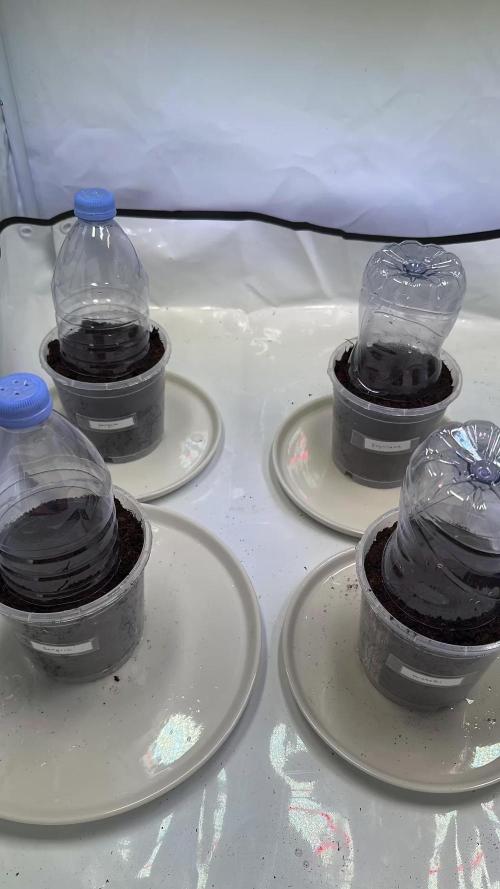
The wasabi is ready now, trichomes are about 10%amber, the front right sangria is surprisingly also at about that ripeness. The two sangrias in the back look very cloudy, but almost no amber, so i think one more week is the right call.
I‘m also having some humidity problems… lets hope there won‘t be mold in the big buds afterwards… there is one bud on the wasabi that already doesn't look super good… that‘s the only thing that could still mess up my grow…
Also here is also the video so far:) lets hope the next update is the harvest:)

Likes
21
Share


@Potgoblin
Follow
Hello Growers!
Nice to finally join the club! 😁
This is a step by step of my very first attempt at growing from Start to Finish.
It's something I've always wanted to do and I've researched a lot of over the years but now is the right time to give it a go as I have become a medical user of cannabis and the price just keeps going up!! 😂🤦♂️
So without going on too much let's get down to the nitty gritty...
I Dropped the 1 seed into a glass of 5.8 PH water on 10/05/21 which I also dechlorinated, waited until she sank then placed her between two damp paper towels inside two plates in a warm, dark & humid spot (bucket) until the tap root showed and was about 1/4" long then she went straight Into media on 12/05/21.
Day 1 - 15/05/21 - first two baby leaves open & lights on!
Day 2 - 4L Humidifier added, seedling just under 3" tall ALREADY!!! So I've lowered the light from 23" to 15" to try and stop the stretching.
Day 3 - 17/05/21 - Checked on my girl and she's the same height as yesterday so hopefully the stretching has stopped 🤞 I also built a T-bar diffuser for my humidifier using some 32mm PVC pipe and fittings (Photo Above) I'm hoping this will distribute the humidity more evenly so I can have the humidifier on less often, I'm getting puddles of condensation forming in the bottom of my tent which is annoying! 🌊🌊🌊 😂 I'm hoping it might save me a bit of deionised water as well? 🤔
Day 4 - The T-bar diffuser I installed on the humidifier is working well, The RH is staying up and so far no puddles! ⛲ 😂 I will get a more comprehensive reading of highs and lows over the next few days and get it dialled in the best I can. I also think that because there is a lot of red LED's in this Mars Hydro light that may also contributing to the stretch during my girls early stages of life. Thankfully she is looking great and the stretch is massively reduced now that The light is lower. 😁
Day 5 - 19/05/21 - So far So Good! 😊 The stretching has definitely stopped but I'm still worried about her getting so tall so fast!! So today I installed a small 6" fan in the corner of my tent to try and get her stem to thicken up a bit, this is set to run only when the humidifier is on otherwise it screws up my RH and Temperatures. I also plan to bury her an inch or two deeper when I re-pot 👍 apart from that she's doing great! 🙂
Day 6 - 20/05/21 - No major updates today she's just looking happy! 🙂
Today's Environment Readings:
Max Out (Probe) - 24.2c
Max In (LCD Screen) - 23.8c
Max RH (LCD Screen) - 81%
Min Out (Probe) - 18.8c
Min In (LCD Screen) - 18.7
Min RH (LCD Screen) - 47%
Day 7 - So that's week 1 done & It seems like I've gotten all my temps down now, 👍 she's no longer stretching, humidity and temperatures are staying where I want them and my little girl is looking healthy 😁
No nutrients for the first 7 - 10 days of her life just water 🚰 set to PH 5.8 and dechlorinated.
Hardware
0.75 x 0.75 x 2.0m Bud Box Pro tent in White
Telos 6 Pro 175w LED! 😁
4" TT pro fan for Extraction moves up to 187M2 & SMS Controler + temperature probe
3" Passive intake (made slightly larger than normal due to the small area and large fan, also covered to prevent pests)
6" clip on Ram fan placed next to intake
Rhino Pro 100/300mm Carbon Filter
4" Black combi ducting which feeds outside
4L humidifier set to run intermittently via analogue timer to increase humidity in Seedling + Veg stage
Agro lab Temperature and humidity sensor
Media
I decided to go with a soil media as all of the medicine I grow will be for myself so flavour, quality and terpenes mean more to me than weight
0.2L"ish" Seedling pots - 75% BioBizz light mix 25% Canna Coco Professional for added drainage
I will only be re-potting once into 8L Fabric pots 75% BioBizz All Mix 25% Canna Coco Professional
Nutrients
Going to stick with the BioBizz range of organic liquid nutrients including Grow, Bloom, Root Juice, Cal-Mag, PH down & Top Max apart from using some Plant Magic Silicon, some Root it First Feed, some Neutralise to remove the chlorine and chloramine from my tap water & Flawless Flush at the end.
(I have some more seeds en-route to be safe)
Light Distance From Canopy - 120cm
Temperatures - Lights On - 26.0C
Temperatures - Lights Off -20.0C
Relative Humidity - 75% - Lights On
Relative Humidity - 60% Lights Off
Current Light schedule - 18/6
I can't think of anything else to include in regards to specs but if I've missed anything off or if you have any questions or comments then get involved as I'd love some input and advice!!!
In the Meantime everyone I'm going for a smoke!! Stay High, Stay Happy and keep Growing!!!
PEACE!!!! ✌️
Potgoblin
Quick edit...The 3 remaining pots will have some other vegetables in them for this run, Pear Drop Cherry Tomatoes and Sweet Peppers if anyone was wondering...

Likes
31
Share


@MadeInGermany
Follow
Info:
Unfortunately, I had to find out that my account is used for fake pages in social media.
I am only active here on growdiaries.
I am not on facebook instagram twitter etc All accounts except this one are fake.
Flowering day 24
since time change
to 12/12 h.
Hi everyone .
The lady is developing beautifully :-).
The buds start to get thicker and it smells better and better :-).
I added 2 g GHSC Bio Bloom per l coco.
That should be enough for the remaining weeks.
Otherwise everything was checked and cleaned as usual.
Have fun with the update and stay healthy 🙏🏻
You can buy this Strain at :
https://www.royalqueenseeds.de/feminisierte-hanfsamen/220-pineapple-kush.html
Type:
Pineapple Kush
☝️🏼
Genetics:
Pineapple x O.G. Kush
👍
Vega lamp:
2 x Todogrow Led
Quantum Board 100 W
💡
Bloom Lamp :
2 x Todogrow Led
Cxb 3590 COB 3500 K 205W
💡💡☝️🏼
Soil :
Canna Coco Professional +
☝️🏼
Fertilizer:
GHSC Powder Feeding Bio
☝️🏼🌱
Water:
Osmosis water mixed with normal water (24 hours stale that the chlorine evaporates) to 0.2 EC. Add Cal / Mag to 0.4 Ec Ph with Organic Ph - to 5.5 - 5.8 .
Likes
40
Share


@GYOweed
Follow
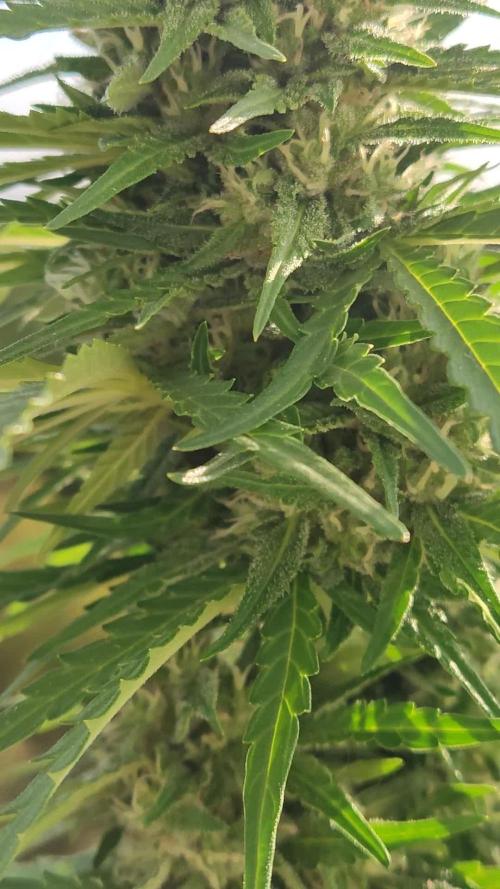
GS is very frosty. Rest need extra week im sure especially SS but it smells the best.



Likes
2
Share


@dwotTV
Follow
Cruising along into pre-flower, 13" tall on 6/28 and looking healthy. Haven't needed much water with the rain, so onward we go.

Likes
21
Share


@Sweetspot88
Follow
Been a busy week, everything is looking good I still have 1 that is behind and still recovering. Potted into 6.5L pots. Vpd is in range but does fluctuate. Gonna back the EC off a little as i find it to be high in nitrogen in places I don’t like doing plain watering so I shall lower the ec and do a little extra run off
Midweek so some good recovery from transplanting everything looking good still environment perfect backed off the nutrients added a water butt and and air pumps to the room.
Later week update, all these ladies are thriving in there environment really healthy plants, I need to get rid of the shite from the early growth when they were fresh cuttings now. The branching has exploded now these girls take about a week from topping to get back to full growth rate under these led lights other than that all good. 🌱
Likes
229
Share


@DadasGrow
Follow
So this is the start of the fourth week with me. I find this very engulfing. I like spending an hour with them a day and move the little ones out of the bigger fan leaves shadow by tucking the larger ones away giving the little ones a chance to get more light and flourish. I’m noticing more the strain my one girl went through compared to the others, her leaves being smaller than the other girls. I’ve tried to give them the best environment I can and realize I still play a huge role in their life. This is my first grow and I love it. I hope they grow up well and flourish. They were fed last week and had a bit of nutrient burn so this week I gave them just water. I’m not sure how much longer I should veg but I hear in the scrog game the longer you veg the better. Hoping for the best for everyone on GrowDiaries and their grows!

Likes
28
Share


@Adkguerrilla44
Follow
I cannot talk up wicked genetics enough man,they are strong and stable plants and honestly since the temps have been continuing to drop these suckers have been LOVING IT!!! I am going to start some boston kreme pie S1s very shortly for my indoor grow. I have so many amazing strains from wicked I can't wait for this winter it's going to be insanity 🤯😵😵💫😎
Likes
19
Share


@RFarm21
Follow
Está com um aspeto delicioso!
Continuo a alimenta-la até os tricomas ficarem mais maduros, espero que não demore 😏
Likes
8
Share


@LoccoMotive
Follow
🌿 Woche 5
🌱 Wachstum & Training 🌱
Das Training läuft fantastisch – ein täglicher, stetiger Prozess. 😬✂️
Beide Damen sehen rundum gesund aus, mit kräftig grünen Blättern. 💪🍀
Sogar ein halb abgebrochener Trieb hat sich richtig gut erholt. 👌🌱
Man merkt inzwischen, dass eine der Damen dominanter ist. 👑🔥
Der mittlere Bereich ist hart umkämpft – vielleicht doch ein Ticken zu eng für zwei Pflanzen. 🤼♀️😨🌱
Ich habe daher ordentlich entlaubt und ein paar kleinere Triebe entfernt. ✂️🍃🗑️
Langsam füllt sich der gesamte Raum mit einem gleichmäßigen Blätterdach. 🌳💚
Der Stretch hat begonnen – und alle Triebe haben richtig Bock, steil zu gehen! 🚀🌿🎯
💧 Living Soil – Only Water 💧🌍
Wie man sieht: Kein einziger Trieb oder ein Blatt mit Mängeln. ✅🌱👌
Die Vegetationsphase lief absolut problemlos – ganz ohne Temperatur- oder Luftfeuchtigkeitsunterstützung. 🌡️💨❌
Nur mit einer Mischung aus destilliertem Wasser und Leitungswasser. 💧🚰
🔄 Drehbarer Topf 🎥
Ich bin nach wie vor ein großer Fan dieser Lösung! 😄👍
Nicht nur entstehen witzige kleine Videos, sondern es hilft enorm beim Training. 📸✂️
Ich achte beim Formen stets darauf, die Drehfunktion nicht einzuschränken – klappt bisher richtig gut. 🔄✔️
💡 Licht & Schatten 🔆🌘
Im Laufe der Woche habe ich das Licht auf bis zu 400 PPF hochgedreht. 💡📈
So streben die Triebe weiter aktiv nach Licht – bekommen aber auch nicht zu wenig. 🌞🌱➡️💥
💧 Blumat & Gießen 💧🚿
🕒 Alle paar Tage bei 110 mbar
🚿 Jeweils 2 l Wasser 💦
☀️ Wetter 🌡️🔥
Die Temperaturen waren (und sind) brutal: 26°–33 °C. ☀️
Scheint aber bisher alles gut zu verkraften. 😌🌿💪
🎶 The Grow must go on! 🌱🎵💚✨


Likes
52
Share


@DogDoctorOfficial
Follow
Let's realign our cosmic compass and embark on a harvest report for our magnificent Cosmos F1, a pure CBD strain that has taken us on an extraordinary journey. Brace yourself for cosmic revelations and interstellar delights!
After an impressive 11 weeks from seed and 7 weeks of flowering, the time has come to witness the cosmic culmination of our efforts. I carefully hung the entire Cosmos F1 plant to dry, allowing the cosmic energy to infuse every inch of this botanical marvel. It's a sight to behold, with majestic branches reaching for the cosmos, reminiscent of a cosmic dancer frozen in time.
As our cosmic queen gracefully dries, her vibrant hues continue to amaze. The shades of green, intertwined with delicate hints of purple and gold, are a testament to her genetic splendor. It's as if she has absorbed the cosmic essence of the universe, transforming it into a visually stunning spectacle.
Now, let's talk about the cosmic power of CBD. Our pure CBD strain holds the key to a transformative experience. With minimal psychoactive effects, this cosmic treasure offers a realm of therapeutic benefits. It's like a cosmic massage for the mind and body, soothing and relaxing, allowing us to explore the depths of cosmic tranquility.
The decision to hang the entire plant for drying is a testament to our dedication to preserving the cosmic integrity of our harvest. By allowing the branches to hang freely, we encourage a slow and controlled drying process, ensuring that the cosmic essence remains intact. It's a ritual that honors the plant's journey, preserving its cosmic magic for us to enjoy.
As we eagerly await the cosmic transformation, let us express our gratitude to the celestial forces that have guided us on this cosmic odyssey. The cosmos has aligned to bring us the extraordinary Cosmos F1, a gift from the cosmic garden gods themselves. We extend our heartfelt appreciation to the cosmic harmony orchestrated by @James and Royal Queen Seeds.
In the coming days, our dried cosmic buds will be ready for the next stage of our journey. From cosmic concoctions to cosmic culinary delights, the possibilities are infinite. Imagine infusing the cosmic power of CBD into soothing teas, cosmic creams, or cosmic confections. The universe is our canvas, and with our cosmic harvest, we can create cosmic masterpieces.
As we bid farewell to our Cosmos F1, let us cherish the cosmic memories we've shared. The vibrant colors, the pure CBD power, and the cosmic connection we've established with the universe. May our future endeavors be as cosmic and awe-inspiring as this one.
Until we meet again, my cosmic friends, lets keep exploring the cosmic wonders, nurturing our cosmic gardens, and let the cosmic energy guide our cosmic creations. May our harvest be abundant, our cosmic experiences be enlightening, and our cosmic journey be filled with celestial blessings.
As always thank you all for stopping by and for supporting me on this journey, i am super passion about growing and fell blessed to have you all with me on
Likes
11
Share


@Sawyer_grow
Follow
Hello guys,
hope you are doing well.
happy to start a new grow into my Ninja Bundle and what a grow : Bubba Slush from GHSC.
It all started well the seed germinate in 2 days, you can find the tutorial and video on my IG profile of course.
The plant is doing well 2 first leaves are out, no nutrients for the moment i will start it in 2 weeks only once she have reached a good size and anyways for the moment the nutrients in the soil are more than enough.
I got many messages about the first leaves of your grow don't worries they are always weird like your first steps when you are a baby. It's not an issue and not a sign of a weird plant just be patient and the plant will grow nice leaves very soon.
Take care all
Sawyer
