


Likes
Comments
Share


@PEAKYPLANTERS
Follow
Welcome to all, fantastic Weed brothers!
I and these beautiful girls spent another week together stimulating all those buds to bloom in the best of conditions ....
There are good prospects!
a greeting to all and happy harvest

Likes
8
Share


@DWCpaqy
Follow
New week! Tips and help from last week, I had around 1500 ppm and I did flush my roots in water and change everything. Now is around 1000 ppm and dropping 150 ppm a day.
Did read about water level in DWC and how to increase the grow with water. I had the water almost up to the root or the level of there the basket is. Now I have 1-2 inch (2-5 cm) below where the roots come out. This create air roots. I'm not sure if it's the air roots or the ppm but my flower is boosting. Can se buds grow!!
Trimming so I can keep the same hight.
Have any tips or rekomandation?
Only have one question for next week and this is: it's looking a bit thigth between the buds and all of the leaf is cristal on it. Should I cut some more leaf? And what leaf should I trim? Is so thigth in there. Or will it grow fine?

Likes
4
Share

@KannaGrowing
Follow
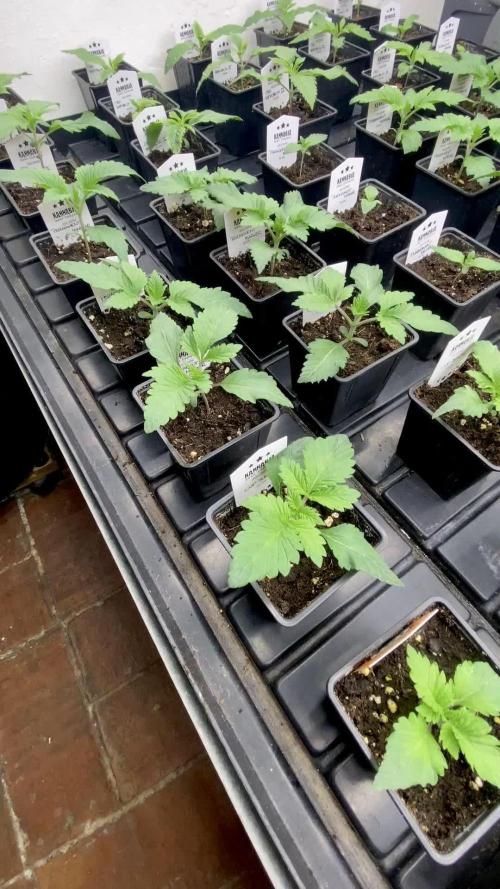
VARIEDAD EN FASE DE TEST. NO DISPONIBLE COMERCIALMENTE. RESULTADOS EN EVALUACIÓN POR KANNABIA.
Empezamos a fertilizar nuestras plantas con abonos líquidos BIO.
Ya se pueden apreciar diferencias significativas entre las distintas cepas.
Alturas diferenciadas entre las variedades, anchura de las hojas etc...
La potencia de las luminarias está ajustada al mínimo.


Likes
2
Share

@eldruida_lamota
Follow
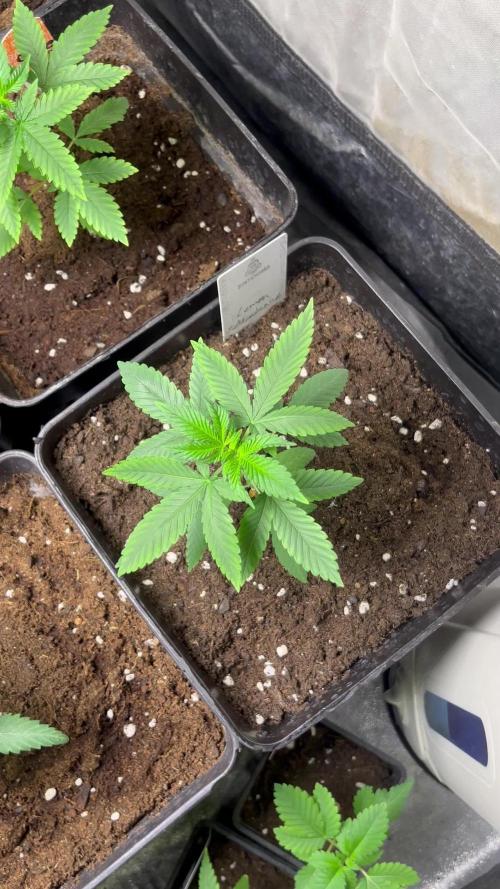
Vamos familia, actualizamos la cuarta semana de vida de estas Lemon Mandarin de Fastbuds.
Tuve problemas con la temperatura que estuvo alta 28/26 grados y humedad dentro de los rangos correctos, la única queja es la temperatura, 16 horas luz, 8 oscuridad, estiraron un poco, pero van lentas por el momento, que cojan fuerza.
El trasplante a sido realizado a la maceta definitiva, 7L con sustrato Top crop.
Hasta aquí todo, Buenos humos 💨💨💨


Likes
3
Share

@FicoCG
Follow
Hey Leute,
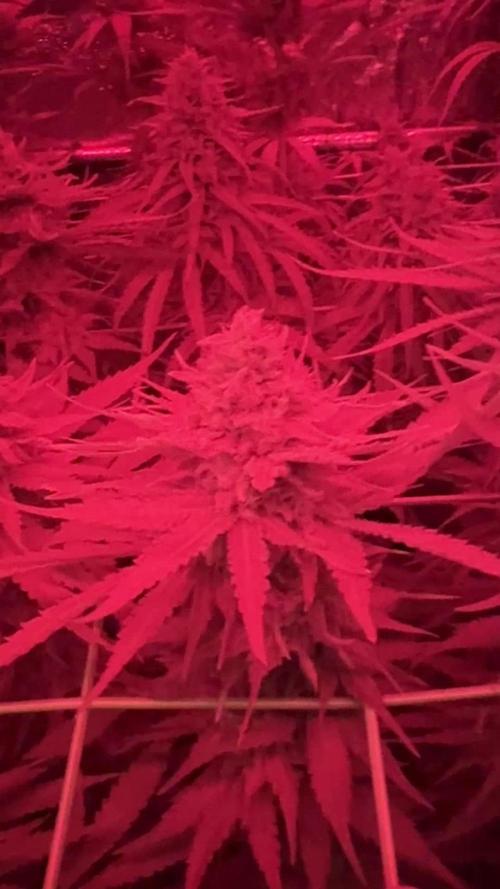
Chup Chup die kleine Lokomotive ist stark am Dampfen!!!
Die Woche 7 ist im vollem Gange und die Buds werden immer größer ^^
Ich konnte noch schnell genug reagieren, habe mich jetzt bei einem ppm von 1200 eingependelt.
Die Hitze von der Lampe ist immens, habe sie jetzt auf 75% dauerhaft reduziert, und die Höhe eingestellt, ca 1200 ppfd im ganzen Zelt.
Die Lemon Skunk (Red No. 2) rechts hinten macht mir etwas Sorgen aber jetzt ist es auch nicht mehr so lange bis zur Ernte!!!
Ich bin mal gespannt ob das mit dem Roten Licht wirklich eine Wirkung hat und ich bessere Buds und früher ernten kann.
Sie haben immer noch immensen Durst alle 4 Tage 5 Liter pH und Dünger Wasser.
Ich hoffe es gefällt euch wie sie aussehen, schade, dass man den Duft nicht durch Handy schicken kann!!!
Liebe Grüße Fićo!


Likes
4
Share


@Filiaes
Follow
02.06
If I look at the other diaries of that starins I think half of the bloom is already done. I think around 4-5 more weeks and I can finally harvest. They are just stunning. My best grow so far and am really happy how the girls perform. It's great to watch them and I can't get enough taking a look into the tent. Beside that we dealed with a lot of rainy days in germany lately so I needed to start the dehumidifier earlier as am used to. Middle of the week I needed to refill the tank, because they were super thirsty. I will reduce 25% of my scheme for the next tank refill coming next days because I see lighty signs of nutrient burn. It's needed to reduce the scheme a bit since I removed a lot of biomass lately.
So, to the last weeks!

Likes
12
Share


@GanjagrowingGal
Follow
Well wowzer!!! Was a very pleasant surprise to get 7.7oz dry what a girl! Will deffo grow another
She was a pleasure to grow til the last 2wks of flowering then she got bud rot and fox tailed! But she smelled so lovely that I’d happily grow her again


Likes
7
Share


@TripleCcannabis
Follow
Strating the germination process for my latest grow. Im growing white Bhutanese by Mandala Seeds. ■ {{ White Bhutanese: 80% Sativa 20% Indica ~ 12 to 14% THC & CBD (Earthy, Fruity, Lemon, Mint, Nutty, Sour, Spicy / Herbal, Sweet)}} Really into cultivating a highly therapeutic strain, which begins with finding something close to what you want to achieve. Fingers crossed 🤞
September 23. In the rock wool she goes.
September 30 Patricia is officially transplanted to her resevoir.

Likes
11
Share


@Hydro_sweetness
Follow
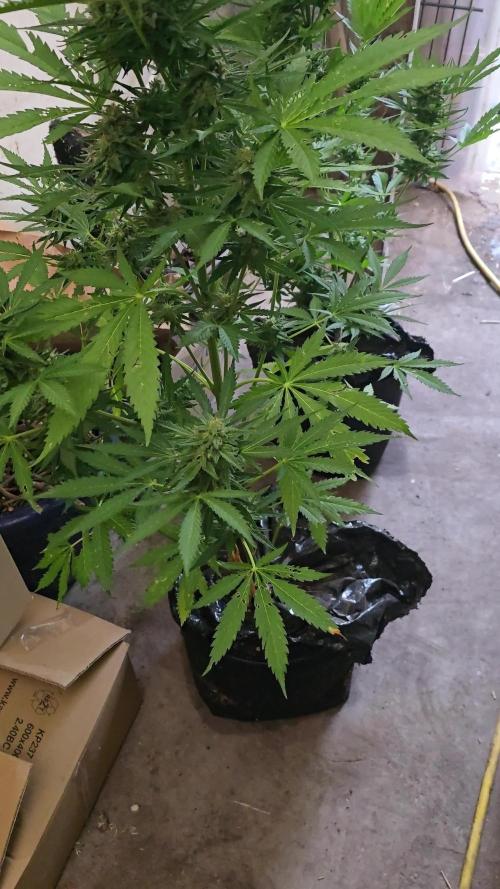
Hey welcome back in the 6th week of flowering with the Dutch Passion’s Colorado Cookies.
In this week I have nothing special to tell actually, everything goes well and everything looks good.
Next week I will only be giving the CannaZym and Canna Boost, after that week it wil be the 8th and last week of flowering.
I will take that week to flush here and let her dry out in the last 2 days.
As soon as she hangs to dry ill put the other 2 cookies (which are in the cabin now) in the main flower tent
to see if I can still let the buds explode (hopefully).
Thast it for now see you all back next week!



Likes
26
Share


@420DeepGrow
Follow
* Actualizo 2 dias antes para cuadrar diarios.
Gracias al equipo de Seedsman y XpertNutrients sin ellos esto no sería posible.
💐🍁 Bubba Cheescake:
Bubba Cheesecake es un cruce de Bubba Kush anterior al 98 con Cheese Cake (Wedding Cake x Exodus Cheese). Se trata de un híbrido 70% índica con muy buenos rendimientos, alto en THC y bajo en CBD. Bubba Cheesecake prospera en interiores y exteriores. En interior se aconseja un corto periodo de crecimiento vegetativo debido a la cantidad de estiramiento que presentan las plantas. Las plantas pueden crecer hasta una altura de 250 a 350 cm. cuando se deja crecer naturalmente al aire libre. En interior, la floración dura entre 60 y 65 días, con rendimientos entre buenos y altos, de 400 a 550 gr/m2. Las plantas de exterior son capaces de producir entre 700 - 800 gr. peso seco. En las latitudes norteñas, en exterior, los productores pueden esperar cosechar a principios de octubre. Los cogollos son grandes y duros como piedras. Las plantas maduras muestran atractivos colores púrpuras y azules y brillan con una resina pegajosa que cubrirá las manos del cultivador si no tiene cuidado. El componente Wedding Cake agrega dulzura al sabor del regaliz y el aroma es terroso y musgoso. La producción de THC es muy alta con un nivel bajo de CBD. El efecto es intensamente narcótico, fuerte y duradero.
🌻🚀 Consigue aqui tus semillas:
🍣🍦🌴 Xpert Nutrients es una empresa especializada en la producción y comercialización de fertilizantes líquidos y tierras, que garantizan excelentes cosechas y un crecimiento activo para sus plantas durante todas las fases de cultivo.
Consigue aqui tus Nutrientes:
https://xpertnutrients.com/es/shop/
📆 Semana 4:
Continuamos la etapa de vegetación, ella se desarrolla muy bien 😎, comienza el buen tiempo, temperaturas agradables para todos.
Esta semana se aplica una solución de trichodermas para una mejor adaptación aunque realmente va genial.
Se mantiene 1/3 de nutrientes Master Root y Master Grow
Likes
5
Share


@CanarianGrow92
Follow
Started week 1 and we placed these girls in a 7 liter pot, they are now growing with 1x Marshydro TS1000 but im adding another TS1000 in 2 weeks when they start flowering
Likes
4
Share


@Jisaac904
Follow
Things moving along very nicely. Waiting on fabric pots to come in the mail so i van give them the space they need.

Likes
285
Share


@Tropicannibis_Todd
Follow
👉Alrighty Then👈
So we are at DAY 42 with the Sugar Larry 👈 And she's doing fantastic 👍 It's now stretching alot 7 inches last week alone 👌
😀 decided to showcase pheno #2 , definitely has different traits then #1 very interesting 😀 thoe both are killing it 👈
Hedgehogs incoming 👈
Except for some slight watering , ive been doing some defolation as well as some LST manipulation to pull branches to the side 👌
👉I had to Top her during the middle of 4th week 👍 she gonna be a tall girl with long legs 😛
👉WeeklyRoundup Video is finally posted 😕 😒 😪 😢 Happy Growing
👉Soil Provided by ProMix.ca
👉Nutrients Provided by Agrogardens
👉Lighting Provided by MarsHydro.ca
Thanks my friends for the great support over the years 🙏 Happy Growing

Likes
58
Share


@Mr_Motalovah
Follow
Hello growers and tokers! 👋 👩🌾 🧑🌾.🔥💨
There has been much change this week!!
First there was a big defoliation done, I cleaned the bottom of the plant.
All the growth that wouldn't amount to anything because the light doesn't penetrate that low.
Also took off the biggest fan leaves to give more room for light.
Then finally switched to 12/12..
After just 36 hours after the defoliation there was a major change.
New growth everywhere, colas started stretching upwards fast.
It's like she already knows it's flowering time.
Great reaction to the defoliation and 12/12 switch.
I'm still watering every other day, After the defoliation I watered with only Enzymes 2ml/L to clean the roots a bit then started with the nutrientes again.
I dropped the amount of grow nutrients from 3ml/L to 1ml/L and started adding bloom nutrientes 2ml/L for now.
I'll slowly be upping the bloom nutrientes and after week 2 I'll no longer add grow nutrients.
That's it for this week. Stay tuned to see how she flowers.
Stay safe!
Likes
1
Share

@blablamesh
Follow
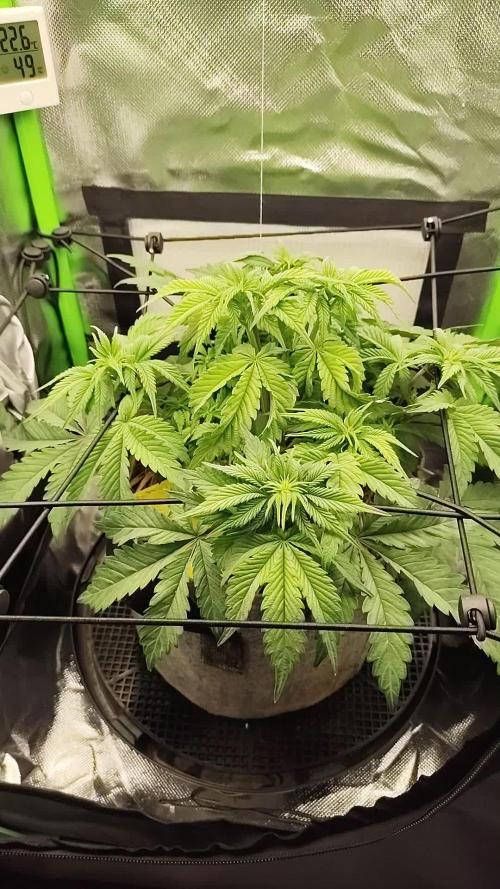
Not really happy with this week. I expected a lot more stretch from the plant, but there is sadly almost none. Also not happy how some of the leaves are looking (turned down). I thought that it might be light or water stress but I tried to reduce both factors and it didn't really change anything. Also tried to lower the vpd but also nothing changed. There are a few gnats here and there, but I can't imagine they would have such an impact, so my last theory would be the pH of the water, but I just ordered a pH meter and it will take some time to arrive. I you have any ideas, let me know.
Likes
17
Share


@Mr_nugs_lover_David
Follow
It's been a beautiful strain to work with, the flowrs are definitely worth it after all this time, the quality is definitely high. However this pheno of ak420 smells very different from the other 2 phenos I've grown along with her. The flowrs are beautiful, very solid and frosty nuggets, I smoked a few little nuggets when trimming but I'm excited to taste the big buds, hope you guys enjoyed the process. I want to say that this pheno #1 has a different smell compared to the other 2 phenotypes of ak420 that you can see here on my page as well, so stay tuned guys! Overall result is very nice, good quality, strong weed, sticky, stinky. I can say that it's very great and also you can get them for a very cheap price so it's a very good investment if you're looking for a powerful and affordable strain. Cheers growmies! ❤️💚💛💎👨🌾
Likes
31
Share


@Endriu
Follow
Hello Bros&Sis! Ciao!😊
this time I've decided to made a video update, from the start of the week to the finish, we're gonna see some BIG differences! (The longest is from the end)
About the ladies:
Girls in coco
Royal AK- she's drinking every single drop op solution and has literally exploded! I'm really happy about her training (top/lst/hst). A very strong strain.
OG Kush- I don't get this girl, she's definitely not an heavy drinker.
Speedy Chile FF- when I re-potted her into 6lt pot, some of my Bros hoped for a Baobab, what do you think?😂 (has some mutations, has a growth of 3 leaves and then 2 branches have joined together and the other has grown normally)
Ladies in Soil:
UK Cheese auto- I've broke a branch due to heavy crop. Lesson learned.
Pink Doc CBD auto- she's growing good, finally! The only thing I'm worried about is that she will not grow so much, because switch is near.
Candy Kush Express- A really nice lady, not too tall, good side branches and she take everything with no care less (one of the most "broken" in the tent)
Special Kush#1- She likes her new pot, but there's something wrong (see leaves) maybe related to VPD or RU?
I've used different techniques on this ladies, but the one I like the most is cropping the branches and the main stems and also broke the branches where meets the stems, to give'em more power, and more "space" for nutrients transports in sight of bloom!
That's all mate, we will see soon for the next update! Ciao!😙
(hey @Growdiaries if you want to use my video, feel free to do it, but please, don't change the music, it's already on YT and for CC use)

