


Likes
Comments
Share


Likes
39
Share


@Weird_Jimmy
Follow
👉Had to throw in some lights on pix for fun. The colors look cool. I use a led work light to highlight parts of the pant and make them show green. The plant is frosty and smelling sweet. Not a strong pungent smell, but a light lemony pine, especially when touched. The lower row of branches has two or three smaller side branches with a few small plump super mega frosty nuggets. At Harvest I will keep track of these and cure them together for comparison. Been Trichome hunting and from what Ive been able to ascertain its mostly clear with some milky and zero amber. Its at the end of the timeline from Growers Choice, 65 days, and it looks like 10+ days to go. Its possible it may not get many Ambers. I will let the plant decide. Right now its still got green leaves, except the scars of the earlier nutrient burn and the calcium deficiency. Have plucked a few under canopy leaves that were droopy and shaded. The upped canopy of leaves are still perked up and the buds slowly plumping up. Very few emerging pistols, 95% are red.
👉The nutrient mix is the"ripen" recipe on the General Hydroponics Flora series, using the full line mixed to make 1.3ec solution. I target the pH to be 5.9. The runoff EC is back to a more predictable climb in ec with no spikes. I rinse fertigated twice using 5.9pH RO water with 1.5mil/gal Calmag only. The pot is saturated at approximately 1.25l. So when I give it 2 liters, I get about .75liters run off.
👉I will begin prepping the dry area for the harvest and get all the jars and BV packs Ill need. I plan on keeping each cola and its good buds together and giving each its own jar. I dont anticipate harvest for another week or two. It wont be fully cured by Christmas, but its definitely going to help make the season brighter!


Likes
50
Share


@gottagrowsometime
Follow
She grew fast, was no trouble. Vegged out around 30 days. Pre flower there wasn't much of a stretch because of the Flming. What was meant to happen was she was meant to stop cold in her tracks growing in height, and she was meant to throw out 4 nodes on top, (tis what happens when you Flming) i knew this wouldn't happen but I was hoping for 1 big superbud. But for that, the nodes needed to grow a few CM, especially the 2 end ones and they were meant to grow some and form a nice big bud on top. But I got a funny shaped unformed total bud. Its okay, it's frosty and she grew no issues, took everything like a champ, a bit of nutrient burn, but, I've come to take that with synthetic nutrients.
Had a real easy time with this girl. Pity only 1 out of 3 seeds popped. Well, they popped but failed to throw out any leafs and just died.
But for what I did get, I'm super happy with the results. Think she's my best looking grow so far. In the pic its 17g and I smoked more than that, how I know is cause all I had left was the top and I smoked more than half of the nodes while it was drying. She's my favourite so far from FB.

Likes
28
Share


@Susquihanna
Follow
This week has been sunny, hot and wet. I have not done a thing except to keep an eye on Miss Gorilla Cookies. It has been a hot and rainy week and I did not feed this plant this week. That is why I did not record Ph levels and PPM, etc this week. I have really wanted to give this diary an honest, straight up review of Gorilla Cookies growing in whatever Mother Nature threw her way. She is tall and thin but has a lot of bud growth. I am eager to see how big her buds will get.
One thing that I have not been super pleased with is using Miracle Grow as a nutrient. This outside grow was an experiment using Miracle and not my typical Fox Farm nutrients. At this point in my grow, Miracle Grow needs to remain for garden vegetables and flowers NOT cannibas.
As a result, I have made an Executive Decision and will going add some @Advance Nutrients Jungle Juice for the remainder this grow.
@Hindugod and I have been growing our Gorilla Cookie plants simultaneously and his plants look thicker than mine do. His weather has not been as hard on his plants as I have had here in Virginia. He is also using different nutrients. It is fun watching these 2 Gorilla cookies grow differently and the same:)
Stay tuned to next week and comments are always welcome. Thanks for visiting--susquihanna
Likes
22
Share


@Rap_a_cap
Follow
Summer Solstice
Perfect weather this week, Cookies is grown a lot and now shows giant fan leaves. LTS started with a little of difficulties because of very short internode length. From today the worse heat wave of european history will put a strain on my Cookies for 15 days at least, must be very careful she don't like heat. Watered with rain or Ph controlled water. Plants start to smell.
OT
Maleb is in alternate grow, very little time to preflowering. I bet she is a girl.


Likes
10
Share


Processing
Likes
57
Share


@MadeInGermany
Follow
Hey everyone 😀.
These weeks they have continued to develop very well 👍.
They have made a huge leap forward since they were repotted 😃.
They will be topped again this week, and will then move to the flower tent next week 😍.
I am very curious to see how it will develop until next week.
I wish you a lot of fun with the new update, stay healthy 🙏🏻 and let it grow 🌱🍀
You can buy this Strain at :
https://sweetseeds.es/de/red-mandarine-f1-fast-version/
Type:
Red Mandarine F1 Fast Version
☝️🏼
Genetics:
Red Poison Auto®️ (SWS39)
X
Tangie (California Orange x Hybrid Skunk)
👍
Vega lamp:
2 x Todogrow Led
Quantum Board 100 W
💡
Bloom Lamp :
2 x Todogrow Led
Cxb 3590 COB 3500 K 205W
💡💡☝️🏼
Soil :
Canna Coco Professional +
☝️🏼
Fertilizer:
Green House Powder Feeding
☝️🏼🌱
Water:
Osmosis water mixed with normal water (24 hours stale that the chlorine evaporates) to 0.2 EC. Add Cal / Mag to 0.4 Ec Ph with Organic Ph - to 5.5 - 5.8 .
Likes
14
Share


@ThatoneAKguy
Follow
this is almost the end of week 6. Hoping to see some bulking soon. Lower sites are still producing pistils and the top site pistils are starting to curl over.

Likes
3
Share


@mquintero7
Follow
Last week of flowering, buds are big and fat. Delicious smell, it never became purple, but everything else was excellent. A few more days for perfect harvest.


Likes
3
Share

@Gardens_of_Of
Follow
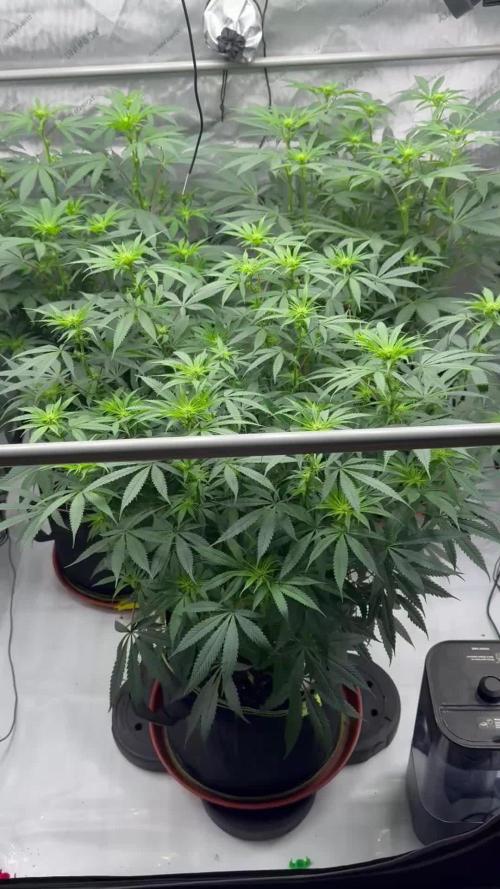
They completed second week of flowering. They keep on happily stretching and groing beautiful colas. To avoid further stretch and increase DLI, I am dialing in to level 9 on my lamp and keeping it still at 60 cm distance.
This week, I will just leave the lamp at the same height and let them decide how close they want to come the light source.
Humidity is fluctuating between 52-55%.. Temp is 22-26 Celsius. VPD is relatively constant around 1.40s except for very rainy days where my dehumidifier comes into play.
PPFD is increased to ~1050 uMol this week. If they don’t like it, I will just dial back to level 8.

Likes
30
Share


@Ganjagrandaddy
Follow
Hi all
What a great week it has been for the Zammi girls this week. I flipped them to flowering two days after my last entry. They had reached a good point for my space to make sure that I have the airflow and light coverage to endure the mains could all benefit. The results of the H.s.t/Quad training has been successful and I now have multi merristems ( mains) of equal position . This will now hopefully feed them all the benefits that the main usually gets and ensure lots of chunky colas with very little popcorn to waste energy on.
Bruce Banner #3 is performing brilliantly. I did lose the snapped and repaired f.i.m but the crown of mains ( 8) and the single one left in the middle will be a great foundation for the next stage of their life. This lady has not missed a beat from the Germination and is showing the breeding experience that has produced it too. No signs of any issues at all so far.
Candy Rain although a lot smaller than her cousins from Zammi is beginning to catch up very nicely with 4 very chunky looking mains forming. The last next week of stretch should give her a very nice shape and structural strength for some fat colas too. Her colour and vigour is excellent and the rips are putting out so e very nice energy too.
Jealousy #1 is really enjoying the chance to push as many of her branches to light as possible with the opening up of her natural growing structure. Plenty of in-fighti g to be the main stem which is a benefit and her overall size and appearance is excellent. #2 has really been a shock with the size of some of her fan leaves ( see pic) She has a few huge I es that will be grabbing so many lumens to convert that I will be sad to defoliate them . She is really fighting to impress over her sister it seems and her overall size is just a little smaller than #1. They have plenty of lower stem growth with fairly short node lengths that will form up to make some very long thick colas hopefully.
Seeing how well these girls have filled the space and the nice even canopy that is still uniform after a weeks stretch , I think I will need to defoliate at day 21 of flowering to make sure they don't get too close together and stop the cool fresh air from circulating through them all. We are just warming up in the UK so I thinkni will need to also keep check on room temps and humidity more now too. Hope the video is useful to someone out there and I hope you can continue to follow along as we go. Be safe and well.

Likes
3
Share


@Lebigrow59
Follow
Seventh week of flowering:
I opted not to put a net to facilitate access to the room.
As expected, the buds are starting to be too heavy.
I hang them one by one, on hooks high up.
The buds swell and still smell !
I increase the EC to 2.60
Good hydration, no dead leaves to remove.
See you next week !

Likes
17
Share

@Flavors
Follow
🌱 Week 6 Update 🌱
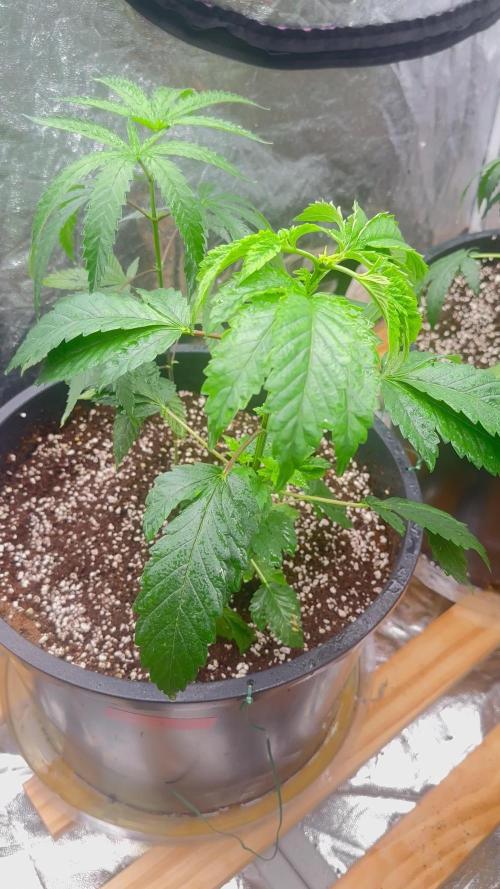
So I caught a little hiccup this week — turns out my timer was off by 2️⃣ hours! 😅 I’ve adjusted it back to the proper 18/6 light schedule 🌞🌚 so we’re back on track. The girls are definitely getting bigger and looking healthy! 💪💚
The autos are starting to flower already! 🌸✨ A bit earlier than expected, but hey… we’ll see what the future holds. 👀🤞
Happy growing, growmies! 🌿🔥
#GrowDiary #Week6 #CannabisGrow #AutosInBloom 🌱💡🌼

Likes
6
Share

@k0nz1
Follow
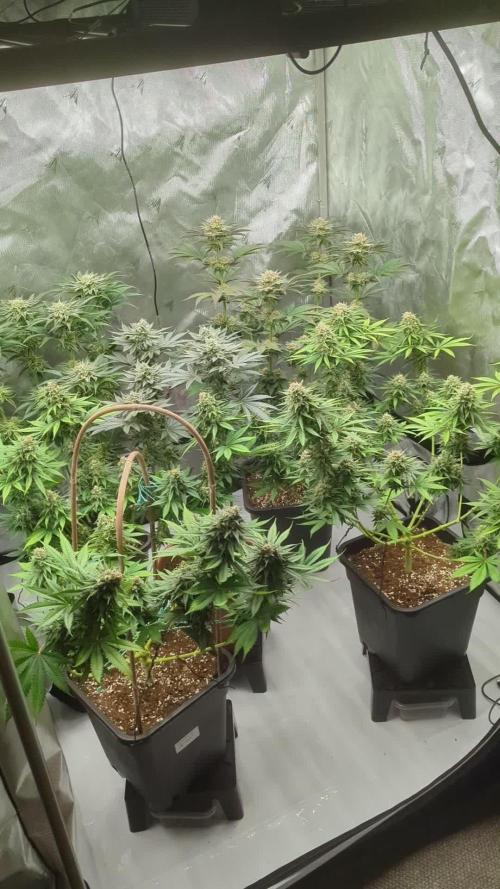
The Ladies are slowly Fading into autumn leaves. BBP have very heavy Flowers. They got a little Support for the branches.
Lemon Orange full of trichomes with heavy Citrus Aroma.
BBP smell so intense fruity , almost like a fruit Dessert.
Temp 20-25 Celsius
RH 55-65
Everything good for now. Just feeding the normal Canna Schedule and watching em mature and ripening Out.
1-3 weeks to to.


Likes
8
Share


@Silverback_Guerilla
Follow
I didn't really finish this diary. I took them back outdoors to finish for the last week. It finished kinda scraggly and the buds were fluffy. As soon as the bud was dry, I pressed it for the rosin...and forgot to do the diary.
Decent for a freebie, but I won't be growing it again.
Potency: 6/10
Yield: 4/10
Aroma: 7/10
Flavor: 5/10
Bag-appeal: 3/10
Likes
16
Share


@Naujas
Follow
everything looks stable :) the mistake was made when choosing this pot, it is too small for her :( there is no room for the roots so it grows quite slowly, but everything is fine - I learn from my mistakes :) this week I did a lot of pruning of leaves and branches, which the girl responded well to , without much stress, I'm going on vacation soon - I'll leave the girl alone for a week - of course someone will come to water her :) so before I leave I'll give her at least 1000ppm water, and the next 2 waterings will only be pure water 25ppm :) I hope everything will be fine :) good luck everyone :).

Likes
17
Share


@Kayotic
Follow
Decided NOT to water one more time. Put into the dark around 1:20 P.M . Usually do 48 hours, might just do 24 this time. Leaves are still a great color and very healthy.
Took the light out of this tent. Going to attempt to rearrange things AGAIN! Spider Farmer 2x2 was just at 90 rh! Thinking of moving that light ( Alphapar) back into the Alphapar tent. Can't remember why I moved it in the first place, think it was for drying another.

Likes
2
Share


@krst97
Follow
I cut the plant after 48 hours of total darkness. To flush the best, I ran a few dozen liters of water through the jar until the one that came out below was transparent. Although the flowers failed to close, I am satisfied with the result and the smell of the buds inspires a good terpene. To dry well, I moved the grow box to the room with an air conditioner. I'm keeping the temperature around 26-27 degrees and the humidity around 50%.