


Likes
Comments
Share


Likes
11
Share


@Skunkiest_bender39
Follow
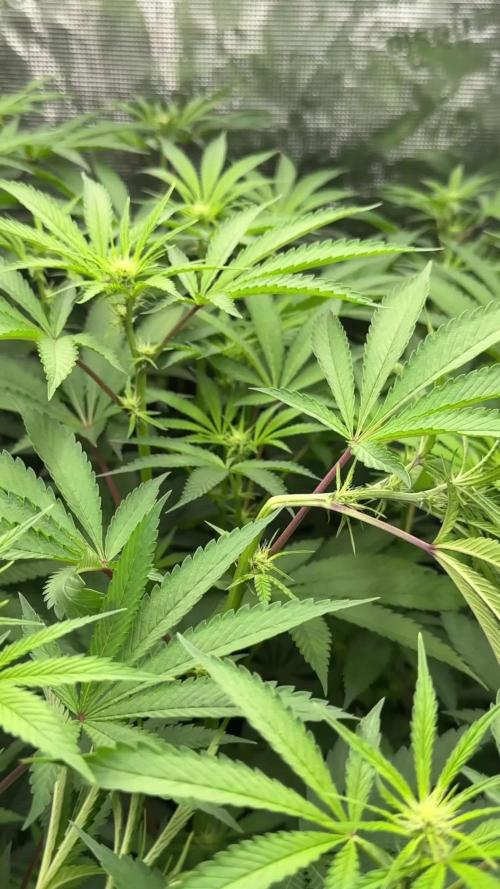
10tage re-veg hat super funktioniert. Sogar einigeSonnensegel sind besetzt. Die bananas riechen super Süß und fruchtig.
Die Zake haben einen absolut heftigen Basilikum Minze Diesel duft! Alle samt super weiter gewachsen. Habe mich ins Zelt gesetzt und komplett abgedunkelt, stelle in 2 Tagen auf 12/12 um


Likes
10
Share

@DogDoctorOfficial
Follow
💙 Project Blue Tent – Week 9
Blue Waffle F1 – Pheno A
🌿 Too Much Stretch, Then a Big Reset
Hello everyone, and welcome back to another chapter inside Project Blue Tent! 💙🌱
If you're new here, Project Blue Tent is our little experiment with four individual Blue Waffle F1 plants from Zamnesia, each documented separately from seed to harvest.
All four girls share the same environment, lighting, irrigation, nutrition and general cultivation philosophy.
And yet, as always...
they each have their own personality.
Last week I was wondering just how much these girls were going to stretch after seven weeks of vegetation.
Well...
I got my answer. 😂
They stretched.
A lot.
And this week became one of those weeks where the grower has to stop watching and start acting.
The plants were getting simply too tall.
With the height of the pots and substrate, the drainage system underneath them, and the distance between the canopy and the LED fixtures becoming increasingly limited, some of the tops were getting dangerously close to the lights.
So we made some changes.
A fairly big reset, actually.
And looking at the room now?
I'm very happy with where we landed.
🌿 Pheno A – She Took the Invitation to Stretch Seriously
Plant A is now approximately 145 cm tall.
😂
Yes.
One hundred and forty-five centimetres.
And when you add the height coming from the pots, substrate and drainage arrangement underneath the plants, that number becomes even more relevant when you're working inside a relatively limited vertical space.
Last week she was already moving quickly.
This week she basically said:
"Hold my nutrient solution."
😂💙
The structure she built during those seven weeks of vegetation gave her an enormous amount of material to work with.
The SCROG distributed that growth beautifully.
But once flowering stretch really kicked in, all of that established structure began pushing upward.
And eventually...
we simply ran out of comfortable vertical room.
So rather than fighting the plants continuously, we changed the room around them.
🕸️ The Second SCROG – Because These Girls Are Getting Big
One of the biggest changes this week was the installation of a second SCROG net.
This wasn't done because the first net failed.
Quite the opposite.
The first net did exactly what we wanted during vegetation:
It helped distribute the plants horizontally and build an even canopy.
But now these girls have become much taller.
And as flowering progresses, those branches are going to become heavier.
So the second net is there for something different:
support.
We're essentially creating another layer of structure through the upper portion of the plants.
This gives the flowering branches something to lean against as the flowers develop and gain weight.
And with plants this tall, I would much rather organize that structure now than discover later that a heavy flowering branch has decided to take a dramatic trip toward the floor.
😂
The second net also helps keep the canopy organized after the major defoliation.
And looking at the room now...
I think it was absolutely the right decision.
✂️ The Big Defoliation
And then came the other major event of the week.
Defoliation.
Not a little cleanup.
Not removing three leaves and calling it a day.
We went deep.
The room had become extremely dense, and with the plants stretching this aggressively, we needed to open everything up.
We removed leaves where they were creating unnecessary congestion and took out foliage from stems where appropriate, leaving the productive growth and flowering structure we wanted to carry forward.
This wasn't about making the plants look naked.
It was about making the structure functional again.
And there's an important distinction here.
We're not defoliating because removing leaves magically creates more flowers.
That's not the objective.
Leaves are valuable.
They're part of the plant's photosynthetic machinery.
The objective here was to manage excessive congestion, improve visibility through the canopy, increase air movement through the plant and reduce the amount of unnecessary foliage competing for space around the developing flowers.
We're trying to create a better working environment for the plant.
Not punish the plant.
Not stress it for the sake of stress.
And certainly not remove every leaf we can find.
🌿 What We Expect From This Defoliation
Now comes the interesting part.
After a significant cleanup like this, I don't expect the plants to immediately look like they're growing faster.
Quite the opposite.
There can be a period where they need to settle.
They've lost a considerable amount of leaf area.
We've physically changed their architecture.
So I expect the plants to spend some time adjusting and continuing their transition into flowering.
What I'm hoping to gain is something different:
better structure.
Better airflow.
Better light penetration.
Better access to the flowering sites.
Less congestion.
And a much easier canopy to manage as the flowers continue developing.
Will it completely stop the stretch?
No.
I wouldn't expect that.
The plants are already well into their flowering transition, and genetics, plant maturity and environmental conditions still have a huge influence on how much they stretch.
But by removing excess congestion and adding the second SCROG, we've made the remaining structure considerably easier to manage.
Now we watch.
🔥 A Few LED Burned Tops – And We Caught It
There was another little lesson hidden inside all that stretching.
Some tops had gotten too close to the LEDs.
And we saw a few leaves and flowering tips showing signs of LED stress/burning.
Nothing catastrophic.
Nothing that concerns me at this point.
But definitely something we needed to address.
And honestly?
I'm glad we caught it now.
Because once the plants were getting that close to the lights, we were already running out of room to work with.
So we attacked the problem from several directions.
We moved the ventilation equipment outside the tent.
We raised the LEDs.
We opened the canopy.
We installed another SCROG.
And suddenly...
we gained some valuable vertical breathing room.
That little bit of extra space can make a huge difference inside a tent.
🌬️ Moving the Carbon Filter & Extractor Outside
Another major change was moving the carbon filter and extractor outside the tent.
Previously, having that equipment inside the tent was consuming precious vertical space.
And with these girls reaching toward the lights, every centimetre suddenly became valuable.
So we moved the filter and extractor to the top of the tent.
The system now pulls air from the tent through the carbon filter and extractor and then exhausts it outside.
This gave us the space we desperately needed.
And that allowed us to raise the LED fixtures closer to the top of the tent rather than having the ventilation equipment occupying that valuable ceiling space.
It sounds like a relatively small modification.
But in a tent with plants this tall?
Huge difference.
Sometimes the solution isn't changing the plant.
Sometimes it's changing the room around the plant.
😂💙
💡 More Room for the Lights
And this is one of the most satisfying results of the whole operation.
Once the ventilation equipment was moved outside, we could bring the LEDs higher.
That immediately created more separation between the flowering tops and the fixtures.
The few areas that had experienced LED stress were addressed before things could become serious.
And now we have much more room to work with.
That's exactly what I wanted.
Because I don't want to spend the remainder of flowering constantly fighting the ceiling.
I want these girls to have somewhere to finish.
They already have plenty of height.
Now we need them to put their energy into the flowers.
🌬️ Two Fans – Creating a Vortex
We also added a second Zamnesia clip fan, positioned underneath the canopy.
So now we have:
One fan above.
One fan below.
And the goal isn't simply to make the leaves move.
We're trying to create a more complete circulation pattern through the tent.
With one fan moving air across the upper canopy and another helping move air underneath, the airflow can circulate through different levels of the room rather than leaving the lower portion relatively stagnant.
The idea is to encourage a kind of vortex-style circulation through the canopy.
Air moves.
Circulates.
Changes direction.
And continues moving through the plant structure.
This is particularly important now because we've spent the week opening the canopy and creating space.
There's no point creating all that space if the air simply sits there.
So now we've got airflow working from above and below.
And looking at the room?
It feels considerably more alive.
🌿 The Room After Defoliation
I have to say...
I love the way the room looks now.
Before the defoliation, it was an absolute jungle.
Beautiful.
Healthy.
But incredibly dense.
Now?
You can see the architecture.
You can see the branches.
You can see the flowering sites.
You can see the second SCROG.
You can see the airflow equipment.
And most importantly...
you can see the plants.
😂💙
The room feels organized again.
And that's exactly what we needed.
These girls have been growing extremely aggressively.
Now we're giving them a structure in which that growth can actually be managed.
✂️ A Word About Scissors
I also want to mention something that might seem insignificant but is actually very important to me.
The Zamnesia curved scissors.
I really like these.
For much of my defoliation, I actually use my fingers.
If a leaf can be gently removed without cutting anything else, that's often my preference.
But that's not always possible.
Some leaves are tucked into awkward places.
Some are smaller.
Some are delicate.
Some require a precise cut.
And that's where the scissors come in.
But there is one rule I don't compromise on:
Clean scissors.
Always.
Even when they're brand new, I still like to make sure the scissors are clean before using them.
When you're moving from plant to plant and making multiple cuts, cleanliness matters.
We're working with living tissue.
So there's no reason to introduce unnecessary contamination into the process.
Clean tools.
Gentle hands.
Deliberate cuts.
And don't cut something just because you happen to have scissors in your hand.
😂
💙 Pheno A After the Reset
And now...
let's come back to our girl.
Because despite all the work this week, Pheno A looks fantastic.
She's still one of the larger structures in this tent.
She's tall.
She's vigorous.
She's got plenty of flowering sites.
And after the cleanup, her architecture is much easier to appreciate.
The plant has gone from:
"How the hell are we going to fit all of this in here?"
to:
"Okay. Now we have a plan."
😂💙
The flowers are there.
The structure is there.
The health is there.
And now she has additional support underneath her developing flowering branches.
This is a very good place to be heading into the next stage.
🌸 From Building Plant to Building Flowers
This is the transition I'm most interested in now.
Up until this point, so much of the conversation has been about growth.
Height.
Branches.
SCROG.
Canopy.
Stretch.
But now?
The plant has done enough building.
I want to see her start putting more of that energy into flowering.
The architecture is established.
The second net is installed.
The canopy has been opened.
The lighting has been raised.
The airflow has been improved.
The room has been reorganized.
Now we let her work.
And hopefully...
the next photographs will show us exactly what all that preparation was for.
Beautiful flowers getting bigger.
💧 Nutrition – The Girls Are Hungry
Another important development this week is nutrition.
The girls are absolutely loving the feeding.
So we've increased the Hydro A and Hydro B recipe slightly.
We're now running:
Plagron Hydro A — 2.2 ml/L
Plagron Hydro B — 2.2 ml/L
Plagron Hydro Roots — 1 ml/L
Plagron Power Buds — 1 ml/L
pH adjustment as required
That small increase has brought the EC up accordingly.
Current recorded EC is approximately 2.49 mS/cm.
And again, this wasn't some dramatic change.
It was simply a small progression because the plants are consuming aggressively and showing us that they are ready for it.
They're growing.
They're flowering.
They're drinking.
They're hungry.
So we listen.
And we adjust.
That's the whole philosophy.
Don't feed a number.
Feed the plant.
🌡️ Week 9 Environment
The current recorded conditions are:
🌸 Flowering: Week 9
📏 Height: approximately 145 cm
💡 Light schedule: 12/12
☀️ Day temperature: 27°C
🌙 Night temperature: 27°C
💧 Relative humidity: 67%
⚗️ pH: 6.01
⚡ EC: approximately 2.49 mS/cm
🌡️ Solution temperature: 25.3°C
🌱 Substrate temperature: 24°C
🌬️ CO₂: approximately 666 ppm
? Pot size: 8 L
💦 Watering: approximately 1.6 L per plant / 24h
The environment remains remarkably stable.
And that's especially valuable after a week where we've physically changed so much of the room.
The plants have enough to deal with simply adapting to their new architecture.
I don't want environmental instability adding another variable.
So now...
stability.
Consistency.
Observation.
🔬 Same Room. Same Conditions. Four Different Girls.
One thing that's fascinating about this particular project is how uniform the room remains despite the plants being so vigorous.
The four Blue Waffle F1 girls are remarkably similar.
They all went through the same long vegetative period.
They all experienced the same lighting.
They all received the same irrigation.
They all received the same nutrition.
They all experienced the same environmental conditions.
And now they're all showing that same general flowering transition.
There are individual differences, of course.
That's what we're documenting.
But overall?
They are behaving like sisters.
And that's making this experiment incredibly interesting.
🌿 What I'm Watching Now
After this week's reset, there are several things I'm going to be watching closely.
First:
How quickly does the stretch settle?
Second:
How do the plants respond to the heavy defoliation?
Third:
How does the second SCROG hold the flowering branches as they gain weight?
Fourth:
How does the new airflow pattern perform under a developing flowering canopy?
And finally...
How much of that beautiful vegetative structure is going to turn into flowers?
Those are the questions now.
We've done the work.
Now we observe the results.
🌸 The Big Lesson From This Week
If there's one thing this week reminded me of, it's that a grow isn't always about having a perfect plan.
Sometimes you make the best plan you can.
Then the plant laughs at you.
😂
We knew they might stretch.
We didn't know they'd stretch this much.
So we adapted.
We moved the ventilation equipment.
We raised the LEDs.
We cleaned the canopy.
We installed another SCROG.
We added another fan.
We adjusted the nutrition.
And now?
The room is looking better than it did before the problem appeared.
That's what I consider a successful grow.
Not avoiding every problem.
Recognizing them early and adapting intelligently.
🔭 Looking Ahead – Now We Let Them Flower
And this is where things get exciting.
The girls have been through a major reset.
The canopy is open.
The second SCROG is in place.
The LEDs are higher.
The ventilation system has been moved outside.
Airflow is now working from above and below.
The plants are receiving their updated nutrition.
And Pheno A?
She's standing there at 145 cm, looking at me like none of this was particularly dramatic.
😂💙
Now I want to see what she does with the room we've created for her.
Hopefully the aggressive vertical growth begins to calm down.
Hopefully the flowers start becoming the dominant story.
Hopefully the second SCROG gives us the support we need as those flowers gain weight.
And hopefully those few LED-stressed tops recover without further drama.
I think we caught that issue early enough.
Now we watch.
💙 Final Thoughts – The Room Is Back Under Control
What a week.
Seriously.
😂
We went from:
"They're stretching a little."
to:
"Okay, these girls are going to hit the LEDs."
And then we went to work.
The carbon filter and extractor moved outside the tent.
The LEDs went higher.
The canopy received a serious cleanup.
A second SCROG was installed.
A second Zamnesia clip fan went underneath the canopy.
Airflow now works from above and below.
The nutrition was increased slightly.
A few LED-burned leaves and tops were cleaned up.
And after all of that...
I look at the room and smile.
Because it looks beautiful.
The plants look healthy.
The structure is organized.
The flowering sites are everywhere.
And Pheno A is absolutely shining.
She's tall.
She's vigorous.
She's beautifully developed.
And now she's finally got some breathing room.
🌿💙
The defoliation wasn't about making her smaller.
It wasn't about forcing her to flower.
It wasn't about chasing some magical yield increase.
It was about taking an overly crowded flowering structure and making it more functional.
The second SCROG isn't there because we expect failure.
It's there because these girls have become substantial plants and we want to support them properly.
The second fan isn't there simply to make the leaves dance.
It's there to help create better circulation through the entire canopy.
Moving the ventilation equipment wasn't cosmetic.
It gave us precious vertical space.
And raising the LEDs gave us more room between the fixtures and the flowering tops.
Every change had a reason.
And now...
we wait.
The girls have done their part.
We've done ours.
Now let's see what Blue Waffle F1 Pheno A does with this new chapter.
Because I have a feeling the next few weeks are going to get very interesting.
💙🌸🌿
🙏 A Huge Thank You
A huge thank you once again to Zamnesia for making Project Blue Tent possible and for giving us the opportunity to explore these beautiful Blue Waffle F1 genetics phenotype by phenotype.
Thank you to Plagron for the Hydro nutrient line and everything supporting these girls through this very vigorous cycle.
A massive thank you to Zamnesia for the Phytonaut LED lighting and for the curved scissors and clip fan that have become part of the practical side of this project.
Thank you to Mars Hydro for the irrigation and drainage system that continues keeping these girls supplied while they absolutely demolish their water.
😂💙
And thank you to GrowDiaries for giving us the platform to document all of this craziness and share it with growers around the world.
Most importantly...
thank you to everyone following Project Blue Tent.
This week was definitely one of those chapters where the plants reminded us who's actually in charge.
We planned.
They stretched.
We adapted.
😂
And now the room is ready for the next phase.
Four Blue Waffle F1 girls.
One room.
One environment.
One very ambitious flowering canopy.
And a second SCROG ready to catch whatever these ladies decide to throw at us next.
Let's see how they finish.
Until next week...
More room. More airflow. More support. And hopefully a lot more flowers. 💙🌸🌿
Growers Love, happy growing, and take care everyone! 🌱💙
Processing
Likes
7
Share


@Rasta_Ant
Follow
All looking a little bit sick this week bit root bound in those tiny cups I think. I've repotted into 3.5 litre pots see if they perk up be under 600w hps next week so they shold shoot right up in no time


Likes
41
Share


@Mrs_Larimar
Follow
2024-07-02
OUTDOOR
The Outdoor lady is a Queen, she grows very beautiful
despite the weather, we had aweek with very warm and sunny , now we are back to
cold, humid and rainy
it looks like she dont catres.
INDOOR
the lady stretches and shows alot of Colas with sweet Flowers, i havent counted the colas
iam feeding the indootr Pland additionally to the topdressing with insectfrass
iam watching her, because it looks like she dont needs alot of feedings and is fine
Divine Seeds developed Opium as a new champion strain, unprecedently powerful and loaded with unbelievable quantities of resin. Certainly, no average genetic base could be behind such brilliant parameters! Several Afghani Indica landraces, recognized as most potent and resinous, were bred together with a mighty Brazilian Sativa which Opium inherits its bright berry taste from. Then a great deal of work followed aiming for the highest THC level and endurability as well as a branchy structure that would provide maximal yields. Now we can proudly title Opium the best Indica you could dream of growing!
Indoors these plants mostly stay mid-height (1.5 m), reaching up to 2.0 m out of doors. Depending on your height limitations, Opium flourishes universally in grow boxes, balconies, green houses and terraces. Due to its Afghani parentage, this strain can stand hot weather if provided enough water and some shadow. Responds well to any training techniques: ScroG and SoG, LST, topping and FIM, supercropping. The start of blooming is marked with a rush of growth, when plants stretch almost 1.4x. Expect heavy colas that often require additional supports. Whilst ripening, Opium gives off a pungent earthy stench with fruity and berry undertones, also a bit of pine. Ready for outdoor harvesting in October.
The stoning psychedelic impact of Opium is like being hypnotized (unless you’ve had too much, then it feels more like a blackout). Stone-lovers will appreciate every minute with Opium: its spicy taste immerses your mind into daydreaming, while the body rests flat. Recreation with this psychedelic Indica means silent tripping from one insight to another. Mighty enough to kill chronical pains, Opium is also medically efficient against insomnia, nausea, appetite disorders, muscle spasms, headaches, irritation, fatigue, panic attacks, epilepsy. Best consumed at night time, the effects keep going for up to 4 hours.


Likes
12
Share


@Daggstein
Follow
Starting Week 16 tonight and she managed to stretch another 5 cm over the last week..
The stretch is real, and the bud sites are coming along nicely.
With a clean clean Reservoir, im looking forward to the week ahead as i expect to see some buds sites to start to fill out..

Likes
69
Share

@GreenHobbit
Follow
Woche 14 – Urlaub? Die Buddha kennt das Wort nicht. 🌴🌿
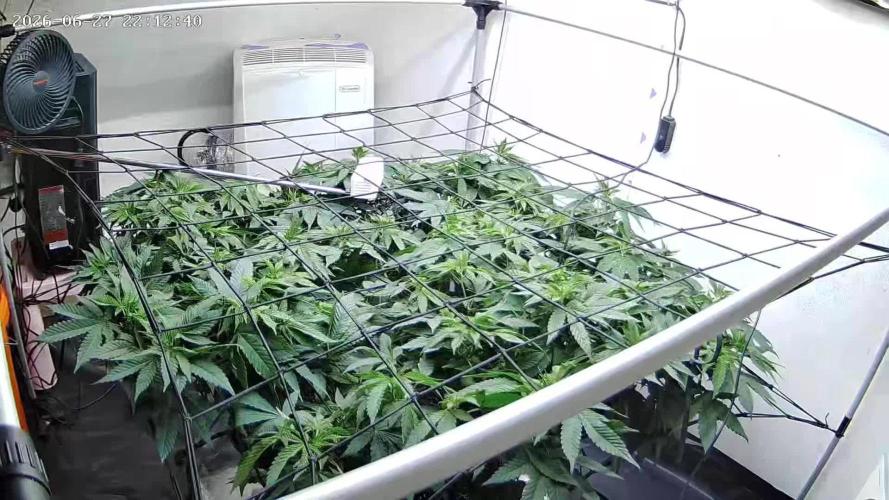
Eigentlich sollte diese Woche ganz entspannt werden. Koffer gepackt, 10 Tage Türkei, Sonne, Meer und abschalten. Zumindest für mich. Meine Laughing Buddha hatte da allerdings ganz andere Pläne. 😄
Bevor es losging, bekam sie noch einmal 8 Liter Wasser, der 40-Liter-Topf wurde zuvor noch mit frischer Erde aufgefüllt und anschließend hieß es: “Bis in zehn Tagen.”
Zum Glück hängt inzwischen eine Kamera im Growroom. So kann ich jeden Tag kurz nach dem Rechten sehen. Es ist schon verrückt, wie beruhigend so eine kleine Kamera sein kann, wenn man hunderte Kilometer entfernt am Pool sitzt. 😅
Da ich diese Woche natürlich keine Fotos machen konnte, gibt es diesmal einen kleinen Zeitraffer der Hobbit-Cam, damit ihr trotzdem verfolgen könnt, wie sich die Lady in meiner Abwesenheit entwickelt. 📹🌿
⸻
Das zweite Netz erwacht zum Leben
Eigentlich hatte ich gehofft, dass die Triebe während meines Urlaubs langsam bis zum zweiten Netz wachsen.
Die Buddha hatte offenbar andere Vorstellungen.
Schon wenige Tage nach meiner Abreise schoben sich die ersten Spitzen durch das obere Netz. Mit jedem weiteren Tag kamen neue dazu.
Genau so hatte ich mir das vorgestellt.
Ich wollte vor dem Urlaub bewusst nicht noch einmal trainieren oder auslichten. Die Pflanze sollte einfach wachsen dürfen – ohne zusätzlichen Stress.
Im Nachhinein war das genau die richtige Entscheidung.
Die Triebe entwickeln sich gleichmäßig, die Höhe bleibt erstaunlich homogen und die Fläche wird immer geschlossener. Genau diese gleichmäßige Krone wird mir nach dem Urlaub das Verteilen im zweiten Netz deutlich erleichtern.
⸻
Grow aus der Ferne
Es fühlt sich immer noch etwas ungewohnt an, einen Grow komplett aus der Ferne zu begleiten.
Normalerweise stehe ich täglich im Growroom, kontrolliere jede Spitze und freue mich über jeden Zentimeter Wachstum. Dieses Mal bleibt mir nur der Blick auf die Kamera – und genau das macht dieses Update irgendwie besonders.
Umso schöner ist es zu sehen, dass die Buddha ihren eigenen Plan verfolgt und offensichtlich bestens zurechtkommt.
⸻
Wie geht es weiter?
Noch ein paar Tage Urlaub.
Bis dahin heißt es für die Buddha nur eines:
Wachsen.
Nach meiner Rückkehr wartet dann der wahrscheinlich spannendste Abschnitt der gesamten Vegetationsphase:
* alle Triebe sauber im zweiten Netz verteilen,
* unterhalb gründlich auslichten,
* der Pflanze ein paar Tage Erholung gönnen
* und anschließend endlich den Wechsel in die Blüte einleiten.
Ich habe das Gefühl, dass sich die vielen kleinen Entscheidungen der letzten Wochen langsam auszahlen.
Und wenn ich die Entwicklung über die Kamera sehe, freue ich mich jetzt schon darauf, die Tür zum Growroom wieder zu öffnen.
Ich glaube, die Laughing Buddha nutzt meinen Urlaub mindestens genauso gut wie ich. 🍀🌿

Likes
10
Share


@GanjaFarmer101
Follow
Will update over time - have another three on the go at various stages.

Likes
34
Share


@MadeInGermany
Follow
Info:
Unfortunately, I had to find out that my account is used for fake pages in social media.
I am only active here on growdiaries.
I am not on facebook instagram twitter etc All accounts except this one are fake.
Have fun with the Update 😃.
Flowering day 28
since the time
change to 12/12 h.
Hi everyone :-) .
Today she got another 1 g GHSC Bio Bloom per l coco 👍.
It is developing really well and is starting to smell very sweet :-) Everything was cleaned and refilled 👍.
Have fun and stay healthy.
You can buy this Strain at :
https://www.exoticseed.eu/
Type:
Quick Sherbet
☝️🏼
Genetics:
75% Indica / 25% Sativa
Sunset Sherbet X Black Lemon
👍
Vega lamp:
2 x Todogrow Led
Quantum Board 100 W
💡
Bloom Lamp :
2 x Todogrow Led
Cxb 3590 COB 3500 K 205W
💡💡☝️🏼
Soil :
Canna Coco Professional +
☝️🏼
Fertilizer:
Green House Powder Feeding
☝️🏼🌱
Water:
Osmosis water mixed with normal water (24 hours stale that the chlorine evaporates) to 0.2 EC. Add Cal / Mag to 0.4 Ec Ph with Organic Ph - to 5.5 - 5.8

Likes
7
Share


@Canna055
Follow
Flower day 15, Ladys doing good
Started to lollipop
The HerzOG seems to bounce back after last week cal/mag def.
50-60%Rl
20-27*C
Light is set to 80% ~ 560W


Likes
18
Share


@Dendegrow
Follow
Frozen Black Cherry is still taking her time… but that’s totally fine! ⏳🍒 The buds are looking absolutely gorgeous – and the smell? Completely different from the RDWC run. It's wild how much the medium can change the terpene profile! 🔥🌿
The bud structure is still dense and consistent, but no color change yet – likely because I kept the temps quite warm these past days and nights 🌡️🌙 Now that the others are almost ready for harvest, I’ll begin slowly dropping the temperature to bring out those beautiful colors across the garden ❄️💜
I’ll give Frozen Cherry all the time she needs – I want all trichomes to turn nice and milky, with a touch of amber for that perfect high 🔬✨ Patience pays off! Don’t forget to follow for updates and final results! 🚀
---
Die Frozen Black Cherry lässt sich noch ein bisschen Zeit… aber das ist völlig in Ordnung! ⏳🍒 Die Buds sehen einfach traumhaft aus – und der Geruch? Komplett anders als beim RDWC-Grow. Kaum zu glauben, wie stark das Medium das Terpenprofil beeinflussen kann! 🔥🌿
Die Budstruktur ist immer noch schön dicht, aber die Farbveränderung lässt bisher auf sich warten – was wohl an den wärmeren Tagen und Nächten liegt, die ich zuletzt gehalten habe 🌡️🌙 Jetzt, wo die anderen fast fertig sind, senke ich langsam die Temperatur, um bei allen nochmal das volle Farbspektrum rauszukitzeln ❄️💜
Frozen Cherry bekommt jetzt einfach die Zeit, die sie braucht – ich will, dass alle Trichome schön milchig sind, mit ein paar bernsteinfarbenen Highlights für die perfekte Wirkung 🔬✨ Geduld zahlt sich aus! Folgt mir, um nichts vom Endspurt zu verpassen! 🚀
Likes
12
Share


@NONSENSE
Follow
Hi.
I have good news - my plant began to bloom after 2 weeks of vegetation.
This is good news and you can already see small flowers
The smell is minimal - a little mint with sweet aromas.
All branches are covered with inflorescences. I am very happy with the fast flowering.
Now I will do defoliation of large leaves.
I will add more Blooms and PCs to plant diet this week. i will keep light same 18/6.
PPM: 550 - 650
PH: 6.30 - 6.50


Likes
18
Share

@Cauli
Follow
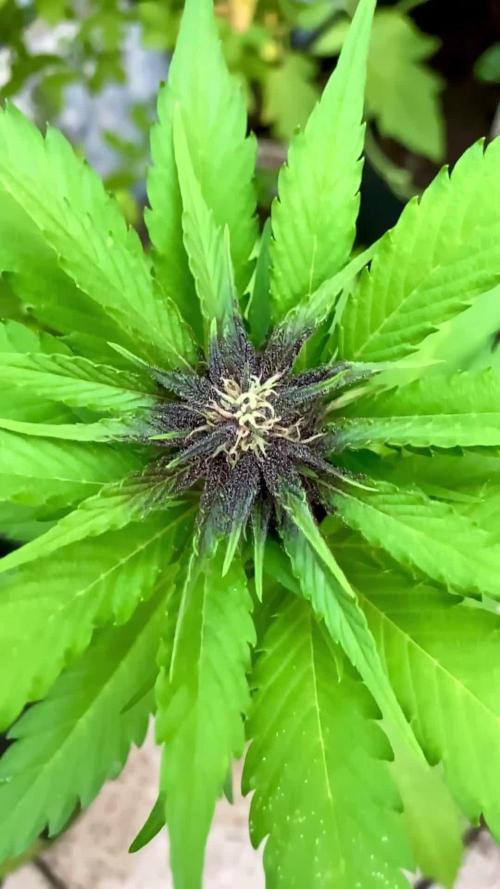
Finally, this week they got some light.
Plants seemed to enjoy it and made a nice jump in bud size this week.
And, there were some small caterpillars this week which wanted to eat the buds.
Had to remove them, no big deal.


Likes
2
Share

@Chucky324
Follow
Hello This is the end of week 11 and the beginning of week 12 of flowering.
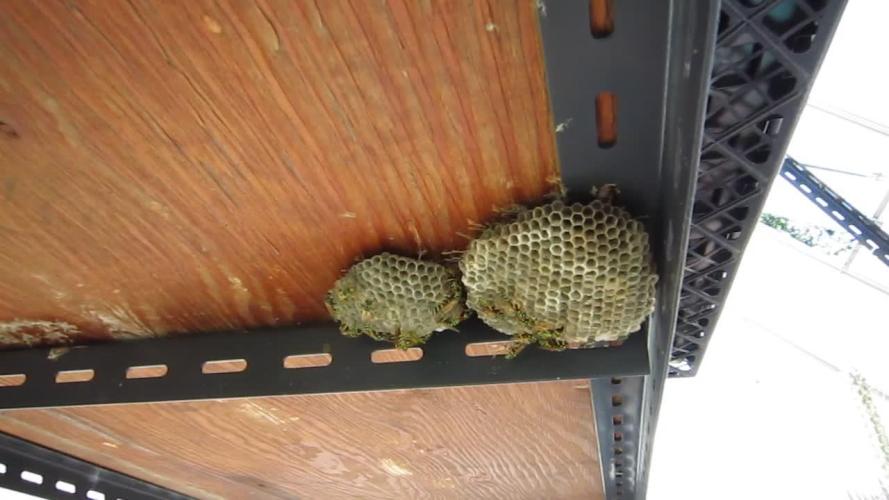
Oh Man... Got some yellow leaves still happening. I've been watering with rainwater and it's 6.8 ph
So I'll try some ph adjusted nutrient next time to see if that's the problem. It will be around 5.8 ph
The growing tips look good, it's just some of the older leaves that are going yellow.
OK. Be Cool.
Chuck.


Likes
52
Share


@Weedpixels
Follow
INFO:
__________________________________________
LIGHT:
* 400 PPFD, 12/12
+ Keep raising the PPFD with a (100) each week until we reach +800 PPFD.
__________________________________________
NPK:
* MAIN: PLAGRON // Coco A // 3,0ml / Liter
* MAIN: PLAGRON // Coco B // 3,0ml / Liter
* Stimulator: PLAGRON // Power Roots // 1,0ml / Liter
* Stimulator: PLAGRON // Pure Zym // 1,0ml / Liter
* Stimulator: Blackstrap Molasses // 5,0ml / Liter
* Foliar Feeding: BIONOVA // Silution // 2,0ml / Liter
__________________________________________
ENVIROMENT:
* Humid: 60-65%
* Temp: 22-25C
* CO2: 600-900
__________________________________________
HAPPENINGS:
+ Flipped over to flower 12/12 light schedule
+ Increased the main nutrients
- Can see some spots on the leafs, so im adding BIONOVA Silution in foliar feeding
__________________________________________
STRAIN INFO:
Gender: Feminised
Genes: 80% INDICA - 20% SATIVA
Genetics: Californian Sunset Sherbet and the autoflowering strain Strawberry Cola Auto.
Harvest: 450-600 g/m²
Flowering: 7 weeks
THC: 18-22%
CBD: 0,1%
Taste: Earthy, Citrus, Cool
EFFECTS
Stimulating, Happiness, Relaxing
Release Year202?
WEBPAGE:
https://sweetseeds.es/en/f1-fast-version-seeds/3237-strawberry-cola-sherbet-f1-fast-version.html
Processing
Likes
21
Share


@LittleBigTrees
Follow
This week I Realised I'd used the wrong feed chart so I was over feeding 🙄 the leaves burnt on a few plants so I've only fed them water this week and will resume feeding from next week.
There are still no pre sex pistils showing but it can't be far off now.
As soon as pistils start to show I'll start feeding bloom feed.
I've turned the light up to 30000lux using HLG's online calculator for converting a lux meter/app reading to PAR , my light is 3000k which with lm301H Led's works out @ 465ppfd which is about the max the plants can use in veg without supliments co2.
Here's the link for anyone using quantum boards, it has different spectrum calculators.
It's been really useful setting my light up so big thank you to HLG (even though I have a Geeklight) and a thank you to the GML show on YouTube for bringing it to growers attention (I love that weekly show, so much info and perspective)
https://horticulturelightinggroup.com/blogs/calculators/converting-lux-to-ppfd
Hope everyone's staying safe and growing 😎
Likes
32
Share


@Sadhus
Follow
Ajout d'une plaque pour éviter les algues , encore du scrog et defoliation, vidange et renouvellement du réservoir d'eau , on remplit encore le filet et go 12/12
