


Likes
Comments
Share


@MadeInGermany
Follow
Hey guys :-)
First of all I have to say that all 5 strains I have in the tent from Amsterdam Genetic are beautiful genetics 👍 .
This week they were repotted into 8L fabric pots.
When repotting, 2 g of Green House Powder Feeding Bio line were added per liter of substrate :-) .
That's enough until the first flowers start 👍.
Watering was done twice this week with 0.8 l each.
Otherwise everything was cleaned and checked and fresh osmosis water was mixed.
Stay healthy 🙏🏻💚
👇🏼👇🏼👇🏼👇🏼👇🏼👇🏼👇🏼👇🏼👇🏼👇🏼👇🏼👇🏼
You can buy this Nutrients at :
https://shop.greenhousefeeding.com/us/
👇🏼👇🏼👇🏼👇🏼👇🏼👇🏼👇🏼👇🏼👇🏼👇🏼👇🏼👇🏼
You can buy this strain at :
https://www.amsterdamgenetics.com/product/choco-cheesecake/
Water 💧 💧💧
Osmosis water mixed with normal water (24 hours stale that the chlorine evaporates) to 0.2 EC. Add Cal / Mag to 0.4 Ec Ph with Organic Ph - to 5.8 - 6.4
MadeInGermany

Likes
32
Share


@Skipi007
Follow
The girls are growing and doing well 👍
Day 12 they no longer grow to the top, but their stems are still quite thin
The nutrition was adjusted to the minimum dose specified by the manufacturer, each received 0.6 l
rinsed with 2 l of treated water, flooded with 0.6 l of nutrient solution

Likes
34
Share


@PEAKYPLANTERS
Follow
Brothers of the good and old Weed, welcome back to the diaries and gardens of your beloved Peaky!
The time has come to begin to expel the residues of nutrients from the ground and induce the plant to download all its reserves that has accumulated to date!
any question or curiosity ... I always remain available for everyone!

Likes
93
Share


@MadeInGermany
Follow
Welcome to the Zamnesia Spring Cup 🏆
Hi all 🤗
She continued to do very well this week 😍.
On June 28th she was placed in the flowering tent, where she now has a light duration of 12/12 h.
I am very curious to see how it develops in bloom, and what a smell will end up blowing through the tent 😍.
She still has enough nutrients left, so I will probably only give Monster Bud Mix again in 2-3 weeks :-).
I wish you all a lot of fun with the diary, stay healthy 🙏🏻 and let it grow 🌱🍀
You can Buy This Strain @
www.Zamnesia.com
Zamnesia Spring Cup 🏆🏆🏆
Type:
Runtz
☝️🏼
Genetics:
Zkittlez x Gelato
👍
Vega lamp: 2 x Todogrow Led
Quantum Board 100 W
💡
Bloom Lamp : 2 x Todogrow Led
Cxb 3590 COB 3500 K 205 W
💡💡☝️🏼
Soil : Canna Bio
☝️🏼
Nutrients : Monster Bud Mix
☝️🏼🌱
Water: Osmosis water mixed with normal water (24 hours stale that the chlorine evaporates) to 0.2 EC. Add Cal / Mag to 0.4 Ec Ph with Organic Ph - to 6.0 - 6.3
💦💧


Processing
Likes
6
Share


@mRJ519
Follow
Started some very mild LST... I know I'm probably a worry wart but these are my first time babies hahaha seems more even though

Likes
35
Share


@XperencdGmanXG
Follow
I should have more room for this one in the next 2 to 3 weeks, then I can start growing her. I am flexing my gro knowhow muscles by keeping this one as small as possible for as long as I need it to without killing it. Sometimes this technique will come in handy so it is good to practice it.


Likes
19
Share


@Comfrey
Follow
Tropicana flowers 🌞☀️🌤️🌦️🌧️
Plant is 15 cm high because of low stress training. The length is 31 cm.
Day 36:
Sun is shining, 15-23 degrees, high humidity. Tropicana gets two liters of pure rainwater. Spend the day in my veggie garden working. In the evening I brought some 🐞for Tropicana because I spottet a few lice. My mood changes drastically as I find spider mites eggs, first and second stadium. Don‘t overthink that and decide to defoliate the plant immediately.
I prepare a tee out of the leaves which brings fast relaxation. My mood is much better now.
Day 37
In the morning with better light I find more spider mites and decide to wash the plant with rainwater. Can‘t find after any more of these little killer dwarfs. I decide to bring more beetles and check the leafs more often. Temperature is felling under 20 degrees, it‘s raining and the humidity is 87%.
Day 38
In the early morning I couldn‘t find any mites on Tropicana. Got to continue controlling this in the next weeks regular. I‘m sure they are still there somewhere hidden in a dark spot.
🌦️ 13 - 21 degrees and humidity is around 60-70%.
Day 39
🌦️🌧️ Very rainy day. Just let Tropicana enjoy life and tie down the top one more time. 🐞 stay since some days. One on every plant. I think the mites are a result of their start inside and no hygiene at all. Have the same with my peppers some years.
14 - 21 degrees, humidity around 84%
Day 40
🌧️☁️🌤️☀️15 degrees, humidity 83% We listen to Roots Reggae, Tropicana is happy and quite busy with producing new roots, I guess.
Don‘t understand when to stop low stress training. I think it’s enough now. She needs a rest.
Day 41
🌧️⛈️🌧️🌧️ 15 - 19 degrees, humidity up to 89%
We had rainfall today around 65 liters of water. I collected enough of it for the next weeks.
Day 42
☀️ 6 - 23 degrees. Humidity is falling.
Tropicana enjoys the morning sun while she drinks and drinks and drinks…. Coffee. 😅
Likes
9
Share


@SkunkyDog
Follow
Hallo zusammen 🤙.
Das war es jetzt für sie wir sehen uns in 3 Wochen für den Erntebericht 🤙

Likes
2
Share


@LoganatorDude
Follow
I absolutely love to watch them grow! Especially that moment they hit their first growth spurt.
I started with RO water that is remineralized for drinking purposes. The ppm is only 18! My tap is 156! So considering they don’t need much water, I’ve been stealing some of our drinking water. The RO water starts at pH of 7. After I add the nutrients, ppm of 249 @ pH of 5.8 while soil is still sweet @ pH of 7
I think my days are off as a new week begins on the last day of the previous week. I am going to leave that for consistency.
04/21 - Noticing some possible nutrient issues with the Fruity Pebbles for several days now. Going to see what she needs. Up front I’m thinking maybe just a super small amount of Amino Acids with a little Epsom Salt. Maybe she is struggling to access the nitrates from the neem cake. IF it’s a issues with nitrogen. We will see. Maybe she would benefit from some extra calcium?… Any ideas are greatly appreciated.
Day 22 and I am noticing how these girls have been burning up a lot of potassium lately, dealing with the wind and sun 💨 ☀️, getting pushed around all day.
I plant to top dress with some Kelp Meal pretty soon.
Day 24 -> 4/22/22- a quote from the weather on today’s red flag warning and dust storm warning.
“ HAZARD...Less than a quarter mile visibility with damaging wind in excess of 60 mph. SOURCE...Satellite imagery. IMPACT...Dangerous life-threatening travel.”
I’m keeping the girls inside today.
Day 26, I was planning to check the runoff on some of these girls, especially the fruity pebbles, however I messed that up as I also top dressed WAY too much of the seaweed bliss. So I flushed with plain RO water at pH of 7 until there was only slight coloration in the runoff. I didn’t check the runoff as a lot has changed with all that flushing. So next watering/feeding I will make sure I check the runoff on multiple plants.
So the seaweed bliss with its 17 on potassium, seems to be the most likely culprit for why there is a bronze-ish color on the inside of the new growth. Hopefully a foliar feed of Epsom salts can correct the problem. Inside tent, lights on LOW. Noticing similar pattern in all of them to a degree, most noticeable in the fruity pebbles.


Likes
4
Share
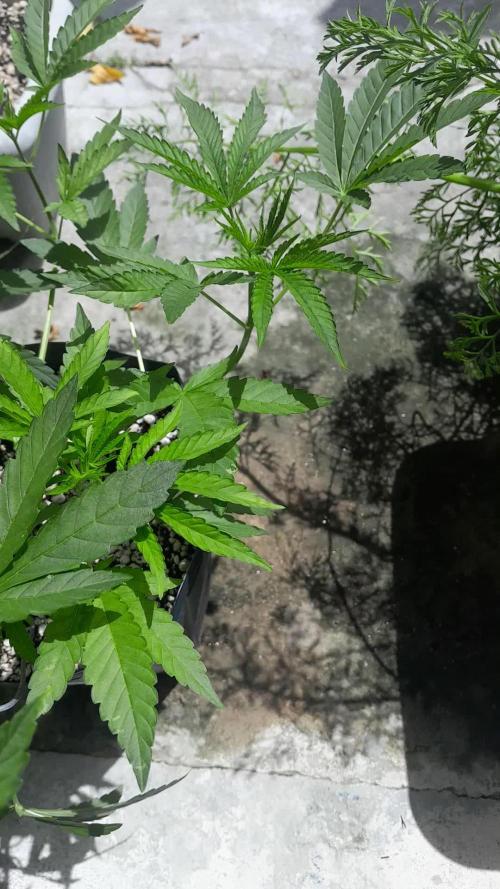

@Jardineiro_Br
Follow
Elas estavam afastadas demais da luz por isso estou colocando elas também no ambiente externo pra compensar, por conta disso estão recebendo quando 20 horas de luz. Como estavam.muotm alongadas fiz um LST e parece que dará bons resultados. O comprimento do galho esta enchendo de gemas laterais .
Likes
34
Share


@SalocinSpecial
Follow
D61 (21/01/2021): First day for week 5 of flowering. It's incredible how the buds are forming and getting bigger. It easily doubled (if not more) in size in the last 7 days. Since beginning of bloom, I normally gave water every other days. I make sure the soil is dry and the pots feel light when I lift them before giving any water. But it's not ideal cause it means that the plant drank all the water at his disposal and maybe it missed some. I will try a different watering schedule by giving water every 36 hours instead of every 48 hours. I will still make sure the soil his not wet and the pot not heavy (soil full of water) when I will give water. At this stage, they need a lot of nutrients to produce big buds. I will give nutrients every other feeding and only Max Minerals the others. Today I gave 1/2 of the recommended dose of Max Minerals.
- temp: 24-26C light ON ; 21-22C light OFF
- water: PH6.3 , 329PPM , less then a gallon each
- run off: PH6.9 and 1090PPM for Glue Gelato ; PH6.9 and 940PPM for Banana Kush
- RH: 50% light ON ; 48-49% light OFF
D62 (22/01/2021): Nothing special for today. The lamps are now at 12 inches from higher colas.
- temp: 24-25C light ON ; 20-21C light OFF
- no water
- RH: 50-52% light ON ; 48-52% light OFF
D63 (23/01/2021): I gave full dose of Max Minerals and Max Bud and 1/2 of Max Grow. All base on mid late flower recommended dose. Relative humidity % was difficult to maintain low last night. It is normal since I give water more often. I removed leaves to help reduce humidity. Both look and smell sooooo good! 😋
- temp: 24-26C light ON ; 21-22C light OFF
- water: PH6 , 940PPM , less then a gallon each
- run off: PH6.7 and 1270PPM for Glue Gelato ; PH6.7 and 1100PPM for Banana Kush
- RH: 50% light ON ; 55% light OFF
D64 (24/01/2021): I gave half dose of Max Minerals.
- temp: 24-26C light ON ; 21-22C light OFF
- water: PH6.4 , 360PPM , less then a gallon each
- run off: PH6.9 and 950PPM for Glue Gelato ; PH6.9 and 1030PPM for Banana Kush
- RH: 50% light ON ; 45-47% light OFF
D65 (25/01/2021): I'm at day 65 and base on the website I bough the seeds, they are close to harvest. They say 65-75 day from seed. My girls are not ready. I guess maybe 2 more weeks. The trichomes are all cloudy for Glue Gelato and 90% cloudy 10% clear for Banana Kush. I think it is time to start flushing. I will only give tap water at proper PH for the next 10-14 days and keep looking at trichomes. I consider also reducing air temperature and humidity for the rest of the grow. We are getting close! 😍😎
- temp: 24-26C light ON ; 20-22C light OFF
- no water
- RH: 49% light ON ; 49-50% light OFF
D66 (26/01/2021): I decided not flushing today. I gave only full dose of Max Bud. Glue Gelato is getting very frosty! She has approximately 50% white pistils and 50% brown pistils but she keep growing new pistils. Banana Kush is less frosty but thicker and look a bit behind in maturity compared with Glue Gelato.
- temp: 24-25C light ON ; 21-22C light OFF
- water: PH6 , 440PPM , less then a gallon each
- run off: PH6.8 and 930PPM for Glue Gelato ; PH6.8 and 1220PPM for Banana Kush
- RH: 48% light ON ; 47-50% light OFF
D67 (27/01/2021): The electric breaker where all the equipment of my tent is plug tripped. It took me around 20 min to notice it. During that time the relative humidity % went up around 75%. I don't think it will cause anything bad but I wanted to document it. I started the flush today by giving tap water at proper PH. The tap water of my city is around 130-140 PPM. I always let it sit in a bucket for 24h.
- temp: 24-25C light ON ; 20-21C light OFF
- water: PH6, 135PPM, less then a gallon each
- run off: PH6.9 and 625PPM for Glue Gelato ; PH6.9 and 725PPM for Banana Kush
- RH: 48% light ON ; 52-55% light OFF

Likes
8
Share


Likes
277
Share

@Tower84
Follow
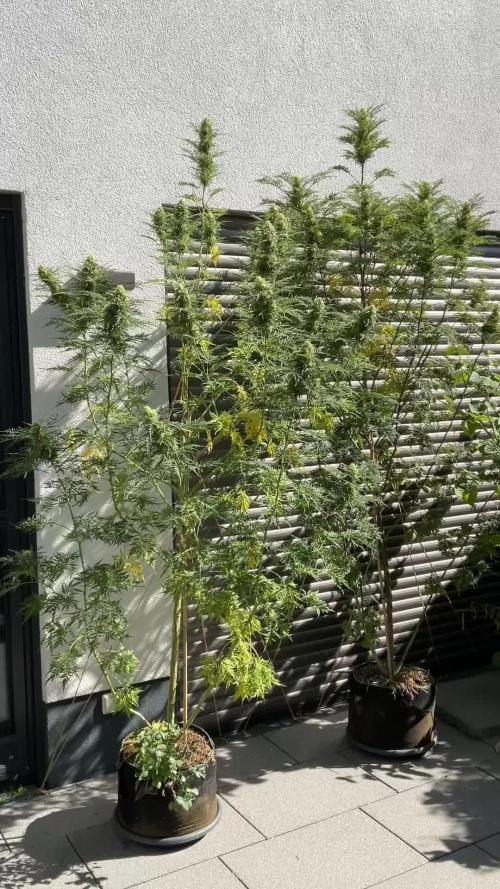
🌿 Woche 26 – Mentha de Croco von Terpyz 🇩🇪
Die Entwicklung der Buds schreitet momentan wirklich hervorragend voran 🌸💚. Besonders bei der linken Pflanze sieht man inzwischen jeden Tag deutliche Fortschritte. Die Buds beginnen bereits wunderschön in der Sonne zu glitzern und die ersten Trichome machen richtig Lust auf das Endergebnis ✨☀️.
Auch der Geruch beim Reiben an den Zuckerblättern wird immer spannender 👃🌿. Ich würde das aktuelle Aroma als zitronig, minzig, leicht lösemittelhaltig und mit einer feinen Beerennote beschreiben 🍋🍃. Eine wirklich interessante Kombination, die sich hoffentlich in den kommenden Wochen noch weiter entwickelt.
Der Breeder erwähnt, dass es bei diesem Cultivar seltene Blaubeer-Phenos geben soll, deren Buds allerdings Unterstützung benötigen 🌸. Ich könnte mir durchaus vorstellen, dass sich die linke Pflanze in diese Richtung entwickelt. Natürlich ist es dafür noch viel zu früh, um das sicher zu sagen, aber die Kombination aus Aroma und ihrer bisherigen Entwicklung macht mich definitiv neugierig 👀.
Von allen drei Pflanzen in meinem aktuellen Grow riecht die linke Mentha de Croco momentan tatsächlich am besten 😍. Ich bin deshalb besonders gespannt, wie sich ihr Aroma bis zur Ernte noch verändert.
Die rechte Pflanze ist im Vergleich momentan etwas unspektakulärer 🌿. Dafür scheint ihre Struktur etwas unkomplizierter zu sein, sodass ich mir bei ihr wahrscheinlich etwas weniger Sorgen um die Unterstützung der Buds machen muss 🌸. Bei der linken Pflanze werde ich das Gewicht der Buds definitiv weiter im Auge behalten.
Beim Wasserverbrauch liege ich momentan bei ungefähr 2,5–4 Litern pro Pflanze und Tag 💧. Das hängt inzwischen stark davon ab, wie warm es tagsüber wird. Diese Woche soll es noch einmal etwas wärmer werden ☀️🌡️ – für die weitere Blütenentwicklung dürfte das durchaus hilfreich sein.
Langsam steigt bei mir wirklich die Vorfreude auf das Endergebnis 😍🌸. Gerade die linke Pflanze macht mich mit ihrem Aroma und dem zunehmenden Trichombesatz richtig neugierig. Jetzt heißt es weiter beobachten, das Wetter genießen und hoffen, dass die Pflanzen ihre Buds noch ordentlich weiter aufbauen 🤞🌿.
🌿 Week 26 – Mentha de Croco by Terpyz 🇬🇧
The bud development is progressing really well at the moment 🌸💚. Especially on the left plant, I can see noticeable changes almost every day. The buds are already sparkling beautifully in the sunlight, and seeing the first serious layer of trichomes is making me really excited about the final result ✨☀️.
The aroma when rubbing the sugar leaves is becoming more and more interesting as well 👃🌿. At the moment, I would describe it as lemony, minty, slightly solvent-like, with a subtle berry note 🍋🍃. It’s a really fascinating combination and I hope the terpene profile continues to develop over the next few weeks.
The breeder mentions that this cultivar can occasionally produce rare blueberry phenotypes, although those buds apparently need some additional support 🌸. I could definitely imagine the left plant moving in that direction. Of course, it’s still far too early to say that for sure, but the combination of its aroma and overall development definitely has me curious 👀.
Out of all three plants in my current grow, the left Mentha de Croco actually smells the best at the moment 😍. I’m therefore especially interested to see how her aroma develops by harvest.
The right plant is a little less spectacular for now 🌿. However, its structure seems somewhat easier to manage, so I’m expecting slightly fewer concerns about supporting the buds 🌸. I’ll definitely keep a close eye on the weight of the buds on the left plant.
Water consumption is currently around 2.5–4 litres per plant per day 💧. It varies quite a bit depending on daytime temperatures. It’s supposed to get a little warmer again this week ☀️🌡️, which should hopefully help with further bud development.
I’m getting more and more excited about the final result 😍🌸. The left plant in particular has me really curious with her aroma and increasing trichome coverage. For now, it’s all about watching the plants develop, enjoying the warmer weather and hoping they continue to stack up those beautiful buds 🤞🌿.

Likes
1
Share

@Growfather1
Follow
Hello everyone,
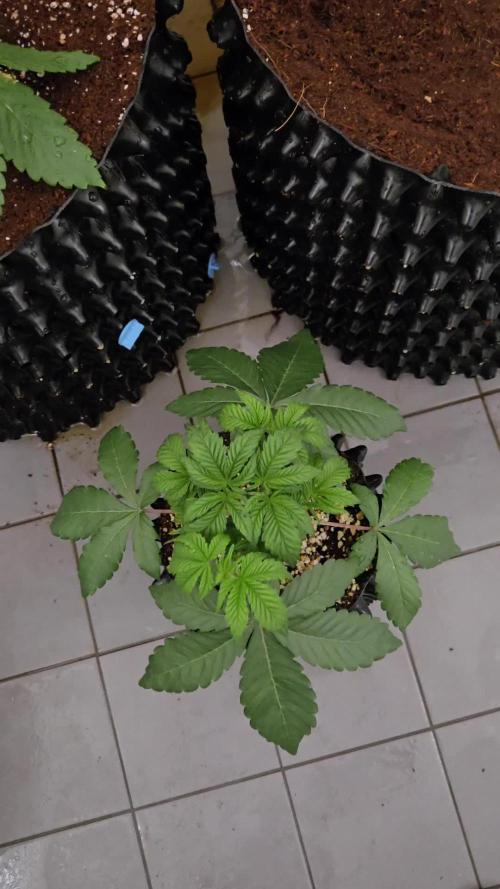
Finally finished transplanting 2 Mac1 F1 plants and i can tell you I'm exhausted and i still need to move them 25 meters to the tent OMG.
I have one plant that i will transplant within 48 hours.
I gonna give them a good defoliation and then they can enjoy their new pot for at least 4 weeks before flipping to flower.
Let's see how they look next week, thanks for stopping by and have a nice week.
Regards,
Growfather

Likes
15
Share


@Aleks555
Follow
Gorilla Zkittlez Auto is a true work of art among autoflowers. With its powerful, dense buds literally dotted with 'sugar', each stage of growth of this plant is pure eye pleasure. The scent she exudes is as delicious as her taste-sweet, with fruity notes, promising an unforgettable delight. This beauty not only looks great, but also gives a strong, powerful effect that both relaxes and cheers up. Special thanks for this outstanding variety of 42Fast Buds, and, of course, Xpert Nutrients-your fertilizers made such impressive results possible. Each stage of growth was perfect thanks to this tandem. This variety is a real miracle for any grower!
Xpert Nutrients is the fertilizer that truly makes a difference! 🌱
From the very start of our grow, Xpert Nutrients has proven itself to be exceptional. Every plant receiving this nourishment flourishes—from strong roots to dense, trichome-covered buds. With its balanced formula and ease of use, our beauties get everything they need for optimal growth and flowering. It’s a joy to see how the plants respond to this fertilizer!
A huge thank you to Xpert Nutrients for your high-quality product and continuous support. Without your nutrients, our results wouldn't be as impressive! 🙌
Likes
7
Share

@Hempcules
Follow
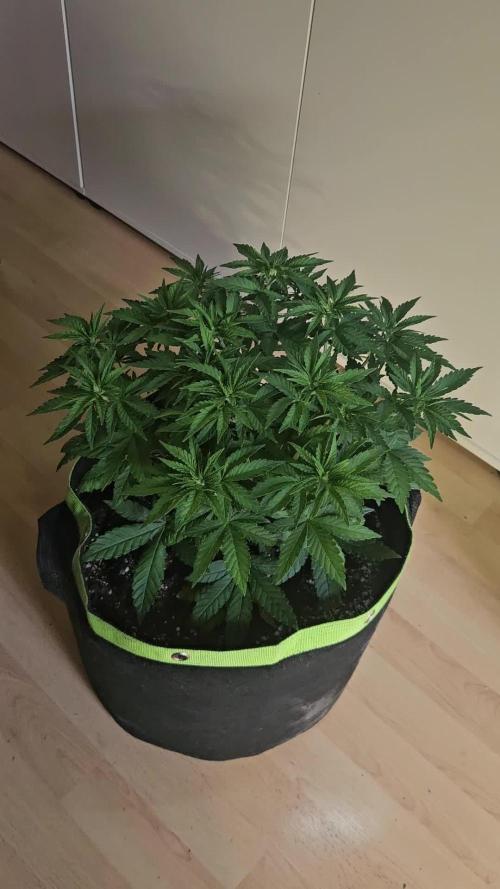
WEEK 6
This week I transplanted the plant into a 25 L pot with Allmix as planned. Now I’ll let the 16 shoots grow a bit more before I start with the SCROG. Temperatures are very high at the moment, and before repotting the nutrients had already become a bit low. I fed with Grow fertilizer once more beforehand, though I could have started a little earlier.Other than that, I’m very satisfied. The plant has developed nicely and symmetrically, providing a great foundation for the flowering phase.
PPFD: 450µmol/m²/s
Water: 1x water, 1x nutrient solution


Likes
37
Share


@Roberts
Follow
Mandarin XL auto looks like she is done stretching. She is starting to for trichromes and start bulking. I did a solution change in her several days ago. Everything Is looking good. 🤞🏻for some nice buds to form. Nothing more to report. Thank you Gen1:11, Medic Grow, and Ganja Farmer. 🤜🏻🤛🏻🌱🌱🌱
Thank you grow diaries community for the 👇likes👇, follows, comments, and subscriptions on my YouTube channel👇. ❄️🌱🍻
Happy Growing 🌱🌱🌱
https://youtube.com/channel/UCAhN7yRzWLpcaRHhMIQ7X4g

Likes
70
Share

@Roberts
Follow
Big Fat Wedding Cake is growing great under the Spider Farmer G5000/UVR40 lights. She is starting to stack now. She has been very hungry. Everything is looking good at tye moment. Thank you Spider Farmer, Athena, and DutchFem Seeds. 🤜🏻🤛🏻🌱🌱🌱
Thank you grow diaries community for the 👇likes👇, follows, comments, and subscriptions on my YouTube channel👇. ❄️🌱🍻
Happy Growing 🌱🌱🌱
https://youtube.com/channel/UCAhN7yRzWLpcaRHhMIQ7X4g
Spider Farmer Official Website Links:
US&Worldwide: https://www.spider-farmer.com
CA: https://spiderfarmer.ca
UK: https://spiderfarmer.co.uk
EU: https://spiderfarmer.eu
AU: https://spiderfarmer.com.au
G5000 Light Amazon Link:
amzn.to/4643esa
UVR 40:
https://www.amazon.com/dp/B0BR7SGTHS
Discount code: saveurcash (Stackable)
