


Likes
Comments
Share


@newenglandgrowers
Follow
Starting my flush this week using 10ml of Clearex per Gallon of water flushed down to 450EC or 225ppm, going to now continue watering with ph'd balanced water when dry with about 10-20% runoff. Going to keep an eye on the trichomes but I'm thinking I'm gonna harvest early to mid of next week. I'm going to try and bring out even more of the colors in the flowers this last week or two and I'm going to start watering with ice cold water not sure if it'll help or not but I'm gonna give it a shot. End of Week 13/Week 8 of Flower it went well the plants are flushed and are fading, going to chop in a few days.

Likes
22
Share


@m0use
Follow
***Sponsored Grow*** = Medic || https://medicgrow.com || Grow = ***Sponsored Grow***
Not a whole lot is happening this week, still having some PH issues in the medium, I believe this is from the microbial mass I added a while back. A microbe product, PH going into the medium is around 6.5-6.8 and coming out is between 5.5-5.8, so something is acidifying it up. Also noticed the runoff last week was a bit higher at times. So lowered the feed down quite a bit, going in at 1.4EC vs 1.8 will bump it up to 1.5 and 1.6 in the next few weeks. I also added in a bit of a PK booster. nothing to crazy only 60ppm worth on a total allowance of 700PPM
Lights now running at 100% with V1 spectrum, decided to go with 100% now vs after stretch, will see how it works out.
Till next week.
***Sponsored Grow***
Official Website:
https://medicgrow.com/
+
https://www.kannabia.com/en
Facebook:
https://www.facebook.com/medicgrowled
+
https://www.facebook.com/kannabiaseed/
Twitter:
https://twitter.com/medicgrow
+
https://twitter.com/kannabiaseeds
Instagram:
https://www.instagram.com/medicgrow420/
+
https://www.instagram.com/kannabiaseedsint
YouTube:
https://www.youtube.com/channel/UCNmiY4F9z94u-8eGj7R1CSQ
+
https://www.youtube.com/c/KannabiaSeedCompany
Growdiaries:
https://growdiaries.com/grower/medicgrowled
https://growdiaries.com/grow-lights/medic-grow
+
https://growdiaries.com/grower/kannabia
https://growdiaries.com/seedbank/kannabia

Likes
6
Share


@BigGGrows
Follow
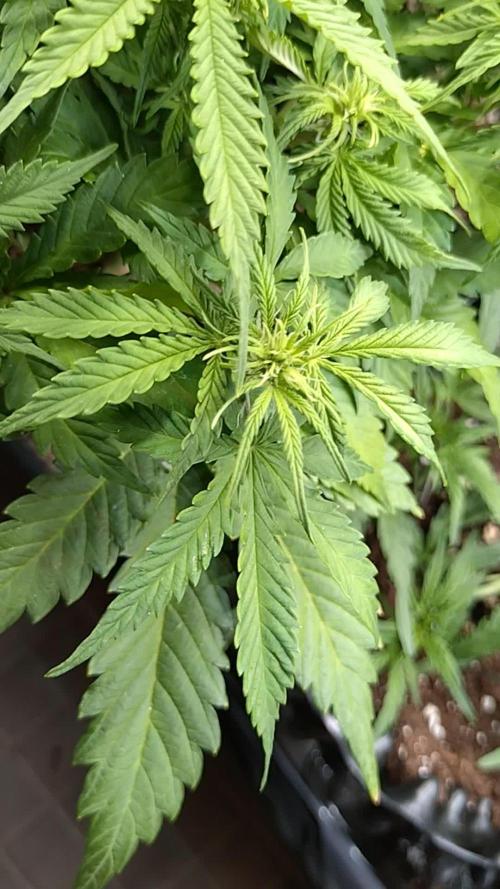
The candy cush bounced back with resilience this week after the transplant. She is about to go into stretch and seems to be doing well this week.




Likes
4
Share

@Mr175budman
Follow
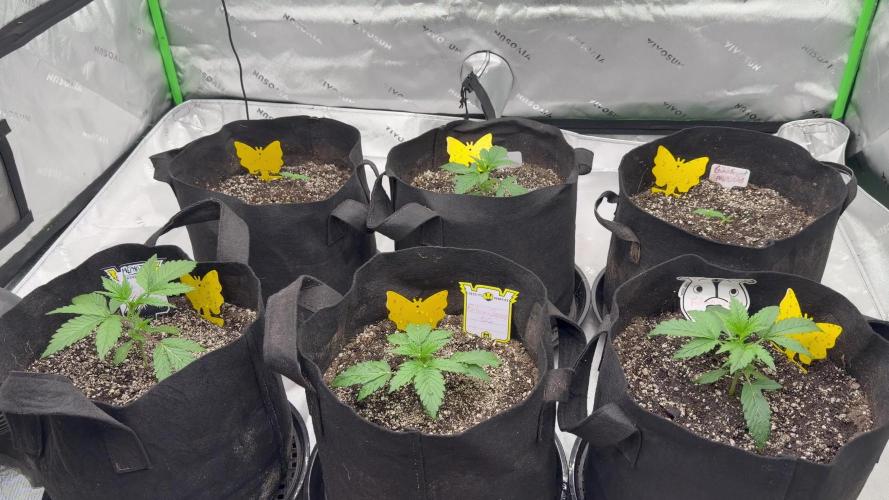
The leaves are turning a lovely color, and the plant is growing well without any signs of light or leaf burn.

Likes
23
Share


@M_J_KllrAutoSystems
Follow
WEEK 11) DAY1
Changed light schedule from 20/4 to 18/6 which will stay that way until harvest. Now I also start dropping the temperature 1 degree every 3-4 days. You don’t have to do this! I do this so the plants gradually acclimate to the lower temperatures like fall and then the beautiful different colors that come out from every individual Girl are different.
(DAY2) light defoliation for an omelette Fill both water 6 gallons ph5.9, put an extra fan under WMZ#1 due to her size I might put a standup fan behind her.
(DAY4) tuck leaves down all around the cola’s well my ac infinity 8” fan just broke only 4.5 months old ridiculous.
(DAY6) water 6 gallons

Likes
55
Share


@nonick123
Follow
Día 85 (07/04) Riego con 1.000 ml H2O EC 0,45
Hace mucho calor!
Día 86 (08/04) Riego con 1.000 ml H2O EC 0,45
Día 87 (09/04) Riego con 1.000 ml H2O EC 0,45
Día 88 (10/04) Riego con 1.000 ml H2O EC 0,45
Día 89 (11/04) Riego con 1.000 ml H2O EC 0,45
Día 90 (12/04) Riego con 750 ml H2O EC 0,45
Reviso los tricomas y aún no está lista!
10% tricomas nublados, 3% tricomas ambar y el resto transparentes
Parece que este pheno va a necesitar una semana más...
Día 91 (13/04) Riego con 750 ml H2O EC 0,45
🚀 Khalifa Genetics - https://khalifagenetics.com/product/lemon-blanco-v3/ @khalifa.genetics
💦 BioTabs 15% DISCOUNT code "GDBT420" biotabs.nl/en/shop/ @biotabs_official
🌱Substrate PRO-MIX HP BACILLUS + MYCORRHIZAE @promixmitch @promixgrowers_unfiltered
💡2 x Mars Hydro FC1500 EVO Led Grow Light (2024 NEW FC 1500-EVO Samsung LM301H 150W LED) - https://marshydro.eu/products/fc1500-evo-led-grow-lights/ - https://www.amazon.de/dp/B0CSSGN5D8?ref=myi_title_dp

Processing
Likes
Comments
Share


@Mrbudgrower88
Follow
The wedding cake seeds have exploded in size since being potted into bigger pots and it has done nothing but helped them.
Likes
10
Share


@CervantiS
Follow
Feb.9
Diy Growbox: 60*60*160 cm
Light: 150w led
Light Cycle: 12/12
Soil: CocoPerlite in diy Hydrobucket
Extractor: 120mm PC vent Running 24/7
Dear Growdiary,
Had to find out how to calibrate Ph meter, stupid manual didn't say how get next Ph setting.
Found out on Youtube, Thanks to all tutorial uploaders 👍
Day62:
Feeding 780ppm @ 6.14Ph 4L
Drainwater 169ppm @ 6.50Ph
Day65:
Bucket seems to dry up fast
Water 2L added

Likes
28
Share


@Professor_Chaos
Follow
Beginning of week...
So the ladies are beginning to stack pistils at the crowns.. The Mandarin Cookies has been stacking a little quicker.. Thicker.. They both are showing purple tips on the stiples.. Not the pistils or leaves.. The stiples.. ETHOS Cookies has been showing that for ever now.. The Mandarin Cookies has just started showing these purple tipped stiples.. Gorgeous plants.. Even tho Mandarin Cookies is super freakishly tall and stretchy.. And the ETHOS Cookies is basically a runt.. Doesn't want to make ANY stems.. But plenty of leaves lol.. She should be able to hold up some super fat colas pretty easily tho so that's awesome! I stopped using the Armor Si and the FloraGro.. As well as the MYCO Plus (powder) stuff.. Also going down on the FloraMicro.. Just basically using 1 tsp/gallon of the CALiMAGic, FloraMicro, FloraBloom, and Kushie Kush.. 30 drops/gallon of the Floralicous Plus (not sure if that's too much to be honest).. 2 tsp/gallon of the FloraNectar Fruit-N-Fusion and last but not least... 2 mL/gallon of Hydroguard... *phew*.. Damn that's alot.. But that's alot less then what I was giving these girls... They should do alot better..
Mid week...
I have defoliated the ETHOS Cookies a bit more.. Mostly trying to make sure there is good airflow and no larfy producing branches in there.. She should produce some really nice colas with how short and stubby she is lol.. As for the Mandarin Cookies, I've just been supercropping the shit outta the really tall branches.. I've never supercropped a plant so much lol.. And I'm not good at it at all.. Most of the branches are split open, bruised.. Just very crappy looking.. It will heal, they always do 😂 I just hate hurting them like this.. Especially in flower.. But it's still pretty early in flower.. And the pistils are still exploding just as much as the non-supercropped branches.. I can't wait!!!...
End of week..
Both girls are exploding with trichomes! I love these super frosted strains! The ETHOS Cookies seems to be stackin calyxes faster than the Mandarin Cookies.. I can tell the ETHOS Cookies is gonna stack some fat ass colas! The ETHOS Cookies runoff is doing good.. pH going in is 6.2 - 6.3 and runoff is usually 6.0 - 6.2.. Foliage is nice and green.. She may be nitrogen sensitive deeper into flower.. Maybe not.. We shall see.. As for the Mandarin Cookies.. Wow.. This girl is super tall.. She is also stackin calyxes, pistils and nicely. The runoff is still giving me issues but as far as I can tell, she is accepting it and making the best of what she has. Going in pH is 6.2 - 6.3.. Runoff is coming out 5.6 - 5.7.. It's bothering the shit outta me! Lol.. It doesn't seem to matter what pH I put in, it will ALWAYS runoff at 5.6 - 5.7 pH.. But like I said.. She is accepting it as long as I keep the "in" pH in my preferred range.. I usually keep the "going in" pH at 6.1 - 6.3 the ENTIRE grow.. I always get great results doing this.. Its best for Calcium uptake and Calcium is a huge issue when it comes to growing in coco coir.. Anyways.. Both ladies are doing great.. Both look gorgeous and healthy.. Oh yeah!! I like to rub the trichomes to get a little idea of what the terpenes are gonna be like.. And hoooooly shit.. ETHOS Cookies smells like nothing I've ever smelled before.. I can't even begin to explain it.. Literally.. And the Mandarin Cookies is starting to give off a nice citrusy scent.. I hope this carbon filter is able to scrub the air enough.. Cuz if these are anything like the Early Lemon Berry, then yeah, this carbon filter is gonna be put thru the ultimate test lol.. Anyways.. On to the next week!....

Likes
27
Share


@GreenFingeredLT
Follow
Day 56: Merry Christmas everyone.
Today It seems the K deficency symptoms aren't getting any worse and a few of the smaller and less effected leaves are returning to green already! I guess the other leaves will take time IF they go green at all by the end of the grow. The flowers have swollen again so even though there was a deficiency she doesn't seem to have slowed down too much. Score one for having loads of leaf mass I guess! I'm going to monitor her closely today and tomorrow, he pot is still very wet and humic acid helps soil hold onto water so it may be another 24 hours before she needs watering at least! But I think a water with no nutes will be fine this time. The overall plant has taken on a healthy shade of green, it's just the parts that had gone pale from the k def that are still the wrong colour, hopefully these will gain a healthier green over the day / tomorrow, I think 1 more week and she'll be ready to defoliate and head into the flush stage.
Looks like it might be a satisfying first harvest!
Day 57: It doesn't look it so much from the pictures, but today the plant is looking a much healthier shade of green, in the leaves in the central mass we still have some leaves that aren't fully green because they were hidden in the depths of the plant. Today I did some very light LST just to pull the flowers out slightly further, I noticed there's a lot of buds on some of the stems and I've tried to expose the light as deep into the light as possible, in about 1/2 weeks I'll defoliate again and try and expose more of the lower down flowers to the light, today I simply tidied up the base of the plant and exposed the main stem base to more airflow, I think the stalk is looking healthy, I've never seen a healthy stalk before but there's a white film that I recognise from being the skin earlier on, raised the grow question to be sure
I also trimmed off some tiny flowers near the base of the plant, they were never going to reach anything significant and I understand taking these smaller flowers can stress the plant in the right way to grow the rest bigger, So today I took 3 flowers that weren't even going to be larf by the end. As well as exposing more of each tops stem to more light I hope to stimulate growth along some of the stems that look like they'll produce a good amount of popcorn buds

Likes
59
Share


@JeyGanesha
Follow
Gente!amici contadini eccoci arrivati all'ottava settimana di fioritura 💪 tutto procede come deve. La lotta biologica che sto facendogli con le mie care amiche coccinelle 🐞 funziona Super bene...fossero state tutte larve di coccinelle 🐞 era ancora meglio.si perché la voracità che ha la larva di coccis è incomparabile....poi le larve non volano aggirro. Stanno sulle foglie e mangiano tutto. Uova ragni rossi ecc....
Likes
26
Share


@shibbyguy
Follow
Day 50 - Decided to veg for one more week. Plants currently 70cm x 70cm wide and 33cm tall, hoping to get to 40cm at end of week.
Fixed issue with the low extration rate. Found the filter had become blocked from the humidifier. Have moved it to the opposite side of tent. Hopefully this prevents it from happening again.
Day 53 - Have been have Ph issue again due to algae. Plant hasnt been drinking much and growth seems very slow.
Day 55 - Defoliated whole plant. Roots have some slime on them. Peroxide flushed with plain water for 12hrs maintained around 150ppm. All slime appears to be gone.

Processing
Likes
97
Share


@DudeGrowsWeed
Follow
Welcome to the 2018/19 indoor grow season!!! I am totally psyched to be growing Blackberry from FastBuds as one of the first strains this season. I was fortunate enough to have won 7th place for my Tangie'matic diary and won seeds from FastBuds. When searching the FastBuds website for a strain to choose I was looking for something purple and fruity. I think I found the answer here in BlackBerry.
One of the seeds was started a couple of days ahead of the other. The first seedling is looking pretty good, the second not as much, but I'm confident it will grow out of its funk. I am seeing some signs of burn, I guess the soil must be too hot. I started to try to flush through with straight ph'ed water, but then I started seeing signs of overwatering (rookie mistake, I know). Now I'm just trying to keep a little water on the bottom tray so it generates some humidity in the dome. There's also a heat mat under the tray I have the heat mat on a timer also, 30 min on/30 min off cycling all day. It seemed to get too hot on 24/7.
I'll be transplanting and moving to my 2'x4' tent in about a week. They will live there during veg, then I'll be moving to a 4'x8' tent (not purchased yet) for flower. I'm also planning on adding some COB LED's in the flower tent. Then I'll dedicate my 2x4 tent to mothers, clones and seedlings.
Its going to be a little different this season with both photo period and autoflowering strains going at the same time. But I'm looking forward to it! 👍
Stay tuned...


Likes
19
Share


@emeraldlabs
Follow
Second topping on day 28! 1 more to go!
Will include all details once done with topping (going for mainline).
Photos/video taken 28 days after breaking soil.
Likes
3
Share

@Organic_G
Follow
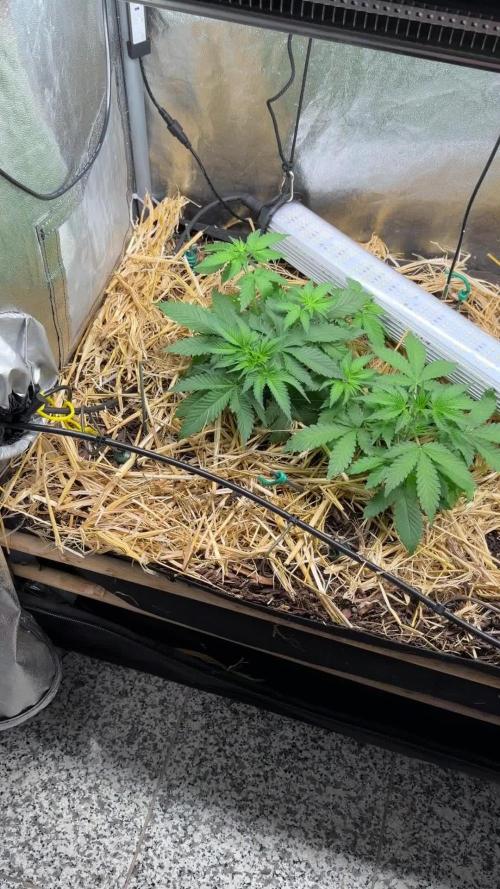
Wachsen aber gehen an mir vorbei hahaha muss nicht wässern, muss nichts machen einfach wachsen lassen und vergessen das ist immer das beste ;)
Werden heute oder morgen auf 12/12 wegen der Photoperiodischen umgestellt, zeigen erste Vorblüteerscheinungen, zumindest die Autos, daher muss die Purple Mango Kush nachziehen


Likes
2
Share


@TheBudWhisperer
Follow
Solid week. All the clones responded really well to the new res. And they didn’t fully transition the first time so were quick to start re-veging. We’re flipping to flower now to try and keep plant heights down and root mass smaller.
*Notes: hopeful to see some quality representation from at least a couple of these clones once the run in the main tent starts to turnover. Still genetically firing from the hip but there’s usually at least one of those prized purple and pink hue phenos in every run of this strain. If I can keep that trait prevalent throughout later generations of this cross - it’s a win.