


Likes
Comments
Share


@Jonny_Blaze269
Follow
Wk4, Day22, 4/27/22
Wk4, Day23, 4/28/22, continued defoliation and tied down tops, each plant has at least 6 tops
Wk4, Day27, 5/2/22, no issues requiring adjustments
Wk4, Day28, 5/3/22, heavy tie downs and defoliation to finish Wk4

Likes
3
Share


@BeskarBuds
Follow
Well it’s been a challenging grow this time around the flowering stage. Started with way too high humidity at levels of 70% on average.
Just recently got the Hydrone 5 from AC Infinity and it worked great bring humidity levels down to low 40%.
It does create a lot of heat though and with my set up being in my garage it can some times be affected by outside temperatures and he we just had a bit of a heat wave this past week with the added heat from the new dehumidifier my tent was average 35 degrees Celsius which absolutely fried some of my fan leaves.
Major defoliation to clean the plant up and hopefully she continues to develop beautiful buds.
Very resilient plant so far taking on my rookie mistakes strong!
This is the way.

Likes
202
Share


@CrazyHorse
Follow
😇 😇 😇 Hi to all growers 😁 😁 😁
So let's start !! The first day of the girls' first week of life is a fact 💪 💪 💪
Some technical details:
- Light cycle 20.5h on 3.5h off
- Mars TSW first week set to 50% power
- Ventilation RAM 4" 165m3 / h
- Air humidifier from China ( doing job!! )
- 3x AutoPot + 3x AirDome
See you soon, You Lovely Girls Growers 😇 😉 🙌
Likes
1
Share


@FarithAriasFajardo
Follow
Aquí las fotos de esta nueva semana de vegetación para ambas plantas, cumpliendo así la white widow 23 dias de plantada y la zinfandel 16. La fotos corresponden al 21, 24 y 27 de abril. Por ahora no hay nada más que agregar. Ya que esta semana solo agregué algo de sustrato en ambas y el riego fue de agua reposada con una bomba dando oxígeno por 24hr y un ph de 6,1 a 6,5. Lo que no sé es si realizar alguna tipo de poda más adelante o si mejor las dejo crecer como son, ya que no sé mucho. Existe el temor de dañarlas o estresarlas demasiado. Lo pensaré, también recibo cualquier consejo u observación con ellas!


Likes
46
Share


@KingSalomonsWeed
Follow
22.07.
Hallo,
Tag 26. Blüte 1
Zwei 2 girls im Growschrank von Zelsius.
Einer, im Westflügel des Anwesens.
Läuft, so habe ich es gehofft.
23.07. Greenception GC4.
4 COB LED. Zwei in Weiß. Eine in Blau (eine kostet soviel wie 3 weiße). Und eine in Rot(noch teurer).
Uva leds uvb leds. Und 2 Lüfter.
128w/h.
Und ist sehr gut abgestimmt.
Das ist mein high tec high budget grow.
Meisterweed bekomme ich hin.
Grins.
Dies soll mein Eintritt zum Großmeister grower werden.
(ich fänds passend)
Dazu sollten sie terpen reich(da könnt ich mogeln, denn ihr könnt es nicht riechen), kristallhart, und glitzernd sein. (Ich liebe glitzerndes weed).
Yield : I still don't care.
BIO WEED.
Thats all what I want!
24.07. Alles durchgewurzelt bis unten. Beide. Pflanzen sehen top aus.
25.07. Bobo dreht durch. 29 Tage alt. Blühte 4. Stamm mindestens 40 mm
Ca 1,57 zoll. Jetzt schon! Das habe ich noch nie gehabt.
27.07. Das Männchen steht kurz davor seine Samenkapsel zu öffnen. Ich werde den Pollen Sammeln zur späteren Verwendung. Und nachdem er ordentlich gemolken wurde darf er nach Spinnenart gehen.
Kill after sex.
29.07. Bobo! Tina! Geschwister.
Eine riesig. Eine normal. Sind tolle Pflanzen.
Bobo hat die größten Fächerblätter ever.
Die unteren Äste, Verzweigungen sehen komplett gleich aus.

Likes
31
Share


@Wicked_Stix
Follow
Three weeks into flower and things are moving along. I defoliated some of the lower branches and spread out a few branches here and there. Other than that it's the same situation as always. Nutrients are pumping and lights are beaming. Everything is running smooth and all is well with the world. Like some namaste shit going on around here at the moment. Could very well just be the calm before the storm...

Likes
19
Share


@sirstickyfingers
Follow
Start of Week 2 day 2 of flower!! These girls are stretching and starting to stack bud sites.
My little sour diesel is doing her best to reach that canopy with the others, she aint showing alot of sites at the moment but im hoping after stretch and defoliation I can get more to pop.
I decided to upgrade my light and now have a SE4500 450w on the way. From what I had researched Id like to be getting 1000ppfd in the center and then around 600-700 on edges
I picked up some stashblend and real growers recharge and added it to my water as a compost tea today and will be implementing that in the watering per the plant needs .
My biggest fear doing organics is getting behind on the food for these girls. I plan to top dress with worm castings, gaia green all purpose 4-4-4 and power bloom 2-8-4 every 3 weeks during flower, and then about the 4 week of flower I will be using more power bloom than all purpose to avoid too much nitrogen.
My biggest thing I been going back and forth on is when to defoliate. I dont wanna start removing abunch of leaves and force my plant to recover during the stretch rather than making bud sites. I figure once it is done stretching completely I am going to lollipop and remove all branches/larf and leaves under the canopy.
feel free to comment, provide tips, suggestions im open to all as im still new and learning
Thanks for looking and happy growing!!


Likes
57
Share

@wolfvb
Follow
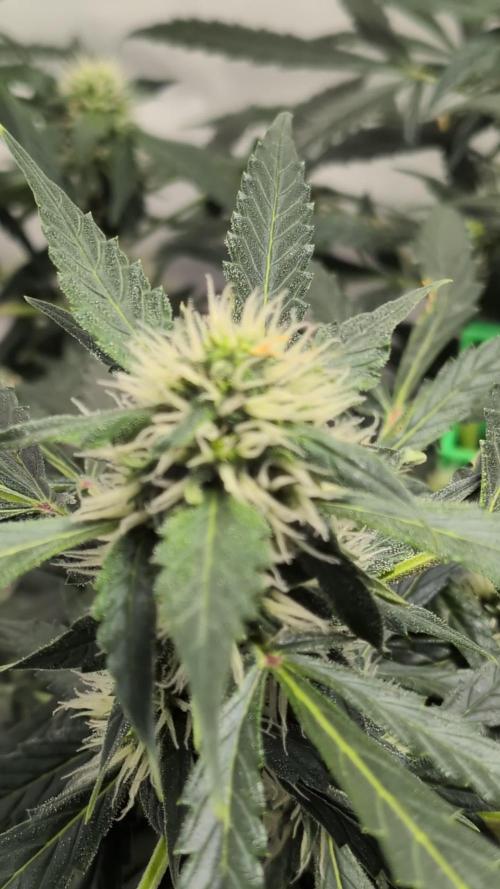
Week 10: Buds are stacking and the frost is building!
Observations:
Week 10 is in the books and the girls are looking beautiful! The bud sites are really starting to fatten up and stack nicely. We are seeing some great trichome production developing on the sugar leaves, giving them a nice frosty look.
Looking closely at the pistils, we have a mix right now. Many are still bright white and shooting straight out, which means the calyxes are still swelling and the plant is actively packing on weight. However, on some of the more mature colas, the pistils are just starting to darken, turn orange/brown, and curl inward.
Plant Health & Nutrients:
Overall, the canopy looks healthy and vigorous. The fan leaves are a very deep, rich, dark green. I did notice some very minor nutrient burn (crispy brown tips) on the edges of some leaves. It's nothing major to worry about, but it tells me the plant is right at its absolute limit for nutrients. I might dial back the feeding/EC slightly (especially the Nitrogen, given how dark the leaves are) so I don't stress her out as she finishes up flower.
Next Steps:
Going to keep the environment dialed in, keep an eye on those leaf tips, and just let her do her thing! The smell is really starting to come through now.

Likes
34
Share


@Southwest_budders21
Follow
Not much to say apart from they are getting bigger and all three seem to be girls now 11 days until I flip!
Edit: I'm happy with the training and keeping them low, so the aim is to flip this week
Likes
8
Share


@420Somewhere
Follow
Started the flush a few days ago and the fall colors have started to come through on this Wedding Gelato. Smells heavy of lemon citrus. Sticky icky.

Likes
91
Share


@Salokin
Follow
Hi Growmies,
I'm excited to share some big news today! Although there have been some unexpected twists, it's all part of the incredible journey of gardening.
I've just completed the harvest, a tad earlier than initially planned, due to finding a bit of mold in one of the buds. Despite this minor hiccup, the trichomes were already at a decent 10% to 15% amber. So, all things considered, the timing ended up being pretty spot-on. The harvested weight was a solid 609 grams after trimming, which is quite a feat!
A lesson learned for next time: perhaps I let her grow a few too many buds, leading to a denser canopy than ideal. But on the bright side, the aroma is absolutely divine. I sampled an airy bud that had dried a bit, and wow, it packs a stronger punch than its clone mother. And the flavor? Pure, unadulterated cheese – no hint of pineapple here!
Now, the anticipation builds for the final dry weight, which I should know in about 3-4 days. It's always exciting to see the fruits of our labor fully realized.
A huge thanks to everyone who's been following along on this journey. Your interest and support mean the world.
And now, the adventure continues! I've started on Epic Buzz by Anesia Seeds. The diary for this new chapter is up and running, and the seedlings have already sprouted, marking the beginning of another exciting phase.
(https://growdiaries.com/diaries/185718-grow-journal-by-salokin)
I can't wait to share more updates with you all. Here's to the continued growth and learning in our gardening adventures!

Likes
9
Share


@HIAZ_urbanbudfarmer
Follow
Busy week getting the new setup going. GG is going really good has taken to training well. Expecting a bit of stretching off her in flowering. Can notice the sativa traits in her with more distance between nodes, and her slimmer sativa type leaves . Have noticed how sticky she's starting to get when training her, left with sticky resin coated fingers😋 she's a nice plant
Likes
2
Share

@FirstFarmer420
Follow
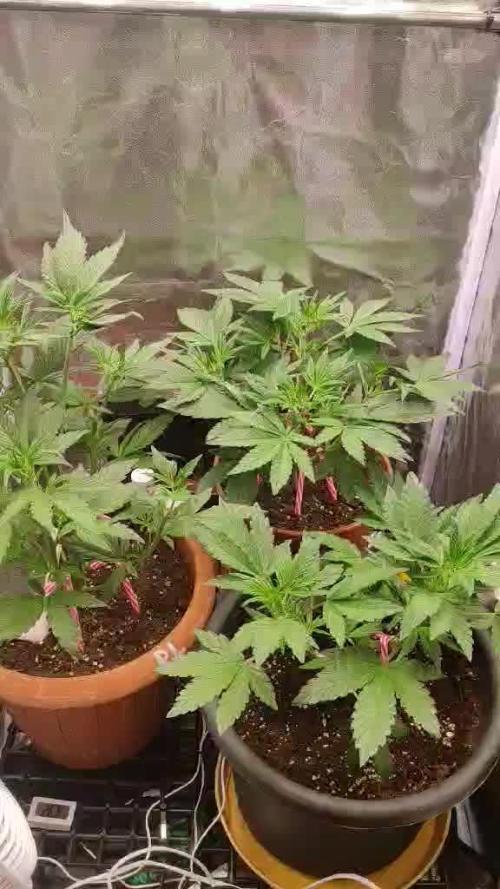
Dostávám se do rané fáze květu. Holky měly problém s přemokřením půdy. 9 dní bez vody jim dost prospělo. TC je krásně rozvětvena. LST jde krásně.
Žádné zlomeniny, jen pár listů šlo pryč pro zvýšení intenzity světla tam kde je potřeba. Pro nové rozvětvení. PL je velká ale dělá mi starosti,jeji nová poupata a nové výhonky se otáčejí směrem dolů. Ne všechny ale většina ano. Nevíte někdo řešení?
Těším se až se to po týdnu vše rozjede ještě větším tempem. Šťastný růst
Likes
4
Share


@CheeRz
Follow
Gelato #2 is so small 😂 but she's definitely happy tho'. Topped both ladies and did some LST. They should be ready for bloom soon.
Likes
3
Share

@Skynets_Growing
Follow
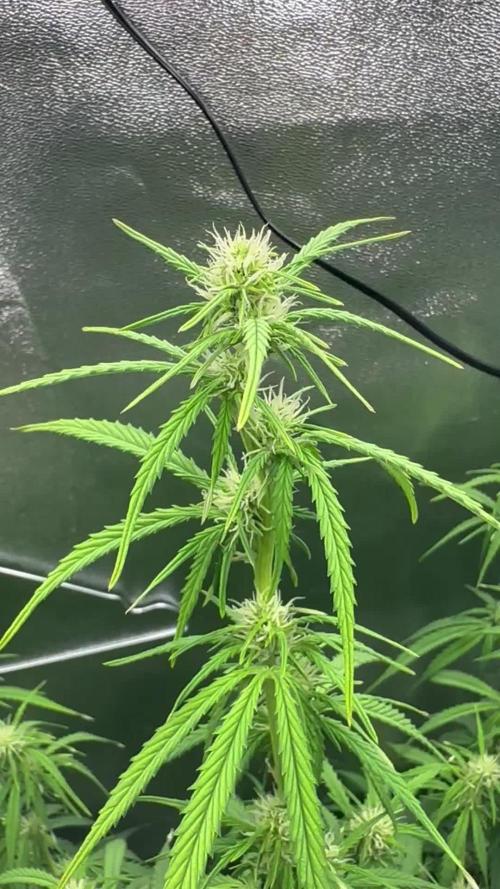
Elsa her stretch is going to an end and after the stretch you can give your plant a Defloration…21 days after Stretch / pre Flower start. I take my scissors and give her a cut. I have never done that before. A new Experiment of Defloration. A few days later Elsa is looking a little bit thirsty but she look okay… we can start in Grow week 10 🤗
Likes
225
Share


@The_Projexx
Follow
This marks the start of week 4 for these wonderful lady's . I'm going to be slowing up on the nutrients and the watering noticing some stuff I don't like seeing . For the growth difference in 1 week all I can say is WOW I'm getting very excited to see what the future holds for these young lady's !!! I'd like to thank every one for their continued support! I've learned so much in such a short amount of time because the community is KICK ASS . I'm going to be repotting these fine young lady's into their final homes at the end of this week! Stay tuned ladies and gentlemen alike and remember to check my diaries daily for updates !
Anyone checking out the pictures it isn't mites or any of that I been having a battle to get them to my standard of clean since the transplant. Slow and gentle is the way so no damages are done ! :)
-Happy Growing!

Likes
22
Share

@Borberad
Follow
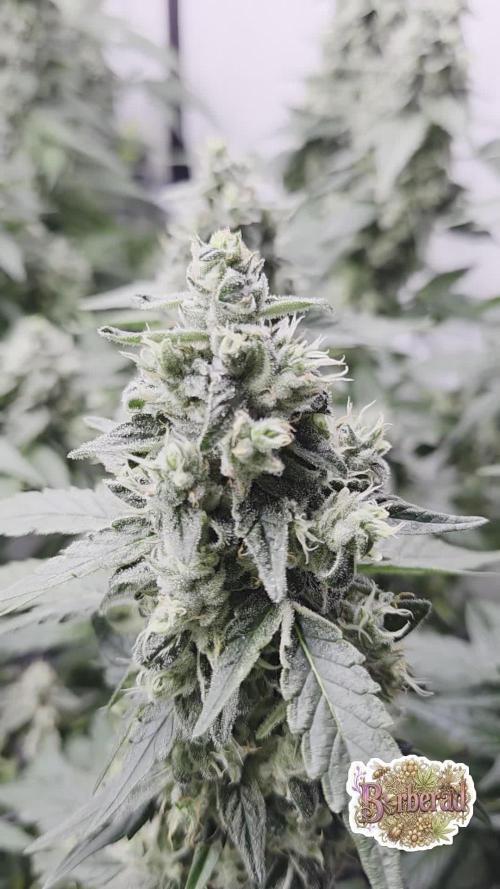
Woche 14
Die Blüten sind zu dichten Trichombergen verschmolzen, die Stellenweise kaum noch Blattgrün zeigen. Angesichts der Blütenstruktur, Blattfarbe und Gesamterscheinung gehen wir von min. noch 2 bis 3 Wochen aus, eher 4 bis die Dame den richtigen Blütepeak für unseren Geschmack erreicht hat.
Tag 93 ❄️🗻🍁🍂
Tag 97 Hongkong Wetter 😭 29° und 78% es bleibt nur beten. 🙏

Likes
12
Share


@Yessi_squeeze
Follow
These girls are in full flower in week 5. They stayed the typical size of an auto. The two were seperated in anticipation but clearly it may have been unnecessary


Likes
4
Share


@Naujas
Follow
42 days into my project - "Girl on the balcony on the north side" she is already blooming :) she looks really good, knowing what conditions she has to endure, this week there was not much sun, there was a lot of wind and rain, I used a little LST for the girl, the girl drinks = every other day 1.5 liters of water 6.3 ph, every 3rd watering I give biobizz nutrients :) good luck to everyone :).
Likes
25
Share


@Kakui
Follow
Veg54, riego con 6.2 pH y EC 1.5, drenaje de 2.0 EC y pH 6.3, todo ok. Las plantas ya alcanzaron entre 25~30cm, en 2 días más comenzará la pre floración.
Veg56, están casi de 30 centímetros de altura, último día de vegetación, mañana entrarán a pre floración, necesitan una defoliación.
