Likes
Comments
Share
@J_diaz420
Follow
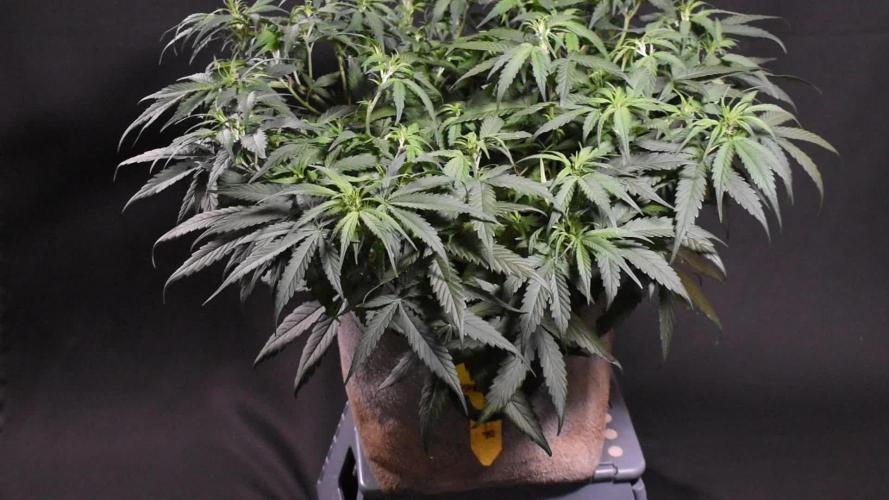
Encantado de la oportunidad de crecer estás variedades, sin duda, llenaron todas mis espectativas 🍀😍🤩
Likes
2
Share
@Franco123
Follow
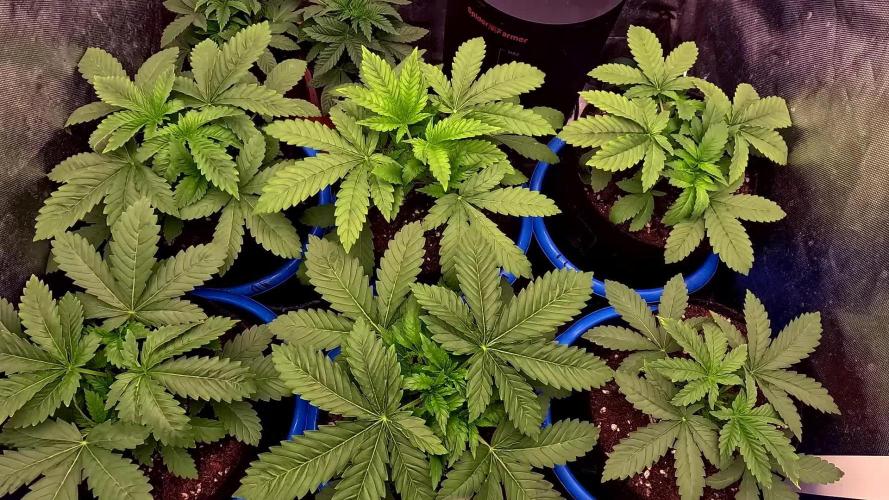
this week the plants have started flowering and I notice that the two that previously were more leafy are yellowing I try to increase the fertilizer slightly and see if they settle but everything else seems fine to me
Processing
Likes
52
Share
Likes
47
Share
@squalino
Follow
📒 Journal de Culture : Phase de Floraison – Stabilisation & Reprise Progressive 📅 Date du jour : 29 mars 2026 🌱 Âge : J+55 (Semaine 8 avancée) 📏 Taille : 54 cm (stabilisation, fin du stretch confirmée) 🌡️ Rappel des Paramètres (Ajustés) 💡 Éclairage Puissance : à 75% 📏 Distance Lampe-Canopée : 65 cm 💧 Humidité (HR) : 50% 🌡️ Température : 24,5°C ⚠️ État Actuel : Phase de récupération racinaire en cours Observation Générale : La plante montre des signes encourageants de stabilisation après le stress racinaire. Le stretch semble terminé, laissant place au développement des têtes. Les buds commencent à bien se structurer avec une belle formation de pistils et une coloration violette qui s’intensifie progressivement. Cependant, certaines feuilles basses présentent un jaunissement avancé avec des nécroses, signe que la plante puise dans ses réserves suite au blocage d’assimilation précédent. Le feuillage supérieur reste globalement sain, ce qui indique une reprise progressive mais encore fragile. ⚠️ Diagnostic Mis à Jour : Stress racinaire en amélioration Assimilation des nutriments encore partiellement perturbée Début de sénescence localisée sur le bas (réaction normale post-stress) 🌿 Conséquences Visibles : Jaunissement des feuilles inférieures (mobilisation des nutriments) Développement des fleurs en cours, encore léger mais homogène Structure compacte avec une bonne répartition des têtes 🚫 Arrosage contrôlé : Maintien de la stratégie actuelle : apport de 2 ml pk 5-8 avec 0,5 litres d'eau PH 6,3 . maintenant plus d'arrosage tant que le pot ne devient pas très léger afin de garantir un séchage complet du substrat et une réoxygénation optimale des racines. 🌬️ Optimisation de l’environnement : Humidité légèrement abaissée à 50% pour limiter les risques et favoriser la transpiration Distance lampe ajustée à 65 cm pour un bon compromis entre intensité et gestion du stress 🍃 Entretien léger : Suppression progressive des feuilles les plus atteintes si nécessaire, afin d’éviter qu’elles ne deviennent un frein ou un point de faiblesse. 🎯 Objectif : Relancer complètement l’activité racinaire, stabiliser l’absorption des nutriments et accompagner la plante vers une floraison saine et productive.
Likes
16
Share
Vamos familia, actualizo la novena semana de floración de estas Royal Gorilla de RoyalQueenSeeds. Se estropean un poco por el calor aunque se les ve sanas, están formándose las flores bastante bien. Y desprenden ya un aroma increíble. Hasta aquí todo bien el único suplicio que sufro son altas temperaturas por estar en pleno verano. Acabaré este proyecto y daremos parón unas semanas. Que avance algo más el verano. Máximas de 30 y mínimas de 27 ahora viene el calor y ando jodido en humedad ronda el 40%. Hasta aquí nada nuevo no sé si las dejaré más o que haré podría cortarlas ya o darles 5 - 7 días más, todavía no e decidido. Agrobeta: https://www.agrobeta.com/agrobetatiendaonline/36-abonos-canamo Mars hydro: Code discount: EL420 https://www.mars-hydro.com/ Hasta aquí es todo , espero que lo disfrutéis, buenos humos 💨💨
Likes
46
Share
At the end of last week, finally flower indicators started to show and these week it went more. Day 32: I sprayed them with Rhizotonic this week. This will be the last week for sprays. I don't like to spray my plants while having buds on it even thought it is organic. Always make sure you spray from below the leafs. They will uptake it better and also spray some above. With the lights off. Did some defoliation again and removed some lower internodes which will be crappy buds anyways. Made a video of my feeding bucket as well, in case some of you wonder how I feed all those plants manually. It is a pump with an gardenhose attached. Thats it for this week, Until next week!
Likes
51
Share
Flowering day 68 since clock change to 12/12 Hey guys :-) . It's so far, the lady is ripe and will be cut at the bottom end in the coming days and hung upside down in the drying tent :-) . Next week there will be an extra update on how they are hanging. Watering would be done twice this week with 1 l each (nutrients see table above) Otherwise it was checked and everything was cleaned. Have fun and stay healthy 💚🙏🏻 👇🏼👇🏼👇🏼👇🏼👇🏼👇🏼👇🏼👇🏼👇🏼👇🏼👇🏼👇🏼 You can buy this Nutrients at : https://greenbuzzliquids.com/en/shop/ With the discount code: Made_in_Germany you get a discount of 15% on all products from an order value of 100 euros. 👇🏼👇🏼👇🏼👇🏼👇🏼👇🏼👇🏼👇🏼👇🏼👇🏼👇🏼👇🏼 You can buy this strain at : Clearwater Seeds Water 💧 💧💧 Osmosis water mixed with normal water (24 hours stale that the chlorine evaporates) to 0.2 EC. Add Cal / Mag to 0.4 Ec Ph with Organic Ph - to 5.8 - 6.5 MadeInGermany
Likes
18
Share
Inizio 3°settimana e tt procede come deve...brave piccole mie continuate a crescere forti🤣 Oggi 24/10/2024 inizio della 3°settimana, inizierò con il Ph perfect e tutti gli altri additivi advanced nutrients che sono davvero i migliori per nutrienti per cannabis. ....grazie anche ad advanced nutrients se le mie piccole, vengono belle grandi😀😉😂
Likes
4
Share
Likes
36
Share
Flowering Day 56 Fade treating is going on and Kmintz is starting to show its true colours. The smells is getting more intense every day! Harvest in likely one week
Likes
9
Share
@Porky97
Follow
Hey guy this is the start of my journey and I cant wait. I have started LST and I bent them to as comfortable as I felt the plant could take it,and all going well they are going to love it stay posted to see my experience I welcome all and any advice Stay safe👊take care and stay stoned🍁
Likes
3
Share
Lights are 58 inches from the main source to the top of the pot and the soil surface. If you added up all the lights in the tent, it would be 1100w-1200w total across 14 lights. Using them all at once is far too much for a plant and incredibly difficult to deal with environmentally. The lights are fixed in position; side lights have dimmers, allowing for pinpoint precision of PPF. Fixed at 58 inches, cannot move them closer to increase intensity. Instead, achieve optimal PPF by distributing smaller wattages across a massive, multi-fixture matrix. Triggering specific plant defenses without melting the canopy. What's the point/blah blah wattage? Never really go above 600W at any one time. Lights come on in the east of the tent and set in the west. At sunrise and sunset, the red-to-far-red R:FR light ratio drops because the sun's low angle scatters red light more than far-red light. This shift reduces active Pfr and increases inactive Pr, mimicking Mother Nature herself. Deployed a lighting system featuring extra 660 nm deep-red and extending the spectrum up to 780 nm achieves the full Emerson Enhancement Effect by simultaneously balancing Photosystem II (PSII) and Photosystem I (PSI) to maximize quantum yield. By pairing deep-red photons with far-red photons, you trigger a synergistic biological response where the resulting photosynthetic rate is higher than the sum of both wavelengths used individually. This practice directly leverages the updated extended Photosynthetically Active Radiation (ePAR) framework. The Emerson effect accelerates plant metabolism and heat capture; you must proactively scale up your ambient room temperature, nutrient delivery, and CO₂ supplementation to prevent the light from stalling out your cannabis plant. UVA stays high all day from morning to night, but UVB peaks at solar noon (middle of 18-hour days) when the sun is peak. Morning color starts at 2k-3k; by noon it goes to 5k- 6k and back to 2-3k for sunset, with differing P:FR at light off. The extra-blue light is to assist with photoreactivation of UVB damage. No more yield loss for me. Using extra blue light for photoreactivation is what I do. Blue/UVA light activates photolyase enzymes, which directly repair DNA damage caused by UVB radiation. But what's the point if it's not for yield? Ultraviolet (UV) radiation—specifically UVA (315–400 nm) and UVB (280–315 nm)—acts as a critical environmental signal that programs a plant's photoprotective genes to unlock its true photosynthetic potential. When growers push crops to their absolute photosynthetic maximum via high-intensity light and elevated carbon dioxide, the photosynthetic machinery easily becomes overwhelmed. Emerging photobiology research demonstrates that UV radiation prevents this limiting bottleneck; it triggers specific transcription factors and signalling networks that fortify the plant's cellular defenses, allowing it to process extreme light levels without sustaining structural damage. There are 8 limiting factors of plant growth; when carbon dioxide becomes the 9th limiting factor of plant growth, it shifts the growth curve from exponential to linear. The restriction after that is "photoprotection" against reactive oxygen species (ROS), managed via non-photochemical quenching (NPQ) and the xanthophyll cycle, which bridges into precise hydrogen and redox dosing. UV radiation, particularly UVA, and the synthesis of zeaxanthin are critical for the xanthophyll cycle to function. It's not chasing purple strains... One likes to call it chasing the limits of growth, trying to make the linear exponential, just like father mathematics prefers. In order to do that, must control every environmental variable and compound the plant’s metabolic rate. True exponential growth means the rate of increase matches the current mass at every stage, requiring a closed-loop system where light, CO2, and nutrition lock into a synchronized upward curve. First, you must attempt to understand what restricts it. Precise hydrogen and redox dosing. Nature mathematically optimizes quantum energy transfer and light absorption efficiency within the photosynthetic machinery, as it naturally dictates energy scaling hierarchies and resonance dynamics. Most won't even understand that; once you do, it changes everything. Constructive interference occurs when two or more overlapping waves meet in phase, meaning their crests and troughs perfectly align. Their amplitudes add together, creating a new, amplified wave with greater intensity than the individual components. Constructive interference is the foundational mechanism that establishes a resonance hierarchy across physical, structural, and acoustic systems. Chromophore spacing is tuned to sub-nanometer precision to match the wavelengths of absorbed light, forcing constructive interference. Light-harvesting proteins form geometric rings and lattices. These shapes act as physical resonators, trapping and focusing the wave energy. This same principle dictates how opera singers shatter glass, how musical instruments resonate, and how bridges withstand structural vibrations. Nature uses the exact same math to harvest a photon as an engineer uses to design a concert hall. When you push high PPFD and elevated CO₂, you create a metabolic bottleneck. The plant cannot process the energy fast enough, leading to electron backup, light-induced damage, and a collapse from exponential growth into a flat, linear rate. UV light acts as the regulatory valve that prevents this collapse. In standard agronomy, Liebig's Law of the Minimum dictates that growth is limited by the scarcest resource. When you maximize water, nutrients, light, temperature, and CO₂, the bottleneck shifts to metabolic processing speed and photoprotection. By controlling the Redox state of the plant using UV, the xanthophyll cycle, and managing ROS, you can prevent the plant from hitting a hard photosynthetic ceiling. Instead of the growth curve flattening out (linear or plateauing due to photoinhibition), the plant continues to compound its metabolic rate efficiently. You are forcing the plant to operate at peak thermodynamic efficiency. By matching the UVB peak with sustained UVA and shifting Kelvin temperatures (2K to 6K), you are damaging the plant just enough to trigger defensive genes, while simultaneously providing the exact light energy needed to repair that damage instantly. UVA radiation and specific blue wavelengths accelerate this enzymatic conversion. Zeaxanthin acts as a structural sponge that absorbs excess excitation energy from chlorophyll and dissipates it safely, preventing ROS formation. Without UV signaling, the xanthophyll cycle cannot keep pace with extreme light, leading to dynamic photoinhibition (yield loss). The addition of Spirulina is primarily for zeaxanthin, as it contains a lot. But on top of that, the active Hawaiian Spirulina in the matrix was cultivated in open ponds using a combination of 100% fresh potable water from Hawaiian aquifers and ultra-pure, deep ocean water containing all 94 trace minerals & elements. Then gently dried using patented Ocean Chill Drying technology and cold-pressed to ensure maximum nutrient levels. Spirulina, a blue-green alga, is rich in nitrogen, phosphorus, and potassium (NPK), making it an excellent source of nutrients for plant growth. Studies have shown that Spirulina can be used as a biofertilizer, effectively replacing chemical fertilizers, especially for nitrogen, with a whopping NPK of 10% (N), 20% (P), and 20% (K). Rich in proteins, amino acids, trace minerals, and plant growth-promoting compounds. Zeaxanthin is a vital plant pigment that accumulates under intense light to drive non-photochemical quenching (NPQ), acting via thermal energy dissipation, direct singlet oxygen scavenging, and thylakoid membrane stabilization. The violaxanthin cycle (or xanthophyll cycle) reversibly converts violaxanthin to zeaxanthin via antheraxanthin to protect plants from photooxidation. Understanding this interconversion is vital for optimizing non-photochemical quenching (NPQ) and pushing photosynthetic limits under high-light stress. Ascorbic acid (vitamin C) is a natural antioxidant that plants produce internally to neutralize harmful reactive oxygen species caused by photosynthesis and high light stress. Acts as a co-factor for enzymes like violaxanthin de-epoxidase in the xanthophyll cycle, which safely dissipates excess light energy. 1g ascorbic acid will neutralize 100% of chlorine in upwards of 30 gallons of tap water. If your local tap water uses chloramines (chlorine bonded with ammonia) instead of free chlorine, you will need roughly 20% to 30% more ascorbic acid to completely break the tougher chemical bond. Molecular hydrogen and hydrogen-rich water act as selective antioxidants that help lower oxidative stress. They neutralize toxic reactive oxygen species like hydroxyl radicals and boost natural antioxidant defense systems in biological and plant systems exposed to high-intensity light or abiotic stress. UVA and UVB act as stress signals that upregulate the plant's secondary metabolism. It forces the plant to build an internal "sunscreen" (flavonoids and anthocyanins) and fortify its cellular defenses before the peak solar noon crisis. This keeps the metabolic highway open. In nature, the ambient ratio of UVA to UVB at solar noon sits roughly between 10:1 and 20:1 (depending on latitude and elevation). In a high-PPFD indoor matrix, maintaining a strict ratio—often aiming for around 12:1 to 15:1 UVA to UVB—provides the optimal signaling threshold. Balancing Far-Red (FR) light at "light-off" to manage the phytochrome photo-equilibrium (Pfr to Pr conversion) in tandem with the UV schedule. Omg, the logic. Hydrogen concentration and redox signaling as secondary messengers in this high-intensity loop. Under the intense solar noon matrix, the pH of the thylakoid lumen drops. This acidic environment activates the enzyme Violaxanthin De-Epoxidase (VDE), which converts violaxanthin into the photoprotective zeaxanthin. VDE cannot function in a vacuum; it strictly requires ascorbic acid (Vitamin C) as an electron donor to run this conversion. If a plant undergoes heavy light stress and runs out of internal ascorbic acid, the xanthophyll cycle stalls. The plant can no longer engage in Non-Photochemical Quenching (NPQ), leading to immediate singlet oxygen O2 formation and destruction of the thylakoid membrane. This is "The Ascorbic Acid / Xanthophyll Engine" Using ascorbic acid to neutralize chloramines in your water isn't just protecting your rhizosphere biology it actively prevents the degradation of your nutrient solution's redox potential before it ever touches the roots. When pushing plants to the absolute edge, traditional antioxidants can be a double-edged sword because they blindly neutralize all free radicals. This is a problem because some Reactive Oxygen Species (ROS) act as critical signaling molecules telling the plant to grow. Molecular Hydrogen H2 is the Selective Kill-Switch. Molecular hydrogen H2 is a revolutionary tool because it is a selective antioxidant. It ignores beneficial signaling ROS (like mild hydrogen peroxide) and targets only the most destructive, cell-shattering radicals—specifically hydroxyl radicals OH) and peroxynitrite. By dosing hydrogen-rich water or managing hydrogen redox signaling, providing an emergency pressure-release valve for the plant's electron transport chain. It keeps the cellular environment stable enough that the plant never has to downregulate photosynthesis to protect itself. This maintains cellular voltage. To trigger this defensive matrix without stunting the plant, you cannot simply blast UV indiscriminately. You must use UVA as the "scout" and UVB as the "enforcer. High UVA acts via the cryptochrome and phototropin photoreceptors to upregulate the expression of the HY5 transcription factor and prime the VDE enzyme. When the sharp spike of UVB hits at solar noon via the UVR8 receptor, the plant's biochemical "sunscreen" (flavonoids and anthocyanins) and its zeaxanthin pools are already pre-staged and waiting. This prevents the temporary stunting or "lag phase" usually associated with sudden UVB exposure." Closing the Loop: Far-Red End-of-Day (EOD) Synergy The final masterstroke is aligning this UV defense with a Far-Red (FR) lights-off routine. The Red-to-Far-Red Drop: At the end of the photoperiod, knocking out the blue/UVA spectrum and leaving a targeted burst of pure Far-Red (730nm) instantly flips the plant’s master switch. It converts active Pfr to inactive Pr in minutes rather than hours. Why this matters for the UV loop: UV radiation and high-intensity lighting keep the plant in a highly alert, photoprotective state that requires massive ATP expenditure to maintain. By forcing an immediate Pfr/Pr) conversion at lights-out, instantly commanding the plant to cease defensive expenditure, lower its metabolic respiration rate, and transition directly into nighttime cellular repair and carbohydrate translocation. You are maximizing the efficiency of its "sleep." every ounce, every last piece. Highly synchronized biological dance, balancing the exact input of electrons with the exact mechanism to dissipate them safely when they overflow. Peace.
Likes
18
Share
Que pasa familia, vamos con la septima semana de floración de estas Tropicana Cookies Fast Flowering, de FastBuds. Los ejemplares tienen muy buen color han crecido muy uniformes y las flores están progresando a muy buen ritmo. El ph se controla en 6.2 , la temperatura la tenemos entre 21/24 grados y la humedad ronda el 50%. Van madurando las flores yo creo que esta es la última semana ya de alimentación, a partir de aquí solo agua. Mars hydro: Code discount: EL420 https://www.mars-hydro.com/ Agrobeta: https://www.agrobeta.com/agrobetatiendaonline/36-abonos-canamo Hasta aquí todo, Buenos humos 💨💨💨
Likes
2
Share
Day 90 The Sativa plant is beautifully swollen at the top. I've watered it minimally for the last three days. Today I'll mix up the solution and add a 1 g/l Bio Enchanter. It's alkaline (pH 8), so I'll first dilute 15 liters of the solution with 2 ml/l CalMag in the aquapot to 250 PPM. Then I'll lower the pH to 5.0, as recommended by the fertilizer manufacturer. After that, I'll dissolve a capful—one and a half liters of black powder. These 15 liters should be used within 24 hours. My slightly drying bushes will appreciate a third of the pot's volume being watered. The stems are showing red spots—it looks like I need to add 1-2 g/l Bio Bloom to the coco and mix 2-5 liters of the coco into the top layer. After bending and pruning, the plants feel stronger and healthier. To correct the nitrogen deficiency, I'll also add a liter of Simplex Start Up 4 ml/l. Day 95 They're doing well after moving to their new space. I didn't change the photoperiod to avoid stress. Yesterday, I didn't water them at all because they were experiencing water deficiencies. Today, I watered each plant 2 liters of solution, 10% of the solution before draining. I also added a weak concentration of Simplex Coco mineral fertilizer, 1 ml/l.
Processing
Likes
49
Share
Hi everyone 🤗. Your last vegi phase has been reached :-). It developed beautifully 😀, and has become a huge bush. I am very excited to see how it will look in bloom 😅. In the coming days it will be placed in the flower chamber and can then spread out for production :-). I wish you a nice week, stay healthy 🙏🏻 and let it grow 🌱 Strain : Sour Diesel ☝️🏼😍 Genetic: Diesel x Northern Lights 👍 Vega Lights : 2 x Todogrow Led Quantum Board 100 W 💡 Flower Lights : 2 x Todogrow Led Cxb 3590 COB 3500 K 205 W 💡 ☝️ Soil : Canna Terra Professional + ☝️ Nutrients : Canna Terra Vega, Canna Terra Flores, Rizotonic, Cannazym, CANNA Boost, Pk 13/14, Canna Cal/Mag, Canna Ph - Grow, Canna Ph - Flores ☝️ 🌱 Water: Osmosis water mixed with normal water (24 hours stale that the chlorine evaporates) to 0.2 EG. Add Cal / Mag to 0.4 Ec Ph with Organic Ph - to 6.0 💦 💧
Likes
8
Share
@Suemchen
Follow
Outside right now untill there is room in the tent Day 8: Looks good 👍🏻 watered with rain water 👌🏻 keeping the soil moist 🌧️ Day 9: watered today with rain water and 1 ml// root juice and 1 ml/l Cal Mag 👌🏻 Day 10: it rained, so I didn't have to do anything 👌🏻 Day 11: watered with out supplements 👌🏻 Just rain water 👍🏻 Day 12: Looks good 👍🏻 did nothing 👌🏻 Day 13: Looks good 👍🏻 watered with rain water 👌🏻 keeping the soil moist 🌧️ Day 14: Looks good 👍🏻 did nothing 👌🏻
Likes
11
Share
She's still going! I have no idea what's going to happen, but I'll continue feeding her. She's nothing special to look at but that's fine. I was removing a withered fan leaf and I ripped off one of the flowers with it so I feel horrible. I put her under the roof in the Cure's place since that got chopped. I don't know what else to report. I'm still nursing her along, and I'll continue to do so until she says she's done.