




Likes
17
Share


@Mr_nugs_lover_David
Follow
She's looking absolutely beautiful this week, developing fast and very healthy. She's dealing with some fungus gnats but she's fine, she's growing in living soil By Florians living organics. ✌️👨🌾💚❤️💛

Likes
122
Share


@Natrona
Follow
The weather is getting cooler with average temperatures in the upper 60fs. Looking at trichomes, I see lots of milky trichomes but not many amber. So end of the month.
I did brew a "tea" using my pre brewed teas chamomile, hibiscus*, detox blend, etc and some oats. * also some new hibiscus which provides potassium and the oats add phosphorus. @yan402. This close to harvest, I hope I didn't mess up 😒the grow with this 10/15 feed.
10/16 so I decided to take off the big fan leaVes of the outside girls. I started trimming yhe leVes off with scissors but they got so sticky the blades wouldn't open so I used my fingernails to pinch them off. My fingers were stuck together by the time I was done. And the smell wow citrus an d spicy.
Rambo out with me, Eating nip and scratching chin on aloe. What a life!
Night temperatures have dropped onto the 40s . I've noticed Runtz is getting purple in the leaves and buds. And Frosty ✨️✨️. WOW
10/20 is 99 days from popping soil


Likes
2
Share

@Splint
Follow
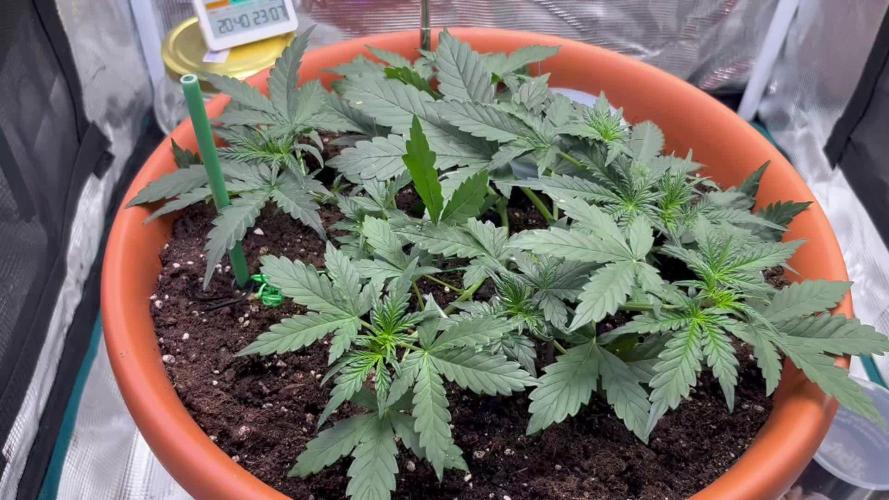
a lot of horizontal growth this week, barely any vertical growth, maybe I should reduce the LST, idk



Likes
14
Share


@Okie4
Follow
Good week so far !! On to my last strength of nutrients !! Then the flush begins. Girls are starting to bulk up. Had to purchase a dehumidifier to keep the humidity down this week. Wish I knew exactly how long this strain went.. any idea ?

Likes
37
Share


@Pugbutt
Follow
The ladies are looking good this week. 2 of them on Wednesday had a few twisted leafs, so I have been trying to figure out how my ph got high. My normal routine is to prep the water the day before feeding to the correct ph. But finding after it sits over night, it rises from 6.5 to 7.1. This has now been corrected and only time will tell if these two ladies decide to untwist.
My topping is looking really good, I've enclosed a photo of the beautiful knuckles on them. Trying to decide if I should top again, and when can I?
I think the SCOG net will be coming out real soon, maybe this week or next. My one shorter girl has gotten bigger, but still considerably shorter than the rest. SCOG, should give her a chance to catch up.
I'm really looking forward to this grow, and being my first, it's been really enjoyable. I only wish I picked up this hobby sooner. I find it fulfilling and relaxing.


Likes
37
Share


@DaddyPrime2
Follow
5/12/2024 these plants just keep on getting fluffier and fluffier. Did a slight defoliation. The plant I did training on, seems to have better stackage than her sister. If lst doesn’t increase yield, then it at the very least will increase bud size/stacking.
5/19 end of the week, they're starting to pack on weight now. Pistils are turning a super bright orange color that has a pink tint to it that is super beautiful. The camera does not do it justice at all. I would definitely recommend this strain to anyone. It's stupid easy to grow and the buds are just getting ridiculous. You could probably drop like 9 of these in 3 gal pots in 3x3 tent and just water and basic notes and do a sea of green style. Watch the humidity though.
Likes
21
Share


@Chubbs
Follow
420FASTBUDS
ORT2109
All in all I would say this was an amazing and easy strain to grow. Unfortunately the worst happened with my flower tent and a few of the girls cought Powder Mold. So I ended up salvaging and harvesting what I could from a few of the plants left before completely overhauling and scrubbing the tent down from top to bottom. I decided to do a dryice sift with the flowers that I saved. I had some trim left over from a past grow so I mixed everything together and Wow am I happy I did. Probably the sweetest smelling kief I've extracted. I'm glad I have more of these seeds so I will not only recommend this strain but definitely be growing it again. I'll keep my fingers crossed that the improvements I've made with the tent I'll have better results as that's what growings all about. Learning with every grow from your mistakes and trying not to let it get your discouraged cause from my experience the more issue's you come across and learn to resolve the better grower you will be.
Happy Growing
Likes
39
Share


@eldruidamx
Follow
Day 92. Watering with fertilizers.
Day 93. Watering with clean water.
Day 94. Watering with fertilizers.
Day 95. Watering with clean water.
Day 96. Watering with fertilizers.
Day 97. Watering with clean water.
Day 98. Watering with fertilizers.




Likes
25
Share


@Spike_KCanG
Follow
A couple of problems arose with my two newest grows so I thoroughly checked the compost pot and looked if the worms were okay.
After harvesting the GDP, I wanted to throw out her soil. It had been used two runs and I have no place to reuse it outside. Did my best and sifted through the dirt looking for her worms. Found only six 😔. Four adults and two adolescents who were just getting their red color in.
This was not a good sign. The worms were obviously not reproducing enough to keep up a colony, and that was most likely due to the soil ph. Don't have the instrument to measure it, but as my ph meter was broke the past two weeks.... 😅😅 Time to check in on the Vermicompost and see if they are still 'grinding'.
-----------------------------------
April 17
Last picture I have of her soil structure.
-----------------------------------
April 23
Took that thing apart!!
It must have took 3 hours to sift through all the soil, rip up bark coco and what not. sift out the worms and keep them moist, but it was finished.
I don't know how many worms there are but it's a good handful. About the same amount I put in there in the beginning. There were also perhaps 20 or so eggs that caught my eye. These are good signs!
After the manhandled soil was put into an other pot, I drowned her with 12L of dechlorinated tapwater (thanks to Envi Chlorine Clear!!).
BioDown to 6.3 ph + 0.2g/L Microbes.
I don't know how many liters of water ran off, but that soil is definitely at 6.3 now...
.. and the sewage pipes might be clogged 😅😇😂
Let the pot set to dry, at a tilt. Changed position every 5 minutes or so, about 2 hours long. Hopefully all the excess water is out!
Introduced the Army of Wiggles to their new accommodations and said good night.
There are probably still remnants of BioBizz nutrients in the soil, and I'm too lazy to flush again. Won't start her on the new microbial food until I'm sure the Living take hold of this environment. Coming from a possible 7.5 down to 6.3ph might be an adjustment.
I'll check the topsoil in a week or so and see how the Living are getting along.
-----------------------------------
Thanks for stopping by 👊
See you with the next update!
Likes
14
Share


@eldruida_lamota
Follow
Que pasa familia, vamos con la tercera semana de crecimiento de estas Gorilla Zkittlez Auto de FastBuds.
Tiene muy buenas reseñas y pues me animé a colocar 5 plantas.
La tierra que utilizamos que está en la publicación anterior es top crop all mix, aparte alimentamos nuestras plantas con Agrobeta, el tetra 9 fue aplicado foliar.
Por supuesto el ph se mide en cada riego y se mantiene en 6.2, regando cada 72 horas e intentando mantener la humedad un poco alta al principio.
Las próximas semanas vamos viendo cómo avanzan.
Mars hydro:
Code discount: EL420
https://www.mars-hydro.com/
Agrobeta:
https://www.agrobeta.com/agrobetatiendaonline/36-abonos-canamo
Hasta aquí todo, Buenos humos 💨💨💨
Likes
96
Share


@Tropicannibis_Todd
Follow
💩Alrighty then Growmies We Are Back At it 💩
Well folks we just finished up the last run and so we are bad to do it all over again 😁
So what do you say we have some fun 👈 We got some Z & Z 🚗 🚘 🚗 🚘 👉 From Exotic Seeds
Well we are just 49 days and folks shes doing pretty good 👌
I've had some uptake issues over early into the grow but there doing much better 👈
So I gave them a light flush and then switched to there new brand of nutrients and began there new regiments 👌Just need to remind myself to take it easy 🤔
FC4800 from MarsHydro Lights being readjusted and chart updated .........👍I've added a UR45 to the mix👈
www.marshydro.ca
👉I am using Agrogardens for nutrients for my grows and welcome anyone to give them a try .👈
👉 www.agrogardens.com 👈
Agrogardens Cal MAG
Agrogardens Grow A+B
Agrogardens Bloom A+B
Agrogardens Bud Booster
Agrogardens PK13/14
I GOT MULTIPLE DIARIES ON THE GO 😱 please check them out 😎
👉THANKS FOR TAKING THE TIME TO GO OVER MY DIARIES 👈
Would you like to hang with the growdiary community 👉 https://discord.gg/gr4cHGDpdb 👈

Likes
6
Share

@Jardineiro_Br
Follow
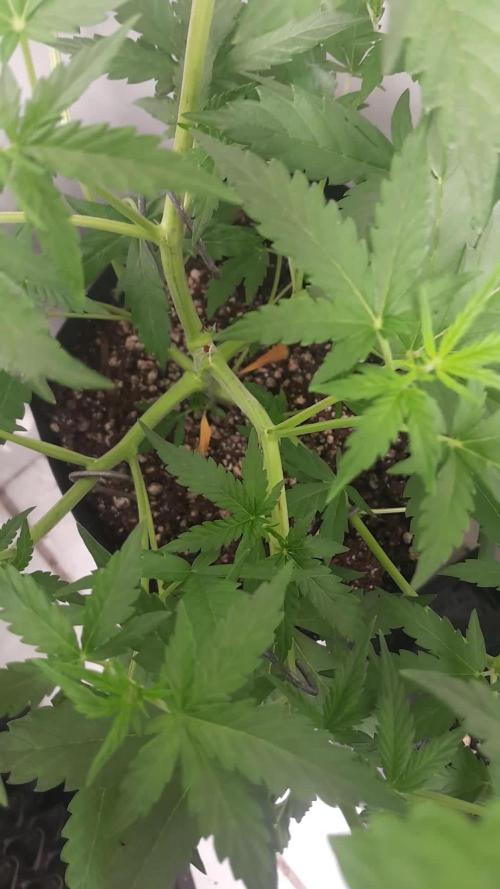
O diario era para duas diesel , mas coloquei uma atrasada também, nas duas mais antigas fiz poda top e lst , ja na terceira que coloquei depois apenas a poda top. Elas estão no cantinho da luz, mas perecem estar se desenvolvendo bem .