


Likes
Comments
Share


@AsNoriu
Follow
Day 82. Last week for them, next weekend they are down. Was expecting them to be developed a lot better, but this grow went with hiccups too ...
Looks like they stuck in the development a bit. My friend left light dimmed down twice for few days each time ... Gnats ... And we are here ...
Still colas fat, Gelato not so smelly, Wedding Cake is a lot stinker.
Happy Growing !!!

Likes
11
Share

@ThatsmyGrow
Follow
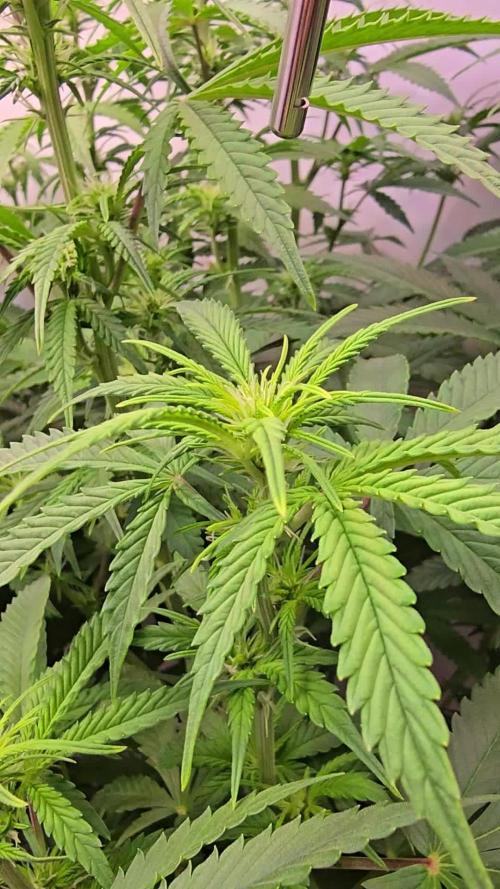
I like how the super silver haze grow the 2 weeks in flower, i hope they will super big haze buds





Likes
5
Share

@hassehujasse
Follow
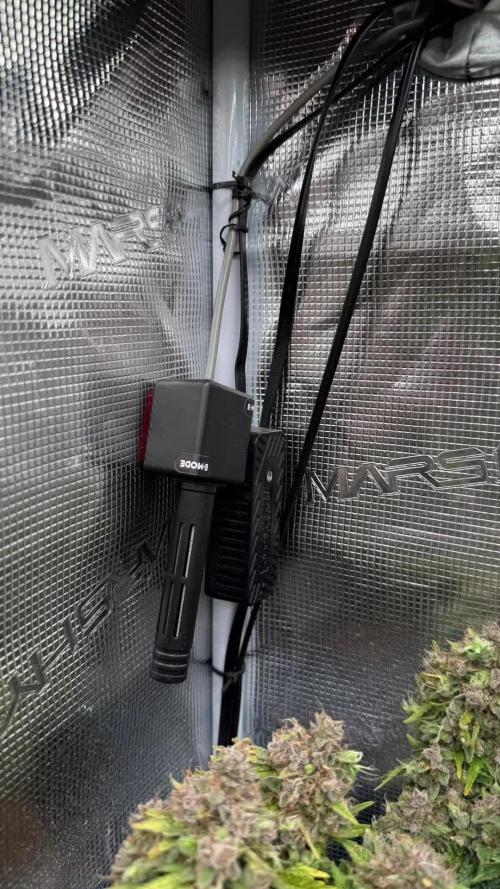
Whats up in your church?What happened overnight in your box? Check out my

Likes
8
Share

@Sobreruedas
Follow
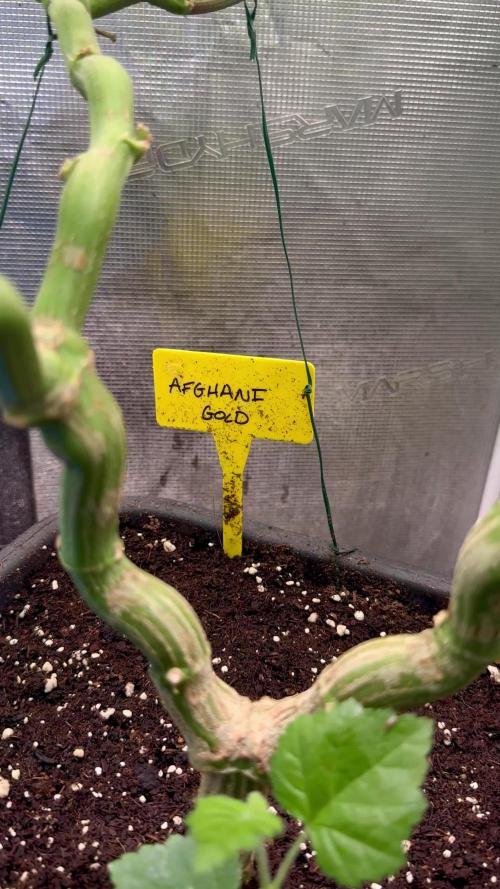
This week I flipped the photoperiod to 12/12 since the scrog net was already filled.
I also performed a selective defoliation to improve light penetration and airflow through the canopy.
The LED power was increased by 10%, and it’s currently running at around 500 PPFD to support the transition into flower 💡🌸
Now it’s time to let her stretch and see how she responds during the first weeks of flowering 💪🌿

Likes
12
Share

@Stoney_Stark
Follow
Sticky Broccoli Auto – Week 7 Update
Week 3 of Flower
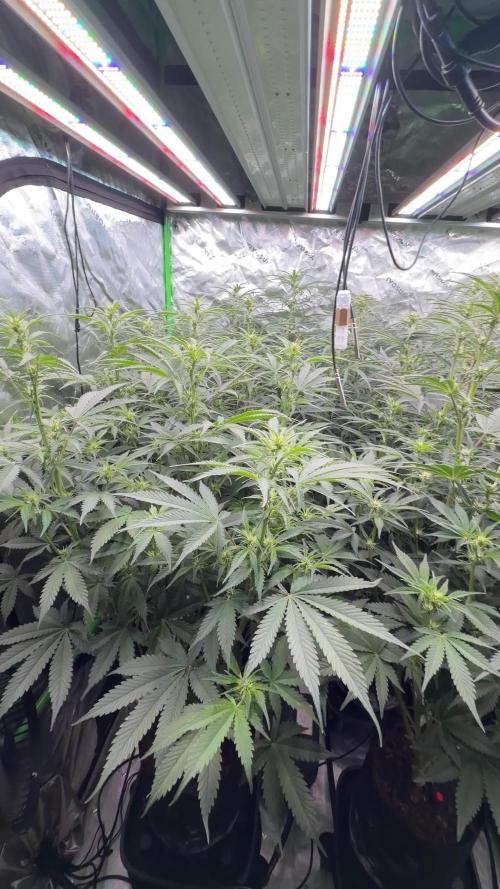
Stretch appears to be finished and the plants have transitioned fully into flower production. Bud sites are forming across the canopy and stacking is beginning nicely. Trichomes are already visible on a couple of the plants, which is a great early indicator of strong resin production.
Aroma is developing into a sweet, skunky, earthy profile. Overall plant health looks excellent with strong color and structure. There is very minor tip burn visible on some leaves, which may be the result of allowing the coco to dry back slightly too much between feedings. Allowing coco to dry too far can concentrate salts in the medium and temporarily increase EC around the root zone.
⸻
Light & Environment
• Plants have finished stretch and are now focusing energy on bud formation.
• UV-A and UV-B supplementation introduced this week at low intensity.
• UV schedule: 30 minutes halfway through the light cycle.
• Final defoliation completed to open the canopy and improve airflow and light penetration.
⸻
Feeding Log
All nutrient measurements are per gallon.
3/3
Started using low intensity UV-A and UV-B for 30 minutes halfway through the light cycle.
Mixed ~4 gallons of feed solution. Each plant received about 15% runoff.
940 ppm
5.7 pH
• .5 ml Silicium Bloom
• 2 ml MagCal
• 5 ml Cocos A
• 13 ml Cocos B
• 4 ml Pure Zym
• 2 ml Green Sensation
• 2 ml Power Buds
• 5 ml Ruby Fulvic
• 6 ml Photosynthesis Plus
⸻
3/4
Added Royal Rush to the schedule at 8 ml per gallon once per week as recommended on the bottle. Interested to see how the 8-0-0 nitrogen boost performs during flowering.
1200 ppm
5.8 pH
• .5 ml Silicium Bloom
• 2 ml MagCal
• 5 ml Cocos A
• 15 ml Cocos B
• 4 ml Pure Zym
• 3 ml Green Sensation
• 2 ml Power Buds
• 5 ml Ruby Fulvic
• 8 ml Royal Rush (weekly)
• 6 ml Photosynthesis Plus
⸻
3/5
Final defoliation completed.
Mixed 4 gallons.
1140 ppm
5.8 pH
• .5 ml Silicium Bloom
• 2 ml MagCal
• 5 ml Cocos A
• 15 ml Cocos B
• 4 ml Pure Zym
• 3 ml Green Sensation
• 2 ml Power Buds
• 5 ml Ruby Fulvic
• 6 ml Photosynthesis Plus
⸻
3/6
Mixed 4 gallons.
Auto-watering system ran until about 10% runoff.
1160 ppm
5.8 pH
• .5 ml Silicium Bloom
• 2 ml MagCal
• 5 ml Cocos A
• 15 ml Cocos B
• 4 ml Pure Zym
• 3 ml Green Sensation
• 2 ml Power Buds
• 5 ml Ruby Fulvic
• 6 ml Photosynthesis Plus
⸻
3/7
Auto-watering system activated until about 1 gallon remained in the reservoir.
Each plant watered to runoff.
1180 ppm
5.8 pH
• .5 ml Silicium Bloom
• 2 ml MagCal
• 5 ml Cocos A
• 15 ml Cocos B
• 4 ml Pure Zym
• 3 ml Green Sensation
• 2 ml Power Buds
• 5 ml Ruby Fulvic
• 6 ml Photosynthesis Plus
⸻
3/8
Mixed 4 gallons. Approximately 2.5 gallons used.
Each plant received a healthy amount of runoff. Plants are looking very healthy and bud sites are stacking nicely.
1100 ppm
5.8 pH
• .5 ml Silicium Bloom
• 2 ml MagCal
• 5 ml Cocos A
• 15 ml Cocos B
• 4 ml Pure Zym
• 3 ml Green Sensation
• 2 ml Power Buds
• 5 ml Ruby Fulvic
⸻
3/9
Mixed 3 gallons. Each plant watered to light runoff. About 1.5 gallons of feed solution remained.
885 ppm
5.8 pH
• .5 ml Silicium Bloom
• 2 ml MagCal
• 5 ml Cocos A
• 15 ml Cocos B
• 4 ml Pure Zym
• 3 ml Green Sensation
• 2 ml Power Buds
• 5 ml Ruby Fulvic
⸻
3/10
Finished the remaining nutrient solution from 3/9.
No runoff.
⸻
Nutrient Function Overview
Silicium Bloom
Provides potassium silicate to strengthen cell walls, improve structural strength, and increase resistance to environmental stress during heavy flower development.
MagCal
Supplies calcium and magnesium which are critical for chlorophyll production, cell structure, and preventing deficiencies common in coco.
Cocos A & B
Primary base nutrient supplying macro and micronutrients needed for flowering growth.
Pure Zym
Enzymes that break down dead root matter and organic debris in the root zone, keeping the rhizosphere clean and improving nutrient uptake.
Green Sensation
Bloom enhancer designed to increase flower density, resin production, and final yield.
Power Buds
Encourages rapid flower initiation and increased bud site formation.
Ruby Fulvic
Fulvic acids improve nutrient chelation and transport, helping plants absorb nutrients more efficiently.
Royal Rush
High nitrogen microbial feed that stimulates beneficial microbes and increases metabolic activity in the root zone.
Photosynthesis Plus
Beneficial bacteria that enhance photosynthesis efficiency and root zone microbial activity.

Likes
4
Share


@Familytrees19
Follow
I’m back!! And sorry I’m using my videos I posted on YouTube..😞😞 I will make sure not to in my posts to come!!
Popped seeds Jun 27
Temps inside some at 80 degrees F
Humidity is at 75-80%
8 seeds planted and all 8 made it!

Likes
55
Share


@Belverde
Follow
Welcome growers
Week three of flowering for these SORBET#4 🌿🌿🌿🍧
Two of the three girls are quite fast in producing buds and you are already starting to feel a sweet and particular aroma..
There is also a bit of purple coloring here and there and above all several trichomes have already appeared 💯
One of them, on the other hand, is visibly slower and has no strange colors
In any case
As seen in the video, the most evident thing these days was a massive defoliation ✂️✂️✂️🍃🍃🍃🍃🍃
Honestly, I never use such an aggressive technique..
This time I decided to practice it on all the plants I have in the garden (10 visible in the diaries + 8 regular all female) out of pure curiosity to see how each of them will react
It's a bit of a controversial method, but it's trying and seeing what happens
Let's hope so 🍀
I immediately start a more massive fertilization..
Next week we will see how they will be 😉
About nutrients 👇
I still giving their always organic/veganic nutrients..
A little bit of silicium (Bionova) / Crescita (Biomagno) / Activera (Biobizz) / Grow vegan (Bionova) / The Missing Link (Bionova) / X-Cell (Bionova) / Bioheaven (Biobizz) , a little bit of P-K 3-5 (Bionova) /Fioritura (Biomagno) / Bloom vegan (Bionova) and now i have introduced Biomassa (Biomagno) and Florastimo (Biomagno)
Basically these nutrients contain primarily NPK in organic / vegan form + kelp extracts, humic and fulvic acids, amino acids, aloe vera, potassium silicate, beneficial bacteria and fungi
Like i usually do, a little bit of everything at any watering 💧
And that's all..
See you in week n°4 🌻
Thanks for stopping by 😎👍👍
FC ✌️
🇮🇹

Likes
11
Share


@ADHDselfmedication
Follow
3 seeds from barneys farm : glue gelato auto.
Diary :
Day 1:
I dug a pit and cleaned my dirt with metal grid and a wheelbarrow & Installed the greenhouse.
Day 2 : I rotated my dirt and added universal soil. 4 x 70l to area of 6m2. I also planted seeds in universal soil without sprouting first.
Day 3 :
I gave water and checked for sprouts. Bought moist meter and dripping hose.
Installed those and making the greenhouse more moisty now.
Feeling : Verry happy for my first time. Lots to learn.. . Excited

Likes
13
Share
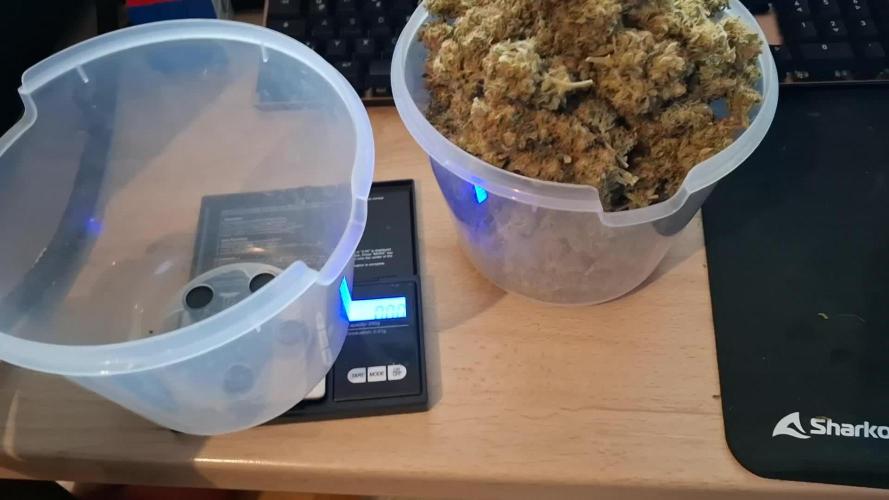

@sellem
Follow
After a 7 Day dry, theyre ready for the bags. Did a final dry trim of them, was thorough but not overly. Excited on how they will smell and taste once cured!
Likes
30
Share


@XperencdGmanXG
Follow
well this little girl has just started pre flower so she should be in full flower by this time next week. Hopefully she gets some fast growth before the flowering begins.

Likes
12
Share


@Jesperado
Follow
Brought a friend to check out the grow this week.
Check out the video and remember to turn on the audio.
Likes
25
Share


@Mrs_Larimar
Follow
When I started this Grow, i never expected such a vigor Plant, and i havent been reading about the
XL-Versions.
But now its clear, by incrossing the Ruderalis, the Plants grows explosive and extremly Strong
I had to move them out of the small Cabinet
after i took them into the Floweringroom, they continued to Grow and in the End the Plants got
130 cm Hight
I wished i had grown them in bigger Pots
But i started them into 5l ( fitting into my Growbox)
and it was to late to transplant them
3 of 4 Plants turned darkpurple-one was pink.
Harvesting was an easy Job, because of those lovey Budshape, they are growing symmetric konic
along the Branches
they were Smelling like Peach, and some musky Undertone
while Harvesting them ,i got a Smell of fresh pressed Applejuice and some " green smell"
Plants were covered with sticky trichomes,
very courious to the endproduct
Its an easy to grow Plant, if you know about her vigourness 😂
Iam very pleased with the grow
welldone @Sweet_seeds


Likes
11
Share


@Cockneycultivar
Follow
This week she has grown so tall. I am so regretful for not scrog’in her or done any low stress training.
Although I do have a nice size tent with the grow light on adjustable rope so it’s not that much of a problem.
Although when I flip her to 12/12 into flower I know she’s gonna stretch even more.
The size of her leafs are impressive.
I read that your not meant to use biobizz grow and fish mix at the same time but I went against it and she’s showing no signs of stress or nutrition problems.
I even have an 11 fingered leaf now!!
She is beginning to smell very nice too, so all good so far. Can’t wait till she packs on some bud now.
Likes
6
Share


@CalGonJim
Follow
8/26 Monday morning 12am They are doing good. The camera fell into a plant...so lucky it didn't hurt the plant..that never happened before. My grow is HAUNTED!!!! Dark Devils are doing pretty good. All the others are great. I need more dirt in Blueberry Auto by Seedsman I'll do top filling later this week.
2am got the microscope 👍👍👍👍 I swear she is like a pet and she’s playing dead with her tongue hanging out. It’s hilarious. I’m really enjoying this one. This is gonna be a lot of fun.👻👻👻👍👍👍👍. 11 am I ordered a new microscope!!!
8/27 Dark Devil looks pretty cool. All other plants are doing just great!!
8/28 turned lights up to 52 looking good 4/28 Dark Devil Auto Monster crawls out of Hell!!!! Dark Devil Auto looks like the war boy that figured out Furiosa stole the War Rig. !!!!
I put a light tent over Dark Devil monster. I will need to trim the roots and make sure the trays aren't in standing water. Blueberry is in mostly Perlite doesnt take up water the same.
New microscope nice picture but no zooming in, I got the kind with the wider mouth, narrow mouth is better getting close to plants.... after 2 years I just NOW figured out the plastic cover comes off?? not the lens cap....im retarded there's just no other way to explain it
8/29 She's ALIVE and wow! got some amazing pics a little blurry and shaky but Dark Devil Auto by Sweetseeds is the coolest thing ive seen. Doing the seed surgery worked.
8/30 Some amazing progress on the Dark DEvil. The others are great Medusa F1 is the strongest followed by Gorilla Strawberry. The lights on the right side of the Mars Hydro light dont seem to be as strong as the ones on the left is ill rotate the plants today.
8/31 5 am lights up to 55 Watts. They are doing good. RSQ Medusa F1 showing the strongest so far, not a surprise there! Fast Buds Straw Gorilla taking off strong next. Pink Kush CBD and Blueberry Auto by Seedsman up next and surviving in almost all Perlite. I will put more dirt in when she gets taller. Dark Devil is going steady and very strong just amazing.
9/1 Growing nice now I will top them all above the 3rd node to keep the grow small

Likes
23
Share


@SkunkyDog420
Follow
Hallo zusammen 🤙.
So das war es für sie habe sie heute geerntet
Sie riecht fantastisch und sieht sehr lecker aus.
Wir sehen uns in 3 Wochen mit dem Erntebericht.
Rabattcode für den BIOTABS-Webshop https://biotabs.nl/en/shop/ GDBT420, damit erhalten Sie 15 Prozent


