


Likes
Comments
Share


@Eddine
Follow
11eme semaine j'ai commencé le rinçage des deux variété rien a dire a par que j'ai hâte de la récolte et recommencé une nouvelle session :D j'aimerai fait une variété fast buds violette
obligé de changé de filtre car les plante son trop odorante

Likes
3
Share

@Philhsy
Follow
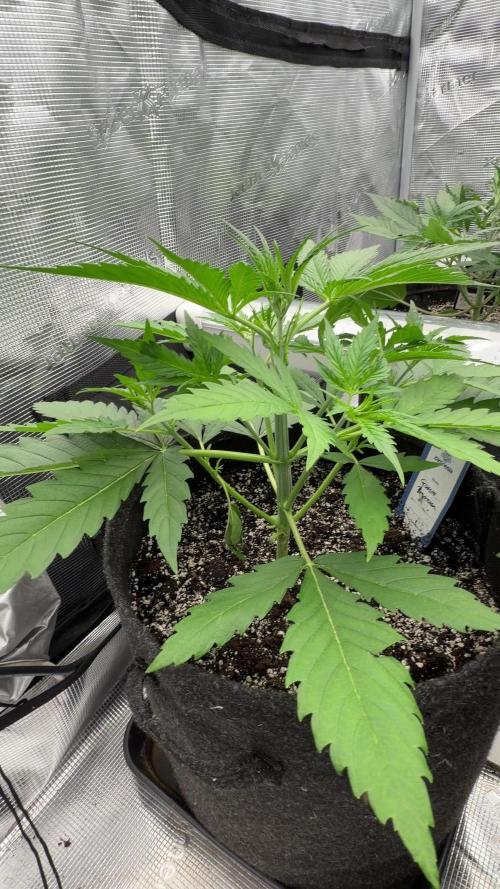
🍌 Guava Banana Auto – Week 3 Update
Week 3 and Guava Banana Auto is moving along beautifully! 🌱💚
Growth has been steady with strong branching, healthy leaf development, and a nice compact structure. The canopy is beginning to fill out, and the plant is showing excellent vigor as it heads toward the next stage of growth.
-light feeding athalf strength
-little defoliation done
Conditions have remained stable, and the plant has responded well with lush green foliage and plenty of new growth emerging every day. So far everything is running smoothly with no major issues to report.
Really excited to see how this one develops over the coming weeks. If the early growth is anything to go by, this should turn into a fantastic producer with some seriously tasty flowers. 🍌
Looking forward to the stretch and the first signs of flower soon. Until then, it’s all about keeping things dialed in and letting the genetics do their thing!
Likes
21
Share


@JuicyFruit
Follow
Day 55 - 18/11/19
i still think another 1-2 weeks for this one, getting a jewelers loupe for the beginning of week 9 so i can tell exactly where were at in terms of harvest :) anyone got any thoughts on this little plant? have a look at the photos and videos and let me know in the comments below :) oh and i finally nailed what this strains smell is - tropical hubba bubba gum with cheese :'D
Day 59 - 22/11/19
Got my jewelers loupe 2 days ago and ive been having a look at them. its pretty hard to see for a newbie grower. ive looked at harvest guides online and seen pictures of clear, cloudy and amber trichomes. mine look mostly cloudy (60%) and slightly glassy (40%) with barely any ambers. i may be wrong but the reason i think its cloudy is that it looks white against the leaves instead of see through or like glass. so going on this for my first trichome inspection im gonna harvest in the middle of next week.
Smell is getting strong enough to stink out a room, still that tropical cheese smell, although its just so pungent it lingers in the rooms after bringing it out of the tent to inspect it. smell isnt a problem if you put it back in the tent and spray some air freshener stuff in the next room. the carbon filter is doing its job exactly as described along with the fan.
The fan leaves started to get yellow patches and sugar leaves starting to curl. and a friend thinks its nearing the end of its life.
I flushed yesterday and will flush again today to drain out any excess salts and nutes.
Thanks for following along.
im excited for week 9!
Happy Growing!

Likes
16
Share


@EXZELENS
Follow
D71: She seems to have grown a bit in the last day and the pistils are for sure looking more orange than white. Now I´ll keep an eye on the thricomes, still clear yet with little cloudy, using the microscope. This one, unlike her unfortunate sister, I intend to let develop to full maturity. No watering yet as she still has some.
D72: Everyday I´m checking for rot, and it wasn´t today.
D73: Watered 2L with 1,5ml of cal-mag trying to resolve a possible iron deficiency.
D74: The pistils are all orange already but the thrics are yet mostly cloudy. She seems very close to harvest tho.
D75: Found a little set of leaves from a larf that were starting to want to rot and blocking airflow so I just cut them off. Humidity is high ( and I´m having trouble and no budget to control it ) and her thricomes aren´t developing in the pace the pistils are starting to turn orange. Otherwise, the buds are incredibly beautiful, with nice purple colors on the sugar leaves and some calyxes and a big big amount of thricomes everywhere!
D76: Well, today when I arrived at home and went to see the tent I noticed mold on her. The thricomes were about 20-25% clear unfortunately but I had to chop her, I can´t control the high humidity at the lights off period and it would only get worse and I would lose much more buds. The overall size was ok, very big buds – which I lost at least 25% of them -, mostly medium buds, both very beautiful and dense, and a huuuge amount of larfs that were hidden in the middle, but I can´t blame that on anyone else except myself. The smell is incredible tho, looking forward to smoke her. In the next weeks I´ll be updating with the harvest week and strain review. Thank you for reading, stay safe and peace ✌️


Likes
6
Share

@Skynets_Growing
Follow
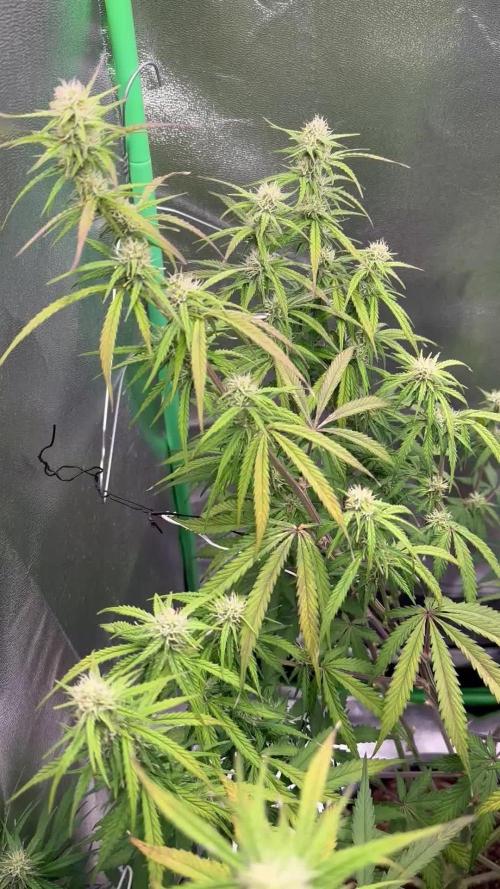
I cannot say what is going wrong with Elsa an my grow. I give her water every day hothing more, because she live in living soil. But you can see on the Picture… every day she looks more and more destroy. But on day 71 were i thought to end this grow with Elsa you can see that she fight… and I will fight to for her. The grow went in week 11 …

Likes
6
Share


@Weedzoks
Follow
Bonne semaine ! 😁
28/07 : Pulvérisation 2ml/l de vita race avec une cuillère à café de savon noir par litre d’eau.
29/07 : Défoliation et cut des secondaires.
Likes
4
Share

@GUGU_choices
Follow
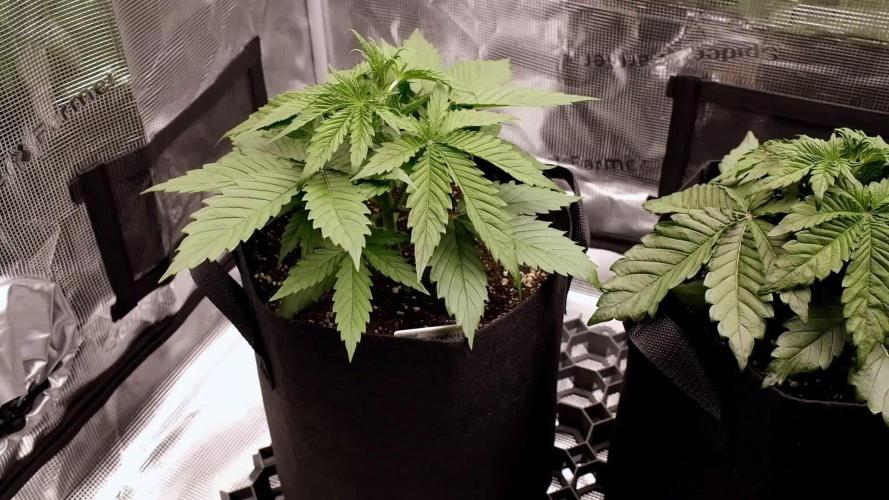
Hey growers, we're at the end of week three. The girls look healthy and have gotten a lot stronger over the week. They're doing well, Papaya in the middle may have been getting more nitrogen than she should have, but she's basically recovered from that. Good luck growers!
-
Čau growers, máme konec třetího týdne. Děvčata vypadají zdravě a pěkne zesílily za ten týden. Daří se jim dobře, Papaya uprostřed si možná žunkla více dusíku než by bylo žádoucí, ale z toho se už v podstatě dostala. Ať se daří growers!
Likes
31
Share


@Endriu
Follow
Ciao bros&sis!
It's been a while, I know, but here we are!
Ok, about the girls: they are fine, i've decided to transplant some of them in coco coir to learn the "hydro way" (I see DWC in near future) thanks to the great tips learned from @Mr_Di and embolden by my bro @Totem I'll try to works with mineral fertilizer, EC and the inert medium.
Girls in coco are:
Royal AK- still the queen. into her new 12lt airpot (not fill it because is too big) she's growin an inch a day
OG Kush- she likes nutes and everything, but there's something wrong with the leaves... into 11lt netpot
Speedy Chile- she's growing strange, but strong. into 6lt pot (I wanna give her a chanche, but not waste time and money)
Ferts of choice: Canna Coco A+B, easy to manage and economic
I also add some liquid silicon to the water to prepare the plants for the oncoming training, great product for sure.
Soil:
UK Cheese auto- she's flowering even after crop, lst and hst. STRONG genetics. 8.8ltpot
Pink Doc CBD auto- at the third try, we have a winner! Finally a seedling that seems normal and fine, we will see... 8.8lt pot
Candy Kush Express- she like soil, indeed. Nice plants, topped and transplanted. 10lt plastic growbag
Special Kush- tiny princess, she was begging for more space. 10lt plastic growbag
That's all mate, we will see soon for the next update! Ciao!😙


Likes
7
Share


@TINO14
Follow
Semana 14, 9 de flora se añadió CO2 y se nota mucho la estimulación.
Lavado de raíz listo 🤩 aunque solo alimentamos con agua,CO2,luz.
Todavía tengo una duda después del secado le daré un curado con madera CEDRO ( caja casera ) , después daré una opinión sobre esta cata.
Recuerden que hay elementos en específico que tienen que ser adquiridos como "producto" obligatoriamente y otros que no es necesario gastar. El método CO2 es bastante efectivo y solo con levadura azúcar y agua.
Una observación muy importante es que encontré un cm2 de moho , atentos a este factor.
De todas formas nunca me mostraron algo de moho pudo haber Sido un error mio en el proceso de lavado de raíz.
Rastafaraaaaah🌴🌴🌴
Likes
30
Share


@Sticky_fingaz
Follow
BIG BIG apologies to Heather from fast buds & to Growdiaries & anyone who follows.
The past few months have been a massive struggle, not just with temperatures & growing weed but on a personal level.
My wife has been very poorly & with covid and everything going on, it's put a massive strain on us all!!
I've tries to maintain an active presence on Instagram but that's about all I've physically had time for.
I've put this update together today, so far into the grow now it almost seems pointless.
I lost my original Mimosa due to high temps & high RH. Moving into the attic at that time of year was a mistake. It has cost me a small fortune to keep things alive. I've had to purchase an air con unit, more fans & just more of everything to be honest.
My purple punch is almost ready to harvest, any time within the next couple of days, followed shortly by Bruce Banner & Kosher cake.
I wont be winning any awards for this Diary & I feel bad as I was supposed to be show casing what 420 Fast buds has to offer & I've failed...miserably.
I hope you can make sense of all the pictures I've included....just a mass photo frenzy over the past few weeks.
Thanks to everyone & all your comments.
Wishing you all the best.
One Love ❤️
Likes
8
Share


@Huntress007
Follow
This beautiful lady is doing well! She is flowering beautifully and strong 💪! Doubling up on her flower nutrients!

Likes
1
Share


@Elguacho420
Follow
Muy buenas a tod@s... Octava semanita de la red cookie gelato... Ya estamos en los días finales, hermosas y pretas flores, rico aroma dulce y bastante recina parece... Una limpieza y listo... Hermosa planta... Me encantó... Buen finde para tod@s y buenos humos... 😎💪🏻🇦🇷🤝🏻🇪🇦💨💨💨
Processing
Likes
88
Share


@No_Clout
Follow
08/08/18 - Day 22 looking good especially after the minor bump in the road, the wire I bought for the LST is doing it’s job for the time being but I will be buying some proper stuff on the weekend. ✌️🏻
10/08/18 - did more LST last night and their responding well except one, I did some minor defoliation of some fan leaves hogging the 💡
11/08/18 - plant #3 is finally getting into feel of the LST and is looking a lot happier, but girl #1 & #2 are just going with the flow and killing it, my first time doing LST like this and I wish I started doing it two harvest ago 😂👌🏻
13/08/18 - watered each plant with 2 litres each 💧plant number #3 has a slight kink in it from the LST it has been a pain for it the main stem has hardly any flexibility but the other two are 👍🏻
Likes
9
Share


@CrazyRussian
Follow
This is just a normal week, they grow as fast as mushrooms, I gave them blooming nutes for the first time, they will start producing buds from now. :)

Processing
Likes
15
Share


@LittleBigTrees
Follow
Put the seeds into the soil about 1cm deep, mist sprayed. I've put them on a window sill as it's predicted frost tomorrow and the day after 😳 in the middle of May!
Transferred outside to the pollytunnel after 48hrs on a windowsill.
Watered with rainwater.

Likes
6
Share


@Izlti_ocelopilli
Follow
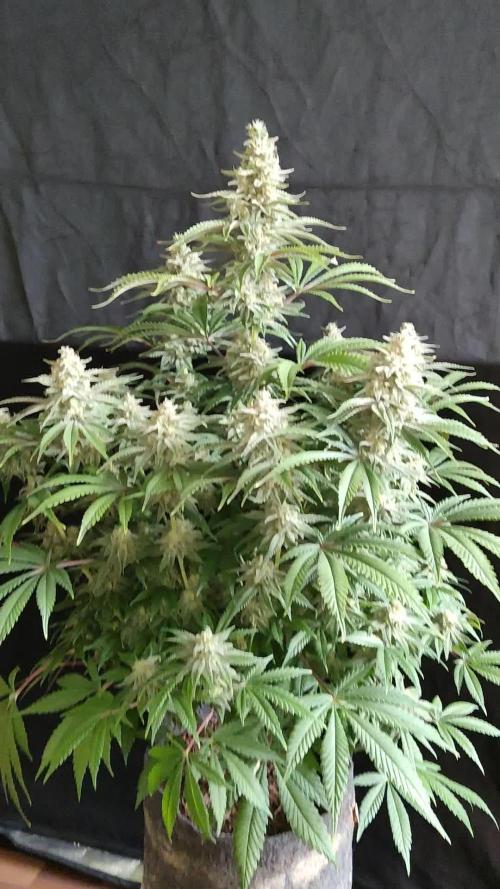
Flowering nicely, reaching the halfway point and the flower is stacking nice and tight.


Likes
12
Share


@Mysterdo420
Follow
Week 6 Day 42 nothing new, i just now turn the light from 16/8 to 12/12 last week i trim some leaves with mine fingers (i dont use scissors)cause its better for airflow and when you do that i do before i feed girls and then after that į recover with pure water, the ladies color says evrything going well :)
Happy Growing!!!


Likes
7
Share


@x_grower
Follow
Last week was very challenging, two girls got really tall below the white light, while the other two below the blurple spectrum ended up being smaller and bushier, both looking fantastic. Last week I also probably went too far defoliating the shaded smaller girl which stunned it a bit for a day or two but its flowering vigorously again. Although the unexpected stretch which led to uneven light coverage overally the platns are looking solid, smelly and sugary :)
