


Likes
Comments
Share


@LoganatorDude
Follow
Day 38,
Mexican Haze (x1) is 7” tall
Morning Glory is 8” tall
The remaining closely average 6” in height.
Amazing dark green leaves 🌳💕🌳
Day 42,
Second feed, sometimes they dry out fast and I just give them plain water before a feed on the next watering.


Likes
29
Share


@nonick123
Follow
Día 27 (20/05) Riego con 250 ml de Té de Compost
Auto Northern Dragon Fuel está creciendo exponencialmente!
Día 28 (21/05) Vuelven a tener sed! Las riego con 250 ml sólo H20 pH 6.2
Auto Northern Dragon Fuel se ha recuperado muy bien de la deficiencia de Mg
Día 29 (22/05) Riego con 750 ml H2O+ Regulator 0,15 ml/l + CaMg-Boost 0,25 ml/l + Startbooster 0,25 ml/l + TopBooster 0,2 ml/l- pH 6.2
Día 30 (23/05) Lemon Cherry Cookies Auto está sedienta de nuevo!
500 ml de sólo H2O con el pH 6.3
Día 31 (24/05) Lemon Cherry Cookies Auto está sedienta de nuevo!
Riego con 750 ml H2O + Regulator 0,15 ml/l + TopBooster 0,2 ml/l- pH 6.2
Día 32 (25/05) Las plantas no paran de crecer! 😍
Día 33 (26/05) Riego con 750 ml H2O + Regulator 0,15 ml/l + CaMg-Boost 0,25 ml/l + TopBooster 0,2 ml/l- pH 6.2
Lemon Cherry Cookies Auto tiene un olor increíble 😍😍😍
💦Nutrients by Aptus Holland - www.aptus-holland.com
🌱Substrate PRO-MIX HP BACILLUS + MYCORRHIZAE - www.pthorticulture.com/en/products/pro-mix-hp-biostimulant-plus-mycorrhizae

Likes
29
Share

@eldruida_lamota
Follow
Que pasa familia, vamos con la novena semana de floración de estas Papayton feminizadas de fastbuds.
Vamos al lío, el ph se controla en 6.2 , la temperatura la tenemos entre 25/21 grados y la humedad ronda el 50%.
El ciclo de floración puse 12h de luz, el foco está al 100% de potencia.
Va madurando y marcándose unos aromas bastante dulces y afrutados.
COMENTAR: que una de las 3 salió macho y otra la corte ya por qué me estaba dando problemas pero la que queda la aguantamos y ya os enseñaré al final la que corte ya también.
- os dejo por aquí un CÓDIGO: Eldruida
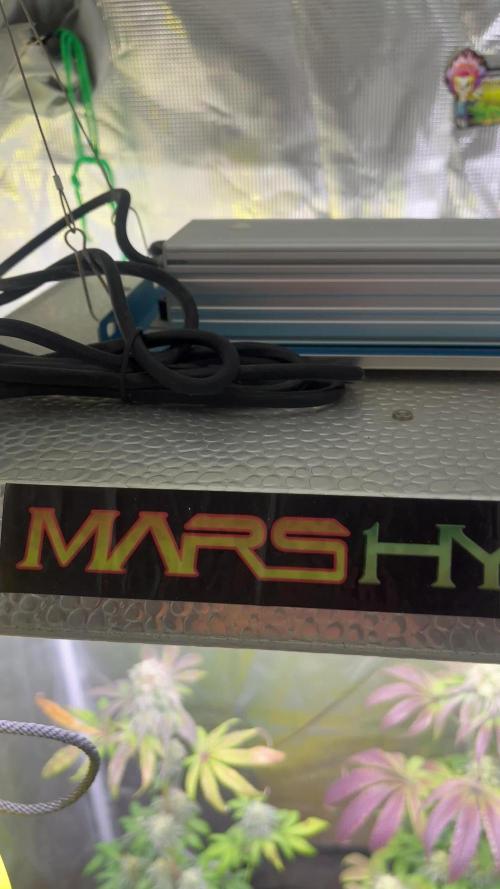
Descuento para la tienda de MARS HYDRO.
https://www.mars-hydro.com
Hasta aquí todo, Buenos humos 💨💨💨
Likes
14
Share


@Swiftgrow
Follow
Caught them reaching out to the light, seeing some great growth. Starting to see a few pistols coming up hopefully they will start flowering properly soon

Likes
20
Share


@TechDCo
Follow
15/10/2024
Lights On!
All looks well. She's drinking now just over 8L:
Current feed schedule
5L/Lights On!
3L/Lights Off!
It's apparent the 65L Pot is allowing her roots to stretch and feed more!
It can be risky transplanting during early flower; 😬 looking back of my diaries, I mess this up.
Looks like the fence steal bracket diy worked for multipurpose lol
Will look for a better alternative later on!
16/10/2024
Lights On!
Both Freaky Pablos 🤪 turned out to be males!
I was going to mate them with bubblegum gpp. I think I'm best of making a full growing season for making seeds but like this. I've saved some of its ball sacs!
"Blue Geleto 41 - Barney's Farm is ready for the switch 👌 in the indica tent!
The Future is now drinking a little over 8L/24h in the 60L.
She has taken the introduction of hollands feed well!
"Time waits for one.....I just have a broken watch, so watch me wait for no one"
17/10/2024
Lights On!
The Future is edging ever so slightly to close to the light! I may have to supercrop them. Leaves huge bigger than my hands ✋️ 🙌 😌 I have M/L, the leaves are like L/XL uk metrics
"Blue Geleto 41 indica seems to be enjoying her room alone and can strectch out!
Currently under a budmaster god 6 & 4 averaging about 550watts with 30dli under canopy! No uv leds installed on these budmasters for they are mostly used for vegging. Hopefully I should be able to use the spectrum king for her last 3 weeks of flower. I have two but I need to get a series 600 meanwell driver for it. The crop master needs some new leds soldered on for its lost a lot of its optics and efficacy.
Meanwhile; I'm well footed in one of the pic lol head over heels 👠 😜 jokes 😃
18/10/2024
Lights On!
19/10/2024
Lights On!
"I put my hand upon my hip! When I dip, you dip! I dip" 🎶
Blue Geleto 41, First defoliation of the switch! (Not expecting miracles under the veg lights) for flowering with!
20/10/2024
Lights On!
Lite Defoliation and supercropped some colas; for last night she stretched 6cms.
21/10/2024
Lights On!
22/10/2024
Lights On!
Dimmed: 530watts slite canoeing!

Likes
262
Share


@Ju_Bps
Follow
Hello my friends 👨🌾👨🌾🌲🌲,
All was fine thiw week, Buds are more and more fat!
I've continue to give pk 13-14 this week, I'll probably give one more time this new week after back to canna boost accelerator.
Humidity was nice all the week between 45_55%HR, this Sunday back to 60%.
Hope will down again with nice weather.
I've given
2.7l water/plant
-Water + rqs bloom tabs + sugar royal
-Water + pk 13-14
-Water only
Ph@6
Thanks for like, follow, good vibes, let me really happy, for suport my friends ❤️👨🌾🌲,
With your all positives vibes I've been contacted by mars hydro this week, I'm so happy,
Thanks to @marshydrococo 😘😘
And thanks to @royalqueenseeds for all this nice seeds 😘😘🌲🌲

Likes
26
Share


@FatnastyzBudz
Follow
So excited to be finally drying her. She may have went another week, but it was time.
She was quite the trooper! She survived over feeding and over watering. She wore her battle scars proudly though!
Very nice nuggets, very little larf. Like maybe less than 10g. 💪👌
So very glad I have another, she deserves her own space!
Mouth watering strain Im glad I got to grow!
Again, TYVM Clarissa
@Weedseedsexpress
She is amazing and just as I hoped!
Weedseedsexpress.com

Likes
32
Share


@blackoutJK
Follow
One of the Sunset Sherbet immediately sank, the other floated. Both Gelato floated.
on 7/4 - After 18ish hour soak, planted 3/4" into solo cup - coast of main stonington blend soil. PH'd water to 6.4 an watered enough to saturate plant site.
on 7/5 - Both Sunset Sherbets popped thru the soil.
on 7/6 - One Gelato popped thru soil. Lightly watered the plants the already popped.
on 7/7- Second gelato still didnt pop, moved soil aside and saw it was cracked and tap root growing. Re-covered the seed with soil and lightly misted with 6.4ph water. Removed the humidity bags from the sherbets and the one gelato,
Light was at 24" 50% power. Moved light up to 33" and 100% power.
on 7/8 - very light watering on all plants
on 7/9 - about 100ml water on 2x sherb 1x gelato. Second Gelato finally popped up today. Lowered light to 30", still at 100% power


Likes
11
Share


@GorillaZativus
Follow
Videos:
10 días despertando , transplante 12 días , algunos sistemas radiculares y despertando post transplante .
🌱Solución de riego a micorrizas :
Mycochum y luego riego completo cuando despierten .
Ocupamos granular y great white en polvo para transplante , mitad y mitad.
Ph: 6,0
Ec: 0,7
🌱Solución riego a foleo 1 hora antes que despierten :
1 litro : proactive 5,0 ml y knactive 2 ml.
Ec : 0,5
Ph: 6,0
🌱Sumamos alfalfa alrededor de los tréboles
👑Actualización Jardin 18-19 días .
⌛️Videos :
🎥18 días , con hambre y sueño.
🎥19 días antes de dormir
🎥19 días despertando post foleo y post preventivo de tierra de diatomeas , listas para transplante en 1 semana .
🌱Solución foleo 2 litros :
knactive + proactive (4,0 ml ) y ( 0,8 de proactive ( melazas , quitina , etc ) Y sumamos preventivo después que se secó el foleo.
Ec : 0,4
Ph: 6,1
🌱metimos amarres al central y full lst .

Likes
94
Share


@Master_weeda
Follow
Last straight before flushing this run was very pleasant and relatively easy
I feasted on this session
On these different tests I learned a lot about cars
Among other things that the LST is essential and that the different apical or other sizes are to be avoided because their predefined life cycles do not allow them and this generates a loss in performance
To return to my five damsels
The northen light auto at @RQS was the fastest the first amber trichomes appeared at day 56 I did not expect taken from court I start rinsing
The bubblegum from 00seeds still has not bloomed I plunged into the dark 20h ....
The blueberry auto # 1 of pevseeds is simply gorgeous rugged and will surely give me a nice harvest it has suffered pinch of Apex and LST
The gorilla glue from @fast_buds is not left smaller than the bonsai style but very well trimmed she suffered LST Apex pinch and size of the main apex ...
Et en français
Dernière ligne droite avant le rinçage ce run à étais très plaisant et relativement facile
Je me suis régalé sur cette session
Sur ces différents test j'ai beaucoup appris sur les autos
Entre autre que le LST est primordial et que les différentes tailles apicale ou autre sont à proscrire car leur cycles de vie prédéfinie ne leur permettent pas et cela génère une perte au niveau du rendement
Pour revenir à mes 5 demoiselles
La northen light auto de chez @RQS à étais la plus rapide les premiers trichomes ambrés sont apparus au jour 56 je ne m'y attendais pas pris de cour je commence son rinçage
La bubblegum de chez 00seeds n'a toujours pas fleuri je l'ai plongé dans le noir 20h ....
La blueberry auto#1 de pevseeds est tout simplement magnifique robuste et va surrement m'offrir une belle récolte elle a subis pincage d'Apex et LST
La gorilla glue de chez @fast_buds est pas en reste plus petite du style bonsaï mais très bien garnie elle a subis LST pincage d'Apex et taille de l'apex principal
La blueberry auto#2 de @pevseeds
Est pas mal mais on voit nettement que le main lining subis la stréssée et par l'occasion perdre de sons rendement final je souligne la robustesse de cette variété
Merci à tous d'être passé pas ici
Que la force soit avec vous !


Likes
48
Share


@Regenwurm
Follow
Die Damen haben nach wie vor durst. Diese Woche die Damen geflusht. Nachts ca 23 Grad/ Tags 26 Grad. Luftfeuchtigkeit bei relativ konstant 50%. Also Klima gut.
Bei einer der Ladies habe ich einen Anteil von ca. 50 % Coco dort die doppelte Menge calmag wie oben bei dem Dünger angegeben . Die Blattfarbe der beiden Pflanzen ist nun durch die Erhöhung von calmag bei der Coco Pflanze gleich . PH Wert Gieß und Drain ok bei 6.2 nach ordentlichem durchgiessen. Vor 2 Tagen gespült und bei der Coco mit einem erhöhten Zusatz an calmag von Green buzz. Hier habe ich den ec gemessen der aktuell mit ca 1-1,1 ganz gut ist. Ich halte mich nun an den düngeplan von Greenbuzz der mit seinen Mengen aktuell gut funktioniert. Ich hoffe es ist der richtige Weg . Die Damen sehen beide gut aus. Entlaubung durchgeführt um dem Licht in den weg in die Mitte der Pflanze zu ermöglichen. Lichtstärke der Lampe auf 85 % bei einem Abstand von 40 cm. Düngezugabe 2 mal in dieser Woche

Likes
6
Share


@Lovemabud
Follow
As hot weather is on the way next week, I have not choice but to harvest.
With multiple humid days in the 30s forecast I know its either harvest now or contend with grow tent temps close to 40c. Definitely not going to help the terps anyhow. Honestly I think she needs another few days, but super close either way. Trichs are predominantly milky white with just a tiny amount of amber. Managed to get a 5 day flush, not ideal but best I could do before the heat comes. Will manicure really well to speed up the dry time, hoping for a 4 day dry to avoid the hot weather. 🔥
Likes
14
Share


@Terpyboyz
Follow
Alrighty growmies 👌🏻 so I’ve had a bit of a week set back due to issues, but back on track, the heat wave has definitely given a few girls a bit of a hard time not being able to attend but none the less, lifted the light again, trying to get on top of this PH fluctuating I’m having again using these stupid PH drops as my PH pen also keep jumping. Besides that I’ve managed to make a new home for the clones and got them under a couple UFO LEDs so that will house them for a few more weeks and al bring out the 600w HPS for them, but these runtz since being repotted have not taking nicely to it at all even using dynomyco so again hopefully by Friday they should be past that stage if not on flowering either way going to be a bomb scare when these taller plants start to stretch might have to bring out the net for sure 🤣🤙🏻 if all goes wrong at least I have my clones for back ups, keep eyes open for the incoming fire thou 🔥


Likes
53
Share


@DogDoctorOfficial
Follow
Hello, my wonderful green-thumbed friends! Welcome to the Week 5 veg report for our fabulous P.C.R.s. This week has been all about new beginnings and meticulous care, as we continue to nurture these beauties towards their full potential. Let’s dive in!
New Home, Sweet Home
This week, our P.C.R.s made the big move to their new 3x3 tent, and boy, do they love it! Under the bright and consistent light of the ViparSpectra P2000, these plants are set to thrive. The P2000 is a game-changer, offering a full spectrum that mimics natural sunlight, ensuring our plants get the best light for every stage of their growth. It’s like bringing a slice of the sun indoors!
Leaf Love and Clones
We also took some leaves and cuts this week to encourage bushier growth and to propagate new plants. Each cut was carefully treated with Clonex Gel, a rooting hormone that gives our clones the best start. Think of it as a nutrient-packed smoothie for our cuttings, providing all they need to develop strong, healthy roots.
To keep our new clones happy and hydrated, we used Clonex Mist, which is like a gentle rain shower, supplying essential nutrients and promoting robust root development. It’s all about giving them the TLC they need to become the next generation of thriving plants.
TLC and Maintenance
With the move, I made sure to maintain the optimal environment inside the tent. Our TDS is holding steady at 410, with a pH of 5.8 and a temperature of 21°C for watering. These parameters are crucial for nutrient uptake and overall plant health, ensuring our P.C.R.s have everything they need to flourish.
Why We Do What We Do
Understanding the importance of each step is key. The ViparSpectra P2000 not only ensures our plants receive the perfect light spectrum but also helps in energy efficiency, which is great for our environment and our energy bills! The Clonex Gel and Spray ensure that our clones have the best possible start, reducing transplant shock and speeding up root development.
Keeping our grow space clean and organized also helps in preventing pests and diseases, creating a safe and healthy environment for our plants to thrive. It’s all about setting the stage for success and letting nature do the rest.
In Conclusion
Week 5 has been all about setting up our P.C.R.s for success. From the new tent setup to taking care of clones, every step has been filled with excitement and careful planning. The journey is just as important as the destination, and I’m thrilled to see these plants grow and flourish.
Shout Outs
A huge shout out to @aptusholland, our main sponsor, for their incredible products that keep our plants thriving. Another big thank you to @artgenetix for creating the phenomenal P.C.R. strain. And to the wonderful community at Grow Diaries and all our followers, your support and enthusiasm keep us going. Let's continue to grow together!
Until next time, happy growing, and may your gardens be lush and green!
Genetics - P.C.R. @Art_Genetix_Team https://artgenetix.world/
Nutricion @aptusholland https://aptus-holland.com/
LED Power @Lumatek and @viparspectra
As always thank you all for stopping by , for the love and for it all, i fell blessed to have you all with me for one more love journey Thank you Thank you Thank you , you guys are great and have been amazing , thank you for everything !
#aptus #aptusplanttech #aptusgang #aptusfamily #aptustrueplantscience #inbalancewithnature #trueplantscience #dogdoctorofficial #growerslove
With true love comes happiness , Always believe in your self and always do things expecting nothing and with an open heart , be a giver and the universe will give back to you in ways you could not even imagine so !
Growers love to you all

Likes
27
Share


Likes
22
Share


@GrowinHome
Follow
Most ladies are showing signs of flowering so today I will start counting the weeks.
Here u can also see my mutant/special ladies. They germinated a bit different from the others.
Day 3 of flower is showing some major progress‼️🙌🏽
I did NOT top any of these mutated plants. I only removed some very ugly growing leaves.
So everything u see on them is done by mother nature.

Likes
5
Share


@Cousinrandy
Follow
ok...serious growth..
My room is not high :) enough to harbour the ladies..
mmmm. let me think for a minute
I'll dominate the living sh@t out of them... ; SUPERCROPPING
Likes
20
Share


@Bread_n_Buds
Follow
We have reached the second week of flowering for our beautiful photoperiod ladies of Zamnesia. Born 1 September now at day 45 amazing.
---- The general environmental conditions are good, there is always a little too much heat from next week we should have just enough for the resining a sharp drop in temperatures that could also give us beautiful foliage for this period.
--- Our Runtz are two very stable and regular plants that will give us great satisfaction. They are not very big and although we do not have a couple of not very tall growboxes it is very good, they flower quite quickly, there are already some buds formed unlike others. Like its auto and f1 version it eats a lot of fertilizer especially in the initial and medium flowering phase you need to give it fuel. Our two are very healthy let's be clear but it is one of those plants that eats food a little more than the others. I’m only defoliating and pruning and lollipopping in lower side of the plant no LST because i need to save space, yes very nice tecnique but not very good to save space.
--- Fertilization program - The fertilizers are always Plagron and I am following the table that I generated on the site depending on the chosen substrate. Create your own card and follow it, never be presumptuous my friend as I have been in the past, follow the card and look at the plants, not all need the same amount of fertilizer. We have reached the moment of giving a good dose of iron in the first weeks of flowering on the advice of Plagron directly foliar and I am at the end of the second week of flowering. It had started a little quietly but now it is proving to be among the best.
---- https://plagron.com/en
- Power Roots - 1 ml/l
- Alga Bloom - 4 ml/l
- Pure Zym - 1 ml/l
- Sugar Royal - 1 ml/l
- Vita Race - 5 ml/l
--- The Plagron 100% Organic pack is available on Zamnesia at: https://www.zamnesia.io/en/11457 -pla gron-easy-pack-natural.html
--- The dehumidifier now works between 50% and 55%
// Strain Description // Guys, we have really reached a turning point! Our breeders have recreated one of the most sought-after strains by Californians: the very powerful and exquisitely delicious Runtz. This cross between Gelato and Zkittlez is everything you could want from a cannabis strain: tasty, powerful, balanced, productive and fast flowering. Buy the seeds and try it yourself!
- Get a seed of this fantastic strain --- https://www.zamnesia.io/it/6000-zamnesia-seeds-runtz-femminizzato.html
- Soil and Fertilizers entirely organic --- https://plagron.com/en buy on www.zamnesia.io
- Growbox and air sistem --- https://www.secretjardin.com/
- Light - Sp3000 - https://marshydro.eu/
- Music and sound --- I made my girls listen to 432hz frequencies and music from www.radionula.com
- Z --- You can find these seeds, much more from the world of cannabis, mushrooms and an incredible series of accessories and gadgets on the reference site not only mine but of many growers
—— https://www .zamnesia.com

Likes
54
Share


@Hou_Stone
Follow
J'ai fait du HST sur les plus grandes branches des ztrawberry pour essayer d'équilibrer la hauteur.
Bonne idée ? De toute façon c'est fait, on verra bien.
Jusqu'à présent j'utilisais des engrais biobizz ouvert depuis 3 ans. ça n'a pas trop mal marché après tout.
Mais j'ai investi dans des engrais de green house feeding, je vais utiliser ça maintenant. ( 0.6g/l poudre hybride + 0.4g/l booster pk)
-------------------------------------------------------------------
Grow Room: trafika urban hydroponics 100x100x200 cm
Lamp: kit trafika urban hydroponics ballast & lampe HPS : 250-600w
Extractor & carbon filter : Mars hydro 6 inch 402 CFM ( power 3/10 )
Soil : 20% perlite, 20% vermiculite, 60% universal soil
Average daily temperature & humidity : 20 à 29°C 35 à 60%
Average nigth temperature & humidity : 12 à 17°C & 50 à 70 %
Likes
1
Share


@DrGL_Thumb
Follow
Absolutely blown away by the new 2025 setup, prev ran 3 tents 😂, switched to AC Ifinity 2,4 x 1,2 single tent, 3 x 150 or 6“ fans. Fans all port outside, 2 exhaust with yet uncoupled carbon filters, 1 inlet with pollen filter. 6-7 air push fans (not all yet on 😂). SpiderFarmer 16L humidifier, inkbird RH control, inkbird heat control, heater, trotek dehumidifier (12L) with drain line and reservoir. Blumat system with RO fed 20L water butt, each pot with 3 long ceramic blumats. Data logger from SensorPush including WiFi hub and 4 sensors. One in cellar room (lung room), one above each plant canopy. Setup logger n sensors and track VPD. System running itself