




Likes
11
Share


@DimJesus
Follow
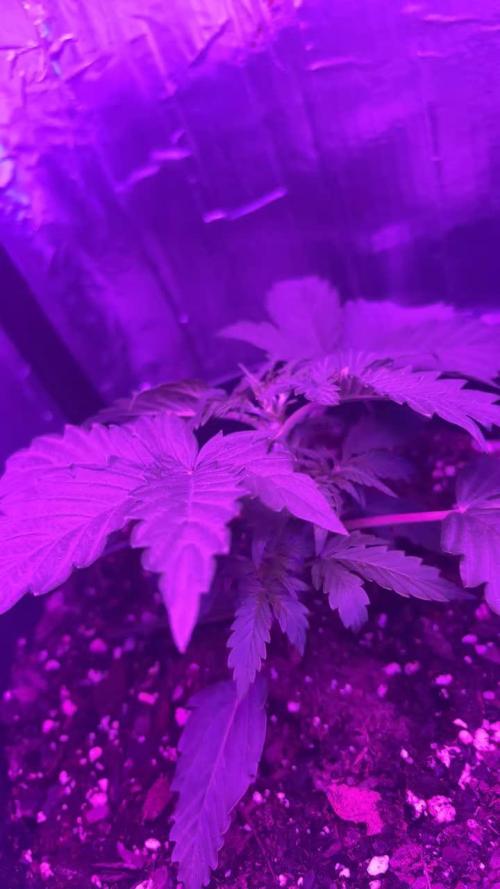
Hola a todos! Creciendo felices la segunda semana, comencé a fertilizar.
No puedo estimar la altura porque le adiciono substrato poco a poco pues bajó unos centímetros después de humedecido.
Pensando en utilizar LST para aprovechar mejor el espacio, estufa pequeña.
Me parece que se está desenvolviendo bien.
Acepto recomendaciones 🙌

Likes
Comments
Share


Likes
4
Share


@MrGoonai
Follow
02/03/25 Short facts:
- 58cm high
- Light is @80% but in a distance of 24 to 35cm - 600 to 740 ppfd
- VPD increased to 1.0 but I only do get it up to 0.9
- Defoliated again
---------------------------------------------------------------------------------
She has grown significantly again, becoming taller and producing more leaves. I had to defoliate her once more, but she has already regrown some leaves, so I'll probably have to defoliate her again this week.
I'm really impressed, she's doing so well!
Likes
7
Share


@Holy_dog_farm
Follow
3 weeks curing and i think its done now very strong and sweet smell.
Really enjoy my first autoFlowering harvest with this strain.


Likes
4
Share

@birdmountain
Follow
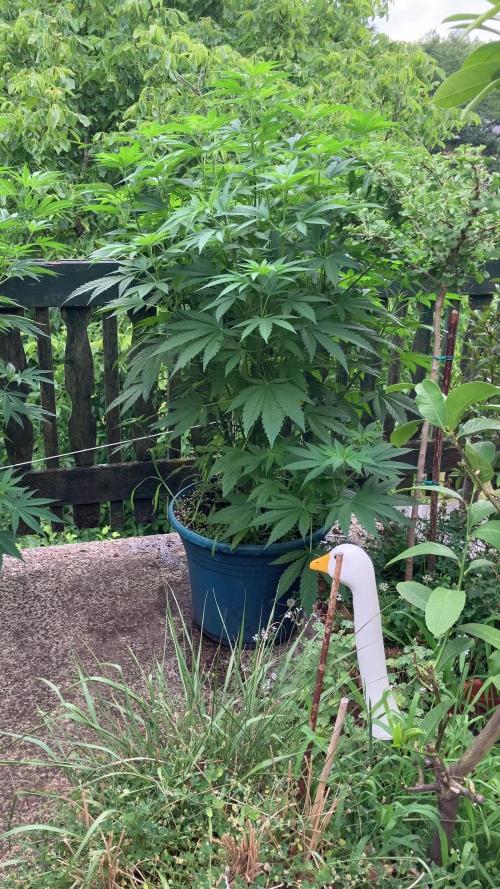
Sie ist diese Woche sehr gut gewachsen. Das Klima war sehr angenehm, der Wasserverbrauch ist zurückgegangen, trotzdem wächst sie munter weiter und schließt zu den anderen auf.
Die tägliche Flüssigdüngung läßt die Blätter weiterhin satt grün erscheinen und die wöchentliche einmalige Düngung mit Seetang versorgt sie hoffentlich mit genug Mineralien.
Vielen Dank für euren Besuch und beste Wünsche für eine erfolgreiche Grow-Woche!


Likes
31
Share


@scotch_egg
Follow
Back with the Lemons, Thanks for coming by!
Day 44 - Height: LP#1 @ 36" / LP#2 @ 33"
The Lemons move into week 7. They have a fantastic smell now! The scent in the room is a sugary, sweet citrus backed up by a spicy black pepper. I pruned off the lower leaves that were turning yellow, many of them were squashed and bent from the walls anyway and some were actually hanging off where they've been pushed about a bit in the space, but it's all good. The buds on LP#2 are really tightening up now, but they're really making the buds on LP#1 look a bit leggy, especially the buds on the side stems. In terms of issues, there is some pretty serious light bleaching going on in the tips of the leaves, but what's done is done, so I'll have to keep an eye out for that in future grows. Otherwise plants look healthy. Leaf Surface Temperature at the canopy is 25c, which is about 2-3c lower than the ambient temps in the space, so I think thats all good, despite the light bleaching they shouldn't be suffering from heat stress too much really. Hopefully going to see the buds fatten up real nice over the next couple of weeks before harvest!
Day 48 - Height: LP#1 @ 36" / LP#2 @ 33"
Day 48 and the Lemon Twins are really starting to get sticky and pack on the weight now. LP#2 can't hold herself up at all anymore, so I've had to string a whole bunch of wires up to keep the side stems vertical. It's nice though because it condenses the footprint in my tent. I did the same with my Kush from last grow and it actually makes my space a bit easier to deal with. I think they must be approaching harvest window in a week or so, but I'm going to let them run a couple more weeks at least before I start checking trichomes seriously. All healthy and nothing bad to report though!
One thing I'm not really sure about and keep trying to research is the effect of light bleaching on plants. Mine always suffer from quite severe light bleaching or nutrient burn on the tips by this point in their lifecycle which actually comes mostly from the heat and light coming back off the reflective walls I think, as it burns the leaves next to the walls the most. My plants seem to grow well and look healthy in all other respects though and they yield well enough, so I don't really know if it's a problem. I need to read a lot more about this.
Thanks for reading, happy growing and take it easy!


Likes
10
Share


@pHilosophy420
Follow
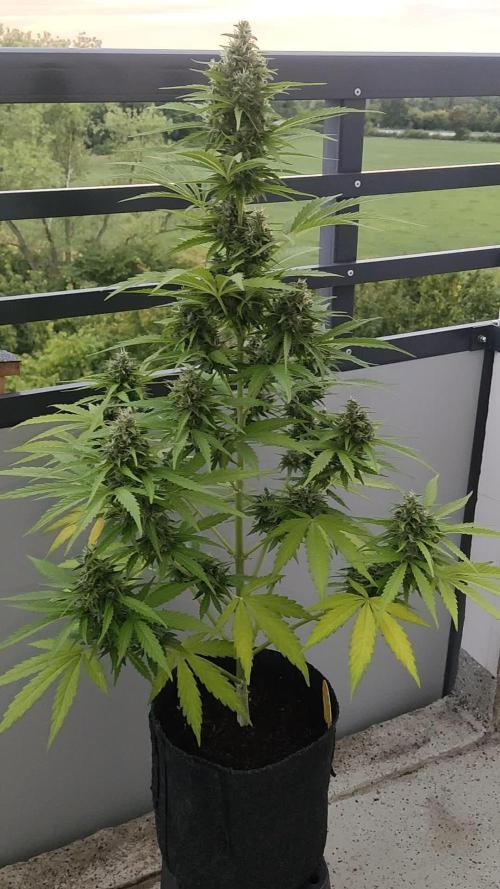
She’s growing really well. We had two extremely hot days at 30°C, which caused some leaf curling, but overall the plant handled it just fine.
The heat didn’t stress her much, thanks to the two CO₂ grow bags I have in place to help manage intense light and higher temperatures.



Likes
44
Share


@Herbz_Unkraut
Follow
Great week again...work effort was like 3h whole week...only had to refill NS (+-20L every 2 days)
Buds getting fatter every day...no brown pistrills yet so budgrowth is still in full effect
PH was very stable again, 6.1-6.2 all week
EC fell slighty before refilling NS
I think EC 1.3 could be a bit too much for them...leaves are quite darkgreen and they start to get nuteburn on tips...but i'll leave it at 1.3 for the rest of the grow
I decided that i won't exchange NS completely anymore...will leave it be till i replace it with pure water in 2 weeks (will be a 3 week cycle then)
Roots look great + i put in 15g of TNT Bactorr, water temp is at 20-21° so no need to worry about rot till the end of the grow i think

Likes
92
Share


@DogDoctorOfficial
Follow
🌟 Welcome to the TrolMaster Chronicles: Seed to Harvest Adventure! 1st run🌟
Hey, Grow Fam! It’s DogDoctor here, and I’m thrilled to kick off this exciting new series with you. Today marks the beginning of our journey through the TrolMaster sponsorship, and we’re diving right into the heart of the action with germination and unboxing. 🌱✨
We’re starting strong with the Germination Station by @thecannakan, a game-changer for this process. I’ll be showing you all the details as we delve deep into every aspect of our grow adventure.
Here’s today’s lineup for the germination extravaganza:
1️⃣ Mandarin Squeeze - Terpyz Mutant Genetics. 🌈 One seed germinated.
2️⃣ Punch Pie RQS and Tyson 2.0 Genetics. 🍰 One seed germinated.
3️⃣ RS11 by Kannabia Seeds. 🚀 One seed germinated.
4️⃣ Green Papaya by Super Sativa Seed Club. 🍍 Tester unreleased seed, one germinated.
5️⃣ Gorilla Mellon by Fast Buds. 🍉 Two seeds, one germinated (the first one didn’t make it).
6️⃣ Tropical Smoothies - Tried all seeds from the pack, but unfortunately, none germinated. 🌴
We’re also using the complete organic mineral line from @aptusholland, which includes top-notch nutrients to ensure our plants get the best start possible. 🌿✨ Plus, we’ve got the new ProMix Mycorrhizae soil, which will help create a thriving root environment. 🌱
Throughout this journey, I’ll be breaking down every step, sharing tips, and keeping it real with both the successes and challenges. I’m excited to share this adventure with you, and there’s so much more to come!
For more in-depth coverage and exclusive content, make sure to check out my YouTube channel and subscribe—where you’ll find full video breakdowns, detailed insights, and more. 🌟🎥 Follow me on Instagram for additional exclusive updates and behind-the-scenes peeks that you won’t find anywhere else! 📸✨
Your support means the world to me, and I can’t wait to have you along for every step of this amazing journey. Let’s grow together and make some magic happen!
#TrolMasterChronicles #SeedToHarvest #GrowDiaries #GrowJourney #TrolMaster #TheCannakan #GrowLife #PlantAdventure #HighFrequency #PositiveVibes #GrowWithMe #SubscribeNow #ExclusiveContent #AptusHolland #ProMixMycorrhizae
P.S. 🌟💚 I want to take a moment to express just how honored and grateful I am to be the first TrolMaster Maverick. This opportunity is a dream come true, and I’m beyond excited to embark on this journey with all of you. Being a part of this incredible community and pushing the boundaries of indoor horticulture with TrolMaster and ThinkGrowLED is a privilege I don’t take lightly. 🙌
A massive shoutout and thank you to the entire TrolMaster and ThinkGrow team for believing in me and supporting this adventure. Your trust and support mean the world to me, and I promise to give it my all to make this journey as amazing as possible. 🌟🙏
Thank you, Grow Fam, for being here from the start. Your encouragement and enthusiasm fuel my passion and make every step of this journey worth it. Here’s to making magic happen together and to many more incredible milestones ahead. Let’s grow, learn, and shine! 🌱✨
With all my heart,Growers Love and thank you. 💚
#FirstMaverick #TrolMasterFamily #ThinkGrowLED #GratefulHeart #GrowTogether #MakingMagic
Lets Play a game , FB Gorilla Melon Jump in to the future, can you guess the week ? Let me know in the comments before we get there , this is just for fun Lets Grow 💚💚💚 Growers Love everyone 💚💚💚


Likes
16
Share


@morganfreeman420
Follow
Creo que el filtro esta roto o dañado ya que el extractor larga todo hacia afuera todo el olor de la tienda


Likes
10
Share


@eldruida_lamota
Follow
Que pasa familia, ya estamos aquí para actualizar la 3 semana de floración y es que la vaina se pone interesante, están cogiendo unos tonos.
No os e comentado creo pero hasta ahora hay 2 armarios, uno con 100w y otro con 150w en el de 100w hay 4 red cookies gelato en 7L.y en el de 150w hay 5 ejemplares de red cookies gelato en 15L de maceta.
El cual en donde practique el crooping fue en el de 150w , que veréis todos los céntrales partidos .
Hasta ahora alimentado total con bases de advanced nutrients más big bud y bud candy.
E tenido algún problemita en la sala con las humedades que pronto estará solucionado aunque no fue mucho hay que decirlo todo. ( máximas en interior de 70 % en pico alto…) eso está mal así que la solución es un deshumidificador potente y a seguir.
Hasta aquí todo espero que disfrutéis con los diarios y buenos humos 💨💨💨
Likes
20
Share


@Hashy
Follow
This is a fastflowering test strain and I have no real information on the genetics. I'm guessing the flowering time of 57 days is about right for a fast flowering strain.
I trimmed her after 13 days of drying and got 30g of decent solid buds and 15g of larfy buds that will go with the trim to make some hash.
Power used for whole grow in 114 days.
Lights=201.7Kw (201.7×0.25)(=£50.42)
Rad=212.23kw (212.23×0.25)(=£53.05)
201.7÷114=1.769kw per day light average.
Average 100w for veg
Average 150w for flower.
Light average for grow 125w.
Stats for the grow.
FFNA2410=42g
FFNA2411=45g
FFNA2412=43g
Acapulco Gold=44g
Expected hash from trim 28g
Total=174g
174÷125=1.39g/W
Likes
14
Share


@danwho
Follow
8/31/2024
Both plants getting their first day of bloom spectrum lighting, red spectrum dominant. Already seeing signs of flowering on Plant A - the transition into flower must have been perfect. Otherwise, this plant might be an autoflower? DLI on canopy top around 30-32. Lights set to 70% intensity.
Reduced lung room humidity to 50% target. Lots of rain lately and the dehumidifier is working hard to keep up with 60-80% outdoor humidity. Tent humidity is hanging out around 60-65%
9/2/2024
Checking over both plants and doing light defoliation of larger fan leaves. Looking for more pre-flower signs on Plant B. Small nodules appearing on plant B. slightly odd formations compared to plant A. I will be keeping a close eye on this over the next few days.
Water level issues from last week are well within control. Since the fix was implemented the system requires about 2 fewer gallons to keep the system cycling as intended. Continuing to top the reservoir with fresh nutrient water with about 1 gallon of water per day. Still have not conducted a water change from the system. I will be planning one here closer to the end of this week when I have a little bit more free time at home.
9/3/2024
Plant A has a few signs of natural varieagation on fan leaves. Also found this cool leaf formation on a few of the larger fan leaves (see picture above). Plant B pre-flower signs still look odd, but monitoring closely.
9/6
Plant B still unconfirmed as a female. Preflower expressions are looking slightly more female, but no hairs yet. Both plants are looking healthy and doing well! The flow issues with the return line was due to a root mass making its way into the line and getting stuck. I was able to pump it out with some suction. Flow is completely returned and both buckets, back to stress free hydro for a few more days :D


Likes
10
Share

@Flavors
Follow
🌸 Sticky Broccoli – Grow Diary 🌸
Week 15 | Flower Week 1 | Coco + Perlite
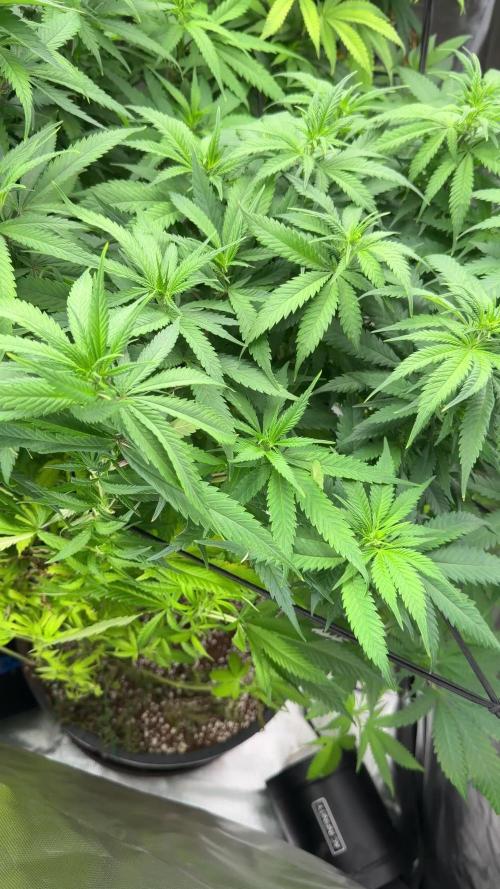
This week the plant was officially flipped to flower by changing the light cycle to 12/12 ⏳🌺
The canopy is fully established and spread evenly through the SCROG net 🌐
Stretch has begun with noticeable vertical growth across multiple tops 🚀
🌿
Plant remains healthy with strong vigor and deep green foliage 💪
Airflow is good both above and below the canopy 🌬️
Watering remains consistent with slight runoff 💧
Training is now limited to light tucking and canopy maintenance.
Focus has shifted from vegetative growth to flower production 🌸