


Likes
Comments
Share


@DonPeyote
Follow
Requiere mantener bastante baja la humedad en las últimas semanas ya que lo grueso de las colas las hace propensas a la botrytis, ojo ahí.
La planta en si es resistente pero es el grosor de sus flores, lo denso de las colas lo que te obliga a tener muy controlada la humedad en etapas avanzadas, creo que es más para tirarla programando la flora para el verano

Likes
56
Share


@Aedaone
Follow
The temperatures, humidity, and watering volume(if measured) in grow conditions are all averaged for the week. The pH is soil pH. Any watering done by me is well water which is 7.6 pH and 50° F. Any listed nutrients are ml/gallon of soil.
Day 1 we had lots of sunshine and a lite breeze. The soil began to dry out and I watered about 1.5 - 2 gallons per plant, from the water hose, that afternoon.
Day 2 we had rain early morning and showers throughout the day. The girls look like their roots found the iron I added last week.
Day 3 we had early morning rain, drizzle and showers in the afternoon. I added an additional 50ml of ferrous sulfate top dressed. I also spread just enough peat moss to cover the ferrous sulfate to prevent the rain from splashing it onto plants. Previously the rain splashed granules of ferrous sulfate onto the leaves, burning them. I used 50ml or 1.66ml/gallon of soil. as I've only got about 25 gallons of soil. I'm waiting to top off after this excessive rain is done.
Day 4 we had more rain, drizzle, and mist intermittently throughout the . The good news is the ferrous sulfate has lowered soil pH to 6.2 👌. There's still a small excess of phosphorus, but the girls will grow into it.
Day 5 we had more rain. It rained all morning for about 8 hours. The pots are soaking wet.
Day 6 We missed the scattered showers but it's been 80-90% humidity all day. Even with the beautiful sunshine the soil isn't drying out. I'm looking at the nodes to see when I'll be topping.
Day 7 we had lots of sunshine and temps over 80°F. These girls are loving it. I'm looking at the 4th node to top. I'll wait for more stem above the 4th node.There needs to be enough stem above the node that it won't split as the branches grow heavy from large buds.
This week was a success. The girls more than doubled in height. They performed their job while battling excessive rain and winds. I'll be looking to top these girls and add soil to top off their pots next week. I'm hoping for less rain and more sunshine next week.


Likes
21
Share

@therealgrowmie
Follow
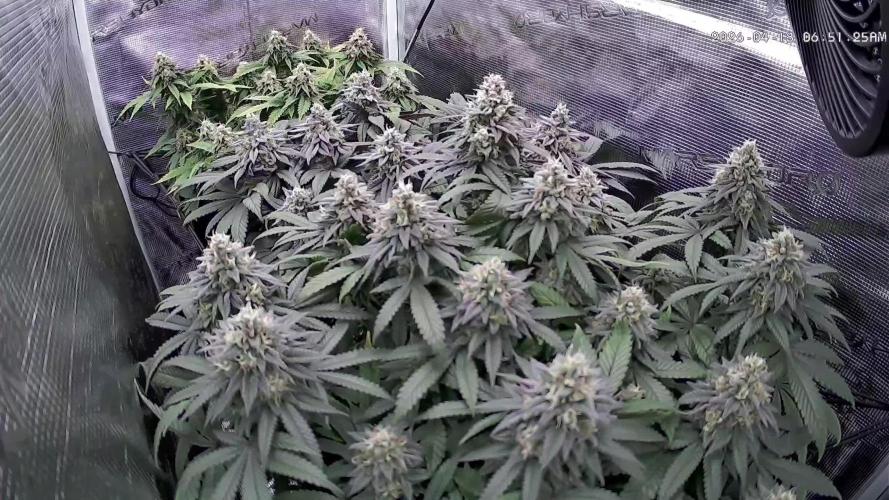
We’re really entering the final stretch now, Growmies. The buds are dense, frosty, and looking properly mature from a distance; exactly the kind of sight that makes you want to grab the scissors already 😅
But the close-ups tell the real story. The trichomes are mostly cloudy, with some clear ones still mixed in and not much amber showing yet. So while the plants look almost ready, they’re asking for a little more patience.
The Northern Lights are looking especially strong: dark, frosty, and stacked with chunky tops. The Critical is fading harder and still has that limey colour going on. At this stage, I’m not going to panic-feed or chase perfect leaves anymore. The best move is to keep watering consistent, make sure pH is in range, avoid overwatering, and give only mild, balanced feeding if needed. No drastic corrections this late in flower.
My current guess: around 7–12 days left, depending on how fast the trichomes turn. I’ll keep watching closely and aim for mostly cloudy with a small touch of amber.
At this stage, it’s really just about not messing it up now 😂
Stats so far:
💧 Watering: Every third day
🌡️ Temp: 26–28°C
💦 Humidity: 65% RH
📈 VPD: ~1.18 kPa
💡 Light: ~700 PPFD

Likes
4
Share


@Minuteman_Organics
Follow
Another week down. Getting ready for outdoors. Bringing them out during the day. And inside and night. Gonna start leaving them out a few nights a week on the warmer days
The m:f ratio is equaling out to be much closer to 1:1 which is great. The clones I'm not giving as gifts could also make great backups for some of these. Most of my friends grow indoors so I give them the short and stocky phenos and I keep the tall lanky

Likes
Comments
Share

@Lvnsource
Follow
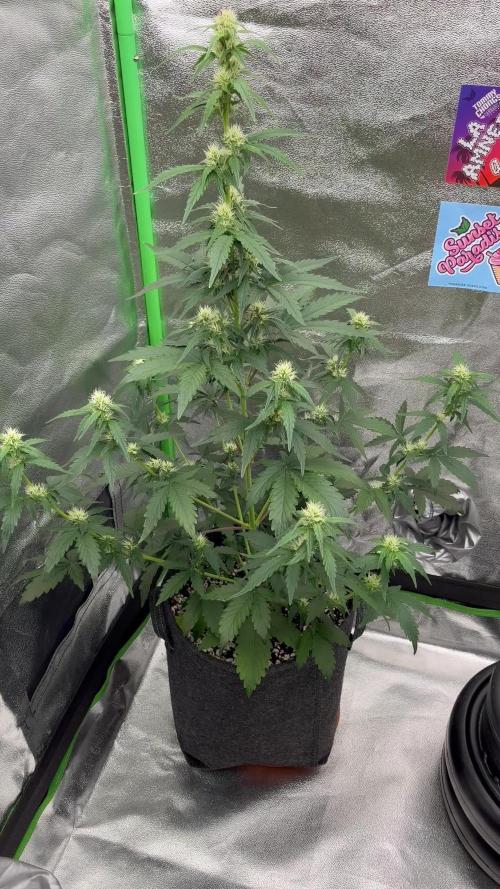
Feed log;
D:34 - 4.0L + 4.0L - [pH 6.8] Si[1.2ml] ,Vega[9.5ml], Flores[15ml],Ca[0.3g/L/]Mg[0.1g/L] INPUT; [1.75 EC] OUTPUT; 2.7L pH [6.0] [1.27 EC] previous irrigation: D:30
———————————————————————————
Everything’s running great, and the stretch has started slowing down. Today I included a foliar of some “seaweed/humic bio stimulant,” being careful not to spray the flower tufts. I’ll include this booster into my main regimen as a chelating agent to improve micronutrient uptake and support overall plant stress tolerance ?
Other than that I’ve increased the PAR level from 550 to 650 ppfd and will slowly increase to 850 ppfd over the course of flower.


Likes
3
Share

@KannaGrowing
Follow
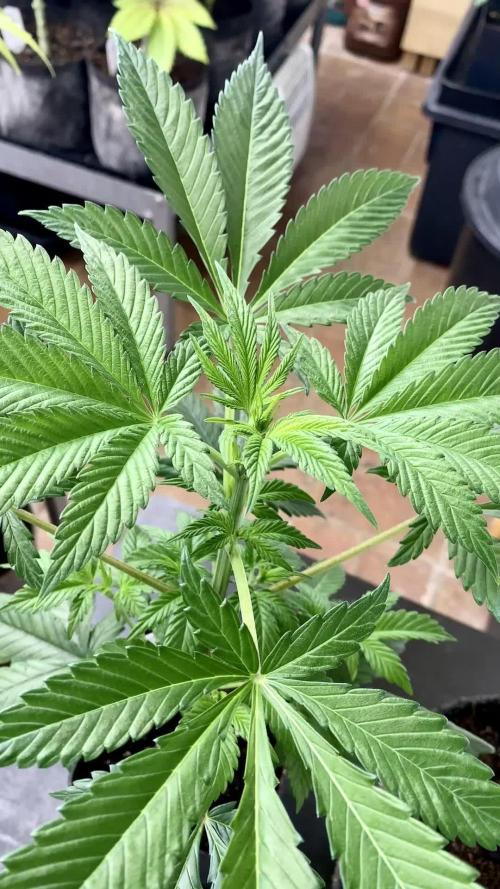
Os mostramos una comparativa con la cepa en modo vegetativo y en floración.
Estamos entrando en la última etapa del cultivo y poco a poco vamos eliminando fertilizantes conforme veamos que ya no lo necesitan.
Reducimos la potencia de las luminarias al 50%.

Likes
11
Share


@4_Pro2Bono_0
Follow
Harvest 2 weekend ago and dried at ~60° at 60 RH. Took about 12 days total.

Likes
15
Share


@Siriuz
Follow
Check out the videos guys, she is flowering real good even tho we are not using any special nute like big bud for example, but i really want to try it soon, hopefully!
Still she is doing great and im happy to have her!
How are you doing growers whats up!?
Dont forget to leave a comment
Any suggestion is welcome!
We are happy to learn new things alwas,
Thanks for the support happy growing everybody
Enjoy the footage thanks to Siriuz
Likes
11
Share


@Papastroumf
Follow
Day 43 : Watering with co2 tab / 5L. Also added food again because i think they need it. Increased ppm to 850. Maybe the next one will be pure water. Ventilation works all the time when lights are on. Temp and humi are stable and this is good for the girls. 5 cm in 3 days. Patience is the key always. Also removed some burned leaves from all ladies.
Edit (Day 47) : Watering with co2 tab every 5L. I watered with juices again at 850ppm because i felt that they need it. Only DsD drank pure water because of burns. Also 4cm in 4 days. She will be low yielder with good stuff. It smells sickkkk.

Likes
1
Share

@420DeepGrow
Follow
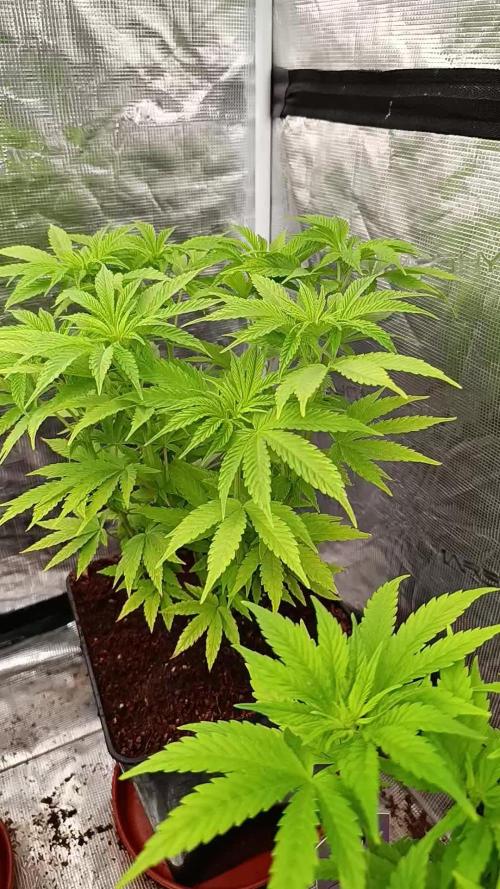
📆 Semana 2
Tras el paso a 12/12, la planta entra de lleno en la transición a floración con una respuesta positiva. Se realizó un lavado de sales del coco de fábrica, dejando el sustrato limpio y más reactivo; a partir de ahí, la absorción de nutrientes mejora y la planta muestra mayor equilibrio.
El pH y la EC ya se mueven en rangos estables, el verde se mantiene sano y la estructura empieza a definir los futuros puntos de flor.
Las raíces ya dominan el coco y la energía se dirige a la formación de las primeras preflores, marcando el inicio real del ciclo floral.
Seguimos creciendo fuerte 💪


Likes
14
Share


@MRTHC
Follow
Ok. On flower day 47 started flush. Ended up using 5gallons to bring her down from 800ppm to about mid 500ppm. Will use RO water next flush dirt better results. Recent tricomes pics shows milky clear with a hint of Amber.... This sample came from 5" down the canopy. Also the has been an emergence of new white pistils at the top colas. On day 52 she was given ice at her roots.

Processing
Likes
2
Share


@OGxGxMoney
Follow
Cant believe how fast these grew!! 48-72 hours from germ and four to five days later, these were sitting above ground!!😁😁


Likes
12
Share


@Froggman
Follow
Not giving her much water these days; today’s may have been here last. I think one more week, maybe two?
Likes
43
Share


@TheBulldozerSicily
Follow
Venerdì 2 febbraio facciamo un bel flush, svuotiamo il serbatoio cambiando acqua, partiamo da 50 lt di acqua demineralizzata Aggiungo 200 ml di cannaflush e lascio girare per 24h
Sabato 3 febbraio svuoto il serbatoio con la soluzione cannafluh e metto in circolo altri 50 lt di sola acqua osmotica per altre 24h.
Domenica 4 febbraio svuoto nuovamente i serbatoi di sola acqua, e riempiamo di nuovo con 75 lt di acqua e questa volta Aggiungiamo i soliti nostri nutrienti:
135 grow 90 micro 45 bloom
75 sensizym 75 calmag 75 rhino skin 75 nirvana 75 bud candy
Ec Ph6.2
Likes
12
Share

@MindFlowers68
Follow
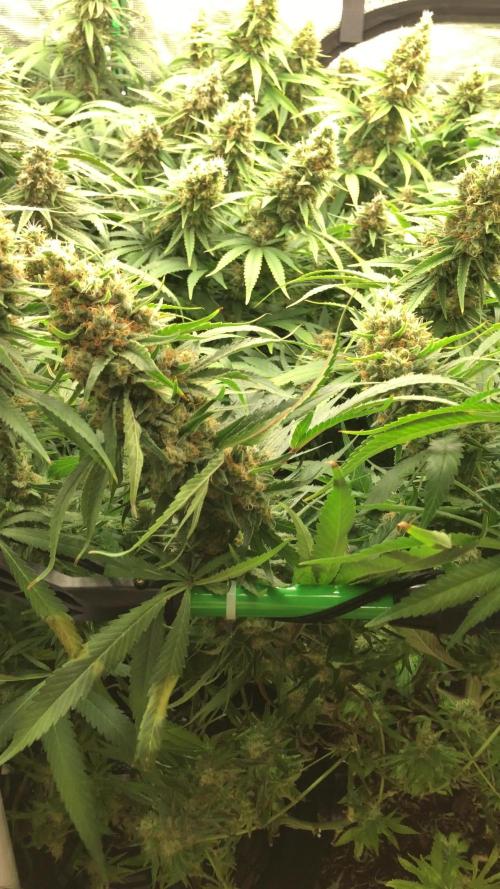
The white dominana was really stacking and not showing too much signs of wanting to slow down towards the end but this week I got her to frost up. A lot of the stigmas are now orange as well when I cut that main cola off to take pictures. My arm was starting to get sore from holding it straight out. There was a lot of big colas in there. She's got a nice funkiness to her, but nothing to exotic or pungent in your face. Not a Skunky sort of funk, but more of like a light BO funk. It's got a slight citrus, earthiness and fruity kind of watermelon and honestly it's very subtle though. Looks like the potency is there though.
Harvest went really well with the plants. It's always a little nerve-racking going in there wondering if you're gonna run into anything like budrot or pests you didn't see but this round, nothing to speak of. Which most rounds are but I've had a few issues with some bud rot in some big colas before. Everything looked really clean. No signs of bud rot, no pests in or our of the soil. No powdery mildew. The tent really wasn't even that dirty. I had to clean it after I recommended my 65 gallon pots for my next round and was shocked how clean I got it within a day of having those plants in there growing.
This week my main focus was trying to get the temps down a little bit and humidity is low as I could. At the beginning of the week I dropped the lights down a full hour, down to 10/14. Also, the last few days before harvest, my temps were getting above 83 towards the end of the night and cut them off even earlier, so there was a few days they got roughly 9 hours of light last few days. I watered twice this week but the last dry back before cutting them my soil moisture's got around 18%, so pretty dry. I would've like to keep them a little wetter but ambient humidity has been very high. The last few days I managed to get into the 78°F 55% humidity range which I was happy with.
Harvesting the four plants took from 8 PM to 4 AM after their night cycle by myself. Each plant taking an hour and a half With very tiny breaks in between. I was on the second plant taking a hanger out to my dry area and I hear a loud shuffle in my mind thought it was the cat at first and then I realized that was too big of a sound to be my cat. Then I thought I was getting robbed or something and then I looked up and it was like a three year old buck about 250 pounds big antlers! We both looked at each other and jump scared, and both took off in opposite directions. It was kind of hilarious, but I was a little spooked after that, so I kinda had to set up a light outside so I could see better and the first few trips after that, I may have grabbed a PVC pipe in my off hand like I was in the game Doom or something lol.
I wasn't able to fit all the pictures I took from harvesting. I'll have to add them to my next week after they're dry, of all the plants hanging. It seems like I've got my drying area carved out pretty good for the flowers space I have. Does suck having to move my drum set out for two weeks and freezing in my studio though but better than not having a decent drying space that's for sure I had my twine still up from during my auto flowers and utilized a few of those hanging from the ceiling to get a couple extra hangers in.