Likes
Comments
Share


@JuanHaze_Arg
Follow
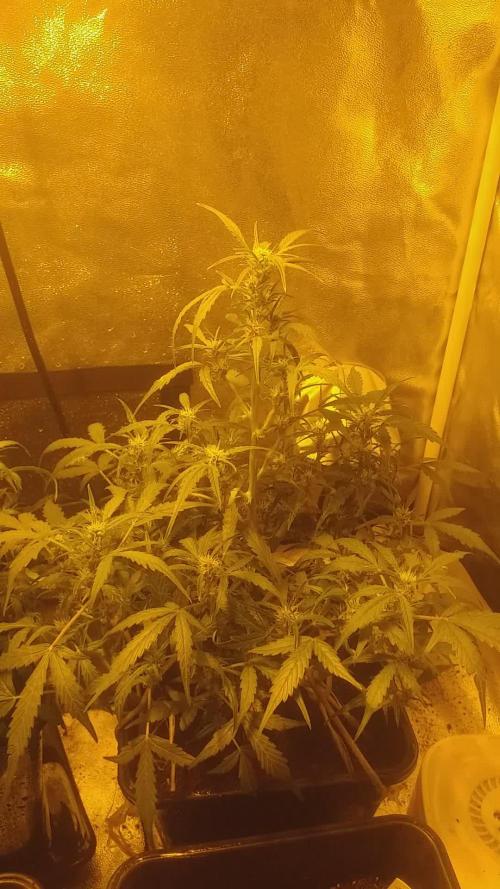
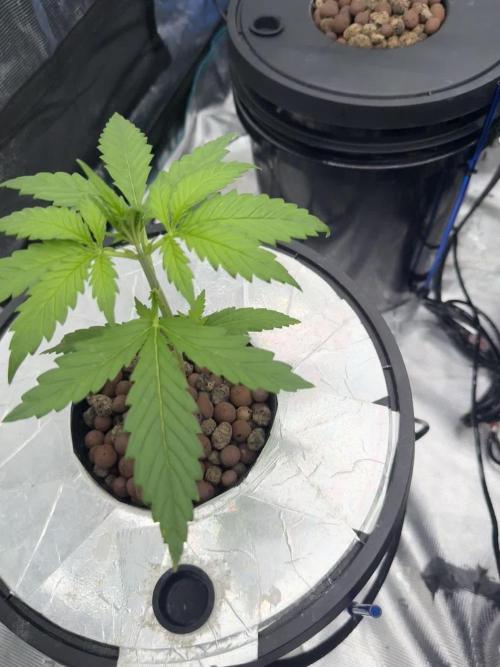
18/05 se riega con 2,5L de agua (60% de agua de osmosis inversa + 40% de grifo) + 1ml/L de calmag de top crop, + 0,5gramos de trico+ de namaste nutrientes.
21/05 se riega con 3 litros de agua (50% de agua de osmosis + 50% de ml grifo) + 1,5ml de cal mag de top crop. + 0,5 gramos de monster bloom de grotek PH: 6.4 EC: 1.1

Likes
18
Share


@valiotoro
Follow
Hello everyone week 2 has passed for this Strawberry Gorilla auto by Fast Buds 😎
this plant is doing very well growing at fast pace and with a beautiful green colour on the leaves.
wish you all happy growing!

Likes
69
Share


@nonick123
Follow
Día 66 (05/08) Cerrado por vacaciones
Día 67 (06/08) Mi amigo viene a casa a hacer un riego con 1 Litro de H2O pH 6,5
Día 68 (07/08) Cerrado por vacaciones
Día 69 (08/08) Vuelta de vacaciones! A ver como están después de 5 días sin verlas... 😱
Riego con 1 litro de H2O pH 6,5
Añado 3 cm de sustrato nuevo porque se ha compactado y se ven las raíces! 😢
Día 70 (09/08) Riego 500 ml H2O pH 6,55
Eliminación de algunas ramas bajas
Día 71 (10/08) Riego 500 ml H2O pH 6,55
Sesión de fotos semanal!
Día 72 (11/08) Riego con 1 Litro de Té Vegetativo de Lurpe Solutions. Preparación: 24 horas con bomba de aire (oxigenación) con ingredientes:
Green Sunrise 8 ml/L + Insect Frass 16 ml/L + Hummus Lombriz 8 ml/L + Melaza 1 ml/L + Kelp Hidrolizado 0,25 g/L
Aplicación foliar Kelp hidrolizado de Lurpe Solutions a 0,25 ml/l
💦Nutrients by Lurpe Solutions - www.lurpenaturalsolutions.com
🌱Substrate PRO-MIX HP BACILLUS + MYCORRHIZAE - www.pthorticulture.com/en/products/pro-mix-hp-biostimulant-plus-mycorrhizae
Likes
149
Share


@CBD_Sweden
Follow
Hi all the happy people here in GrowDiaries.
This is my second cultivation ever and it will be fun to try a bigger space than my closet grow.
First, I'm just going to say I'm done with the construction of my new growroom.
I put some pictures on the construction here in week one.
The room is 2.14 meters by 1.7 meters and has a ceiling height of 2 meters.
It provides a floor area of 3.6 square meters.
I use a 54 Watt Lightwawe T5 for germination and 2 Pcs 400 Watt HPS lamps.
I have a channel fan that replaces the room air about 40 times an hour to get a comfortable theme in the room, the air enters a fresh air intake from the outside.
The air is purified through a carbon filter to then leave the room to the rest of the basement.
Then I use that heat to heat the rest of the basement.
I will use 8 pcs 15 liter Autopots to grow with and a 100 liter water tank that supplies the pots of water and nutrition.
I will grow completely organically in soil and will watercure my buds to get the best possible medicine for me.
But there are no cultivation rooms to be displayed here, so I continue with what is most important.
Today I have put my seeds in my moisture dome and hope the seeds have germinated within a few days.
I am very excited to see how the new growroom will work and how this Blue cheese Auto from Royal queen seeds will turn out.
Blue Cheese automatic cannabis seeds are a cross of Blueberry Automatic and Cheese Automatic that has been perfected over five years of breeding and careful selection. The result is a feminized, autoflowering strain with superior yield, flavor, and effects to either of its distinguished parent strains.
THC: 16%
CBD: Low
Yield Indoor : 325 - 375 gr/m2
Yield Outdoor: 60 - 110 gr/plant
Height Indoor: 40 - 70 cm
Height Outdoor: 60 - 110 cm
Flowering: 7 - 8 weeks
Harvest month: 9-10 weeks after planting
Genetic Background: Blueberry x Cheese x Ruderalis
Type: Sa 35% In 40% Ru 25%
Effect: Cerebral and uplifting
Climate: Mild
..............................................................................................................................................................................................................................................................................................................................................
Update 2017-08-15. All 4 seeds have germinated and planted in small pots inside the humidity dome.
I'm so glad it worked so well and now it's just hoping they'll start growing and become 4 big healthy girls :)
...............................................................................................................................................................................................................................................................................................................................................
Update 2017-08-16. I have mixed my own soil today. Its 40% sieved peat harrow H2-H4 0-30 mm, 45% sieved peat harrow H4-H6 0-30 mm. 5% sand and 10% of compost soil. And i use 15% of perilite and mix it all together.
................................................................................................................................................................................................................................................................................................................................................
Update 2017-08.20. Nr1 and 2 grow and thrive.
Number 3 just got rid of the seedpod and is folding out the sheets.
Number 4 is a bit shy and can only be seen if you look carefully into the soil.
.........................................................................................................................................................................................................................................................................................................................................
Update 2017-08-21. Nr 1 and 2 is doing well. Nr3 is trying to catch up and Nr4 is still shy.
--------------------------------------------------------------------------------------------------------------------------------------------------------------------------------------------------------
2017-08-23. Transplanted 2 girls from humidity dome and the small germinating pots to 15 liter autopots. The other 2 girls have to wait a little more before transplant to the autopots.
................................................................................................................................................................................................................................................................................................................................................................................
2017-08-27. The girls have settled in to there new home of the 15 liters autopot after a little transplant chock. Now the real week 1 starts for me and the girls.
--------------------------------------------------------------------------------------------------------------------------------------------------------------------------------------------------------
2017-08-28. New pic and movies.
---------------------------------------------------------------------------------------------------------------------------------------------------------------------------------------
2017-08-28. Nr3 is transplanted in 15 liter autopot.
-------------------------------------------------------------------------------------------------------------------------------------------------------------------------------
2017-08-29. New movie of the girls. Its no water for 3 days now for Nr1 and 2 so the roots develop more and match the plant above the soil. The temp controlled fan is awesome, its easy to set what temp you like to have in the room. Right now its 28 celcius. And humidity is 56%.
------------------------------------------------------------------------------------------------------------------------------------------------------------------------------------------
2017-08-29.
Hello to you who read my diary, I just want to say that I am pleased that you have chosen to check in with me and in my diary.
I just want to say that I do this for myself and for a steady flow of my medicine.
Everything you read and see in my diary is 100% honest and I will never distort or beautify anything here.
I document my crops so that I can learn from my mistakes and also to look back at those different crops.
I try to update with pictures every day and with text if something special has happened in the garden.
This is my strainhunt for the best medicine and the beginning of my journey with cannabis and the cultivation of it.
-----------------------------------------------------------------------------------------------------------------------------------------------------------------------
2017-08-30. Cleaned the room this morning, just vacuuming and cleaning with chlorine solution. Im testing the fan to control temp and humidity, it works great.
Added some pics with measurements and movie. Everything is looking great right now.
---------------------------------------------------------------------------------------------------------------------------------------------------------------------------
2017-08-31. New pics and videos.
---------------------------------------------------------------------------------------------------------------------------------------------------------------------------------
2017-09-01. New pics and videos. Gave each of the girls with 2 ml Alg-A-Mic, 4ml Bio-Grow, 4ml Bio-Heaven and 10 ml Formulex mixed in 2 liters of water.
I hope they like it :)
-------------------------------------------------------------------------------------------------------------------------------------------------------------------------------------------------------------------------------------------
2017-09-02. New pics and the girls liked the water and nutrients yesterday.
-------------------------------------------------------------------------------------------------------------
2017-09-03. New videos of the girls this morning. Nr1 and 3 looks great and nr 2 is looking a little funny, maby a little stressed.
Kl. 16.00. Did some defoliation on the girls. Added video.
Kl.. 23.00. New videos, defoliation and leaftucking.
-----------------------------------------------------------------------------------------------------------------
2017-09-04. Kl. 11.00. Week 3 starts. Trying to LST the girls and defoliate/leaftuck. New picks.
KL 23.00. New video.
--------------------------------------------------------------------------------------------------------------
2017-09-05. KL 08.00. Cleaned the room this morning, just vacuuming and cleaning with chlorine solution.
KL 12.00. The girls got 2 liters of water each with nutes in it, added a video.
----------------------------------------------------------------------------------------------------------------
2017-09-06. KL 08.00. The girls woke up after their beauty sleep, the leaves are always a bit down after 6 h of darkness, but they will stretch now when the HPS lamp starts.
Everything looks good and I keep trying to tuck the leaves so they get the maximum amount of light where needed. Added pics and video.
The Nr 3 girl is still a little bit behind the other 2 girls and all the 3 girls look like there 3 different pheno of the same plant.
KL 23.30. Did some LST.
----------------------------------------------------------------------------------------------------------------------
2017-09-07. Day 21 from sprouting, Nr3 is 17 days from sprouting. I have never tested PH in my grows, when growing organic in soil iv learned that it adapt PH by it self. But im curious by nature so i had to test.
Kl 10.00 Tested PH in the soil, it was 6.9 and tested my tap water and it was 6.8. Added a video of the girls, its 10 H after defoliation, LST and leaftucking. I think its looking good.
Kl 22.30. New pics.

Likes
Comments
Share

@Piratebay
Follow
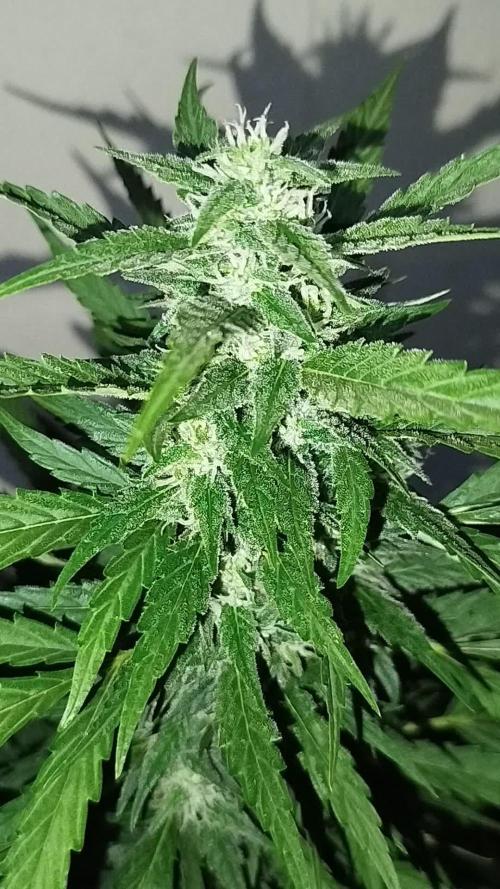
mix de esquejes de papaya zoap en experimento de suelo vivo en el exterior.
A priori con la maceta se ven la diferencia en resina mucho más cargada un aroma más pronunciado comparando de una maceta de 25litros a un suelo vivo de 200litros de turba en arriate conectado directamente a la tierra del suelo vivo.
Dspues de esta prueba en calidad.
Las observaremos en interior bajo los leds y una buena cama de living soil.
Super satisfecho por lo que veo de esta genética. 🍋?📂

Likes
13
Share


@Damonkey
Follow
Great easy grow, took well to led grow and nutrients never needed to step back. Needed support fairly early on in grow. Heavy flowers not massive but I guess loaded with oils and good stuff. No apple smell or taste with these two phenos at all. Both super heavy chem affairs. One however tastes a lot like gorilla glue, it is one of the parents. This cultivar has shot straight to the top of my lists of grow again. It’s pure fire.


Likes
9
Share


@masterofsmeagol
Follow
6/8 Haven't had to water yet (besides the two tens and I should've held off). It's an overcast day. Perfect for the plants. I've noticed more off shoots of 3 pronged leaves so a few plants will reveg but thats fine. I'm happy with how things are going thus far. These are certainly very resilient strains. I've done some SLIGHT LSTing.
EDIT: IT'S BEEN A NICE DAY TODAY. A LITTLE OVERCAST BUT SUNNY AT TIMES. PERFECT WEATHER FOR THE GIRLS. THEY ARE LOVING IT OUT THERE!
6/9 And the girls are lookin' Fiiiiiine. In all seriousness everything is doing pretty good. Even that overwatered pink kush runt in the 10gal is coming out of its little funk. Some of my FIM's turned out amazing! With the reveg of some of these I'll definately have my hands full. Very grateful for smart pots and well draining soil! We've gotten some harsh rain but the girls all seem fine. It's the wind today that's a little worrisome. I may stop over later. I COULD put up tarps around the cage as wind blocks (and have before in the past) but it increases the humidity of an already extremely humid day. These girls are strong. I'm sure they'll be fine. I've found that the tarps typically hurt worse than they help.
6/10 56° at 9am. Shook the plants off. Medium wasn't soaked though. Luckily we had some wind. It's not raining now but it's going to have showers for half the day. Tomorrow is supposed to be in the 80's and sunshine so if that comes through things might workout alright. I still haven't had to water this year besides that one gallon on the tens. If I do something I'll update. I'm considering light stepping the two pink kush's in the 10's. I'll need to do more research.


Likes
9
Share


@BLAZED
Follow
Week 3 (1-7 to 7-7)
1-7
Temps: 22.2 to 26 degrees
Humidity: 50% to 70%
2-7
Temps: 22.2 to 25.2 degrees
Humidity: 49% to 73%
Watering: #1: 80 ml. #2: 77 ml. PH: 5.8
3-7
Temps: 21.8 to 25.3 degrees
Humidity: 52% to 78%
4-7
Temps: 22.2 to 26 degrees
Humidity: 36% to 64%
5-7
Temps: 19.7 to 24.5 degrees
Humidity: 45% to 62%
Watering: Both 1.5L
I transplanted the girls in the early morning to 18L AutoPots.
I use the airbases with an airdome, and a airstone connected to an airpump.
As for the soil i use Plagron Coco-Perlite 70/30.
After i transplanted them i moved them into the 100x100x180cm tent.
The light is at 40% strength with a distance of 60 cm.
Im happy they are finally transplanted into the AutoPots, My plan was to do this way sooner but i forgot to buy the root disks.
So i had to wait till they arrived, and with the legalization in Germany there is a huge delivery time.
6-7
Temps: 18.8 to 25 degrees
Humidity: 41% to 64%
7-7
Temps: 18.8 to 25.5 degrees
Humidity: 44% to 57%


Likes
9
Share


@DisTentAint4Campin
Follow
0o0o0of bacio belts she is growing boy and stretching in the closet I got plenty of room she was a make shift closet gna go a different route next time its just to hot in the room I keep the door closed alot due to a fucking terrorist of a cat luckily my bedroom is fucking huge plants making it hot 🔥 up in my bedroom


Likes
6
Share
@Organic710
Follow
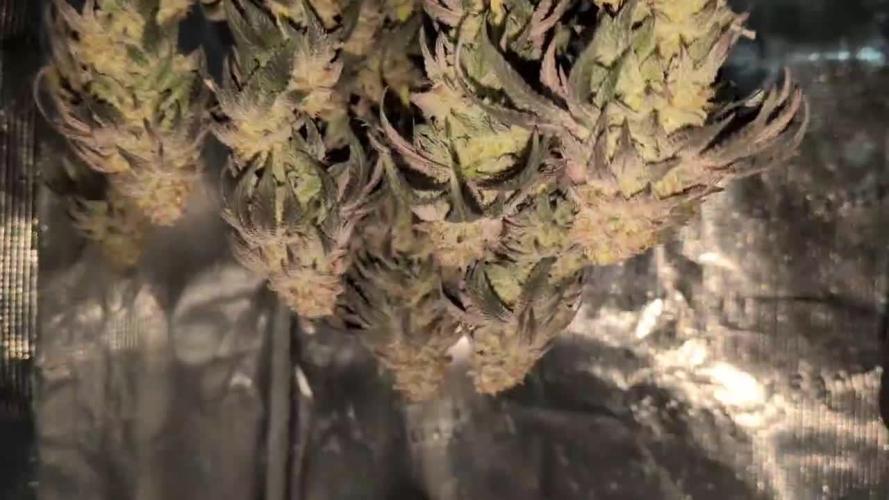
Chopped all 5 plants and cleaned the tent before hanging 4 plants up to dry. The 5th plant was the runt in the bottom right corner its finished and has some nice flowers but I feel this harvest will be pretty big and Im a solo person. 10 plants can become a chore all within a few weeks so I thought I may aswel freeze the 5th plant and turn it into cannacaps eventually. I usually make bho or wash it though mesh bubble bags and decarb the bho/bubblehash then put into empty pills with MCT oil and lecithin. I make 5 caps per 1g of product estimating them at 100mg each. These are 10/10 for my epilepsy 🙏
Likes
4
Share


@Willy_Balls
Follow
Last week ahead. Next time will cut nitrogen earlier. These ice cream cakes did not like it at this level. Also had a little dripper clog and mokums tulip got a little burnt. At these high ec levels they are super sensitive to drybacks.


Likes
46
Share


@Merrymoosefamilyfarms
Follow
Hey hey everybody! I hope you all had a fantastic week and I am excited to be back for our latest update which marks the end of week 15 and the beginning of week 16!
Now I don’t know if it’s just me or the beginning of the year can be explained off as Mercury being in retrograde (I’m not saying it is, that’s more my wife’s deal- I wouldn’t know either way) but things have been absolutely nuts over here and I needed a little something good to help level out the crazy…
I have some awesome things in the mail (still rolling in from the spending spree I went on) but truth be told we were between deliveries, and I needed instant gratification- soo I may have accidentally brushed up against the timer and flipped to flower ( and by accidentally brushed up against, of course I mean I fully intentionally programmed the time to flip to flower in a moment of weakness…🤷♂️🏻)
Am I sorry? No… will it slightly kill me from an aspect of my struggle with occasional OCD? Oh yes…. Ohhhh yesssss…. That little corner is/was driving me nuts but I figured it was time to just let it do it’s thing- honestly once I noticed I picked a pot that was too small for what I was trying to do, I should have just there in the towel, flipped and taken it as a learning lesson for next time…. Buuuuut alas, I am stubborn and that is NOT how that went down… I’m still excited for what’s to come, we should have some (hopefully) pretty impressive things developing soon so I am stoked!
That being said however, I have also had some unimpressive things happen, for instance- yesterday, I go in to feed the girls and my light is off! I (obviously) must have screwed something up when I went to change the light schedule- specifically, due to the fact that there are 9 or 10 possible lighting schedules you can set, I think I had correctly set the on/off times BUUUUUT I think after I had switched to the next programmed on/off times which were incorrect-
I noticed when I saw that the lights were off, they should have been on for another three hours (give or take) - so I immediately started messing with the timer and turned the lights back on and continued to tend to those lovely ladies. I then went and made dinner- after, I just had this feeling that I should check on the tent, just in case- and sure enough, an hour after the lights were supposed to be turned off, there they were, on like grey poupon (I apologize I haven’t heard that in like a decade or more, had to

Likes
2
Share


@fabialien
Follow
Lunes 19 Agosto 2024
Semana 3 de vida se esta Lebron haze, va muy bien, se le aplico bases PH perfect de Advance Nutrients.

Likes
15
Share


@TheCannaProphet
Follow
~ DUTCH PASSION / SUPER SATIVA SEED CLUB FAST FLOWER 'TESTER' A and 'TESTER' B ~
Well cannafam, here we go again on another growing adventure together! This diary will be special to me for two reasons, one because I have the opportunity to cultivate some new and exciting strains from two of the TOP breeders in the industry! The second reason this will be special to me is that I will be growing these two strains in a brand new greenhouse that I put up! I'm super stoked to see how these two ladies turn out in this new setup.
On to the strains:
'Tester' Strain A info: Hybrid (I/S) | 6-7 weeks flowering | Fruity, Sweet, Candy
'Tester' Strain B info: Indica-Dominant (90%) | 7 weeks flowering | Fruity, Peppery, Sweet
I hope that you enjoy this run as much as I will... It's going to be fun and interesting for sure!
~GROW WHAT YOU LOVE, LOVE WHAT YOU GROW!~
____________________________________________________________________________________________________________________________________________________________________________________________________________________________________________________________________________________________________________________________
The Setup:
These beauties will be growing in a brand spanking new 10x14' greenhouse that I have equipped with automatic window openers, a complement of Hurricane fans and a de-humidifier/heater to help keep the environment as dialed in as possible.
I started both tester in glasses of tap water, where they soaked for 24hrs. After soaking, they were placed directly into whole eggshells with just their tops removed to make a natural seed starting pot that I filled with a 70/30 blend of Coco/Perlite which was pre-moistened with well water ph'd to 6.2, then placed under a 50w full spectrum LED on a 24hr light schedule.
Once, they both have their second set of leaves emerged, I plan on starting to put them in the greenhouse for 2-3 hour a day for a few days to help them acclimate and 'harden off' in the greenhouse. I'll be starting both off in 1qt pots, then transplanting them into to gradually larger pots until they're around 6 weeks old, then they will go into their final pots which are 25g fabric pots.
I mix my initial medium using 3 tbsp/g of Gaia Green Organics 4-4-4 along with 1 tbsp/g of Gaia Green Organics Glacial Rock Dust for the trace minerals it provides, 1 tbsp/g of Down To Earth Kelp Meal, 1 tbsp/g of Trichoderma/Mycorrhizae, and 1 cup/g of Wiggle Worm Castings. I hand mix my amendments to ensure an even distribution throughout the medium. I'll be watering with well water ph'd to 6.2-6.8 and providing bi-weekly compost tea's throughout the run.
____________________________________________________________________________________________________________________________________________________________________________________________________________________________________________________________________________________________________________________________
Weekly Updates:
5/16- Week Five is here and I couldn't be happier with how both of the Testers from Dutch Passion/SSSC are doing! Both are continuing to have excellent vigor and are 'praying' hard every day... VERY happy ladies!
5/18- Today, I watered both Testers with 1.5g of straight well water which was ph'd to 6.2 @ 70℉. I also removed some new shoots growing down low on both plants to help redirect energy towards the upper portions.
5/20- Yesterday and today were cool and rainy, so all I really did was to spend some quality time with the ladies, giving them both a good looking over to catch any issues well before they get out of hand. Both looked fantastic!
5/22- Yesterday, both Testers were watered with 2g of well water with 3 tbsp/g of Worm Tea concentrate, which was ph'd to 6.4 @ 72℉. I have also started to do some HST on both, twisting and bending branches to allow light to reach down into their canopies.
Well fam, Week Six of veg is on the books for these two gorgeous girls from Dutch Passion/Super Sativa Seed Club and I am absolutely impressed with how well both are doing despite the rather warm temp's right now... Strong ladies!💪
Thank you for visiting my diary, I hope you will follow along and hope you enjoy what I do! Stay Blessed!😎💚
Likes
19
Share


@Yessi_squeeze
Follow
All same strain but growing differently due to different environments. Humidity issues resolved with dehumidifier. Runt had to be pruned and still so many buds. Single GG in tent is short and stocky ... Nice crystals. They smell wonderful.

Likes
5
Share


@Naujas
Follow
although the first week outside was not very good, there was little sun and cold nights, the temperature was +7 at night, but it seems the girls successfully endured it, now they promise better weather :).

Likes
2
Share