Likes
Comments
Share


@iMeus
Follow
(11.20.18) Hello friends,, I'm going to update this grow on my computer since the phone is struggling to even handle typing this message... I'll try to have everything ready by tomorrow. Much love
(11.21.18) ~ Update ~
Hello again! I have some good news! The buds are purple and beautiful, I can’t wait to see the end results :) I hoped the cold weather would bring out some purple qualities and boom! It did it :D as a side note it was a bit weird making a vlog while being sick but hey that’s how it goes. I hope you guys have a wonderful Thanksgiving, enjoy the holidays my friends, much love <3
~ Individual Progress Notes ~
[CBD Blueberry]
Height: 23”
Tops: 7
Notes: This girl may be the weirdest one but she’s got the buds! I’m not sure what will become of this mutated girl, though I’m sure she’ll have fantastic anti anxiety qualities. I might turn most of the end product into RSO. Though I’ll cure and keep some on the side for times of need.
[Mazar]
Height: 22”
Tops: 16
Notes: Had a bit of nute burn, not too much though. I’m going to feed this girl separately so I can avoid stressing her out. The Mazar has the most bud sites, this make her buds smaller in comparison to CBD and SSH.
[Super Silver Haze]
Height: 23”
Tops: 16
Notes: I have to say it, this plant might be my favorite. I love Mazar and all her fluffy beauty but the heavy stems, big fans, packed buds, she took my number spot! I love how strong and easy it is to deal with her. As a new grower I couldn’t ask for a better beginner strain.
[White Widow]
Height: 23”
Tops: 16
Notes: Okay, White Widow will always be my numero uno. An all day smoke that never gets old (to me). I could work, study, game, or sleep without any distractions or odd effects. This might be in part to my personal chemistry, so I can’t say this will affect you the same way. I hope this girl is like all the WW I’ve had before or better!
~ Final Thoughts ~
As I bring my weekly update to a close I wanted to say thank you all for the support and comments, you have no idea how grateful I am to each and every one of you. Enjoy the holidays, much love & good grow’n <3

Likes
1
Share


@Russian_Scrog_King
Follow
hello everyone, I thought the plants were already big enough and switched them to flowering.
A shivaki (Three A Light) type of training was conducted for 27 days and after a day the plants recovered from stress and since this quarrel is going well, I thought that it was impossible to wait any longer.
I expect to harvest in 70 days

Processing
Likes
13
Share


@GrowGuy97
Follow
Got everything moved around & the new carbon filter, fans & lights so hopefully I got better coverage with less power👍🏼 Topped 1 of the Gelato OGs today was getting way taller than the rest we will see how she bounces back! Everything else seems to be going great!
Day 22 topped & trimmed them up a bit
Day 23 started LST on a few
Day 24 started mainline on one of the GZ
Day 25 trimmed them a little more today


Likes
5
Share


@GODAXE
Follow
25.08.2024
day 14 of flowering.
finally got somme sun after 6 day of rain, the camper berry look fine. showing nice grow and nice flower build up.
the blackberry just look like shooting star in the night sky.
fast berry have start to show dark coloration to, with the night temp getting colder as the summer slowly past by she should have a nice dress by end of september.

Likes
40
Share


@Dunk_Junk
Follow
This could be her last week. Flushing now.. She is on 12/12 because of her tent mates.
Most trichomes clear but some are cloudy now.
Some close up shots for you.
Likes
62
Share


@SimpleGrow
Follow
Hello grow friends,
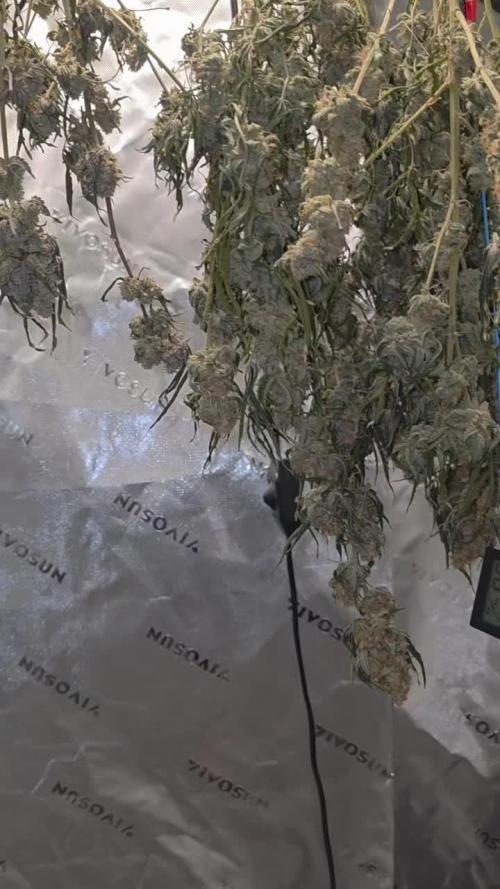
Today is the start of Week 7 and it‘s day 40 of groth for the plants. It‘s safe to say, they transitioned nicely into flower and spread evenly throughout the tent. It was pretty time consuming to get enough light to the lower branches but it seemes to be paying off. At the start of next week, I have a heavy defolition planed so at day 21 of flower most of the fanleaves will be cut off. This will help tremendously with the high humidity i‘m dealing with. Somehow I still manage to get it down but I still have a job to go to and not much time to devote. Anyways, c you soon guys and have a great start to the week. 🤟🏼


Likes
5
Share


Likes
21
Share


@Staffedition
Follow
Привет друзья. Моей растихе сегодня 28 дней.
Начал применять LST технику на 19 дне и продалжаю применять её через день, а 18 августа добавил ДЕФОЛИЗАЦИЮ
С 20.08 ДЕФОЛИЗАЦИЮ делаю каждые 3,4 дня
С 20.08 применяю технику LST каждые 3,4 дня
На сегодняшний день влажность 63%
Растение растёт хорошо. генетика радует.
Всем мира и добра!
#Smail_Seeds
Likes
45
Share


@masterofsmeagol
Follow
7/3 Hot as fuck today. Japanese beetles were around. I killed a few. I'm going to have to go over and keep an eye on things. It reached 90° today for the majority of the day. I watered around 1pm as I noticed most of the bags were very light. I'm glad I held off on the BT. I've dealt with jpn beetles before so hopfully that won't be an issue. Things are getting big. It won't let me upload any pictures or the video I did. I may upload it to past week. Went back over at night and and plants looked dropy but it was after 7pm and they were just going to sleep.
7/4 Didn't take photos this morning. Found some jpn beetles. That's the damage I've been seeing. I went back over last night to hunt them but I only got two. There weren't any others. No biggie. I'll put some pics up from today after I get back
7/5 Didn't get a chance to check the plants out today. My intuition tingled around 1pm and I had just gotten home and I ran over to check them. They displayed minor signs of heat stress as seen in the pics (due to the super high humidity and 90° weather) and the bags were light. A few were REALLY light. I could see they needed water. I WATERED 4 1/2 GALLONS TO THE GARDEN. DO TO THE HIGH TENPS AND WINDS IVE HAD TO WATER THE LAST THREE DAYS IN A ROW. IVE SLOWLY STRARTED INCREASING VOLUME. I don't want to water until I get a shit ton of run off because I want to keep the nutes in my soil as long as possible. As you can see things are going great. Minor pests but notjing major. They're growing at a very rapid pace. I'll need to add another layer of supports soon and begin to LST some of these girls. I've got one seedling in a 10 gal and I'm pretty sure it's a feminized red runtz but it's in preflower and looks and SHOULD be a female but I haven't seen the white hair yet. Looks like a female preflower though. I do have one auto though in a 5 gallon tjats doing good too. I have a bunch of pics but the internet is too slow. I'll upload tomorrow. Started pouring around 6.
7/6 Poured sheet rain all night. After it had Bern super fucking hot and I watered my plants with 4 1/2 gallons. Oh well. If I didn't water we wouldn't have gotten the rain. The fabric bags makes watering easier. The wind will dry out the medium. We do have some rain in the forecast. A pallet fell over and knocked my 5 gal bucket with tje auto into a 10 gal seedling but it held the pallet up and didn't damage anything. Out of all the ways it coyldve landed it landed just right to not hurt anything. Everything is super healthy. I do have some random pest damage but it's minimal. I'll decide whether to use a spray or not. Didn't take pictures this morning. Was pressed for time.
7/7 Super hot even at 8a.m. Rained the majority of the day yesterday. Plants are getting HUGE. I'm going to have to build a second round of supports and should probably start some LSTing. They seem to like growing natural how they are (besides the original topping and FIMed. You can tell these are ALL very high % indicas. I'm seeing pistols spitting out everywhere. Event horizon and sherb cake seem to be in the lead. The seedlings have realky taken off. The one I put in the 50 has fan leaves the size of my hands.
7/8 Wow it has been extremely hot. It's going to be in the 90's again today. Checked my plants and it seems the GMOs seem to be using more water. Those bags were a little lighter. Seeing how there is no rain in for a few days I had to water. WATERED 3 1/2 GALLONS. LAST SEEDLING FINALLY SHOWED AS A FEMALE.
7/9 Bags are still heavy. Found ONE jpn beetle this morning. Plants seem to be bigger everytime I look.starying the stretch and spitting out some pistols. I took some pics of the pistles. I'll update
7/10 should've started a new week but I didn't. I'll make next week six days. Plants are starting ro stretch. Minor random pest damage but woth the heat they need lots of water. Noticed a couple dead interior leaves so I should probably go through everything and defoliate. I need to add another layer of supports as well.


Likes
10
Share


@TherealNICOGREEN
Follow
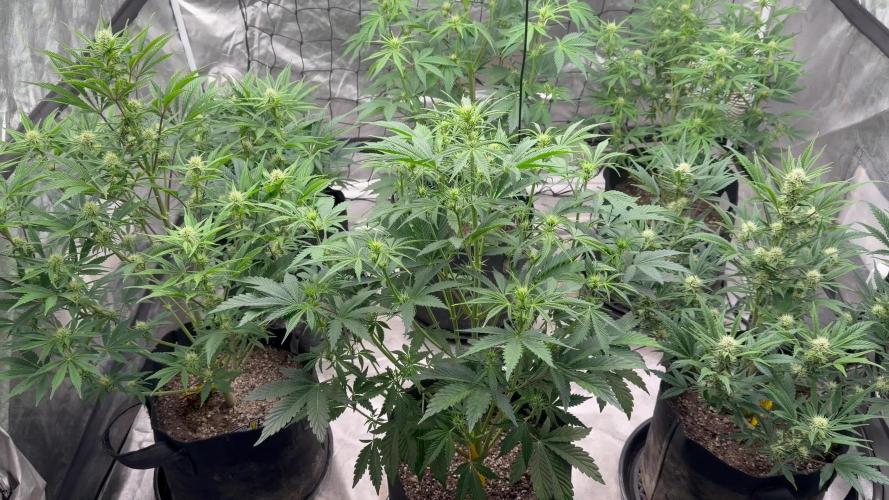
Jeg har ALDRIG OPLEVET NOGET SOM DETE ! Jeg har DESVÆRRE BLADLUS!!! Men hende her kan de ikke lide 😇✌️👍💚☮️😇😉jeg fandt nogle mariehøns 🐞! Det tog, toppen! Så ringer jeg til dem som står for salg/ sponsor ting( gødnings kit og DENNE GANG DET BEDSTE MOD BÅDE BLADLUS, spindemider osv ! Jeg spurgte om de vil sponsorere BARE DENNE ENE GANG! De tvivler IKKE ET SEKUND OG NU ER DET PÅ VEJ FRA : www.Gro-lys.dk , som ligger i Århus Danmark!🇩🇰 mine planter ville vært døde alle SAMMEN UDEN HJÆLP FRA GRO-LYS OG DERES TEm tusind tak for hjælpen og glæder mig til at vise det i en tiktok video konkurrence film 🎥! 💚☮️✌️😇💚☮️tjek deres hjemmeside og frø hjemme side som virkelig kan anbefales!!! Men nu tilbage til min Første Aladdins skunk ! Hun har fordoblet tricommer i næsten ingen tid ca6 dage! Hun viser, sææ må å tegn på hun er klar til flush/ riper fra Terra A ! Hun er også 4 mdr om 4 dage så tiden er også ret passende! Men jeg tror jeg giver hende 2uger før skyl starter! Glæder mig til næste opdatering om 7-12 dage Max! Best Nicogreen 💚☮️



Processing
Likes
7
Share


@x_grower
Follow
Last week plants grew very healthy, as they got bushier the humidty raised providing a better enviroment, I could even reduce the amount of water I give them. Planning to move to flowering stage very soon.

Likes
5
Share

@PigBearMan
Follow
Hey there,
As I went to the Mary Jane some weeks ago, I got a Promo Seed from Wizard Trees.
I‘m usually not the Cali-Weed-Guy, because I don‘t like the taste and the colours… it‘s always so dark and I personally like „light green“ weed… you know, oldschool. Just good weed and not some hokus pokus.
PPFD ~ 160
Let‘s see what this turns out. I will definetly keep it as a mother plant and take clones.
See you around… ✌️

Likes
23
Share


@Mazgoth
Follow
The color is awesome,this plant is really tall even for this tent,the grow is really fast too
Likes
19
Share


@cherokee
Follow
Привет 🖖
С новым годом 🎅
2022 самый ужасный год в моей жизни! Он был сложным во всем, экономический кризис, война.......
Я добавил видео, это 2 ракеты 31 декабря упали рядом с моим домом, русские нацисты обстреляли жилой район, умерла девушка 22 года ей было..... 4 человека получили ранения..... Так страшно ещё не было! Мы встречали новый год под обстрелы ракет и звук сирен тревоги в полной темноте...... Россия государство террорист убийца 😣
Это мой блог и я хочу здесь делится своими чувствами и эмоциями, что бы больше людей знали что происходит.
А теперь дневник.
На этой неделе растения стабильно получали 20 часов света, это очень помогло им стать больше и сильнее.
Я продолжаю тренировки LST.
На этой неделе была обрезка веерных листьев, я часто практикую дефолиацию автоцветов. Надеюсь проблем со светом не будет, растения уже показали "усы" свой пол, значит стадия предцвета будет примерно через неделю, хочу что бы они стали ещё больше и набрали "мяса" массу.
Ещё раз поздравляю всех с новым годом. Мира вам и вашим семьям, и мирного неба, что бы в ваш дом не прилетали ракеты.
🇺🇦 🇺🇦 🇺🇦


Likes
4
Share


@Wolf47
Follow
Strawberry CC have been really good girls. Haven’t given me any problems, and have been growing steadily. Hope I don’t jinx myself!
Likes
2
Share

@ProfessorWeed
Follow
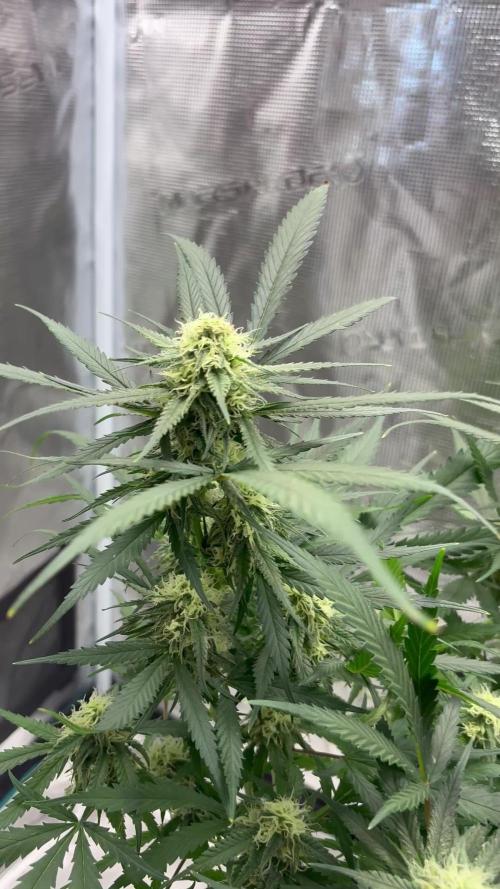
Sie saugt das Wasser gut weg.
Alle 2 Tage gibt’s 1,5L Wasser PH angepasst.
Die Tribe wiegen schon ganz schön was.
Bisher wirklich sehr empfehlenswert der strain.
Mit einer besseren Erde hätte sie sicher noch mehr an Maße drauf packen können.