




Processing
Likes
22
Share


@Yiyis_Grow
Follow
He tenido unos problemas esta semana.
Una de las plantas no tiene orden jajaja. Al parecer sus ramas no están muy fuertes y se caen. Acá es donde me arrepiento de no haber usado scrog.
Otras dos plantas están presentando un poco de amarillo en las puntas de las hojas y una que otra un poco quemado justo en la punta color amarilla.
Por lo demás las veo bien, se hicieron un poco más gordas, pero no lo suficiente o lo que quisiera.
Necesito incorporar co2 y scrog en el próximo cultivo.
Espero resolver mis problemas y mejorarlas para la otra semana.
Buenos humos


Likes
10
Share


@cuervo420
Follow
Ultima semana de vegetativo. Fueron 7 semanas y unos días de la Muse en 18/6. Agregamos MadGrow Algas foliar. Pasamos dos plantas afuera a florar así le damos un poco mas de espacio en el indoor. Quedaron 5 plantas total, la Muse central, 3 esquejes de Portela y una Hulkberry. Pusimos la red de SCROG, acomodamos las puntas y buscamos que ocupe todo el espacio. Luego de unos días que se acomodaron las pasamos a flora 12/12. Arranca el segundo capitulo 🌸


Likes
6
Share

@CheeRz
Follow
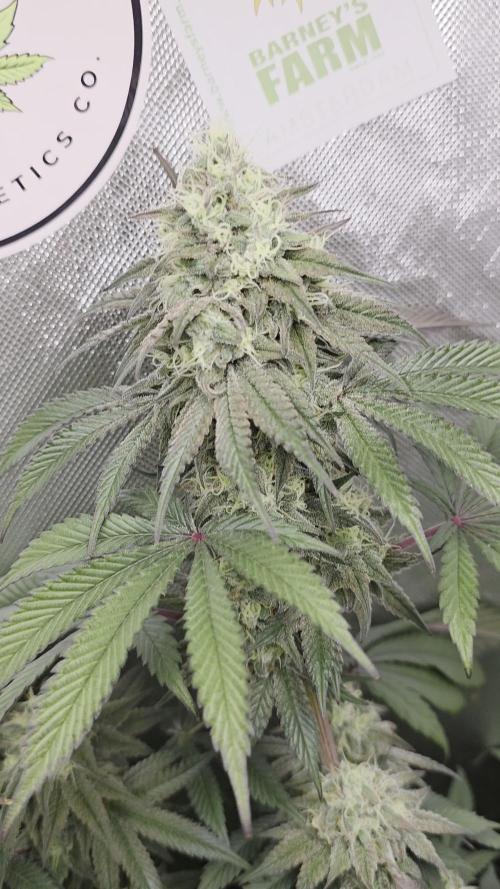
WEEK 10 - FLOWERING: Tropical Maturation
🌼 FLOWERING PROGRESS
We are now in the 10th week (6th week of flowering), and the Papayton is showing impressive development. The buds are visibly gaining weight and density every day. The resin production is in full swing, covering the flowers in a thick, sticky layer of crystals. It’s great to see how the plant is putting all its energy into the final flower formation. ❄️
👃 TERPENES & AROMA
The tropical scent is becoming much more defined this week. There is a strong, sweet papaya aroma that dominates the tent, perfectly complemented by a creamy finish. The Top-Max is clearly doing its job in bringing out these exotic fruit notes as the plant matures. 🍦
💧 NUTRIENT FEEDING & WATERING
The feeding schedule remains at a high level to provide all the necessary building blocks for the final ripening process. The focus is on maximizing terpene development and resin output.
Current Feeding Schedule:
Calmag: 1.5 ml/l
Acti-Vera: 5 ml/l
Bio-Heaven: 5 ml/l
Bio-Bloom: 4 ml/l
Top-Max: 5 ml/l
Bio-Grow: 1 ml/l

Likes
47
Share


@S2340420
Follow
This was a good grow couple of ups and downs weather wise and the moment of devastation when seeing my fattest cola had been affected by bud rot this was a solid happy nug yesterday and today well thenpics tell a tale all other buds were fine and are drying as we speak ye win some ye lose some some are just fkin annoying

Likes
132
Share


@BudBoutique
Follow
Welcome to Bud Boutique Grow Diary - really appreciate all your love and support :)
Dont forget to check out my other current grows!
🗓️ This Week:
- LETS CHOP IT ✂️✂️✂️
- beautiful big bud structure
- last trichome check again after 48hrs Darkness - looking perfect!!
- Now lets dry inside the tent for 12-14 Days - Trimjail soon
Thank you for still staying with me 💚
___________________________________________
--- 🌱 Strain ---
🏷️ SWEET CHEESE by Sweet Seeds
https://sweetseeds.es/en/photoperiod-dependent-seeds/48-sweet-cheese.html
---💡 Lighting ---
💡LUMATEK ZEUS PRO 600
https://lumatek-lighting.com/zeus-600w-pro-29/
--- 🥗 Nutrients and Feeding
* 🍸 PLAGRON Algae Baseline grow/bloom + Additives: Power Roots, Sugar Royal, Pure Enzym, Silic Rock, Power Buds, Green Sensation
* 📅💪 baseline grow/bloow: 4ml/l & additives: 1ml/l each
https://plagron.com/de/hobby/produkte
--- 🏭 Grow Setup ---
* 🏠🌿 Indoor: Homebox 120x120x200cm (4x4)
* 📐🌀 PrimaKlima exhausting Fan 1180m3/h (running on 60-80%) & Can Light Filter 800m3/h & 1x Fanbox 1x Dyson fan for Air circulation
https://primaklima.com/de/shop/ventilatoren-de/ec-ventilatoren/pk160ec-tc/
https://canfilters.com/products/filters/
All Likes and comments are highly appreciated!!!
don't forget to check out my Instagram: budboutiquee

Likes
9
Share


Likes
2
Share

@hassehujasse
Follow
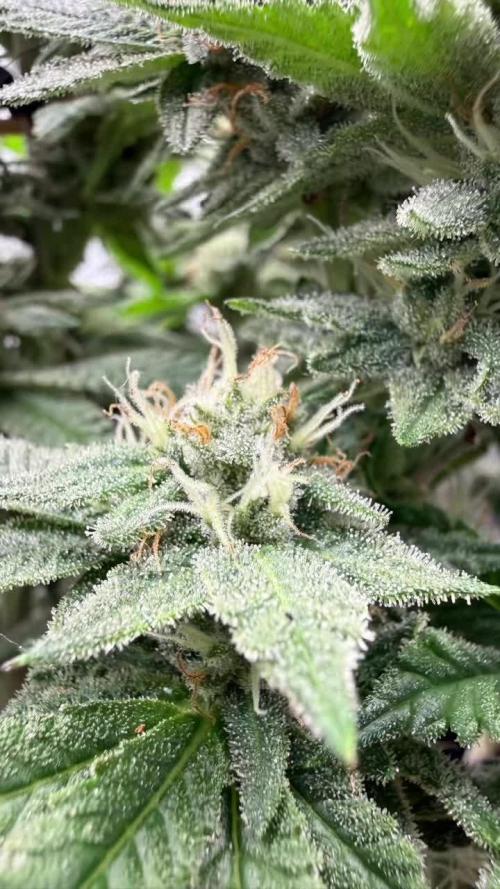
Transformation de la chica a la mujer. Disfruta lo conmigo
Strong begining of the week, looking forward to give her all my love
Likes
5
Share


@Elevated_97
Follow
Im a little late on the update this week pictures are still dated tho. I started the mills line this week after flushing and did a bit more lst work on the plant even ended up cloning her a few times just for the fun of it and to help with the canopy. I really like this strain and have been having a lot of fun growing it so having a couple more around is fine by me. I can't wait to see how she produces!!!(especially once I start using the vitalize nutrient solution.)

Likes
23
Share


@Ganjagrandaddy
Follow
Day 27 flower: I love the Gz strain with a passion. The colours that are beginning to shown on all of their buds are beautiful already and they are not even half way through yet !!. #1 is by far the biggest girl with so many tops going for her final yield weight. #2 is plodding along still in her indica stout kinda way. forming ok too
#3 was the tallest of the 4 and had to be supercropped to get the lower buds some light down there. gave 5 mains a 90° bend.
#4 is still a little lady but is making nice bud stacks for the party too.
They are getting sticky icky now too and smell really fruity when rubbed a little
well done Barneys Farm
Likes
3
Share


@Kazbrownthumb
Follow
I got really busy towards the end and probably made a few mistakes. Probably cut it down a bit early too but she wasnt able to hold herself up anymore and broke some stems. All in all compared to the outcome of my last grow this one plant doubled my outcome so I dont believe I maybe improving on my growing skills.
I have her curing in jars right now. Out of the sample I have tried I really enjoy it. Smells like candy, tastes like candy with a little extra something something at the end. Smooth, burns clean I couldn't be happier.

Likes
14
Share


@Professor_Chaos
Follow
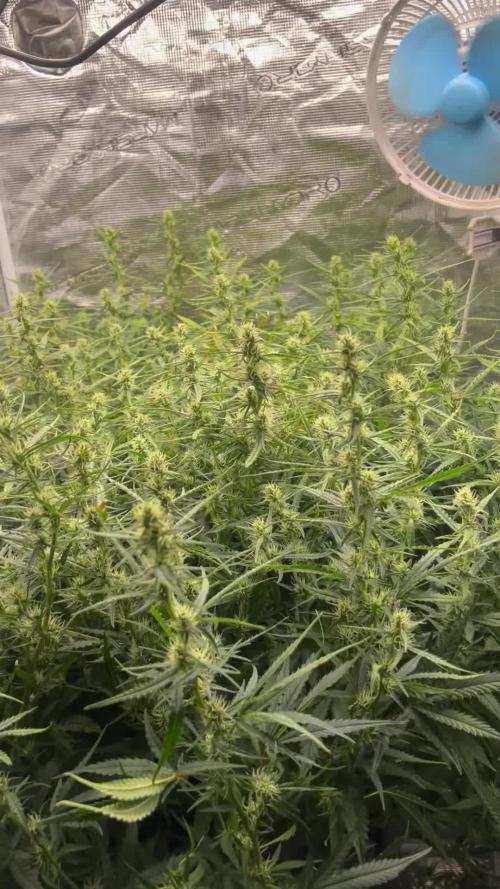
Begging of week..
She is happy and healthy asf.. Pistils are poppin out everywhere.. Leaves are looking a little burnt on the tips.. But some of the older leaves are lime green.. Almost like they want to begin yellowing or something.. Other than that.. No issues.. My supercropped branch has healed nicely.. Turning into a nice knuckle lol....
Mid week..
I just barely noticed that ALL the leaves have a mutation that has double serrated leaves.. You can see what it looks like in the pics. This is the first time I've ever seen it in person.. Kinda pretty really.. Ive read about it before.. Nothing to be worried about.. Just cosmetic, I guess.

Likes
23
Share


@HanzGrowz
Follow
Just waiting it out now. No added nutrients, just water. Bubba and Black Dog have exceeded their expected flowering time, and both are at 95% cloudy with 5% or so still clear. Chemdawg and The New can take up to 70 days or more so we’ll see if they’re late too.
Bubba is a foxtailing machine. It was one weekend in early Flower when heat/humidity got out of hand while I was away for 3 days. She hermied a bit and I’ve had my eye out for bananas ever since (find a few every so often). Taking a risk to keep her in the tent with the others but if I catch them early enough the others should be ok. Interestingly I found a YouTube video of a guy that ran bubba and had the same foxtail development (also the same scent description and look overall). Nothing like the gorgeous fat purple budded girl I had last year but the citrus smell on this lime green bud pheno/version is impressive. Curious to see how the smoke compares.
Scent combo from all four plants is amazing!

Likes
8
Share


@Goldenbags
Follow
9/3 One of the West Coast OG's, seems to be a bit stunted..the smallest of the lot but has the most pistils so far.
11/3 lsd has started flowering! Have been doing some light defoliation here and there and some lst to open them up.

Likes
4
Share


@adam_pawloski87
Follow
Twenty20 Ateam R&D Update! Wow this week went so great, Germination was 100%successful!! We went with the usual paper towel method an they all popped up in the soil on Saturday the 28th! Let’s grow lil babies let’s grow!!

Likes
Comments
Share

@LoveTerps
Follow
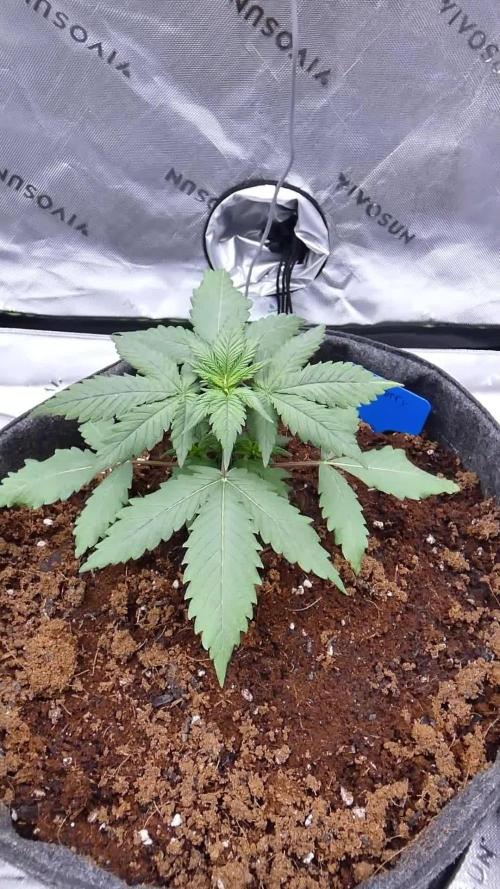
May 26 2026
She's been repotted into a 5 gallon grow bag, and that will serve as her home for the remainder of the grow. The soil in the bottom half is pro-mix all purpose, and the top half is a combination of coco coir, perlite, worm castings, biochar, blood meal, bone meal, Epsom salts, and a bit of cal-mag.
Healthwise she is doing good, and also putting off a very faint aroma.


Likes
1
Share


@Kraken85
Follow
1 er Cycle : Gourmande e crossance et Flo ...
La Tangerine Dream est une variété de cannabis à dominance sativa au goût acidulé, doux et intense. Les arômes d'agrumes ainsi que les effets qui sont à la fois cérébral et relaxant satisferont aussi bien les amateurs de THC comme les amateurs de CBD. Les juges de la Cannabis Cup 2010 étaient d'accord avec cette description car ils l'ont élu comme la meilleure variété de cannabis 2010.
Barney's Farm annonce un temps de floraison de 60-65 jours, ce qui est court pour une variété sativa aussi puissante. La Tangerine Dream donne des plantes de un mètre de haut en intérieur avec beaucoup de branches latérales robustes.
La production de la Tamngerine Dream est impressionnante, 600 gr/m2 en indoor. Les têtes sont grandes, compactes et recouvertes de pistils rouges orangés ainsi que d'une résine très odorante remplie de THC.
L'effet de la Tangerine Dream de Barney's Farm dure longtemps. Quant à ses parents, la G13 est une variété de cannabis légendaire reconnue pour ses saveurs intenses ainsi que ses effets très puissants et la Neville's A5 Haze est une plante exotique raffinée.
La Tangerine Dream de Barney's Farm est une variété de cannabis très productive et de floraison courte. Les taux de THC et de CBD annoncés par Barney's Farm sont exceptionnels car peu de variétés du marché actuel arrivent à 25% de THC et 1.8 de CBD.
Parfait rien a dire.
2 ème Cycle:


