


Likes
Comments
Share


@EileanDonanCastle
Follow
It’s been a long day potting these girls into there new home.
All is looking well. Little bit of heat stress but ime sure they will cope 🤞

Likes
20
Share


@Chubbs
Follow
420 Fastbuds Week 2 Veg
FBT2305
The two of these are starting off great. The few rust spots stopped and stayed on the couple leafs it showed up on. I feed 500ml of solution every other day. I did start the General Hydroponics 3 part Flora series as well as the Calimagic. On week one I started 1/4tsp per gal ratio every other feed, so far no burn so will probably bump it up this coming week and see how they respond. All in all Happy Growing.

Likes
15
Share


@OrganikTek
Follow
Weather Continuos Cool And Wet
Beautiful Bubs Forming In Black Cream
Wedding Cake Gone Full Bloom. Discoverd Source Of The Yellowing.... Red Led From My esp32....
BomBerry Shes a Later Late VegBoom Late Full Bloom If Shes Continuos To Grow I Dont Have More Space For Her
Couskush She Isnt So Big as The Other. The Other Are More Evolued I Think. Shes Now Starting To Go Full On Bloom.
Chears BrotherHood


Processing
Likes
24
Share


@DaddyPrime
Follow
7/19 shes starting to fill out more around the top. I keep thinking about what she'll look like with buds on her
7/21 watered and took pictures
7/22 she has most her dark green color back. She was hungry for nitrogen for awhile and shes responded nicely


Likes
128
Share


@PapaNugs
Follow
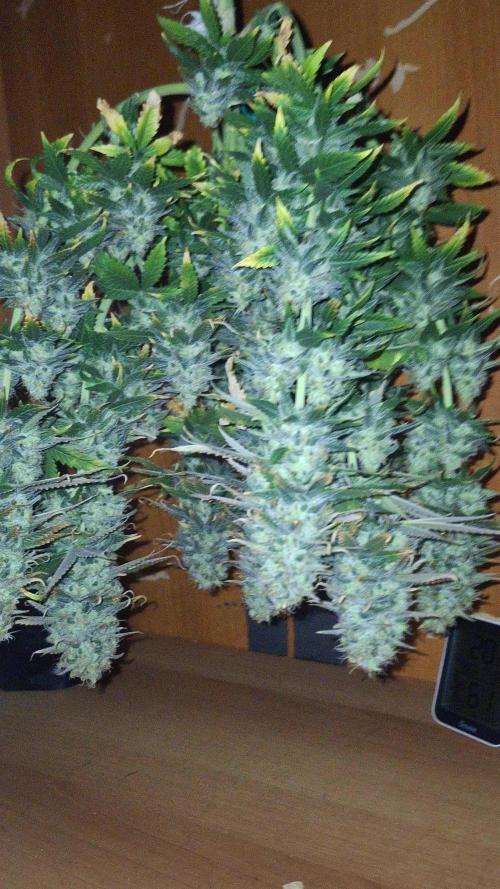
These girls are super sticky! Resin is building up all over the place, including the leaves. I've been defoliating like crazy but they just keep coming back.

Likes
19
Share

@DogDoctorOfficial
Follow
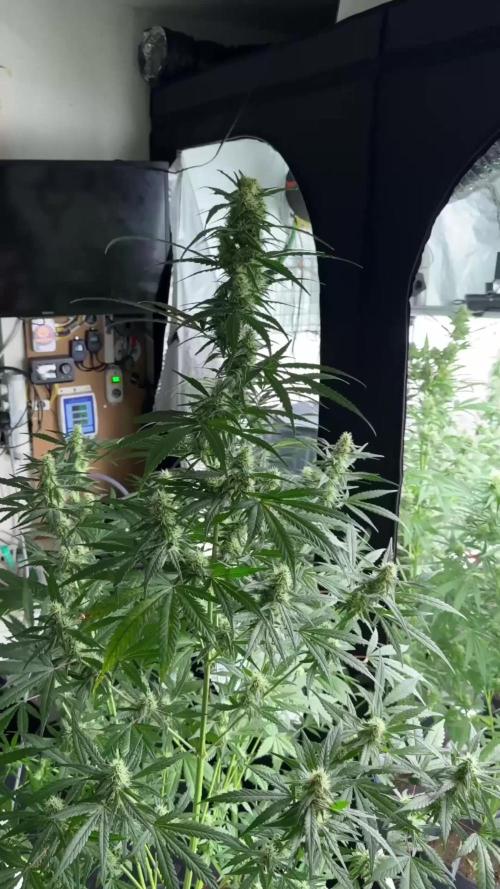
🌸 White Widow — Week 4 of Flower (12/12–11/13 From Seed)
Stage: Week 4 Flower (full flower, no stretch left)
Structure: Compact plant, building a tall main cola (~25 cm target) + tidy “golf-ball” side colas
Frost: Already impressive; trichomes thickening across tops and sugar leaves
Watering: Hand watering (by feel; no runoff chasing)
Light routine: Still running the red-on/red-off sunrise/sunset via TrolMaster (15 min before/after)
⸻
Quick Recap (for anyone just joining)
• Germination: We lost the first batch (uneven heat mat, my mistake). We restarted and this solo survivor is the one you see now.
• Veg under 11/13: She stayed compact and stubbornly vegged a while before showing preflower, great node stacking.
• Early flower: Bud set → second flower push → now deep into Week 4 with clear, even sites top to bottom.
• Environment: Room was hot early on; AC install stabilized temps and RH. Plants never showed stress, credit to genetics, steady care, and balanced feed.
⸻
🍽️ Nutrition (this week)
We’ve removed Top Booster completely. Current, steady recipe:
• Aptus Regulator – supports cell strength, transport efficiency, and stress tolerance
• Aptus CalMag Boost – LED + coco/active soil insurance for Ca/Mg/Fe availability
• Plagron Power Buds – encourages compact flower set at each node
• Plagron Sugar Royal – metabolic push (N-based aminos) to drive energy use + aroma precursors
• Plagron Green Sensation – balanced late-flower support (PK + organics/biostims) for density, oil, and finish
• Aptus All-in-One Liquid – (still in) gentle full-spectrum base; likely to taper/stop soon as the soil biology carries more of the load
Why this mix now?
Week 4 is the “early swell” window: calyx initiation shifts into mass formation. We’re keeping Ca/Mg steady for membrane integrity and photosynthesis under strong LED; using Power Buds to keep sites tight, Sugar Royal to feed metabolism and terpenes, Green Sensation to support density/oils, and Regulator to keep the plant efficient under heat/PPFD. All-in-One remains as a safety net while the super soil’s biology fully ramps, then it can step back.
⸻
🔬 Plant Development (what’s happening physiologically)
• Stretch is done. Auxin dominance recedes; energy diverts to calyx swelling and trichome biosynthesis.
• Trichomes rising. Expect a marked increase in capitate-stalked heads on bracts and sugar leaves from now through Week 6–7.
• Carb sink strength. Flowers become the primary sink; steady water + balanced EC will keep turgor and bulking clean.
⸻
💡 Light & Rhythm
• Sunrise/sunset with reds (TrolMaster): 15 min before and after the white/blue block to smooth transitions and lean into the red/far-red synergy.
• Target PPFD/DLI: With shorter photoperiods (11–12 h), aim ~700–800 µmol·m⁻²·s⁻¹ to land a DLI ~28–32 mol·m⁻²·day⁻¹—a sweet spot for mid-flower without forcing heat stress.
⸻
🌡️ Environment (steady and sensible)
• Temps/RH: Now stable since AC: ~28 °C and mid-60s %RH previously reported—great for mid-flower resin and growth when airflow is strong.
• VPD: Around 1.3–1.4 kPa is ideal for Week 4 bulk—keeps stomata active, minimizes mold risk, and preserves turgor.
• CO₂: Natural room swings are fine at this stage; plant responses are telling us she’s happy.
⸻
👀 What to Expect Next (Week 5–6)
• Calyx stacking & mass gain on the main cola and those side “golf balls.”
• Frost explosion: More trichomes and a greasy feel on sugar leaves.
• Aroma lift: Expect that classic White Widow earthy-spice to start pushing out.
What not to expect
• Height—she’s done stretching.
• True ripening signals (amber heads, heavy fade) — too early.
• Big defoliation needs, she’s compact; keep leaves that drive sugars unless a leaf blocks airflow or a bud site entirely.
⸻
Grower’s Tips (why the choices matter)
• No Top Booster now: Keeps K spikes in check; prevents Ca/K antagonism and tip burn while the plant is setting long-term resin factories.
• Keep Ca/Mg consistent: Under strong LEDs, Ca deficits appear suddenly in fast-bulking weeks. Stay ahead, not behind.
• Watering style: Hand watering gives you feel-level control over moisture fronts and prevents swings—perfect for a compact, single-plant showcase.
⸻
🙏 Gratitude & Shoutouts
🌱 Zamnesia Seeds — for the living legend, White Widow
💧 Aptus Holland — clean, precise fundamentals (Regulator, CalMag, All-in-One)
🌸 Plagron — Power Buds, Sugar Royal, Green Sensation driving flower expression
💡 ThinkGrow & Future of Grow (Black Series 600W) — power + uniformity for dense stacking
🧠 TrolMaster — the ecosystem that lets us choreograph sunrise/sunset and keep the room steady
…and you, reading and riding along. Thank you for being here and sharing the love for the craft.
📲 Don’t forget to Subscribe and follow me on Instagram and YouTube @DogDoctorOfficial for exclusive content, real-time updates, and behind-the-scenes magic. We’ve got so much more coming, including transplanting and all the amazing techniques that go along with it. You won’t want to miss it.
• GrowDiaries Journal: https://growdiaries.com/grower/dogdoctorofficial
• Instagram: https://www.instagram.com/dogdoctorofficial/
• YouTube: https://www.youtube.com/@dogdoctorofficial
⸻
Explore the Gear that Powers My Grow
If you’re curious about the tech I’m using, check out these links:
• Genetics, gear, nutrients, and more – Zamnesia: https://www.zamnesia.com/
• Environmental control & automation – TrolMaster: https://www.trolmaster.eu/
• Advanced LED lighting – Future of Grow: https://www.futureofgrow.com/
• Root and growth nutrition – Aptus Holland: https://aptus-holland.com/
• Nutrient systems & boosters – Plagron: https://plagron.com/en/
• Soil & substrate excellence – PRO-MIX BX: https://www.pthorticulture.com/en-us/products/pro-mix-bx-mycorrhizae
• Curing and storage – Grove Bags: https://grovebags.com/
⸻
We’ve got much more coming as we move through the grow cycles. Trust me, you won’t want to miss the next steps, let’s push the boundaries of indoor horticulture together!
As always, this is shared for educational purposes, aiming to spread understanding and appreciation for this plant. Let’s celebrate it responsibly and continue to learn and grow together.
Friendly reminder all you see here is pure research and for educational purposes only,
With true love comes happiness. Always believe in yourself, and always do things expecting nothing and with an open heart. Be a giver, and the universe will give back in ways you could never imagine.
💚 Growers love to all
Likes
5
Share


@GrowLegend
Follow
Bien aquí esta el día esperado la cosecha, es mi primer cultivo y considero que lo logre. En muchos medios de lectura y en especial en vídeos mencionan que no puedes esperar mucho es tu primer cultivo. En mi caso es falso y lo demuestro ya que si aprendes, investigas por cuenta y lees lo suficiente, obtendrás un alto porcentaje de que los resultados se den. Muy contento con mi plantas y sus tonos morados. Puntos a mejorar tener una carpa de cultivo y por su puesto un extractor de humedad para que baje la humedad preferiblemente a 45 grados
Vendrán mejores contenidos y cosechas mas abundantes. Gracias a todos por su vistas y comentarios. Saludos y bendiciones!

Likes
19
Share


@Ezzjaybruh
Follow
All transplanted to new one gallon containers. Gonna flower soon in these.
Topped and LST on bottom branches
Topped again on upper branches
—-Switched to 12/12 on oct 22—-
Training some more day 2 of flower


Likes
9
Share


@Alejangrow
Follow
Moved these girls into the flower room at the end of this week.🌺 Gave them their first week of bloom nutes. 💉
Likes
Comments
Share

@Sakub
Follow
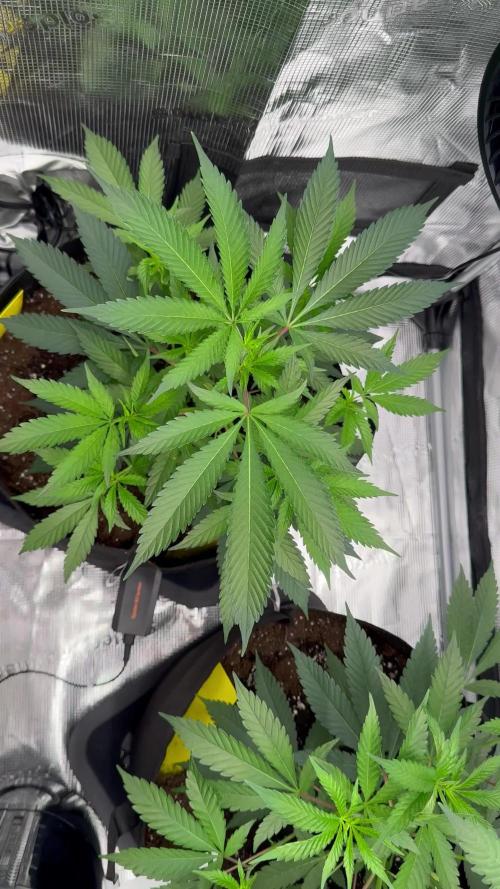
This week, I topped the girls for the first time. They’re still getting just tap water. I went from struggling with low humidity to dealing with high humidity, but the Spider Farmer dehumidifier solved most of the issues. Humidity still spikes for about 20–30 minutes after the lights go off, but after that, it’s all Gucci.

Likes
6
Share

@GERGrowDesigns
Follow
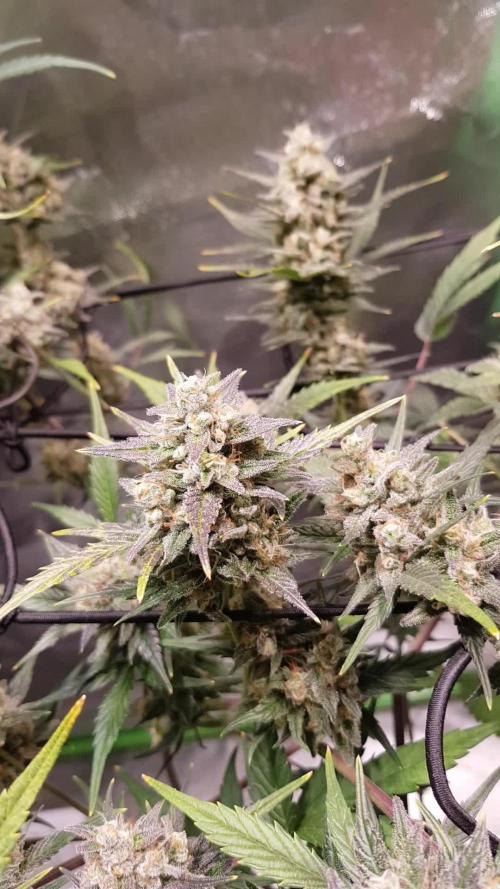
Welcome to Flower Week 4 of Fast Buds Apple Strudel Auto
I'm excited to share my grow journey with you from my
FastBuds Project . It's going to be an incredible ride, full of learning, growing, and connecting with fellow growers from all around the world!
For this Project , I’ve chosen the Feminized Auto strain Apple Strudel:
Here’s what I’m working with:
• 🌱 Tent: 120x60x80
• 🧑🌾 Breeder Company: Fast buds
• 💧 Humidity Range: 60
• ⏳ Flowering Time: 9-10 Weeks
• Strain Info: 29%THC
• 🌡️ Temperature: 26
• 🍵 Pot Size: 12
• Nutrient Brand: Hy-Pro
• ⚡ Lights : 200w
A huge thank you to Fast Buds for allowing me to try my Best with this amazing collection from Automatic and Photo Strains they managed to Sponsore . Big thanks for supporting the grower community worldwide! Your genetics and passion speak for themselves!
I would truly appreciate every bit of feedback, help, questions, or discussions – and of course, your likes and interactions mean the world to me as I try to stand out in this exciting competition!
Let’s grow together – and don’t forget to stop by again to see the latest updates!
Happy growing!
Stay lifted and stay curious!
Peace & Buds!
Processing
Likes
10
Share


@BodyByVio
Follow
This week I Supercrop all the plants and spred them out over both lights. One more week of Veg and they are ready to explode
Check me out on Instagram @growmorestressless





Likes
2
Share


@TowersD
Follow
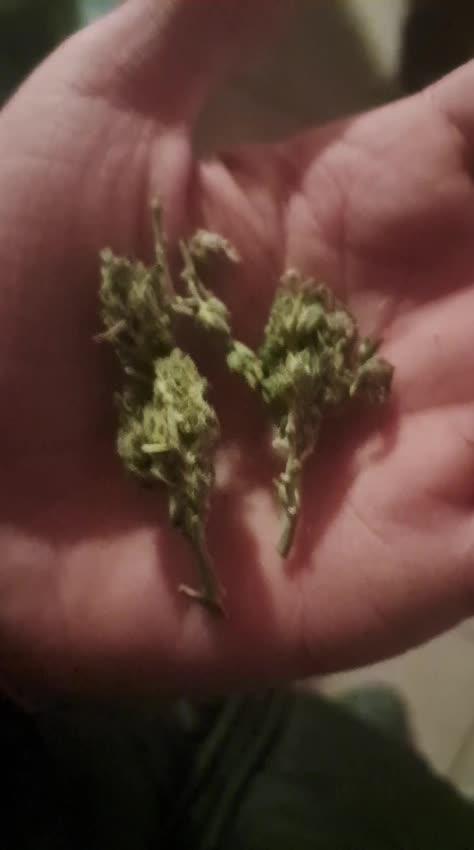
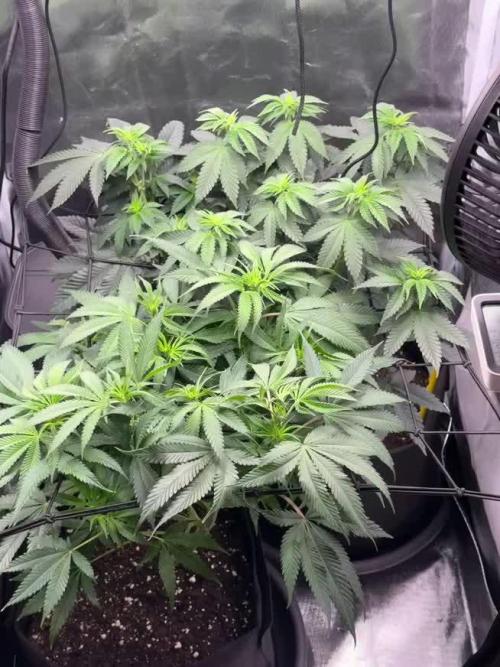
In the beggining of week 4 of flower the phenos are showing differences.
Nanaz x BBC are way toller that the Headbands.
Also, Nanaz x BBC #2 has no pistils but it is a female plant. I have that happened before when I grew the Banana Butter Cups S1