


Likes
Comments
Share


@ItsCannaDog
Follow
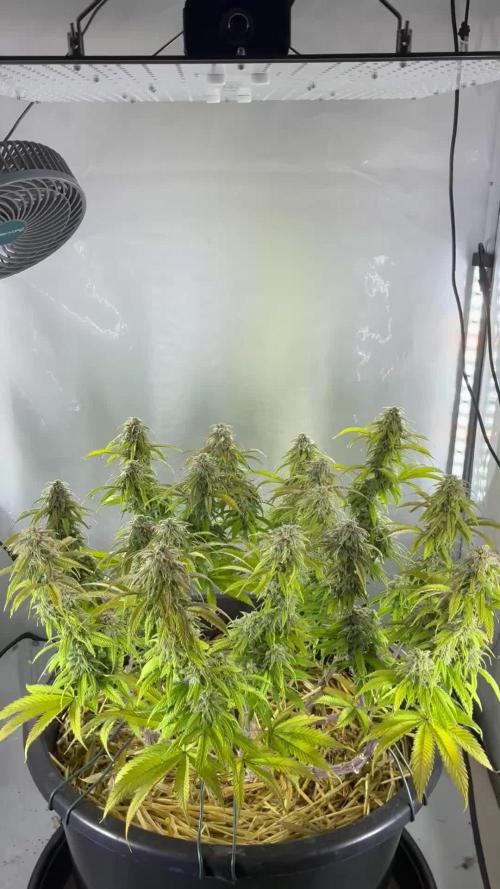
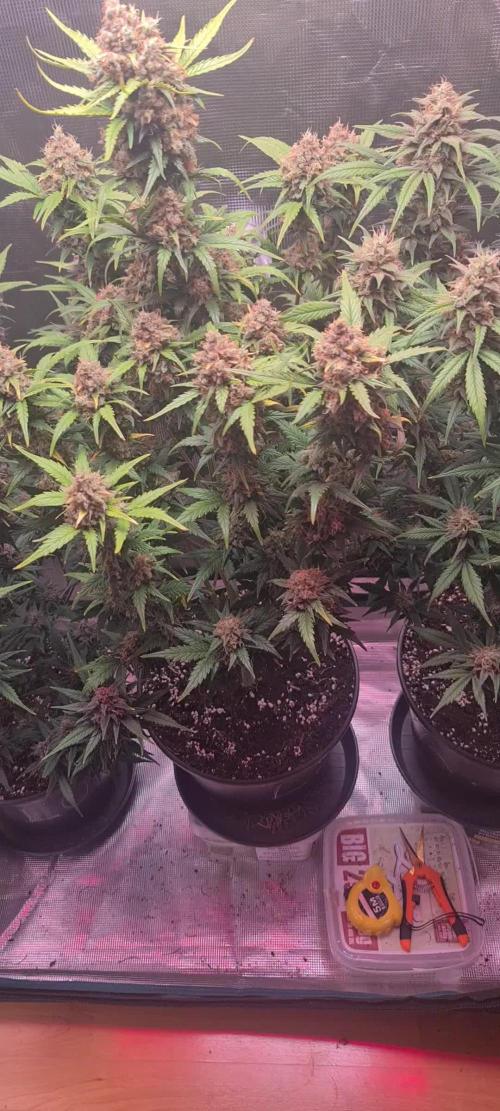
This is the start of week 4 of flower. Raised my light to the maximum height, have it on 100% full spectrum and 50% red and ir. Noticed some yellow tips with a little curling, thought it was light burn, but now think it may be over nutrients so I lowered nutrients to about 75% of what they recommended to see maybe it will help. Other than that not much else I did, besides letting these girls grow.

Processing
Likes
42
Share


@Gabarram
Follow
03/12/2019 Day 81 The Dr seems to be concentrating in forming buds but I think she's grown some half centimeter, is she going to touch the ceiling? She has to know that is is confined and the sky is not the limit, at least in her condition.
Day 82 (04-12-2019) The shoot at the rear left is almost touching the celiling of the grow tent😨 and i keep on tying other shoots and keeping them the farthest from the burning lights (many leaves' tips are scorched, but fortunately it's just the tip and the bud is still far from that hot point. Other leaves that are close to the lights, well, I took scissors and there's no need to speak further. Look the hard work I'm having with this plant height's issue. Goddammit why can't I have a normal grow like everyone?
Day 83 just looking the video and the pics is self explanatory. No further comments 😒
Day 84 Ithe tallest shoot has reached the ceiling and seems to try to keep on growing so she needed to start bending at the very top because she wouldn't get past the tent fabric.
Regarding EC, I am using a fertigation solution about 1,3 mS/cm and the runoff EC at 1.5 mS/cm. EC has been kept controlled since I raised fertigation volume to 6 L per fertigation event (1/day), unfortunately this solution containing nutrients goes to waste :(
Day 85 07/12 I'lllst the tops that get to touch the ceiling and keep observing and acting as needed. I fear she'll stilll keep going up for a while. Fertigations as usual, got runoff EC 650 ppm today (1.3 ms/cm) which I think it's very good of a value.
Day 86 (08/12/2019) Following advice I defoliated and even cut some thin and improductive shoots. Removed a lot of foliage and even supercropped a long tall shoot, I want to see how this high stress technique affects her. Because I plan to keep it doing if other shoots decided to continue growing.
I wonder why do shoots continue growing vertical after having passed the light's level. Is it the glow coming from the reflective walls perhaps? Many questions.
I decided to take down some tall shoots by suspending little weights near the tip, it seems to work more or less fine.
Day 87 luckily the HST seems to have worked fine, the shoots are recovering and point upwards again. The main tip is quite unruly, today I supercropped that tip. Runoff EC is 650 ppm, perfect.
Day 92 /14-12-2019) I think that despite her exaggerate growth she's managing to thrive fine with some limitations, buds seems going well. Shoots are still growing vertical but supercropping and resistance seems to have hampered her a while, but now I see she engaged on growing some centimeters more :/
Day 93 two days from starting the 14th week, despite the lights and the heat of this season (added to the lights I had to keep the tent door open for there was 32 ºC inside) the Dr is taking it well, I see the buds foxtailing as I expected, and I'm positive this grow will get to a good end. I'll work day by day to achieve that. Regarding fertigation, I gave her a solution half concentrated (relative to the solutions that I had given her the preceding days) because I noticed salt build-up by the EC measurements. I left run off EC at 800 ppm which is still a bit high for my liking but not excessively. For the amount of runoff I collected today, I see she seems to be drinking a little more.

Processing
Likes
26
Share


@Teamdirtbag2
Follow
I have transplanted into Dutch buckets. Filled with perlite. And all are now in the Greenhouse. Doing great. These are watered 4 times a day for 1 minute.
This girl is looking great. Preflowers are out.

Likes
4
Share
@lolasher
Follow
In den letzten Tagen hat sich was erfreuliches getan:
Die Tropicanna Poison hat sich endlich dafür entschieden, sichtbare Buds zu entwickeln.
Ich war kurz vor der Verzweiflung. Diese sind zwar Mikroklein, aber vielleicht schwellen die noch ordentlich an. Der Stamm sieht auch wieder etwas besser aus - der war fast schwarz, inzwischen sind wir wieder bei einem ungesunden lila 😂👍.
Der Geruch wird süßlicher, freut mich auch, da diese Pfeffernote echt nicht meins war.
Klar, die komplette Pflanze sieht nicht wirklich top aus, aber die scheint über den Berg zu sein. Bin gespannt, wie sich das entwickelt.

Likes
5
Share

@Antarctic
Follow
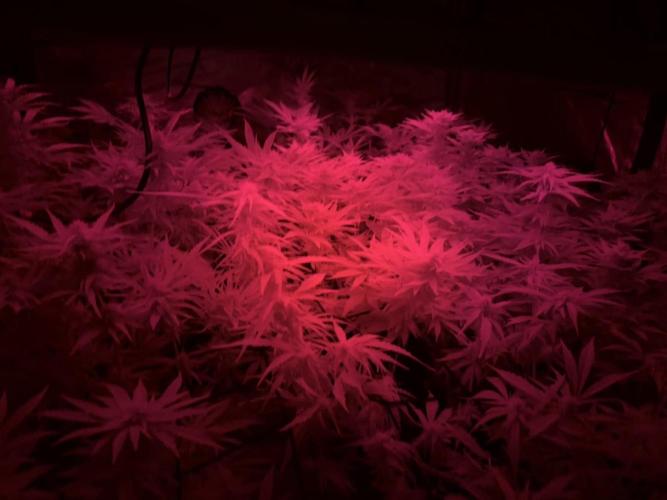
Week 14 (Plant Week 14) = Flower Week 5
Humidity management became more serious, so I installed a dehumidifier.
I focused on keeping the tent dry and stable, so everything runs properly (less risk of mold).
Defoliation continued gradually across Week 13 into Week 14: small cuts consistently over time instead of one heavy session.
Today (end of Week 14)
I did the final defoliation session.
This is the last major trim; I’m not planning to remove more leaves going forward.
Buds now have a stronger smell, and the resin is very sticky during handling.
If you want it even tighter, here’s a one-paragraph version you can use as a caption:
Caption version:
“Flower Week 3–4: Started gradual defoliation and canopy control. Plants kept stretching longer than expected, so I added new tie-down points and continued LST. Reduced light to ~60% after heavier trimming to reduce stress. Humidity was high, so I installed a dehumidifier in Week 4 and focused on keeping the tent dry and stable. Today I finished the final defoliation; buds are now noticeably more aromatic and extremely sticky/resinous.”

Likes
2
Share


@FourTwenty_Plants
Follow
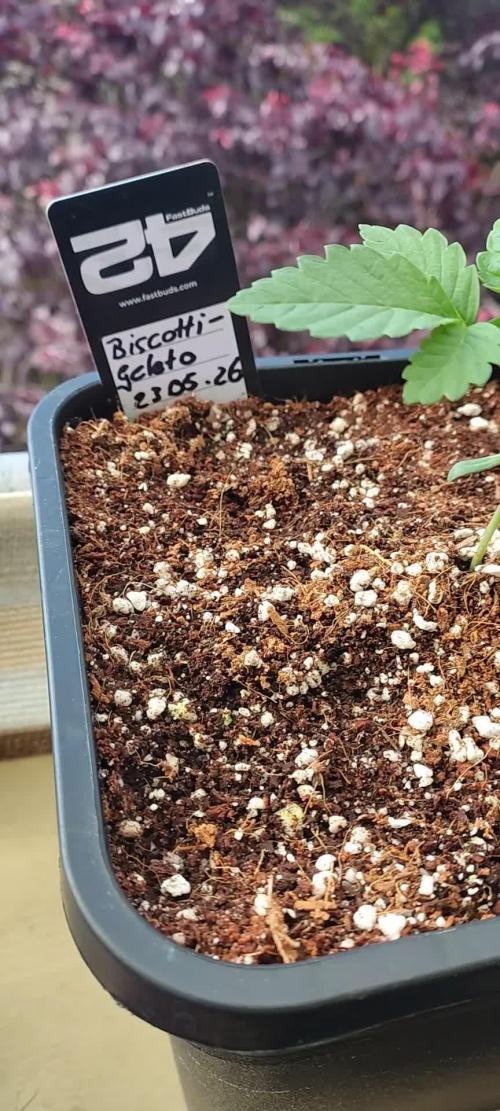
Been on the Spananbis so I wasnt able to check on them but they did really good the last few days. Put a net on them to spread them out a bit cause im scared of not enough airflow between the plants



Likes
19
Share


@Deepgrow
Follow
Añado 1 pastilla de Easy 2 Grow por cada 15 litros de agua para no sobrefertilizar. Tiene abono organico de Royal Queen Seeds, 30-40 gr x cada tiesto de 8litros.

Likes
Comments
Share


@weedismalifebra
Follow
Not a big flower but great yield and crazy smell, easy to grow and beautiful colors


Likes
12
Share


@DeepWaterGrower
Follow
🗓️ WEEK 1 / DAYS 1-7 (flo)
🔙 The first four weeks of vegetation went remarkably smoothly. I gradually increased the EC from 0.6 to 1.2, and the plant responded with healthy, compact growth. By the end of week 4, the plant was bushy, vibrant green, and ready for the flip after a 24-hour flush.
💧 At the beginning of this week I introduced a new nutrient solution with EC 1.6 - PH 6 and also started adding a flowering stimulator to the mix, Power Buds by Plagron. She's definitely thirsty, drinking about 2 LT/day, and importantly, isn't showing any signs of stress from the change.
🌱 With the switch to the 12/12 light cycle, the plant has started the stretching, increasing in height from 21 cm to 29 cm. It's also become incredibly bushy! Given her still relatively contained height, I've decided I won't be using a SCROG net.

Likes
18
Share


@JohnnyBlaz3
Follow
woot woot the flowers are stating to come in and wow what a differnce the new ACCURATE ph meter made, was something I wanted for a while but didnt make the purchase. My old $50 meter was off by .27 even right after calibration!!!!! I can only imagine how much it drifted after a week or two, very happy with the $120 tester, I reads almost instantly and is very precise. I started co2 this week and switched to flower nutes.

Likes
42
Share


@iLoveGoodWeed
Follow
Week 9 - both gorilla ladies growing healthy and getting fat
9L Pot the bud is getting fat and frosty
12 Pot buds are now stretching and getting some frost
Likes
54
Share


@Belverde
Follow
Hello everyone
Welcome 🙂
All right, we are in the end of this story with this amazing plant, the BLUE GELATO#41🌳🍦
Week number 17 in total , from seed..
76 days of bloom..
Lovely smell 👌
Complex bouquet 💐
Nice super sticky trichomes production 🚀
Buds very dense 💪
I'm actually in love with this pheno 😍
I can't wait to try her true taste after a couple of months of good cure..
And more..
But probably I will do a first test in a month and half..
And after that I will post harwest
Anyway..
Now , I think to cut her in a couple of days ✂️
So , see you in a few weeks for the final upgrade..
Thanks for stopping by here and for all the support in this weeks , or just now👍🙏
Hope you was enjoy..
Ciao ✌️
🇮🇹
Likes
18
Share


@Grow4Releaf
Follow
These two have been grooving.
The bigger Bush plant vegged almost a week longer then the other.
Only change was raised the nutrients to 1/2 dose. And increasing how often I need to water.its about to be a daily thing . They are hungry.
I'm not complaining lol.
But let's see how they fill out over the next 21days.
Roughly at day 55 as of oct 25th !!
Appreciate anyone checking in here.
If u can leave a comment/like so I can check out what ur growing!!

Likes
16
Share


@DabBod
Follow
This week went well no real problems besides underestimating the amount of water I would need to prepare following the transplant. I’m noticing some older leaves showing some curling at the tips especially on the second pheno, I’m going to let it ride for the next week as it could be attributed to the transplant although the signs point to n tox I’m using slow release dry amendments as directed I don’t think this is the case. I may add the trellis net next week if the second pheno can catch up in heigh.

Likes
1
Share


@Nickeluring
Follow
We have had another very hot week. All my girls are suffering and display some ugly looking leaves. But so far the buds are doing well.
Both plants look good but I prefer the sturcture of the mainlined plant. It gets cleaner and longer colas,


Likes
2
Share


@DrBud420
Follow
The plants were fed 3 days ago for the last time.. after the soil has dried, only flawless finish will go (probably from tomorrow) for the next 10-12 days, how long will it last... Glookies has a strong, exotic smell, it smells a lot like melon, sometimes a little like coffee... the smell is intense and can be felt even at 40-50 meters, especially at night... it is currently in full potency, some 90% trichomes are cloudy-milky and sometimes amber, when it is removed it will be exactly what an indica dominant hybrid should be... Dos Si Dos 33# also smells a bit like melon, but I think it will completely lose that smell by the end, no lime, citrus and mint as it says, it smells mostly like gelato, which makes sense because it's genetics,but I like it...it's like I planted gelato lol...but unfortunately I won't leave it as long as it requires because the weather won't allow it, I'll take it down in 12 days at the latest because after that the temperatures will go up to 3 degrees Celsius at night, the humidity will go over 70 , it's going to rain, there's no point in keeping it longer than that, I'm just increasing the risk of mold, and it's not like I haven't already thrown away a couple of moldy heads...50% of the trichomes are cloudy-milky, the rest are transparent and some amber... I hope that by the end it will be able to achieve at least full potency because time will not allow for more amber
These plants are real viking warriors, they didn't miss a bit of stress, but thank the dear Gods, it was reflected in the potency, and not in the production of seeds... this season is the worst season I've ever experienced, and so are my plants ...throughout the season they were under stress, and I was under even more stress...the weather in May and June was cold, without enough sun, temperatures were low, constant rain, ice and storms...after that came abnormal temperatures that easily exceeded 60 degrees Celsius in the direct sun....drought for almost 3 months, without a drop of rain, on the hottest days some plants drank 100+ liters of water, including food, I couldn't believe it with my own eyes... outdoor this year cost me more than if I did indoor... there were a lot of storms throughout the season... the last storm completely uprooted 3 of my plants and I had to take them down... of course I didn't manage to cut that much grass in time, so I ended up with over 600 g of dry moldy gorilla zkittlez( that's about it, the quarter that I cut gave 150 grams of dry matter, so I realized that there was no reason to continue cutting) it got worse because I didn't have time to cut it, and it was soaked from the rain... I still can't complain even if I I don't like the smell, I'm not a fan, it's potent and the work is relaxing and divine, I managed to save about 20 grams without it being touched at all... I have more strains that have been in jars for some time, but this is not the place for them now, I will certainly include some footage of them in jars as well...all the strains are superb and each is beautiful in its own way...I couldn't stop I decide on just one... dos si dos 33, runtz x layer cake, glookies and mimosa x orange punch I'm definitely planting again in the future..
I'm also interested in what barney's amnesia lemon is like because I really like this one, so next year I'll probably plant it too
Dos si dos is about 120 cm tall, glookies 2 m
These two plants had additional stress unlike the others which also didn't suffer...they were in smart pots, staked and one morning I go for a tour and see the plant broken, and the pot torn all the way, like a beast that was there.. .did some wild animal fly over there and got tangled up and uprooted it all... and it was as if someone had cut it with a knife, after a few days the same with the other plant, the same completely... then I seriously started to i mean someone is casting a spell on me lol then they were transplanted in early bloom into direct soil
Then glookies was transplanted to a place with much less sun than it was in, but at that moment I couldn't choose, what is there is..