The Grow Awards 2026 🏆
Likes
Comments
Share
@Roberts
Follow
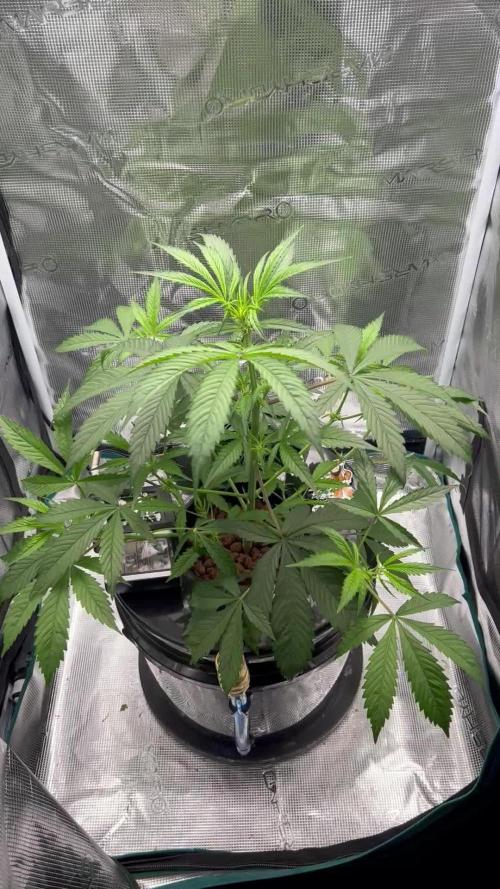
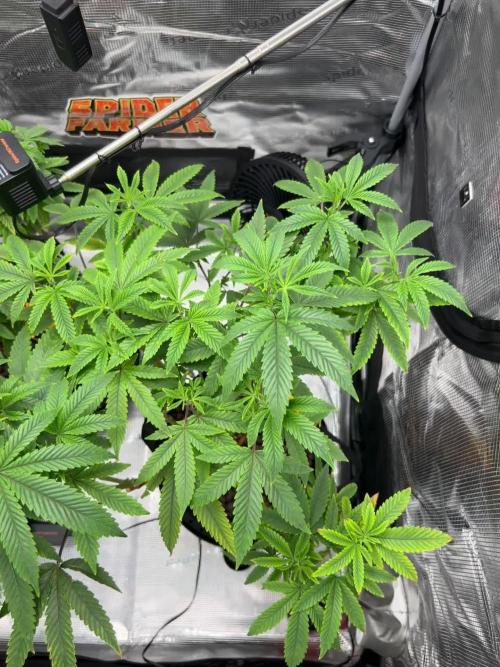
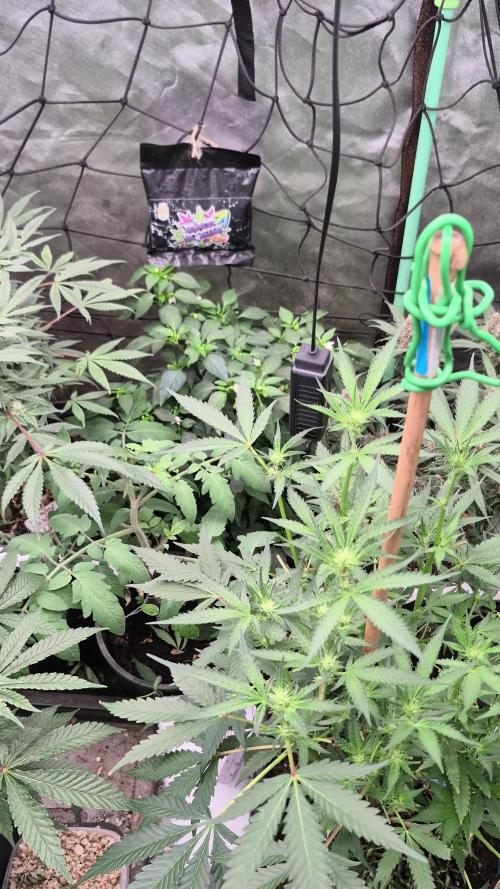
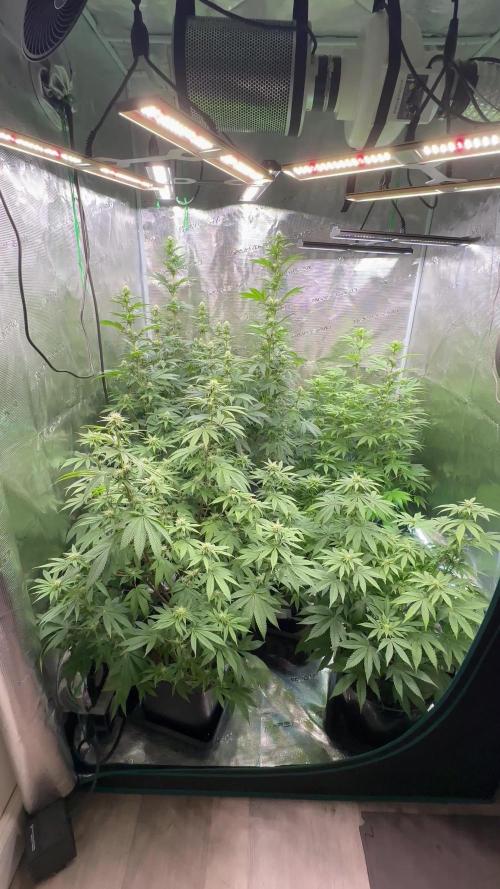
Gold Sativa is doing well. She is in heavy bulking. I upped her nutrition. She is in a New Level Hydro bucket, under a Spider Farmer SE5000 light. Nothing new to report. Steady the course till the finish. Thank you New Level Hydro, Spider Farmer, and Quebec Seeds. 🤜🤛🌱🌱🌱 Thank you grow diaries community for the 👇likes👇, follows, comments, and subscriptions on my YouTube channel👇. ❄️🌱🍻 Happy Growing 🌱🌱🌱 https://youtube.com/channel/UCAhN7yRzWLpcaRHhMIQ7X4g SE5000 https://amzn.to/3qFpAML Spider Farmer Official Website Links: US&Worldwide: https://www.spider-farmer.com UK: https://spiderfarmer.co.uk CA: https://spiderfarmer.ca EU: https://spiderfarmer.eu AU: https://spiderfarmer.com.au Coupon Code: saveurcash (is stackable in most cases) Www.newlevelhydro.com Www.hygrozyme.com
Processing
Likes
43
Share
Bonjour à tous les padawans et maîtres jedis Jour98 grosse defoliation et léger arrosage Jour101 arrosage avec 2, 5 litres d'eau ph6.3
Likes
4
Share
@alexb420
Follow
buds starting to get shape and trichs coming in nice. the blueberry muffin has such a unique berry pastry smell. no dank weed smell at all. the khalifa mintz x (bcc x jealousy) is still pretty gassy, with stronger fruit profiles on both strains now that the buds are starting to get fuller. update in a bother 2-3 weeks lol.
Likes
55
Share
@w33dhawk
Follow
05.04.21 Anfang der 3ten blüte Woche.Hab mich jetzt dazu entschieden das biegen und binden ein zu stellen natürlich halte ich weiter die Blätter unter dem netzt aber ich erlaube den Ladys jetzt durch das Netz auf zu steigen hab ja noch genügend Platz nach oben(hoffe ich). Das Wachstum is immer noch ziemlich stark ich denke mal das wird sich diese Woche auch nicht wirklich viel dran ändern und sie zieht vom trinken her stark an hab anfang der ersten woche 1x 4l mit Zusätzen gegossen und das hat 7 Tage gehalten bin jetzt an Tag 15 und muss alle 4 Tage 4l giessen gutes Zeichen denke ich mal..... 06.04.21 hab heute nur Blätter unters netzt gesteckt und schon von meinem nächsten Grow geträumt..... 07.04.21 wieder ein Tag vergangen und mehr als Blätter unterm Netz halten und hier und da mal ein Blatt entfernen war heut auch wieder nicht los... 08.04.21 heute war mal wieder bewässern dran und das tägliche Spiel Blätter weg stecken sonnst war nix weiter..... 09.04.21 hab das gefühl das das Wachstum anfängt sich ein zu stellen und Blätter hab ich heut wieder unters netzt gebogen was das hoch drücken der Blätter betrifft sind die Ladys ziemlich stark und eigenwillig gehe 2x täglich runter drücken unters netz werde nächstes mal eine kürzere Maschen weite fürs netz nehmen dachte 10 cm ist genug platz aber 5 cm pro Kästchen sollten sicher auch reichen das macht das spiel mit dem biegen und binden sicherlich einfacher und lässt die Blätter besser an Ort und Stelle Ach ja und ein paar Blätter hab ich heute noch entfernt ist aber auch bald mal Ende mit Blätter entfernen ich will sie nicht zu stark stressen... 10.04.21 Blätter unterm netz halten knapp 2 Std einige Blätter entfernt die von unten gegen die buds drücken sonnst war nix.... 11.04.21 hab heute wieder mal nur Blätter unters netzt gedrückt und den Pflanzen beim wachsen zu geschaut die Woche lief super bin echt stolz auf mich das ich die Finger so gut von der schere lassen könnte die letzten 21 Tage hab das netzt mal fast voll bekommen obwohl ich zu geben muss das die Masse die da wächst mir angst macht vor schimmel im späteren Verlauf des grows....
Likes
47
Share
@BloodBath
Follow
Could have gotten more off the plant of it wasn’t mutated from the get. But oh well I’m not mad about it. I just won’t be growing anything from that company ever again and also won’t be growing old strains anytime soon. I’ve had so much more success with other genetics of different strains from different company’s. The Skywalker from DNA came out amazing. The sour wiz just came down and that’s even better. Thanks for looking.
Likes
13
Share
@HeavyHead
Follow
Started giving full strength nutrients and added big bud and bud candy at this point. Dropped my room temperature slightly. Been having a bit of an issue with room humidity and I’m too cheap to buy another dehumidifier so I added a second fan to keep everything dry. Starting to get a nice purple on one of the plants too :) Also have some orange sherbet autos going in the back of check my other diaries :)
Likes
14
Share
@Chucky324
Follow
Hello. This is the end of week 8 and the beginning of week 9 of flowering. One more week of flowering for these plants and then harvest after 9 weeks of flowering.. Things are good here. I got 1 big flush in. Should be able to get 2 more flushes in this week. And I like a couple of days of dark before harvest. I'll show some pictures of, before the harvest, next week. I see some of the buds are heavy enough to start heading for the floor. I though I tied them up tight. 😏 Ok. Be Great. Chuck.
Likes
100
Share
Giorno 65 Ad oggi ho tagliato le due Rainbow Belts (qualche giorno prima per esaltarne il gusto Zkittlez) e le due Zombie Kush una al giorno 58 l'altra giorno 63. Rimane questa bestia di Milk Monkey. Sento biscotti sento vaniglia ma sento anche dell'acido. Mai avuto cime così piene di resina. Mamma mia che spettacolo di banca semi questa Exotic Genetics (meglio spendere qualche euro in più e avere erba che vale 20/25euro al grammo che spendere poco per avere erba commerciale) Saluti e a settimane prossima 🖐️ ❤️
Likes
20
Share
@Lazuli
Follow
So the plant went in flowering mid week 5 of veg, i flower her under optic phantom 1XL at 60% power (60watts) for the first 2 weeks Shes in pure coco with perlite I only water every 2 days as the pot is very heavy at this stage Final 3 pictures are day 5 Here i took off 6 big fanleaves already Start flower: march 4
Likes
3
Share
@Rko41
Follow
Engraissage pour fonky monk et Time loop , rinçage et flush pour ice pie et enchantress
Likes
52
Share
Lacewings seemed to have mostly killed themselves by flying into hot light fixtures. I may have left the UV on which was smart of me :) Done very little to combat if anything but make a sea of carcasses, on the bright side its good nutrition for the soil. Made a concoction of ethanol 70%, equal parts water, and cayenne pepper with a couple of squirts of dish soap. Took around an hour of good scrubbing the entire canopy. Worked a lot more effectively and way cheaper. Scorched earth right now, but it seems to have wiped them out almost entirely very pleased. Attempted a "Fudge I Missed" for the topping. So just time to wait and see how it goes. Question? If I attached a plant to two separate pots but it was connected by rootzone, one has a pH of 7.5 ish the other has 4.5. Would the Intelligence of the plant able to dictate each pot separately to uptake the nutrients best suited to pH or would it still try to draw nitrogen from a pot with a pH where nitrogen struggles to uptake? Food for stoner thought experiments! Another was on my mind. What happens when a plant gets too much light? Well, it burns and curls up leaves. That's the heat radiation, let's remove excess heat, now what? I've always read it's just bad, or not good, but when I look for an explanation on a deeper level it's just bad and you shouldn't do it. So I did. How much can a cannabis plant absorb, 40 moles in a day, ok I'll give it 60 moles. 80 nothing bad ever happened. The answer, finally. Oh great........more questions........ Reactive oxygen species (ROS) are molecules capable of independent existence, containing at least one oxygen atom and one or more unpaired electrons. "Sunlight is the essential source of energy for most photosynthetic organisms, yet sunlight in excess of the organism’s photosynthetic capacity can generate reactive oxygen species (ROS) that lead to cellular damage. To avoid damage, plants respond to high light (HL) by activating photophysical pathways that safely convert excess energy to heat, which is known as nonphotochemical quenching (NPQ) (Rochaix, 2014). While NPQ allows for healthy growth, it also limits the overall photosynthetic efficiency under many conditions. If NPQ were optimized for biomass, yields would improve dramatically, potentially by up to 30% (Kromdijk et al., 2016; Zhu et al., 2010). However, critical information to guide optimization is still lacking, including the molecular origin of NPQ and the mechanism of regulation." What I found most interesting was research pointing out that pH is linked to this defense mechanism. The organism can better facilitate "quenching" when oversaturated with light in a low pH. Now I Know during photosynthesis plants naturally produce exudates (chemicals that are secreted through their roots). Do they have the ability to alter pH themselves using these excretions? Or is that done by the beneficial bacteria? If I can prevent reactive oxygen species from causing damage by "too much light". The extra water needed to keep this level of burn cooled though, I must learn to crawl before I can run. Reactive oxygen species (ROS) are key signaling molecules that enable cells to rapidly respond to different stimuli. In plants, ROS plays a crucial role in abiotic and biotic stress sensing, integration of different environmental signals, and activation of stress-response networks, thus contributing to the establishment of defense mechanisms and plant resilience. Recent advances in the study of ROS signaling in plants include the identification of ROS receptors and key regulatory hubs that connect ROS signaling with other important stress-response signal transduction pathways and hormones, as well as new roles for ROS in organelle-to-organelle and cell-to-cell signaling. Our understanding of how ROS are regulated in cells by balancing production, scavenging, and transport has also increased. In this Review, we discuss these promising developments and how they might be used to increase plant resilience to environmental stress. Temperature stress is one of the major abiotic stresses that adversely affect agricultural productivity worldwide. Temperatures beyond a plant's physiological optimum can trigger significant physiological and biochemical perturbations, reducing plant growth and tolerance to stress. Improving a plant's tolerance to these temperature fluctuations requires a deep understanding of its responses to environmental change. To adapt to temperature fluctuations, plants tailor their acclimatory signal transduction events, specifically, cellular redox state, that are governed by plant hormones, reactive oxygen species (ROS) regulatory systems, and other molecular components. The role of ROS in plants as important signaling molecules during stress acclimation has recently been established. Here, hormone-triggered ROS produced by NADPH oxidases, feedback regulation, and integrated signaling events during temperature stress activate stress-response pathways and induce acclimation or defense mechanisms. At the other extreme, excess ROS accumulation, following temperature-induced oxidative stress, can have negative consequences on plant growth and stress acclimation. The excessive ROS is regulated by the ROS scavenging system, which subsequently promotes plant tolerance. All these signaling events, including crosstalk between hormones and ROS, modify the plant's transcriptomic, metabolomic, and biochemical states and promote plant acclimation, tolerance, and survival. Here, we provide a comprehensive review of the ROS, hormones, and their joint role in shaping a plant's responses to high and low temperatures, and we conclude by outlining hormone/ROS-regulated plant-responsive strategies for developing stress-tolerant crops to combat temperature changes. Onward upward for now. Next! Adenosine triphosphate (ATP) is an energy-carrying molecule known as "the energy currency of life" or "the fuel of life," because it's the universal energy source for all living cells.1 Every living organism consists of cells that rely on ATP for their energy needs. ATP is made by converting the food we eat into energy. It's an essential building block for all life forms. Without ATP, cells wouldn't have the fuel or power to perform functions necessary to stay alive, and they would eventually die. All forms of life rely on ATP to do the things they must do to survive.2 ATP is made of a nitrogen base (adenine) and a sugar molecule (ribose), which create adenosine, plus three phosphate molecules. If adenosine only has one phosphate molecule, it’s called adenosine monophosphate (AMP). If it has two phosphates, it’s called adenosine diphosphate (ADP). Although adenosine is a fundamental part of ATP, when it comes to providing energy to a cell and fueling cellular processes, the phosphate molecules are what really matter. The most energy-loaded composition for adenosine is ATP, which has three phosphates.3 ATP was first discovered in the 1920s. In 1929, Karl Lohmann—a German chemist studying muscle contractions—isolated what we now call adenosine triphosphate in a laboratory. At the time, Lohmann called ATP by a different name. It wasn't until a decade later, in 1939, that Nobel Prize–-winner Fritz Lipmann established that ATP is the universal carrier of energy in all living cells and coined the term "energy-rich phosphate bonds."45 Lipmann focused on phosphate bonds as the key to ATP being the universal energy source for all living cells, because adenosine triphosphate releases energy when one of its three phosphate bonds breaks off to form ADP. ATP is a high-energy molecule with three phosphate bonds; ADP is low-energy with only two phosphate bonds. The Twos and Threes of ATP and ADP Adenosine triphosphate (ATP) becomes adenosine diphosphate (ADP) when one of its three phosphate molecules breaks free and releases energy (“tri” means “three,” while “di” means “two”). Conversely, ADP becomes ATP when a phosphate molecule is added. As part of an ongoing energy cycle, ADP is constantly recycled back into ATP.3 Much like a rechargeable battery with a fluctuating state of charge, ATP represents a fully charged battery, and ADP represents a "low-power mode." Every time a fully charged ATP molecule loses a phosphate bond, it becomes ADP; energy is released via the process of ATP becoming ADP. On the flip side, when a phosphate bond is added, ADP becomes ATP. When ADP becomes ATP, what was previously a low-charged energy adenosine molecule (ADP) becomes fully charged ATP. This energy-creation and energy-depletion cycle happens time and time again, much like your smartphone battery can be recharged countless times during its lifespan. The human body uses molecules held in the fats, proteins, and carbohydrates we eat or drink as sources of energy to make ATP. This happens through a process called hydrolysis . After food is digested, it's synthesized into glucose, which is a form of sugar. Glucose is the main source of fuel that our cells' mitochondria use to convert caloric energy from food into ATP, which is an energy form that can be used by cells. ATP is made via a process called cellular respiration that occurs in the mitochondria of a cell. Mitochondria are tiny subunits within a cell that specialize in extracting energy from the foods we eat and converting it into ATP. Mitochondria can convert glucose into ATP via two different types of cellular respiration: Aerobic (with oxygen) Anaerobic (without oxygen) Aerobic cellular respiration transforms glucose into ATP in a three-step process, as follows: Step 1: Glycolysis Step 2: The Krebs cycle (also called the citric acid cycle) Step 3: Electron transport chain During glycolysis, glucose (i.e., sugar) from food sources is broken down into pyruvate molecules. This is followed by the Krebs cycle, which is an aerobic process that uses oxygen to finish breaking down sugar and harnesses energy into electron carriers that fuel the synthesis of ATP. Lastly, the electron transport chain (ETC) pumps positively charged protons that drive ATP production throughout the mitochondria’s inner membrane.2 ATP can also be produced without oxygen (i.e., anaerobic), which is something plants, algae, and some bacteria do by converting the energy held in sunlight into energy that can be used by a cell via photosynthesis. Anaerobic exercise means that your body is working out "without oxygen." Anaerobic glycolysis occurs in human cells when there isn't enough oxygen available during an anaerobic workout. If no oxygen is present during cellular respiration, pyruvate can't enter the Krebs cycle and is oxidized into lactic acid. In the absence of oxygen, lactic acid fermentation makes ATP anaerobically. The burning sensation you feel in your muscles when you're huffing and puffing during anaerobic high-intensity interval training (HIIT) that maxes out your aerobic capacity or during a strenuous weight-lifting workout is lactic acid, which is used to make ATP via anaerobic glycolysis. During aerobic exercise, mitochondria have enough oxygen to make ATP aerobically. However, when you're out of breath and your cells don’t have enough oxygen to perform cellular respiration aerobically, the process can still happen anaerobically, but it creates a temporary burning sensation in your skeletal muscles. Why ATP Is So Important? ATP is essential for life and makes it possible for us to do the things we do. Without ATP, cells wouldn't be able to use the energy held in food to fuel cellular processes, and an organism couldn't stay alive. As a real-world example, when a car runs out of gas and is parked on the side of the road, the only thing that will make the car drivable again is putting some gasoline back in the tank. For all living cells, ATP is like the gas in a car's fuel tank. Without ATP, cells wouldn't have a source of usable energy, and the organism would die. Eating a well-balanced diet and staying hydrated should give your body all the resources it needs to produce plenty of ATP. Although some athletes may slightly improve their performance by taking supplements or ergonomic aids designed to increase ATP production, it's debatable that oral adenosine triphosphate supplementation actually increases energy. An average cell in the human body uses about 10 million ATP molecules per second and can recycle all of its ATP in less than a minute. Over 24 hours, the human body turns over its weight in ATP. You can last weeks without food. You can last days without water. You can last minutes without oxygen. You can last 16 seconds at most without ATP. Food amounts to one-third of ATP production within the human body.
Likes
Comments
Share
las plantas siguen con su bloque o carencia pero ya esto se termina en nada , tienen muy buenos olores dulces y flores apretadas me gusta este cultivo y son semillas de granel baratas y con agua dura ,alguna semilla de mas calidad y agua bien controlada de ec pueden salir cosas buenas en 11L
Likes
25
Share
**** Week 13 growth - February 27 to March 5, 2021 - Week 4 Flower ***** These girls are looking a little more different as we get further in flower. Pheno 1 is starting to swell more this week and here leaves are a nice rich green colour. Pheno 2 on the other hand has lighter leaf colour but is reacting less favourable to the amount of nitrogen and clawing down at the end of the week. It could be that she is also reacting worse to the increased light intensity this week. The frost production on Pheno 1 is also coming out more now. These two girls seems a little more reactionary to nutrient levels. Light intensity increased this week. Pushed up to 525 watts and then to 550 watts at the end of the week. This got the a little hot by the end of the week though. Working with a new light and finding the sweet spots takes a run or two. Learning how the girls grow anyway so the whole run is a lot of learning......its all good😀 Nutrients were pushed a little at the end of last week and the start of this week so backing off a bit more again. Given that they were pushed with light intensity they started showing some signs of nutrient issues. It’s good though as there is reaction time and back off to plain water feed for a couple of days at the end of the week and into week 5. Week 5 is going to be the start of the last stage of flower feed and work with that for two weeks, then stop feeding at the end of week 6........the plan so far anyway. Little more detail....... Feb 27/21 - Day 22 - big feed day - all IPP line plus silica @ 1ml, CalMag @ 1ml, Rezin @ 1.5ml, enzymes @ 1.5ml - 1650ppm and 6.1pH - 4L Feb 28/21 - Day23 - Microbe day but also added some CalMag - Natures Candy @ 1.5ml, Recharge @ 1/2 tsp/gal, Magnifical @ 1.5ml, Micro @ 1ml, Bloom 1.5ml, Terpinator @ 2ml - 950 ppm and 6.0pH - 3L - leaf colour almost looks light today. Mar 1/21 - Day 24 - dry out day. Mar 2/21 - Day 25 - plain water - 300ppm and 6.1 ph - 4L - light power pushed up to 550 watts today. - (too much from 16” to 20”........note!!) Mar 3/21 - Day 26 - plain water with two suppliiments - Terpinator @ 3ml, Rezin @ 2ml. - 525ppm & 6.0pH - 4L - stripped some leaves today......sticky in the middle😃😃👍👍 Mar 4/21 - Day 27 - no water added today - light power reduced today 450 watts. - been going too hard with intensity. Seeing leaf curl on other girls in the tent. - joys of diagnosing cannabis😂 - starting with backing off light and reduce ppm going in but not the ml👍 Mar 5/21 - Day 28 - hit with microbes again to help with stresses. - recharge @ 1 tsp/gal, Nature’s Candy @ 1.5ml - 375ppm and 6.0pH - 3L Moving right along we are through 4 weeks now and moving past the middle of flower.
Likes
45
Share
This girl came out a monster, overall very easy and nice strain to grow 💪 The smell coming out of her is trully amazing
Likes
3
Share