




Likes
253
Share

@Hologram
Follow
Yes!
harvest time!
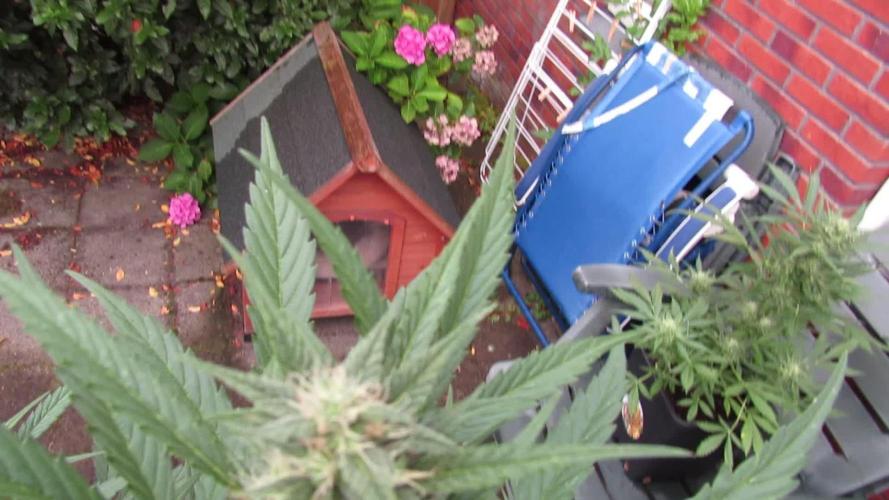
Buds r very solid, smelling very sweet and have lovely colours of pink in it.. but dang! so sticky!!
She was in a 5L pot but she grew hard, like the beast she is 😎👍
Sticky was on tour a lot
She started out on my window sill with only 13H of daylight and NO sunshine! But the winter was long, and i just could not wait any longer! 👊
..then she went in my little greenhouse in my garden//and when she got bigger, she got an upgrade to the big safehouse (also in garden)
and now and then she could stay on my gardentable to catch few rays..
She has battled a lot of bad (storms!) and cold weather and with that came a lot of bugs and pests..(big safe house is open at the sides.. its more a cover to protect them from rain and wind)
But she still kept on growing like she did not care..
Only the last week of her grow she got some nice weather
and i think she was very happy i let her enjoy that before chop!👏
yes i can write a lot about this grow, but i can also just say:
WOW!
my whole garden smelled very sweet thanks to her
but im sure my neighbours are happy she is gone..😆
And don't forget:
FOR ALL MY GROWBROS IS A DISCOUNTCODE: ZAMMIGD2023
YOU GET 20% OFF @ZAMNESIA!
😎
happy growing for all✊

Likes
6
Share

@DogDoctorOfficial
Follow
🥒 Project Blue Tent – Week 6
Pickle Lemon Haze F1 – Pheno A (Folder 14A)
Hello everyone, and welcome back to another chapter of Project Blue Tent! 💙🌱
If this is your first time joining the adventure, welcome!
Project Blue Tent follows four individual plants, each documented in its own dedicated diary from seed to harvest. Every plant shares the exact same environment, lighting, irrigation schedule, nutrition and care. By keeping every environmental variable as consistent as possible, we can truly appreciate how each phenotype expresses its own unique personality while also showcasing the remarkable stability of modern F1 genetics.
Today we're checking in with Pickle Lemon Haze F1 – Plant A.
────────────────────────
🌱 Week Six – A Canopy Coming Together
This week has been all about refinement.
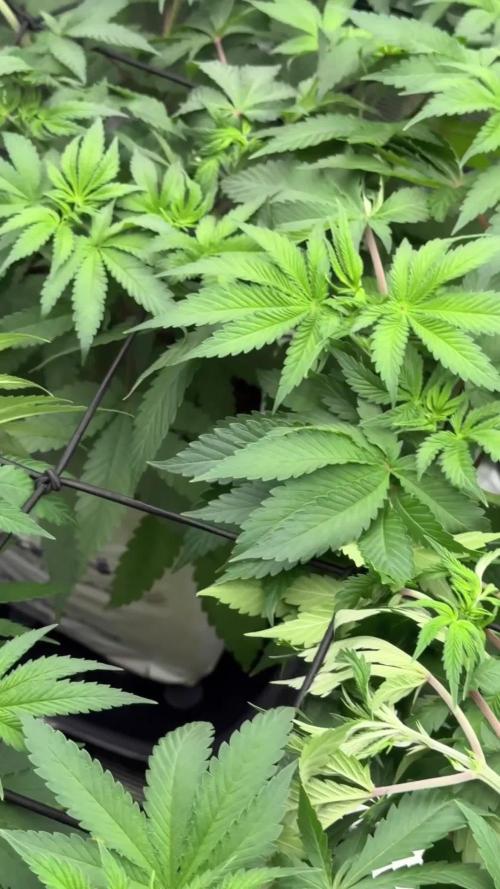
Rather than chasing vertical growth, the focus has shifted entirely toward building the widest and most even canopy possible. Every day brings a little more progress as branches continue filling the SCROG net, gradually transforming four individual plants into one uniform sea of green.
One small change compared to last week's report is the official canopy height.
Although Plant A measured around 66 cm previously, I lowered and tightened the SCROG net across the entire tent. As a result, all four plants are now sitting at approximately 60 cm, with every centimetre of new growth being directed horizontally through the screen instead of upwards.
That's exactly the objective at this stage.
We're no longer trying to grow taller plants.
We're growing a larger canopy.
Every branch guided sideways today will become another well-positioned flowering site tomorrow.
────────────────────────
🌿 Pickle Lemon Haze F1 – Plant A
Plant A continues to impress me every single day.
She remains the most vigorous plant inside the Blue Tent, responding to every bit of training with explosive new growth.
Even after being topped and now spending her days tucked beneath the SCROG net, she simply refuses to slow down. Every branch seems eager to reach for the next opening, making the daily training routine both enjoyable and incredibly rewarding.
The internodal spacing remains nice and tight, the stems continue thickening, and her foliage has developed a rich, healthy green colour that tells me she's enjoying everything the environment is providing.
One thing I particularly appreciate is how well she's balancing strength with flexibility.
The branches are becoming sturdy enough to support future flowers while remaining pliable enough to guide gently beneath the screen without complaint.
She's proving herself to be an absolute pleasure to train.
────────────────────────
🕸️ Working with the SCROG
As the canopy develops, the SCROG net is becoming more than just a training tool.
It's now helping shape the entire structure of the grow.
Every day I spend a few minutes gently guiding branches into empty spaces, allowing the plant to expand naturally instead of allowing individual tops to dominate the canopy.
It's a surprisingly relaxing process.
No aggressive bending.
No rushing.
Just small adjustments made consistently over time.
Watching those empty squares slowly disappear is one of my favourite parts of vegetative growth, and this week the Blue Tent has really started looking like one unified canopy instead of four separate plants.
────────────────────────
🌡️ Blue Tent Environment
Consistency continues to be one of the biggest advantages inside the Blue Tent.
Average conditions throughout the week remained:
• 🌡️ Day Temperature: 30°C
• 🌙 Night Temperature: 25°C
• 💧 Relative Humidity: 58%
• 🥥 Root Zone Temperature: 24°C
• 💦 Nutrient Solution Temperature: 18°C
• ⚗️ pH: 5.8
• ⚡ EC: 1.92 mS/cm
• 💨 CO₂: Approximately 450 ppm
• 💡 Light Schedule: 18/6
• 💧 Irrigation: 1.2 litres per plant per day
These stable conditions continue allowing the plants to focus entirely on vigorous vegetative growth while recovering effortlessly from training.
────────────────────────
🥥 Feeding & Irrigation
The feeding schedule remains unchanged this week.
Sometimes, when everything is working exactly as planned, the best decision is simply to stay consistent.
Each plant continues receiving approximately 1.2 litres of nutrient solution every day through the Mars Hydro automatic drip irrigation system.
The slow and consistent delivery keeps the coco evenly moist while ensuring the roots always have access to fresh nutrients.
Once the solution passes through the substrate, the automatic drainage system removes the runoff beneath the grow bags, preventing old nutrient solution from accumulating around the root zone and helping maintain a clean, stable growing environment.
Current feeding schedule:
• Plagron Hydro A — 1.9 ml/L
• Plagron Hydro B — 1.9 ml/L
• Plagron Hydro Roots — 1 ml/L
The rich green colour across the canopy tells me the plants are extremely happy with this feeding regime, and for now I see no reason to make any adjustments.
────────────────────────
🌿 Pickle Lemon Haze F1 – Plant A
Every week this phenotype reinforces the same first impression she gave me shortly after germination.
She's energetic.
Confident.
And incredibly responsive.
She doesn't simply recover from training.
She seems to thrive because of it.
The combination of vigorous branching, compact internodal spacing and healthy foliage is creating exactly the kind of plant I hoped for when starting this project.
It's becoming easier every week to imagine how productive she'll be once flowering begins.
────────────────────────
👀 Looking Ahead
The objective for next week remains beautifully simple.
Continue filling the SCROG.
Maintain the stable environment.
Keep guiding each branch into its own space.
Patience is the key at this stage.
Every small adjustment made now will help create a flatter canopy, better light distribution and, hopefully, an even more productive flowering cycle in the weeks ahead.
The Blue Tent continues moving exactly in the direction I was hoping for, and I can't wait to watch these ladies take the next step together.
────────────────────────
💙 Thank You
A huge thank you to Zamnesia for making Project Blue Tent possible, from these incredible Pickle Lemon Haze F1 genetics to the complete ecosystem surrounding this grow.
A heartfelt thank you to Plagron for providing the Premium Growbags together with the Hydro nutrient line that continues delivering healthy, vigorous growth week after week.
A special thank you to Phytonaut for the outstanding LED lighting, producing compact growth, beautiful structure and an incredibly even canopy throughout the Blue Tent.
A sincere thank you to Mars Hydro for the automatic drip irrigation and drainage system that has brought consistency, cleanliness and peace of mind to this entire project.
Thank you to GrowDiaries for providing growers around the world with a place to document their journeys, exchange knowledge and inspire one another every single day.
And finally...
Thank you to every one of you following Project Blue Tent.
Whether you've been here since the first seed cracked, recently joined the adventure, leave comments every week or quietly follow along in the background, your support genuinely means more than you know.
The canopy is getting fuller, the plants are thriving, and the adventure is only becoming more exciting.
Until next week...
Growers Love, happy growing, and I'll see you all soon. 🌱💙
Likes
21
Share


@Trickybis82
Follow
This is the start of week 4 vegetation. Nearly at 5th nodes which Is where I will top the plants.
So far so good.. these babies are all loving life right now. However I had notice a couple 9f there first fan leaves had a few yellowish spots I put this down to possible a little over feed 9n nutrients.
Since this,they have sprouted very nicely and all the leaves coming through are vibrant green and looking healthier.
Any suggestions as to what the yellowish colour could be? Hopefully nothing serious.


Likes
3
Share


@XxBILLZAxX
Follow
The purchase of a new light finally! starting to fill the tent so will need to possibly defoliate soon. Leaves are a much nicer colour.
At the end of the first video shows the start of the leaf claw. Didn't notice it for about a week after this. :(
Likes
13
Share


@TheMightyHermit
Follow
Unfortunate Week...
Honey cream had a couple of "budrot" spots forming due to droplets of water dripping into the flower and not drying (99%humidity nights)...
Thankfully those buds were cut down and she doesn't seem to be producing any more "budrot"..
Apart from that, the smell is amazing on her.
Power Flower is going nicely too, but seems to not have too much smell...


Likes
29
Share

@BettyFlores
Follow
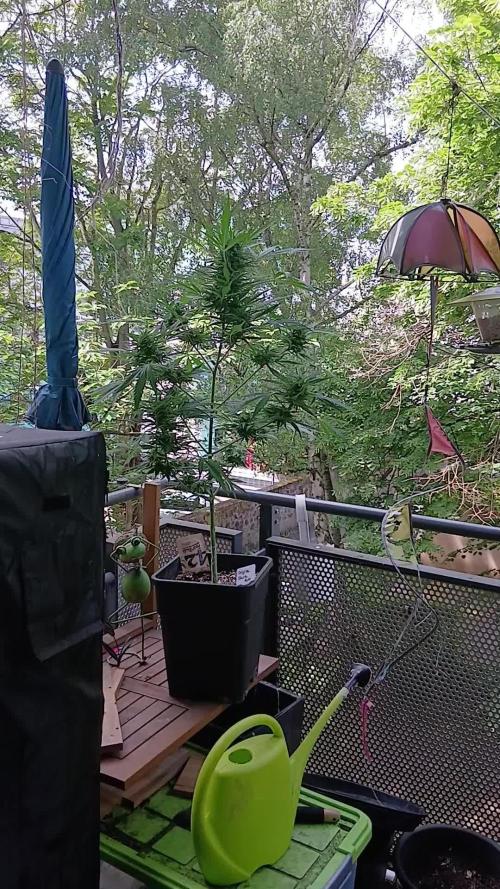
21.05.2026 Bald kann ich sie ernten. Zumindest sind die Trichome recht reif und in ein paar Tagen könnte es soweit sein. Sie riecht wirklich sehr stark und die gesamte Nachbarschaft darf daran teilhaben. Dieser pure skunkige Geruch ist einfach nur göttlich. Auch mit den Temperaturen geht es aufwärts und ich freue mich schon jetzt auf den nächsten FastBuds-Run.
Happy growing 🌸 💜
Likes
10
Share

@PhinolaGreen
Follow
12. Woche
Die letzte Woche ist angebrochen, ich habe den Dünger schon vor ein paar Tagen eingestellt und bin dazu übergangen sie täglich mit 2L Wasser zu spülen. Mitte der Woche werde ich den ganzen Topf einmal mit 30L Wasser durchspülen, damit zumindest die gröbsten Spuren aus dem Substrat kommen. Ich habe mich als Endlösung für Flawles Finish von Advanced Nutrients entschieden.
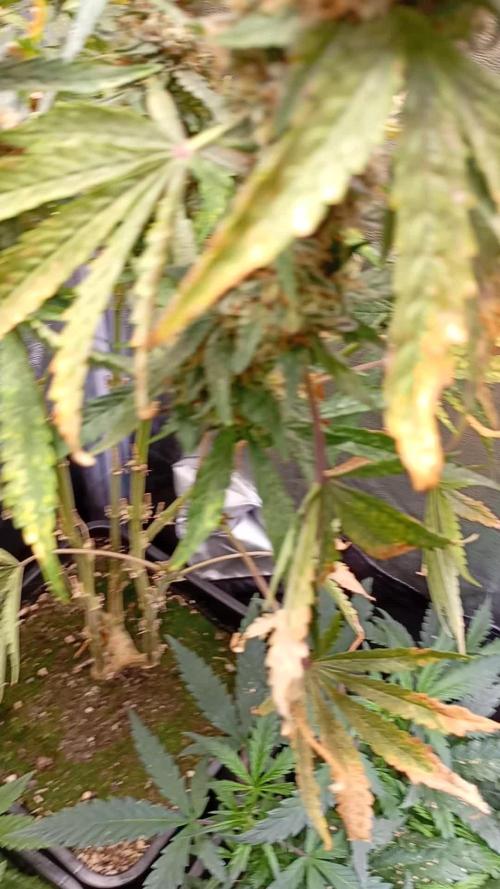
Wir sind auf der Zielgeraden, North Thunderfuck Auto von Royal Queen Seeds hat wirklich schöne Buds entwickelt, sie sieht im Vergleich zum ersten Mal ganz anders aus. Richtig schöne kompakte heavy wight Buds. Sieht richtig toll aus bis jetzt. Die Lampe lief die letzten 2 Wochen auf 100%, auch dank des zusätzlichen Co2 ohne Probleme. Endspurt Ladys und Gentleman 🙂


Likes
Comments
Share


@zombikush81
Follow
I start by saying that the genetics of this fantastic and super plant, the only exemplary because I was given after ordering, the first time I cultivated this variety .. I never had any problem from germination at the end of harvest, made grow for 6 weeks approximately with light hours 18/6, then kept in bloom for 10 weeks ...... and from about 10 days to dry with temperatures between 19/20 degrees, and humidity rate to 50% between today and tomorrow I'll make a nice manicure.

Likes
64
Share


@Cheeba_Inu
Follow
As of March 27, Day 7 of the grow, the seedling is doing alright but showing minor cal-mag deficiency. I will be doing a little cal-mag foliar spraying to help get through this delicate period.
I turned on my HLG-100v2 light and have the seedling vegging under a 20/4 hour light schedule. I have transitioned up to .8EC as increasing the cal-mag in the coco is important after a week of low EC fertigation. I maintain a 5 gallon nutrient reservoir with an air stone and H202 to keep it sterile, and have a pump to automatically water 3 times a day for 20 second intervals.
March 29, Day 9: I am still trying to correct the minor cal-mag issues, but the Euforia is still growing at a pretty good speed so I am not too worried.
March 30, Day 10: running a humidifier under a clear dome to get the RH up for the seedling.

Likes
7
Share


@BushDoctor740
Follow
Well I have 6 little seedlings that sprouted looking happy and healthy.Going to give just plain water once the pots dry up a bit more.Ill add Gaia green 4,4,4 top dressing with a shot of recharge in a few days after these seedlings are stronger.Se7000 set at 30 percent power and is raised to the ceiling.I prefer to do this over lowering the lights and intensity and not being able to walk around and work in the ⛺️.Day 4 added a 1 inch layer of farm farm ocean forest and I’ll water plain ph tap water when the pots are dry.Also placed some pins and anchors to tie down branches for when the girls are ready for training :)
Likes
9
Share


@Drtomb
Follow
Just purchased a new Gorilla grow Tent, and completely redid my setup in my 4x8 veg area and my new 4x8 Flower area.
First the Veg area. It consists of a 4x4 flood table, the other side contains 13 4gal buckets full of hydroton. Also 1 control bucket. This control bucket not only floods the flood buckets, but also floods the table.
The plants start off from the moms, they are moved from the flood table into s flood bucket and vegged to produce at least 9 clones (hopefully more like 15) . They are then cloned and after 1-2 weeks they are moved into the 4gal buckets. They sit for ~1month growing bigger, all while waiting for there flowering spot to be opened up.
While vegging they are topped and have 3-4 tops selected and focused by trimming any branches that start to reach for light. By the time they are moved they are about 16" inches high. All have 3 tops and are approximately the same height.
They are moved into the flowering spot snd immediately are switched from veg nutes to bloom nutes.
Over the next 3 weeks i will trim branches that reach away from the 3 main cola stems by more than 2". Also if one or 2 branches on the plant are having a bugger growth spurt, i pinch the tops. This allows the plant to focus growth hormones to the other tops.

Likes
18
Share


@lino06000
Follow
17/07/22 des fruits apparaisse dans une grande majorité ,j'ai essayer de scrog les chessecake et les wedding glues en bon débutant j ai casser une branche que j'ai essayer de reparer a la macgyver tout sa en photos!.je suis très satisfait du milieu de cette semaine !
22/07/22 demain dernier jour de la semaines des fruit a 90% partout plutot bien lancer mais pas très homogene j'ai pas mal de progrés a faire^^
très bonnes semaine a suivre
Likes
2
Share


@Green_Peace
Follow
Increased Buddy to 1mm p/l. Really impressed with these nutrients so far, there's been no problems or defeciences the entire grow. All plants look happy, healthy and green. This plant is at the back of the timelapses.
Likes
12
Share


Likes
16
Share


@MrWolfe
Follow
The plants look and feel incredible, I can't wait to do some serious supercropping later into this week. Follow along! This should be fun.
Day 3 flower update: holy cow I love these plants, I am having a ton of growth and turned the optic 8s up to 100/50/25 and going to leave it here until 9/1 then switch to 100/60/50 and see how they react. Clones got cleaned out today to a buddy so we can further a couple other strains, the Chempie cuts were exquisite. Side note a little bit of nutrient burn noticed on main girl ZKWC but not anything to stress about, washing machine mother does not seem to mind a higher EC feed. The last few weeks have been a 30 second watering once a day. As of today 8/23 I am switching to 5/5/2.5/2.5 ml/g for BasisA/BasisB/StartR/Calimagic.
I am obviously not an expert grower, just a guy trying to grow some beautiful big fat flowers. Take my advice with a grain of salt but feel free to lurk and watch the results!
So day 4 of flower I was contemplating what my goal for this grow is, and I settled on schwazzing this grow, I did it with my first photo grow in Hydro and had awesome success on all but two plants (weaker blue dream phenos did not respond well and I had all kinds of feeding issues not entirely sure they would've made it without the schwaz either but anyways...) So yeah we're gonna try it out. Plants are bouncing back quickly from everything, I supercropping a ton to really spread the plant out and I'll be throwing a trellis back up after they have a chance to reach.

Processing
Likes
4
Share


@Andres
Follow
she grows outdoor ... without any relevant information ... only her vegetation is slow ... it's autumn ... and the sun is not very strong ...


