




Likes
Comments
Share

@youdan
Follow
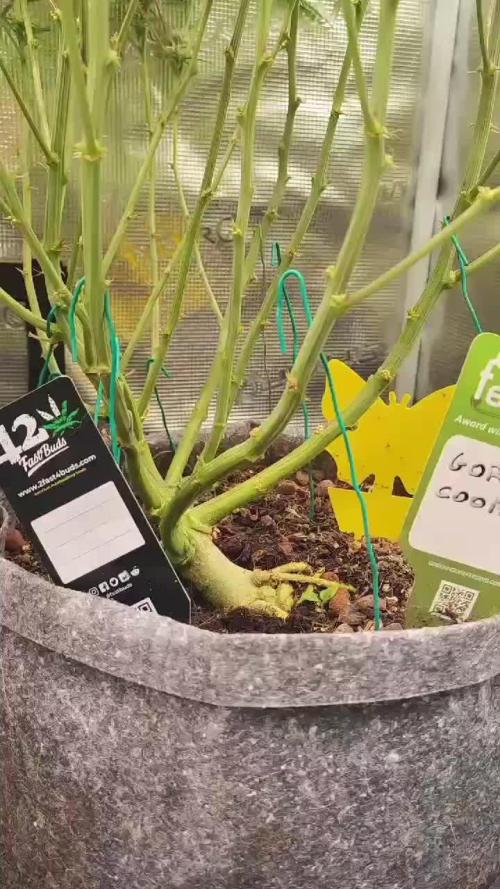
Ho praticato il lollipopping per cercare di traferire le energia solo in alcune parti e sembra andare benissimo. la prossima settimana pubblichero delle foto pazzesche sicuramente.

Likes
20
Share


@totaleclipse
Follow
Growth has been very very slow due to bad rainy and cold weather. My hopes are not the highest for this one :/

Likes
Comments
Share

@Bread_n_Buds
Follow
Zamnesia's Lemon Cherry Gelato is a very versatile plant, beautiful, fast-growing, and clones very well. We started from seed, and everything went very quickly, and the start of flowering is very promising.
We're in an 11-liter square pot, with little vegetative growth and growing upright.
Techniques chosen: the plant was left to grow upright, meaning only a little tidying up the lower parts to prevent unnecessary growth and to give the upper buds that potency they deserve.
We're 100% organic and 1000% Plagron, as always.
The soil we've chosen is the recently launched Plagron Bio LightMix, which will allow us to get started more smoothly and reliably, without the sudden changes that liquid fertilizers can cause. A week is more than enough, so let's not overdo it.
We're in the early stages of flowering, but we're well-equipped with fertilizers and additives. We've added:
- Power Roots 1 ml/l (Always use it for the first two weeks of flowering, especially after transplanting)
- Pure Zym 1 ml/l
- Silic Rock 1 ml/l
- CalMag Pro 1 ml/l
- Sugar Royal 1 ml/l
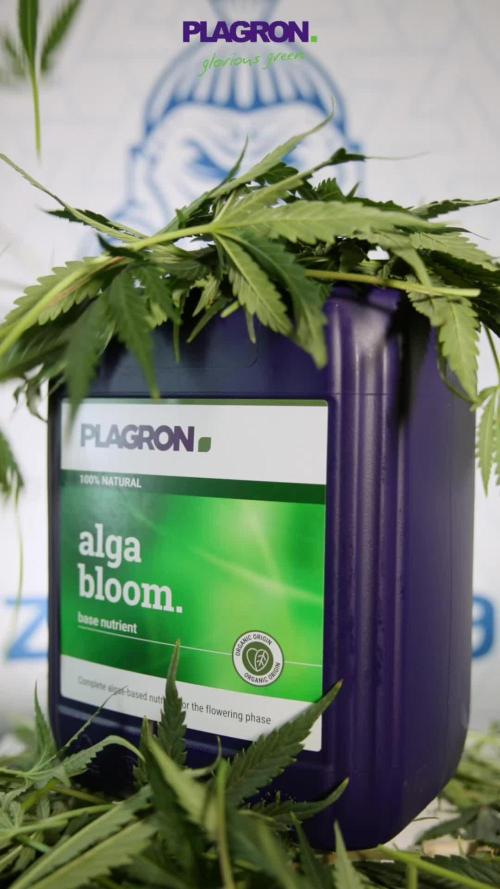
- Alga Bloom 4 ml/l
- Power Buds 1 ml/l
Once a week as a foliar spray: (until the first two weeks of flowering)
- Vita Race 5 ml/l
Choose your favorite style and calculate your results on the website:
www.plagron.com
Our new 720W Spider King lamp from Vanguard Hydroponics is now at 80%
Z - https://www.zamnesia.io/en/531-growshop
A rocket start looks more than promising. Give it a try.
Z - https://www.zamnesia.io/en/11242-zamnesia-seeds-lemon-cherry-gelato.html
Z - Lemon Cherry Gelato is an extraordinary hybrid capable of offering a complete and satisfying experience to all growers and cannabis enthusiasts. This premium strain is the result of crossing Sunset Sherbet and Girl Scout Cookies, two strains renowned for their high quality and delicious aromas. With a genetic makeup composed of 60% indica and 40% sativa, Lemon Cherry Gelato produces stimulating and dynamic effects. With 26% THC, it infuses deeply relaxing vibes, keeping the mind clear and alert.
Lemon Cherry Gelato adapts easily to any growing environment. Indoor plants maintain a compact structure, reaching 110 cm in height, making them ideal for limited spaces. Outdoors, this strain grows up to 140 cm. Extremely adaptable, this strain responds well to cultivation techniques such as topping and low-stress training (LST), allowing growers to optimize space and increase final yields. Indoors, a minimum of 600 g/m² is possible after a flowering period of 8-9 weeks. Outdoors, plants will reach maturity in September and, in optimal conditions, will yield around 1000 g each. Thanks to its innate resistance, Lemon Cherry Gelato is perfect for both beginners and experienced growers.
You already know this, but I recommend it: here you will find many beautiful things, essentially "the best that nature has to offer."
Z - www.zamnesia.com
Music //
www.radionula.com
+ Feng Shui Music
+ Frequencies 432 Hz
Likes
211
Share


@PapaNugs
Follow
Huge week in the tent. Lollipopping. Defoliation. Redid the LST ties. Added height to the plants to level the canopy. Added the blumats self watering setup. The tent got a total makeover. They look healthy otherwise.
Likes
16
Share


@GrowerGaz
Follow
Just a lot of defoliation and a little lst this week. Hesi working great . Flipped today 1/9. Light is doing brilliantly so far


Likes
33
Share


@Belverde
Follow
Welcome growers & co.
I have grown two specimens of this genetics.
One grew it maintaining its original structure, where a long central top prevailed .... but quite loaded even below ..
The other one I decided instead to cut the tip, making a simple topping, thus creating seven / eight main peaks
I highly recommend topping or LST with this strain as she responds very well to training and is a great producer
The aroma is also definitely 100% Blueberry

Likes
43
Share


@Sejnik
Follow
Ke konci týdne dostali poslední lehkou defoliaci.
Biobizz má sytě zelené barvy a viditelně o něco málo větší květy.
Florganics chytil světlejší zeleno žlutý odstín a má o něco menší květy. Ale má o trochu víc pryskyřice. Pokračuji v zalévání čistou vodou
Likes
35
Share


@SAC87
Follow
Hi Growers.
So all 3 FastBuds Pineapple Express Auto seeds popped in less than 3 days. I’ve left them uncovered, added a humidifier and turned a fan on low to just to give them a little wiggle. They were sprayed and lightly watered in a 4” circle around the stalks to have those roots go search for water.
Just gonna give them some time and mist for a week and start super low feeding according to the FastBuds auto feed schedule. I’m looking forward to seeing these babies grow!!!
Happy Growing 🌱

Likes
28
Share


@Elysian_gardens710
Follow
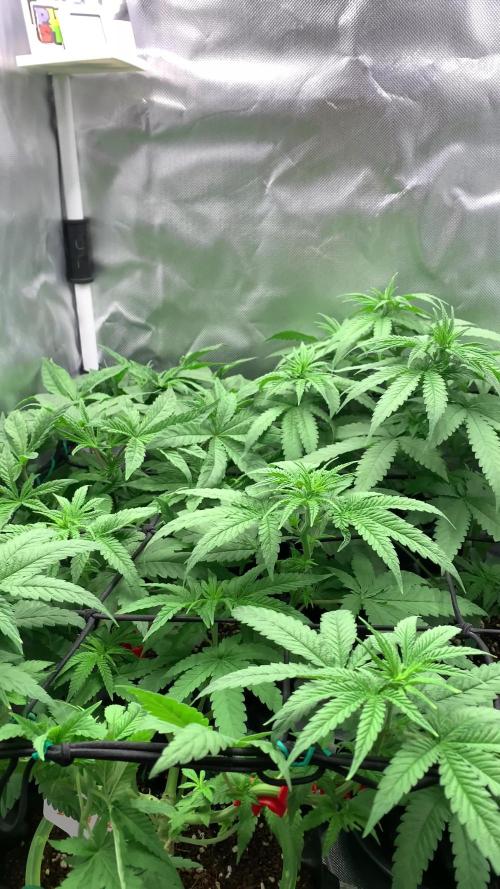
It's the 4th week of Flower!! I've gotta say, counting weeks is tough and I always get it mixed up. 0-7 days is 1 week. So this is week 4, days 21-28. I do some reason feel like the 28th day should be the start of week 4 but it doesn't work that way...idk sorry bout the rant!
This week I wont do a day by day as nothing has happened per those days. Except for Thursday. Day 27 of flower.
Every Thursday we water in the Teas and recharge. I also, lollipopped her this week and removed some of the larger fan leaves. CMOG is the heaviest plant as it is and some great spacing between buds ensure hood light penetration.
She is getting super stinky and frosty too!! Cannot wait for 1 more week for her to really pop!!



Likes
8
Share


@Shalma_kush_420
Follow
Muy buenas mi gentee.
Otra semanita más por aquí, ya en la semana 5 de crecimiento.
Y se puede observar como va bastante bien, con buena estructura, buen color y buena ramificación.
Se le están dando riegos semanales con bioestimulantes de The hype company y aparte dos riegos de agua más semanales.
La temperatura la estamos empezando a subir, para esta semana cambiala a maceta final y pasarla a floración.
Así que veremos cómo sigue la próxima.


Likes
121
Share


@DogDoctorOfficial
Follow
One more week here we go 💚🌱💚🌱💚🌱
Week 3 day 18 and the TSW2000 keeps delivering, today i decided to make a little video showing how i water my girls 😇 here is also the link for the Magnum auto TImeLAP video that i just uploaded today https://growdiaries.com/diaries/105893-grow-journal-by-dogdoctor 💚 i hope you guys enjoy it 💚 growers love 💚
And with and enormous honneur and pleasure that i start collaborating with MARSHYDRO, they wore kind enough and send me a 4x4 grow tent and a TSW2000 for me to do tests and reviews, i got to admit the quality on the materials, the easy assembling, the user manual, even the art detail that came with a bunch of cool stickers, are plus things that can not go unnoticed 🙏💚 Thanks Marshydro for so many details 🙌😉 i will try and post them all in here, but you can follow me on my instagram account https://instagram.com/dogdoctorofficial for every day updates , videos giveaways etc, or in my youtube channel- https://youtube.com/channel/UCR7ta4DKLFMg2xxTMr2cpIg keep tuned 💚💚💚
Thank you MARSHYDRO for having faith in my love for growing , lets make magic together 🙏🙏🙏
Genetics - Cookies Fam genetics - 3x SunsetSherbet
Grow tent - MARSHYDRO 4x4
Ligth - MARSHYDRO TSW 2000 @ 85%
Filter - vanguard hydroponics Falcon Filters
Extraction - 2 x vanguard hydroponics 280m3h
Extraction control - SMSCOM Smart MK2
All i grow is medicine for myself, for me and for my best friend with is me 😆 nothing to sell, so don’t even ask 😅💚💚💚
All info and full product details can be find in can find @
https://www.mars-hydro.com/grow-tent
https://www.mars-hydro.com/led-grow-light/mars-ts-series-led-grow-light/mars-tsw-2000-led-full-spectrum-hydroponic-led-grow-light
https://marshydro.eu/ DISCOUNT CODE - DOGDOCTOR 💚💚💚🙏🙏🙏💚💚💚
https://marshydroau.com/
More info and updates @
https://growdiaries.com/grower/dogdoctor
https://instagram.com/dogdoctorofficial
https://youtube.com/channel/UCR7ta4DKLFMg2xxTMr2cpIg
💚💚💚Growers love to you all 💚💚💚

Likes
4
Share


@GaliforniaWeeds
Follow
7/9/29 día 1 de floración
Esto arranca amigos, por desgracia lo hace con unas temperaturas altísimas, con maximas de incluso 32 grados debido a la ola de calor que estamos sufriendo. Ya hemos montado el sistema de riego y lo hemos preogramado para regar durante 1min cada 4h durante el día. La solución la hemos preparado con los productos Cyco arriba descritos, con una ec de 1 y un ph de 6,1. Por otro lado nuestro jardín. Esta iluminado por 4 barras led 100w de solux, y un lec solux de 630w aunque por el momento está a 315w debido a las altas temperaturas. Para empezar la floración lo hacemos con una defoliación y una poda de ramas bajas. Estaremos atentos a cambios en las pequeñas para intentar mantener en cada momento la alimentación adecuada, sin carencia y sin excesos. No te lo pierdas!!
9/9/20 día 3 de floración
Buenas, nuestras pequeñas se aclimatan bien a la nueva alimentación y a su nuevo medio. Aumentamos la ec del tanke a 1,1ec y seguimos manteniendo el ph a 6,1. Por otro lado las temperaturas parece que disminuyen por lo que pasamos el lec de 315w a 415w, manteniendo así unas temperaturas diurnas de entre 26 y 27 grados. Esperemos que continúen descendiendo hasta poder mantener las temperaturas a 23 grados durante todo el día. La humedad ronda el 40% y estaremos atentos para que no suba de ahí. Deja tu like y síguenos para no perderte nada. Buenos humos!!
11/9/20 día 5 de floración
Nuestro cultivo avanza sin demasiados cambios, durante estos días se aprecia que las nenas aumentan su altura más rápidamente y los brotes se multiplican.seguiremos atentos para que todo siga su curso. Buenos humos.
Likes
16
Share


@willertex
Follow
📅 D71 - 10/01
📜 New week. No res change
✍️ 1.5 EC
♒ 5,5 pH
🌊 10 L
📏 90 cm
📅 D74 - 13/01
📜 Res change
✍️ 1.5 EC
♒ 5,5 pH
🌊 10 L
📏 90 cm

