


Likes
Comments
Share


@Prototype0181
Follow
The growth on this girl last week 🔥🔥🔥 & she's healthy AF(excuse my French🤣) She's been praying🙏 24/7 to my Geeklight Geekbeast Pro.
At the end of next week i'm gonna do a big clean up on her (defol & lollipop) also i gonna give her, her first tea😁 (Bio-Tabs Compost Thee)
Stay tuned & elevated growmies💚

Likes
1
Share


@BruWeed
Follow
11/03 - Comenzo su primera semana en etapa de crecimiento.
Pego el estiron mas rapido ahora, esta midiendo 10 cm de alto.
Seguramente la deje 3 semanas en crecimiento.
Esta semana ya le subo el ph a 6.0
Le agrego 1L de agua y de los tres fertilizantes 1ml.
En estos dias estare publicando mas imagenes de como viene.
Podes seguirme en Instagram: bruweed_
Likes
1
Share


@Ultraviolet_
Follow
"IVM Matrix" or Isotropic Vector Matrix, a fundamental 3D grid of tetrahedra and octahedra described by R. Buckminster Fuller, representing an "isotropic" or uniform-distance, space-filling coordinate system. A structure where every vertex is equidistant from its neighbors, forming a network of triangles. Composed of 64 tetrahedra (often known as the 64-tetrahedron grid), 12 octahedra, and 6 octa-tetrahedra. It is a vector equilibrium, meaning it is the only geometric form where the distance from the center to its vertices is the same as the distance between its vertices. Considered a, if not the, fundamental geometry of space in synergetic geometry, often used to map quantum energy flows, such as in the 64-tetrahedron grid.
On side note:
Elite Shungite, also known as Noble or Type 1 Shungite, is a rare form of shungite containing 90% to 98% carbon. Its connection to R. Buckminster Fuller lies in its unique molecular structure, which contains natural fullerenes (C60), named after the renowned architect and theorist. Shungite is the only known natural source of fullerenes on Earth. These are carbon molecules shaped like soccer balls or geodesic domes, directly mimicking the architectural designs of R. Buckminster Fuller. Elite shungite contains a higher concentration of these fullerenes compared to regular black shungite. Elite shungite makes up only about 1% of all shungite mined, with the only deposit located in Karelia, Russia. It is frequently used for water purification, as the high carbon content is believed to absorb pollutants and neutralize toxins. It is highly valued for protecting against electromagnetic fields (EMF) and radiation. It is known as a "miracle stone" and used for grounding and balancing energy. C60 buckminsterfullerene molecules can pass through diffraction gratings and exhibit quantum interference. This is significant because they demonstrate that quantum mechanics applies to large, massive, "classical" objects, not just subatomic particles. This bridging of the quantum-classical divide has profound implications for fundamental physics, nanotechnology, and future quantum technologies. As one of the most massive objects (720 AMU) to demonstrate wave behavior, C60 allows scientists to study decoherence, the process by which a quantum system loses its "quantumness" by interacting with the environment.
DISCLAIMER:
Shungite is considered a decorative or collector's item and is used for alternative metaphysical purposes. Its efficacy for medical or scientific water purification has not been validated by mainstream regulatory agencies. (Same corporate agencies that put Katy Perry in space on a dildo rocket).


Likes
53
Share


@Mastr
Follow
Just chop her down in 75 days from seed
Veg 21 days
Bloom 54
She produce very dense nugs alot better than before I think without bloombastic won't happen I let her dry in 23° for 32 hour then 24°for 3 days then ready this is quekest way you can dry your bud without test or smell like grass its take max 5 days


Likes
2
Share


@stggenetix
Follow
massive growth in this girl. i decided to flip them both cuz they are in a 2x2. trying to get 12 tops. 6.3 ph 1800 ppm run off. the one girl goy reckt by knats so her roots got stunted. haven't decide what to do. toped her and she grew strange. gonna bump up the lights a bit maybe she streached out to much. topped one last time in the 3 gal. cal mag and silica only for now.

Likes
15
Share


@HighOhioAn
Follow
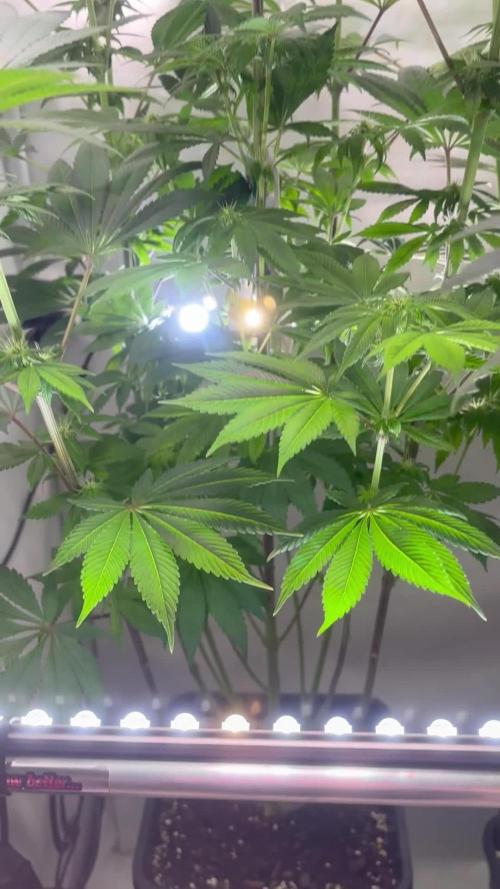
Thank you so much Molly and Heather and all of the fast boats team for giving me the opportunity and setting this up for me so I can have some of the best genetics in my garden ztrawberriez auto Is an absolutely beautiful plant. I recommend it for everyone.🔥💯


Likes
7
Share

@sunshinegroww
Follow
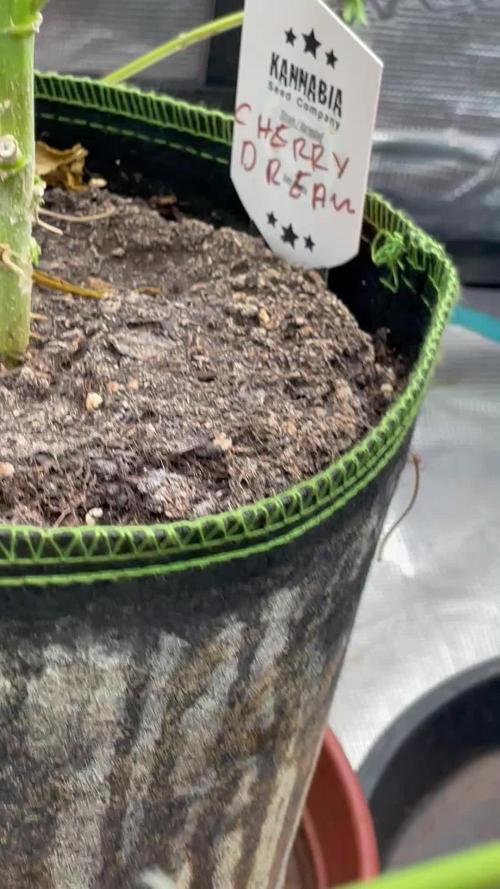
Hard as rock flowers big ones too very easy to grow indeed,very compact ideal for small spaces big thanks to Kanabia providing the beans ??😍👊

Likes
42
Share


@Ukfarmer420
Follow
Hi guys
So here we are, day 1 of 12/12 plants all look healthy I have performed a defoliation and will do a major defoliation on day 21 of flip.
I'm expecting a massive stretch lol, lights on 80% I'll.switch it.up to.100% on day 21.
Started on biobizz bloom and topmax today so hopefully I didnt burn them lol
Happy growing guys


Likes
2
Share


@DigiDom
Follow
Not much do do this week. Training is mostly done. Don't really have anything to trim as was doing it as I went along. Just need to keep an eye on her. She's starting to flower but it looks like dimming the light affected the stretch.
Day 37 - some mild defoliation
Day 39 - looks like she's done with her stretch but hopefully she'll grow a bit more.

Likes
24
Share


@m0use
Follow
***Sponsored Grow*** = Medic || https://medicgrow.com || Grow = ***Sponsored Grow***
Ok, so first week of introducing the trip tonic line of feed into the medium and getting rid of the lotus crap, all of the newer growth is looking much better and some of the older growth is greening up but I don't expect a full fix for that. Gave some extra grow B in this week as it is higher in P and K and will act as a small PK boost for the stretch that is to come. Flipped my plants to flower as well so they are now on a 12/12 setting. Been using the medic grows mini sun 2's internal timer in the lights and they appear to be working just fine. They have pre-programmed setting of 12/16/18/20/22 "on" cycles, I thought it might have been hold the dial till the number you want came up but its not that fancy. As of now my photoperiod is from 1:30pm-1:30am but I might move this up to 12pm-12am so when I need to look at my plants I'm not waiting till the afternoon. Its really only an issue on the days I'm working. over all happy with the progress, Plants are drinking lots so I'm happy with that.
Lights still running at 80% with V1 spectrum, will increase to 100% after stretch, don't need to growing into them and burning up.
Till next week.
***Sponsored Grow***
Official Website:
https://medicgrow.com/
+
https://www.emeraldtriangleseeds.co.uk/
Facebook:
https://www.facebook.com/medicgrowled
+
https://www.facebook.com/OriginalETS/
Twitter:
https://twitter.com/medicgrow
+
https://twitter.com/emeraldseeds
Instagram:
https://www.instagram.com/medicgrow420/
+
https://www.instagram.com/emeraldtriangleseeds/
YouTube:
https://www.youtube.com/channel/UCNmiY4F9z94u-8eGj7R1CSQ
Growdiaries:
https://growdiaries.com/grower/medicgrowled
https://growdiaries.com/grow-lights/medic-grow
+
https://growdiaries.com/grower/emeraldtriangleseeds
https://growdiaries.com/seedbank/emerald-triangle-seeds

Likes
Comments
Share


@Kider196nyc
Follow
ac infinity germination dome with heat mat and led lights. Seeds planted into solo cups

Likes
21
Share


@siLva_77
Follow
End of Week 9, the Trichomes on the Painkiller Loopings ready to Chop. The Blue Dream needs 1 more Week.
Bald wird geerntet !


Processing
Likes
18
Share


@ROM101
Follow
Flushing this girl and will harvest in about a week. Rock solid buds really happy with how she's turned out.

Likes
14
Share

@Radagast_
Follow
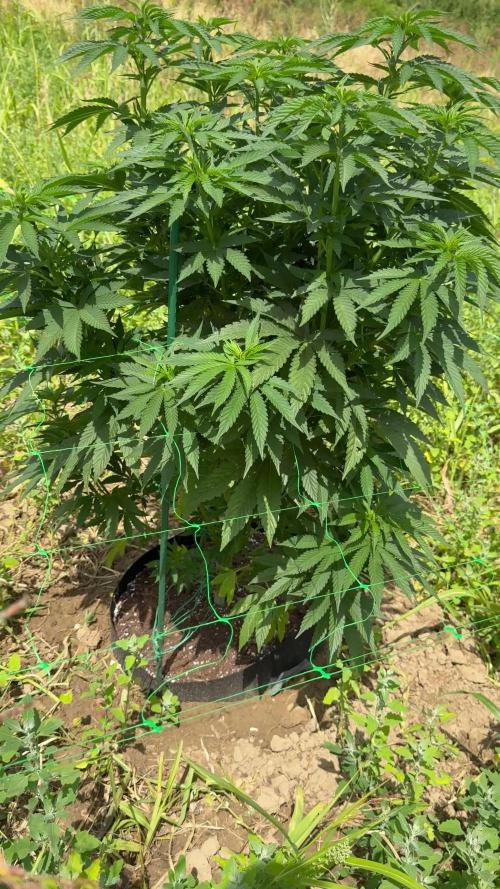
11.07.
Dos Si Dos 33# 1# Day 77#
Dos Si Dos 33# 2# Day 77#
Today is the end of the eleventh week for the plants.
There were storms all week and with the fact that they spent almost the whole week under stress (they were also under heat stress a couple of days before), I am certainly satisfied with the progress.
On Tuesday, they were watered for the last time, with clean water, then it rained, and the next day it rained all day, since then they have not been watered, as soon as the soil dries I will feed them.
Below in the table is the food that they received last time, but it is included in this week, and I introduced that as well.
Stay High and Keep Growing!!!

Likes
17
Share


@RoyColt
Follow
Always R.O Water
Watering the plant 3 times for per week
1st Watering with nutriens. (750 ppm) 27.03.2023) 4 liter
2st Watering with nutriens. (750 ppm) 30.03.2023) 4 liter
3st Watering with only R.O water & CalMag. (300 ppm) (01.04.2023) 4 liter
1000 ppfd


Likes
25
Share


@pifflestikkz
Follow
Day 22
25/07/24 Thursday
Still no Feed/water since Tuesday.
Been a humid and overcast two days so not as much evaporation as normal.
All plants happy and healthy 💚
Video updates
Day 23
26/07/24 Friday
De-chlorinated watering pH 6 with 5ml calmag to 5L water.
Watered each with 250ml and had small run off.
I will continue to feed/water with small run offs to help prevent salt build ups.
Video update.
Day 26
29/07/24 Monday
Nice feed today, using de-chlorinated tap water pH 6.
They each had 300ml with small run off.
All looks incredibly happy and healthy!
The Auto Kabul that was mutated and twisted has pulled herself through and is just a bit shorter than the others.
Day 28
31/07/24 Wednesday
End of week😁
De-chlorinated water pH 6 today with Plagron pk13-14 5ml to 5L
Plagron power buds 5ml to 5L
Used 300ml of the 5L solution.
I will be using these on water days from now on as they are advised to be used every irrigation.
We'll see how they perform 💪💚


Likes
154
Share


@StarLorr
Follow
Welcome to my Lemon Mandarin 🍋🍊Diary.
In this Diary:
Seeds: Fast Buds (from contest)thanks
___________________________
Feeding:
Mon 14Apr: 2L Remo/Recharge pH'd 6.47
Thu 17Apr: 2L Remo/Recharge pH'd 6.44
Sat 19Apr: 2L Remo/Recharge pH'd 6.42
Mon 21Apr: 2L Remo/Recharge pH'd 6.42
___________________________
Monday 21st last feeding of the grow.
Will be flushing with Advanced Nutrients: Flawless Finish.
_________________________
buds are sticky smelly citrusy and some are plumper than others😋😋
_________________________
Thanks for stopping by, likes and comments are appreciated!👊🏻😎
Keep on growin!
Keep on tokin!!!
😙💨💨💨💨💨