


Likes
Comments
Share


@Bwright_315
Follow
So far so good. This is week 2 or 3of flowering and no issues so far. The fan leave are starting to thin out but I guess that Normal in the flowering stage.
The only question I have in this stage is what should my humidity but for the flower stage ? I heard any where from 60-40?

Likes
8
Share


@Shadowpup369
Follow
These two did great even through a lil stress they still came out on top. I almost want to run it back but I think it's time for something fruity maybe, maybe having a terpene profile that helps initiate a more stone heavy affect and be indica heavy.

Likes
1
Share

@rommyu
Follow
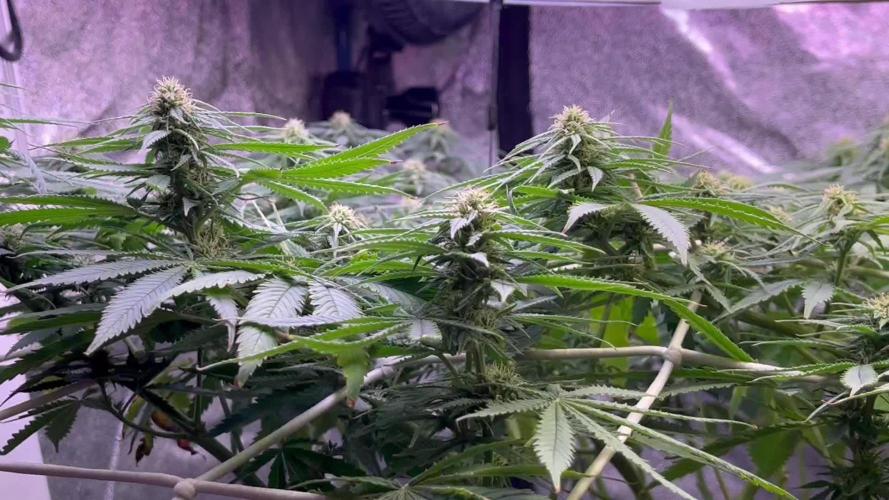
Recovering from a hard week of losing a third of the leaves. I had nutrient lockout from too high ec which results in the roots not drinking eating. I thought I had some mold so I cut all the yellowing leaves which were the plant’s buffers causing it to lose more leaves in a doom loop until I realized what the problem was. It feels like it’s restarting and I have lost some time

Likes
7
Share


@Ninjabuds
Follow
My Runtz plant is a sturdy one! It's got thick, strong branches and robust leaves, like it could handle anything. I bet this one would thrive outdoors. The leaves are a beautiful deep green, almost velvety. This plant just radiates health and vigor. I'm excited to see how it develops!
This past week has been a whirlwind of work, leaving little time for anything else. My phone's camera roll is sadly neglected, with only a few snapshots to show for it. But finally, I'm finding a moment to catch up on my grow diaries. It's been exciting to see the progress, even if it's just through photos. I'm looking forward to documenting the next stage!

Processing
Likes
11
Share


@ganjaman24
Follow
They’re looking extremely healthy..gave em their first nute feed with the last watering seem to be doing fairly well..fimmed the GG and LST. Did not touch the unkown as it looks smaller to be the same age. Running GHE base line with few extra supplements.
****UPDATE****
Both are LST’d..might rethink the way I tie them. Going for a “coil” type look, we’ll see though. They’re looking great! Hoping for females!

Likes
47
Share


@GanjaReaper
Follow
Day 83:
After being in the dark for like 4-7 days, they where ready to harvest. All plants getting cut by the machine, big buds are cut by hand.
I never weight wet buds because that doesnt make any sence. I will update soon on how much it is dry weight.
My friend helped me with the harvest since it takes many hours of work.
I have many buds that are as big or bigger as my hand.
Quallity so far looks promising even thought there are shitty buds as well, but thats normal and oke.
They have been cut freshly so I won't lose much weight when cutting. This will happen when cutting dry buds.
The remaining small leafs on the wet buds will dry in with the buds and will be barely visible.
Thanks @Fastbuds for sponsering the seeds. It was a really hard thought to make a diary about it while having more then 100 other strain plants.
So both diaries look almost the same now. Ill hope you guys liked my grow and that we can go bigger in the future, so that i can make a , single strain,better and full diary about it.
More info soon.

Likes
5
Share


@Mr_nugs_lover_David
Follow
The plant looks super healthy and strong, I've removed the main stem allowing the secondary branches to become the main ones now and also I've done this to void a high height for the plants, I want everything as low as possible, let's see how this lady keeps developing guys!

Likes
58
Share


@valiotoro
Follow
Nice buds very sticky 💥
The smell its not a cheese in particular its the whooole plate of cheese with the jam & the dried fruits & earthy its delicious!🧀🍇
Likes
3
Share

@BunnyBud
Follow
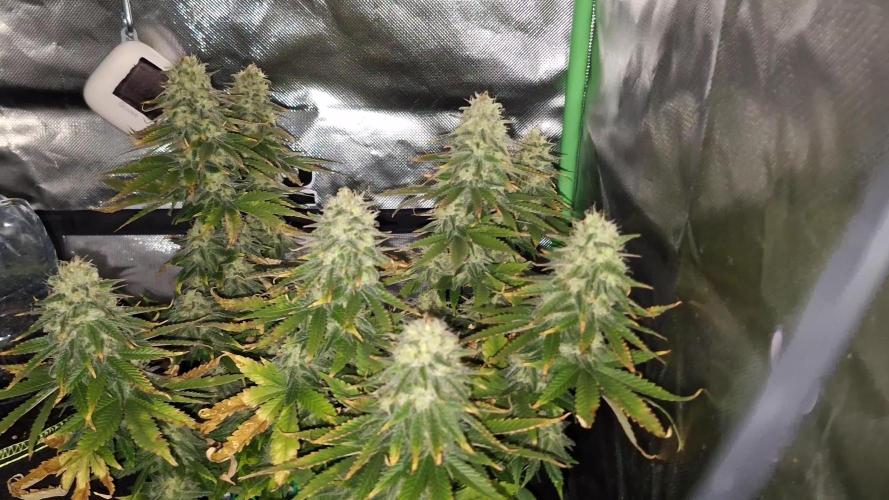
Despite being a dwarf, despite all the shortcomings and damage it has suffered, I cannot complain about the buds it has produced. I am satisfied with my little bonsai. ❤️
Likes
15
Share


@Meewin
Follow
Planted the Blue Dream from Seedsman outside yesterday. This ends her days under the led lights from Mars Hydro and starts her journey in the great outdoors!!

Likes
4
Share


@NurseGreen23
Follow
Still a ways to go for this lass but she's lookin nice and frosty. Wish I'd had more opportunity (and inclination) to train as she's quite leafy and the lower bud sites are getting crowded out a bit. She'll have the tent to herself for a while as her sister doesn't have long to go.
Likes
6
Share


@Mismatas
Follow
MI MEJOR COSECHA HASTA AHORA, 425 GRAMOS EN SECO DE FLORES PERFECTAMENTE MANICURADOS, DUREZA DE COGOLLOS, INCREIBLE EFECTO Y SABOR, INCREIBLE PRODUCCION, GRACIAS SENSI SEEDS !!!!!



Likes
1
Share

@Northern_Ent
Follow
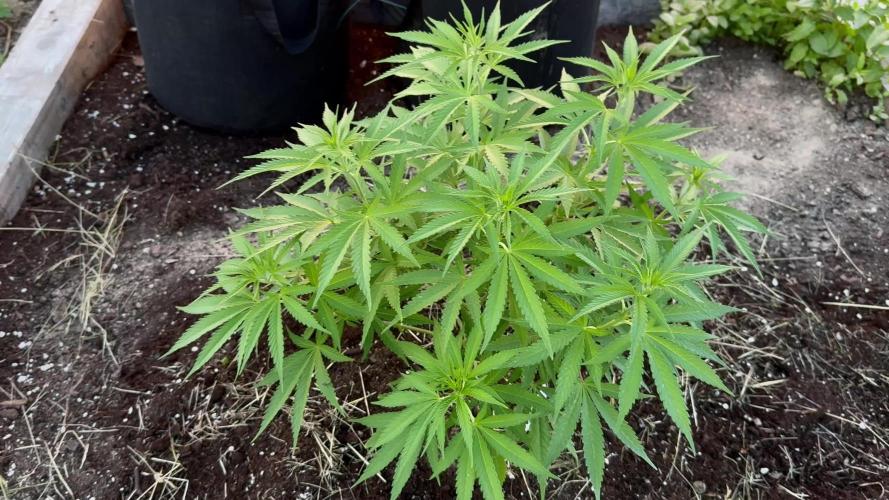
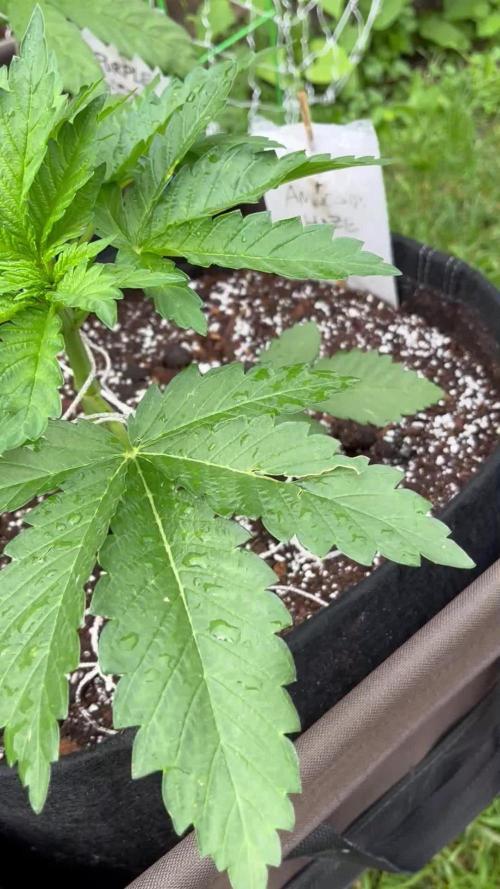
June 28: record rainfall this June and she is healthy but behind schedule due to the weather. Perhaps a bit slow to recover from the first topping but she will get going fast the next two weeks.
Likes
6
Share
@Chrisandweed
Follow
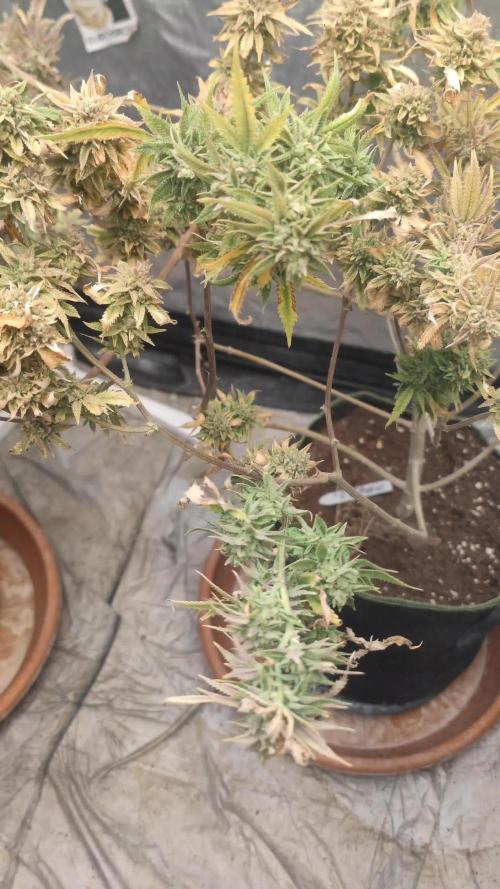
Bueno, ayer hice el ultimo riego, mas cantidad de lo habitual, y ya cuando seque, se corta, supongo que actualizaré fotos, conforme avance la semana, del corte y posterior proceso ya que dado que hubo araña y ciertos problemas, voy a hacer el budwashing que habitualmente hago.
En el video se ve algún cogollo con telaraña de araña roja, de ahí el budwashing. Dentro de lo malo, no son todos los cocos los que la tienen pero bueno, un buen lavado no jode nada.
Edit 12-02-2026: CORTADA! ya puesta a secar en el tendedero xD dado que en el armario había algo de araña aunque no habia afectado a todas las plantas, he decidido hacerles budwashing a todas no sin un petique que me centre y buena música 😁. Normalmente subía fotos del proceso, en esta ocasión, aunque sea un poco mas tedioso, he subido un video del proceso.
Cuando seque finalizaré el diario y subiré las fotos de los cogollos manicurados.
Aclaro, la he puesto a secar en el tendedero pero metido al armario ya sin luces y tal XD solo ventilador oscilante y extractor con el filtro, que solo con el corte la he liado en la calle 😅😂😂😂
Pues la vd es que ha salido mas de lo que pensaba, como la tenía ahí esquinada, era la mas inaccesible, me costaba mas verla bien. Algunos cogollos están cubiertos de telarañas y los enfoco en el video para que se vea, pero otros no, por lo que entiendo que pese a mis fallos, la resistencia es mas media, ya que otras o han sufrido mas, o casi no lo han sufrido, pero en definitiva, siento que muy buena variedad pero no para cultivarla como yo he hecho, esta tiene pinta de ser una de esas que pones en exterior y tira a los 3 metros. Buuueno, pa'so stánnn pa probaah y exsusperimentar xD
Likes
13
Share


@CBDezz
Follow
The plants are ready to be chopped and hung for 3-5 days. I removed all the fans leaves and left them all branches on the main stem. The ladies smell so strong I can wait to see how they turn out when they are dried and cured.
1) I plan to hang them for 3-5 days @ 71 f and 50-55 RH,
2) Do a final tight trim
3) Than I will move them to jars and cure for 2-3 weeks
I will update the diary with harvest pictures & weight before I move them to the jars for curing.
I think the seeds might have got mixed up when packing because these three plants were all supposed to be the same and you can clearly tell from the pictures that they are not.
Likes
45
Share


@masterofsmeagol
Follow
8/27 I think I mightve been overwatering. It's so hard to tell when the conditions change week to week. That's Maine for ya. Bags were still heavy and plants were soaked. I tried to shake the more advanced flowering plants without sending water everywhere. That's how septoria spreads. The event horizon I treated with plant doctor looks the best it ever has. It's tile for another application on the toasted toffy. I'm seeing a few spots again. I didn't have time to take pictures or do a video. This video is from last night. I'll treat that toasted toffy again today and I'll record it here. After I see it working u may treat the others. I see some residue of k bicarb but it has pretty much eradicated the pm. I know it will always be there but these treatments seem to be working. I'll be adding beastie bloom to my line up soon. EVERYDAY I go over the buds are bigger more compact and dense. Event horizon, toasted toffy and the red runtz (I think) in the 50 are flowering to beat hell! The get bigger everytime I see them. I can smell them as soon as I round the corner. This is going to be a good year. These strainsxare high in thc. Maybe I gave up some mold resistance and a harder to grow strain but if I can make it to the end it will be fire.
WENT BACK OVER AROUND 5. OBVIOUSLY IN THIS SCORCHING 80°+ day the seedling in the 10 was dry as a popcorn fart. Some other plants seemed dry when I stuck my arm down the bag but I could feel some moisture when I pushed my finger through the medium. They WILL need water but I'm not giving it to them tonight. Took a shit ton if pictures and a video this morning. I'll uploadcthat shit tomorrow. I'm trying to do a couple right now. Anyway I continued to defoliate what needs it. Flowers are swelling. I GAVE THE TOASTED TOFFY ITS 2ND TREATING OF PLANT DOCTOR. I USED A QTR GALLON OF A 4 TSP PER GALLON MIXTURE. I MADE SURE TO GET AS MUCH OF THE FOLIAGE AS POSSIBLE AND THEN I USED THE RESTCON THE MEDIUM. I SHOULDVE PROBABLY WATERED THAT ONE BUT ITS GOING TO RAIN TONIGHT. AT LEAST I HOPE IT IS. Looks like some of the pics are uploading! Yay! The plants looked the best I've ever seen them tonight so I held off watering. My wife is I'll and may need to go to the hospital. So instead of watering prematurely I can monitor the situation and make a decision in the morning. I made enough phed water for my father to go around and water everything. He is aware of the situation. Hopfully that will not be necessary. However, I don't want to over water and I feel like they didn't want it. Just going with my intuition. It's done me pretty good so far.
8/28 Luckily no hospital. It's sprinkling out. Plants are covered in water so we got SOME rain. It says we will get 0.00 but that can't be right. I watered the 10 yesterday and everything else this morning with a gallon each except the middle gmo in the 30 which got 1.5 gallons. Did not water the one in the 50 gal pot. It looks a little overwatered. Also looks like it has a slight calcium/magnesium deficiency. I'll up the calmag and i'll make sure when I do water I'll water thoroughly. Like usual toasted toffy is looking better after the treatment. The all star has been the k bicarb. I haven't seen shit for pm. Just a little residue from the k-bicarb. Took a video and some pictures. This is the fun time. I like watching the buds develop. Some of these plants were monster cropped so they are STACKED. I'll keep what I do updated.
8/29 Made an awesome video today bit it won't upload. Probably because its a little over 2 minutes. I'll do another one if it won't upload. Nope it won't even attempt to upload it now. Oh well. They flowers just looked so pretty this morning. I noticed some WPM on the event horizon in the middle. I noticed SOME on the bottom and interior of the GMO that I had already identified. I'll do another k-bicarb treatment and see how that goes. Plant Doctor seems to he doing a pretty good job on the septoria on toastedctoffy and my favorite event horizon. That plantvis THICK. it's going to be stacked and have some huge colas. I need to LST it and suppirt those giant colas and separate them a bit more. There is never any shortage of work to be done I can tell you that. I have defoliation to do on the sherb pie and the middle event horizon. It seems like crisis after crisis. Bu my plants are STRONG.
8/30 It was in the 40s at 6am. Shook off the plants. Bags are still heavy. I see some septoria climbing a bottom branch of the toasted toffy. It's foggy as hell out. Can't see a foot in front of me. Saw a LITTLE PM on the gmo I've been treating. It's just time to apply the ki bicarb. Plant Doctor is working wonders on even horizon in the back. I see some pm on the one in the middle. I think I'll treat that with plant doctor as well. I'm not sure. I messed up the video. I've got work to do. I'm waiting until I water and I'll feed again. I'm going to add beastie bloom to the lineup this time I think. Only one plant seems like it m9ght be too early for it. We'll see. I need to look back. I'll document what I do. Video won't upload. I'll try later but it's sideways
WENT OVER AROUND 3PM AND EVERYTHING LOOKED FABULOUS. WELL....THE PLANT I DIDNT WATERCLAST TIME IN THE 50 WAS DROOPING SO I GAVE IT A GALLON AND A HALF. THE TEN WAS LIGHT SO I GAVE IT A GALLON. IT WASNT DROOPY BUT ITS A HUGE PLANT IN A 10GAL AND USES A LOT OF WATER. I WAS PLANNING TO GO CHECK THEM TONIGHT AND SEE IF THEY NEEDED WATER BUT EVERYTHING IS PRAYING TO THE SUN! I DONT WANT TO OVERWATER AND I BELIEVE THESE WOULD BE BEST SUITED TO BE WATERED IN TGE MORNING. ILL FEED THIS TIME AS WELL. IM CONSIDERING ANOTHER APP OF K BICARB. TOOK A FEW PICTURES AND VIDEOS BUT ILL NEED TO UPLOAD
8/31 FED AND WATERED EVERYTHING. TOASTED TOFFY DIDNT GET FED DUE TO SEPTORIA AND THE 10 ISNT FAR ENOUGH ALONG.. THE 50 WAS WATERED YESTERDAY BUT GOT THE FEED WITH A LITTLE MORE WATER THIS MORNING. I ADDED ABOUT 1/16 TSP BEASTUE BLOOM TO THE REGULAR LINEUP TO SEE HOW IT GOES. MY BUDDY TOLD ME LOTS OF PEOPLE HAVING PROBLEMS WITH PM. I WENT BACK OVER TO DEFOLIATE AND LOOK FOR PM AND I FOUND IT. ON THE GMO INTETIOR AND SOME BOTTOM BRANCHES. I DEFOLIATED WHAT WAS BAD AND THEN I SPRAYED 3 GMO'S, EVENT HORIZON IN THE MIDDLE AND SHERB PIE WITH K-BICARB. HOPFULLY THAT WILL KEEP THINGS OUT OF CONTROL. I WILL BE WATCHING AND KEEPING UP WITH FUNGACIDES. IF I FIND ONE NOT WORKING ILL SWITCH IT UP. I HAVE A FEW OPTIONS. BUDS ARE EXPLODING IN GROWTH! WINDY OUT. I SAW A SECONDARY BRANCH LIMP AND MY GEART SUNK. I LOOKED DOWN THOUGH AND SAW THAT IT JUST WAS BLOWN HATD AGAINST THE TOMATO CAGE AND SNAPPED. I REMOVED IT WITB A SIGH OF RELIEF. MY BUDDY SAYS THE SEPTORIA DOESNT LOOK TO BAD AND ITS PRETTY FAR IN FLOWER SO HE THINKS ILL BE ALRIGHT. NEVER GROWING CLONES AGAIN. ILL STICK TO SEEDS AND STEAINS MADE FOR MAINES
9/1 Forgot to write an entry. IT RAINED FOR A BIT BUT TURNED TO BRIGHT 80'S
9/2 WATERED EVERYTHING. I THINK ITS TIME FOR ANOTHER TREATMENT OF PLANT DOCTOR TODAY. The septoria is getting a little worse. The buds are swelling everyday though. I think this plant only has a month left. I just need to outrun it. So far so good. I think my watering habits are better now. It's different depending on weather. Potassium bicarb has been wonderful treating the pm on that gmo. I treated the middle event horizon with it as well. It seems to work awesome. I'm losing tons of leaves. I hope that's normal senescence. I think it is seeing as how I see SOME foliage in the woods. Its matching other diaries. The plant must shed some leaves to make these flowers that seem to double in size every time I see them! Trying to upload a couple videos but they are long so we'll see what happens.
WENT BACK OVER AT NIGHT ANDCAPPLIED A LITTLE BIT OF K BICARB AND DEFOLIATED WHAT I SAW ON THAT GMO. IVE BEEN DEFOLIATING WHAT SEEMS LIKE A LOT BUT BUDS ARE SWELLING AND ITS CONGRUENT WITH THE MAJORITY OF MY DIARIES. I WISH I HAD PERFECT CONDITIONS BUT I DONT. I TREATED THE EVENTHORIZON WITH PLANT DOCTOR AGAIN. I USED APPROX A QTR GALLON OF 2 TSP/GALLON AND TRIED TO AVOID BUDS WHILE STILL GETTING THE LEAVES. I KINDA USED THE REST AS A SQUALCH SINCE I HAD WATERED THIS MORNING. THE WIND WAS STRONG. I ADDED A GARDEN STAKE AND ROPE SUPPORT TO THE TOASTED TOFFY AND ATTACHED IT RIGHT TO THE FRAME OF THE CAGE. LOOKS GOOD FOR NOW. ILL KEEP THINGS UPDATED.


Likes
3
Share


@UrbanBoer
Follow
Unknown Strain SA PLUG Edition, herself and Monday's Blue,are the oldest trees, and yet they have not finished flowering, the seasonal change is to blame.
It to boosts skinny stems, but I am more intrigued in how she's going to support her buds.


Likes
9
Share


@R_Dub
Follow
Easy grow the FoxFarm plant yielded 53 Grams of bud and 14 of trim, the Recipe420 dropped 61 and 68 grams plus a 29 grams of trim. Like everyone else it seems my experience with FoxFarm soils are ....interesting the Recipe420 girls took nutes like a champ and the soil didn't get compacted stayed nice and airy, the FoxFarm soil is considerably denser retained water better but did not take nutes well AT ALL. It may be me but I'm going to try either my own mix or a different blend. No shade good soil just..weird. Chopped them and hung them whole in the GGT 4X2 dried them at 60-70 degree F, and 58-62% humidity for 10 days, trimmed and placed in CVault tasted one bud in the process and holy smokes she hits 😀 this aint no dispo stuff
