


Likes
Comments
Share


@GanjaFarmer101
Follow
Really enjoyed growing this - easy, resistant, and very high yielding.


Likes
21
Share

@TrickzCutz
Follow
Servus Moin!
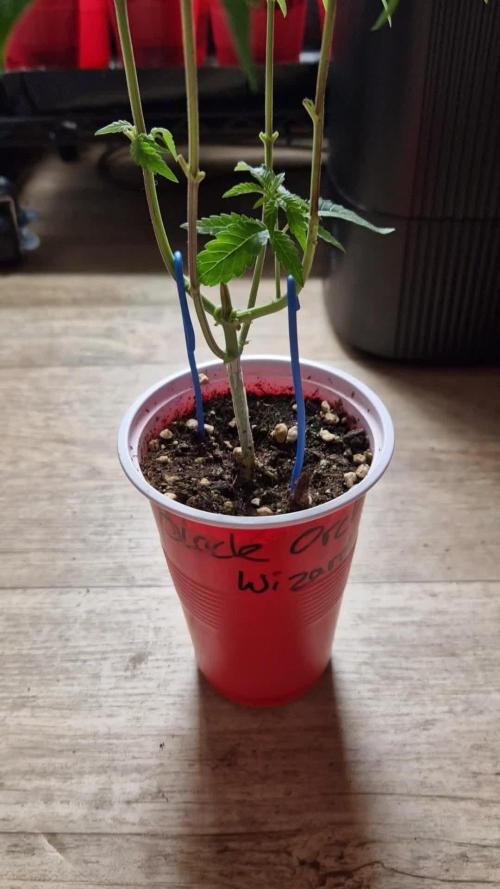
Die Black Orchard wächst auch vor sich hin und wartet auf das umtopfen.


Processing
Likes
9
Share


Likes
17
Share


@VovaFarms
Follow
I'm very happy whit this strain. The plant didnt get very tall, i have 8 nice colas which yielded almost 80 g's of dry bud. The smell is very intense. I did tasted some of the buds and high is very good - euphoric and creative. I cant wait to see what happens after some curing in jars.

Likes
25
Share


@pifflestikkz
Follow
Day 65
06/09/24 Friday
Feed today using de-chlorinated tap water pH 6.
Only update of lemon zkittles as rest are quarantined 🤣
I will upload if they pass the check in 3 days 🙏✌️💚
Day 66
07/09/24 Saturday
De-chlorinated tap water pH 6 only today.
Mould 😔🤦♂️
Day 67
08/09/24 Sunday
Feed today using de-chlorinated tap water pH 6.
Day 69
10/09/24 Tuesday
(End of week)
De-chlorinated tap water pH 6 only today.


Likes
20
Share


@Robin87
Follow
Same as there big sister, 54th day of flower.. These plants haven’t had any work done what so ever, not one leaf has been removed from the start, no folding of leaves, literally just left to flourish in there “natural” environment, and I couldn’t be more happier with what’s inbetween the “mess”😂.. buds are swollen and ❄️, stinking of 🍋.
Likes
60
Share


@BOMbolenath
Follow
Amazing strain, the most fragant in the grow. Very sticky buds, lots of resin. Last week of feeding.

Processing
Likes
6
Share


@OroVerdeOrganics
Follow
Some plants seem to be turning colors early.
Pretty fast flowering varieties so not concerned.
Covered in trichomes.
It’s beginning to smell super fruity.
Likes
19
Share


@DreamIT
Follow
Sponsored by:
🌸SUPER SATIVA SEEDS CLUB🌸-💡VIPARSPECTRA💡-💐GREEN BUZZ LIQUIDS💐-🛠️WEDRYER🛠️
4/9 I'm back with updates! Super Sativa Seeds Club's Lemon OG is a monster in height. has exceeded 110 centimeters and has yet to finish growing! monstrously large! and it consumes more fertilizer than the others, but that's not a problem. fertilized today and probably tomorrow too. yeah!
__________________________________________
Personal advertising (contains affiliate links)
__________________________________________
🦄Super Sativa Seeds Club, creators of premium and legendary genetics since 1985! Anonymous shipping!
✅https://bit.ly/Supersativaseeds
__________________________________________
Did you know that Green Buzz Liquids fertilizers are 100% vegan? A complete line of products ready to give the best to each of your plants! Visit the site and see my journals to see how they work 🦄
🤯 And with the code "dreamit" you will immediately receive a 15% discount on your purchases
✅https: //bit.ly/GreenBuzzLiquidsPro
__________________________________________
👀 Are you looking for a good lamp to start with? 👀
🌞Viparspectra has something more than the others, take a look at their site.
⏩ Use "GDVIP" for an extra discount or "DREAMIT3" for an extra 5 %% discount
👀 Search for it on Amazon
✅Amazon USA: https://amzn.to/30xSTVq
✅Amazon Canada: https://amzn.to/38udUVe
✅Viparspectra UE: bit.ly/ViparspectraUE
✅Viparspectra USA: bit.ly/ViparspectraUS
______________________________________________
🌈 Tired of blowing on your weed hoping it dries quickly? Check out the Wedryer website! You will find a well-made accessory that will help your weed dry in just 8-10 days without the annoying risk of finding mold or other annoyances! (no affiliate links)
✅https: //bit.ly/Wedryer_
______________________________________________
📷🥇Follow the best photos on Instagram 🥇📷
https://www.instagram.com/dreamit420/
Backup
https://www.instagram.com/dreamit4200/
🔻🔻Leave a comment with your opinion if you pass by here🔻🔻
🤟🦄💚 Thank you and enjoy growth 💚🦄🤟

Likes
8
Share


@sweetkaya
Follow
Day 76 - The ladies are getting weight, everything's good. No signs of whiteflies at all. Some days ago I covered the SP with a shading net because the top buds were beginning to burn and the light is not dimmable. I'm going to buy the SP1000 for the next run to have a better final result. Updating in a few days 🙏

Likes
14
Share

@Hempface86
Follow
I hope everyone is doing well and happy Easter aka
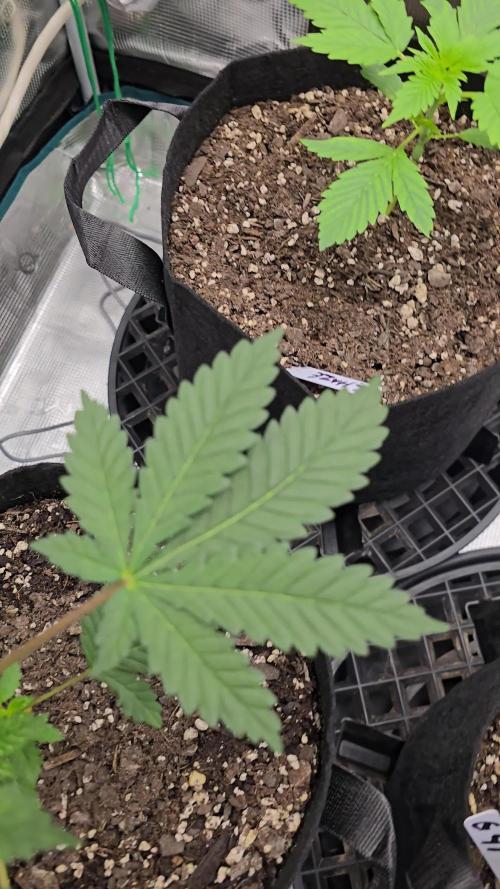
Resurrection day... Anyway, this plant, it's starting to catcher groove.But as you can see, she is a triploid i believe based down the three leaves coming out the top.. If anyone has any experience with this and any tips would be much appreciated, i think it's cool, but I don't want it to be a problem that affects my other plants.. I don't think it will be.. But so far so good.. Thank you for stopping by God bless and happy growing 🙏
Likes
111
Share


@420DeepGrow
Follow
ACTUALIZACIONES A DIARIO!!
Miles de gracias al equipo de Royal Queen Seeds y a @James por proponerme esta aventura tan trepidante y poder conocer de cerca las nuevas F1 y sobre todo a la gran Titan F1. Espero que lo disfruteis y os sirva como referencia.
¿Qué piensas cuando lees la palabra “Titán”? Hay quienes la asocian con los hijos de Urano de la mitología griega. Otros saben que Titán es la luna más grande de Saturno. ¿Y entre los cultivadores de hierba? Estas personas reconocen a la Titan F1 como una variedad de marihuana con una genética de vanguardia. Se trata de uno de los primeros híbridos F1 autoflorecientes, y es una variedad pionera que ofrece productividad, resistencia y algo completamente nuevo.
La Titan F1 deleitará tu olfato durante la fase de floración y más allá. Esta variedad autofloreciente ofrece un potente perfil de terpenos compuesto principalmente por mirceno, farneseno, ocimeno, pineno, bisabolol y limoneno.
Gracias a MarsHydro 😊🙏 por darme la mejor luz que hay en el mercado.
La marca numero uno en focos 💡, carpas de cultivo ⛺️, extractores 🌬️ y demás aparatos que necesitas para tu cultivo.
Para esta aventura arrancaremos con 💡Mars Hydro TS 1000 Full Spectrum LED Grow Light 150W Regulable y 1 semilla autofloreciente a un ciclo de 20/4.
Verdaderos 150w con este TS1000, la mejor luz de cultivo LED para principiantes.
Ofrece una luz adecuada para 2-4 plantas 🌱. Su precio razonable, la marcada mejora del rendimiento y el control variable de la producción la hacen amigable para los nuevos cultivadores. Todo un tesoro para cualquier cultivador que este comenzando.
Usaremos para esta aventura una carpa de 60x60x90, MarsHydro una carpa para los más exigentes.Con una solapa de cremallera mejorada, dobles cremalleras de metal con forro,reflectante diamante tipo Mylar, postes de metal para una estructura mas solida, no se puede pedir nada mas.
Garantizando una respuesta en solo 24 horas tanto si has usado antes la marca como si no.
🌻🚀 Consigue tus semillas aqui:
https://www.royalqueenseeds.es/semillas-de-marihuana-hibridas-f1/624-titan-f1.html
💡 MarsHydro TS1000:
https://www.amazon.com/gp/product/B07PLY1WKK
⛺️ 60 x 60 x 90 MarsHydro:
https://www.amazon.com/dp/B081PN2QDN/
Septima semana de floracion, las planta ha terminado de estirar, las ramas laterales han estirando junto con la cola central y se muestran los futuros cogollos, es una planta muy compacta y he tenido que quitar alguna hoja baja para evitar la aparicion de algun hongo.
Se muestra una gran cola principal.
Es la genetica que mejor ha respondido, por no decir la mejor. Felicidades Royal Queen Seeds y MarsHydro 😁.
Los cogollos han estirado muy rápido y se ha formado una larga cola principal con muchos cogollos en las ramas laterales, continua cargandose de resina.
Las flores empiezan a engordar, queda poco para el lavado de raíces.
📆 Día 63 a 70: Riego con EC de 1050 a diario, los cogollos empiezan a madurar se acerca la cosecha, ha sido un cultivo muy rápido y sencillo.


Likes
17
Share


@The_Doctor_Green
Follow
Apenas a crecido 4 cms más con respecto a la semana pasada.
He visto que empezaron a aparecer las preflores, así que en breve empezara la floracion..regue con oro negro y organic power 2ml y 1ml x litro respectivamente.
Likes
4
Share


@pzwags420
Follow
week 3 flower is going great. I increased my UVA lights to 8 hrs on. Gsc and Blueberry have decent bud-lets already on day 17. OG kush has preflowers. waiting on Blueberry muffin to show pre fowers should be soon. At the end of week 3 GSC and Blueberry are doing the best and starting to get more trichomes. Im waiting on OG kush And Blueberry Muffin to really get going!


Likes
2
Share

@Lahuertacannabica
Follow
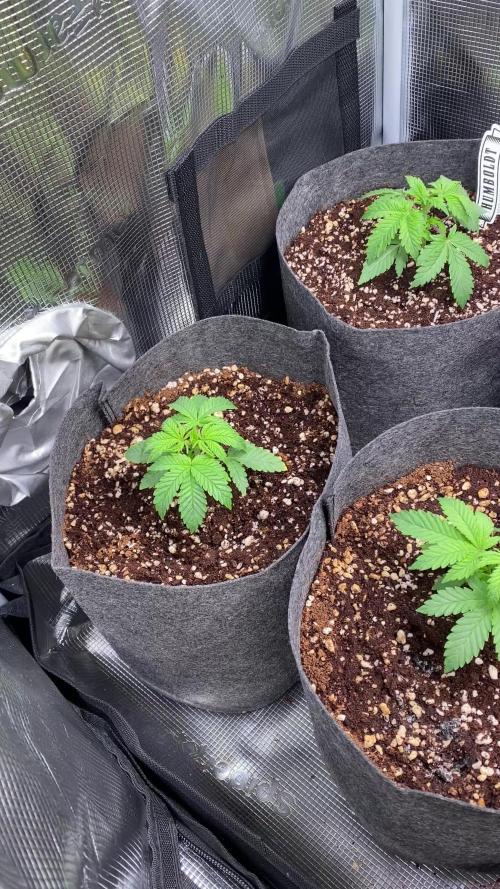
🌱 Semana 3 desde germinación – Ajustes clave.
Entramos en la semana 3 desde germinación y esta semana hemos hecho varios cambios importantes para empezar a empujar el crecimiento.
🔹 Riego y fertilización.
Esta semana hemos aumentado la cantidad de fertilizantes, subiendo la EC del riego hasta 0.8.
Además, hemos cambiado la estrategia de riego:
Riegos más cortos y continuos
Objetivo: subir la EC del suelo, que estaba bastante baja
📉 EC suelo inicio semana: 0.5
📈 EC suelo final semana 3: 1.2
Este control ha sido posible gracias al sensor 3-en-1 del kit GGS AC5 de Spider Farmer, que nos está facilitando muchísimo el ajuste fino del cultivo.
🔹 Próximos riegos.
A partir de ahora, en los siguientes riegos añadiremos Atazyme de Atami a la tabla, para mejorar la actividad radicular y ayudar a asimilar mejor los nutrientes.
🔹 Iluminación y clima.
Hemos subido la potencia del LED Spider Farmer SF2000 301H EVO al 75%, lo que ha provocado Un ligero aumento de la temperatura ambiente
Mejor intensidad lumínica para esta fase de crecimiento
Por ahora las plantas están respondiendo bien a los cambios, con un verde sano y crecimiento constante. Seguimos ajustando poco a poco, sin prisas pero sin pausas 💪🌿
Likes
93
Share


@Ferenc
Follow
So the 3rd week started. I did realize that the plants started growing faster and on Sunday I did transform them to a bigger hydroponic pot. They were entering the vegetative stage. I know I should have not done it to the autoflowering so I should have planted it to the finisher pot but I did not know because it is my first time so I kept reading and receiving information. I stopped spraying the plants because I saw one yellow dot and I checked it can be toxicity or fungee so better not to play but still use it for the soil. I constantly raised up the quantity of the water so started adding 140 ml a day for two plants, 70ml 2 times morning, evening. So one plant receives 35 ml in the morning and the same amount in the evening, approximately 12 hours difference. I use two lamps 60W each with a dual head so (30W 2 times each plant.) The Gelato Cookie D'ohpe started smelling not strong but the smell was weak, only if you go closer or in the grow tent. I started also adding bat guano-acacia honey and water mix. (1-liter water 1 tablespoon bat guano, plus very good quality acacia honey mix 1 tablespoon). The Gelato Cookie D'ohpe also started growing faster, at the beginning it was growing slower but now, it has changed. I also set the light schedule 20 hours on and 4 hours off with two-timer. Ventilation started I use a small USB fan which is able to go 17 hours with a 5000mpah power bank so I bought 2 when one is off the second is used and the other is charged. Pretty much it works almost 24/0. I do fertilize on Monday, Wednesday, Friday with that bat guano mix giving the same amount of water like if it was normal. 140 ml a day (70ml morning, 70ml evening). Other days the same quantity of clean water. I never used tap water I buy still water from the shop.

Likes
78
Share


@Roberts
Follow
Pure Ice cream great really well under the Spider Farmer lights in the Athena nutrition. She did get too close to the light. I should of hst her. My mistake, they will still smoke. Smells great, and is loaded in trichromes. Has a sweet creamy. Pine smell. Everything looks great. I only had minor ph issues during grow. She was thriving for a lot of it. Thank you Spider Farmer, Athena, and Pure Instinto Seeds. 🤜🏻🤛🏻🌱🌱🌱
Happy new year.
Thank you grow diaries community for the 👇likes👇, follows, comments, and subscriptions on my YouTube channel👇. ❄️🌱🍻
Happy Growing 🌱🌱🌱
https://youtube.com/channel/UCAhN7yRzWLpcaRHhMIQ7X4g
Spider Farmer Official Website Links:
US&Worldwide: https://www.spider-farmer.com
CA: https://spiderfarmer.ca
UK: https://spiderfarmer.co.uk
EU: https://spiderfarmer.eu
AU: https://spiderfarmer.com.au
G5000 Light Amazon Link:
amzn.to/4643esa
UVR 40:
https://www.amazon.com/dp/B0BR7SGTHS
Discount code: saveurcash (Stackable)

Likes
169
Share


@SlowpokeFuegobud
Follow
🍊 🐶 💜 🍊 🐶 💜 🍊 🐶 💜 🍊 🐶 💜
SOUR TANGIE DAWG!!! Does this sound like great weed or what?! 😁😁😁
Thanks @SSSC_John for running those fun contests and for giving us a chance to grow those beautiful genetics on stage! ✨ 🙏 💜
I'm so excited for this!! 😍
It's a new variety from SSSC and there's a contest running in the contest section for this one and the Purple OG Punch Auto! 😎 Better than the Oscars, in my opinion.
Can't wait to see what my fellow growmies will whip up! :wand: ✨
I started 4 regs now, put them directly in soil, after soaking them for three hours in pure humic acid from Green Buzz. 💧
Normally I always start with 3 regs, I always have minimum one female, but this time I don't have much time, I need to be safe. It will be a drama if I end up with 2 or 3 females, I can't kill them hahaha! 😬
Thanks my faithful grower friends, for showing up here and looking at my girls! I always tell them who is looking. 😜 💚 💚 💚 😘 Love you!!
Million thankyouuus go out to my sponsors @GreenBuzzNutrients, thanks so much for your support!! 💚 💚 💚
If anyone would like to try their amazing organic products, you can find a generous discount code of 25% in my weekly comments from next week on! 😜 🙏
If you want a recommendation which product to get first.. BIGFRUITS!! 😍 I love the tasty terps with this one!!
https://greenbuzzliquids.com/
💚 💚 💚💚 💚 💚💚 💚 💚💚 💚 💚💚 💚 💚💚 💚 💚💚 💚 💚
___________________________________________________________________
Strain Info:
About Sour Tangie Dawg cannabis seeds
Sour Tangie Dawg is a sativa dominant cross between the famous Tangie and Chemdawg. Expect a combination of sweet & fruity mixed with a gassy, jet-fuel flavour. The amazing mix of citrus, tangerine, pine and gasoline produces uniquely rich, dank buds. The powerful sativa high is strong, uplifting and long lasting, great for creativity and socialising.
Chemdawg is the parent of OG Kush, all Diesel strain originate from Chemdawg. The Tangie is originally a Skunk hybrid strain but extremely fruity with the trademark Tangerine flavour. This strain is potent with THC-levels over 20% alongside very generous yields of top quality weed, very suited for hash and rosin producers. If you’re looking for a strain to produce the best tasting concentrates this Sour Tangie Dawg is a proven winner! She easy to grow and the perfect choice for SCROG growing due to her growth speed and stretch. We advise switching to 12/12 light when 75% of the net is filled. For outdoor growers the harvest period is early October. Indoors she’s finished after 9 weeks of flower - fast for a sativa dominant strain. We recommend growing in soil with organic nutrients for the best tasting weed.
Get some fantastic genetics here: https://supersativaseedclub.com/ 💜 🐘