


Likes
Comments
Share


@Hashy
Follow
This was a good harvest for 9L pots and being a bit crammed into the tent. Like the others grown in this grow she probably would have come out with some amazing colours if I could have lowered the temps near the end of its cycle.


Likes
16
Share


@Rangi_Kijani
Follow
Momma is just about ready for her 36-hr pre-harvest dark period. Going to give her 1, maybe 2, more short light cycles (~10 hrs).
Trichomes are mostly cloudy with some amber. Pistils have darkened and curled in. Buds are plump and firm. It’s time! 😎
Likes
59
Share


@GMSgrows
Follow
An early update, due to rain in the forecast for tomorrow and the next day. Girls have formed button size buds and the nodes are stacking close. Very strong healthy girls here. Tallest lady just under 11 foot. My favourite time of year is upon us now. Cooler weather, just hoping on little rain for the next 6 weeks...
Added a little video so more of their size is shown, better than a pic
Likes
2
Share


@brown_tattooz
Follow
Week 4 plants have made alot growth with dark rich green leaves.. have not had any nutrient deficiency pop up, these plants are amazing Im impressed with the resilience of it… defoliated 2x once at the start of week 4 an end of week 4 they quickly had new growth… I accidentally snapped a stem while lst barely holding on on one side an within 24hrs it had completely healed with a small scar.. probably gonna veg for one week … excited for this progress!!!


Likes
8
Share


@taylordarling
Follow
This week was when I first recognized that there was something wrong....
Initially I only realized that the stems of my little girl were slightly bent downward. In some cases I have experienced this orientation when a plant is exhausted and about to got through its sleeping period but, this seemed different. In the following days I began to notice that the lower leaves were beginning to fade, the stems began to turn red, and still the leaves were bending downward and not praying to the light!
At first I just figured that my plant was in need of a feeding and transplanting to a larger container but, after doing a bit of research I realized that the I may have been experiencing a phosphorus deficiency. From my understanding I knew that these plants require nutrients that is high in nitrogen during the vegetative part of its life however, I did not realize that it's still needed an adequate amount of phosphorus in this stage too.
As I mentioned perviously, I decided to reuse my soil for this grow and as a result of sterlization my growing medium no longer had any nutrients to offer my plant at the time. I believe this is the reason I began to see signs of deficiencies and going forward if I ever reuse my medium again I will make sure to re-amend it before using it.
*I also topped the plant at the 5th node this week as well*

Likes
5
Share


@Rizza78
Follow
Smooth few days after the defoliations. They seem to be happy. Malted Milk can be very temperamental but I have been catching on to her ways. Still wary with my feedings tho. Want to give all these different nutes and unknown what the results will be? Installed ac units in each room to ensure good temperatures and RH outside the tents. Hoping for another good week!


Likes
296
Share


@StarLorr
Follow
Welcome to my Ðivine ØĠ Ķush diary.
In this diary:
Seeds: sponsored by Ðivine Șeeds
Media: Promix HP
Nutrients: Advanced Nutrients, Diablo Nutrients, Gaia Green Power Bloom.
Light and Weather: Şun☀️and Mother Earth.🌎
___________________________
Wet Weight: 1391 grams
___________________________
Wet Trimming with my trimming bowl was a humongous time saver!!
______________________________
Took me about 6 hours to wet trim.
______________________________
I wanna Thanks Ðivine Seeðs for the Opportunity to grow and smøke your Ðivine Plants👊🏼😉
______________________________
Thanks for stopping by, likes and comments are appreciated!👊🏻😎
Keep on growin!
Keep on tokin!!!
😙💨💨💨💨💨

Likes
8
Share


@Zucca
Follow
Touching wood 😅 the girls are in good health and are growing well.
The majority of the thrycoms are still transparent, some are milky white and very few are turning brown-reddish.
Given that Royal Queen Seeds indicates a flowering period lasting between ten and eleven weeks I think to be in line.
I slightly reduced the amount of water to plant #5 (the one with genetic mutation) because I noticed she drinks less than the others (soil is costantly wetter than the others)

Likes
26
Share


@GroloCup
Follow
She's moving along into flower and I've started using a little bloom nutes now that the stretch is tapering off. Took off a few fan leaves that were blocking some bud sites and removed some lower growth that wouldn't make much more than underdeveloped larf. She's definitely crowded in the tent, but she's continuing to go through her paces and should stay on track. She's starting to effervesce and it's a sweet earthy note with a more skunky stem rub. Lets see where this week takes us!

Likes
32
Share

@Growbody
Follow
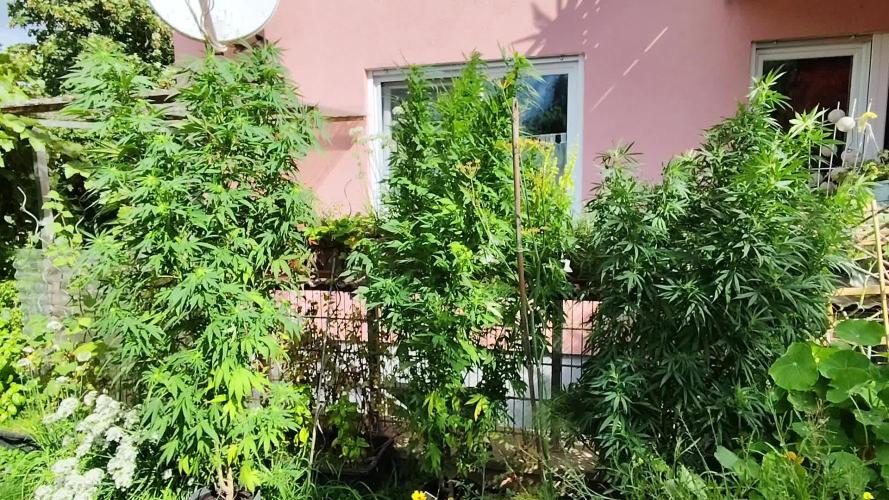
Hallo und herzlich willkommen zu meinem Growbericht Outdoor 2025 mit den Sorten Power Flower Feminized, Royal Medic Feminized und Special Kush #1 Feminized, alle 3 von Royal Queen Seeds. Es ist das erste Mal, das ich Töpfe für den Outdoor grow verwende, bisher waren alle Gorilla grows und direkt in die Erde gepflanzt.
Die URL der Power Flower Feminized: https://www.royalqueenseeds.de/feminisierte-hanfsamen/120-power-flower.html
Die URL der Royal Medic Feminized: https://www.royalqueenseeds.de/cbd-samen/148-royal-medic.html
Die URL der Special Kush #1 Feminized: https://www.royalqueenseeds.de/feminisierte-hanfsamen/138-special-kush-1.html
Die Planung für den Grow ist, die Samen in easyplug Anzuchtwürfeln keimen zu lassen und danach in 0,6L und 2,2L Plastiktöpfen, dann letztlich in die neuen komplett doppellagigen ROOTIES 15 Liter Wide Version Stofftöpfe umzutopfen. Sobald die Witterung es zuläßt, sollen die Pflanzen an die frische Luft.
Es ist schon eine Weile her, das der Grow losging, die Bilder sind jetzt aktuell.
Tag 187: Die drei Ladies haben sich unter der Obhut meiner Nachbarin sehr schön entwickelt. Es hatte sehr viel geregnet, hinterm Rückhaltebecken war ein See und der Bach war voll bis zum Rand. Der Brunnen ist auch wieder offen. Die drei großen stehen jetzt wieder in der Sonne, heute hat's nur ein paar Wölkchen. Die Power Flower fem. ist jetzt 215 cm hoch, die Special Kush #1 fem. 205cm und die Royal Medic fem. 175 cm. Der Blütenzuwachs ist jetzt endlich deutlich zu erkennen.
Tag 188: Heute ist es sehr windig und stark bewölkt. Die drei Großen sind jetzt doppelt am Zaun festgemacht, nur eine Befestigung hat nicht mehr gereicht.
Wenn's dir gefallen hat, schau wieder vorbei ✌️😎
Likes
39
Share


@Trichoterpz
Follow
Full feed on everything this week. Started fattening up and filling out. They are now taking 5 litres each every two days. Starting to smell more as the days go on

Likes
29
Share


@TheCannaProphet
Follow
----------------------------------
~SEEDSMAN PEYOTE FORUM~
----------------------------------
Characteristics
BREEDER/BRAND: Seedsman
GENETICS: GSC Forum Cut x Peyote Purple
VARIETY: Indica / Sativa
FLOWERING TYPE: Photoperiod
SEX: Feminized
THC CONTENT: 20%+
GROWS: Indoors, Outdoors
FLOWERING TIME: 65 days
MEDICAL CONDITIONS: Glaucoma, Headaches, Migraines, Stress
MEDICINAL PROPERTIES: Yes
EFFECT: Powerful
__________________________________________________________________________________________________________________________________________________________________________________________________________________________________________________________________________________________________________________________________________________________________________________________________________________________________________________
~🤩This run is part of a Seedsman Seeds sponsored PEYOTE FAMILY COOPERATIVE GROW, I'm also cultivating a Peyote Gorilla and Peyote Zkittles that each have their own diaries.💚~
'Peyote Forum is an Indica-sativa hybrid cross between the legendary taste sensation Forum Cookies, a pheno-type of GSC (Girl Scout Cookies), and the highly potent Peyote Purple cannabis strains. This is a must-have strain for your collection which produces very high THC content..
Forum Cookies is a 75% sativa strain which retains the qualities of the original Girl Scout Cookies while adding extra cerebral sativa effects. Despite the dominance of sativa the buds it produces are very dense and rich in resin-exuding trichomes which glisten against the forest green bud-leaves and orange pistils. Some plants may display purple colors in the buds and smaller leaves at maturity.
While yields aren't enormous they are certainly decent and the sheer quality more than makes up for this fact. Flowering takes 65 days give or take. Flavors are pungent and similar to the original GSC showing a pungent Skunk character with notes of nuts and sweet spices and suggestions of earth and pine. THC production will vary between 19 - 28% depending on conditions, lighting intensity and the skill of the grower. The effect is physically relaxing while offering a cerebral twist which is uplifting, relieving stress while also helping with the symptoms of glaucoma, migraines and headaches.
Peyote Purple, however, is an Indica-dominant strain with 90% Indica genetics. Its ancestry can be traced from a single purple phenotype which was back-crossed for several generations in order to stabilize its qualities. This plant takes 8 - 9 weeks of flowering before it is ready to harvest producing average yields of way-above-average weed. The THC content is very high with plants reaching between 18 - 28%. Its name is attributed to its headiness as this Indica offers some pronounced cerebral effects with a relaxing yet uplifting high which can leave smokers sleepy and somewhat unfocused with heavier use. Therapeutically it is recommended for the treatment of chronic pain, cramps, Insomnia, muscle spasms and stress.
Brought together in Peyote Forum growers can expect some very potent, tasty dank buds with high levels of THC and an uplifting high.'
*description credit to Seedsman Seeds
__________________________________________________________________________________________________________________________________________________________________________________________________________________________________________________________________________________________________________________________________________________________________________________________________________________________________________________
THE SETUP:
~Planted into Jiffy Peat Pellets that were hydrated with de-chlorinated water with SuperThrive added then ph'd to 6.0 @ 80℉
~Grown 100% organic in 10g fabric pots with Mother Earth 70/30 Coco/Perlite medium amended with 2tbs/g of Down To Earth 4-4-4 / 2 cups/g of Earthworm Castings / 1tbs/g of Dr. Earth Flower Girl 3-9-4, 1tbs/g of Dr. Earth Bat Guano, 3/4 cup of Down To Earth Azomite and 1 tsp/g Down To Earth Fish Bone Meal.
~24hr light cycle during Germination / 19/5 light cycle for Vegetation and 12/12 for Flower
~Straight water ph'd @ 6.2-6.8 when needed and weekly Compost Tea's.
__________________________________________________________________________________________________________________________________________________________________________________________________________________________________________________________________________________________________________________________________________________________________________________________________________________________________________________
WEEKLY UPDATES:9/20- 💥BOOM!💥 Week Six of flower is here and my girl's in high gear, stacking her flowers and pumping out trichomes!
Today I watered her with 1.5g de-chlorinated water with 5ml/g of Botanicare CalMag+ added, then ph'd to 6.2 @ 72℉. I turned her pot and plucked a couple of yellow shade leaves...the basic daily maintenance.
9/22- I didn't water her yesterday as she looked great and was 'praying' hard. Today she was given 1.5g of de-chlorinated water which was ph'd to 6.2 @ 72℉ which I gave her through her drip pan (bottom chuggin) and I also gave her pot a turn.
She continues to pile on the trichomes and is stacking weight onto her flowers! She is one healthy beautiful cultivar with flowers forming that will be enormous and she's looking lovelier by the day! 😍
9/24- We're getting close to wrapping up Week Six of flower in a couple of days and she'll be around four more weeks from finishing, with the most exciting weeks yet to come!
I didn't water yesterday and today I went ahead and Top Dressed her with 2 tbsp/g Dr. Earth Flower Girl 3-9-4, 1 tbsp/g Dr. Earth Gold Premium 4-4-4, 1/2 cup Down To Earth Bio-Fish, 1/3 cup Down To Earth High Phosphorus Bat Guano and 2 cups of Worm Castings.
I watered in the Top Dress with 1.5g of de-chlorinated water which was ph'd to 6.2 @ 72℉ and let her enjoy her meal! 😜
9/26- After her heavy watering on the 24th I didn't water yesterday and when I checked her today at 'lights on' and she still had some weight to her pot and her leaves were praying hard so I held off on watering today and will hit her tomorrow with her usual 1.5g watering.
~Thanks for stopping in! Things should be getting a lot more interesting in the coming weeks...Stay lifted and be Blessed! 😎🙏~
Likes
2
Share

@sunshinegroww
Follow
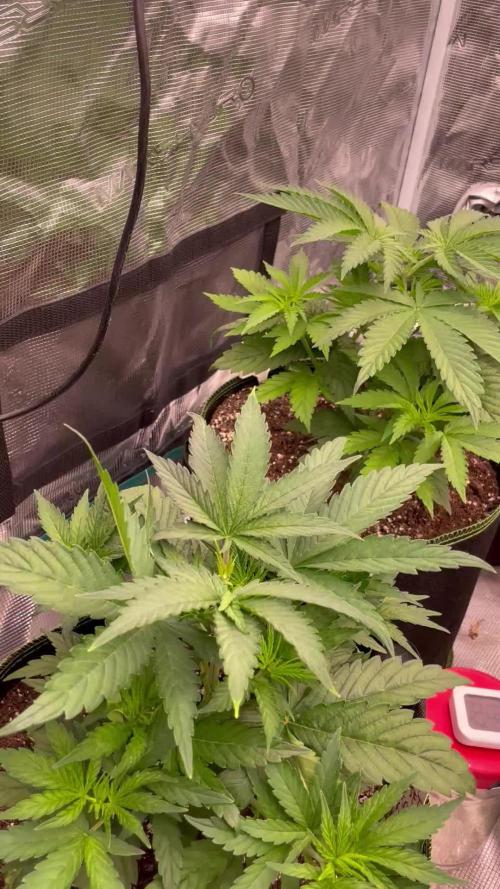
Hey hey hey looking sexy very healthy and happy removed 2 bottom set if leaves 🍁 she will get feed now and happy days 🏝️

Likes
12
Share

@Mousse
Follow
Lampe 100%
Neue Woche neues Glück 🍀
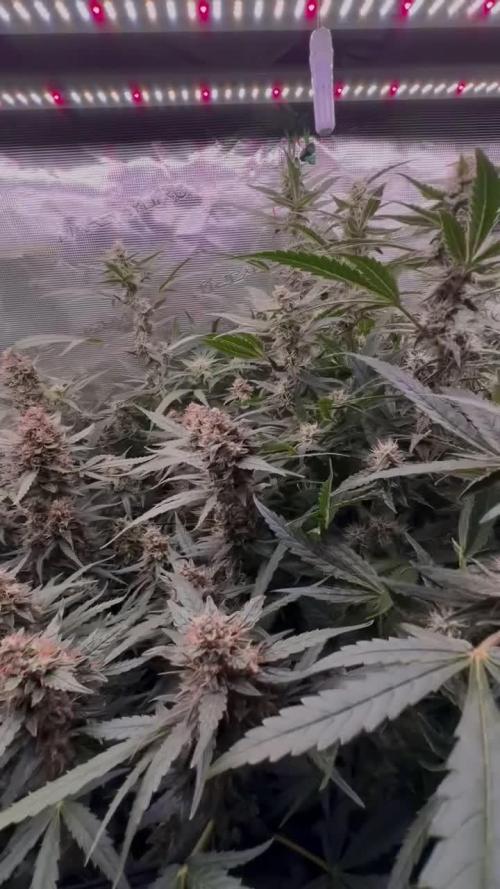
Die Damen sind in der 2.-3. Blüte Phase, der Stretch war noch voll im gange bei der #2 (sie hat nur noch Par cm. bis zur Lampe).😅
Generell ist die #1 und #3 weiter in der Blüte Entwicklung.
Pk habe ich auch abgesetzt waren insgesamt 10 Tage ca.
Sonst musste ich einen neuen CO2 Bag
Aufhängen weil der leer war. 🏽🌱🌱
Mo: (Fotos)
Di:
Gießen:
4L je
Dünger:
Canna Coco A&B = 2 ml/L
CalMag = 0,8 ml/L
Cannazym = 0,8 ml/L
Boost = 2 ml/L
pH: 5.8
EC: 1.73
Mi:
Gießen:
4L je
Dünger:
Canna Coco A&B = 2 ml/L
CalMag = 0,8 ml/L
Cannazym = 0,8 ml/L
Boost = 2 ml/L
pH: 5.8
EC: 1.73
Do(Video)
Fr:
Gießen:
4L je
Dünger:
Canna Coco A&B = 2 ml/L
CalMag = 0,8 ml/L
Cannazym = 0,8 ml/L
Boost = 2 ml/L
pH: 5.8
EC: 1.73
Sa :
Gießen: #1:#3
4L-6L je
Dünger für Links und Rechts:
Canna Coco A&B = 1.8 ml/L langsam runter für Flush vorbereiten —-
CalMag = 0,8 ml/L
Cannazym = 0,5 ml/L
Boost = abgesetzt.
pH: 5.8
EC: 0.8
Gießen: #2
4L-6L je
Dünger für Mitte:
Canna Coco A&B = 2 ml/L
CalMag = 0,8 ml/L
Cannazym = 0,5 ml/L
Sugar Royal = 0,6 ml/L
Green Sensation = 0,6 ml/L
pH: 5.8
EC: 2,1
So: nichts

Likes
15
Share


@RussianGrower
Follow
Greetings to all my friends from all over the world, greetings to you from Russia! Another week has gone and I am updating my diary. The plants show healthy growth, but when I arrived at a secret place, I found that one of the 400 watts burned out, so part of the tent was not lit. This lamp has served me for about seven years, but nothing lasts forever. When I did the defolation, the second 250-watt lamp burned out, but unfortunately it worked for more than a year. It's good that I had replacement lamps.
Due to the problem with the lamp, one side of the plants did not develop very well. But despite this, the processes of the plant became of sufficient size so that I took them for cloning. I took ten shoots, placed them in a hormone gel and transferred them to Rootriot, moving the clones into the greenhouse creating a microclimate there.
If you are interested in following the adventures of weed in Russia, subscribe to my diaries


Likes
13
Share


@Ieiogrow94
Follow
Eccoci qui...
Tutto va per il meglio, questa settimana ho eseguito Lollipopping e Defoliation per far si che le cime principali sprigionino al meglio il loro vigore.
Siamo verso la fine del progetto ora bisogna solo aspettare la fine...
Grazie a tutti per il supporto🔥🌲❤️

Likes
2
Share


@CogordoAcuatico
Follow
Cosecha finalizada, fue una de las mejores plantas que e tenido, su aroma fuerte a menta y pegamento invadió toda mi casa, ni hablar del tamaño mounstruoso