Likes
62
Share


@SimpleGrow
Follow
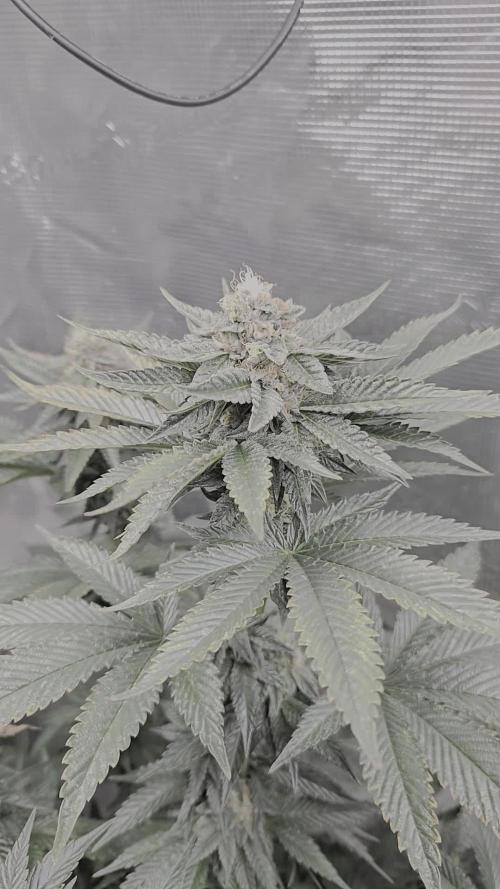
Hello guys, today the plants reach end of week 7 of flower. Nr.2 is ripening pretty fast and Nr.1 had a little bit of a grow boost. I‘m not sure when to harvest them but i‘ll try to keep the temperature cool and the lights slightly higher. The leaves are taking a more yellowish colour. This run it doesn‘t seem that the buds are going to get purple but i won‘t give up hope yet. 🙏

Likes
2
Share

@Emerald_Gardens
Follow
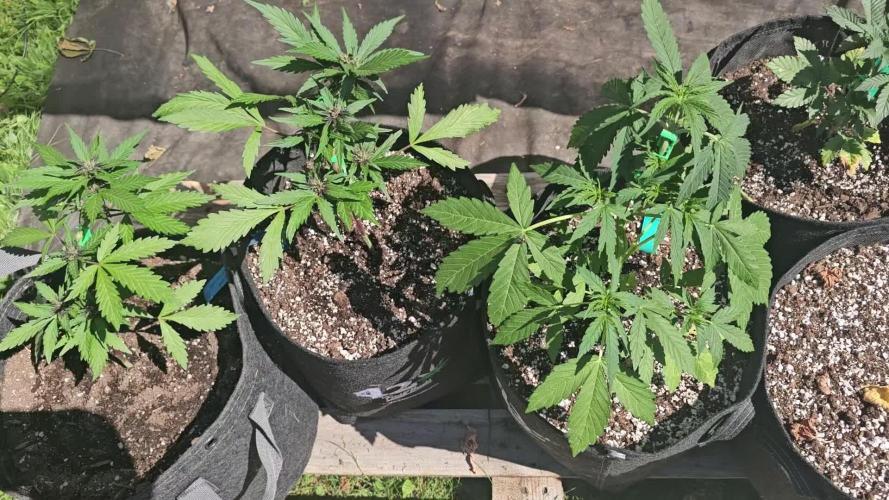
This week shows low stress training is starting the even out the canopy. The purple lemonade auto is now in flower however the OG Kush auto is still in veg mode. The mystery third plant is in early veg. We are now in full swing feed. And this weeks nutrients was green planets gp3, GP liquid weight, GP rezin, Gp root builder, and lastly cronk nutrients cal mag at a tds of 1220ppm and 6.3PH


Likes
19
Share


@Budha420
Follow
Day 30: Girls are stretching and starting flower😇 pots are getting dry quick so maybe ill have to up water to 1.2l once a day or even out through out the day🤔
Day 31: Gave about 1.3L feeding to all girls! made sure to hydrate coco all the way and gave some water to watertray so they can suck it up if they are still hungry! i cheked ppm on my water but didnt check runoff yet. ppm was 900 with 0.5 convert. ph around 6. will add pics later or tmrw😎
Day 32: gave girls little lighter feeding, around 3ml/L GH nutes b clmag.
I was too lazy to take proper pics with better light so took a vid instead😁
Day 33: i was thinking of pinning the tallest cola to scrog but decided against it. Mainly because these girls are doing very well, and my only consern is light burn. I cant get my light as high as i want to, cos my tent is only 180cm and got filter above my light. I think ill need yo setup next grow so my filter is outside of the tent🤔 thx for all commentors on my growquestion/diary! Made my day to hear my babies are doing well without any bigger problems😁💚 Edit: did some LST on bigger colas to avoid lightburn since these girls are strecthing almost 5cm a day😁 hopefully they will keep the same energy on developing buds😉 I checked ppm and pH from runoff; #1 ppm 750 ph 6.6 #2 ppm 750 ph 6.5 #3 ph 6.4 ppm 750 (all ppm converts were made on 0.5 rate) Gonna give low ph watering next day
Day 34: Good morning growers😎 this morning i gave my girls quite an heavy feed, 6ml calmag, micro, bloom and 3 ml gro into 5 or so litres. pH around 5.7 and ppm 1100 with 0.5. Pics are coming later afternoon with some runoff numbers😎 stay lifted💚
Likes
15
Share


@38PLAN
Follow
Stiamo ancora raccogliendo,ancora nessuna pianta é morta,sto rimuovendo piano piano le cime più mature,così facendo evitiamo le cime popcorn e diamo il tempo alla pianta di riempire anche le cime inferiori,per adesso levando quella fumata e venduta siamo all'incirca sui 780g,però aspettiamo anche il nuovo stendino,alla fine del raccolto dovremmo arrivare a quasi 2 Kili con 7 piante e 6 vasi,con una media di 333g a pianta,ho pubblicato tutto quello che potevo,ogni procedimento,spero vi piaccia e mi seguiate


Likes
Comments
Share

@MrIssa3x3
Follow
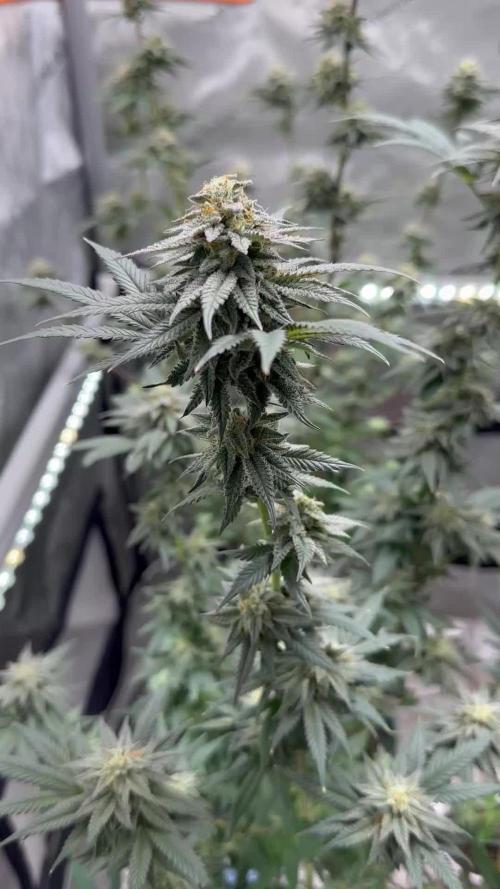
Day 49. They’re starting to lean pretty good. Staked and tied a few branches. Still drinking normal, expect them to slow down this week. Ended up defoling and top dressing with small amount of craft blend, Kashi, and build a flower on like day 47. Plucked one or two sacs off the diesel donuts. Tall, purple jug life pheno in the loudest with sweet burned rubber nose. Ready to see how these girls finish.





Likes
23
Share


@Foggedaboudit
Follow
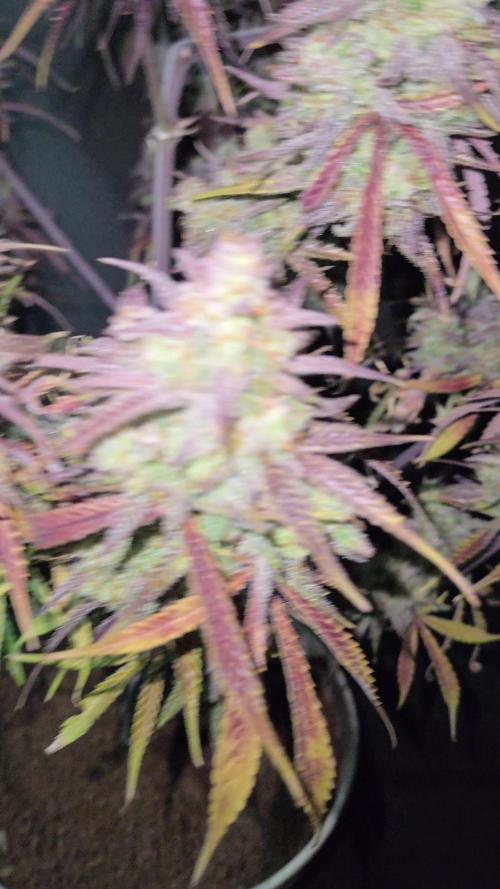
Two obviously very different plants. Both huge, especially for autos but one looks like a typical sativa (long, stretchy, naturally well-aerated and allowing light to penetrate all the way down) and it smells exactly like Amnesia (citrusy with a slight earthy/spicy background). The other needs a couple more weeks to reveal her terpenes but looks wise it’s the typical cookie-type morphology with big round tight nugs and short internode space. Now maybe this is just a case of wild phenotypical variation or maybe I’m inadvertently growing some other strain. The package sure said Break-Up Cake auto but regardless, these are showing great promise in terms of quality and yield! Vamos a ver!



Likes
88
Share


@Wastent91
Follow
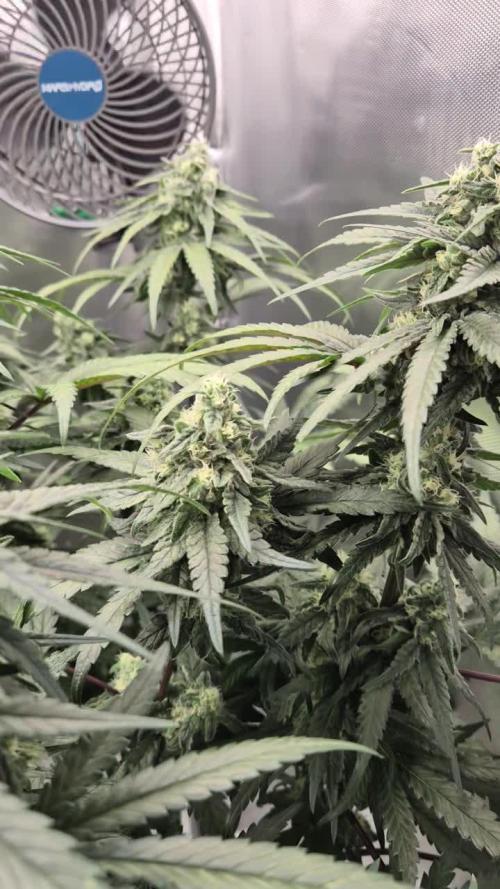
Ehiiiii ragazzii come va?? La settimana per queste due ragazze hibride F1 è davvero andata bene!! Merito soprattutto penso della intensità e qualità della nuova luce Mars hydro che posseggo e ringrazio vivamente di avermi dato questa possibilità di poter collaborare con loro e creare delle bellezze del genere che x me sono come pezzi di arte in evoluzione!? Non so se mi spiego! Per me sono la cosa più importante di tutta la mia intera vita! Chiaramente dopo la mia donna ,mia nonna e i miei gatti🐱🐱 apparte questo la genetica mostra una crescita uniforme dei due fenotipi Apollo nonostante la differenza di nutrienti... Vedremo nelle prossime settimane lo sviluppo delle cime come sarà , mi aspetto delle gran belle cime a giudicare dal verde bello intenso che hanno queste piante si vede che sono in ottima salute , e x ora x me preparare prima il terriccio e fare un soil living tra micorriza e nematodi mi pare l opzione migliore, a meno che nn compro tutta la linea Advanced Nutrients e allora nn avrò carenze nutritive! Se volete spedirmela boss di Advanced sono qua x testare se i vostri prodotti siano migliori delle tecniche che utilizzo io , preparando un terriccio organico, piuttosto che aggiungere troppi fertilizzanti minerali dopo.. a meno che ho tutta l ampia scelta di utilizzare tutti i prodotti specifici.. apparte questo ringrazio come al solito Mars Hydro e Royalqueenseeds che mi hanno dato fiducia x costruire tutte questo ! Buon 420 a tutti?! 😼💪🧙♂️🌱🌿🌲💨❤️❤️


Likes
37
Share


@Smoking_Joe_Frazier
Follow
Week 12: Tangie Finish Line in sight
Today, I checked Tangie’s trichomes and noticed that 20% have already turned amber. This signals that it’s time for a flush. I’m using pH-balanced water (pH 6) with an EC of just 0.092 ms/cm due to my extremely soft water. My goal is to stress Tangie a bit in these final days to boost trichome production. I plan to remove some fan leaves two days before harvest and let the soil dry out slightly. She has about 4-5 more days to go.
The aroma has become incredibly strong, with a vibrant, fruity scent dominating the air. It’s amazing how much more potent this smell is compared to the pre-harvested buds, which are now in the curing process and beginning to release that delightful orange and citrus fragrance. I’m eager to compare the flavor, potency, and high between the early and late harvests. The finish line is definitely in sight and I'm happy that I could let her ripen entirely to she what she is capable of 😍
Update 17.08 (Day 82)
Today I decided to finally harvest the rest of this lovely Tangie. The trichomes showed a good mix of amber and cloudy trichomes, and I don't want to risk letting her overripen. I opted to cut only the fan leaves again to ensure a slow and consistent drying process.
So far, so good, my friends—everything good must come to an end. Check out my harvest report of my Tangie lady for details on the yield, strain characteristics, and, of course, the smoke report.
What's left to say? I want to extend a heartfelt thank you to all of you for joining me on this incredible and educational journey ♥️
Reaching nearly 2,000 views on my first diary is something I never expected, and it’s all thanks to your support. A special shoutout to Fast Buds for launching this contest—it gave me the motivation to share my experience—and for the outstanding strains you’ve brought to life. You are the best, guys. 💪🏽
Likes
63
Share


@Roberts
Follow
Strawberry Amnesia is growing well. She had a solution change today. She is gonna get some defoliation come next week. Everything is going great. Thank you Herbies seeds, Athena, and Spider Farmer. 🤜🏻🤛🏻🌱🌱🌱
Thank you grow diaries community for the 👇likes👇, follows, comments, and subscriptions on my YouTube channel👇.
❄️🌱🍻 Happy Growing 🌱🌱🌱
https://youtube.com/channel/UCAhN7yRzWLpcaRHhMIQ7X4g.

Likes
29
Share


@lefthandedJ
Follow
Flowering looks awesome on the ChemDog! Lots of bud sites and they're growing at a respectable rate. ATF's are running 3 plants in 3 diff stages- one's a couple weeks into flower, one's just starting,and one's still the holdout. Meanwhile, I've got flowering on the Night Nurse and one of the Viper Cookies. The rest are close but I can't say for sure they've transitioned. Weather's getting into a hot and humid phase, gotta watch that ChemDog. Think it's got a decent structure for ventilation but I've read horror stories on how the Dog loves mold. Further training of the branches has been fruitful, I'm seeing a lot more topside bud sites than usual. I'm working on irrigation-- I set up a 30 gal container and it works for drip, but without a pipe system it's still one at a time, although I have to admit it's worth it to save my back. Plus, I have to have a supply ready for use in case my buddy needs to fill in for me and water the ladies.
Been checking the cameras regularly ( I have them all throughout the property, game cameras with IR flash), and to date haven't seen anything that would constitute a threat. Just some curious raccoons and one really ugly opossum. Even the skunks don't bother them this year, which is nice but a little strange considering they dig in them every year. It's really just the animals I'm watching for, people aren't as much of a concern. Mostly because I don't know any. Aside from that, I sleep with my head feet away from my babies, so somebody would have to have big brass ones to even try. Yes, I know, a little overprotective.
Fingers crossed it'll be one hell of a harvest (by my standards).
8/11 Update:
Been lucky still with the weather, but it's turning really humid. Fed the girls this morning, a mix of 1C molasses and 1/2C epsom salt in 20 gallons. Just a little supplement to the tiger bloom they've been feasting on. Speaking of the Tiger Bloom, I can't help but think I'd do just as well mixing my own nutrient solution, since the cost really adds up quick. For his year, however, it'll be fine. My watering gizmo is working well, just leaks a tiny bit and that's fine for the remainder of the year. Now that I have an idea of what works for me I can spend the off-season setting up something right.
Had to thin out the Lamb's a bit, it wasn't getting anywhere near enough air flow. Also took a few on the ChemDog as I'm expecting mold/rot conditions for a while and she's prone. Shouldn't have much problem, wind blows almost constantly here, but you can never be too careful. Training is taking well, overall they look pretty good. Next year-- bigger grow bags, better soil, and much pickier seed choices. I think I may even abandon the idea of topping them in the future-- it just slows them down and you can get the same end results with training. Granted, my ladies are kinda sparse and ugly, but that's the learning curve. Next time around I think I have a pretty good idea of what to do and when to do it, based on what worked and didn't work this year. Another big thing is nutrient timing-- I def jumped the gun on flower power for a few of them and it just stunted them wicked-- shoulda continued veg food a couple weeks into flower even for the early bloomer, she'd be a monster.

Likes
52
Share


@Hashy
Follow
Grow diary 11 stage 5
Days 41-50
During the week she had some training and I removed the damaged leaves. The whole grow has suffered from me not getting the watering schedule sorted.
She has been in flower for about a week now, this one has stretched more then some of the other strains. Think this one will bounce back.