


Likes
Comments
Share


@MG2009
Follow
08/23/2023
Starting week 2 flowering
AK #1 is now 17" tall
AK #2 is now 12.5" tall
Bruce Banner is 16" tall
All going well no more bug issues fed a little bit of nitrogen this week in the form of
(901 C release) 1/4 strength
trying to push some Carbon on her, no more Nitrogen will be used after week 2 of flowering, only P-K will be from Fox Farms Big Bloom
0-0.5-0.7 mixed with Bio-Remedy
Hope that they have more stretch in them but time will tell. Either way flower are exploding all over her!
Going to give them some Fresh Aloe Vera water, there loaded with Amino acids other good stuff.
08/27/2022
Not sure if auto flower goes through different flowering stages, if they do phase one is fleeting first flush of pistils fading and fresh ones popping up everywhere . Bruce Banner is a resin monster even some bigger leaves getting resin rails.

Likes
79
Share


@Gorrilla420
Follow
So this plant grew huge, was put in the ground at around 3 weeks old and she took of from there. I topped it around a week after she went in ground and believe it was the perfect time as all side branches shit up as well as the 2 main heads. Biggest auto I’ve done to date including any indoor. She didn’t get the attention it deserved and not much feed went into this plant she just lived of the soil and rain. Will certainly try this strain again.
Well done to tastebudz for this amazing auto and big thank you to them for letting me try there strains!
Happy growing🌱


Likes
14
Share

@cangrowz
Follow
Der Grow lief finde ich sehr gut, auch beim ernten sah man wie sehr lila/rot es teilweise bei den Buds. Das war letztendlich genau was ich wollte. Nächste Sorte wird Lemon Haze :)

Likes
37
Share


@NewbieLearner
Follow
Loved this strain through and through. Woukld definitely recommend that you buy these seeds and try them yourself!😁😎😜


Likes
30
Share


@Blabina
Follow
👻👻👻 Reminder : 👻👻👻 So, I created the diary the 15th of september, I wrotte every previous informations on paper then on a word sheet. I reallized that I got everything to create a diary here, so I did it. I should maybe try to end this first grow without buying any fertilizer and keep going with my home made receips (taken from several sources and reading). I think I will do some fun experiments on a following diary. It is well known, dwarves don't run fast, so next batch will be 3 quick one from royal queen seeds, with smart pot and coco
ideas i had. It will be fun an probably in 3-4 weeks (I plane to harvest my dwarves a little bit later around week 11, but I don't know, I have to check trichomes, they will give me the answer.)🙌💩So from week (8) we are in *LIVE* mode for this diary. Hello elves (you are the elves, you reading me). Smiles are allowed (this is unfair you smoke your plants so you have a strong adventage) while reading. Orcs are the pests and desease attacking the dwarves (the 3 plants)👻👻👻
👉 I've cut every branches, it was an amazing experience : My dwarves killed the orcs, they survived and escape from this AMAZING journey. They where really impossible to kill. They suffered from : Overwatering, over defoliation, nutrients burn, probably root rot, to much heat (more than 30 degree for some days), a too small pot... And they smell like : 😅😇😇😇 a wounderfull smell. I did all the "noob" mistakes basically but I learned so much. I started to feed them with home made nutrients and ended to use biobizz really at the end. I don't know what was the best for those dwarves but they made it.
I will update this diary with a video and will give in 1-2 weeks the weight dry, I am really curious about it, I left really no branches, they are like ready to be in a jar.
So:
👉 The famous 3/3 with amazing colors gave me : 38 gr. wet
👉 The famous 2/3 gave me : 34 gr. wet
👉 The famous 1/3 gave me : 30-31 gr. wet
The harvest seems not amazing, I don't know how much weight I may loose by drying (I kept really only the heads). For a first grow, I am happy, because I simply made it. I know that it is now a growing experience, like those wounderfull amazing plants. And I learned a lot. Allready excited to launch a second harvest. A matter of time actually. It was fast, joyfull, stressfull, great to do it.
SUMMARY :
😮 Why this diary name ? 😮
👉 Because when I descovered growdiaries.com 3-4 weeks before harvesting I was completly sure to fail and that my dwarves were gona die. 😁
😮 Is it the first time you have a kind of relationship with dwarves or plants like this ? 😮
👉 Hell yeah... I am totally a casual smoker and I never did this in my life before. I have to say that I started to have like a real relationship with those 3 dwarves, they start to miss me ( I just cuted them like 2-3 hours ago). 😞😢
😮 Did you enjoy to do that ? 😮
👉 Well... It will be definitly hard to don't do it again. Hopefully when seeds arrived at my home, they where not alone, 3 quick one are waiting to have a funz experience with me. The trick what started to be a small investment turned into buying more and more stuff (ph and ec meter etc...) So I want to use them more 😲😘😍
😮 Are you high right now ? 😮
👉 Absolutly not, I haven't smoke any weed for about 3-4 months maybe and I don't drink, I mean, I am naturally like this. 😕
😮 What about the elves ? 😮
👉 You mean the readers of this website who followed, liked, help me a lot with A TREMENDOUS AMOUNT OF GOOD ADVICES ? I love them ♥️☺️♥️ Thank to all the readers, growers, people taking care of this website and not giving any infos to the police, breeders for giving us the opportunity to do this, light crafters for giving us sun in a tent, tent builders, special potions crafters (who create amazing nutrients) specially those dedicated to the natural 100% products... I mean thank you to all elves. ♥️

Processing
Likes
10
Share


@YAKDADDYDWC
Follow
Had major problems with temps rising this week was forced to pull out the aircon..... gona cost a fortune!!! To top it off i got gnats but 8 think im on top of it geez i have had some troubles from enviroment because its summer and i would have better results in winter
Likes
3
Share


Likes
30
Share

@DogDoctorOfficial
Follow
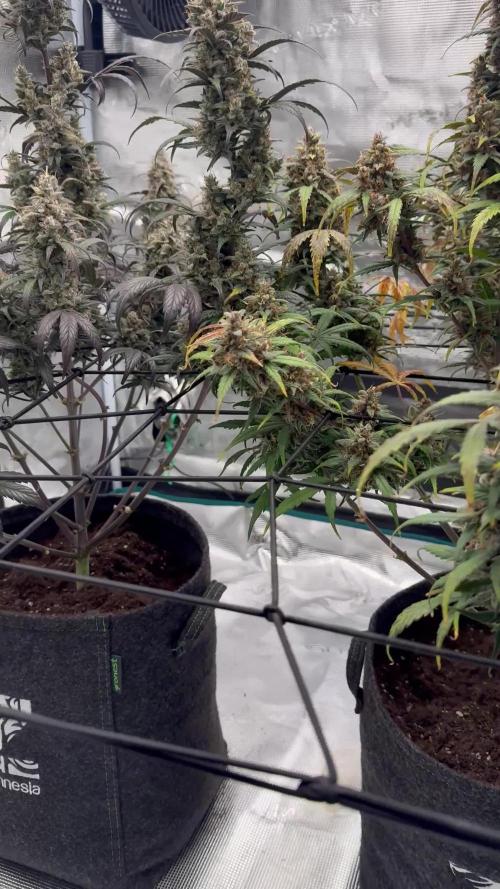
🌸 WEEK 6 FLOWER — “Giants in Full Bloom”
Hello beautiful people!
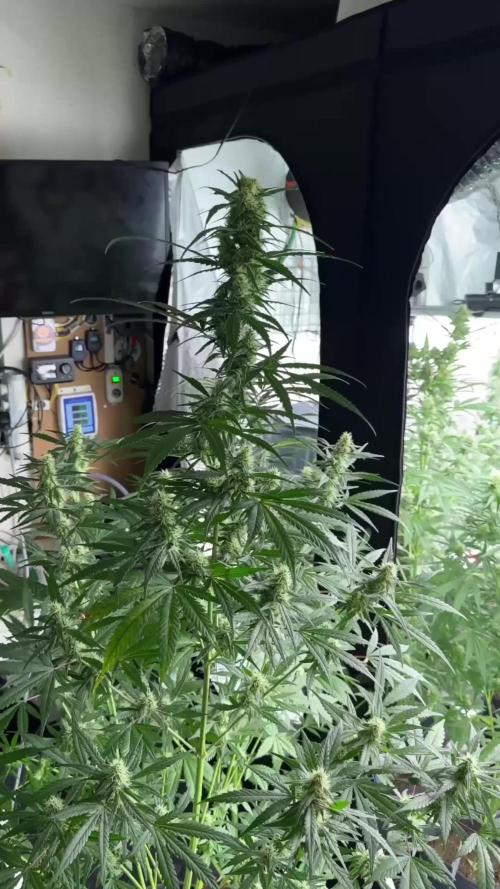
Week 6 is here, and I’m honestly in awe — these girls have turned into monsters in the best possible way. The Permanent Marker genetics are showing their full character now, and it’s pure art to witness.
Our Permanent Marker #1, the one who always aimed for the moon, is now proudly showing her colors — purple tones starting to dance along her sugar leaves, a sign that she’s entering her final transformation.
Meanwhile, Pheno #2 keeps her deep, loyal greens, compact and elegant, building buds that are dense, heavy, and sparkling.
The aroma this week is unreal — floral, rich, and much stronger than expected for this stage. You can already sense the terpene complexity these genetics carry.
⸻
🌿 Conditions & Strength
It’s been hot and humid lately, the kind of weather that tests every grower’s setup.
Still, these two girls are standing proud — no signs of stress, no rot, no weakness. While some of their neighbors in the same room have shown small signs of bud rot, our Permanent Markers are holding their ground like true champions.
• Room temp: peaks around 31°C
• Humidity: ~60%
• Soil temp: ~25°C
• PPFD (PAR):
• Pheno #2: 760–780 μmol/m²/s
• Pheno #1: 1,000–1,100 μmol/m²/s provably more lol
Both phenos continue thriving under the ThinkGrow and Future of Grow LEDs, the TrolMaster system keeping everything in check, and our Aptus Holland organic recipe delivering balanced, slow-release nutrition through the pellets and boosters.
⸻
🌱 Quick Recap – From Seed to Giants
From germination in the CannaKan, three seeds popped strong — and from the start, these two stood out.
Through early veg, lush and compact growth, the transplant into Zamnesia 11L fabric pots, and now deep into flower — they’ve been consistent, strong, and stunning. Every week has been a new chapter in this living story.
⸻
🏆 The Dognabis Cup – It’s Happening!
The Dognabis Cup is officially alive and thriving! Boxes have arrived, seeds are popping, and the first diaries are already out there — go check them out! 🌍
Each grower brings their own light, style, and story to the Cup, and that’s what makes it special.
Remember: the more detailed, the better your chances to shine.
Share your notes, your challenges, your victories — this Cup is about learning, connecting, and celebrating together.
To everyone participating — good luck, and thank you for being part of this dream.
⸻
💚 Gratitude & Community
As always, a massive thank you to Zamnesia Seeds, Ocogenectica Seeds, Aptus Holland, ThinkGrow, Future of Grow, Skunk Magazine, FOG, Grovebags, DaggaDNA, Popeyes Passion, Imperial Seeds and TrolMaster, as well as to everyone who follows, supports, and believes in the spirit of this Cup — from the growers to the dreamers, the lovers and even the haters (you’re part of the story too 😄).
Together, we grow. 🌿
⸻
🌸 What’s Next
From here on, we’re expecting more color, more aroma, and that beautiful trichome frost to start covering everything. The finish line is getting closer, and I couldn’t be more excited to see how both phenos express themselves in the coming weeks.
⸻
✨ “To grow is to share, to bloom is to connect — and through every cup, seed, and story, we keep the garden alive.”
**THE DOGNABIS CUP OFFICIALLY STARTED** ⏰ @everyone
**The Dognabis Cup** is an independent, community-driven virtual competition designed to bring people together, celebrate and share the passion for cultivation. This competition is organized by DogDoctorOfficial and is not affiliated with any of other third-party platforms.
More than 30 contenders will have to grow with the same genetics and using one of our Aptus Pograms (Premium, Clean, Super Soil).
We can follow weekly updates
***(list will be updated all the time as more growers join)***:
🌱 **Dognabis#09P** (**P**hotoperiod)
https://growdiaries.com/diaries/285981-grow-journal-by-sadhus
🌱 **Dognabis#09A** (**A**utoflower)
https://growdiaries.com/diaries/286091-grow-journal-by-sadhus
🌱 **Dognabis #16P**
https://growdiaries.com/diaries/285519-grow-journal-by-fabisfinest
🌱 **Dognabis #017P**
https://growdiaries.com/diaries/285851-grow-journal-by-highgrower0711
🌱 **Dognabis #18P **(**P**hotoperiod)
https://growdiaries.com/diaries/265751-grow-journal-by-develgrow
🌱 **Dognabis #18A **(**A**utoflower)
https://growdiaries.com/diaries/285549-grow-journal-by-develgrow
🌱 **Dognabis #21P**
https://growdiaries.com/diaries/285531-grow-journal-by-mrs-larimar
🌱 **Dognabis#22A https://growdiaries.com/diaries/287996-grow-journal-by-daves-garden710
🌱 **Dognabis #22P https://growdiaries.com/diaries/287990-grow-journal-by-daves-garden710
🌱 **Dognabis #811A Jealousy Diesel Auto https://growdiaries.com/diaries/287216-grow-journal-by-philhsy
🌱 **Dognabis 19A https://growdiaries.com/diaries/289566-grow-journal-by-marijuanaut?lnk=2066296
***Here are some other useful links:***
*Dognabis Cup on Instagram:*
https://www.instagram.com/dognabiscup/
*Explore Aptus Premium Programs:*
https://aptus-holland.com/premium-programs/
*Explore Aptus Clean Programs:*
https://aptus-holland.com/clean-programs/
*Explore Aptus Super Soil Programs:*
https://aptus-holland.com/super-soil-programs/
Happy growing everyone 💚
⸻
📲 Don’t forget to Subscribe and follow me on Instagram and YouTube @DogDoctorOfficial for exclusive content, real-time updates, and behind-the-scenes magic. We’ve got so much more coming, including transplanting and all the amazing techniques that go along with it. You won’t want to miss it.
• GrowDiaries Journal: https://growdiaries.com/grower/dogdoctorofficial
• Instagram: https://www.instagram.com/dogdoctorofficial/
• YouTube: https://www.youtube.com/@dogdoctorofficial
⸻
Explore the Gear that Powers My Grow
If you’re curious about the tech I’m using, check out these links:
• Genetics, gear, nutrients, and more – Zamnesia: https://www.zamnesia.com/
• Environmental control & automation – TrolMaster: https://www.trolmaster.eu/
• Advanced LED lighting – Future of Grow: https://www.futureofgrow.com/
• Root and growth nutrition – Aptus Holland: https://aptus-holland.com/
• Soil & substrate excellence – PRO-MIX BX: https://www.pthorticulture.com/en-us/products/pro-mix-bx-mycorrhizae
• Curing and storage – Grove Bags: https://grovebags.com/
⸻
We’ve got much more coming as we move through the grow cycles. Trust me, you won’t want to miss the next steps, let’s push the boundaries of indoor horticulture together!
As always, this is shared for educational purposes, aiming to spread understanding and appreciation for this plant. Let’s celebrate it responsibly and continue to learn and grow together.
With true love comes happiness. Always believe in yourself, and always do things expecting nothing and with an open heart. Be a giver, and the universe will give back in ways you could never imagine.
💚 Growers love to all 💚

Likes
3
Share

@LAShugars
Follow
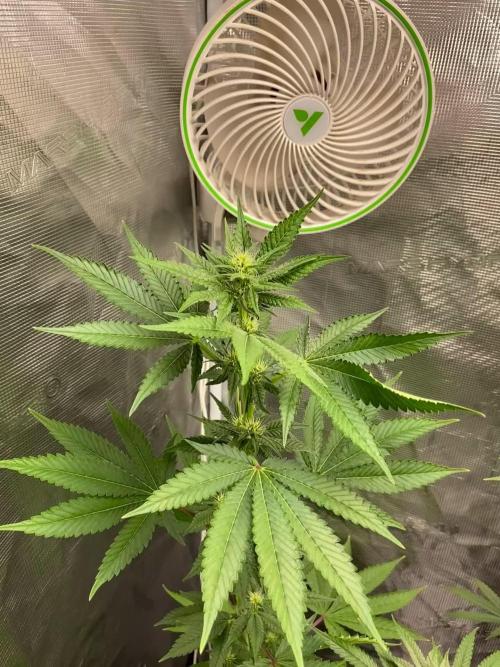
Shes still hanging in there.
Poor thing. I soooo regret not letting her veg longer.
Shes green again!!! This is the best shes looked since transplanting. What a trooper she is! This is a very resilient plant

Processing
Likes
3
Share


@Dico29
Follow
Day 136.... buds are swelling and looking nice, don’t really do much beside chill in my closet with my other plants but all in all it’s great smell and destroys all my chances of smell control, which is very little to a point of non existent

Likes
14
Share

@Growbody
Follow
Hallo und herzlich willkommen zu meinem Growbericht Outdoor 2025 mit den Sorten Power Flower Feminized, Royal Medic Feminized und Special Kush #1 Feminized, alle 3 von Royal Queen Seeds. Es ist das erste Mal, das ich Töpfe für den Outdoor grow verwende, bisher waren alle Gorilla grows und direkt in die Erde gepflanzt.
Die URL der Power Flower Feminized: https://www.royalqueenseeds.de/feminisierte-hanfsamen/120-power-flower.html
Die URL der Royal Medic Feminized: https://www.royalqueenseeds.de/cbd-samen/148-royal-medic.html
Die URL der Special Kush #1 Feminized: https://www.royalqueenseeds.de/feminisierte-hanfsamen/138-special-kush-1.html
Die Planung für den Grow ist, die Samen in easyplug Anzuchtwürfeln keimen zu lassen und danach in 0,6L und 2,2L Plastiktöpfen, dann letztlich in die neuen komplett doppellagigen ROOTIES 15 Liter Wide Version Stofftöpfe umzutopfen. Sobald die Witterung es zuläßt, sollen die Pflanzen an die frische Luft.
Es ist schon eine Weile her, das der Grow losging, die Bilder sind jetzt aktuell.
Tag 133: Die Power Flower fem. ist jetzt 170 cm, die Special Kush #1 fem. 170 cm und die Royal Medic fem. 145 cm hoch. Gestern haben die drei einen kurzen Regenguss abbekommen, war nicht schnell genug draussen. Heute ist das Wetter ideal, leicht bewölkt, 27°C und 45% Luftfeuchtigkeit. Es wird weiter 2x am Tag jeweils 1,5 Liter gegossen, den Schachtelhalmextrakt gibt's nur 1x alle 14 Tage.
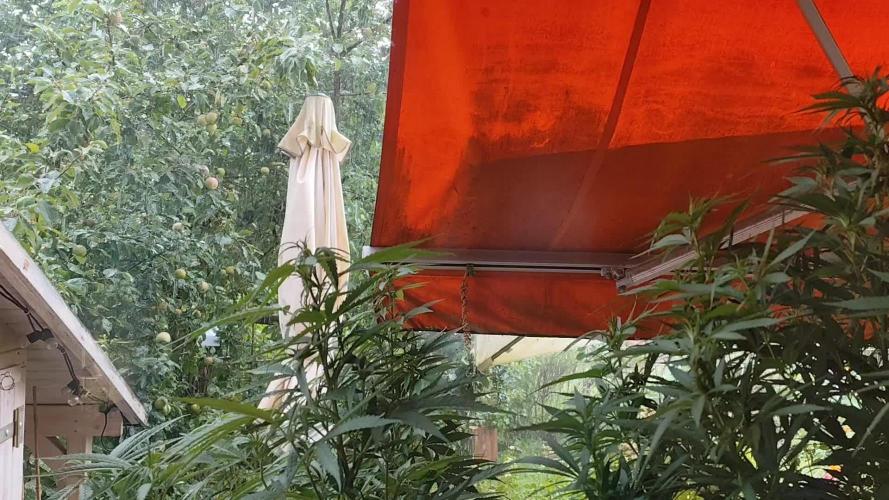
Tag 135: Sehr windig und ein düsterer Himmel, den Rest des Tages verbringen die Großen unter'm Balkon.
Tag 136: Leider immer noch nicht der letzte Regen, da kommt noch ein größeres Gewitter angegrollt.
Tag 138: Was für ein sch... Wetter!!! Bilder erspare ich euch heute, die drei Grazien sind immer noch unter'm Balkon im Trockenen. Alle paar Stunden kommt ein kräftiger Regenguss, so oft will ich die drei nicht 'rumschleppen. Und noch was, die drei sind jetzt schon die vierte Woche in der Vorblüte, bin das nicht mehr gewohnt, das es bei den Regulären einiges länger dauert, bis die Blüte so richtig losgeht. Vielleicht wird das später mal korrigiert, jetzt hat's weder Zeit noch Lust dazu. Also, auch die 19. Woche im Grunde eine Veggiwoche.
Wenn's dir gefallen hat, schau wieder vorbei ✌️😎
Likes
19
Share


@birdmountain
Follow
Es wurde Zeit, das Wetter wurde ungemütlich, kalt und regnerisch. Die anderen Pflanzen hatten bereits Schimmel entwickelt und es war auch kein weiteres Blütenwachstum festzustellen. die Trichome sahen auch leicht angebräunt aus, Deshalb wurde geerntet und verarbeitet. Die Ernte der zweiten späten Pflanze war wesentlich geringer aber noch passabel.

Likes
23
Share
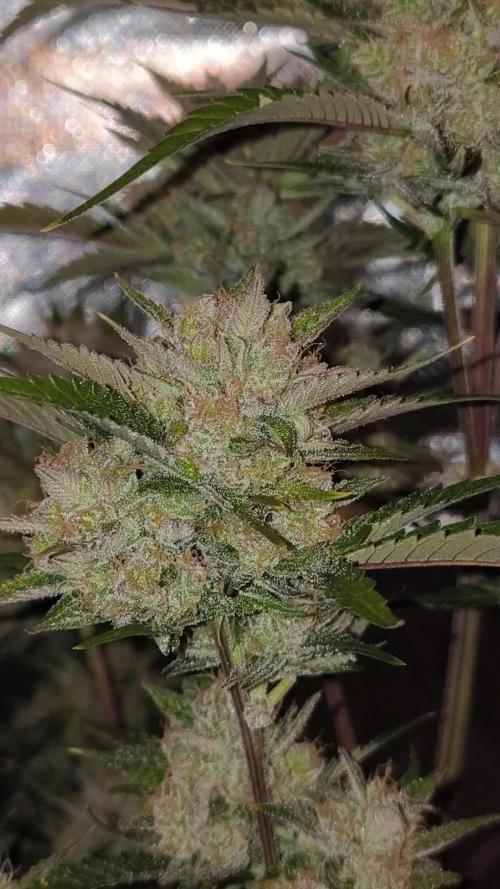

@DevelGrow
Follow
Hallo Freunde 👋 Frost Banger von Fast Buds ist 63 Tage Alt und geht dem Ende entgegen! Sie steht nun alleine im Dunkeln und hat nur noch Wasser bekommen. Sie hat einen genialen süß Sauer stinkenden blumigen Duft an sich mit harzigen Zucker überzogene Big Buds! Nach dem terpen Profi wird es wohl am Anfang nächster Woche soweit sein für die Ernte! Keep Green and grow High ✌️🍀💚🍀
Likes
8
Share


@sweetkaya
Follow
Day 76 - The ladies are getting weight, everything's good. No signs of whiteflies at all. Some days ago I covered the SP with a shading net because the top buds were beginning to burn and the light is not dimmable. I'm going to buy the SP1000 for the next run to have a better final result. Updating in a few days 🙏


Likes
15
Share


@Seabass
Follow
20.06.
Little one really tight and flowering hardout in 25L pot
Middleone stretching and flowering
Tall one is just going up and up but will bring much more flowers from what I can see. 40L pot maybe not so bad after all.
Likes
6
Share


@BigGGrows
Follow
This week was a big week for the candy cush. I noticed upon watering her to run off, that in the same day the pot would go super dry and light weight. I also noticed stress in the leaves and roots poking out the bottom of the pot. It was time for a transplant. So far so good! Upon transplanting i performed more LST to help her fill in the pot. She went from a 1 gallon to a 5 gallon. She was also defoliated thia week.

Likes
53
Share


@MistaOC
Follow
13.04. Day 77
Day 37 of flower and everything’s going according to plan. Buds are thickening up nicely, and the environment remains stable across the board.
The one problematic plant is still struggling, but I think I’ve figured it out: looks like a nutrient lockout caused by overfeeding. From now on, the back right and front right plants will get only adjusted water – no more feed.
The rest of the ladies are looking great, pushing hard and stacking well. No complaints – the grow is on track!
*******************************************
10L RO Water // ph 6,2 // 1ml/L Regulator // 2ml/L CalMag // 10ml Green Sensation // ph- // every second day
*******************************************
Likes
15
Share


@UnforgivenRanger
Follow
Day 82 approximately one week give or take till harvest. Still not seeing much amber but I guess it’ll start soon. This is only my second ever grow so I’m still learning as I go. Buds are dense and sticky.

Likes
3
Share


@Seventease
Follow
Buds growing nicely in size. Thrichomes forming on the sugar leaves. Looking nice and frosty!

Likes
169
Share


@CRiSPrGrow
Follow
Gorilla came down three days and ten hours ago, had the whole grow room to spare so she was hung whole upside down after just a bit of trimming for the main fan leaves that sort of thing. First day 24°C 60% humidity, second day 26-28°C 50% humidity, third day 25.5 °C 35% humidity. I had the exhaust and the fan going which gave this very nice light indirect breeze on these ladies. Really amazing smell that i had not really noticed until D-day, pistachios and christmas pine. Thought i was golden until i realised they were drying faster than i wanted. Ended up with 65/70% humidity which made these buds kinda airy in a way. Also the way the gorilla grows there were loads of tiny stems everywhere was a killer trying to get them out, ended up mincen some of the buds somewhat. Gorilla glue is absolutely a great auto to run. In ten gal it was tripple the size of my stunted one. 370 wet, hopefully something close to 100 dry - let's see I'll update in a couple of weeks.
The gorilla grows bushy quickly, by week 3 it was noticeably more bushy than the rest. Kinda took an extra week to really start flowering then it stretched 20-50 cm a week for four weeks. In all it's close to 1.5 meters in height, loads of colas, maybe twice or three times as many as the GSC. Next time i'm gonna prune the flower nodes further down the cola.
The buds themselves are quite thin, but rock solid much harder than any other strain i've grown so far - but this is my first time growen so take that with a grain of salt. The buds are covered in frost, trykes all over, oily oily oily, if you touch the buds your hands smells great for a few hours. Fun ! The trykes started appearing quite early and took a while's longer than the rest to get ripe - like truly ripe. So there were absolutely no ambers, maybe i saw one or two, but basically no ambers - this lady got cut down at the height of potency
The grow tent. Once you dial it in it becomes your best friend, but if you're having trouble getting it stable it can become your worst nightmare. I made every mistake in the book. First off i set it up without really testing it with the lights on when using it as a germination room. Worked like a charmed until i turned it on. Took me weeks to figure it out. In the end running the AC the whole time through all of summer until it's very last day. 600W HPS through summer is not something i'm gonna be doing again. With my wing reflector there was nothing i could do except keep the lamps high, led to a lot of stretching. Cool tube is the only way to go. The HPS started flickering half way through veg and it died while I was away. I ended up going through 5 of those small fans until i realized & got a box fan. Once I accidently had it pointing straight at them for 8 hours or more a couple of times on max.… So i got a white 150W fan from china i also got Silent TT 123 W fan and hooked it onto the cool tube. Great fan, huge, black, strong, and with temperature control. I call him big dick cop killer because he's black and beats the heat. get it? Had two 90° bends outflowing for the exhaust and the heat just wasn't getting dissipated quick enough. Both of them together I could rest my hand on the cool tube with ease.
i was able to test out temps and lux at various points in the grow room and figured i could have up to 4 degrees difference between the base and the top of the plant, still got it pretty stable. I had differences in lux from several 100 to several 1000 different places in the tent, probably because I was hanging the filter, the fan and the cooltube all crooked by then, but at that point my grow was a slow moving trainwreck. I had everything I needed to dial in my lamp to plant distance too, but couldn’t.
I went bio which was nice, but i think I should try synthtetics or a mix next time. The soil spawned some flies which were easy to get rid of. Then when i tried measuring the EC of the soil, i'm afraisd that the soil particulates kind of skew results. Thought the soil could buff out anything really but rhizotonic had the better of me before i could get my PH strips in.... not that it matters but I broke my PH meter pretty quickly anyway. Live and learn !
Watering itself I think is something you should pay attention to, you don’t want to be pouring it out and getting your soil compacted from the water. Seedlings are a different thing, not too much water, don’t keep the medium too wet, maybe watering with precision is something that could be done. Using the liquid ferts was quite tedious, and I have doubts about using all bio in general, using liquid fertilisers regularly in soil, and following the labels. Thing is you shouldn’t really need much of these ferts in soil anyway, yet still got cal mag deficiencies so you tell me!
Well there's a fair few things i wouldn't do again, like grow in the heat of summer with a 600W HPS and the AC on. I fumbled around before I had my dimmable ballast, and stressed out the seedlings which is a no no. Once I got the ballast I lowered then raised the intensity from 250 to 600 in three weeks light stressing my poor babies even more. It never occurred to me to plan out a grow, next time i'll definitely plan it out and make sure I'm kitted out a bit better going in. Same for the grow room, avoid bends in the piping, set the thing up a run it before i throw the plants in there, wont hang my filter above that high, and keep the fan on the ground maybe. Grow room wise I’m kitted out, got everything I need, but next time will install some 70 micron mesh in all my intakes just in case. Also never growing without cal mag again even in soil ! I'll probably do straight drops into forever homes directly too, no sense faffing about like the @silverback_guerilla 😂.
It's not all bad news though, loads of things i would do again. I would even grow in soil again, especially now i have a bunch of soil ferts from america (thanks @mrs_larimar !!!). I wouldn't mind using the 600W HPS again, worked well enough ! most importantly i will be using TNB CO2 again because it makes a clear difference even if i don't have any of my own grows to compare it to. Another critical thing i did which i'll be using again is the chelation agents, i'm going to want to stay more on top of those and might even use as foliar spray on XXLs between weeks 3 and 4 veg. I ended up spraying rhiz second to third week, will definitely add some cal mag in the foliar spray. Mag sulfur supplement is going in next time too, if you put a lot of light, you need a lot of magnesium, so that's happening again for sure. I’ve been looking at predator insects pretty seriously, ladybugs are a must clearly, but I might throw in some other ones too just to be sure.
It's a lot about what you do when you're not growing , learning about it, meeting great folks (see the comments for all my thanks), and enjoying watching a plant grow slowly. I learned so much about a plant that’s been a part of my life since I was eleven, I think I was 15 when I first thought it was silly not to grow, fifteen years later I can’t believe how long it took me to try it out ! Getting a crash course in horticulture, using a tent, and generally learning about the bio-dynamic world that surrounds us was really rewarding.
Just got some cool ferts in the mail all the way from America, so thanks to growgreentrees.com and growcaps might try them side by side. Expecting some cool testers soon too so thanks to @pharmaz my boy past the bridge ! I’ll pop those right in FTB5, Auto Zkits, and something else I don’t know yet cream cookies or lsd35? I really wanted to get out of the dirt with some coco or DWCs but oh well another soil grow can’t hurt ! A big thank you to @mrs_Larimar GD and the folks at trim bag for the gear ! I’ve already got a spinning blade thing, so let’s see how this compares , but at least now I’ve got cool scissors to do all that trimming – bless ! Just wanted to say thanks for holding my hand to a few folks @mrs_larimar of course, thank you so much and looking forward to some fun times on gd; my main man @mudbug great hanging out with you growmie ; @pharmaz and @silverback_guerilla; new friends like @bigdaddyk @valhallasgarden and @slimsativa; My ghost brother @beans, check out his one leaf GONNA MAKE IT GONNA BEAST IT ; Everyone who stopped by to help me @B4RNS of course, @farmerbrett too, @hawkbo, @tryhard, @tonino, @tazard @mad_scientist @spinnergrow, @poleeg1986 – he’s an amazing European canna porno director check out his gorillas my good lord save me; special thanks to all the Growvengers, and the @dudegrowsweed ; @wheetobeme, @experimentgreen, @weedeep, @chi_town_white_boy @chillum_mafia and even @mulch – play your part man bless ! Thanks to Nico @fast_buds for some cool testers, my favorite hat and some fun times on GD !
A final recap of everything I learned (see for yourself in the diary) : never buy a kit, buy local, buy direct, less is more, go big on fans, keep refills around, always add CalMag CO2 and chelation agents, no bends in the pipes, cover your intakes with micro mesh, nail the first couple weeks of flower and it’s smooth sailing, always protect your eyes ! Just one last thing though: have to say it’s pretty great having access to all the best horticuralists from around the world. Shout outs to all my North American and South American grower friends, @russiangrower and all the east European growers, my Scandinavian friends, Spanish and German growers, and African and Japanese growers, I don’t understand everything you’re saying all the time but I like your style ! You won’t know until you grow ! Dassit 🚀000000