


Likes
Comments
Share


@Nookandplant42o
Follow
Alright Robust in the original shape of a Christmas tree, its thick leaves and well-resined flowers the pistil phase starts to turn orange the trichomes we can go further to have milky with amber, and enjoy its performance until the end its smell is very strong it is sweet .

Likes
14
Share


@Bigbombbudz
Follow
Another week closer....
So glad we are almost to the end, the heat out lately has been a killer, added another fan to the room it helped a little ....
The girls are drinking alot ..they are at the point were the ppms dont drop but raise as the water goes down.. do to not taking up nutrients as they were when growing earlier, so in turn the last few weeks I start to drop in ppms ...I never have noticed a difference by keeping them high all the way to the end I like to drop the last few weeks ....if they are not using it why feed them it......
everything else is going great
Until next week, smoke a fatty , help out your fellow grower.
Likes
5
Share


@Lazuli
Follow
She got preflowers
I cut of some nodes to keep her a bit less bushy, these go very wild and i like to do this early, in coco they recover very fast so this is not a problem


Likes
10
Share


@Itslegalnow
Follow
It’s still drying but i pulled a few nugs to start the cure. I still have one plant up, it’s seeded and working hard on seed production. Keeping alive as long as needed.


Likes
52
Share


@Ultraviolet
Follow
You don't become confident by shouting affirmations in the mirror, but by having a stack of undeniable proof that you are who you say you are, outwork your self-doubt.
Nitrogen fixation is a chemical process by which molecular nitrogen (N2), which has a strong triple covalent bond, is converted into ammonia (NH3) or related nitrogenous compounds, typically in soil or aquatic systems but also in industry. The nitrogen in air is molecular dinitrogen, a relatively nonreactive molecule that is metabolically useless to all but a few microorganisms. Biological nitrogen fixation or diazotrophy is an important microbe-mediated process that converts dinitrogen (N2) gas to ammonia (NH3) using the nitrogenase protein complex (Nif).[2][3]
Nitrogen fixation is essential to life because fixed inorganic nitrogen compounds are required for the biosynthesis of all nitrogen-containing organic compounds, such as amino acids and proteins, nucleoside triphosphates and nucleic acids. As part of the nitrogen cycle, it is essential for agriculture and the manufacture of fertilizer. It is also, indirectly, relevant to the manufacture of all nitrogen chemical compounds, which include some explosives, pharmaceuticals, and dyes.
Nitrogen fixation is carried out naturally in soil by microorganisms termed diazotrophs that include bacteria, such as Azotobacter, and archaea. Some nitrogen-fixing bacteria have symbiotic relationships with plant groups, especially legumes.[4] Looser non-symbiotic relationships between diazotrophs and plants are often referred to as associative, as seen in nitrogen fixation on rice roots. Nitrogen fixation occurs between some termites and fungi.[5] It occurs naturally in the air by means of NOx production by lightning.[6][7]
All biological reactions involving the process of nitrogen fixation are catalyzed by enzymes called nitrogenases.[8] These enzymes contain iron, often with a second metal, usually molybdenum but sometimes vanadium.
Green clover (Fixation)
White clover (Fixation)
Red Clover. (Fixation)
Yellow Clover. (Fixation, deeper roots)
Sweet Thai Basil. (Terpenes)
Italian Basil. (Terpenes)
Chamomile.(Oil production)
Borage.(Pest attraction taste)
Lavender.(Pest attraction smell)
Marigold(Pest attraction visual)
Mycorrhizae are beneficial associations between mycorrhizal fungi and a plant’s root system. Mycorrhizal fungi spores germinate in the soil, creating filaments (hyphae) that penetrate the root cells, thus establishing a symbiotic relationship. This collaboration leads to the development of both intra-radical and extra-radical networks of filaments, enabling efficient exploration of the soil for enhanced access to nutrients and water. Consequently, these vital resources are transferred to the plant, resulting in numerous benefits for crop cultivation.
Various mycorrhizal products are available in diverse formulations (powder, granular, and liquid), concentrations, and qualities. Ongoing advancements in products, technologies, and research are reshaping our understanding of mycorrhizae. Despite these positive developments, certain misconceptions persist. In the following discussion, we aim to clarify the truths and dispel the myths surrounding mycorrhizae products.
MYTH #1
A HIGHER NUMBER OF MYCORRHIZAE SPECIES MEANS BETTER RESULTS.
Contrary to common belief, having a higher number of mycorrhizae species in a product does not translate to better results; in fact, it often yields the opposite outcome. A plant can sustain only one association with a particular mycorrhizal fungi species. Introducing multiple species creates competition among them, which is not advantageous for the plant. The initial colonizer does not ensure the highest success; instead, it gains precedence. It is recommended to select a product with a concentrated presence of a single mycorrhizae species known for its effective performance, rather than opting for a product with multiple species at lower concentrations.
MYTH #2
ECTOMYCORRHIZAE ARE EFFECTIVE FOR CANNABIS PLANTS.
Although ectomycorrhizae can colonize five to ten percent of plant species, cannabis is not among them. Ectomycorrhizae do not penetrate the root cells; instead, they develop around the roots and on the exterior. For cannabis plants, it is essential to seek out endomycorrhizae. Endomycorrhizae are capable of colonizing 70% to 90% of plant species, including cannabis. Unlike ectomycorrhizae, endomycorrhizae penetrate the root cells, forming structures like arbuscules for the exchange of nutrients and water with the plant.
MYTH #3
WHOLE INOCULANT (PROPAGULES) PERFORM BETTER THAN ONLY VIABLE SPORES.
The propagule count specified on most mycorrhizae products indicates the presence of spores (viable and unviable), hyphae, and root fragments. However, it is crucial to note that only viable spores, those with the capacity to germinate, can successfully colonize a plant’s root system. Spores are to mycorrhizal fungi what seeds are to cannabis plants—a fundamental component enabling fungi reproduction. Consequently, even if a mycorrhizal product boasts millions of propagules, its effectiveness hinges on the presence of viable spores. Without viable spores, the product will not contribute to plant development. Therefore, the genuine value of a mycorrhizal inoculant lies in the quantity of viable spores it contains, as only viable spores can efficiently initiate symbiosis.
MYTH #4
ALL METHODS OF APPLICATION YIELD IDENTICAL RESULTS.
To establish the symbiosis, mycorrhizal fungi spores must be close to the plant roots. The optimal recommendation is to directly apply mycorrhizal inoculant to the roots, either in powder, granular or slurry form. This method ensures maximum proximity between the spores and the roots, facilitating a rapid establishment of symbiosis. Particularly with crops like cannabis, which have a short growing cycle, employing this technique is the most effective way to obtain optimal benefits. Alternatively, techniques such as blending the inoculant with the soil are effective, but there may be a delay in the establishment of symbiosis. This is because the roots need to grow and come into contact with the dispersed spores throughout the growing media.
MYTH #5
MYCORRHIZAE CAN ONLY BE GROWN ON LIVING PLANTS.
While the predominant method for commercially producing mycorrhizae involves growing them on the root systems of living plants (in vivo production), it is not the exclusive nor the optimal technique. In fact, this production approach has notable drawbacks that the “root organ culture” method just does not have (in vitro production). In vitro production occurs in meticulously controlled, aseptic laboratory conditions, allowing for the consistent generation of products that are viable, highly concentrated, species-specific, and free from pathogens. Achieving such precision and quality is impossible when relying on the cultivation of mycorrhizal fungi on plants exposed to external conditions.
In conclusion, it is crucial to take all these factors into consideration when choosing the appropriate product for your crop to fully harness the wide array of benefits provided by a high-quality mycorrhizal product.
STRONGER PLANT – Stress resistance.
FASTER GROWTH – Improve plant structure and shorter veg time.
INCREASE YIELD – Overall more biomass.
IMPROVED QUALITY – Increase cannabinoids and terpenes content.

Likes
116
Share


@Kitties_and_Colas
Follow
~_~_~_~_~_~_~_~_~_~_~_~_~_~_~_~_~_~_~_~_~_~_~_~_~_~_~_~_~_~_~_~_~_~_~_~_~_~_~_~_~_~_~_~_~_~_~_~_~_~_~_~_~_~_~_~_~_~_~_~_~_~_~_~_~_~_~_~_~_~_~_~_~_~_~_~_~_~_~_~_~_~_~_
😺💡🌱 Start week 4!! Plants seem good but 2 are still looking a little hungry,.. there was little change in their color 3-4 days after their last feeding so we fed them again but set PH to 6.5 this time to see if this helps them take it., we also gave 2ml/gal bloom solution to all plants..these seem a little on the small side but we've had a few auto strains start out this way before, i guess time will tell! 😺👌...The MarsHydro is running super cool in that tent, temps have looked great since fixing the timer issue..we'll be sure to update again midweek..thanks for stopping by and happy harvests everyone!! ❤️❤️❤️
⚡Mars Hydro/SP-3000⚡ Specifications ⚙️:
Diodes: Samsung LM301B / Osram 660nm (960 total!)
Driver: Meanwell 300watt 🔌 (300W±5% @AC120V-277V)
PPF: 824umol/S ☢️
PPE: 2.8 µmol/j 〰️〰️
Lifespan: >50k hrs ⌛
Veg Coverage: 3 x 5 ft 🌱
Flowering Coverage: 2 x 4 ft 🌼
Weight: 10.1 lbs (4.6kg)
-The SP-3000 uses an aluminum heatsink (no fan) and the driver can be placed outside the tent 🌡️⬇️
-IP65 waterproof ratings, tolerant to high humidity grow environments 💦 ..
-Up to 30 can be daisy-chained together and all controlled from a single light!
💡~💡~💡~💡~💡
~_~_~_~_~_~_~_~_~_~_~_~_~_~_~_~_~_~_~_~_~_~_~_~_~_~_~_~_~_~_~_~_~_~_~_~_~_~_~_~_~_~_~_~_~_~_~_~_~_~_~_~_~_~_~_~_~_~_~_~_~_~_~_~_~_~_~_~_~_~_~_~_~_~_~_~_~_~_~_~_~_~_~
11/9/21
😺 We moved the MarsHydro again to approx 18inches, I think this is the sweet spot, all the girls are praying again..I found a PAR chart done by a different grower at 19inches using the SP-3000 and numbers are incredible (I included a pic if his results)...we've been giving all plants 2ml/gal grow solution with every watering, i know its trace but I've overfed way too many autos and just assume play it safe..one of the autos is further along than the rest and she's now showing a little calcium deficiency, we added 3ml/gal calmag with her last feeding and will just monitor for now..thanks for reading my novel lol and happy harvests everyone!!! 😽 💨
~_~_~_~_~_~_~_~_~_~_~_~_~_~_~_~_~_~_~_~_~_~_~_~_~_~_~_~_~_~_~_~_~_~_~_~_~_~_~_~_~_~_~_~_~_~_~_~_~_~_~_~_~_~_~_~_~_~_~_~_~_~_~_~_~_~_~_~_~_~_~_~_~_~_~_~_~_~_~_~_~_~_~


Likes
19
Share


@Ryder
Follow
Another week in the books and they seem to be maturing fast. Added some sweet candy and bud explosion by Greenleafnutrients @ 1 gram per 4 litres for each. Today I noticed some very small white pests on top of the pot, i only noticed when i watered as thats when they started moving about. Plants seem fine and with only a few weeks to go im not sure if I could or if its worth trying to treat it, guess ill just let the plants tell me....thanks for stopping by....✌️


Likes
8
Share


@JohnnyBarrel
Follow
Week 9
All plants are growing vigorously in a healthy way. Side branches are stretching, structure is enlarging since topping. Approximately same size; the bigger are Flash Back #2 & Brake Pad Breath.
Daylight 15h40 - 6h20/22h
Found some aphids on the Royal Moby: I sprayed Black Soap on every plants and cleaned the infested plant leaf by leaf.
I placed sticky traps in each pot: yellow, blue and black for the different type of insects
Major parts of the time plants are in the veranda; clean, sunny and ventilated room. It’s easier to control pests and diseases, but the risk is the contamination between plants in this type of closed space.
I sprayed Neem oil too.
2 watering:
-roots stimulator + enzyme
-grow nutrients + Bio Heaven
Added more soil in pot (1.5L/plants) : Worm Humus + bat guano + diatomaceous earth (natural mineral insecticide) + vermiculite
Sprayed Fish Mix.


Likes
29
Share


@Caertner
Follow
Wusa. Bonzai chillt. Blüten warten auf Pollen, doch der kommt nicht... hm. Langsam wird es eng.
Die Farben sind einmalig... Schönster Herbst (im Frühling) ;)

Likes
22
Share


@Robbaus
Follow
E voilà! Dopo 120 giorni e ben 7 ore consecutive di pulizia oggi finalmente ho raccolto. Aspetto di pesarla tra due settimane ma ad occhio è stata la volta migliore di sempre, non ho mai riempito 6 livelli della rete per l'essiccazione e non ci ho messo mai 7 ore a pulirla tutta. Bene. Le più scarse sono state sicuramente le due Peyote Critical, mentre la Blue sunset Shebert e le due Tropicanna Banana molto abbondanti. Non vedo l'ora di pesare 🤩😍🤩😍🤩😍🤩🍀🍀🍀🍀🍀
Likes
26
Share

@For2itous
Follow
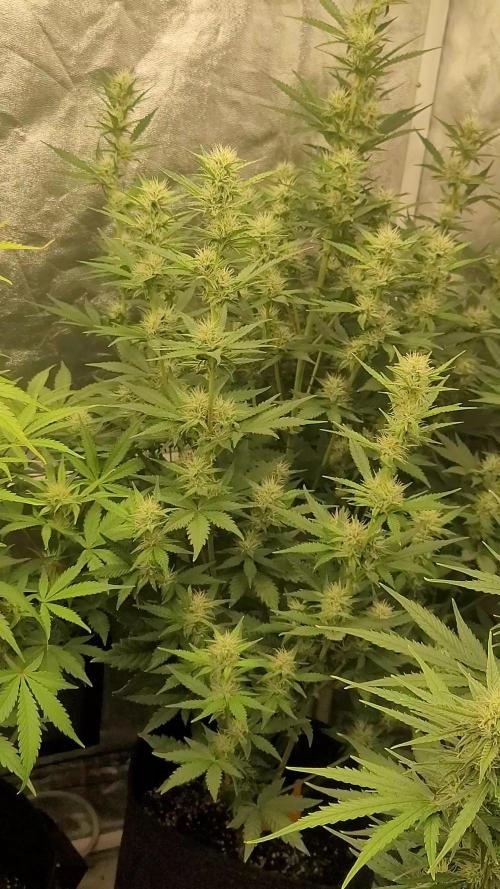
Its really taken off 😊 just typical feeding routine of some nutes and just top dressed them to hopefully keep in some more moisture and help the roots expand. They've got so big I don't have much room so I just defoliate them when I can. They're all starting to smell really good 😋 just hard to tell with so many branches cramped together lol Happy growing 🌴


Likes
5
Share

@BEM_Genetix
Follow
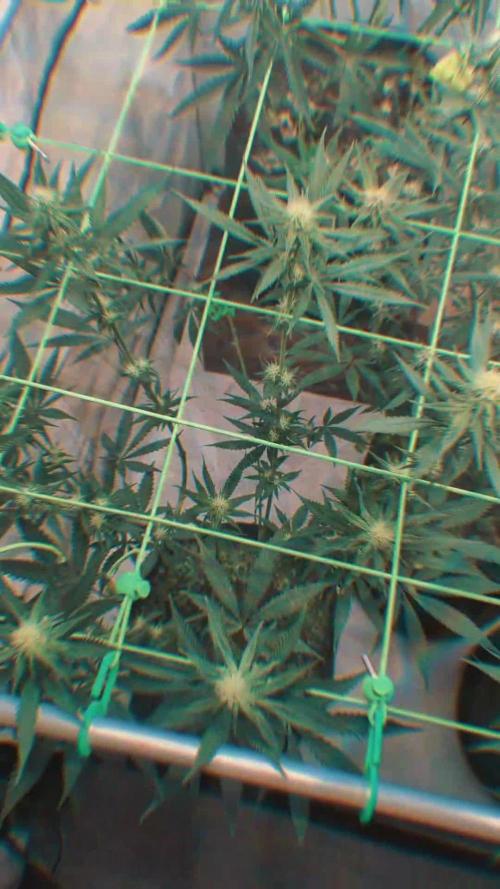
Die Entwicklung mit APTUS Nutrients sieht sehr gut aus. Gesund bis in jede Blattspitze. Die ersten terps machen sich breit und es liegt ein Duft aus Kirschen und Blaubeeren in der Luft. Die entlaubung haben sie sehr gut weg gesteckt.
Development with APTUS Nutrients is looking very good. Healthy right down to the very tips of the leaves. The first terpenes are starting to come through, and the air is filled with the scent of cherries and blueberries. They handled the defoliation really well.
Likes
15
Share


@Wenz004
Follow
Soo...Nr.1 von 2 die auf dem Balkon waren wächst super...war jetzt die ganze Woche geflippt auf 12 h aber von Blütephase sind minimal nur Ansätze zu sehen...aber der Stretch ist wohl schon im Gange...trotzt living soil und 1 mal pro Woche Kompost-Tee...gebe ich noch was dazu...topbooster und P-boost von Aptus...ich bin davon überzeugt das kein living soil genug Phosphor für die Stretchphase hat. Ab und zu noch etwas "fish shit" aber nicht bei jedem Gießen...das Zeug ist in Deutschland teuer bis unerhältlich...aber sehr gut.
Cover crop funktioniert auch sehr gut...habe gesehen dass es viele bei sehr jungen Pflanzen machen...davon würde ich abraten.
Die Nr.2...auf dem Balkon gestartet und dann ausgewildert...habe ich auch besucht aber keine neuen Bilder gemacht wie hier vor 2 Wochen gepstet...macht nur wenig Fortschritte...aber sieht wunderschön aus.


