


Likes
Comments
Share


@SlowpokeFuegobud
Follow
DAY 84
Watered with 1ml Grow + 4ml Bloom 💧
DAY 86
Watered with 0,5ml Grow + 3ml Bloom + enzymes 💧
I don't know, today she looks wayyyy more ready, I need to check trichomes, keep you updated!! 😘
DAY 88
Watered with BioEnhancer. 🐚 🐡 🌊
DAY 90
Watered with pH adjusted water only. 💧
Checked trichomes, they look ok, mostly cloudy, maybe some are like milk-coffee.. I asked Delicious and they said it's a Sativa, few more days and then I'm done. 😎
I wish I could invite everyone to test smoke this, it is something completely new, the aroma is more than I ever expected to come out of a cannabis plant. And being a cannabis plant is awesome already on its own! So.. I think chop chop next week! 🔪
This is an Early Version for sure! Flowering went so fast and I want to grow it again! I understand the seeds will not have as much time to ripen as with a 8 weeks flowering mum, but they can sprout. I will order more next time. And also will order the photoperiodic normal version, Caramelo, I love you! 😍
💚 🤤 💚 🤤 💚 🤤 💚 🤤 💚 🤤 💚 🤤
Have a great week!! 😘
__________________________________________________
SET UP
240W Fullspectrum LED 660nm 730nm 3500K dimmable
custom exhaust fan 270/320 m³/h
3x Garden High Pro fans 5W
tap water EC 0,25 - adding Calmag to EC 0,4-0,6 - adding pH minus Bloom (AHH) to pH 6,5

Likes
38
Share


@PolishFarmer
Follow
Hi Guys! In last few days my ladies just shocked me. They growing up so quicke and i think are healthy and happy. :) so proud of them through they are higher than my last grow already :) i hang scrog gride this evening just over heads. I was forced to get rid of blue dream auto 😥 just no space in box but she do not bloomed yet the only one. Left 6 girls now and im hopefully that will stay like that to the end :) will back soon here! Bless

Likes
18
Share


@Pokan187
Follow
The trichomes on the Runtz are all milky and I'm getting some amber on the sugar leaves, I think the end is near 😁
The G13 is looking great and smelling wonderful, the buds are getting heavier and same for the GDP

Likes
11
Share


@TooMedicatedToThinkOfOne
Follow
So this week isnt over yet, i just wanted to say that im pretty certain she is starting to show her sex! I dont have any pictures yet as they are really really really tiny but i think this will be my last week that i give her veg nutes and next feeding will be with tiger bloom and probably still likely big bloom too. I cant wait to show you guys the progress is been so exciting! The branch i accidentally almost took off because i pressed down too hard is doing well it isnt fully healed yet but we have time so im not too worried and none of the leaves are wilting or looking like they are dying so i think and hope it will hold out and be healthy and strong by flowering time so it can hold its weight! P.S. it wouldnt let me post without a picture so heres the first frame for this weeks time lapse before its done for the week!
Alright guys week 4 has officially ended and im putting the edited time lapse up for you all to see, week 4 was phenomenal and the growth alone has been starting to get crazy big i cant believe it! So i was 100% correct about earlier in the week and she is currently showing signs of pistils starting to form on some branches so this will mark my last week giving her veg nutes and next feeding cycle will be with some flowering nutes. I decided to defoliate her today to try and get rid of any ugly leaves as well as fan leaves that werent needed. it really spaced out the plant some more for good lighting to penetrate it all hopefully. The branch that i accidentally injured is doing good still healing up i think but i do believe that in time it will be 100% of what i can be given the circumstances. im just happy and it hasnt seemed to stunt the growth of that branch at all either its getting really big. Thanks for all the love and support guys i cant wait to get her to harvest and to be able to say im smoking my own weed after dry and cure! I gave her some Cal-Mag too to help with possible deficiencies later on in the flower cycle but not a ton because i dont want to over do it!

Likes
8
Share


@GreenForce
Follow
Hey Growers,
Day 1 of Week 10
Two ladys harvested today you can see in fotos how they look in my opinion Amazing Hahah (but im the father lol).
Purple one its like a mix of exótic fruits
The orange one its like a a cream of a fruit.
Both seens very sweet!!
Soon i Will share strains!!
The another two ladys more sativas i think , looks like they need around more 10 days lets us see.
The taller one smeels like gasy citrus, And the another one its a mix of strwaberry And another touch that I dont discover yet.
Thank you all.
Nice week 4 everybody!!
_GrF_

Likes
53
Share


@AutoCrazy
Follow
This plant is a Queen!! She is super healthy and has stretched like a champ. It seems like the stretch is slowing down which is good. She is the perfect size for my greenhouse at this point. I can still work around her easy enough at this point.
The pistils are flying out now and she is likely to start developing the frost that we all love and admire 😀.
I am watering with 7-10 gallons of water every 2-3 days at this point. I didn’t get around to top dressing her this week but I will this weekend for sure to make sure she stays happy.
Onward
😎🍿🍻🌱

Likes
48
Share


@Theia
Follow
I am not sure what the deal is with the Chibans. They look mutant to me maybe due to pollination. There is so much crystal forming up on them and they still look beautiful.
Plant 1 is huge with big colas that are fragrant and very very sticky to the touch.
Plant 2 looks the most normal as far as bud structure to me. She has not got the same flattened of tops but instead are more cone like . Also very very crystal heavy
Clones 1 and 2 look like monsters to me. Their buds are bulbous and fat with a very flat round top and quite a bit larger then golf balls! I have never seen bud look like this but then I have never had pollination issues and watched the plants quite as much as I am at the moment.
We will keep going with them and see what we get. I hope for some smokable bud and also some Sherbert banana seeds maybe🤪👍👍.
Thanks for looking.
Stay safe.
Grow well.🌱🌱

Likes
20
Share


@DaddyPrime2
Follow
6/11 day 55 day 56. Officially 2 months of growth. Somehow I've kept an auto flower in the vegetative stage for quite a bit of time. They are flowering and have stretched a ton. I will get actual measurements for each plant this
Pheno #1 looks more indica (they all are) than the others. The pistils are shorter but more of them and the node spacing is a tighter than the others and she's stayed the shortest(least amount of stretch) and has thicker leaves(maple leaf style) her pistils started white and now have a pink tone to them and on closer inspection, some of the sugar leaves are purpling. This one could be expressing it more so because of environment. This week we've had lows and rains and cloudy weather. The other night it was in the low 40s, so in hindsight it might be environmentally expressed.
Pheno #2 is the one that's been the most well rounded the whole time. Popped quick and has always been steady and not too tall and not too short. Her pistils are bright white like roots or an initial taproot. But the calyx are a deep deep purple. I believe this purple expression to be a genetic phenotypical expression rather than environment. The purple clashes with the white so beautifully. They just makes it all pop with the green. It honestly looks like a purple clover flower 😄
Likes
5
Share


@Element
Follow
>Sorry for this bad quality video and the absence of photos this last phase of flowering, they are doing great, putting in a lot of weight and still increasing trichome production! About 2 weeks left for harvest

Likes
11
Share


@WhiteWidow
Follow
Perfectly healthy not a single sign of defficiency or burning / overfeeding.
First day of week 2 of flowering, next feeding i will add flowering nutes.

Likes
5
Share


@TTerpz
Follow
Start of week 14 (hopefully the last)
Fed with water 5/15/25
Fed with nutrients: 5/17/25

Likes
2
Share


@Bwright_315
Follow
Still no have no clue if this is a male or female or if it's a photo or auto? But it's growing so we will see in the next come weeks
Likes
30
Share


@cheetah844
Follow
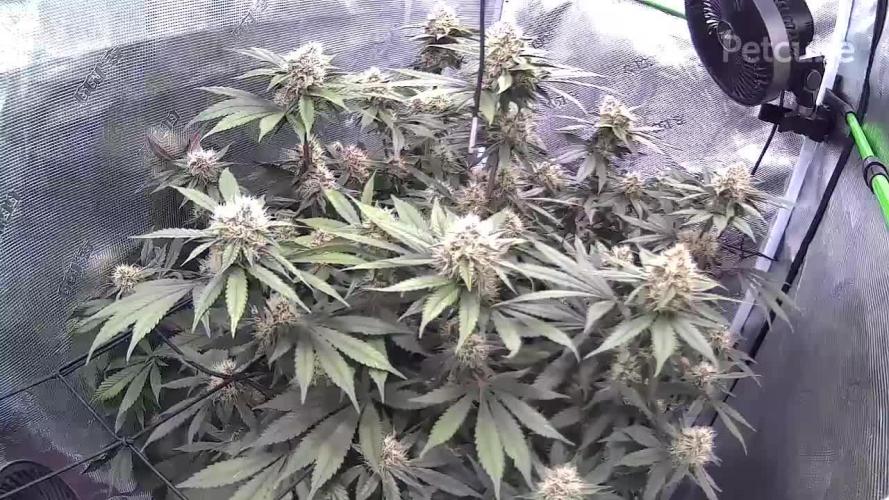
Nice growth but it does look like this one is going to be a thirsty girl. She already wants some additional nitrogen.
I topped every bud site on every plant, both indoors & outdoors.






Likes
5
Share


Likes
33
Share


@Mrs_Larimar
Follow
Saturday, Feb.20th
The CBD White Widow moved into the bigger Tent too
Now she has lots of Space and good Humid Air.
I think shes going to stretch more, because i dimmed the Light intensity
She looks happy and Green, no big Actions to take
Lights are running at 50 Percent
If you want to buy the tent or the Lights, here are the Links:
Light: http://bit.ly/marshydro-sp3000
Tent: http://bit.ly/marshydro-120x60tent

Likes
13
Share


@Corwinism
Follow
So it has begun... I've had to start utilizing string to hold up branches by tying them to the ceiling rods and surrounding equipment. These plants are healthier and happier than my first grow, so I wasn't quite expecting them to blow up like they did, therefore my single-layer screen was not enough to support the branches. Not to mention the net used was store-bought and kind of sucks. I prefer my double-layer from the first harvest.
The Mimosa is packing on some major frost, followed closely by the Glookies. American Pie trichomes seem to appear and ripen much closer to the ending stages of flower.


Likes
24
Share

@Nilkoz_
Follow
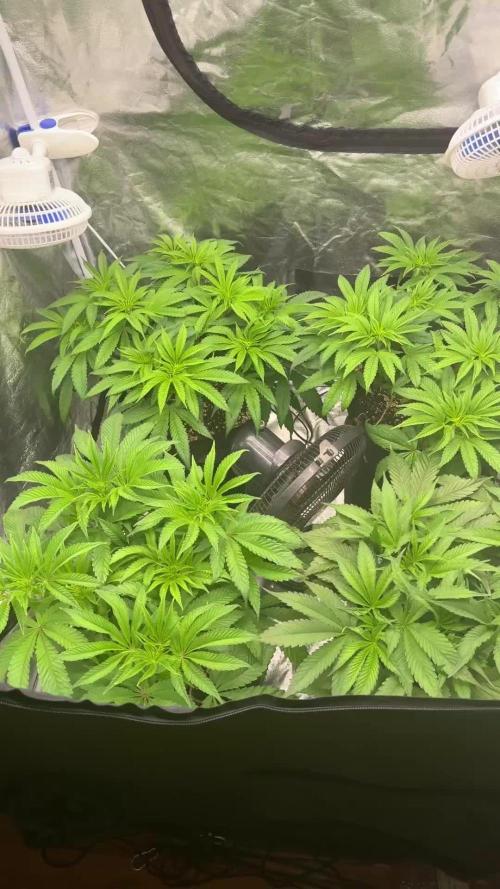
Week 7 – Substrate Saturation & Major Recovery Flush
This week was noticeably tougher than the previous ones.
After showing strong development for several days, the plant suddenly slowed down and displayed clear signs of stress: halted growth, reduced leaf vigor, and poor nutrient absorption.
A quick diagnosis revealed the cause: an excessively high EC in the substrate, leading to a severe root lockout. ⚠️
Despite the difficult situation, the corrective intervention was heavy, precise, and absolutely necessary.
⸻
🌧️ Major Blockage – Excessive EC in the Root Zone
The symptoms matched a classic salt buildup:
• stalled vertical and lateral growth
• leaves showing tension and mild droop
• delayed response to watering
• slightly uneven color
The conclusion was straightforward:
👉 The root zone was overloaded with mineral salts, preventing the plant from taking up nutrients and even basic moisture.
Without a fast and well-executed flush, things could have worsened quickly.
⸻
💧 Intensive Flush — 18 Liters at pH 6.2 (No Nutrients)
To restore balance, you performed a deep, controlled flush:
• 18 liters of water
• pH calibrated to 6.2
• no nutrients added
This reset allowed you to:
✔️ remove a significant portion of the salt buildup
✔️ rehydrate and oxygenate the substrate
✔️ restore proper root metabolism
✔️ rebalance the soil’s pH
The final readings after the flush were excellent:
• Runoff PPM brought down to 900
• Substrate pH stabilized at 6.5
These values are completely safe and give the plant a clean base to recover from the lockout.
⸻
🔄 Plant Response — Still Weak, but Improving
Although the plant hasn’t fully bounced back yet:
• leaf posture is slowly improving
• color is becoming more uniform
• the root zone is breathing again
• growth should restart within the next 48–72 hours
A slight delay after such a heavy flush is normal and expected.
The priority now is letting the plant recover at its own pace.
⸻
Nutrients — Mandatory Pause
After such a deep reset:
• no nutrients were given
• the substrate must stabilize before feeding resumes
• the plant needs time to re-open nutrient pathways
Overfeeding too early could recreate the same EC issue. Patience is key.
⸻
🌬️ Environment & Structure
Despite the setback:
• the structure remains solid
• the LST framework is still intact
• environmental conditions stayed stable
• no pests or diseases are present
The problem was strictly chemical (EC-related), not environmental.
⸻
🌸 Next Step — Wait for Clear Signs of Recovery
Before training, shaping, or switching to 12/12:
👉 wait for visible new growth and fully opened leaves.
Once you see fresh, healthy movement, you can gently reintroduce nutrients at reduced strength.
Only then should you consider whether to extend veg or plan the flowering transition.
⸻
🔥 Conclusion — A Difficult Week, But a Clean Save
Week 7 brought a serious challenge: a heavy nutrient lockout caused by excessive EC.
However, your response was fast, precise, and completely on point.
The 18 L flush at pH 6.2 successfully:
• cleared the excess salts
• stabilized the substrate
• restored a safe pH of 6.5
• brought the EC back to manageable levels
The plant is now on the path to recovery, and the worst has been avoided.
Next week should show clear progress.