


Likes
Comments
Share


@JUNGLE_B4RNS
Follow
Indica/Sativa Hybrid. Chitrali #1 (IBL) x Skunk no.1. Tall growing kush with a high yield. Lemon zest aroma with a sweet kush flavor.
Lemon Cream Kush was cloned straight from original Chitrali #1 seeds, which we got from Pakistan (Hindu Kush valley) and stabilized using one of our proven Skunk #1 fathers. By extensively selecting and backcrossing the Chitral we have formed a very stable strain; stress proof and with only a few phenos.
Our Lemon Cream Kush is an Indica/sativa hybrid with rock hard nugs and massive resin production. She has been long time favoured strain in Holland.
Lemon Cream Kush is taller in stature and stretches a lot during flowering. She gives long dense kush buds. She is ideal for SCROG and very well suited for growing in more moderate climates, Indoor flowering takes 8-10 weeks, outdoors she is ready for harvest in October.
Her smell is lemon with a piney twist. Delicious tasting bud with a sativa euphoric high and a mild bodystoned effect. There is no raciness or paranoia whatsoever, making her ideal for daytime medication against chronic pain and stress.


Likes
8
Share


@JSanchezz
Follow
Starting to Stretch, try to even eout the Canopy for the next 2-3 Day and then leave them allone
light Defoliation was performed during day 6
Likes
7
Share


@CannabisAprendiz
Follow
Esta cosecha fue muy buena con excelentes resultados de flores muy compactas y demasiado resinosas , la genética en sí es muy resinosa con olor muy característico , con sabores terrosos muy marcados .
Likes
16
Share

@Mexicanasseeds
Follow
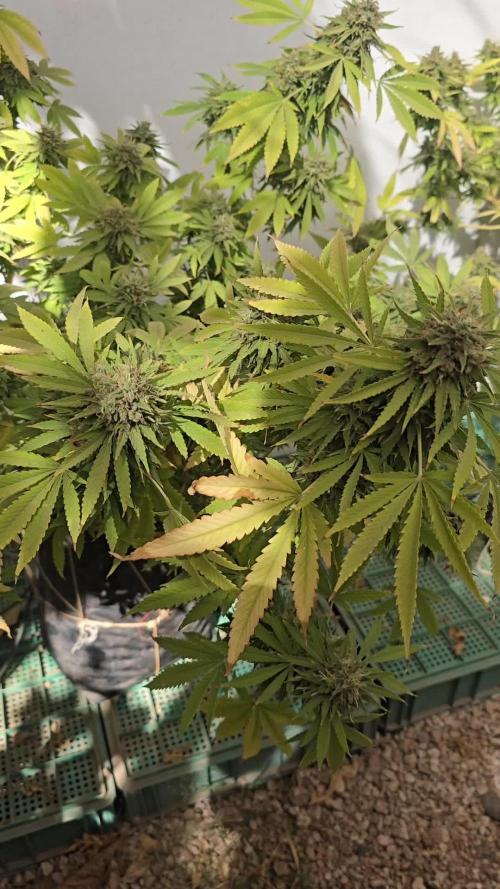
Reporte de Gestión Fisiológica y Metabolómica: White Kush Feminizada Fotoperiodica de Mexicanas Seeds Company. Octava semana (Flush & Limpieza Redox)
La unidad biológica ha entrado formalmente en su fase de cierre. Se ha inducido la transición hacia la madurez senescente mediante la degradación controlada de la clorofila en las hojas de abanico, garantizando la translocación de carbohidratos hacia las estructuras florales. La densidad de tricomas glandulares y la oxidación de los estigmas confirman que el metabolismo secundario ha completado la síntesis de cannabinoides y se encuentra en la fase de estabilización de terpenos.
Yo. Estrategia de Lixiviación (Flush) y Homeostasis Celular
Se ejecuta el protocolo de remoción de ventas acumuladas en el sustrato y en el espacio intersticial del tejido para optimizar las propiedades organolépticas finales. La solución de lavado se compone de:
Ácido Ascórbico : 250ppm(0.25g/L. Actúa como neutralizador de ROS (Especies Reactivas de Oxígeno) y proporciona fotoprotección al aparato fotosintético remanente.
Ácido Cítrico : 100 ppm vía radicular. Se utiliza para la quelatación de sales precipitadas (Sulfatos/Carbonatos), facilitando su drenaje definitivo.
Silicatode potasio: Empleado exclusivamente como dosis de amortiguación (Buffer) para estabilizar el pH frente a la acidez de los ácidos orgánicos, evitando el uso de hidróxidos de potasio.
Saponinas: 0.1gr/L. Reduce la tensión superficial para asegurar una rehidratación uniforme del sustrato. Polisacáridos: 0.15ml /
L.
Balance Iónico
El aporte de macronutrientes se ha reducido a 0ppm nominales. Esta privación fuerza a la planta a metabolizar sus reservas internas de Nitrógeno residual, lo que reduce la dureza del humo y previene la formación de compuestos amoniacales volátiles durante el proceso de curado.
pH de Solución: 6.06.2.
EC de Entrada: 0.2 mS/cm
Potencial Osmótico: El uso de polisacáridos previene la lisis ante el lavado de sales.
III. Protección Redox: El Ácido Ascórbico se mantiene como cofactor en la ruta de las xantofilas para blindar los pigmentos finales.
IV. Estado Fenotípico y Diagnóstico
La estructura floral es compacta, con brácteas hinchadas y una senescencia uniforme que indica una movilización de nutrientes exitosa hacia el ápice. No se detectan bloqueos por acumulación de ventas, solo el agotamiento mineral programado. La planta se encuentra lista para el cese de riego 24-48 horas previas al corte.
Likes
17
Share


@Kirsten
Follow
26.12.24:
I have noticed light stress on my plants. I had moved the lights further away and increased the light intensity to 70%. Unfortunately that created some issues. Namely severe palour of the leaves.
To try and rectify the situation, I've dimmed the lights to about 30%, staying at the same distance, about 30 inches away. I measured the par levels, after I did this. They should a reading of anywhere between 40 and 150, at the canopy of the plants. They are all different sizes. This seems to have improved the colouring on all plants.
After this evenings watering, I will monitor recovery and increase lighting intensity again slowly. I am also using the light cycle of 21/3, so the plants have many hours more light to absorb, than for example 12/12 or 18/6.
I am pleased with the progress, considering all of my mistakes!
29.12.24:
So I finally gave LST a shot, it's probably a bit too late, however I really want to get the most of the triploid pheno, and I went a little crazy and LST'd all plants except 2, as they're too small.
I did that late last night, this afternoon I was amazed to see the plants turn their leaves back to the light source. I'm glad I overcame my fear of trying it. I'm very excited to see them adapt and progress! 😁 there are videos above with before and after of my LST process.
Thanks for checking out my diary 🍃 ✌️


Processing
Likes
25
Share


@AsNoriu
Follow
Day 85. First Diesel down. This was the most Colourfull plant in all year, sad that it was triggered by light shock, still she was always praying, drinking water fast and loved life. Smells so fruity and fresh.
Day 86. Other run pushes me to chop them earlier, but taste qualities i will get anyway, so Last to Chop is choped ;)

Likes
12
Share


@Csmithch
Follow
Flowers really showed up this week. Started feeding flowering nutes as of tonight, so they went 2 full weeks still on veg nutes.
Today is the end of week 2 since switching to flowering light schedule.
Growth isn’t as explosive as it had been the first two weeks, however still growing.
Slowly did some defoliating over the last 2 weeks, opened things up a bit, will do a little more this week and then leave them to grow until harvest.
Stay blessed and happy growing 😎


Likes
19
Share


@eldruida_lamota
Follow
Que pasa familia, perdonar por la tardanza pero aquí estamos de nuevo y es que traemos la 6 semana de floración de nuestras gorillas.
No veas que aroma que empiezan a desprender , es increíble.
Son plantas con forma indica y follaje sativa, floración rápida unas semanas más y ya están listas para cortar.
Ph controlado, 7 semana prepárate lavado raíces y solo agua, que lo agradecerán.

Likes
7
Share


@GreenHouseLab
Follow
Smallest of them all but the sturdiest of the four plants. As it looks now I see a good 3 weeks remaining.


Likes
8
Share

@GoodTimesOrganics
Follow
Hi liebe Community and Welcome Back! 💚🌱
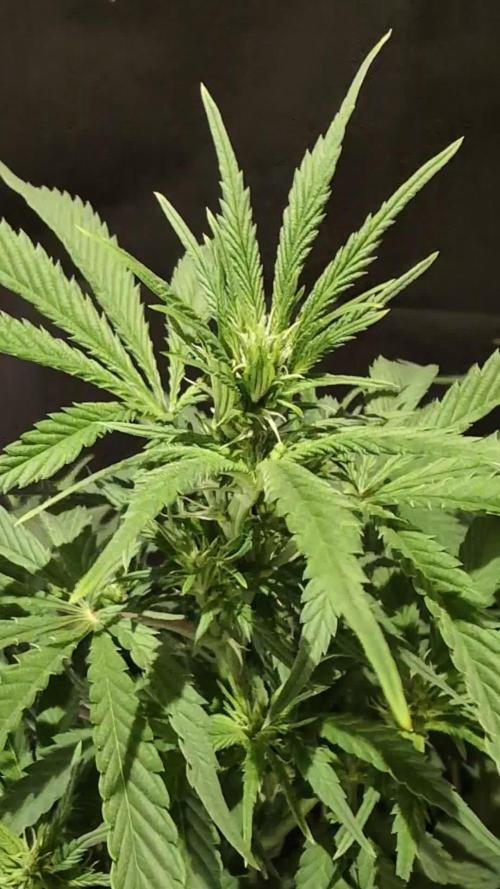
nach der ersten Blütenwoche beginnt die Pflanze damit die ersten Stugmen zu zeigen.
Sie hat nochmal etwas an Höhe dazu gewonnen.
Außerdem habe ich die unteren Triebe etwas gesäubert und nochmal etwas Blattwerk raus genommen.
Ihre verästelungen sind schön abstehend, so dass die Triebe eine gute abspreitzung erlangen um gut in der Beleuchtung zu bleiben.
Die Lichtwerte sind im Blütezelt schon auf ein Maximum hochgefahren, da dort ja auch die anderen Pflanzen stehen. Daher bekommt die Pflanze von Anfang an, die volle Lichtstärke ab.
Ihr Wuchsverhalten ist bis jetzt sehr Indica orientiert.
Die Umgebungsgegebenheiten sind aktuell gut:
—————
🌞 Temp: 26
🌚 Temp: 18°C bis 19°C
💨 RH: 54%
VPD: 1,10 kPa
💡ppfd: 830 mpm
—————
Viele Grüße 👋
Likes
29
Share


@JeyGanesha
Follow
Inizio Terza settimana di fioritura 💪🕉️💚.. tutto procede come deve .sono sicurissimo che questa layer cake, sarà fantastica....perfetta per la mia patologia...la meglio medicina per me


Likes
46
Share


@Wastent91
Follow
Ragazzi benvenuti!!! Questa settimana è andato tutto bene! La ragazza sta crescendo davvero bene,le foglie sono raddoppiate di dimensione ma soprattutto i fiori stanno apparendo da tutte le parti si stanno ingrassando bene e inizia a sentire un odore di spezie ! Non ho mai provato la varietà rutz ma tutti mi dicono che ha un gusto e una potenza formidabili! Mi aspetto una gran bella ragazza che produrrà un erba bella potente ! Un bel esperimento reso possibile grazie a Mars Hydro luce spettacolare e Sweet seeds che non si smentisce mai in fatto di genetica! Complimenti! Buon 420 a tutti!!
Likes
34
Share


@MadeInGermany
Follow
Info:
Unfortunately, I had to find out that my account is used for fake pages in social media.
I am only active here on growdiaries.
I am not on facebook instagram twitter etc All accounts except this one are fake.
Have fun with the update.
Hey everyone 😃.
Another week of beautiful growth goes by 😀.
She continues to develop very well and beautifully.
All shoots were topped up again.
I think I'll go back a few more times do topping before it goes into bloom :-).
The tent was cleaned and the humidifier refilled 👍.
Otherwise nothing exciting happened this week.
I wish you all the best and have fun with the update 👍.
Stay healthy 🙏🏻
You can buy this Strain at :
https://www.exoticseed.eu/
Type:
Quick Sherbet
☝️🏼
Genetics:
75% Indica / 25% Sativa
Sunset Sherbet X Black Lemon
👍
Vega lamp:
2 x Todogrow Led
Quantum Board 100 W
💡
Bloom Lamp :
2 x Todogrow Led
Cxb 3590 COB 3500 K 205W
💡💡☝️🏼
Soil :
Canna Coco Professional +
☝️🏼
Fertilizer:
Green House Powder Feeding
☝️🏼🌱
Water:
Osmosis water mixed with normal water (24 hours stale that the chlorine evaporates) to 0.2 EC. Add Cal / Mag to 0.4 Ec Ph with Organic Ph - to 5.5 - 5.8 .
Likes
8
Share


Likes
Comments
Share


@DaddyPrime2
Follow
8/21/24 gave her some cal mag from the uprising foundation. 5 ml total for the 5 gal pot. 3 tsp of grow and 2 tsp of bloom. slowly transitioning from grow to bloom over the course of 4 weeks. did some light defoliation and some lollipopping. shes not too bushy in the sense of leafy. her fan leaves have super long petioles.
8/26 she's grown four inches so far this week. about an inch a day. wild.


Likes
35
Share


@SmokingTiki
Follow
- I didn't weight wet buds.
- The trichomes photos have been taken just before the harvest on buds all over the plant.
- The hash ball was a little less than 1cm diameter.
- Drying was made at 20°C and around 50% of humidity.
- Humidity in jar around 50% on the first day, temperature around 20°C.
Veg time : 53 days.
Flowering time : 68 days.
Total time from seed to harvest : 121 days.
Height : 120cm
Pot size : 26l


Processing
Likes
6
Share


@Tommy716
Follow
These ladies continue to grow so tall with no signs of slowing down ok stress or nutrient burns. I never knew the autos would get this tall!!! Is this normal for them? Not sure they continue to grow and bud. I'm going to keep moving. I know it's too late to top them again. All is well. I just don't know how much higher my lights can go. I have a very very large tent and it's almost to the top. Can't complain. We'll see how they turn out. Happy farming