




Likes
2
Share


@Hempcules
Follow
WEEK 5 (DAY29-35)
I have already topped the plants for the second time. I plan to repeat this process once or twice more in the coming weeks.
Overall, they are looking good. They have always taken a bit longer to recover from the shock of topping, but I like their general growth pattern.
Likes
15
Share


@SweetheartOG
Follow
The girls are fully in flower this week which of course is a GREAT sight to see when opening the tent. The smell in the tent is so sweet and fruity it's already making your mouth water!! So this week I feed the girls with a little of the living soil veg so they are still getting a helping hand. They were also given the living soil bloom and some barley which I will admit is the first time using it but so far me plus the girls are very much enjoying!! I have done the necessary light de-foliating on all 4 girls over the past 2 weeks and more LST. Happy toking guys and girls!! Will keep you all posted with more videos through the week so please keep checking back 🙂

Likes
18
Share


@Canadian
Follow
The plant seems to be growing very nicely very healthy and no issues whatsoever and it is in full flower mode smelling amazing and strong can wait to see how the flowers grow on this one.
thank you for reading I will continue to update have a happy grow


Likes
2
Share


@Wazowskid
Follow
Las plantas van creciendo estupendamente, de momento no les he dado ningún tipo de fertilizante. He aplicado LST.

Likes
7
Share

@TheDutchWizzards
Follow
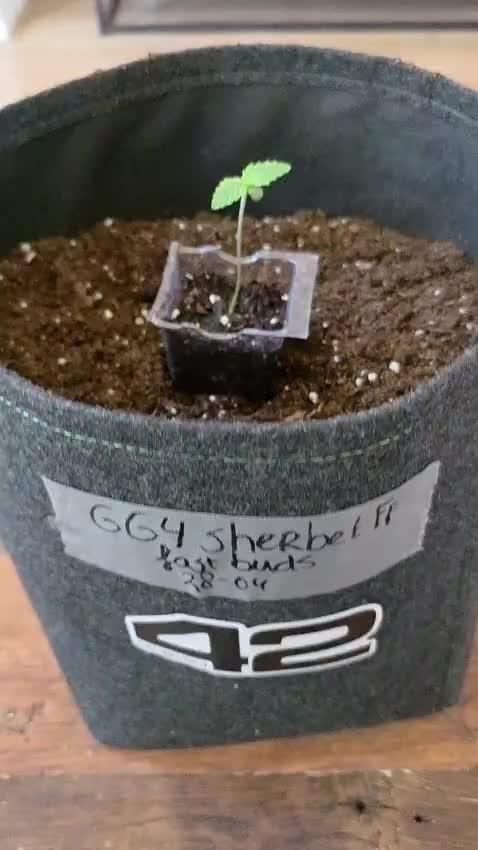
So lets gooo, i chosen to grow 1 of many lovely strains from @fast_buds 🙏🏻🌱🤙🏻 i popped one of this strain and she germanted great and looking very strong and stable 🌱🌱 So happy daysss
also check our instagram : https://www.instagram.com/thedutchwizzards?igsh=MTMzd2JuOWxpbWlxNQ%3D%3D&utm_source=qr
Big tnx for taking time to check it out 🌱🌱🤙🏻🙏🏻


Likes
76
Share


@DogDoctorOfficial
Follow
Week 3 in the Pink Rozay saga has been nothing short of epic, and I'm thrilled to spill the chlorophyll beans on all the exciting happenings.
First things first – the big move. Our girl got a VIP ticket to the 16L final autopot. It's like upgrading from a cozy studio apartment to a spacious penthouse. The roots were rocking and ready for this next level of luxury.
Now, let's talk numbers. TDS? Bumped it up to 490. pH? A cool 5.8. Water temperature? A perfect 21 degrees. It's like we're throwing a plant party, and everyone's invited!
But the real magic happened in the soil. I whipped up a concoction that even Mother Nature would give a nod of approval. Picture this: a mix of super soil goodness, Aptus All-in-One pellets providing the NPK party essentials, Mycormix for that mycorrhizal fiesta, a mix of endomycorrhizae that's like the backbone of your plant's support system. Picture it as the plant's personal entourage, consisting of various species of endomycorrhizae. These fungi are fixed on a vegetal carrier, playing the role of bodyguards that feed and protect the fungi. It's a symbiotic relationship, with mycorrhizae enhancing nutrient uptake and the carrier ensuring their well-being. It's like having a team of nutritional bodyguards ensuring Pink Rozay's well-being, Micromix soil for micronutrient extravagance, and just to top it all off, a dash of Substrate Buffer Powder. It's like creating a nutrient symphony, where each element plays its part in harmony.
Now, when it came time for watering, it was like orchestrating a liquid masterpiece. I unleashed the full schedule veg mix, and oh boy, did our Pink Rozay dance with joy. Regulator, the conductor of this symphony, containing Mono-silicic acid (Si) as a nutrient transporter, Boron (B) acting as a precursor to enhance calcium uptake and fiber production, and Molybdenum (Mo) making moves to shift nitrogen from lower to upper leaves. It's like a nutrient ballet, each element performing its unique role.
CaMg-Boost, giving that extra boost of calcium and magnesium.
All-in-One Liquid, the maestro of well-rounded nutrients, covers all the bases:
Essential Elements: Nitrogen, Phosphorus, Potassium, and Magnesium. These are like the fundamental building blocks, the ABCs of plant nutrition.
Microelements: Boron, Molybdenum, Iron, Manganese, Zinc, and Copper. These are the plant's essential micronutrients, like the subtle brushstrokes that complete a masterpiece.
Imagine it as a nutritional buffet, offering a variety of elements to satiate every nutrient craving Pink Rozay might have.
Start Booster, the kickstarter for vigorous growth,It's not your ordinary nutrient supplement; it's a powerhouse containing:
Organic Nitrogen Chelated with L-amino acids: Think of this as a protein-packed energy shake for your Pink Rozay. It provides the necessary organic nitrogen, fueling her growth with a burst of vitality.
Microlife Biomass from Controlled Fermentation: It's like a microbial party, specifically invited strains gathered through controlled fermentation. These microorganisms are the VIP guests, promoting a healthy, thriving environment for your plant.
Humic Acid from the Leonardite Layer: Extracted from the deep, dark layers of Leonardite, this humic acid is like the plant's personal spa day. It improves nutrient absorption, water retention, and overall soil structure, making the growing experience luxurious for your Pink Rozay.
High-grade Fulvic Acid: The secret ingredient, like a master key unlocking nutrient absorption. Fulvic acid enhances nutrient transport, ensuring your plant gets the most out of every drop.
Imagine it as a nutritional buffet, offering a variety of elements to satiate every nutrient craving Pink Rozay might have.
And just to spice things up, a touch of Micromix drip, because why not add a little extra nutrient flair?
And let's not forget the star of the show – the transplant itself. It's like Pink Rozay moved into a botanical mansion, complete with all the amenities a growing plant could dream of.
Before I sign off, let me send a massive thank you to Aptus Holland for their continuous support. Your products are like the superhero squad of my grow room, ensuring my Pink Rozay gets the VIP treatment she deserves.
And of course, a nod to F.O.G. - Future Of Grow, for illuminating our growing journey with that powerful Black Series 600W LED. The future looks bright, my friends!
So here's to week 3, a chapter filled with growth, nutrients, and transplant triumphs. Until next time, keep on cultivating that green goodness!
Genetics -Pink Rozay @zamnesiaseeds
https://www.zamnesia.com/7646-zamnesia-seeds-pink-rozay.html
Nutrition - @aptusholland
https://aptus-holland.com/
Led Power @ F.O.G. Future Of Grow
https://www.thefuturofgrow.com/en/online-store/BLACK-SERIES-600-p489093171
As always thank you all for stopping by, for the love and for it all , this journey of mine wold just not be the same without you guys, the love and support is very much appreciated and i fell honored and blessed with you all in my life
With true love comes happiness Always believe in your self and always do things expecting nothing and with an open heart , be a giver and the universe will give back to you in ways you could not even imagine so
Friendly reminder all you see here is pure research and for educational purposes only
Growers Love To you All <3 <3 <3

Processing
Likes
10
Share


@yaron
Follow
Hi guys!its getting kind of boring but again a rainy day.They need sunlight bad,the coming days the sun will shine so we will see what happens.
Cheers!
Finally we have sunshine!The smallest one,a gg,just will not grow i dont know whats wrong with her and she is already in flower.
The rest is doing fine i think.
Cheers!
Likes
18
Share


@ChitownCannaChica
Follow
Moving right along! Seems to be very happy. Fast flower is pretty accurate as it is faster than my other photos! Can’t wait ✌️🏻💚
Likes
2
Share



Likes
32
Share


@Stork
Follow
Day 85
Add 5L water
PH 5.5 - 5.7
EC 1.0 - 0.9
TDS 470 - 420
DLI/20h 36
PPFD 510
Water 21c
Day 86
Add 5L nuts
PH 5.3 - 5.8
EC 0.8 - 1.2
TDS 420 - 580
DLI/20h 39
PPFD 540
Water 21c
Day 87
PH 6.1 -
EC 1.2 -
TDS 590 -
DLI/20h 39
PPFD 540
Water 21c
Day 88
PH 5.7
EC 1.2
TDS 590
DLI/20h 39
PPFD 540
Water 21c
Day 89
PH 5.6
EC 0.4
TDS 180
DLI/20h 39
PPFD 540
Day 90
PH 5.6
EC 0.2
TDS 80
DLI/20h 39
PPFD 540
Day 91
PH 6.0
EC 0.2
TDS 90
Likes
Comments
Share

@NickyBond420
Follow
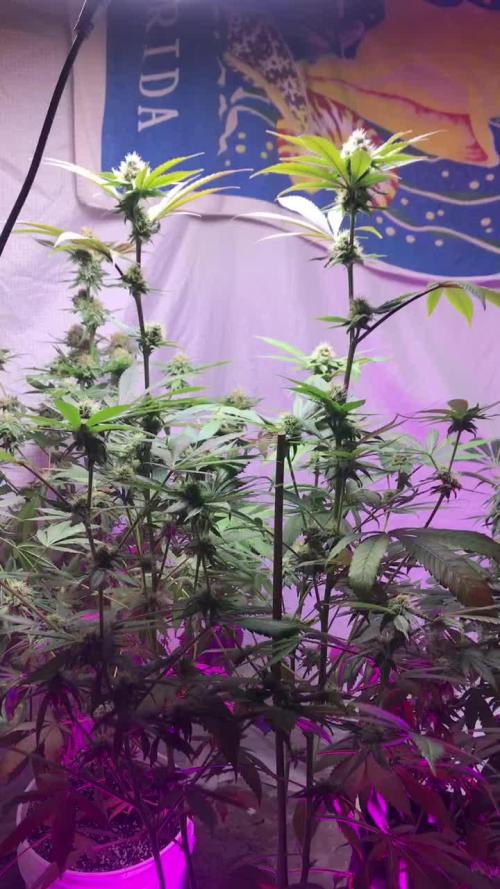
Purple kush is the taller of the plant, and the wham is the shorter thicker one


Likes
3
Share


@Naujas
Follow
63 days!!!! the girl is growing and maturing fantastically :) of course I would like a bigger room for her, but I grow it in the conditions I have :) the girl drinks 3 liters of water with nutrients biobiiz 6.3ph (I also give advancet nutrients micro) she likes it :) since I have two different species growing in my tent, I don't understand the aroma of the trivia :D their terpenes smell very delicious, I just don't understand which one smells better :D good luck to everyone :).
Processing
Likes
7
Share


@MissSolasolita
Follow
End of week 6
1 week of flower
She is growing very well, 16 cm this week
Started LST yesterday with my my plastic Bends
Continues to look very healthy
Stay safe everyone!



Likes
93
Share


@OrganicNature420
Follow
Germination date 🌱 28/11/2021
Day 99 16/03/2022
Strain 🍁 SinCity seeds Frosted Biscotti
(Biscotti Sundae x Whitenightmare)
THC% • Unknown
💡 Mars Hydro FC-E6500
• Power draw 650W + 5%
• Max coverage 5 x 5
• LED 3978 pcs high quality chips
• Max Yield 2.5g / watt
• Noise level 0 DB
• Removable Driver & Light bars
• Daisy chain
• Fast cool system
https://marshydroled.co.uk/ 🇬🇧
PROMO CODE • (organicnature420) DISCOUNT
https://www.mars-hydro.com/ 🇺🇲
PROMO CODE • (ORG420) DISCOUNT 👍🏻
⛺ Mars Hydro 150 x 150 x 200cm
📤📥 AC infinity 6inch
💧 10lt dehumidifier
❄️ 3.1kw air con system
💉 Nutrients GreenBuzzLiquids 🇩🇪
⭐⭐⭐⭐⭐
Organic Grow Liquid • 1-4ml until 2wk flower
Organic Bloom Liquid • 2-4ml flower stage
Organic More PK • 2-4ml +wk3 of flower
Organic Calmag • 1-2ml/lt whole grow
Fast Plants Spray • first 2wks at night lights off
More Roots • 2-5ml veg +2wks flower
Fast Buds • 5ml 12days before flower until wk1
Humic Acid Plus • 2-5ml whole grow
Growzyme • 2-5ml whole grow
Big Fruits • 2-5ml flower stage
Clean Fruits • 5ml flush 1wk
Ph powder
Root Gel
Living Organics
https://greenbuzzliquids.com/
PROMO CODE • organicnature420 15% off ✌️🏼
🥥 Growing Media • Coco Coir
Notes 📝
The only problem has come with this strain. You can see its tried going back into reveg but managed to save this in time. The ones in soil look like they've hermed or mega foxtailed and might have to cut my loses. Wanted to get this one right but looks like I've failed again 🤣 nevermind
Go and give PharmaZ a follow and GreenBuzzLiquids and check out their grows and the future of nutrients.. Organic 💚
Discount codes in bio for Mars and GreenBuzzLiquids 👍🏻
