Likes
Comments
Share
@Nune2021
Follow
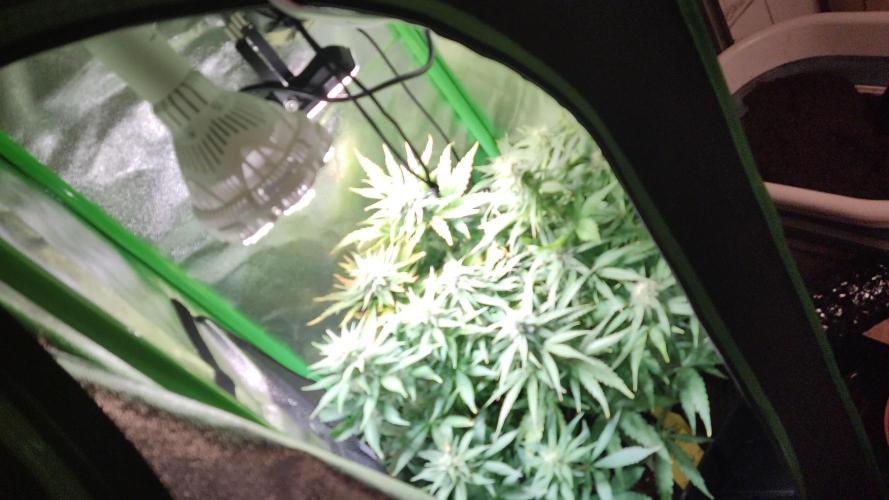
Hey Leute die Pflanzen machen sich sehr gut wie ich finde ich muss nur die unterschiedlichen Größen Händeln aber das passt schon duften tuen sie auch schon
Likes
1
Share
Likes
4
Share
first week of flowering ... vegetation phase done,i think,greatly... looking forward.. 23 january 2019 __________________________________________________
Likes
6
Share
@RatmanJR
Follow
September 9th, 86 days post flip Clones: No major updates this week, plants continue to grow well. Leaves are starting to drop heavy at this point, calyxes are stacking the way a sativa should, stigmas are turning brown as new ones are forming. Smells from last week continue to intensify. This weekend I plan on giving them a nice microbial tea too help break down some of the mites I have a few weeks back. Parents: Growing very well, needs a topping again. God bless!
Likes
92
Share
🌸 Week 4 Flower Report: Growth, Challenges & Big Changes! 🌸 Hey, Grow Diaries Fam! ✨ We’re here at Week 4 of Flower, and what a week it’s been—packed with challenges, adjustments, and exciting progress! Before diving into the details, let’s start with a note on my flowering timeline. While this is Week 4, I don’t start counting flower days the moment I flip to 12/12. Instead, I wait for the plants to show true signs of bloom. It’s a small but significant distinction that keeps things accurate and aligned with the plants’ development. 🌱 Defoliation: Timing is Everything! Defoliation is a critical part of the flowering stage, and I typically wait until Day 21. However, this week, I tackled it earlier on Day 17 because: 1️⃣ The room was simply too full. 2️⃣ And most importantly—the Papaya Zoap had other plans! She’s a fighter—determined, defiant, and constantly reaching for the moon. Despite intense training like super cropping, she’s still pushing upward, nearly outpacing the LED lights. Challenges like this remind us of a simple truth: gardening mirrors life. It’s about resilience, adaptation, and unwavering determination. 💪 This week, I added a second SCROG layer. While this net will support the flowering colas, it’s also there to strategically manage the Papaya Zoap. Why? Because experience has taught me that if she grows out of the LED’s range, she won’t finish properly—and that could disrupt the balance for every other plant in the tent. It’s all about teamwork, even in the garden. 🌟 Defoliation was intense, removing nearly all the leaves with stems to clear space and boost airflow. The tent now looks dramatically different! For the full before-and-after transformation, be sure to check out my YouTube channel—trust me, you’ll want to see this process up close! 🎥✨ Switching to Aptus Holland Minerals A major milestone this week: I’ve transitioned entirely to Aptus Holland Minerals. 🌊 From now on, it’s just minerals—no more organic inputs. This marks the start of a new chapter, and I’m incredibly curious to see how the plants react to these changes. Here’s the current nutrient mix: • System Clean: 0.5 ml/L • Regulator: 0.15 ml/L • RO Water Conditioner: 0.8 ml/L • All-in-One Liquid: 2.1 ml/L I’m keeping the pH at 6.1 and TDS at 556 ppm, and so far, the plants are thriving. This week also included a thorough system clean, ensuring everything runs smoothly as we enter the final flowering stages. 🌿 Bud Development: Pure Magic! The bud formation across all the genetics is nothing short of incredible. Every plant is thriving, and the canopy is lush, vibrant, and full of potential. I’ve raised the PPFD to 750 for this stage, with temps steady at 25°C and RH at 63%—keeping the VPD dialed in at 1.11. The TrolMaster ecosystem, paired with the AutoPots, makes managing these precise conditions seamless. With more time to focus on the plants, I can give them the daily care they deserve. 💚 Shoutouts & Gratitude A huge thank you to my sponsors and supporters: TrolMaster, Aptus Holland, Pro-Mix, Cannakan, and the amazing seed banks. Your incredible products and technology make this journey possible. 🌟 To the Grow Diaries community and all my followers—thank you for your energy, love, and even the challenges from the haters. It all fuels this incredible process, and I apprecilove every bit of it. Special shoutout to Brother Daggadna—check him out on Instagram and show some love! 💚 The plants are heading into the next phase of bloom, and I can’t wait to share how this story unfolds. 🌸✨ As always, stay tuned, stay positive, and let’s keep growing strong together! 🙌 Growers’ love to all 💚 #TrolMaster #AptusHolland #GrowLife #CannabisCommunity #FlowerWeek4 #NeverGiveUp #GrowWithLove #IndoorHorticulture #Defoliation #PPFD #ControlledEnvironment #SCROGNet #DogDoctorOfficial Discount Codes so you can save big on your next check out 💚💚💚 Kannabia - DOGDOCTOR 30% off SeedsmanSeeds - DOGDOCTOR 10% off CannaKan- DOGDOCTOR 15% off terpyz.eu - DOCTOR 15% off The Neutralizer - PORKIT5-DOG 15% off As always thank you all for stopping by, for the love and for it all , this journey of mine wold just not be the same without you guys, the love and support is very much appreciated and i fell honored and so joyful with you all in my life 🙏
 With true love comes happiness 💚🙏 Always believe in your self and always do things expecting nothing and with an open heart , be a giver and the universe will give back to you in ways you could not even imagine so 💚 Friendly reminder all you see here is pure research and for educational purposes only Growers Love to you all 💚💚💚 P.S. – A Deep Dive into the ICL-300: Revolutionizing Under-Canopy Lighting The ICL-300 isn’t just another LED—it’s a game-changer for under-canopy lighting. Unlike traditional LED systems that project light in a single direction, the ICL-300’s 300-degree design ensures even light distribution beneath the canopy. 🌟 This unique feature means that no part of your plant is left in shadow, creating a balanced environment for lower buds to thrive. Key Tech Specs & Benefits: • 300-Degree Light Distribution: This design fills the under-canopy space with optimal light, enhancing photosynthesis where it often gets neglected. 🌱 • Full Spectrum Output: Tailored to meet the specific needs of plants at every stage, ensuring quality growth from base to apex. • Energy Efficiency: Advanced LED technology delivers maximum output with minimal energy usage, keeping costs down and sustainability up. 💡 • Durability & Heat Management: Built with high-quality materials, the ICL-300 stays cool and reliable, even in intense growing environments. Why It Matters: Under-canopy lighting is a game-changer for growers aiming to maximize yield and quality. Typically, lower buds receive less light, resulting in larfy or underdeveloped flowers. The ICL-300 changes that dynamic entirely by turning shadows into opportunity. 🌟 With light evenly dispersed across the entire plant, you’re not just growing; you’re sculpting a masterpiece. For me, the ICL-300 is more than a tool—it’s a partner in innovation. It ensures that every plant in my grow room has equal opportunity to shine, from the top colas to the smallest buds at the base. When paired with a carefully managed ecosystem, like the one powered by TrolMaster, the potential for consistent, top-quality harvests reaches new heights. This isn’t just about adding light—it’s about adding value, efficiency, and balance to the grow process. I’m beyond excited to see how the ICL-300 transforms the game in my tent, and I can’t wait to share the results with you all! 💚
Likes
6
Share
@RFarm21
Follow
Week 4 Jan - 10 January 6 January - feed day 10/1 - Last feed
Likes
9
Share
Ahoj tak tu máme 57 den květů.Holky vypadají skvěle jsem spokojený.zapach velice kvalitní 😂Žena nasrana soused už ani nezdraví zase 😂 jinak brzo bude sekec jen už čekám na jantara pořád žádný 🤔
Likes
12
Share
@Jaindoh
Follow
Gonna let them bulk up a full 10 weeks I think. Just watching them, mostly. Fed them again, but not double dose. Moved the light up to 18", then gradually up to full dosage, Gonna let the weak plant get a little sunburn, but not for the entire grow period. Going to give them a full week on full blast, and then yank the lights a couple inches and back down to 75, to try to match the late stage DLI. Should hopefully save the terps at that point. Set up a 4" blower, now getting ~24.5-25C instead of 27-28.5C. aiming for 40% humidity I think now.
Likes
2
Share
Topped once, turned off IR @ nights, slowed vertical growth back down, and took off both of the very lowest internodes on each plant. Eisenia fetida Stratiolaelaps scimitus Armadillidium vulgare Red wigglers (Eisenia fetida) are highly beneficial. They are considered an ideal choice for "no-till" or container-based organic growing because they live in the upper layers of soil, feeding on organic mulch rather than the plant's root system. Red wigglers accelerate the breakdown of organic amendments and produce high-quality, nutrient-dense worm castings directly in the root zone. Clover is another exceptional component of an organic rhizosphere, offering a sustainable, self-sustaining alternative to synthetic nitrogen fertilizers produced via the energy-intensive Haber-Bosch process. By forming a symbiotic relationship with Rhizobia bacteria, clover converts atmospheric nitrogen N2 into ammonium NH4, providing a steady, slow-release nutrient source that enhances soil health and reduces environmental impacts. Red clover offers superior nitrogen fixation and biomass production compared to white or yellow clover, making it the premier choice for maximum soil vitality, particularly for improving soil structure and providing a high-volume nitrogen credit for subsequent crops. If it is fully functional and efficient soil, the rhizophagy cycle is superior long-term than any synthetic delivery when it comes to preventing deficiencies, not because it's "better," per se. The medium will require a very high CEC to make it to harvest without re-fertilization. The rhizosphere acts as a dynamic, interactive exchange where plants and soil microbes trade resources based on immediate needs. When a plant lacks a specific nutrient, it changes its physiology and releases specialized chemical cocktails—root exudates—into the surrounding soil. These exudates, which include sugars, amino acids, and organic acids, serve as a "shopping list" to attract specific microorganisms, which in turn return higher levels of desired nutrients. There is nothing in comparison when using synthetic delivery, which can cause plants to stop producing exudates, effectively "starving" the beneficial soil life, over time turning the soil barren and void of microbial life. Responsible use, applying the right amount at the right time, can minimize these negative effects. Relying solely on synthetic fertilizers without replenishing organic matter is what typically leads to exhausted soil. The use of synthetic fertilizers can utilize the Cation Exchange Capacity (CEC) of the soil, but without a robust rhizosphere and active microorganisms, the efficiency of this process is significantly reduced. This makes synthetic growing more difficult to prevent deficiencies overall compared to an efficient organic living soil with a robust rhizophagy cycle, as there is no "one size, fits all" when it comes to different nutrient profiles of strains/genetics, making it trickier to "guess" and prevent creeping deficiencies. CEC does not contribute towards EC. Add more CEC using biochar, problem solved. If you keep pH between 6.3 and 6.7, hydrogen is exudated to cycle the medium's CEC for its needs. Keeping the pH between 6.3 and 6.7 creates an environment where plants release H+ to displace positively charged nutrients (like Ca2+, Mg2+, K+ held on soil particles or within artificial media this cycle through nutrients via the medium's Cation Exchange Capacity (CEC) Microorganisms generate a stable potential of approximately 0.5 V EC. The rhizosphere creates its own food, similarly to chelation, using 1000's of varying combinations to create its own food. Start to finish, just add water. Eventually, more materials will need to be added at the beginning of each new grow, but very attainable to go from seed to harvest without ever fertilizing. ATP is important when it comes to biomass accumulation. Cellular root respiration and cellular respiration are essentially the same biological process, the breakdown of glucose to create usable energy (ATP) in the presence of oxygen, just taking place in different parts of the plant. Synthetic (salt-based) grows have significantly lower levels of total rhizosphere respiration, often referred to as root-zone activity, compared to organic living soil grows. While the plant roots themselves may respire in both systems, the surrounding soil ecosystem in a living soil setup is vastly more active, teeming with bacteria, fungi, and beneficial microorganisms. 2 pools of ATP, it won't double in growth buuuut, but improving root respiration by ensuring high oxygen in the soil is crucial. Good aeration ensures roots can fully utilize glucose to generate the ATP necessary for nutrient uptake, leading to healthier and more productive plants, even if growth isn't exactly doubled. The ATP created using root respiration is dedicated to rootzone growth; the ATP created using regular cellular respiration in a synthetic system would have to dedicate a lot of ATP to the roots when there is little or no root respiration. It's true that there is less of an initial ATP cost in breakdown when nutrients are already in their final form (synthetic), but you lose a solid chunk of ATP when the entire plant is reliant on cellular respiration alone; a large portion of ATP is dedicated to root zones for "forced" nutrient uptake rather than traded. Making it overall less efficient, even if the initial cost of breakdown is higher. Not sure if I butchered that but one can hope It makes sense. Oxygen is of critical importance when growing in living soil compared to synthetic soil because it supports the metabolic needs of the microbial, fungal, and insect ecosystem, rather than just the root respiration required by the plant itself. While synthetic grows can survive in lower-oxygen environments with precise mineral feeding, living soil systems rely on aerobic microbes to decompose organic matter (microbial mineralization) to create plant-available nutrients, which is an oxygen-intensive process. While a specific fair percentage is difficult to guess, my experience points to a massive, compound difference between the two methods and the amount of oxygen required. All the ATP spared is used on more biomass, not only that, but the extra root respiration can achieve a much higher CO2 compensation point naturally than you could with synthetic and atmospheric CO2 alone. As a plant grows faster and increases in size, its demand for nutrients to support that growth increases, requiring a higher rate of nutrient uptake. As plants enter phases of rapid vegetative/floral growth, their metabolic demand for nutrients increases exponentially. Without a robust buffer zone—whether in the soil (cation exchange capacity) or in a hydroponic reservoir—deficiencies will occur rapidly because the instantaneous demand for specific nutrients can quickly exceed the rate of supply. A growing body of evidence suggests that organic living soil provides superior long-term soil health and environmental benefits compared to synthetic fertilizers, which are often criticized for promoting a cycle of dependency and degradation. While synthetic fertilizers offer short-term convenience and high yields, they often come at the expense of long-term soil health, sustainability, and increased corporate control over growers/ farmers. Organic living soil, while slower and requiring more care to establish, creates a sustainable, resilient, and, ultimately, more fertile environment. We don't really grow; we facilitate energy conversions, and energy is just numbers. Because the universe works the same way today as it did yesterday, there is a single, fundamental mathematical quantity that remains constant. We call this quantity energy. You cannot put "energy" under a microscope. You observe matter and forces (like heat, motion, or light), but energy is just a scalar number calculated to help predict how these things will change and interact. When an object falls, or when a battery powers your phone, matter shifts and changes form. Through it all, the universe ensures the "total score" of the numbers remains exactly the same. Once all water is removed, approximately 95% to 97% of a plant’s dry matter consists of carbon, oxygen, and hydrogen. These three elements form the structural backbone of all plants. NPK & all the rest 3-5%. Indigenous Amazonians created, or at least significantly enhanced, the fertile, dark soil known as Terra Preta de Índio (Portuguese for "Indian Black Earth") by incorporating biochar and other organic materials into the soil. This anthropogenic (human-made) soil technique, which dates back roughly 2,500 to 8,000 years, allowed ancient civilizations to flourish in regions with naturally poor, acidic, and nutrient-poor tropical soils.
Likes
31
Share
December 23, day 9. Growing coming along decently, despite the early transpiration issue and large pot size. Clear bag and humidifier have been working well, as the ambient humidity of around 35 percent is not pleasant for younger plants. Coco is never my favorite for seedlings, but I expect things to take off soon! December 26, day 12, I reduced how much the plant is covered, while still maintaining humidity. I am experimenting with JR Peterson dry nutrients, specifically their 1 part "tap" formula to see if it holds ph better in for Toronto tap water. I am feeding .4 ec of dry Cal mag and .4 ec of the base nutrients for a total of 1 ec, and I will see how the malasana cookies responds! December 28, Day 14, malasana cookies is responding just fine to the change in nutrients. I am applying 2x daily foliar at .8ec Cal-mag. Its difficult to maintain consistent high plant humidity with such low ambient RH, so this can hopefully help with cal-mag. Cal-mag can be particularly difficult to move up the xylem during transpiration under these conditions. While the plant looks a bit yellow in the photos the leaves are a decently healthy green in realty.
Likes
8
Share
Still waiting for the buds getting bigger. Seems like the ladys will need 10 weeks of flowering, so I will switch to Athena Fade in the middle of week 8. Sour Fraise looks so nice already. This will be nice fruity purple stuff 😋
Processing
Likes
21
Share
Day 48 - 11/11/19 started this week early by accident. Plant smells like tropical cheese and i cant see the stalk anymore except from the leaves, very bushy and seems to be in a mid stage of flowering. buds are getting bigger by the looks of it. very sticky also! Ive been removing about 2 leaves per day from this one, started with a couple touching the soil and removed a few higher ones today to expose the buds to more light and fresh air. when looking at this plant side on the main cola looks huge and growing more every day. im assuming this is about 2 weeks away from harvest so il probs flush next week. roll on harvest time! other than that the humidity has went up to 50-55 the odd time when watering all the plants. it doesnt stay high long with the heat from the lights so it should be fine. Day 51 - 14/11/19 Still removing the odd couple of leaves every day to let the fresh air get near the main cola, i still cant see it very well but it looks like what a 6-7g bud looks like when its dried aha. the smell can be described as if someone took a cheese strain and added something powerful and herbal/tropical to it. cant wait to order my jewelers loupe in a few days to see where im really at :) and i added a video to show the plant looking all frosty. a few weeks to go now!
Likes
6
Share
- lock outs - dimmed light and nutes again drastically ____________________________________________ light- and watering schedule: see photos now: 12 plants 2 x Auto Orange Bud > Dutch Passion (early80's) 2 x Haze Berry Automatic > Royal Queen Seeds (2018) 2 x Auto Bubblegum > TH Seeds (late 80's) 2 x Original Auto BubbleGum > Fast Buds Company (late 80's) 1 x Strawberry Pie Auto > Fast Buds Company 1 x Gorilla Cookies Auto Seed Stockers (2015) 2 x Auto White Widow x Big Bud > Female Seeds setup + strategy: 18 seeds 3 x Auto Orange Bud (early80's) 3 x Haze Berry Automatic (2018) 3 x Auto Euforia (late 90's) 2 x Auto Bubblegum > TH Seeds (late 80's) 2 x Auto Bubblegum > Fast Butts (late 80's) 2 x Strawberry Pie Auto 1 x Gorilla-Cookies Auto (2015) 2 x Auto White Widow x Big Bud setup: 18 x gronest 2 liter 60 cm x 120 cm x 180 cm (2 x 4) growtent 4 l humidifier 25 watt axial fan 15 watt clip fan ro-filter bath room with a 50 watts room fan (-> carbon filter not necessary) ...and a lot of odds and ends. grow strategy: max yield by stressing with: 1. tiny shoes (2 l fabric pots standing on 3 plastic rings (4 cm) for max oxygen) 2. tiny growspace (18plants on 0.72 sqm) 3. many strains (8 strains) 4. annoying neighbourhood (mixing old - i.e. bubblegum (late 80's) - with young- i.e. hazeberry (2018) - genetics) 5. no stress by light or food or water 6. unintentionally too much food plus: - no lst - no hst - just leaf tucking - positioning bigger strains (euphoria, orange bud, haze berry) or just bigger phenos on less intense light spots (end of tent + edges) - music-rotation: 24 hrs reggae (for sativas) - 24 hrs classicals (because it's scientifically proofed) - 24 hrs traditionals from the hindukush region (for the indicas) max efficiency (min electricity - max yield): - light: 23 h on - 1 h off - keeping the distance of 18" (45 cm) and dimming to the right par (lux) - value depending on growing stages (see sheet: beginning 185 par ( 10000 lux/100 watt )/end 340 par ( 18000 lux/175 watt )) => ends up in approx. 170 watts in average over max 15 weeks temperatur management: - using approx. max. half of what the lamp can do keeps temperature low: my tsl 2000 is pulling max. 360 watts of the wall - i need only 175 watts, results in less temperature than using a 175 watts lamp - adjusting the temperature by using a humidifier outside of tent: blown in humidity is soaking degrees and is transported out by fan, works much better than doing the same with pure air summer extreme: no humidifier: 36°C / 35 rh - with humidifier: 29°C / 65 rh works for 1-2 weeks of real hot summer days, no mould, no signs of stress in two summers germination: seeding in waterglass spraying "basic"-water: ro-water (22 ppm) + calmag to 180 ppm every 4 - 8 hours until sprouted man versus fungus gnat: 5 days before seeding i'm running the tent with "basic"-watered pots as if there were plants inside - led on, fans on, humidifier on. Fungus gnats coming with the soil might take the chance to come out now for breeding. i'm waiting with a 9 mm rifle. in the past i found 6 gnats in 2 of 8 x 50 l biobizz lightmix bags coming out of the soil. i could eliminate every single gnat successfully ;) rotating harvest: the little ones will be harvested completely when ready. at this point only the top branches of the big ones will be cut...and the new (basic-watered) pots of the new grow will move into the tent. 2-3 weeks later the secod half of the big ones will be cut and the second half of the new grow will move in... nutes: biobizz / soil: biobizz lightmix bloom,grow,topmax,activera,algamic + aminopower instead of bio heaven (too expensive) individual feeding schedule/once a week: veg: 200 - 600 ppm bloom: 600 - 900 ppm water: ro-water with: veg: 100-150 ppm calmag bloom: 150 ppm calmag
Likes
24
Share
Hi everyone :-) This week it has developed really well 😍. it was also topped for the first time. Like the Cup, I will not do an LST here either, just top it a few times 😃. I wish you all a nice week, stay healthy 🙏🏻 and let it grow 🌱
Processing
Likes
9
Share
@Farr710
Follow
Last week in veg!!!!! Can’t believe 7 weeks came that fast! I’m training the HELL out of her, getting her nice and strong. Trimmed some leaves off today and trained even more. The main stem is about a quarter of an inch thick. She’s getting very strong! Can’t wait to flip into flower. Haven’t had any problems knock on wood.
Likes
11
Share
Hallo zusammen 🤙. Sie wächst sehr schön und macht keine Umstände.
Likes
6
Share
text to edit nbvnbvnbvnbvnbvnbvnvnbvnbvbbbbnjbmhgdhgshcnkbvfxvvb,nmmbvcxcvbncxcvbnbvcvbnmtext to edit nbvnbvnbvnbvnbvnbvnvnbvnbvbbbbnjbmhgdhgshcnkbvfxvvb,nmmbvcxcvbncxcvbnbvcvbnm
Processing
Likes
1
Share
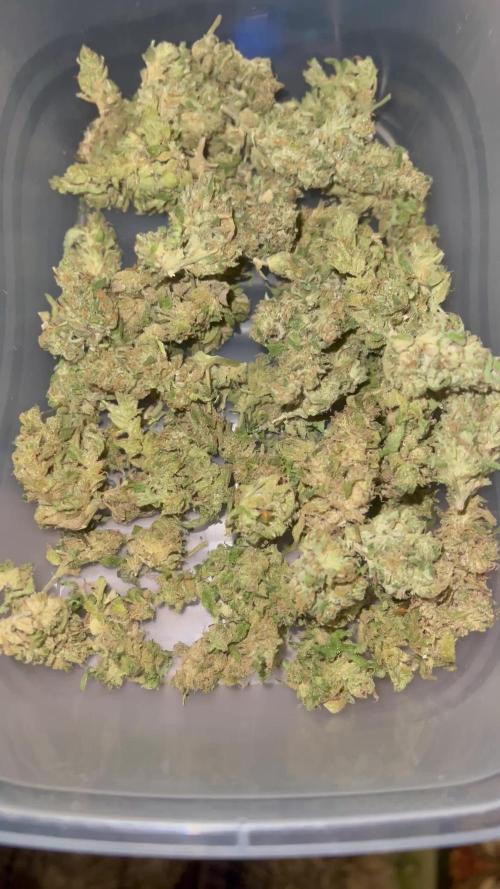
Had to come Down early due to poor weather and rot . Wish I got the full flowering cycle but a lot of weed and good smoke. F***ing monster !!! Cured for 3 months
Likes
16
Share
Everything going great beside the back right Original Oreoz which is very pale and looks either overfed or locked-out. I think this is due to poor genetics. She is still praying and growing buds so... I cannot ajust the feed for differents plants since I use a single reservoir. That's one of the downsight of growing multiple strains on the autopot system. First smell is here, very promising for the 2 tropics. Getting ready for the bulking phase. Happy growing !😊