


Likes
Comments
Share


@GODSGIFT_2005
Follow
For LIQUIDS & Nutes ******GREEN BUZZ NUTRIENTS***** organic.
Also i’m using their LIVING SOIL CULTURE in powder form!
MARSHYDRO ⛺️ has large openings on the sides which is useful for mid section groom room work. 🤩
☀️ MARSHYDRO FC 3000 LED 300W
💨MARSHYDRO 6” in-line EXTRACTOR with speed-variation knob, comes complete with ducting and carbon filter.

Likes
10
Share


@agricola
Follow
My good friend convinced me that trimming and training are paramount, so I've started with slowly defoliating the Creme de la Chems to try and get to lollipop status. They're just starting to flower, so I figured I could get away with a more aggressive approach. Because I failed to train these girls early, I'm stuck dealing with a little rain forest. What I've tried to do is trace each flower topped stalk up from the base, and trim away from the bottom up. 1/3 of the way up per day. I've now got a thick canopy, and I've been trying to just use leaf tucking and manual manipulation every few hours in order to keep the different height flowering sites in direct light. These ladies have really been thriving, and it's been such a joy to watch them grow! I like having two plants in one net pot letting them grow wild, but I think in my next grow I'll keep it to one per pot and train better from the start.
As for the Super Orange Haze ... not as good. I attempted to pull the main branch over to train her to some empty space, but I was too aggressive and ended up popping her head off :(. First grow, first disaster. I took the head and stripped her/coated in clonex and pushed her into some potting soil just to see what would happen. There hasn't been enough foliage to really make me want to do any trimming, I've just tried to tie the stalks off to train them apart. I'm really sad about my mistake decapitation, but she seems to be doing well still. She's probably week 2 of flower based on others' journals.
I changed the water midway through the week (which is when the videos were taken). I drained most of the water out, but roots prevented me from getting the last few gallons. When I refilled the res with RO, I measured the PPM at around 200. I have to assume that remaining nutrient was completely unbalanced leftovers, so feeding will have to just have to be experimental. My approach has been to give around 1:1 Gro vs Bloom and Micro every 2-3 days when I refill with RO. I want to build my PPM up to 1000, but slowly so that I can detect if I hit a ceiling first. It's hard to measure how much food is in the water based on PPM. CalMag is what drives it mostly, so I've been using CalMag as a sort of measuring stick. I keep the CalMag pegged to the Bloom food, but I know it's only good for initial dosing. I can't assume the plants are eating CalMag in the same proportion as anything else :(. If anyone has a line on cheap lab testing ... hit me up. I'd love to be able to test a few hundred samples at a time for NPK and trace so that I can tell (even if post facto) what was going on.

Likes
20
Share


@SKUDUDUBAW
Follow
Hi
As you can see my babies are close to the cut, I would say 2 weeks left.
So now I’ll stop feeding them and let the nature do its job.
Its for sure one of my best session


Likes
19
Share


@Paultemp
Follow
Hi all! 👊😊
Another week started ohh yeaahhh
I do foliar 3 times this week and i see pistil white change in orange
Smell very good pine and citrus :)

Likes
6
Share


@Cheechsdad
Follow
Any help on what may be happening with the slight browning? Maybe over watering? I have not used any nutes up until now with FFBB I would be surprised if burn but it does look like it by the tips

Likes
20
Share

@Dr_Green_Thumb87
Follow
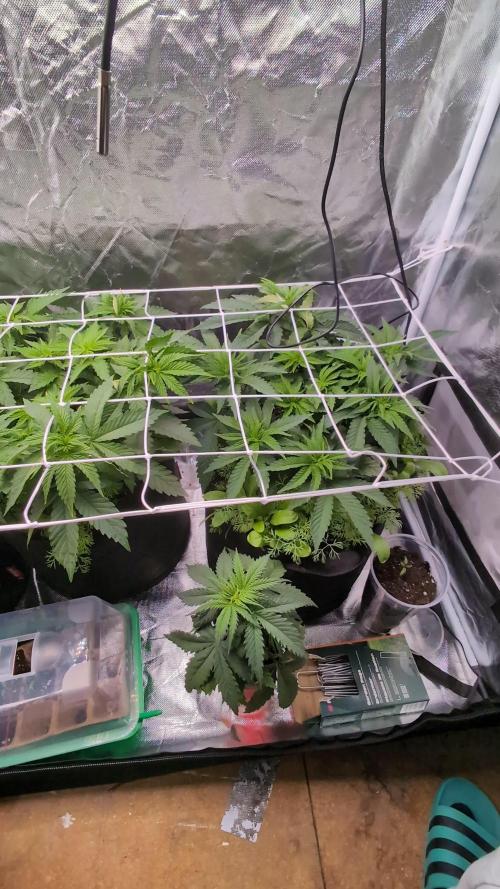
5/11 Start of this week day 35 veg
Watered 5l each Pot Tap water only
Waiting for them to reach the net during this week some Scrog work expected
5/14 getting ready for flowering soon 🥦

Likes
32
Share


@hodette
Follow
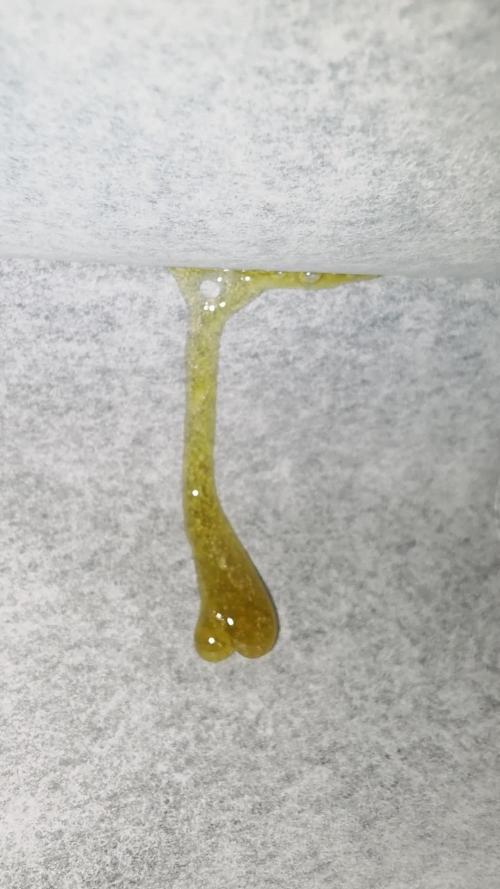
So apparently ive been stoned as fuck... These plants have been in 3 gallon pots the whole time 😂 So the one plant that is a week behind the other one and I these plants look so different from each other for some reason. they are both dank as fuckkkkk




Likes
43
Share


@Sabac
Follow
Última semana de mis plantitas
Hoy corto 12 de 16
Fue un cultivo sin problemas.
Y creo que viene buena producción
Recomiendo 100% los fertilizantes hesi buenísimos.
5 cultivos con ellos y 0 problemas.
El sustrato Biobizz light mix excelente
Las semillas de barneys farm uff pura crema. Eva seeds recomendables y las sweed seeds buenisimas semillas para seguir cultivando. Los Led yxo para ser de un perfil bajo qué no a toda la gente les gusta cumplen la. Función 480w de pura potencia en un espacio de 120x120 los recomiendo para gente que tenga un presupuesto bajo.
Ahora voy por unos sobre 600w aunque los reforzaría estos con unos led de 100w
.
Bueno feliz con los resultados.
Esta semana mostraré los resultados de las plantas cortadas.
Se vienen más cultivos
Salu2

Likes
19
Share


@Mattyice
Follow
I stopped nutrients a few days ago. Beginning to see a mixture of amber and milky trichomes. Flushing for a few more days then harvest. Such a beautiful first grow for me. What an experience. Will be germinating my next seed shortly before harvest red poison from sweet seeds. This was my first grow it was a random free seed with my order of red poison from gardensupplyplug. Will be getting a new light also my viparspectra v1200 is taking a shit lenses on leds are melting but leds all still work somehow. Gonna go with a brand new xs4000 since I bought the one I have used on offer up it's 3 years old. Thanks if you read this and left a comment!
Processing
Likes
10
Share


@HisHope
Follow
12/20 Week 8 Flower
GETTING SNOW!
Maddie frosting up has a ways to go but she is serious about it.
Tammy is just building like a beast
Lovely girls
Adjusted their feed getting a hang on this strain now
12/24
Moved Maddie to finish off in the Flowering tent she goes into flush today
Tammy doing great

Likes
1
Share


@Takeaims
Follow
Zamnesia f1 flowering along nicely in the back of the tent got new f1s at all different stages. In this tent there is week 3 plants at the front and week 7 at the back sorry for the confusion you know what's its like when you get going stay tuned got another tent going up with all f1 hybrids Zamnesia do

Likes
12
Share


@GrowGuy97
Follow
Will post dry weights & more comments soon! Sorry for the lack of updates but Thanks for following & happy growing friends!✌️🏼🙏🏼🌱
Likes
6
Share


@DogDoctorOfficial
Follow
# 💙 Project Blue Tent – Week 12 💙
## Blue Waffle F1 – Pheno B
### 🌸 466 Photos. 600 Photos. One Ridiculously Frosty Girl! ❄️😂
Hello everyone, and welcome back to another chapter inside Project Blue Tent! 💙🌱
And my friends...
I REALLY DON'T KNOW WHAT TO SAY ANYMORE! 😂❄️
Well, actually, I do. I have plenty to say, because this beautiful girl deserves her own report!
Last week, we talked about the incredible uniformity we're seeing throughout this tent. Four plants, two different cultivars, the same environment, the same irrigation system, and the same nutritional program.
And this week?
Her sister is looking ridiculously beautiful too!
But today, we're giving the spotlight to Blue Waffle F1 – Pheno B, because even when plants share the same room and the same conditions, each one deserves to have her own story documented.
And honestly, what a story she's giving us.
The flowers are stacking. The buds are developing. The frost is becoming increasingly impressive, and the whole plant is showing us why I love documenting every stage of a grow.
We've made a few small adjustments to the environment, increased the power of the overhead LEDs, and left the nutrient recipe unchanged.
No unnecessary interventions.
Just a beautiful ecosystem, some seriously frosty flowers, and a grower who's spending far too much time staring at them.
😂💙🌸
Let's get into it!
## 🌿 PHENO B – SAME ROOM, SAME ENVIRONMENT, SAME BEAUTIFUL STORY
If you've been following Project Blue Tent, you'll already know how much work went into getting these girls to this point.
The long vegetative period gave us the structure. The topping and training helped organize the growth. The SCROG supported the canopy, and the second layer of support helped us manage the flowering structure after the stretch.
We also improved the available space inside the tent by moving the extraction equipment outside and raising the main lights.
All those decisions helped us establish the environment we're working with today.
And now?
We're watching the flowers develop within that structure.
Blue Waffle F1 Pheno B is approximately 145 cm tall, and the overall framework is already established. We're not looking to reshape the plant every week or make changes just to have something to report.
At this stage, I'm much more interested in observing the flowers, following their development, and seeing how the plant responds to the environment.
And she's giving us plenty to look at!
## 🌸 THE FLOWERS ARE STACKING BEAUTIFULLY
One of the things that really catches my attention this week is the flower development.
Look at those close-ups!
The flowering sites are becoming increasingly defined, the buds are developing along the branches, and the amount of visible resin in the photographs is absolutely beautiful.
The white pistils are still prominent, and the flowers are continuing to develop.
This is such an interesting stage because the plant is gradually shifting our attention away from the structure and toward the flowers themselves.
Earlier in the project, we were talking about stretch, canopy management, training, defoliation, and support.
All of that work established the framework.
Now we're looking at what that framework is carrying.
And Pheno B is certainly giving us a reason to keep the camera ready.
She's stacking. She's budding. She's developing.
And she's looking ridiculously frosty!
😂❄️💙
## ❄️ THE FROST IS REAL, MY FRIENDS!
I know I keep saying it.
And I know I'm probably going to keep saying it next week too.
But LOOK AT HER!
😂😂😂
The close-up photographs show an incredible amount of detail across the developing flowers and surrounding sugar leaves.
And that's precisely why I enjoy taking the time to photograph these plants properly.
From a distance, you can appreciate the overall structure and the way the flowering sites are distributed.
Get closer, though, and there's an entirely different world waiting to be discovered.
The trichomes. The pistils. The tiny details across the flowers.
It's beautiful to see, and it's even more satisfying when we can document those details and compare them with the previous weeks.
And the best part?
Her sisters are looking just as impressive.
This isn't a story about one plant doing all the work while the others watch.
The entire tent is giving us something to appreciate.
But today, Pheno B gets the spotlight.
And she's absolutely shining! 💙🌸❄️
## 📸 PHOTO STACKING – 466 PHOTOS AND 600 PHOTOS COMBINED!
Now, let's talk about something a little different in this week's report.
The photography!
For this girl, we managed to create two separate photo stacks.
One combines 466 photographs, while the other combines 600 photographs.
And yes, my friends, that's a lot of photographs!
😂📸
We weren't able to take this plant out of the tent and move her into the studio setup, so we had to work with the conditions available to us inside the grow room.
It's not the same as stacking photographs in the studio, where we have much more control over the environment and the shooting conditions.
But we made it work!
And honestly, I'm happy with the results.
The two stacks give us a closer look at the flowers and allow us to appreciate details that can be difficult to capture in a single photograph.
More importantly, they give everyone following this diary a better view of what's happening throughout the flowering structure, including the lower portions of the buds.
Because the top of the plant isn't the whole story.
There's plenty happening further down, too, and I want to document as much of that development as possible.
These photographs are another way of bringing the community closer to the plants.
We can't all stand inside the tent together, so let's bring the tent to the community!
😂💙
And if you're interested in photography, this is also a nice opportunity to see what can be achieved through stacking hundreds of images, even when we're not working in a dedicated studio.
Are the results identical to studio stacking? No.
Am I happy with what we managed to achieve under the circumstances?
Absolutely!
Two stacks. Hundreds of photographs. One very frosty Pheno B.
I'll take that!
📸❄️🌸
## 🔬 WHY PHOTOGRAPH THE LOWER FLOWERS?
This is something I particularly wanted to highlight this week.
When we photograph a flowering plant, it's very easy to concentrate on the most accessible tops.
They're usually easier to reach, easier to frame, and often the first places our eyes are drawn to.
But the plant is a three-dimensional structure.
There are flowers at different heights, branches extending in different directions, and flowering sites that don't all sit in the same position relative to the main lights.
That's why I wanted to make these stacks available.
They help us look more closely at the flowers beyond the most obvious parts of the canopy.
And that matters for documentation.
We're trying to record the plant as a whole, not simply collect a few attractive photographs of the uppermost flowers.
The more detail we can preserve, the better we can appreciate the development we're documenting.
The stacks aren't a substitute for observing the whole plant, of course, but they're a fantastic addition to the diary.
And personally, I love having the opportunity to show everyone a little more of what's happening inside this beautiful ecosystem.
## 💡 MORE LIGHT FROM ABOVE – A SMALL BUT INTERESTING CHANGE
This week, we increased the power of the overhead LEDs.
We're now running the main lighting at the highest level we've decided to use in this 1 × 1 metre tent.
Notice the wording!
We're not necessarily running the equipment at its absolute maximum output. We're using the maximum level we've currently planned for this particular setup.
I honestly don't think we need to push everything to 100% just because we can.
The goal is to give the plants an appropriate amount of light while maintaining a balanced environment.
Light intensity is an important factor in plant development and flower production, but more light doesn't automatically mean more weight.
The response depends on how much light actually reaches the canopy, how the plants tolerate it, and whether the surrounding conditions remain suitable.
So we're increasing the available light without treating maximum output as the objective in itself.
And now we observe.
How will the flowers continue developing?
How will the plant respond to the additional light?
How will the environmental adjustments work alongside the lighting?
Those are the questions we're interested in answering as the project progresses.
We're not making promises about the outcome.
We're documenting the experiment.
And that's what makes this interesting!
💡🌿
## 🌡️ SLIGHTLY LOWER TEMPERATURES AND HUMIDITY
Alongside the lighting adjustment, we've also reduced the temperature by approximately one degree and lowered the relative humidity slightly.
We're making small adjustments rather than changing the entire environment.
The structure is established, the equipment is working, and we're happy with the overall direction of the grow.
So there is no reason to introduce unnecessary changes everywhere at once.
We want to maintain a comfortable environment while observing the plants as flowering progresses.
The increase in lighting power makes it particularly important to keep paying attention to the relationship between light intensity, temperature, humidity, and the plants' overall condition.
It's all connected.
And this is where I think a well-organized ecosystem really makes a difference.
You can adjust one part of the system while keeping the rest as consistent as possible.
That gives you a much clearer picture of what you're observing.
The temperature has come down a little. The humidity has come down a little. The lights have gone up a little.
And the nutrition?
Exactly where it was.
No need to change everything just because we've adjusted a few settings.
## 🌱 NUTRITION – KEEPING THE RECIPE CONSISTENT
The nutrient recipe remains unchanged this week.
We're continuing with the PLAGRON Hydro line, and we're keeping the same mixture in the reservoir.
Our current recorded recipe is:
- PLAGRON Hydro A — 2.2 ml/L
- PLAGRON Hydro B — 2.2 ml/L
- PLAGRON Power Buds — 1 ml/L
- PLAGRON pH Plus — 0.03 ml/L, recorded quantity
- PLAGRON pH Minus — 0.03 ml/L, recorded quantity
Hydro Roots is not part of the current recipe.
We're keeping the nutrition consistent while making the environmental adjustments, which means we're not introducing another variable into the picture.
The current recorded pH is 6.01, and the last recorded EC is 2.24 mS/cm.
Those readings give us a reference point, but we shouldn't automatically assume they're unchanged without taking fresh measurements.
For now, the important point is that the recipe itself remains the same.
We're observing the plants, maintaining the system, and recording what happens.
Consistency is part of the experiment too!
## 💧 IRRIGATION AND DRAINAGE – STILL PART OF THE BIG PICTURE
The automatic irrigation and drainage system continues to play an important role in this setup.
All four plants share the same reservoir, and the system allows us to maintain a consistent approach across the tent.
That's particularly useful for this project because we're documenting the individual plants while keeping the shared inputs as consistent as possible.
The irrigation system doesn't need to be the star of every report.
When everything is working as expected, that's already a positive result.
Our job is to keep an eye on the system, monitor the plants, and make adjustments when there's a reason to do so.
And that's the philosophy we're following this week.
Keep things running smoothly, avoid unnecessary changes, and let the plants continue developing.
💧🌿
## 🕸️ THE STRUCTURE IS READY – NOW THE FLOWERS TAKE CENTRE STAGE
Remember how much work went into creating this structure?
The topping and training.
The original SCROG.
The management of the flowering stretch.
The defoliation.
The second SCROG for additional support.
The changes to the extraction system and the available vertical space.
All those steps helped us reach the stage we're at now.
The plant has an established framework, and the support system remains in place.
We're not trying to redesign her this week.
Instead, we're observing how the flowers develop throughout the existing structure.
And this is one of the most satisfying parts of a long grow.
You make decisions weeks earlier, sometimes without knowing exactly how everything will look when the plant reaches flowering.
Then time passes.
The plant develops.
And eventually, you can stand back and appreciate the result of all that work.
That's what I'm enjoying right now.
The structure has done its job.
Now the flowers are telling their story.
## 💡 TWO LUMIFLORA FIXTURES – THE LOWER CANOPY MATTERS TOO
Our two LumiFlora 150W full-spectrum under-canopy fixtures remain part of the setup.
The main LEDs provide the primary lighting from above, while the LumiFlora fixtures supplement the lower portions of the canopy.
This is an interesting experiment because the plants have substantial vertical structure, and the light reaching different parts of the plant naturally varies with position.
We're interested in observing how the lower flowering sites develop as the plants progress through flowering.
We're not assuming that supplemental lighting will automatically produce a particular result.
We're watching, documenting, and learning.
And this week's photo stacks complement that experiment beautifully.
They allow us to inspect the flowers more closely and give the community a better view of the details we're observing.
The lights are one part of the experiment.
The photographs are another part of the documentation.
Together, they help us tell a more complete story of what's happening inside Project Blue Tent.
## F1 UNIFORMITY – THESE SISTERS ARE INCREDIBLE
And now we come back to something that continues to amaze me.
The similarity between these plants!
We have four individual plants sharing the same tent, with two different cultivars represented.
Blue Waffle F1 and Pickle Lemon Haze F1.
They're sharing the environment, irrigation, reservoir, and general cultivation approach.
And when I look across the room, the similarities in their development are genuinely impressive.
Similar overall structure.
Similar flowering progression.
And now, increasingly impressive flowers across the tent.
Of course, we're still keeping individual diaries because each plant deserves to be documented separately.
Even when two plants look remarkably similar, we shouldn't assume they'll remain identical throughout the entire flowering cycle.
The subtle differences are part of what makes these comparisons interesting.
But right now?
I'm extremely happy with what we're seeing.
And I have to say, Blue Waffle F1 Pheno B is absolutely holding her own.
Her sister looks incredible too, and so do the other girls.
Four plants. Two cultivars. One beautiful ecosystem.
What a pleasure it is to document this!
💙🌸
## 🌿 SOMETIMES THE BEST DECISION IS TO LEAVE THINGS ALONE
One of the biggest lessons from this stage of the project is that not every week requires a major intervention.
There was a time when we were constantly managing the structure, training branches, opening the canopy, and making room for the stretch.
Now, the main structure is established.
The support is in place.
The irrigation is running.
The nutrition remains consistent.
And the flowers are developing.
So we're making a few deliberate adjustments to the environment, but otherwise, we're allowing the plant to do what she needs to do.
There's always a temptation to change something simply because another week has passed.
But that isn't a good reason by itself.
If the system is working, sometimes consistency is the most valuable thing we can provide.
We observe.
We record.
We learn.
And we intervene when there's a genuine reason.
That's how I want to approach the rest of this journey.
## 🌸 CURRENT GROW CONDITIONS
- Cultivar: Blue Waffle F1
- Phenotype: Pheno B
- Flowering: Week 12
- Height: Approximately 145 cm
- Light schedule: 12/12
- Day temperature: 27°C, last recorded
- Night temperature: 27°C, last recorded
- Relative humidity: 59%, last recorded
- pH: 6.01, last recorded
- EC: 2.24 mS/cm, last recorded
- Solution temperature: 25°C, last recorded
- Substrate temperature: 24°C, last recorded
- CO₂: Approximately 666 ppm, last recorded
- Pot size: 8 L
- Watering volume: Approximately 1.6 L per plant per 24 hours, recorded value
- Main lighting: Increased this week to the maximum planned level for this tent
- Under-canopy lighting: 2 × LumiFlora 150W full-spectrum fixtures
- Nutrient program: PLAGRON Hydro
- Nutrient recipe: Unchanged this week
The environmental readings above are the last recorded values shown in the diary. This week's temperature and humidity were reduced slightly, but the new readings have not yet been provided.
## 🔭 WHAT I'M WATCHING NEXT
At this stage, my attention is on the details.
I'm watching the flowers continue developing.
I'm watching the pistils and the way the buds are forming.
I'm watching the overall appearance of the plant and the visible resin across the flowers and sugar leaves.
I'm interested in how the plants respond to the increased overhead light intensity and the slightly cooler, less humid environment.
And I'm particularly interested in continuing to document the lower flowering sites.
The two photo stacks have already given us a fantastic opportunity to look more closely at Pheno B.
I want to keep building that photographic record as the plant progresses.
Because every week adds another piece to the story.
And we're not finished yet!
## 💙 FINAL THOUGHTS – SHE'S FROSTY, AND HER SISTERS ARE TOO!
My friends, if I had to describe this week in a few words, I'd say:
Same room. Same environment. Same beautiful cultivar sisters. And a whole lot of frost!
😂💙❄️
Blue Waffle F1 Pheno B is looking fantastic.
The flowers are stacking.
The buds are developing.
The frost is beautiful.
The structure is established.
The nutrient recipe remains unchanged.
We've slightly reduced the temperature and humidity, increased the overhead LED power, and continued observing the plants without making unnecessary changes.
And we also managed to create two photo stacks, combining 466 and 600 photographs, giving us a closer look at the flowers and the lower parts of the buds.
I'm genuinely happy with the results.
It's not the same as taking the plant into the studio, but it gives us another way to appreciate and document the incredible details we're seeing.
And honestly, I think that's what matters.
We're working with the conditions available to us, finding ways to improve our documentation, and sharing the results with everyone following the project.
I also have to say how much I'm enjoying this entire ecosystem.
Four plants. Two cultivars. Shared conditions. Individual diaries.
The similarities between these girls are fascinating, and the flowers are becoming more impressive every week.
But today, Pheno B gets her moment.
And she deserves it.
We've done the structural work.
We've established the system.
We've made a few small environmental adjustments.
Now we're watching these beautiful flowers develop.
Let's see what the next week brings!
More flowers. More photographs. More observations. And hopefully, even more reasons to stand in front of the tent and say...
"MAN, SHE'S FROSTY!"
😂💙🌸❄️
## 🙏 A HUGE THANK YOU
A huge thank you to Zamnesia for making Project Blue Tent possible and giving us the opportunity to document these beautiful Blue Waffle F1 and Pickle Lemon Haze F1 plants individually.
Thank you to PLAGRON for the Hydro nutrient line supporting this project.
A massive thank you to Mars Hydro for the irrigation and drainage system helping us maintain consistency throughout the tent.
Thank you to Zamnesia for the Phytonaut LED lighting, curved scissors, and clip fans that have become important parts of this ecosystem.
And a special thank you to LumiFlora for the 150W full-spectrum under-canopy fixtures that we're using to explore supplemental lighting beneath the canopy.
Thank you to GrowDiaries for providing the platform where we can document the entire journey, including the experiments, the photographs, the unexpected moments, and the lessons we learn along the way.
And, of course, thank you to everyone following Project Blue Tent!
Your support makes sharing these individual diaries even more enjoyable.
We're continuing to learn, observe, photograph, and appreciate every stage of the journey.
Four plants. Two cultivars. One beautiful ecosystem.
And four girls giving us plenty of reasons to smile.
Growers Love, happy growing, and take care everyone! 🌱💙🌸
Likes
4
Share

@Black_Widow
Follow
Привет садоводы и огородники !
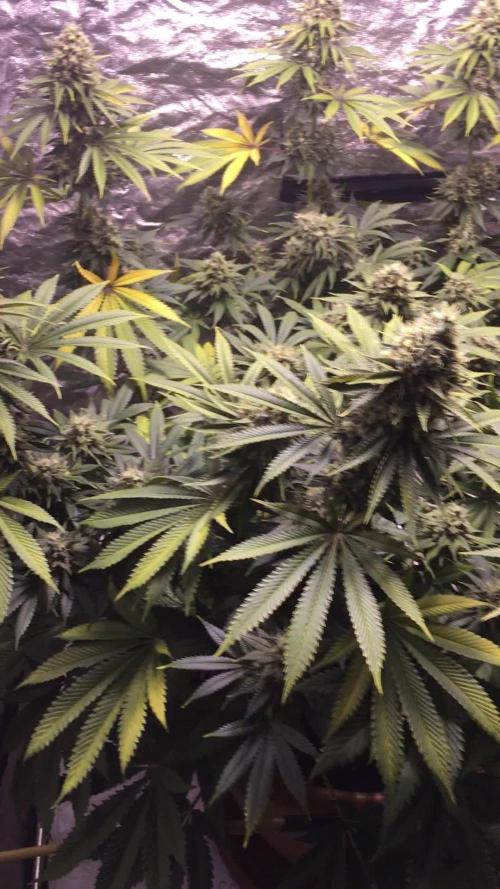
Началась шестая неделя цветения
и я планирую на этой неделе полить последний раз Ripen и оставшийся срок уже поливать ее простой водой
а растение чувствует себя хорошо и выглядит очень привлекательно
и в придачу источает аромат , похожий на тот ,когда варят варенье
уже хочется окунуться в мир тропиков !


Likes
16
Share


@GrowerGaz
Follow
Still defoliating and lollipop , forgot how easy it can be with a good mineral nutrients.


Likes
62
Share


@masterofsmeagol
Follow
6/28 I had to water deeply despite watering thoroughly yesterday. This heat wave is supposed to pass today. We have had temps in the 90's. Ihate it but the girls seem to love it. RH is super high and controlling pm is a pain in the balls. When my connection is better I'll add my vid and photos. Still need a follow up preventative spray. BT is really awesome but super narrow and I've found random stink bugs, earwigs, crickets and grasshoppers as well as easily identifiable leaf damage. I'm thinking Spinosid. Save my PM stuff for PM. Tried checking my PH with a soil meter. The bags are basically just roots. The only two plants it read came to 6.5 which is strange because I usually run around 7.3. I'll certainly take it. If it's correct that is. RH 64 TEMP 84
6/29 Didn't water this morning due to a torrential downpour last night. Nothing broken after first glance. The thunder and wind woke me last night. This storm was horrific yet my plants still seem unaffected. Need to rearrange the cage. It will be a pain to have to move that ice cream cake. Maybe I could find a way to modify the cage outwards. I also need to move the plant in the tote in the back. Luckily I got back and watered before plants dried out. Noticed a FEW dead or yellow leaves on the middle interior of some plants. I upped dosage of growbig last feed and fed a little earlier. I'll go back to my normal feeding schedule and see what happens. Thing is the plants are getting huge so I would think increased nutes would help. Couldn't he lockout. Too much water. Maybe nutes in the soil are leaving? I'll figure it out. I temporarily pulled the stalk on the ice cream cake back and tied it to the posts to get it off the fence.
6/30. 90s again today. I deeply watered and noticed a couple more yellow leaves (bottom middlish). Only thing that was changed was feeding. I may go back to original schedule. Funeral today so I'll have to check things out later. UPDATE: Went back maybe sux hours after watering to find the grow bags dry. I reached my hand in the side and it's pretty much all roots. These high temperatures and wind are drying my plants out. No droop but the soil WAS dry. I watered again and plan to check again tonight. When temps go down I'll probably do a preventative Spinosid spray.
7/1 Watered and fed two gallons. Grow big at 1 1/2 tbsp. Still some yellow leaves on the interior. I'm talking like maybe five. Accidentally destroyed lace wing eggs. I knew it was something to keep an eye out for but I mistakenly thought it was BAD. Oh well it was just two eggs. I'm sure there are more. Tried measuring PH with soil meter but the only two plants that registered were 6.5 and 6.6. I believe the PH to be a bit higher. The bags are so full of roots it's hard to get a measurement. I know my soil and water WAS on point before my gauge broke. However I leave the 7.3 as that was about what the big ones tested at last time measured.
7/2 These are some resilient strains. Currently 54 degrees at 9am. It had been 80 or 90 in the last few days. Perfect rain today. A light shower all day. Obviously didn't water. Found a few yellow leaves but the plants look so good. The also seem to be stretching but it's far to early for the preflower stretch. I'll keep an eye out. Things are looking pretty good. Still need to move that plant in the back.
7/3 Watered today. Looks like it might rain but top soil was a little dry. Also noticed this site measures teaspoons not tablespoons which is how I measure. I'll need to adjust that. There's tell tale damage from a variety of pests (leaf hoppers, pillars, grasshoppers ECT.) So I think I'm going to do a spray within the next couple days. Im leaning towards Spinosid but Dr. Zymes supposably helps the PM as well. I'll do more research and update.
7/4 54 degrees and raining. Haven't checked the girls out yet today.


