




Likes
11
Share


@Farmer1
Follow
This week it really started flowering, there is a lot of wind and the earth dries very quickly despite the mulch. But level Stress she reacted very well from the beginning. Very good genetics so far.


Processing
Likes
7
Share


@420keef
Follow
So i had to take all my plants inside because i found bud rot on 2 of them & the weather wasn’t going to get any better, had to transform my bedroom into a grow room😂 & i have 2 more plants which i am going to finish next to a window.. The smaller plant to the right is a Northern light by zamnesiaseeds that has a seperate diary if you are interested! I really hope the bud rot doesn’t spread anymore & if anyone has any tips or tricks for that they are always welcome!

Likes
17
Share


@eldruida_lamota
Follow
Que hay familia, actualizo la sexta semana de floración y última de estas Runtz F1 automáticas de Zamnesia.
Vaya liada de floración, la luz… los nutrientes… la tierra…desperdiciada, no me gustó mucho este proyecto, la verdad es una variedad poco resistente y además se quedan enanas, las flores también son enanas y no son nada prietas ni gustosas.
La temperatura está 25 grados y la humedad anda entorno al 40%. Riego cada 48 horas.
Hasta aqui todo, en unas semanas actualizaré ya la cosecha y la smoke review.
Agrobeta:
https://www.agrobeta.com/agrobetatiendaonline/36-abonos-canamo
Mars hydro:
Code discount: EL420
https://www.mars-hydro.com/
Os comento que tengo un descuento y para que compréis en la web de Zamnesia de un 20%, el código es ZAMMIGD2023
The discount 20% and the code is ZAMMIGD2023
https://www.zamnesia.com/
Hasta aquí es todo, buenos humos 💨💨💨.

Likes
52
Share


@jmsky
Follow
Permanent Marker was the last one standing and got the chop at day 75 of flower, nearly 11 weeks. The trichomes were still not very amber anywhere except the top sugar leaves, but it was about 90% milky white, and the leaves were all drying out.
I bagged 36g of larfy buds and trimmings, 20.5g top buds, and 12g small buds. 32g smokable is not bad.
I will update with smoke report in a couple weeks, but initial tests were promising. Strong chemical taste not far off from its namesake, with a KO strength punch.



Likes
11
Share


@TheMadHasher
Follow
Whats up everybody! Since last week the ladies have been switched to a flowering light cycle. I eased them into the schedule over like three days just to give them a more natural transition. They all got most of their mature fan leaves removed from the bottom sections to open yo the bud sites to a little more light and airflow. After about the first day you could already see the new growth coming in and more bud sites starting to form. I also bent the dominant colas on all three plants to give them all more of an even canopy. Cant wait to see these babies start budding! I hope everyone has a Merry Christmas! 🎁🎄


Likes
15
Share


@NiBaMeCa420
Follow
These sticky ladies respond very well the scrog and the canopy i nice and level overall and look very pretty
we entered the first week of flowering and a few changes will be made to the nutrients for next weeks update
Cheers and have a great weekend
Likes
12
Share


@BudBrewerz
Follow
Very dense and sticky buds with a little purple in them , she smells very good too, looking forward to her taste
Likes
10
Share


@Ieiogrow94
Follow
Eccoci di nuovo qui!!!
Super eccitato per questa nuova collab con Anesia Seeds, team davvero al top, che mi ha dato l’opportunità di testare questa nuova genetica e di condividere i progressi con tutti voi!!!
Un risultato inaspettato devo dirlo...
Strain 1 ha un odore molto forte sembra "salsiccia" ma quando la fumi davvero è molto pesante!!
Strain 2 molto più soft sia come odore che sapore ma comunque abbastanza interessante..
Nel complesso la consiglio per i colori che rilascia la pianta in fioritura tendendo al rosso specie nelle punte delle prendisole davvero molto bello da vedere..
Grazie a tutti per il supporto ❤️🍀🔥


Likes
4
Share

@BudBrewerz
Follow
This beautiful hazey lady looked ready for the take down, and since I had some time on my hands , thats exactly what I did, she was smelling very nice and rich , Ive got her hanging to dry atm, but im looking very forward of giving her a taste once she's dried and cured. I'll be back for a weigh in once her buds are dried and seperated from the stems etc.

Likes
34
Share


@PapaNugs
Follow
SO, the girls were doing so well into their second week I decided to do the unthinkable... I topped autos! 😳😳🤯🤯
I figured they were doing so well and hadn't entered flower yet; let's do our best to keep them small and get multiple good buds instead of just one. This will also give me the best opportunity to lst them down using ties. Stayed tuned for that!
This girl is doing okay, looking scraggly compared to the rest. I'm hoping she'll spread out once trained.
Dimmed to 40% but increased it today to 60%
Here are the lights details:
Medic Grow Mini Sun-2 150W LED
Model: MN150-022
Spectrum mode: V1
Efficacy: 2.8 umol/J
Thanks for stopping by!
You can find the light on Grow Diaries:
https://growdiaries.com/grow-lights/medic-grow/mini-sun-2-150-watts
You can find the light on Medic Grow's website:
https://medicgrow.com/
Likes
19
Share


@Vegetoo420
Follow
This plant is ready and I flush it RN, pretty pink dress with a lotta tricomes makes her beautiful
Not a big girl so I really hope buds will be good, tasty like the smell she has

Likes
28
Share

@Suemchen
Follow
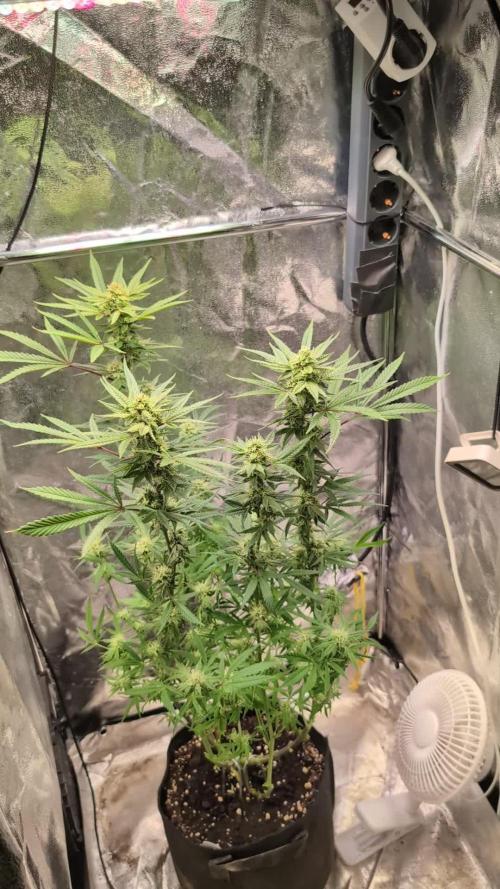
Sanlight EVO 3-60 at 80%
Day 106: looking good and watered again🌊. Watered with rain water and 1ml/l Powerzyme, 2 ml/l Hesi Boost, 1 ml/l Cal Mag, 1 ml/l Alg a mic, 1 ml/l root Juice, 0.5 ml/l Bloom Complex and 1 ml/l Green Sensation. EC at 2.0 and a pH of 6.4 .
Day 108: looking really good 🤗 watered with out supplements 👌🏻 Just rain water 👍🏻 Defoliated a little 👍🏻
Day 111: looking good and watered again🌊. Watered with rain water, 1 ml/l Cal Mag, and 1 ml/l Green Sensation.
Likes
13
Share


@smokeycropping
Follow
Regando solo con agua ya 2 semanas, sin necesidad de lavado el cultivo probiotico me lo permite las flores ya están maduran y se nota una densidad enorme en las special queen y en las green gelato de royal queen seeds
Likes
6
Share


@Elfasitoencasa
Follow
Semana 7 Floración.
Día 82(25/09): Ayer 24/09 regamos con Heavy Bud Pro, y como todos los minerales, absorbió muy rápido la comida. Se notaron varios pistilos mas, y un crecimiento en otras colas que no llegaban a la altura de las principales. En las fotos se puede apreciar el crecimiento. 7ma semana, Abby.
Día 87(30/09): A partir de ayer ya empezamos a regar con agua, hacia calor así que probé con agua un poquito mas fría, y no se si será por el frío o por la etapa pero demostró mas tricomas de los comunes, una evolución grande a pasos lentos.

Likes
15
Share

@masterofsmeagol
Follow
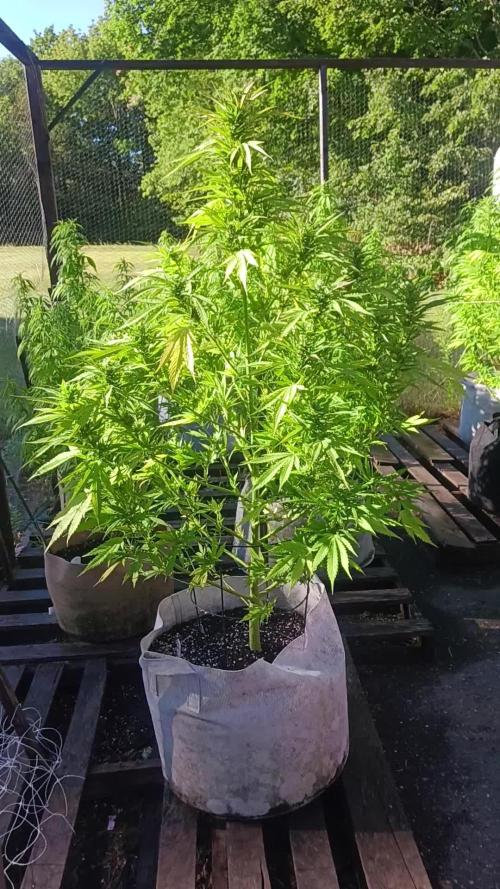
8/17 Watered everything but the 50. Found two leaves with sep markings on the pink kish in the 50. Definitely not using old soil again. I'm pretty sure THIS plant contracted it from the soil and not the way the others did with the lawn mower and birdseed hijinx. It's supposed to rain for the first time basically all summer. It's am 80% chance so I HELD OFF ON PLANT DOCTOR AND DID NOT APPLY as I'm supposed to have a clear day after. I'll apply the plant doctor in the morning. I'm hoping this rain will knock down a bunch of those thrips. They seem to be on a small branch on a plant or two. One or two leaves show damage and I'll pick them off. I figure I'll get them after I apply plant doctor. I'll use either citric acid or just my regular bt-k pillar treatment with Castille or liquid soap. That will kill them as well. I'm on really worried about it. I also might just buy a bunch of lady bugs and unleash them once things get further along.
EDIT: TOOK A QUICK VIDEO AND A COUPLE PICS. HOPEFULLY WE GET THIS RAIN. IF NOT IM GOING TO TREAT THE THRIPS THAT ARE ON TWO PLANTS NOW. I THINK IM GOING TO GO WITH BT-K FOR NY PILLARS AND HOPE THAT THE DISH SOAP IN THE MIX KILLS THE THRIPS. I HAVE LOTS OF DIFFERENT OPTIONS SO ILL FIGURE SOMETHING OUT. BUDS SEEM TO BE EXPLODING IN GROWTH. OH AND THANKS TO THE OUTDOOR GROWER THAT MESSAGED OFFERING TO HELP. I APPRECIATE THAT. THANKS.
8/18 We got the rain we were expecting. It was sheet rain for a few hourscand rained during the night. Everything was drenched and it was cold (50°F). I shook off the special kush that's way further in flower. I decided to use the leafblowrr despite the risk of spreading anything. I did it so that it wasn't ever blowing TOWARDS another plant but still. I was hoping it might blast off some thrips that might have survived that torrential rain. We've never had a dry summer like this. I'll moniter things. My water day is tomorrow so I assume that's when the girls will get their plant doctor dose. It's a great time of year for cannabis growers. We get to watch all the hard work we've put in literally pay off. It's very peaceful in the garden.


Likes
57
Share
@squalino
Follow
🌿 Journal de Culture : Cherry Cola (Auto)
Date : 18/03/2026
Âge : 55 jours (Semaine 8)
Phase : Pleine floraison (Explosion des trichomes)
📊 Paramètres de mon espace
Température : 24,5°C (Jour) / 20°C (Nuit).
Humidité : 50%.
Éclairage : Pure LED 240W réglé à 75% d'intensité, positionnée à 73 cm.
💧 Nutrition & Arrosage (pH 6,3)
Plante #1 (La Grande - 40 cm) : 1,5 Litre d'eau + 5 ml de PK 5-8 (BioTabs).
Plante #2 (La Petite - 30 cm) : 1 Litre d'eau + 2 ml de PK 5-8 (BioTabs).
📏 Travaux & Évolution (SCROG)
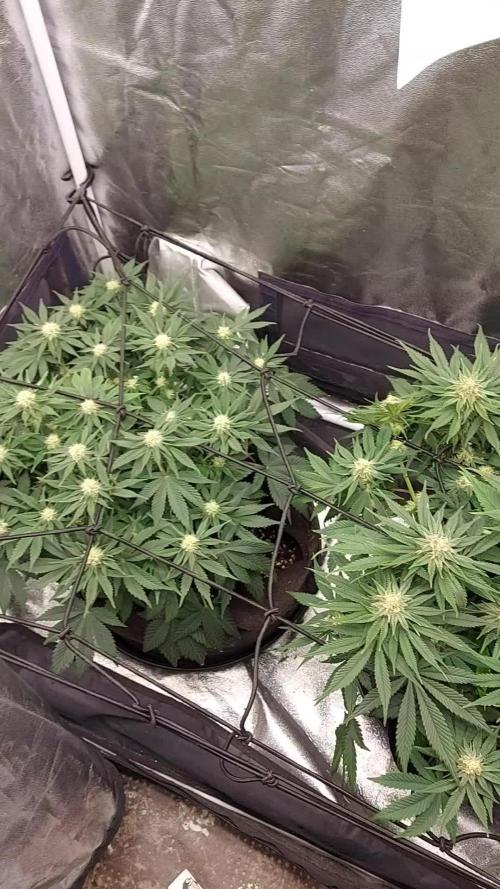
Retrait du LST : J'ai enlevé les fils rouges de palissage. Les branches sont maintenant bien rigides et la structure est parfaitement fixée. Le LST est une réussite totale.
Mise en place du filet : J'ai installé le filet (type SCROG) pour bien soutenir les têtes qui commencent à s'alourdir et homogénéiser la canopée.
🔍 Mes observations
C'est là que ça devient sérieux ! En manipulant la Plante #1 pour l'installer sous le filet, j'ai été surpris : mes doigts ressortis complètement collants. La production de résine est massive.
Niveau odeur, c'est un régal : ça sent déjà très fort le sucré, comme un bonbon. On a bien envoyé le profil terpénique de la Cherry Cola qui se met en place. La santé est au top, les feuilles sont d'un vert parfait et les têtes commencent à prendre une belle densité.
on peut remarquer que quelques feuilles commencent à perdre un peut de vert foncer très bon signe cela veut dire qu'elle puise l'azote des feuilles .et quelques légères pointes brûlées mais rien d'inquiétant cela me le fait a chaque fois lors de la transaction. mais à surveiller quand même.
22/03
ddonné 9,5 litres d'eau PH 6,3 .surface très sec .
merci à tous et à bientôt MUSIQUE DIAPO FAST BUD
Likes
5
Share


@CannaBossBizz
Follow
Did some more LST on her and she liked it. Looks Like nothing happened to her. She's showing First signs of flowering Like getting pistols and Stretching a little Bit. I Hope she'll get bigger soon. Stay tuned 🤙🏽