The Grow Awards 2026 🏆 





Likes
Comments
Share
@Chubbs
Follow
420Fastbuds
FBT2303 Week 1
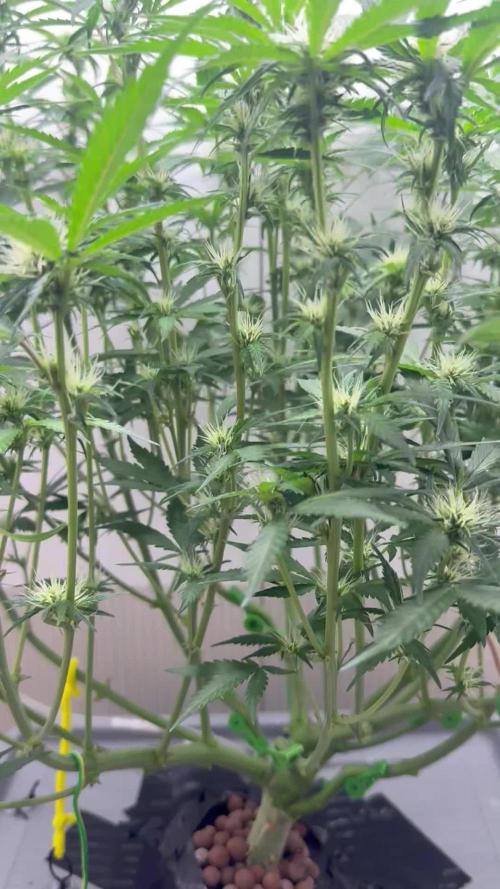
Week 1 of the start of veg for these 2 FBT2303 plants. So far I've switched to 18/6 light cycle and keep a 75'f day temp with a 65'f night time Temps. I give them 500ml of straight well water every other day. I did to a pm spray and didn't realize my lights would be coming on as soon as they did. Lesson learned it'll burn the leafs. 😆
All in all Happy Growing

Likes
13
Share
@SgtDoofy
Follow
March 18
Sherbet has the tent to themselves now. I've flipped to a 12/12 flowering light schedule for Sherbet. You're supposed to imagine what the current plant looks like doubled in size, and flip to flowering according to what you think your tent could handle. The other tent is larger than this one, but it's in a much colder room, so having 12 hours without the heat from the lights could have been harsh for the plant. This room can hover around 50-60F on cold nights, so Sherbet will just stay in this tent to grow.
Temps have lowered 5+ degrees by removing the other plant and it's light.


Likes
15
Share
@Siriuz
Follow
Check out the videos guys, she is flowering real good even tho we are not using any special nute like big bud for example, but i really want to try it soon, hopefully!
Still she is doing great and im happy to have her!
How are you doing growers whats up!?
Dont forget to leave a comment
Any suggestion is welcome!
We are happy to learn new things alwas,
Thanks for the support happy growing everybody
Enjoy the footage thanks to Siriuz

Likes
107
Share
@DogDoctorOfficial
Follow
Hello, my fellow green-thumbed adventurers! Can you believe it? Week 16 from seed has arrived, and our Purple Lemonade Fast Flower is gracefully gliding through her ninth week of flowering. Gather 'round, for this week's update is a delightful blend of patience, popsicle indulgence, and a special video treat!
A Sweet Summertime Update <3
Ah, the summer heat is in full swing, and while I'm eagerly waiting for our Purple Lemonade to declare herself ready for harvest, I've found solace in a frosty treat—popsicle ice creams! It's like a sweet summer romance between me, her, and the cooling delights.
A Video Journey: From Seed to Splendor <3
But hold onto your ice cream sticks, because this week, I'm treating you to a visual delight—a full flowering cycle video! 🌿🎬 Witness the transformation from that first tiny seed to the resplendent beauty she is now. It's a testament to time, care, and the magic of cultivation.
A Shout-Out to Our Allies in Growth <3
A special shout-out to @Fast_Buds , the masterminds behind this botanical marvel. Your creation has been a canvas for our cultivation journey, and for that, we're grateful. And not to forget @aptus_holland and @grow.diaries—your support and insights have been invaluable!
Patience, Popsicles, and Plant Bonding <3
As the days pass, and I find myself savoring popsicle after popsicle, I'm reminded that cultivation is a partnership. Our Purple Lemonade and I are on this journey together, patiently waiting for the perfect moment to harvest and share her flavors with the world.
Nature's Time, Our Joy <3
In this world of instant gratification, watching our plant mature teaches us the art of anticipation. Nature's timeline is its own masterpiece, and every day is a gift. With each passing moment, the flavors deepen, the aromas intensify, and our bond with the plant strengthens.
Stay Cool, Stay Patient, and Keep Popsicling! <3
So, my fellow growers, as the summer sun beats down and I savor yet another popsicle ice cream, let's remember that patience is as sweet as the most delectable treat. With every frozen bite and every day that passes, we're one step closer to tasting the fruits of our labor.
Thank you for joining me on this journey of growth, popsicles, and pure botanical magic. Until our next update, stay cool, keep nurturing, and let's celebrate the joy of cultivation!
Genetics - Fast Buds Purple Lemonade FF
Ligth - Lumatek ZEUS 465 COMPACT PRO
Food - Aptus Holland
#aptus #aptusplanttech #aptusgang #aptusfamily #aptustrueplantscience #inbalancewithnature #trueplantscience #fastbuds #dogdoctorofficial #growerslove
With true love comes happiness <3 <3 <3 Always believe in your self and always do things expecting nothing and with an open heart , be a giver and the universe will give back to you in ways you could not even imagine so <3 <3 <3
All info and full product details can be find in can find @
https://2fast4buds.com/
https://aptus-holland.com/
https://autopot.co.uk/
https://lumatek-lighting.com/
<3 <3 <3 Growers love to you all <3 <3 <3
" Arising from a cross between purple and citrus Cali genetics, Purple Lemonade FF (Fastflowering) offers a complex high made up of perfectly balanced cerebral and body effects that are ideal for daytime use. Expect an extremely enjoyable high that boosts your mood while deeply relaxing your whole body and getting rid of muscle pain. This meticulous cross produces up to 550 g/m2 of some of the most beautiful purple buds, with pinkish and reddish hues that will catch everyone’s attention. The beautiful purple buds are ready for harvest in 7-8 weeks and come hand-in-hand with unbelievably sugary citrus terps that are just as refreshing as a cold lemonade on a hot Summer day. It’s the ideal variety for the sweet-tooth stoner seeking strains that deliver both in quality and quantity of resin.
Bud Description
Purple Lemonade FF grows chunky, spade-shaped buds that boast a whole range of pinkish-purple hues with rich, dark orange pistils shooting out of every direction. This variety stands out for the, oftentimes, lilac trichomes that give them a gorgeous pink tint and make for outstanding purple concentrates. The buds give off a delicious tart lemon aroma that reveals a sweeter, more fruity scent as you break the buds open. Definitely a must for flavor chasers and those looking for pungent terpene profiles. Smoke Reports
Purple Lemonade FF offers an effect that’s just as unique as the flavor. Expect a potent uplifting high that gives you that energy boost you need to get things done while 100% happy and stress-free. The effect gradually transforms into a wave that works its way along the limbs and through the muscles, deeply relaxing your body and putting you in the right mindset to go through a busy day with a huge smile on your face. This is an excellent all-day smoke as it not only increases energy but can also help combat chronic pain, migraine and stress. Plant Appearance
This feminized photoperiod variety develops a thick and strong structure, growing a medium-sized main cola with multiple shorter side branches, typical of hybrid strains. Purple Lemonade FF develops fairly short internodal spacing with gorgeous purple buds growing stacked on top of each other, making it the perfect choice for growers of all levels looking to get lots and lots of top-shelf purple weed, as this variety can produce up to 550 g/m2 in a 7-8 week flower cycle.
Grow Tips
This is a super fast feminized photoperiod version that takes approximately 7-8 weeks to flower with a 5-week vegetation cycle,, this means you can have faster harvests by shortening the veg cycle or have a longer veg cycle for bigger yields. Purple Lemonade FF (Fastflowering) makes for a great candidate for growers of all levels as it’s a vigorous strain that will thrive with basic maintenance both indoors and outdoors. This is a resin powerhouse so make sure to have your trim bin close by as all the resinous sugar leaves will make for the most mouth-watering hash and extracts. Flavor
Expect a long-lasting citrus zest that taste just like it smells. Purple Lemonade FF reeks of a delicious blend of sweet fruits and tart citrus that’ll make your mouth water. On the inhale, expect sour flavors that taste just like lemon candy with hints of orange and a really subtle earthy background. And on the exhale, the citrus flavors open up, giving place to a more sugary berry fruitiness that leaves your whole mouth tasting like an extremely sweet weed-infused lemonade.
Likes
3
Share
@Ogbangbang2981
Follow
this week was a lil challenging, had to get out of LST due to the fact that I broke a branch and that just tripped me off and I took off all my ties , apart from that i started giving her bloom products because I noticed a few hairs. I started applying tiresias mist to one of my branches so I can get pollen sacks to produce my own fem seeds, as I plan on crossing my fortune cookies autoflower with my ak48 autoflower and creating a new strain called "DRAKO" AUTOFLOWER well till next update . O.G. Bang Bang !! out.....

Likes
1
Share
@ZalySk
Follow
a little as it's cold here and the room the tent is in gets down to 15-16c at night. The air is also dry af
This is great, cannabis loves low humidity and a good 10 degree difference in day/night temps in flowering.
Swelling up nice. Doesn't really smell unless handled.


Likes
16
Share
@Ladyblazed
Follow
Started a little training, cut down the older fan leaves and topped up. I’m adding a tiny bit of root stimulator cause changed the pot size last week so it will to promote a faster growth. Gotta keep this lady low cause the box is quite small. So excited 😆

Likes
2
Share
@Backyardnewbie
Follow
Only 2 Pistles are showing very early flower. Plant doesn't seem to be getting any taller this is a genetic issue I think. Going to a different breeder next run. I think they are white label genetics.

Likes
116
Share
@bioaccessory
Follow
Закончилось долгое увлекательное путешествие, мне даже немного грустно. В этот цикл я впервые попробовал технику мэйн-лайниг, надеюсь моя работа вам понравилась, я старался чтоб куст получился красивым.
Хочу сказать спасибо сервису GrowDiaries - это уникальная база данных по выращиванию от тысяч гроверов со всего земного шара. Я, в свою очередь, в этом дневнике стрался очень подробно описывать и фотографировать все свои действия, возможно мой опыт также кому-то будет полезен.
Отдельное спасибо всем, кто посетил и комметнировал мой дневник - вместе мы совершенствуем наше мастерство.
👉Забавный интересный факт👈
На приготовление компота для полива за весь цикл выращивания было использовано 241 литров воды 😉
Спасибо, что были на связи, и будьте здоровы! 🙏

Likes
42
Share
@Dr_Boom
Follow
This was another fun week. I did some defoliation to open up all the bud sites. That took a little longer than I was expecting. This is the largest plant I have ever grown, and I'm learning there are some differences in growing a big girl, the first being she takes longer to defoliate. The second is the amount of water she drinks. I'm watering her a full gallon ever other day and she is taking it all.
Likes
33
Share
@zera1337
Follow
Off to week 5 and my ladies are looking healthy again after one week of struggle.
Super excited for their progress this week.
Height growth is now really noticable and I increased watering to 750ml/plant.
Turned my SF SE3000 up to 80% and increased the distance to 60cm.
So far they are loving it and I'm right on track for a good grow!

Likes
2
Share
@weedismalifebra
Follow
fast as hell everyday grows like 5 to 10cm :DDD ¨
easy to grow
good nutrients, dont let the soil dry:D
Likes
40
Share
@Kitties_and_Colas
Follow
~_~_~_~_~_~_~_~_~_~_~_~_~_~_~_~_~_~_~_~_~_~_~_~_~_~_~_~_~_~_~_~_~_~_~_~_~_~_~_~_~_~_~_~_~_~_~_~_~_~_~_~_~_~_~_~_~_~_~_~_~_~_~_~_~_~_~_~_~_~_~_~_~_~_~_~_~_~_~_~_~_~
❤️💡🌱😽💨
Its been a decent week but we're really hurting for calmag 😿.. our reorder should be here in a few days..their color is still too dark from an overfeeding a little over a week ago but they're starting to bounce back.. bud sites seem standard for 3rd week of flower.. we raised the Solux 350 again, there may be some bleaching on the highest parts of 1 Kush but being magnesium deficient we're not sure so we're playing it safe until our calmag gets here.. we do intend on turning the Solux to 100% after another week of flower.. not much else going on, thank you for reading if you made it this far and happy harvests everyone!! ❤️💡🌱
⚡Hortibloom/Solux 350⚡
Specifications ⚙️:
Diodes: Samsung LM281 Pro / Osram DR (1,440 total)💡
Driver: Inventronics 350 watt🔌
PPF: 1015 μmol/s ☢️
PPE: 2.9 µmol/j 〰️〰️
Lifespan: 50k+ hrs ⌛
Weight: 14.3lbs lbs (6.5kg)
Veg Coverage: 5 x 5 ft 🌱
Flowering Coverage: 4 x 4 ft 🌼
-Uses an aluminum heatsink (no fan), quiet while operating 👂⬇️
-IP65 waterproof ratings, tolerant to high humidity grow environments 💦
-May be daisy-chained via RJ14 and managed from a single controller 💡~💡~💡~💡~💡
🌎 https://hortibloom.com/products/solux-350-led-grow-light
~_~_~_~_~_~_~_~_~_~_~_~_~_~_~_~_~_~_~_~_~_~_~_~_

Likes
4
Share
@UnUlver
Follow
Нечего сказать, все отлично растет, подрезаю листву, чтоб света побольше было.
Сломалась камера. Старый фотик остался.


Likes
10
Share
@ZweetZkittlez
Follow
Activaron 24hs en un vaso de agua sin cloro. Luego al tupper con papel (rollo de cocina).
Luego de 3 / 4 días ya se pasaron a tierra.
En los primeros días y luego, en toda la etapa vegetativa vamos a usar un humidificador para tener una humedad entre el 70% y 80%


Likes
126
Share
@love_2_grow
Follow
D11 - The start of the second week of veg. The girl isn't very tall yet but she is looking healthy and vibrant, and I think it is fair to say at this point that this soil is just fine. I just got unlucky with bad seeds. Oh, well. Upwards and onwards!
D14 - The girl is growing along nicely. Still low but is starting to spread out. I also trimmed the cover crop.
D17 - The last day in week two of veg. She is slowly outgrowing her cup, and I'm going to transplant her next week.

Likes
2
Share
@HIAZ_urbanbudfarmer
Follow
Plant at the front #3 has had slowed growth but buds are filling out pretty well now, pretty sure she is a Orange sherbet. Back 2 are on week 3 day 17!!! & Are going Awesome, buds stacking up & down every branch! Going to get some really good Cola's of them! They are loving the 730watts!’ of light, back left plant looks like a Tropicana Cookies, going to do some defoliation on her & tie branches down a bit to open up middle of plant to allow more light & air to lower bud sites.
Likes
48
Share
@Northern_Ent
Follow
July 6: peak growing season now and I expect she’ll be growing about an inch per day here for the next couple of weeks. Weather should be perfect and just have to dodge the thunderstorms. Started another lazy compost tea.
Cheers to all growers. 👍
July 7: mild defoliation done over this last week to let light in to the growth tips. Water only as a light flush.
July 8: definitely fast growth and looking very dark green but hopefully not too much N. Watered in evening with lazy compost tea.
This lazy compost tea is just a 5 gallon (20 L pail) with couple handfuls of mature compost, some molasses, some humic acids and kelp, Dr Bronners peppermint soap as a surfactant (or wetting agent) and vinegar to get pH near 7. Then it’s all left in the shade for about 24-48 hours with the occasional stir.
Alternately you could just use Recharge which is made from bacteria, molasses and humic acids. Super easy either way.
July 10: added a couple handfuls of malted barley as a top dressing. This is a top organic growing tip from Clackamas Coot. Just get some from a local brew shop which should have a variety of malted grains. Cheap stuff is fine. I’ll add some Power Bloom next week but I figured the barley is good enough for now.
Now 25 inches so she grew 6 inches in 4 days. Good times. Good times.
Likes
2
Share
@IIIStonerIII
Follow
Week was pretty smooth. no ups and downs. just takin a few leaves every now and then. added Green Sensation and Hesi boost to the party. Shes drinking close to 2L per day. Or at least 10liters have been refilled over the last 5 days raising the overall EC from 0.9 to 1.2. We're heading into one of the final stages where buds will hopefully swell like crazy. Back in 7 days. Stay tuned. ✌️✌️