


Likes
Comments
Share


@eldruida_lamota
Follow
Que hay familia, recta final de estas xupet y haribo de Rkiem seeds, la verdad que los esquejes de mi colega e flipado, Los 8 ejemplares han salido muy bien, tienes unos tonos y aunque no sean muy grandes se ven flores muy prietas y repletas de tricomas, espero se puedan apreciar bien en las fotos y el vídeo.
Ya e practicado un lavado de raíces que era necesario para proceder a seguir regando sólo con agua unos días más.
Sin más dilación , me despido hasta el año que viene 🤣 buenos humos y feliz año 💨💨💨🎉🎊.

Likes
6
Share


@w4tch2gr0w
Follow
Harvest day! I gonna let her hang there up to she is dry and good to go for the curing 1-2weeks to go before the glass is filled and we have a weight.
Seeding: 23.08.2024
Germination: 25.08.2024
12-12: 05.10.2024
Flower: 14.10.2024
Harvest: 21.12.2024
Curing:

Likes
55
Share


@Wastent91
Follow
Eccoci qua alla prima settimana di fioritura! Non vedevo l ora!! Allora sembra che la pianta si stia riprendendo dalla carenza che le aveva provacato il fogliame più giallo e scolorito, ora invece tutte le foglie delle cime nuove sono di un bel verde brillante, intenso ma non troppo scuro, quindi significa che ha raggiunto un buon equilibrio di assorbimento di tutti i nutrienti, ora non rimane che seguire la scheda di terra Aquatica, e magari aggiungere un poco di calcio e magnesio nel caso si scolorisce ancora in fioiritura, ma secondo me grazie a questi nutrienti speciali, famosi in tutto il mondo, che hanno i gridi enti segreto industriale, sono sicuro e mi aspetto di coltivare l erba di qualità migliore della mia vita! Mi sento davvero orgoglioso del livello che ho raggiunto di capacità di conoscenza di questa pianta fantastica! Ma ho capito che sono solo all inizio della "vera" comprensione di come utilizzare al meglio i nutrienti, per far esplodere di vigore le mie ragazze! Grazie davvero a tutti voi che mi seguite! È merito anche vostro se mi sono evoluto fino al coltivatore che sono ora! Non mi sento affatto un gran maestro, anzi ho ancora milioni di nozioni da imparare su questa pianta di saggezza millenaria! Grazie come sempre a Mars hydro che mi ha dato gli strumenti necessari per far eccellere le mie abilità nel coltivare sviluppare produrre la migliore erba del pianeta a casa mia! 💪😸👊🌱🌿🌲🌴🥦🧑🌾🍀

Likes
20
Share


@Rob96
Follow
Cut the net down now as all stems hardened in place. Had a reshuffle and as the Dos Si Dos much taller i have moved lights to top and propped my other 3 up on boxes to level the height more.
Really pleased with this plant so nice and short but spread with lots of tops, smells really nice cant wait to see how this fattens up.
Had to do a little late trimming to open up bottom just removing little bits and leaves well under the lights.
Done this mainly to help with the airflow and just to give plants little more space as i suffered a little rot on my first grow as was cramped and struggled with humidity however got good dehumidifier and plenty of airflow so fingers crossed it stays well away this time.
Overall plant looks really strong and healthy cant wait to see how these last 4 to 5 week turn out.


Likes
14
Share


@fivegrow
Follow
This was my first cycle in tent.
The Autopot System is amazing ang brings autonomy.
I used fert Plantprod, calcium nitrate, magnesium sulfate and MKP.
PH around 6.0 and solution fert in tank 1200 PPM .
This strain is fantastic.
It withstood the intense heat of the southern hemisphere's tropical climate.
It was easy to prune and defoliate to control the size.
The smell is of tangerine and flowers produces a lot of resin.
I am very satisfied with this harvest!
Thank you Sweet-seeds!!

Likes
2
Share


@TBILISIWEEDCLUB
Follow
week 8.was a strong
wind with rain and it was bot good for ksd auto(now its okey
pls write if you recommend me what a nutrient to give for strong plant ?.i mean buds coming to get big and plant must hold it)

Likes
Comments
Share


@Aussiegreenthumb82
Follow
Really starting to frost up and beautiful smells ranging from sweet earth to danky dank. Struggling 2 keep humidity down and had 2 cut a small amount of mold from Finnish frost:( added trays of moisture crystals 2 combat but need a dehumidifier.


Likes
38
Share


@GODSGIFT_2005_JM
Follow
For LIQUIDS & NUTES ******GREEN BUZZ NUTRIENTS***** organic.
Also i’m using their LIVING SOIL CULTURE in powder form!
MARSHYDRO ⛺️ has large openings on the sides which is useful for mid section groom room work. 🤩
☀️ MARSHYDRO FC 3000 LED 300W
💨MARSHYDRO 6” in-line EXTRACTOR with speed-variation knob, comes complete with ducting and carbon filter.

Likes
4
Share

@Smev1337
Follow
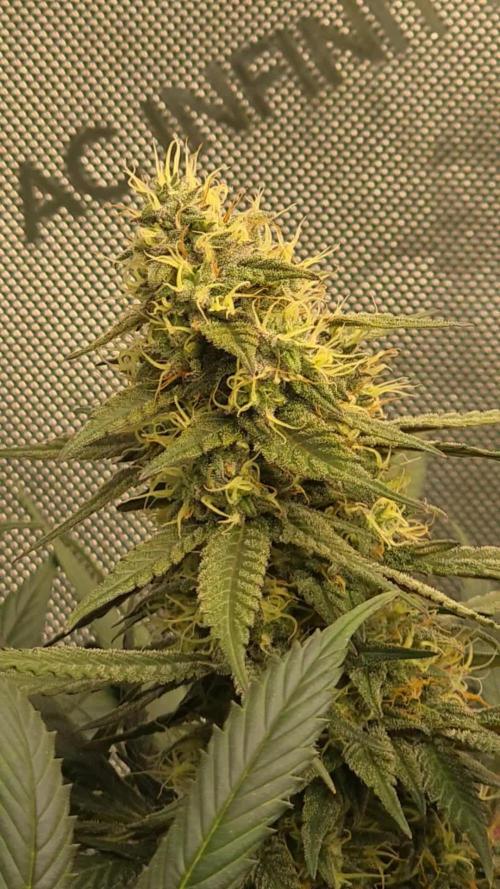
hey all! these 2 ladys are giving really good power off 💪everything is going good and nothing is going bad so far hehe just the plant is developing so big buds that she is starting to tip over so i need to stabilize her before she goes all bendy downwards lmao 😂 happy growing all 😎💚✌️

Likes
26
Share


@TheCannaProphet
Follow
Week 2
7/26- All the girl's are doing great. I had to use some horticulture wire to prop up a couple of the girls that got a little 'top heavy'. Giving 12oz water ph'd to 6.3-6.5 as needed 2 hours after 'lights on' around each plant, and every other day in the saucers (1/4g/ea) to allow the medium to
wick it up and stay moist. Temp's running 72-81deg with an average RH of 55-60%. I'd like to have the RH a bit higher but the girl's seem to be doing fine at the present. 😎Ordered another HLG 650R with the supplemental UV Bar to replace the two SunSystems 315 CMH's....should be a game changer! 💪 Also have an AC Infinity 6" exhaust system w/controller on the way to replace the Hurricane 400cfm fan I'm currently running along with another TerraBloom 6'x24" carbon filter as my current filter is losing efficiency.
7/27- Watered today ph'd to 6.4 with 2 tbsp/gallon unsulfured molasses added. I split 2 1/2g between the eight girls by pouring 12oz around each plant and then dividing the rest in their saucers to be wicked up. Temp's, RH and CO2 all on point!
7/28- Light watering today with straight non-chlorinated water ph'd to 6.5. Growth is looking great across the board. Even the late starters, Seedsman Zkittles #1 & #2, are coming along nicely! All the ladies are averaging in height between 2 1/2' - 3 1/2" and should be getting ready to explode as their root systems become more established and are able to start taking in more nutrients. Fans are running 24/7 to strengthen the stalks....they're gonna need it to support the buds these ladies will be sporting in a couple months!
7-29- Watered all through the bottom today with straight .5g non-chlorinated water ph'd to 6.3. Temp's, RH, CO2 and VPD all on point. Unhooked carbon filter from hose as it's losing efficiency restricting exhaust air flow. Girl's all growing STRONG especially the #1 Seedsman Gelato OG in Fox Farm/Nature's Living Soil mix and the FastBuds Purple Lemonade #2 also in the Fox Farms/Nature's Living Soil mix with the Seedsman Gelato OG #2 in SOHUM soil is getting close. I appears the two girl's in SOHUM soil are not quite as tall as the others but are leafing out well and are stocky with close node spacing.....hmmm?
7/30- Lift checked all the pots and gave 2 1/2g straight non-chlorinated water ph'd to 6.4 with 2 tbsp of unsulfured molasses added. I split the 2 1/2g evenly between all eight giving 20oz through the top and the remainder in the pans to be wicked up. I turned up the HLG 650R to 400w at the wall and kept the height the same. My AC Infinity Cloudline T6 exhaust and new Terrabloom 6x24" carbon filter came today, as did the UV bar from HLG for the HLG 650R that'll be here on the 3rd.....CAN'T WAIT!!! All the girl's are really doing well and starting to begin 'gettin it on'! All are healthy and running between 3-4" tall. Side note: While installing the new exhaust fan setup on of my pooches sneaked in the room and munched off a half of a shade leaf on the #1 Purple Lemonade....she's definitely got good taste!😆 In the process of installing the AC Infinity fan I relocated it and the filter to the left side of the tent and re-routed the cold air intake hoses so that both enter the tent at the bottom and are positioned at either side of the tent. I setup the AC Infinity which is a breeze, set all my high/low limits and alarms and let here run! Temperatures now are running 72-81 deg. and RH is remaining stable @ 55%, CO2@800ppm. All in all a good day!😎👍
7/31- Water looks good on all the girls. I'll just top water lightly today with straight de-chlorinated water ph'd to 6.5. The AC Infinity is really a 'game changer' as temp's are now staying in a stable range without having to adjust the settings on my Ideal Air 14k BTU AC unit...niceee! All my ladies are finishing up their second week like champs and I'm looking forward to the next few weeks as when their root systems reach the 'super-soil' they are going to hopefully have some explosive growth. I'll also be evaluating all of them in the coming week to determine candidates for topping and LST to begin.
8/1- The second HLG 650R came today! I tidied up the tent before installing the 650R: moved EXHALE CO2 bags-one on each side, vacuumed, took care of any loose hanger cords and re-positioned the three thermometers/hygrometers. I installed the second HLG 650R w/UV bar in the tent and set both lights to 400w @ the wall and have both boards centered, level and hung @ 36" from the soil. These lights are AWESOME! I checked temp's on the boards & drivers after they were running for 4 hours: 98deg on the drivers and 94deg on the board...pretty freakin sweeet! Gave the girl's a day off from water as they all looked GTG and are all getting ready to really turn on! I plan on hitting them early tomorrow morning with a good watering. Temp's-RH-VPD all on point for this week. I've been continuing to run the humidifier set @ 60% RH and I'm going so far as to ph the water going into it to see if it makes a difference as my well water runs 7.8ph @225ppm dissolved solids and I hypothesized that as the plants were absorbing the moisture from the air it might be beneficial to have that moisture at the correct ph.....we'll see I guess!

Likes
7
Share


@darb35
Follow
Last week for the girls.
Finally got the humidity down to 50%
they are looking very nice, and I can tell I could have trimmed some more of the lower branches.
This week they only get water (:
Likes
12
Share


@Ctbest2023
Follow
Easy week hoping for a strong finish so only nutes they getting know is rhinoskin a and b ph perfect b52 overdrive and sensizym and bud candy I say they got like another week tops till flush but I take pictures everyday and see colas still getting fatter until that stops I will not cut them so far this grow been a great journey for me and I learned a lot about autos next up will be these gorilla cookies and I can’t wait


Likes
1
Share

@c1note
Follow
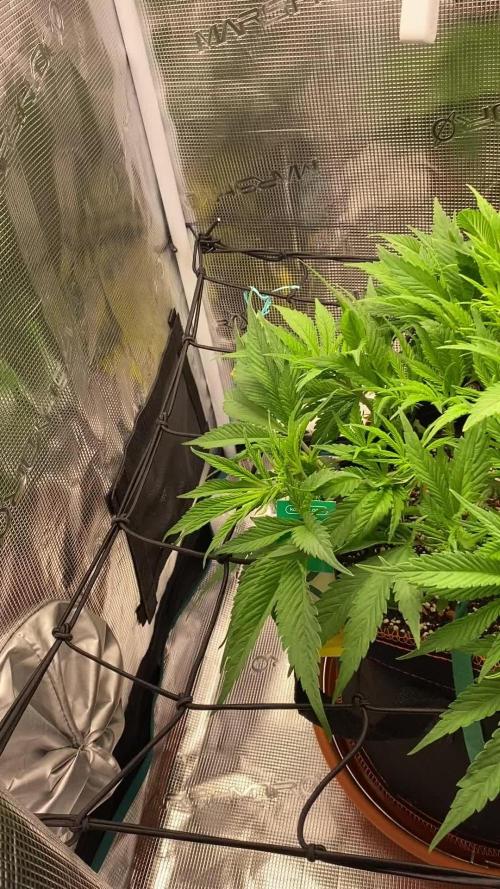
11.11 die Lady nimmt 2L pro Tag auf. Solution 4L mit 12 ml COCO A+B, 8ml Rhizo, 10 ml Cannazym, 3.0 -3.5 ml CalMag, 14ml Boost. EC 1.918 Ph 5.83. Eine Handvoll Laub muss pro Tag raus. Braucht viel Pflege und Nahrung aber bei diesem Wachstum sehr gerne.
09.11 24.7 °C 68 % RL VPD 1.0. Gehe jeden Tag 0.5 ml mit dem Bosster hoch. Schaut sehr gesund aus und verträgt das tägliche Entlauben ohne Probleme.
08.11 neu organisiert, einiges an Blattmaterial rausgenommen. Dieser Busch frisst 1.5 L mit 1.8Ec pro Tag. 650-700 PPFD DLI 1.18 VPD 1.2.
07.11 4 L Solution mit 1.8 Ec. ca.1.6L bis es unten raustropft. Dli 30-32 VPD 1
06.11 Woche 6 Blüte Tag1
Umstellung auf 12/12 nach 24 Stunden Dunkelheit. Dli 28- 30.
2L mit Ec1.72 5.8 ph so wie immer. VPD 1.1


Likes
16
Share


@ChiefIllini
Follow
Day 19 I topped all 5 plants. Very fast growth everyday. Continuing to water every other day with organic kelp. Plants are loving everything I've thrown at them so far🤙
Link of me topping one of my plants:
https://youtu.be/LsLsAdEvyzw
Likes
2
Share


@YAMA47
Follow
Bien..ya corto el Stretch.. estiramiento a princ de flora..miden 70-80cm ..se estan llenando de tricomas.baje lampara a 50cm del dosel. Fertilize c Tricomas-namaste y con Flora Booster-namaste...en unos dias hago lavado de raices..y luego regare solo c agua c detox..p limpiar raices.¡
