


Likes
Comments
Share


@CULTMEN
Follow
💜Amiran grows normally without fertilizers Let's start the LST method and see how everyone's success will turn out

Likes
39
Share


@Roberts
Follow
Bruce Banned #3 fast grew well under the Hortibloom Solux 350. I thought I had messed her up,but she did a lot of filling in at the end. Strong aroma and nice resin. I am looking forward to the smoke report for her. Thank you Hortibloom, and The Orginal Sensibile Seeds Company. 🤜🏻🤛🏻💪🏻❄️🌱
Thank you grow diaries community for the 👇likes👇, follows, comments, and subscriptions on my YouTube channel👇. ❄️🌱🍻
Happy Growing 🌱🌱🌱
https://youtube.com/channel/UCAhN7yRzWLpcaRHhMIQ7X4g

Likes
101
Share


@Ferenc
Follow
Day 51, 4th of November 2020:
The 3rd day since the lamp switched to be 12/12.
I raised up the nutrition intake as it can be seen above only the BioBizz family 2ml/l and removed some LST because the plants remain in shape or just set a bit but nothing significant....
They look good and strech is on the way.....
Nothing really to report there is crazy 2-3 weeks from now ;)


Likes
10
Share


@portcityplug
Follow
I did HST on B and put one of the branches into the centre for a better spread of the light I also took off all the under foliage from A give it some better airflow
did a water change on the 26 everything is looking good to me a little burning on some leafs but light moved up now
Likes
10
Share


@Green_DSL
Follow
WEEK 2 FLOWERING
Since I will use the 7 weeks AN full nutrients program, one week is only 5 days
Plant is doing well leaves are intense green and flowers develops beautifully. I tried to lower the lamp to 30cm but it started burning some leaves tips so I correct the distance to 50cm
Keep doing LST and defoliation every day or two
I am using 100% RO water and give water with nutrients every morning
🌱

Processing
Likes
23
Share


@GrowGuy97
Follow
Started flushing the biggest plant today the should have about another week & half left on it, all the other ones are still clear & cloudy! Fingers crossed everything goes good through harvest I have never flushed or done any of the harvest or cure process😅😬
Likes
59
Share


@Insaniac_0
Follow
(10/28-11/03)
Starting a new grow with two 420 FastBuds Fast Flower seeds (thank you 420 FastBuds for making this possible)
I plan to be rough with these plants and top them both to 8 colas. This journal will be different than my last (alot less detail) but I will still look for new opportunities to learn something new that I can share.
I also plan to take at least 5 pics per week with 1 video and 1 'pretty' cover pic per week, however I also plan to delete the excess details at the end of each week.
I sanded both seeds on the edge and simply soaked a towel for germination. These seeds took 3 days to show a crack in the shell from the time that I placed them into the paper towels without glass of water soak prior- As soon as they cracked, I placed them into Rapid Rooters in an incubator until they showed tap root growing out from the bottom of the rapid rooters plug. That took a total of 6 days (now called Day 0) from paper towel to transplant day (now called Day 1) where they were about 1 to 1.5 inches above the soil line after I planted them in 5 gallon pots with about 2 tsp of Dynomyco Mycorrhizal Inoculant already mixed into the ph balanced soil that had been growing Happy Frog mycorrhizae for 12 days under cardboard.
I fed them each about two cups of plain de-chlorinated tap at 6.3 ph on day 2, and another .5 gallon of 5.8ph de-chlorinated tap on day 7(both plants top soil was 7.0ph before feed). I plan to ph read the top soil again tomorrow but it read 6.7 on both plants after 5.8 feed)
Likes
3
Share


Likes
4
Share

@Itashish
Follow
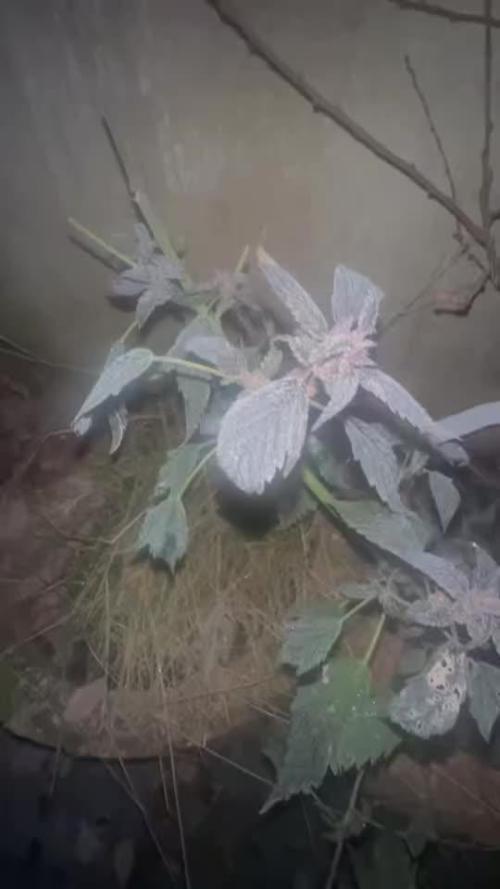
Les petites se portent bien, juste eu un soucis de sur éclairage, rien de bien méchant, j’attends le sexage des plantes pour voir qui je garde en mâle. J’espère que ce sera une graine ABC x Duck issus de la session : mutation strain élite de 2025 dont la femelle a résisté à des températures de -5 degrés en fin de floraison. Les graine ont germer à l’extérieur dans le froid là où le restant du pied à crever.
J’ai mis à la fin des vidéos de la fem Duck sous température négative, photo floraison et de la vue d’ensemble
j’ai mis aussi des photos du mâle ABC.
Malheureusement aucune mutation ne ressort, le gène abc prends le dessus et apporte des feuilles normal.
Les graines Aristodes sont issus d’un mélange de graine d’une pollinisation du mâle Velvet Krush F5 avec plein de femelles de très haute qualité : Il y as eu de la Durganchitral, Rosso Corsa, 98 Bubba Kush BX1, Rozay Breath, Breeder's Choice#1, Kilimandjaro, Amnesia Haze, Cheese Quake et j'en passe, je peux m’attendre à n’importe quoi et c’est ça que j’aime. J’espère que les deux graine soit des fems.
Gas gpt j’espère que ce sera fem aussi j’en connais pas plus mise à part que c’est du très lourd.
Et pour Frosty Purple Freak F5 Fem c’est un clone issus de ma session actuelle Outdoor formation George devenue Bush.
Ça annonce du beau tous ça!
Likes
84
Share


@Mrs_Larimar
Follow
March 11th.
So its fact, one of Three Survivied
Thats a Pity... but iam thinking about cloning
The Survivor is a strong Little one... In 7 Weeks she will be a "Big Mama"
Atm Iam setting up another "Babytent" with another Light... stay Courious...
Iam finishing and actualising Tomorrow
March 13th.
Iam done with setting up
Now i have another Babytent. and Inside the New Viparspectra XS-1000
and the other Stuff to run the Envoirement
I already ca see a difference between both Tents. If you stand outside and just look with Eyesight
the Viparspectra seems to be brighter// has another color of Light.
I made a Unboxing Video for more informations.
Amazon: http://url-9.cn/0y9i
Amazon US: https://amzn.to/3e0P2bk
Amazon CA: https://amzn.to/3bTnEJC
Amazon discount Code:
it10mlarimar XS1000 10%
it15mlarimar XS1500 5%
it20mlarimar XS2000 5%
it40mlarimar XS4000 5%

Likes
13
Share


@Northern_Ent
Follow
Aug 29: Gorilla Cookies Fast is doing great.
Sep 3: still doing the UV lights at midday (unless I forget like today) but always the far red light (730 nm) as a bloom booster. Great trick. Buds are looking great and are already getting thick and solid.


Likes
23
Share


@Wazowskid
Follow
Some leafs are turning yellow which is a signal that the root flushing has worked. I've tried to see the trycomes with s magnifying glass but I don't see any turning ambar yet, the opposite with the pistils, most of them are already brown. At this point I don't know if I should harvest now or wait one more week.
Likes
13
Share


@knicko
Follow
Auf der Waage im getrockneten Zustand waren es 130g somit habe ich mir den Fixkosten ein €/g von 2.55€/g das finde ich nicht schlecht
Likes
50
Share


@AsNoriu
Follow
Day 9. All is running very nice. Happy with light performace a lot.
Girls missed wind a bit, but i cant make it faster, because of neighbours and sound, so i took humidity dome away.
TSL2000 runs 40 cm away and on 40% output.
Girls get daily shower , try to keep some wet cloth to maintain humidity.
Happy Growing !!!


Likes
3
Share


@Xabii
Follow
Topped the plant and it is showing more trouble, next week will reveal what it was.
Values are average of the day.
DATE - EC(us/cm)
20250416 1517
20250417 1535
20250418 1541
20250419 1638
20250420 1874
20250421 1891
20250422 1868
DATE - PH
20250416 5.66
20250417 5.65
20250418 5.64
20250419 5.81
20250420 6.34
20250421 6.21
20250422 6.11
DATE - ORP (mV)
20250416 -14
20250417 -37
20250418 23
20250419 93
20250420 -1
20250421 64
20250422 199
DATE - °C - RH% (Tent Temp/RH)
20250416 23.7 52
20250417 23.6 51
20250418 23.6 51
20250419 23.9 48
20250420 25.1 53
20250421 24.0 53
20250422 22.9 58
DATE - °C (Reservoir)
20250416 20.3
20250417 20.1
20250418 19.6
20250419 19.1
20250420 20.1
20250421 20.3
20250422 20.5
DATE - CF
20250416 15.17
20250417 15.35
20250418 15.41
20250419 16.38
20250420 18.74
20250421 18.91
20250422 18.68
Processing
Likes
14
Share


@SunshineBud
Follow
So, this is my first grow, just starting out. After NJ passed recreational weed, I was like you know what... Went on an amazon spending spree and got some seeds from cropkingseeds and this is it!
I let the seeds soak for 18hr in deer park spring water w/ 1 drop of Organic Liquid Seaweed and Kelp Fertilizer Supplement by Bloom City.
At the end of soakage, it didn't look like any had cracked maybe one did not so sure. So I did up the papertowels according to the video and have to say I feel a little nervous/anxious that there is too much water/weight on the seeds and feer drownage. I'm going to keep it on there though. I check the towels a few times throughout the day and am surprised they're very moist throughout the day and next morning still somewhat damp.
24 hours in the towels I check my babies and one had cracked but the rest were still sealed up tight, unwilling to share the goodness that we all so desire, cmon babies crack that shell for papa!
11/12 looked like 1 seed popped, yay! I remoistened towels a bit but didn't wanna soak them. I also put some rapid rooters in water to soak overnight gunna throw the seeds in them in AM... I was going to do it tonight but figured I should wait see if some pop out more.
11/13 OMG upon checking seeds at 07:10 I found the papertowels like bone dry OMG WTF!!! Panic sets in but I just set up the little terrarium with 6 plugs and put the seeds in and tore some plugs off bottom of a plug to cover seedhole with.
11/14 Got a sprout! YES!! The plugs look nice and moist just going to let it go!
11/15 Woke up this mornin, saw a new sprout peeking thru and then another about to! I got ansy and took off the little top plugs and found all the sprouts were coming up! Leaving the top plug off, hopefully thats not a bad idea.

Likes
2
Share


@OutdoorOperations
Follow
Both are really shooting up. I’m noticing a real difference between using 5 gal pots vs larger containers. Planter size has a huge impact on plant size as one would assume.. But, does it have any impact on quality?
I guess we will find out in a few months. Again, learning and experiments.
Sooo soo hot… was afraid they would show signs of fatigue but they were good..not really trying to push dry back too much in these temps
6/27 saw signs of caterpillars and accidentally broke off an upper branch