The Grow Awards 2026 🏆
Likes
Comments
Share
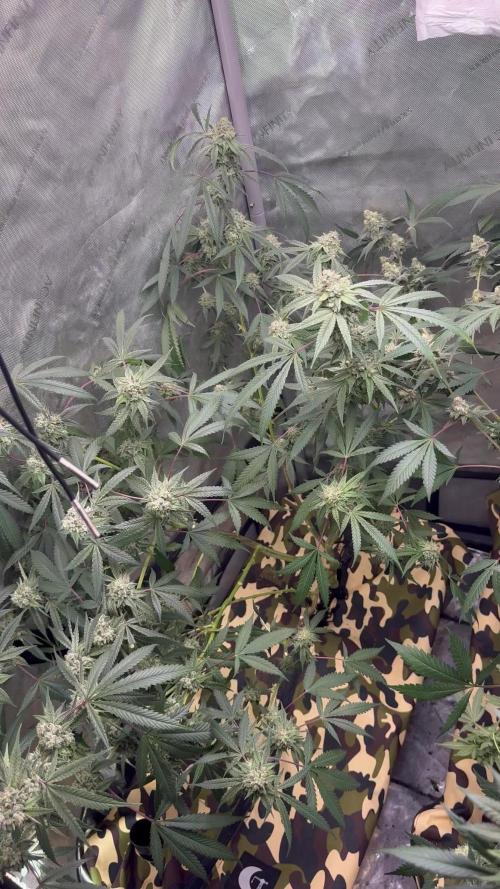
~Entry for the 'Best Rarest & Smallest Pot by Seedsman' contest~ Starring 🤩.... ~ Seedsman Zkittlez Auto ~ Zkittlez (Grape x Grape Apple) Auto x Auto Fruit (Auto Fruit Cheese x Auto Blueberry) Zkittlez Auto is one of the very sweetest-tasting auto strains available anywhere. It is a sativa-dominant (60%) strain that was bred from Zkittlez (Grape x Grape Apple) Auto crossed with a male Fruit Kush Auto, the latter a remarkable fruity strain bred from Fruit Cheese Auto and Blueberry Auto. Growers can expect to harvest some good yields of high-THC buds. Zkittlez Auto remains a fairly short plant, rarely exceeding 120 cm. in height wherever it is grown. This is a vigorous plant which is able to metabolize a high level of nutrients and she's a thirsty girl too! If growing indoors close to neighbors it is strongly advised to ensure good and effective carbon air-filtration in order to neutralize powerful odors. This strain's life-cycle is approximately 90 days from seed to harvest. The leaves on this plant are big and wide serving to convert every lumen available into Zkittlez goodness. Indoor growers should obtain between 400 - 500 gr/m2 while plants cultivated outdoors will produce slightly more at 500 - 600 gr/m2. Lateral branching is very good and it is recommended to use supports/ties to prevent snapping and keep buds close to the light source. This strain's scent is sweet and fruity with candy and berry notes. Its high-THC has been measured at between 21 - 24% with less than 1% CBD. The effect is well-balanced, cerebral and euphoric, and is very good for social situations as well as for relaxing in front of the TV either alone or with company. It also has the added effect of helping to relieve chronic pain, helping with nausea, insomnia and depression as well as stimulating the appetite.** **Credit to Seedsman.com ______________________________________________________________________________________________________________________________________________________________________________________________________________________________________________________________________________________________________________________________________________________________________________________________________________________ ~ The Setup ~ ~ Grown in a 2qt plastic popcorn pot filled with Mother Earth Grow 70/30 Coco/Perlite with Xtreme Gardening Mykos added. ~ Seed was germinated directly in the medium without any 'pre-soak' ~ Feeding will be by Dutch Pro Nutrients ~ 24hr light cycle while germinating ~ 20/4 light cycle after first leaves appear. ~ 4x8 Gorilla Tent ~ HLG 650R w/ 30w Supplemental UVA Bar controlled by a Trolmaster Hydro X controller set for a 15min Sunrise/Sunset simulation. (also a HLG Blackbird for additional side lighting if necessary) ~ Supplemental co2 controlled by an AutoPilot APC 8200 co2 controller ~ AC Infinity Cloudline T6 with Controller 67 using a Terrabloom 6x24" carbon filter ~ De-Humidifier and Humidifier when needed. ~ 14k BTU IdealAir portable A/C unit plumbed into tent for temperature control. ~ BlueLab testing instruments ~ Two Hurricane 18" oscillating fans ~ Two 6" Clip-on fans ~ Two 10" floor mounted fans ______________________________________________________________________________________________________________________________________________________________________________________________________________________________________________________________________________________________________________________________________________________________________________________________________________________ Weekly Update: 1/24- Well, here we go into the Seedsman Zkittlez Auto's 9th week of flower which will be her last! This fine looking lady has been growing for 80 days since she broke ground and has turned out simply AMAZING! 🤩❤️ I'm flushing every day now with well water that's ph'd to 6.5-6.7 @ 71℉ until I have good runoff and that's exactly what I did today in addition to giving her pot a 1/4 turn. 1/26- Today I flushed the Zkittlez Auto for the last time and I'm going to put her in the dark for 72 hours today after checking her trichomes one last time. 1/30- Yesterday the Seedsman Zkittlez Auto was released from 'Dark Jail' and looked absolutely amazing, covered in frost and sporting some gorgeous coloration on her flowers! After snapping some pic's I chopped and hung her to begin the drying/curing process. She's hanging in total darkness with a fan, de-humidifier and humidifier to keep the air circulating gently and the RH at 60% (I usually run the RH down to 50% for the first 24hrs, then up it to 60% for the remainder of the hanging time). The air temperature in my drying room stays a constant 53-60℉ which I find ideal for getting the drying time to the 12-14 days I like it to be to ensure a nice S L O W drying which, I've found, ensures a super delicious product after it's finished curing for 3-4 months in jars! This has been such a fun grow to participate in, and as always, I learned a few things I didn't know previously as I've always grown in much larger containers which made this grow that much more interesting to me! I hope you enjoyed following along half as much as I did growing this little gem from Seedsman Genetics, I truly appreciate all the love and positive comments that I've received throughout this run.... THANK YOU!❤️❤️❤️ See you at the Harvest! 😎🤙 ~ Thank you from the bottom of my heart for following my grows and for all the ❤️and support you give! 💚What you grow - Grow what you💚
Processing
Likes
28
Share
Day 22 and 23: Going easy breezy so far!! I released some ladybugs in my tents on these Chocolate Mint OG's 21st day. So far so good lol. Last night when I watered I gave a little real growers recharge to help with the recent transplant (it definitely gave them a boost!) Its mid summer here in MI and 84+ temps 😬 keeping the house and tents cool has been a challenge to say the least. Thankfully all my plants are in Veg and seem to like the heat. Except the Choc Mint.they are showing mild heat stress on the top fan leaves(at least that's my guess) Tent temps have been around 86 down to 84 daytime. I lowered them so they are 24" from the lights 🤞 hopefully that helps. Other than that, no problems. And some generally happy plants! The recharge and soil combo burned them a very little bit as well. Day 25&26 Nothing too eventful. I watered #2 on day 25. With some real growers recharge. The stuff is awesome! No nutrients needed if you have good soil! Day 26: snip 2 fan leaves from #2(the topped one) she was getting a little bushy. And tucked the other fans under to promote some lower branch growth. #1 I'm letting roll totally natural unless I clean up lower canopy to prevent pests. Day 27: Plants are doing great! #1 is really getting tall and # 2 is staying short and squat because of the training. We are letting #1 go naturally. Today's update is we added some LST wire to #2 to pull down her lowest branches My equipment and gear: 2x4 vivosun Es300 lighting Vivosun oscillating tent fan Honeywell Hurricane fan 6" exhaust outside 15,000 BTU air conditioner 8,500 BTU in tent air conditioning Some sick ass Genetics 😁
Likes
29
Share
@coldweave
Follow
Hey all sorry for the late update. Got really busy with work and just wasnt uploading. I had to cull phat Gary cause she was a genetic herm, I’m talking pollen sacks all the way up the main stem. I’ve seen a few stress sacks here and there on the lowers but nothing like this. I added a video of it so you might know what to look out for. It’s my first experience with exotic genetix and while I have heard of them having herm issues before, I have never had anything quite like phat Gary. But, on the other hand, this Gary Poppins #2 is the best smelling plant I’ve ever had. She smells like a straight strawberry soda, just this very fizzy strawberry scent. It’s unreal. Gary Poppins #1 has a similar terp profile, but not as loud and she’s frosty as ever. Both the perm marker s1’s are identical. Both look exactly like the perm marker flower I’ve bought from seed junky in the past. Very lime green buds with light oranges hairs. Smells just like a permanent marker. Couldn’t be happier with how this run is going, well except Phat Gary. Still haven’t decided on Exotic Genetix yet. I guess we will wait and see how Blueberry Gary comes out, she’s currently in week 6 veg. Shout out to the mad scientist Jbeezy though, this perm marker is unreal. When I saw he was releasing s1’s I couldn’t believe it. Gonna wash this entire run for some fresh frozen. I would absolutely love to get this Gary Poppins #2 smell to transfer to some live rosin. Will update this when we finish and I’ll make a diary for blueberry Gary and Gastro pop from compound genetics when I get a chance. Until then, happy growing all Day: 52F - Week 8 🌡️:79 Fahrenheit 💦:50% 💡:75% @ 14 inches
Likes
4
Share
GOTTA KEEP IT 100.. I FUCKED UP AND SNAPPED OFF TWO NODES OFF THE LADY IN HEY ABBY.. WHICH HONESTLY SHE IS BOUNCING BACK NICE, JUST HURT MY SOUL.. AND THE 5 gal BUCKET LADY JUST WENT SIDEWAYS.. I HAVE NO IDEA WHY. THE LADY IN SOIL HAS TAKEN THE LEAD
Likes
33
Share
@DWCbuds
Follow
After 3 failed germinations from growerschoiceseed.com I decided to order from ILGM.com. 2nd time around decided to germinate just 1 seed and it worked out well. Started soaking seed in ph adjusted water 6.5 for 48 hours. Seed showed small cracking so I placed the seed in damp paper towel. Let that sit for another 48 hours then placed in rock wool that I had soaking in ph 6 water for 24 hours. Placed Rockwell in DWC and turned both lights on at 12". She sprouted after 2 days. No nutrient yet.
Likes
6
Share
@BudeCo
Follow
Feliz com o retorno das meninas que revegetaram na 3 semana de floração. Ficaram por 15 dias com luz 24h. Agora já estão novamente com 3 semanas de 12x12. Recuperação Ok. Mas devem ficar com aspecto de rabo de raposa no final da floração.
Likes
5
Share
@Broffel
Follow
The start of week 7 and no problems with her, start this week to add pk13-14. Almost the end of the week and she doing great, Starting to have some nice buds
Likes
15
Share
@valiotoro
Follow
Hello everyone😎 Week 6 of flower for the LCC🍋🍒🍪 All the top buds harvested✂️ I had a lot of fun growing this strain🤩 The smell is absolutely out of this world…the colors…💜 I have 3 different pheno,all purple,some smells more citrus and the others more ripe cherries! One more week for the lower buds and finito I already feel nostalgic😜 *what’s coming out of the yuzu is essentials oil,every year I make Yuzucello feel free to ask me the recipe🍸🍋
Likes
14
Share
@PlantGod
Follow
Royal Gorilla took 63 to harvest from 12/12 switch Very Sticky while trimming The buds I hung last night totalled 223 grams The trimmings totalled 35 grams I will update next week when things are dry and going into mason jars
Likes
56
Share
What's in the soil? What's not in the soil would be an easier question to answer. 16-18 DLI @ the minute. +++ as she grows. Probably not recommended, but to get to where it needs to be, I need to start now. Vegetative @1400ppm 0.8–1.2 kPa 80–86°F (26.7–30°C) 65–75%, LST Day 10, Fim'd Day 11 CEC (Cation Exchange Capacity): This is a measure of a soil's ability to hold and exchange positively charged nutrients, like calcium, magnesium, and potassium. Soils with high CEC (more clay and organic matter) have more negative charges that attract and hold these essential nutrients, preventing them from leaching away. Biochar is highly efficient at increasing cation exchange capacity (CEC) compared to many other amendments. Biochar's high CEC potential stems from its negatively charged functional groups, and studies show it can increase CEC by over 90%. Amendments like compost also increase CEC but are often more prone to rapid biodegradation, which can make biochar's effect more long-lasting. biochar acts as a long-lasting Cation Exchange Capacity (CEC) enhancer because its porous, carbon-rich structure provides sites for nutrients to bind to, effectively improving nutrient retention in soil without relying on the short-term benefits of fresh organic matter like compost or manure. Biochar's stability means these benefits last much longer than those from traditional organic amendments, making it a sustainable way to improve soil fertility, water retention, and structure over time. Needs to be charged first, similar to Coco, or it will immobilize cations, but at a much higher ratio. a high cation exchange capacity (CEC) results in a high buffer protection, meaning the soil can better resist changes in pH and nutrient availability. This is because a high CEC soil has more negatively charged sites to hold onto essential positively charged nutrients, like calcium and magnesium, and to buffer against acid ions, such as hydrogen. EC (Electrical Conductivity): This measures the amount of soluble salts in the soil. High EC levels indicate a high concentration of dissolved salts and can be a sign of potential salinity issues that can harm plants. The stored cations associated with a medium's cation exchange capacity (CEC) do not directly contribute to a real-time electrical conductivity (EC) reading. A real-time EC measurement reflects only the concentration of free, dissolved salt ions in the water solution within the medium. 98% of a plants nutrients comes directly from the water solution. 2% come directly from soil particles. CEC is a mediums storage capacity for cations. These stored cations do not contribute to a mediums EC directly. Electrical Conductivity (EC) does not measure salt ions adsorbed (stored) onto a Cation Exchange Capacity (CEC) site, as EC measures the conductivity of ions in solution within a soil or water sample, not those held on soil particles. A medium releases stored cations to water by ion exchange, where a new, more desirable ion from the water solution temporarily displaces the stored cation from the medium's surface, a process also seen in plants absorbing nutrients via mass flow. For example, in water softeners, sodium ions are released from resin beads to bond with the medium's surface, displacing calcium and magnesium ions which then enter the water. This same principle applies when plants take up nutrients from the soil solution: the cations are released from the soil particles into the water in response to a concentration equilibrium, and then moved to the root surface via mass flow. An example of ion exchange within the context of Cation Exchange Capacity (CEC) is a soil particle with a negative charge attracting and holding positively charged nutrient ions, like potassium (K+) or calcium (Ca2+), and then exchanging them for other positive ions present in the soil solution. For instance, a negatively charged clay particle in soil can hold a K+ ion and later release it to a plant's roots when a different cation, such as calcium (Ca2+), is abundant and replaces the potassium. This process of holding and swapping positively charged ions is fundamental to soil fertility, as it provides plants with essential nutrients. Negative charges on soil particles: Soil particles, particularly clay and organic matter, have negatively charged surfaces due to their chemical structure. Attraction of cations: These negative charges attract and hold positively charged ions, or cations, such as: Potassium (K+) Calcium (Ca2+) Magnesium (Mg2+) Sodium (Na+) Ammonium (NH4+) Plant roots excrete hydrogen ions (H+) through the action of proton pumps embedded in the root cell membranes, which use ATP (energy) to actively transport H+ ions from inside the root cell into the surrounding soil. This process lowers the pH of the soil, which helps to make certain mineral nutrients, such as iron, more available for uptake by the plant. Mechanism of H+ Excretion Proton Pumps: Root cells contain specialized proteins called proton pumps (H+-ATPases) in their cell membranes. Active Transport: These proton pumps use energy from ATP to actively move H+ ions from the cytoplasm of the root cell into the soil, against their concentration gradient. Role in pH Regulation: This active excretion of H+ is a major way plants regulate their internal cytoplasmic pH. Nutrient Availability: The resulting decrease in soil pH makes certain essential mineral nutrients, like iron, more soluble and available for the root cells to absorb. Ion Exchange: The H+ ions also displace positively charged mineral cations from the soil particles, making them available for uptake. Iron Uptake: In response to iron deficiency stress, plants enhance H+ excretion and reductant release to lower the pH and convert Fe3+ to the more available form Fe2+. The altered pH can influence the activity and composition of beneficial microbes in the soil. The H+ gradient created by the proton pumps can also be used for other vital cell functions, such as ATP synthesis and the transport of other solutes. The hydrogen ions (H+) excreted during photosynthesis come from the splitting of water molecules. This splitting, called photolysis, occurs in Photosystem II to replace the electrons used in the light-dependent reactions. The released hydrogen ions are then pumped into the thylakoid lumen, creating a proton gradient that drives ATP synthesis. Plants release hydrogen ions (H+) from their roots into the soil, a process that occurs in conjunction with nutrient uptake and photosynthesis. These H+ ions compete with mineral cations for the negatively charged sites on soil particles, a phenomenon known as cation exchange. By displacing beneficial mineral cations, the excreted H+ ions make these nutrients available for the plant to absorb, which can also lower the soil pH and indirectly affect its Cation Exchange Capacity (CEC) by altering the pool of exchangeable cations in the soil solution. Plants use proton (H+) exudation, driven by the H+-ATPase enzyme, to release H+ ions into the soil, creating a more acidic rhizosphere, which enhances nutrient availability and influences nutrient cycling processes. This acidification mobilizes insoluble nutrients like iron (Fe) by breaking them down, while also facilitating the activity of beneficial microbes involved in the nutrient cycle. Therefore, H+ exudation is a critical plant strategy for nutrient acquisition and management, allowing plants to improve their access to essential elements from the soil. A lack of water splitting during photosynthesis can affect iron uptake because the resulting energy imbalance disrupts the plant's ability to produce ATP and NADPH, which are crucial for overall photosynthetic energy conversion and can trigger a deficiency in iron homeostasis pathways. While photosynthesis uses hydrogen ions produced from water splitting for the Calvin cycle, not to create a hydrogen gas deficiency, the overall process is sensitive to nutrient availability, and iron is essential for chloroplast function. In photosynthesis, water is split to provide electrons to replace those lost in Photosystem II, which is triggered by light absorption. These electrons then travel along a transport chain to generate ATP (energy currency) and NADPH (reducing power). Carbon Fixation: The generated ATP and NADPH are then used to convert carbon dioxide into carbohydrates in the Calvin cycle. Impaired water splitting (via water in or out) breaks the chain reaction of photosynthesis. This leads to an imbalance in ATP and NADPH levels, which disrupts the Calvin cycle and overall energy production in the plant. Plants require a sufficient supply of essential mineral elements like iron for photosynthesis. Iron is vital for chlorophyll formation and plays a crucial role in electron transport within the chloroplasts. The complex relationship between nutrient status and photosynthesis is evident when iron deficiency can be reverted by depleting other micronutrients like manganese. This highlights how nutrient homeostasis influences photosynthetic function. A lack of adequate energy and reducing power from photosynthesis, which is directly linked to water splitting, can trigger complex adaptive responses in the plant's iron uptake and distribution systems. Plants possess receptors called transceptors that can directly detect specific nutrient concentrations in the soil or within the plant's tissues. These receptors trigger signaling pathways, sometimes involving calcium influx or changes in protein complex activity, that then influence nutrient uptake by the roots. Plants use this information to make long-term adjustments, such as Increasing root biomass to explore more soil for nutrients. Modifying metabolic pathways to make better use of available resources. Adjusting the rate of nutrient transport into the roots. That's why I keep a high EC. Abundance resonates Abundance.
Likes
5
Share
@jojopfoh
Follow
Very frosty and the buds are dense. She is starting her fade. I removed all the old leaves and moved her away from the fan. She is really bulky. The buds are so thick and heavy
Likes
10
Share
@Andres
Follow
Ii am.back whith my plants... she is smell strong
Likes
86
Share
@PapaNugs
Follow
Big week here. Got the girls transplanted to their 7 gallon pots. First time with pots this big. Gonna really let them grow. Got a little water with BT and mycorrhiza.
Likes
11
Share
@ElGrowLab
Follow
Friday is Highday… One Week to go Here are some expressions of my Grow. Except the drying I think there’s nothing that could go wrong now. This Week I only pour water to the plant. The next days no more water for the lady’s so they absorb the last nutrients from the soil Nice Weekend 👌🏻 ElGrowLab🍀
Likes
4
Share
Welcome to week 4 of flower!!! I expect the ladies to slow right down in the stretch and start to focus on fattening up those flower sites. The plants have been going hard since day 1 of flower and I expect they will continue to go hard until the very end! Huge shout outs to @MarsHydroLED and Hidden Vault Genetics for their outstanding work on gear and genetics that make growing a blast! HUGE shout outs go to all my followers and people who stop into the diary alike! Keep on giving out those positive vibes! Follow along and stay tuned wont be long now till we got monster flowers! -The Projexx Day#22F Ladies continue to stretch along , MacMelonz still has some stretch time on her. Day#23F Pictures N/A. Some of the plants are beginning to focus on thickening up their flower sites! Day#24F Ladies are still stretching it out , some are almost 4 feet tall now! Day#25F Banana Smoothie is throwing off the wildest Banana Cream terpenes, the other plants are starting to throw smell too but not as hard as Banana Smoothie. Day#26F Lots of the flower tops are starting to put on mass now. Day#27F Pictures N/A. Creamy Cereal is deff pumping milk and fruit terpenes now. Day#28F Ladies are just cruising along and mostly starting to focus on flowers now. MacMelonz will still stretch for a week or so. Recap: Things went really well this week , the ladies are absolutely exploding and starting to put on mass. With 6-7 weeks left it will be quite exciting to see the end results and the terpene profiles of each plant! Overall really happy and cant wait to see what next week brings!
Likes
62
Share
Processing
Likes
8
Share
Looking great going into day 8!!! No nutes just plain tap water!
Likes
24
Share
End of Week 4 of Flower (day 28): Some flowers look like they're starting to swell. Resin production has begun in earnest. I put a tower fan with 180 deg. oscillation into the tent in order to increase overall airflow. Noticed a slight tip burn showing up on some of the leaves and realized I had stopped getting adequate runoff after each fertigation event. I increased the volume (+16%) of nutrient solution they were getting during each of the 5 daily feedings and there have been no further spread of the tip burn. Seems like the plants are all on cruise control. Here's hoping I can avoid any stupid mistakes the rest of the way. Until next week!