Likes
Comments
Share
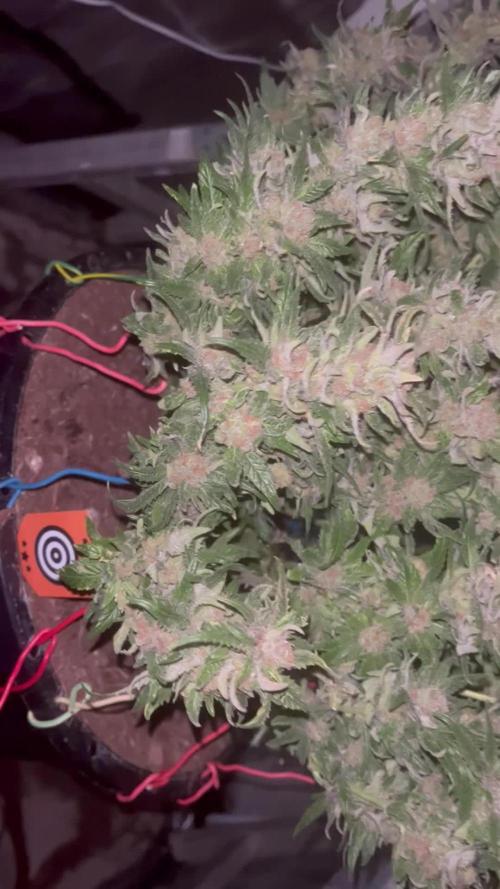
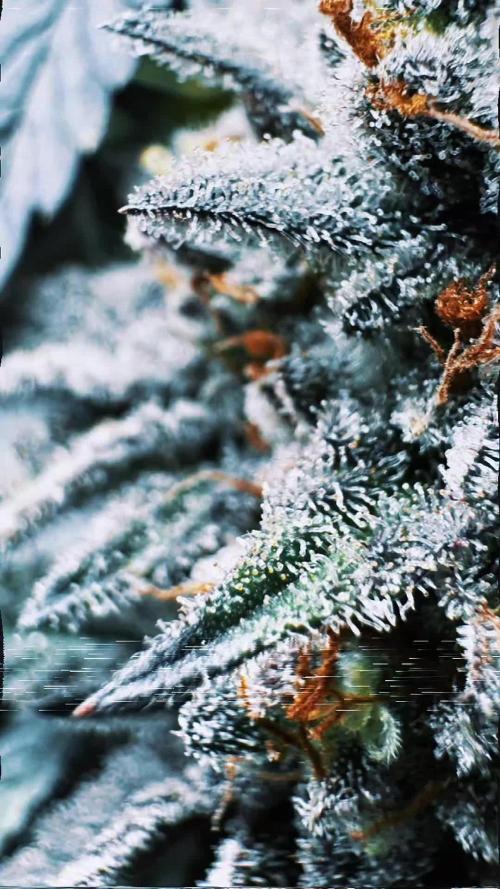
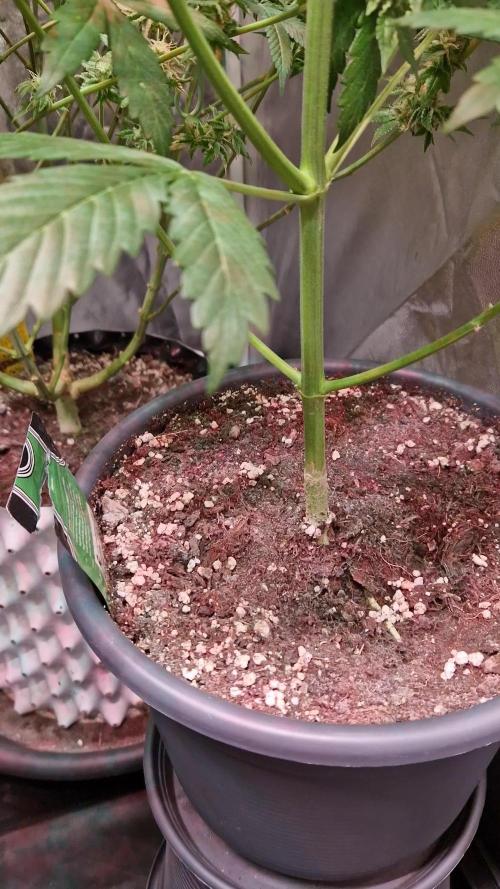
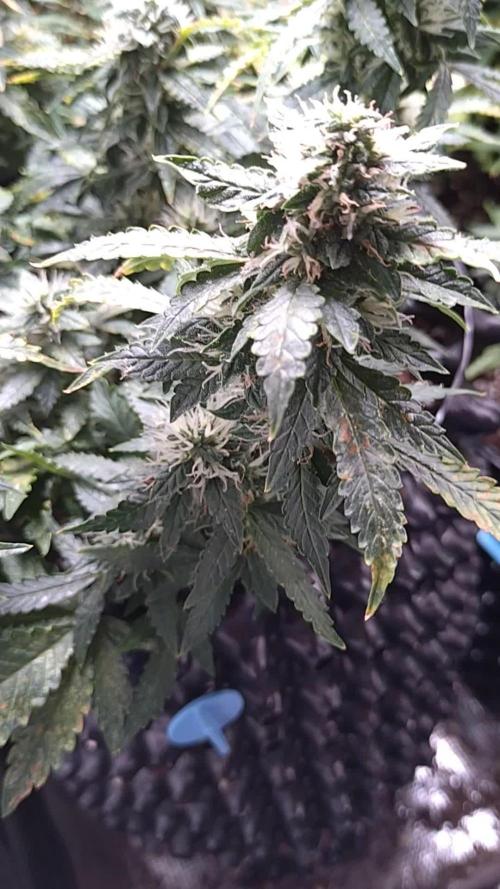
~_~_~_~_~_~_~_~_~_~_~_~_~_~_~_~_~_~_~_~_~_~_~_~_~_~_~_~_~_~_~_~_~_~_~_~_~_~_~_~_~_~_~_~_~_~_~_~_~_~_~_~_~_~_~_~_~_~_~_~_~_~_~_~_~_~_~_~_~_~_~_~_~_~_~_~_~_~_~_~_~_~_ ❤️💡🌱😽💨 It's been a pretty good week, buds are stacking up super fast and i really like the spacing on 2 especially (one is a little too tight).. We were getting some yellowing on the tops so we dimmed the light to 60% (from 75%).. a light meter would go a long way here lol.. no new calcium def spots though so i think we're finally good there.. we recently bought a 5x5 tent to replace this 4x4 and hope to have it up by next week! Thanks for dropping by guys and happy harvests! ~_~_~_~_~_~_~_~_~_~_~_~_~_~_~_~_~_~_~_~_~_~_~_~_~_~_~_~_~_~_~_~_~_~_~_~_~_~_~_~_~_~_~_~_~_~_~_~_~_~_~_~_~_~_~_~_~_~_~_~_~_~_~_~_~_~_~_~_~_~_~_~_~_~_~_~_~_~_~_~_~_~_

Likes
5
Share
Niente vendemmia purtroppo perché qualcuno si è divertito un tantissimo a rubarmi 9 delle mie piante....non c'è la faccio ragazzi mi sto per sentire male...dovevano essere tutti i miei risparmi per durare a fumare fino a marzo....ora non so come devo fare senza erba!!!! Sono in difficoltà sul serio! Ho speso molto per fare tutte queste piante e in mezz'ora mi hanno rubato tutte le mie bimbe!!! Spero il karma glie la farà pagare molto cara!!!!
Likes
28
Share
What's up growmies 🤟🏽 Week number 4 is in the books🙌🏾 Today marks the official start of week 5 and just like my previous grows all my autos are starting to preflower. Like clockwork it starts around week 5 so it lets me know these are right on schedule. I am really focusing on keeping the main cola ties down to keep the canopy as even as possibly. Typically in the past I would stop tying them down during flowering and the main cola would outgrow the rest and dominate. This grow I am continuously tying the main cola down. They all are pretty even except for Caramelicious, her main cola is just a stud and won't bend to 180 w/o me snapping the main stalk. She still is my favorite though and it's my 7th time growing her (I plant at least 1 Caramelicious each grow) The nutrient schedule remains the same. I am feeding them General Hydroponics Flora series. (Floragro, FloraMacro, FloraBloom) I am mixing what the manufacturer recommends for 1 gallon into 3 gallons, so I'm giving roughly 1/3rd what's recommended and it seems to be the sweet spot for my set up and environment. All the plants are doing well and are not showing any signs of stress, deficiency, or toxicity at this point. The weather here in VA has been pretty cold which makes it perfect humidity wise for my indoor grow, without having to blast my Cloud intake system, or even turn on the dehumidifier which won't last long because they are starting to flower and will take up more volume increasing humidity so I expect to have to use them both in the next few weeks. It appears a spider has made it's home in my tent (I see webbing in one corner of the tent) I figured it'll take care of pests for me and is not harmful so I am leaving it be for now. All in all everything is going well so far, fingers crossed. That is it for now, until next time, Happy Growing and like always May the grow goddesses bless you all with a bountiful harvest!
Likes
7
Share
@Damonkey
Follow
I think it was just one of those things with this plant. It maybe could have benefited with a different positioning below the light. The smell is good very strong blueberry/floral hum. I’m guessing the taste is quite similar, I’ll come back to this when it’s been tried.😬 The hash is a great smoke, a good flavour smell and a very heavy stone. I was suffering from quite a bad toothache after smoking this sleeping wasn’t a problem, the pain was controlled very well by it.✌️
Likes
13
Share
@Sadhus
Follow
Rinçage, je réduis L'EC de moitié, 3,4 a 1,7 , sa mûri, les trichomes deviennent bien ambré,les tête sont énormes et très dense , une odeur gazy sucré bonbon fruits très forte et très agréable, j'ai deja recolter une bouture qui avait commencé la senescence bien avant les autres et le finger hash était sublime, les 4 pied mère int sale Mines et absolument rien a voir avec les clones,
Likes
17
Share
Week 5 begins for Mandarin dreams and Divine storm. All four ladies look happy and healthy with minor deficiency signs. All four are bulking up and frosty as my windows (it's -21 °c)! The Mars-Hydro TSW2000 is performing awesome, very happy with it. Thank you Kaoritracy for hooking me up! Thanks for stopping by growfessors 👽🌳💚
Likes
8
Share
and here we go another week in her life the bug larva in the soil seems not stress her too mutch(cockchafer). her leafes are realy huge. have fun groing everyone.
Likes
21
Share
Stretching well at day 14, will only do a little defoliation on day 21 and then it’s pretty much on auto pilate. Excited for the terps on this one
Likes
25
Share
ANTHOCYANIN production is primarily controlled by the Cryptochrome (CR1) Photoreceptor ( !! UV and Blue Spectrums are primary drivers in the production of the pigment that replaces chlorophyll, isn't that awesome! 1. Diverse photoreceptors in plants Many civilizations, including the sun god of ancient Egypt, thought that the blessings of sunlight were the source of life. In fact, the survival of all life, including humans, is supported by the photosynthesis of plants that capture solar energy. Plants that perform photosynthesis have no means of transportation except for some algae. Therefore, it is necessary to monitor various changes in the external environment and respond appropriately to the place to survive. Among various environmental information, light is especially important information for plants that perform photosynthesis. In the process of evolution, plants acquired phytochrome, which mainly receives light in the red light region, and multiple blue light receptors, including his hytropin and phototropin, in order to sense the light environment. .. In addition to these, an ultraviolet light receptor named UVR8 was recently discovered. The latest image of the molecular structure and function of these various plant photoreceptors (Fig. 1), focusing on phytochrome and phototropin. Figure 1 Ultraviolet-visible absorption spectra of phytochrome, cryptochrome, phototropin, and UVR8. The dashed line represents each bioactive absorption spectrum. 2. Phytochrome; red-far red photoreversible molecular switch What is phytochrome? Phytochrome is a photochromic photoreceptor, and has two absorption types, a red light absorption type Pr (absorption maximum wavelength of about 665 nm) and a far-red light absorption type Pfr (730 nm). Reversible light conversion between the two by red light and far-red light, respectively(Fig. 1A, solid line and broken line). In general, Pfr is the active form that causes a physiological response. With some exceptions, phytochrome can be said to function as a photoreversible molecular switch. The background of the discovery is as follows. There are some types of plants that require light for germination (light seed germination). From that study, it was found that germination was induced by red light, the effect was inhibited by subsequent far-red light irradiation, and this could be repeated, and the existence of photoreceptors that reversibly photoconvert was predicted. In 1959, its existence was confirmed by the absorption spectrum measurement of the yellow sprout tissue, and it was named phytochrome. Why does the plant have a sensor to distinguish between such red light and far-red light? There is no big difference between the red and far-red light regions in the open-field spectrum of sunlight, but the proportion of red light is greatly reduced due to the absorption of chloroplasts in the shade of plants. Similar changes in light quality occur in the evening sunlight. Plants perceive this difference in light quality as the ratio of Pr and Pfr, recognize the light environment, and respond to it. Subsequent studies have revealed that it is responsible for various photomorphogenic reactions such as photoperiodic flowering induction, shade repellent, and deyellowing (greening). Furthermore, with the introduction of the model plant Arabidopsis thaliana (At) and the development of molecular biological analysis methods, research has progressed dramatically, and his five types of phytochromes (phyA-E) are present in Arabidopsis thaliana. all right. With the progress of the genome project, Fi’s tochrome-like photoreceptors were found in cyanobacteria, a photosynthetic prokaryotes other than plants. Furthermore, in non-photosynthetic bacteria, a homologue molecule called bacteriophytochrome photoreceptor (BphP) was found in Pseudomonas aeruginosa (Pa) and radiation-resistant bacteria (Deinococcus radiodurans, Dr). Domain structure of phytochrome molecule Phytochrome molecule can be roughly divided into N-terminal side and C-terminal side region. PAS (Per / Arndt / Sim: blue), GAF (cGMP phosphodiesterase / adenylyl cyclase / FhlA: green), PHY (phyto-chrome: purple) 3 in the N-terminal region of plant phytochrome (Fig. 2A) There are two domains and an N-terminal extension region (NTE: dark blue), and phytochromobilin (PΦB), which is one of the ring-opening tetrapyrroles, is thioether-bonded to the system stored in GAF as a chromophore. ing. PAS is a domain involved in the interaction between signal transduction-related proteins, and PHY is a phytochrome-specific domain. There are two PASs and her histidine kinase-related (HKR) domain (red) in the C-terminal region, but the histidine essential for kinase activity is not conserved. 3. Phototropin; photosynthetic efficiency optimized blue light receptor What is phototropin? Charles Darwin, who is famous for his theory of evolution, wrote in his book “The power of move-ment in plants” published in 1882 that plants bend toward blue light. Approximately 100 years later, the protein nph1 (nonphoto-tropic hypocotyl 1) encoded by one of the causative genes of Arabidopsis mutants causing phototropic abnormalities was identified as a blue photoreceptor. Later, another isotype npl1 was found and renamed phototropin 1 (phot1) and 2 (phot2), respectively. In addition to phototropism, phototropin is damaged by chloroplast photolocalization (chloroplasts move through the epidermal cells of the leaves and gather on the cell surface under appropriate light intensity for photosynthesis. As a photoreceptor for reactions such as escaping to the side of cells under dangerous strong light) and stomata (reactions that open stomata to optimize the uptake of carbon dioxide, which is the rate-determining process of photosynthetic reactions). It became clear that it worked. In this way, phototropin can be said to be a blue light receptor responsible for optimizing photosynthetic efficiency. Domain structure and LOV photoreaction of phototropin molecule Phototropin molecule has two photoreceptive domains (LOV1 and LOV2) called LOV (Light-Oxygen-Voltage sensing) on the N-terminal side, and serine / on the C-terminal side. It is a protein kinase that forms threonine kinase (STK) (Fig. 4Aa) and whose activity is regulated by light. LOV is one molecule as a chromophore, he binds FMN (flavin mononucleotide) non-covalently. The LOV forms an α/βfold, and the FMN is located on a β-sheet consisting of five antiparallel β-strands (Fig. 4B). The FMN in the ground state LOV shows the absorption spectrum of a typical oxidized flavin protein with a triplet oscillation structure and an absorption maximum wavelength of 450 nm, and is called D450 (Fig. 1C and Fig. 4E). After being excited to the singlet excited state by blue light, the FMN shifts to the triplet excited state (L660t *) due to intersystem crossing, and then the C4 (Fig. 4C) of the isoaroxazine ring of the FMN is conserved in the vicinity. It forms a transient accretionary prism with the tain (red part in Fig. 4B Eα) (S390I). When this cysteine is replaced with alanine (C / A substitution), the addition reaction does not occur. The effect of adduct formation propagates to the protein moiety, causing kinase activation (S390II). After that, the formed cysteine-flavin adduct spontaneously dissociates and returns to the original D450 (Fig. 4E, dark regression reaction). Phototropin kinase activity control mechanism by LOV2 Why does phototropin have two LOVs? Atphot1 was found as a protein that is rapidly autophosphorylated when irradiated with blue light. The effect of the above C / A substitution on this self-phosphorylation reaction and phototropism was investigated, and LOV2 is the main photomolecular switch in both self-phosphorylation and phototropism. It turns out that it functions as. After that, from experiments using artificial substrates, STK has a constitutive activity, LOV2 functions as an inhibitory domain of this activity, and the inhibition is eliminated by photoreaction, while LOV1 is kinase light. It was shown to modify the photosensitivity of the activation reaction. In addition to this, LOV1 was found to act as a dimerization site from the crystal structure and his SAXS. What kind of molecular mechanism does LOV2 use to photoregulate kinase activity? The following two modules play important roles in this intramolecular signal transduction. Figure 4 (A) Domain structure of LOV photoreceptors. a: Phototropin b: Neochrome c: FKF1 family protein d: Aureochrome (B) Crystal structure of auto barley phot1 LOV2. (C) Structure of FMN isoaroxazine ring. (D) Schematic diagram of the functional domain and module of Arabidopsis thaliana phot1. L, A’α, and Jα represent linker, A’α helix, and Jα helix, respectively. (E) LOV photoreaction. (F) Molecular structure model (mesh) of the LOV2-STK sample (black line) containing A’α of phot2 obtained based on SAXS under dark (top) and under bright (bottom). The yellow, red, and green space-filled models represent the crystal structures of LOV2-Jα, protein kinase A N-lobe, and C-robe, respectively, and black represents FMN. See the text for details. 1) Jα. LOV2 C of oat phot1-to α immediately after the terminus Rix (Jα) is present (Fig. 4D), which interacts with the β-sheet (Fig. 4B) that forms the FMN-bound scaffold of LOV2 in the dark, but unfolds and dissociates from the β-sheet with photoreaction. It was shown by NMR that it does. According to the crystal structure of LOV2-Jα, this Jα is located on the back surface of the β sheet and mainly has a hydrophobic interaction. The formation of S390II causes twisting of the isoaroxazine ring and protonation of N5 (Fig. 4C). As a result, the glutamine side chain present on his Iβ strand (Fig. 4B) in the β-sheet rotates to form a hydrogen bond with this protonated N5. Jα interacts with this his Iβ strand, and these changes are thought to cause the unfold-ing of Jα and dissociation from the β-sheet described above. Experiments such as amino acid substitution of Iβ strands revealed that kinases exhibit constitutive activity when this interaction is eliminated, and that Jα plays an important role in photoactivation of kinases. 2) A’α / Aβ gap. Recently, several results have been reported showing the involvement of amino acids near the A’α helix (Fig. 4D) located upstream of the N-terminal of LOV2 in kinase photoactivation. Therefore, he investigated the role of this A’α and its neighboring amino acids in kinase photoactivation, photoreaction, and Jα structural change for Atphot1. The LOV2-STK polypeptide (Fig. 4D, underlined in black) was used as a photocontrollable kinase for kinase activity analysis. As a result, it was found that the photoactivation of the kinase was abolished when amino acid substitution was introduced into the A’α / Aβ gap between A’α and Aβ of the LOV2 core. Interestingly, he had no effect on the structural changes in Jα examined on the peptide map due to the photoreaction of LOV2 or trypsin degradation. Therefore, the A’α / Aβ gap is considered to play an important role in intramolecular signal transduction after Jα. Structural changes detected by SAXS Structural changes of Jα have been detected by various biophysical methods other than NMR, but structural information on samples including up to STK is reported only by his results to his SAXS. Not. The SAXS measurement of the Atphot2 LOV2-STK polypeptide showed that the radius of inertia increased from 32.4 Å to 34.8 Å, and the molecular model (Fig. 4F) obtained by the ab initio modeling software GASBOR is that of LOV2 and STK. It was shown that the N lobes and C lobes lined up in tandem, and the relative position of LOV2 with respect to STK shifted by about 13 Å under light irradiation. The difference in the molecular model between the two is considered to reflect the structural changes that occur in the Jα and A’α / Aβ gaps mentioned above. Two phototropins with different photosensitivity In the phototropic reaction of Arabidopsis Arabidopsis, Arabidopsis responds to a very wide range of light intensities from 10–4 to 102 μmol photon / sec / m2. At that time, phot1 functions as an optical sensor in a wide range from low light to strong light, while phot2 reacts with light stronger than 1 μmol photon / sec / m2. What is the origin of these differences? As is well known, animal photoreceptors have a high photosensitivity due to the abundance of rhodopsin and the presence of biochemical amplification mechanisms. The exact abundance of phot1 and phot2 in vivo is unknown, but interesting results have been obtained in terms of amplification. The light intensity dependence of the photoactivation of the LOV2-STK polypeptide used in the above kinase analysis was investigated. It was found that phot1 was about 10 times more photosensitive than phot2. On the other hand, when the photochemical reactions of both were examined, it was found that the rate of the dark return reaction of phot1 was about 10 times slower than that of phot2. This result indicates that the longer the lifetime of S390II, which is in the kinase-activated state, the higher the photosensitivity of kinase activation. This correlation was further confirmed by extending the lifespan of her S390II with amino acid substitutions. This alone cannot explain the widespread differences in photosensitivity between phot1 and phot2, but it may explain some of them. Furthermore, it is necessary to investigate in detail protein modifications such as phosphorylation and the effects of phot interacting factors on photosensitivity. Other LOV photoreceptors Among fern plants and green algae, phytochrome ɾphotosensory module (PSM) on the N-terminal side and chimera photoreceptor with full-length phototropin on the C-terminal side, neochrome (Fig. There are types with 4Ab). It has been reported that some neochromes play a role in chloroplast photolocalization as a red light receiver. It is considered that fern plants have such a chimera photoreceptor in order to survive in a habitat such as undergrowth in a jungle where only red light reaches. In addition to this, plants have only one LOV domain, and three proteins involved in the degradation of photomorphogenesis-related proteins, FKF1 (Flavin-binding, Kelch repeat, F-box 1, ZTL (ZEITLUPE)), LKP2 ( There are LOV Kelch Protein2) (Fig. 4Ac) and aureochrome (Fig. 4Ad), which has a bZip domain on the N-terminal side of LOV and functions as a gene transcription factor. 4. Cryptochrome and UVR8 Cryptochrome is one of the blue photoreceptors and forms a superfamily with the DNA photoreceptor photolyase. It has FAD (flavin adenine dinucle-otide) as a chromophore and tetrahydrofolic acid, which is a condensing pigment. The ground state of FAD is considered to be the oxidized type, and the radical type (broken line in Fig. 1B) generated by blue light irradiation is considered to be the signaling state. The radical type also absorbs in the green to orange light region, and may widen the wavelength region of the plant morphogenesis reaction spectrum. Cryptochrome uses blue light to control physiological functions similar to phytochrome. It was identified as a photoreceptor from one of the causative genes of UVR8 Arabidopsis thaliana, and the chromophore is absorbed in the UVB region by a Trp triad consisting of three tryptophans (Fig. 1D). It is involved in the biosynthesis of flavonoids and anthocyanins that function as UV scavengers in plants. Conclusion It is thought that plants have acquired various photoreceptors necessary for their survival during a long evolutionary process. The photoreceptors that cover the existing far-red light to UVB mentioned here are considered to be some of them. More and more diverse photoreceptor genes are conserved in cyanobacteria and marine plankton. By examining these, it is thought that the understanding of plant photoreceptors will be further deepened.
Likes
51
Share
Here we are, ready, after a week of truly fruitful germination we have 20 beautiful plants all marked with the Z of Zamnesia. We have moved on to autoflowering, unlike many growers I have no prejudice against this type of plant, it is true that they are the easiest to make but it is also true that they have improved a lot in terms of flower quality and if once ease meant lower quality now even the most presumptuous old school flower children growers struggle to understand if a flower is from an autoflowering or a normal photoperiod plant. There are people who claim to recognize it from the flavor but then never succeed, it's funny how it works. I enjoy making them strip their heads with these magnificent new autoflowering plants. She is the Black Orchid I have never grown her but I have seen some truly phenomenal photos of this plant. I really hope they come out black. I love it. ---- New Home - The ladies have almost all been transplanted into 11-liter pots, which is my favorite size to get the best ratio of plants in the grow box / yield. Especially if you don't have to do excessive topping or you have to grow the plants straight with main cola like I do for catalog needs like I do, 11 liters guarantees you to make excellent plants. Topping with 11-liter pots is recommended up to a maximum of 16 buds (4 main crops) - The pots are square plastic and canvas branded Zamnesia - The soil used is Plagron Promix with peat and worm castings but not fertilized - --- Start feeding program - A very serious feeding program branded Plagron has begun. We made our own personalized table based on the chosen soil (Plagron Promix 100% organic) that you can all do at the link https://plagron.com/en/tools/grow-schedule-calculator and I started giving: - Power Roots - 1ml/l - Alga Grow - 2 ml/l - Pure Zym - 1 ml/l - Sugar Royal - 1ml/l - Vita Race - 1 ml/l - The 100% Organic pack by Plagron can be found on Zamnesia at the link: https://www.zamnesia.io/it/11457-plagron-easy-pack-natural.html We are giving a lot of humidity with a humidifier and we oscillate between 65% and 70%. // Strain Description // It is said that the orchid symbolizes love, refinement and beauty. Well, we can confirm that the Black Orchid Automatic contains all these attributes and many more. This autoflowering variety has a lot to offer: a particular but very pleasant aromatic profile, and a relaxing and carefree high. Furthermore, this plant is very productive when grown in optimal conditions. - Get a seed of this fantastic strain --- https://www.zamnesia.io/it/9493-zamnesia-seeds-black-orchid-automatic.html - Soil and Fertilizers entirely organic --- https://plagron.com/en buy on www.zamnesia.io - Growbox and air sistem --- https://www.secretjardin.com/ - Light — P2000 - https://www.viparspectra.com - Music and sound --- I made my girls listen to 432hz frequencies and music from www.radionula.com - Z --- You can find these seeds, much more from the world of cannabis, mushrooms and an incredible series of accessories and gadgets on the reference site not only mine but of many growers ---- https://www.zamnesia.io
Likes
4
Share
🇩🇪 14.12. neue Woche neues Aussehen :) zwei Sonnensegel die nach oben zeigten entfernt, damit die inzwischen 4 seitentriebe etwas licht bekommen. die Drähte die letzten Tage über immer mal wieder neu justiert. Und vor ein paar Tagen zwei „Anker“ an den Stamm gesetzt damit die Pflanze bleibt wo sie ist. Durch den zug auf der anderen Seite hat sie angefangen sich dort mehr rüberzubiegen. Ansonsten macht sie sich ganz gut es läuft mehr oder weniger nach Plan. Happy Growing💛✌️ 🇬🇧 12.14. New week, new look :) I removed two upward-facing fan leaves so the four side shoots could get some light. I've been readjusting the wires a few times over the last couple of days. And a few days ago, I added two "anchors" to the stem to keep the plant in place. The tension on the other side had caused it to start bending more. Otherwise, it's doing quite well; things are more or less going according to plan. Happy Growing💛✌️
Likes
3
Share
Our L.A. Kush Cake #3 started slowly, then vegetated very well, and now we're embarking on the flowering adventure in excellent shape. We're in an 11-liter Zamnesia fabric airpot. Techniques chosen: the plant was top-dressed with a 16-tip top-dressing, so four times. We're 100% organic and 1000% Plagron, as always. The soil we've chosen is the recently launched Plagron Bio LightMix, which will allow us to get the grow started more smoothly and reliably, without the sudden changes that liquid fertilizers can cause. A week is more than enough, so let's not overdo it. We're in the early stages of flowering, but we're well-equipped with fertilizers and additives. We've added: - Power Roots 1 ml/l (Always use it for the first two weeks of flowering, especially after transplanting) - Pure Zym 1 ml/l - Silic Rock 1 ml/l - CalMag Pro 1 ml/l - Sugar Royal 1 ml/l - Alga Bloom 4 ml/l - Power Buds 1 ml/l Once a week as a foliar spray: (until the first two weeks of flowering) - Vita Race 5 ml/l Choose your favorite style and calculate your results on the website: www.plagron.com Our new 720W Spider King lamp from Vanguard Hydroponics is now at 80% Z - https://www.zamnesia.io/en/531-growshop Our L.A. Kush Cake looks amazing, try it! Z - https://www.zamnesia.io/en/11097-zamnesia-la-kush-cake-semi.html Z - Want to take your growth to the next level? Now you can with Zamnesia's LA Kush Cake. Originally bred by Seed Junky Genetics from a Wedding Cake and a Kush Mints, this indica-dominant strain produces large quantities of resin-coated buds, rich in sweet terpenes and a relaxing effect. LA Kush Cake seeds produce stocky plants that thrive in any environment. Indoors, they require only 8-9 weeks of flowering to produce dense, trichome-rich buds with a pine-like structure and very compact calyxes. Outdoors, LA Kush Cake can be harvested in early October. Plants produce up to 600 g/m² indoors and 850 g/plant outdoors. In the right conditions, LA Kush Cake can develop intense purple hues that add to its appeal. As you open the jars of these buds, you'll feel a wave of pungent vanilla terpenes wafting through the air, balanced by spicy notes of pepper and mint. Whether you smoke or vape, you'll be instantly intoxicated by its distinctive flavor, with a velvety, creamy aftertaste followed by a powerful yet functional high. Enjoy a relaxing effect that will melt away any tension while keeping your mind clear: perfect for unwinding, enhancing intimacy, or simply enjoying a pleasant smoke. If you need to stay focused, you can: LA Kush Cake relaxes the body while leaving the mind clear and focused, making it the ideal choice for experienced smokers seeking a dynamic, active euphoria that lasts all day. Want to try a potent, productive, and delicious strain? Don't wait: buy LA Kush Cake seeds now and start growing her premium buds at home. You know it, but I recommend it: here you'll find so many wonderful things, practically "all the best nature has to offer." Z - www.zamnesia.com Music // www.radionula.com + Feng Shui Music + 432 Hz Frequencies
Likes
126
Share
this is a very easy one to grow with an enormous bag appeal true her all cycle, a must in any garden, her trichomes production is out of these world, as are them grams on them fruits, a true must for us all to grow
Likes
5
Share
Merry Christmas and happy holidays to everyone, and above all, a fantastic new year of growth with monsters, plants, unicorns, and all the magical beings we love. ** This week, mostly just grow tent photos, so you don't miss any updates over the holidays. Our Nectar Drip #3 is growing beautifully and healthily. It's not a giant in terms of characteristics or technique, but it looks very interesting. It's been trimmed and will be flowering in 7-10 days. Selected Techniques - This plant will grow with a classic main lining but without the traditional lst application that spreads the plant across the pot. This is only because the plant, or rather this phenotype, has very short internodal spacing and hardens quickly, risking cracking. So, a healthy classic main lining (topping mainfolding 3 internodes topping x2 and then x4, maybe if the plant goes well). We're 100% organic and 1000% Plagron, as always. The soil we've chosen is the recently launched Plagron Bio LightMix, which will allow us to get our growing process off to a smoother and more reliable start, without the sudden changes that liquid fertilizers can cause. A week is more than enough, so don't overdo it. We're in the early stages of the vegetative phase, but we're well-equipped with nutrients and additives. We've added: - Power Roots 1 ml/l - Pure Zym 1 ml/l - Silic Rock 1 ml/l - CalMag Pro 1 ml/l - Sugar Royal 1 ml/l - Alga Grow 5 ml/l Once a week as a foliar spray: - Vita Race 5 ml/l Choose your preferred style and calculate the results on the website: www.plagron.com Our new 720W Spider King lamp from Vanguard Hydroponics is still set to the lowest setting. Visit the new Growshop area on the Zamnesia website: Z - https://www.zamnesia.io/it/531-growshop Crazy, it was sold out, it was a limited edition! Try another one: the shop is full! Z - https://www.zamnesia.io/it/35-semi-cannabis T - https://www.zamnesia.io/it/35-semi-cannabis/745-tical Z - Nectar Drip is a unique cannabis hybrid created in collaboration between Zamnesia Seeds and TICAL. These flowers are pure power, with up to 26% THC and effects that stimulate the mind and stabilize the body. But if you want to try them, you'll have to hurry: only 750 packs are available! There's nothing better than a good collaboration: we know that better than anyone! For this partnership, we joined forces with TICAL to create a strain packed with flavor and potency. We brought our delicious Apple Fritter, while TICAL contributed its 24K Gold Fangs. After perfecting the result, Nectar Drip was born. This strain produces potent flowers with a THC content of up to 26%, accompanied by delicious fruity and skunky aromas. Considering one of its parents is Apple Fritter, you can be sure that Nectar Drip has inherited a burst of fruity aromas and flavors. Skunky notes are also noticeable, creating a rich and intriguing profile. When you smoke this beauty, you'll feel relaxed, with a pleasant cerebral buzz accompanying the experience. It's definitely a great evening smoke, perfect for when you want to take a moment for yourself. You know it, but I recommend it. You'll find so many wonderful things here, essentially "all the best that nature has to offer." Z - www.zamnesia.com // Music // www.radionula.com + Feng Shui Music + Frequencies 432 Hz
Likes
132
Share
@rhodes68
Follow
1/25 Week 11 Ripley : Flushing begins with a five gallon flush to move the runoff to under 200ppm and defoliated by pulling almost every leaf on a stem, and god what a bunch there were. This opens the plant and removes those sources of nuets. Going to doing this as quickly as we may so will be monitoring runoff as we go. Tara: Slight Defoliation just trying to keep these leafy SOBs open. Back on Heavy dose of CocoTek and placed in best light I can we just watching the bud growth for how to help this big girl. Will not pick up Peak again until ready to withdraw the CT. Better pics when I can 1/26 Ripley : Second day of flush just keep running water through it till runoff gets low no longer PHing the water, nothing much left in there anyway. Fading really showing now Tara -Zilla : She likes the nuet and light change buds really building now Not getting any taller 1/27 New pics of Ripley she is getting so damn frosty in flush Tara building buds very quickly 1/28 Continuing flush on Ripley, she will be harvested in two days, its fast but we need the space. Tara no changes except more buds 1/30 Ripley removed from tent for harvest. Opened up Tara's binds. Tara now the Queen of all she surveys... All hail Queen Tara The Beast ! 😜 *****RIPLEY HARVEST DAY !!!!! ***** Pics up top Wet weight - 1,140 grams 40.7 Ounces Just looking at it we be lucky to only lose 75% in dry but still not bad! Not a pleasant job trimming - LOTS of leaves UPDATE 261 grams dry, yeah took a beating on the dry but expected it.
Likes
22
Share
Flipped a week ago. They are stretching nicely. I have a couple feet left in the tent. Should be good right? 🤔
Processing
Likes
16
Share
This week all I wanted to see some kind of growth and I kinda see it, they both still look sad , the first plant looks like it's doing "ok" I do see new roots developing so that's a good sign. The 2nd plant still some brownin' appears on some leaves I don't know BUT I do see new roots growing on her my question is: should I still keep her going? OR let her get the axe? The deficiency still appears and I've done everything on the book but don't wonna give up on her (just yet) but I really don't know what to do with her? I wonna give her sometime see what she tells me or if u guys know what am doing wrong I would greatly appreciate
Likes
4
Share
Fue un ciclo interesante. Sabía que era poco espacio, pero necesitaba armar esta idea con un poco más de prolijidad. Voy a tener que armar uno más grande, pero entre tanto, los resultados de este indoor me han sorprendido. Las variedades ayudaron mucho también. Eran muy productoras ambas, principalmente la polaris. Ya tengo enraizando las canpat one, pero aún no están listas. Espero pronto arrancar con el próximo proyecto.