


Likes
Comments
Share


@PEAKYPLANTERS
Follow
Hi guys
welcome back to peaky gardens
my dutch girls are doing well .. one above all had the dominance in the room growing exponentially
the sisters are already starting with flowering and this thing worries me that she is still growing in vegetation 🧐

Likes
17
Share


@BioGrowKing
Follow
Die Woche ist sehr gut verlaufen nun ist der elfte Tag Blüte
Sie scheint sich von den Larfen beziehungsweise Trauer fliegen Erholt zu haben die Blätter stehen wieder schön und sie ist sehr stabil leider ist mir ein Kopf abgebrochen ja ärgerlich aber was soll ich tun der Geruch kommt auch langsam durch es riecht ziemlich gut die Härchen sind schon zu sehen.
Da ich Bio Grow Habe ich in der ersten Woche 8 g Blumen dazu gegeben und die reichen bis zur dritten Woche oder sogar bis zum Ende der Blüte in Enhancer habe ich diese Woche nicht benutzt

Likes
Comments
Share

@Vet_J
Follow
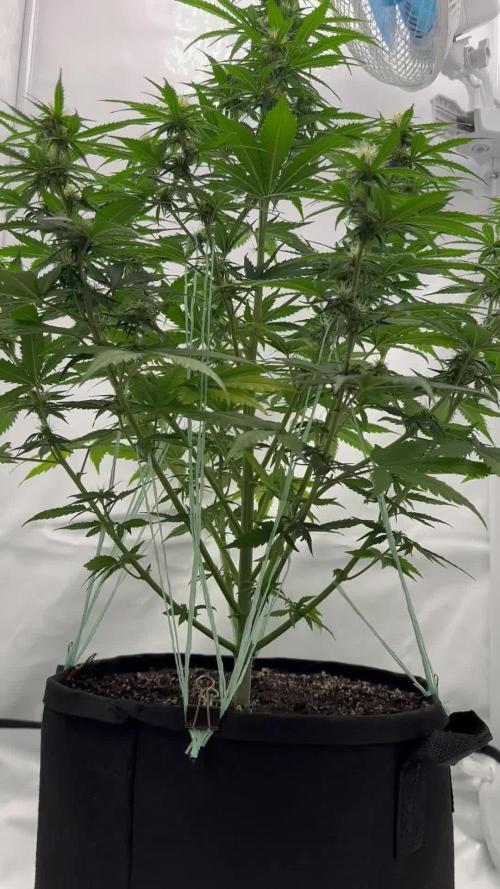
The lower leaves of the plant turned yellow
I have two options that could have caused the lower leaves to turn yellow
The first is a lack of nitrogen. In the last two weeks, I have reduced the dose of AD Grow fertilizer from 4 ml to 2 ml which contains nitrogen and i have not added AD B-52 for two weeks
The second option is that I have a low-quality ph meter. I measure the ph with drops I don’t have digital one and there may be an ph error
The plant was unable to absorb the fertilizer and a large amount of salts are most likely accumulated in the soil.
one more detail:He was defoliated a few days ago.
I hope that this problem will be resolved by next week and the plant will continue to grow at a good pace.
Likes
58
Share


@pifflestikkz
Follow
Day 85
Day 35 Flower
26/07/24 Friday
Big feed again today, using de-chlorinated tap water pH 6. 😁 I noticed slight nute burn on leaf tips so I have dialled back all base nutrients by 1ml.
Day 86
Day 36 Flower
27/07/24 Saturday
De-chlorinated tap water pH 6 only today full 5L a little run off.
Did it outside in the sunshine again today 🌞📸💚
Updates 📸
Day 87
Day 37 Flower
28/07/24 Sunday
Feed again today, De-chlorinated tap water pH 6.
She took the full 5L with about 10% run off.
She really is stacking now 💪
Day 88
Day 38 Flower
29/07/24 Monday
Just de-chlorinated tap water pH 6 today. Noticing pistils starting to mature.
Video update
Day 89
Day 39 Flower
30/07/24 Tuesday
Nice feed again today, de-chlorinated tap water pH 6.
Really throwing out trichomes now, density is getting better as well.
Day 90
Day 40 Flower
31/07/24 Wednesday
De-chlorinated tap water pH 6 only today. Full 5L again she's taking this daily now ,😅💚
Day 91
Day 41 flower
01/08/24 Thursday
End of week
Feed today using de-chlorinated tap water pH 6 added nutes brought it up to 6.2.
She just keeps stacking, think I got a fast flower... Or the heat is a little high and just prolonging her process.
May start flushing next week we will see.


Likes
8
Share


@Reaper
Follow
Start of week 11. plant suffered from cold between week 7 and 9. this is the result of too cold rooms, small yield but she still produce alot of thc, ill let it go for 2 more weeks

Likes
19
Share

@Bncgrower
Follow
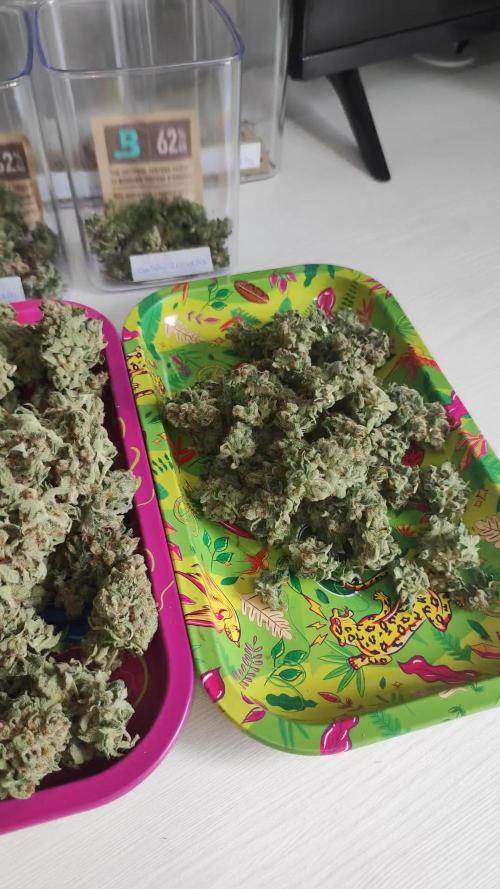
The aroma of Gelato #41 is simply exceptional, to the point that it fills the entire room with its intense and captivating fragrance. Each cultivation only strengthens my admiration for this strain, which will definitely remain one of my favorites, both for its quality and the sensory experience it provides.
*** Gelato 41 has a sweet and creamy aroma, with notes of vanilla, berries, and a citrus touch. The flavor is smooth and creamy like a dessert, with lemon and mint on the exhale.


Likes
53
Share


@MistaOC
Follow
07.04. Day 71
Day 31 of flower and things are holding steady. The girls are progressing nicely – buds are bulking up, resin production is picking up, and that sweet, fruity aroma is getting stronger.
Four out of five plants are thriving with no major issues. One, however, still shows a strong CalMag deficiency – no improvement so far, so it’s under close watch.
Environment stays dialed in: 26 °C during the day, 21 °C at night, 50–60% RH, and a VPD of around 1.5. LED is still running at 70%. All in all, the setup is stable and the buds keep stacking – we stay patient and focused!
*******************************************
10L RO Water // ph 6,2 // 1ml/L Regulator // 2ml/L CalMag // 10ml Green Sensation // ph- //

Likes
3
Share

@Trichoma
Follow
@1.5 kPa
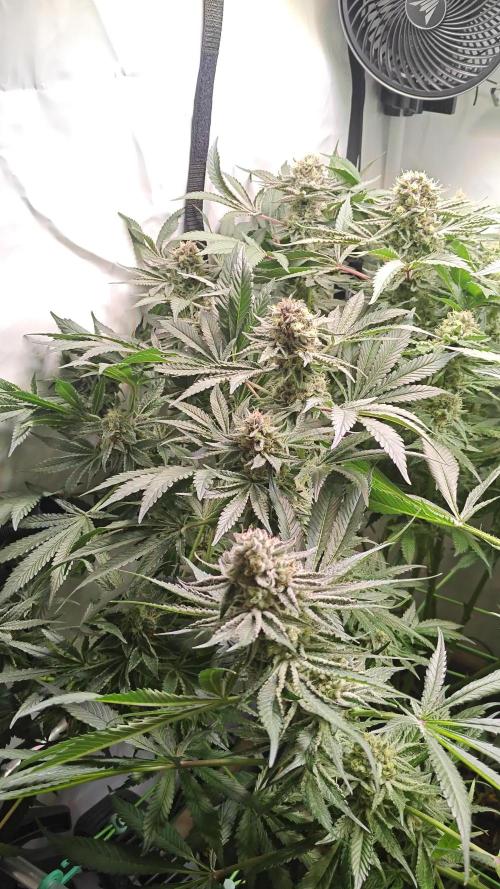
Partially harvested, waiting a week or mby 2 for the rest to ripen a bit more.


Likes
8
Share


@FarmerT
Follow
Week 9 looking good getting ready to chop down both lsd25s the big bud and cherry cola still have time to thicken up for sure
Likes
2
Share

@LegacyGrow
Follow
Deutsch:
Tag 56 Grow
Tag 2 Blüte:
Viel Zeit ist vergangen, und die Ladies haben sich – bis auf einige gelbe Blattspitzen – von ihrem Stress und dem Training erholt.
Am letzten Tag der Vegetationsphase wurde ein „Compost Tea“ angesetzt. Für 25 Liter wurden 125 ml Bio-Melasse, 250 ml Bodenhilfsstoff, 50 g Mykorrhiza-Granulat, 2 Liter Wurmhumus und 75 g Knochenpulver verwendet. Die Mischung wurde unter Sauerstoffzufuhr 24 Stunden lang belüftet. Die vermeintlichen Vorteile dieses Tees sind im Internet ausführlich beschrieben.
Der VPD wird in den Wochen der frühen Blüte weiterhin zwischen 1,0 und 1,2 gehalten. Das entspricht aktuell etwa 24 °C bei 61 % relativer Luftfeuchtigkeit. Der CO₂-Wert liegt zwischen 650 und 850 ppm. Das Licht wird während der Stretch-Phase schrittweise auf 100 % erhöht (aktuell 90 %, ca. 850 PPFD).
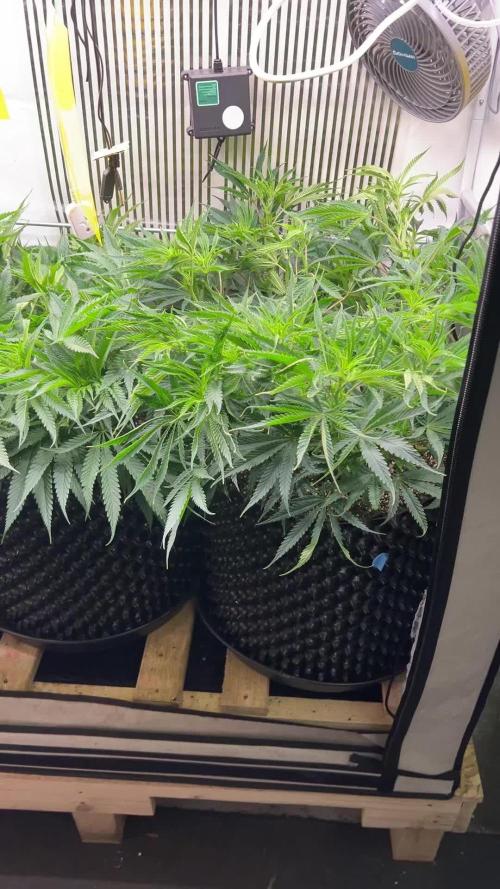
Da im Zelt noch Heizstäbe installiert sind, wird auf ein SCROG-Netz verzichtet.
Tag 59 Grow
Tag 5 Blüte:
Unglaublich! ich musste die Lampe in den letzen Tagen insg. 15cm hocher stellen um die gewollten 30 cm Abstand einzuhalten. Den Unterschied sieht man auch deutlich auf den Bildern mit der Gelbtafel als Orientierungspunkt. Die Lampe ist mittlerweile auf 97% ca 900 ppfd - auch das CO2 wurde entsprechend auf 750-900 ppm erhöht. Da die Ladies sich augenscheinlich sehr über den "Compost-Tea" gefreut haben, habe ich erneut einen aufgesetzt. Das bekannte Rezept von Tag 2 wurde verwendet.
--------------------------------------------------------------------------------------------------------------------------------------------
Day 56 – Grow
Day 2 – Flowering Phase:
A significant amount of time has passed, and the plants have recovered from stress and training, except for a few yellow leaf tips.
On the last day of the vegetative phase, a compost tea was prepared. For 25 liters, 125 ml of organic molasses, 250 ml of soil conditioner, 50 g of mycorrhiza granules, 2 liters of worm castings, and 75 g of bone meal were used. The mixture was aerated with oxygen for 24 hours. The alleged benefits of this tea are widely described online.
VPD will be maintained between 1.0 and 1.2 during the early flowering weeks. This currently corresponds to approximately 24 °C at 61% relative humidity. CO₂ levels are kept between 650 and 850 ppm. During the stretch phase, light intensity is gradually increased to 100% (currently 90%, approximately 850 PPFD).
Since heating rods are installed inside the tent, a SCROG net will not be used.
Day 59 – Grow
Day 5 – Flowering Phase:
Incredible! Over the past few days, I had to raise the lamp by a total of 15 cm to maintain the desired 30 cm distance. The difference is also clearly visible in the photos, using the yellow sticky trap as a reference point. The lamp is now set to 97% (approximately 900 PPFD), and CO₂ has been increased accordingly to 750–900 ppm.
Since the plants appeared to respond very positively to the compost tea, another batch has been prepared. The same recipe used on day 2 was applied again.

Likes
48
Share


@DogDoctorOfficial
Follow
The time to move this cutie pie to the autopot came and with it the feeding applications, for this i use all in one pellets from aptus and i use about 75g for the all cycle , wen transplanting i always use the mycor mixe help to promote my root with the fungus world life.
For now i will be feeding all in one liquid also but just until the pellets have time to brake and get available to my girl <3 <3 <3
Started her training with for me is just leaf bending and making sure that the lower branch get light and get a chance to grow the same high as the main one, or as close as i can get it <3<3<3
For this week this is it , looking flowerd to see her exploding so that i can plug in the autopots , but for now i will keep doing top feedings for a week or so <3 <3 <3
As always thank you all for stopping by and for supporting me on this journey, i am super passion about growing and fell blessed to have you all with me on this new journey <3 <3 <3
Genetics - Fast Buds Tropicana Cookies Auto
Ligth - LUMATEK ZEUS 465 COMPACT PRO
Food - APTUS HOLLAND
Tent - MARS HYDRO
All info and full product details can be find in can find @
https://2fast4buds.com/
https://aptus-holland.com/
https://autopot.co.uk/
https://lumatek-lighting.com/
<3 <3 <3 Growers love to you all <3 <3 <3
Tropicana Cookies Auto is the perfect variety for growers of all levels, especially beginners as this strain performs very well outdoors and indoors, and can produce up to 500gr/m2 in 56-63 days without needing extra maintenance. Reaching up to 110cm, this strain grows fairly tall with medium-sized branching, showing its mixed heritage. Definitely the right choice for those with a high tolerance looking to get their hands on the strongest autoflowers out there. Thanks to the 27% THC, you can expect an extremely powerful and long-lasting high that’ll boost your mood and give you that extra push you need to start your days on the right foot. This variety offers the whole range of citrusy and woody flavors with a strong candy-sweet background that will keep you coming back for more and more.
Bud description
Tropicana Cookies Auto produces gorgeous dark purple flowers, so expect really dark buds with gorgeous hues of pink, purple and blue, and thick dark-orange hairs that get completely covered in resin by harvest time, giving them an almost shiny-white appearance.
This variety develops a typical Indica-like structure and very few sugar leaves that will make your trimming sessions a breeze. But make sure to store your trimmings as the gorgeous flowers reek of a mouth-watering blend of lemon peels, orange juice, and sandalwood that gives it almost a citrus candy-like flavor that makes for the most aromatic hash and extractions.Smoke report
Thanks to the 27% THC, Tropicana Cookies Auto’s effect starts with an energizing head rush that gets your mind up and running while leaving you in a nice calm state. As the Indica-dominant side kicks in, the powerful cerebral effect gradually moves downwards and hits your whole body with a deep relaxation that leaves you with a joyful stoney sensation that alleviates chronic pain while leaving you in an overall happy and positive state of mind.
It’s the perfect daytime and nighttime strain as it can boost your mood and enhance a night out with friends but can also quiet your mind as you get ready for a good night of sleep. No matter the scenario, expect a powerful high that lasts for hours on end.Plant appearance
Tropicana Cookies Auto reaches up to 110cm and develops a tall main cola with shorter side branches, typical of hybrid strains. You can expect a stocky yet tall main cola with medium-sized side branches and thin fan leaves that fade into a yellowish hue with a beautiful dark purple tint. Thanks to the excellent selection, this variety develops a short internodal spacing that makes the medium-sized flowers look like they’re growing stacked on top of each other. It’s the ideal choice for growers who want to get big yields without having to deal with huge plants, as this monster yielder can produce up to 150g per plant while growing relatively short.
Grow tips
This variety grows super dense buds so make sure to space out the branches by tying them down, this way you improve airflow which helps prevent mold and other pests. Tropicana Cookies auto reek of a delicious sweet and sour smell so make sure to flush thoroughly to enhance the aromas even more. This terpene heavyweight finishes with lots of resinous sugar leaves that make for fantastic hash and extractions so remember to have your trim bucket ready!Flavor
Tropicana Cookies Auto boasts remarkably sweet flavors that resemble a blend of lemon peels and fresh orange juice, with subtle floral undertones that make it the perfect choice for extractors looking for unique terpene profiles.
Expect an overall citrusy zest that’ll coat your whole mouth and leave a delicious tropical candy-like flavor aftertaste. The sweet and sour flavors get balanced out with a herbal background that gets stronger as you exhale and gradually opens up, bringing out the whole range of woody, floral, and spicy flavors, making it the perfect choice for the most flavorful extracts.


Likes
1
Share

@xl_xzax-GNX
Follow
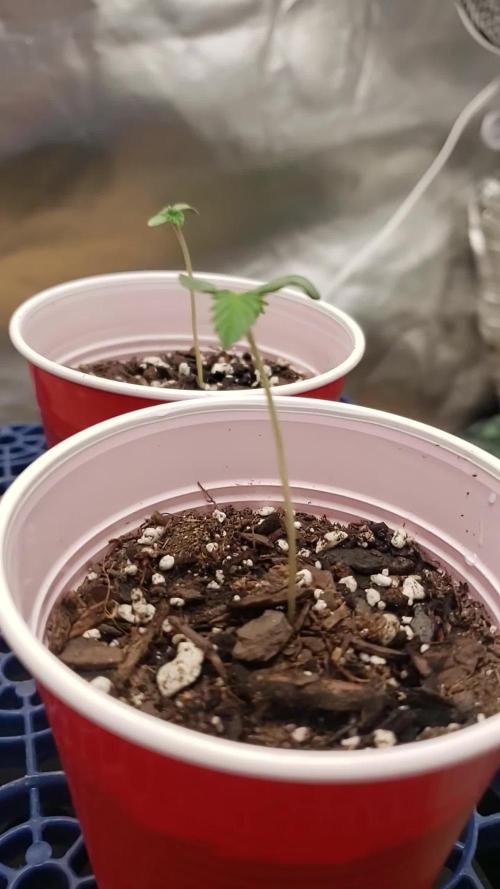
day 1 Jan19 12am initial Seed Drop
40 cell seed tray and dome 99rH
seed 1 75F (1hr post drop)
seed 2 77 (1hr post drop)
JAN 20 day 2 Seed A: Taproot ~2pm // Seed B: Taproot ~11pm
JAN 21 Day 3
22Day 4 failed restarted no Taproot penetration through root plugs and no sprouting from plugs
23Day 5 try 1 fail start germ try 2
24Day 6
25Day 7
**germination reset** -solo cups and direct into soil
day 1 jan 23 1 gmo cookie 3 purple urkle
day2-day3 Jan24-jan25 74F 62rH lost 1x purpleurkle
day 4 Jan26 74F 62rH
day5 jan27 74F 62rH
gmo Seed sprout cotyledon leaves with true leaves form and emergence
urkle #1 stem sprout still shell no cotyledon or trues
urkle#2 waiting Taproot in soil waiting for vertical push a
day6 jan 28 seed A seedling day 2 and Seed B seedling day 1
days Jan 29 seed#3 cut never emerged from soil
**SEEDLING**
jan27 gmoCookie seedling day1await purpleUrkle coytledon leaves& shell shed
jan 28 gmoCookie seedling day2 purpleUrkle day 1 seedling cotyledon and shell shed 8pm ct
jan29 gmoCookie seed 1⅝inch 25mL 6.6ph water purpleUrkle seed1⅛in 10mL 6.6pH water
jan30
jan31
feb1
feb2
feb3
feb4
feb5
feb6
feb7
feb8
feb9
feb10
feb11
feb12
Likes
39
Share


@Ginger_gnome
Follow
Everything is looking done. Been checking when lights turn on and just before you go out and the trenchomes are looking full and starting to turn amber. So first thing tomorrow there all going to get chopped down.
Well that's all for this week
Happy growing everyone.

Likes
30
Share


@BillMonroe
Follow
Absolutely love the CMH light. :) I can recommend it to everyone.
Flowering with 13/11 on/off
The scrog was a bit late. Next grow I can use it better. Plants are getting their hairs.
No spider mites so far. Haha.
I've added 50 watts of DIY led (see previous week). I think I'll add 50w more. My next step for this coming week will be to get some better air movement because my tent is more crowded now. I've sacrificed a plant spot for my good fan in this grow. The scrog net was installed to widen the canopy as much as possible
Critical XXL is just a day or 2 ahead of Pineapple chunk in terms of hair development. Size-wise Pineapple chunk started huge but the Critical XXL plants caught up and grew larger. Now, PC is making a comeback racing through the scrog net. The Pineapple Chunk makes really large leaves that cover the canopy. Needless to say I am excited to see these strong stems develop their buds.

Likes
14
Share


@Organnabis
Follow
They're growing nicely. I've managed to solve the fungus gnat issue without pesticides!!
Just waiting for another node or two and will top them both!
