


Likes
Comments
Share


@Kelly420
Follow
Girls look amazing. Buds fell over from the weight . Going dark for 24hours and then chopping. Will update with final numbers on the scale and the harvest pics.

Likes
1
Share

@Tropical_Growerz
Follow
Hi,
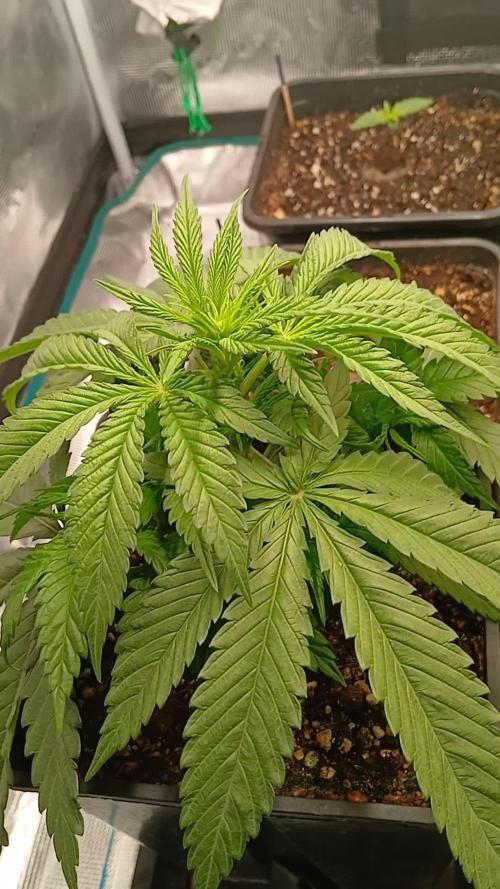
Growth is going well; I had to move a GorillaZ plant into this grow box to force it to flower.
I'm carefully observing their progress.
I'm thinking of taking some cuttings to preserve certain specimens.


Likes
3
Share

@eldruida_lamota
Follow
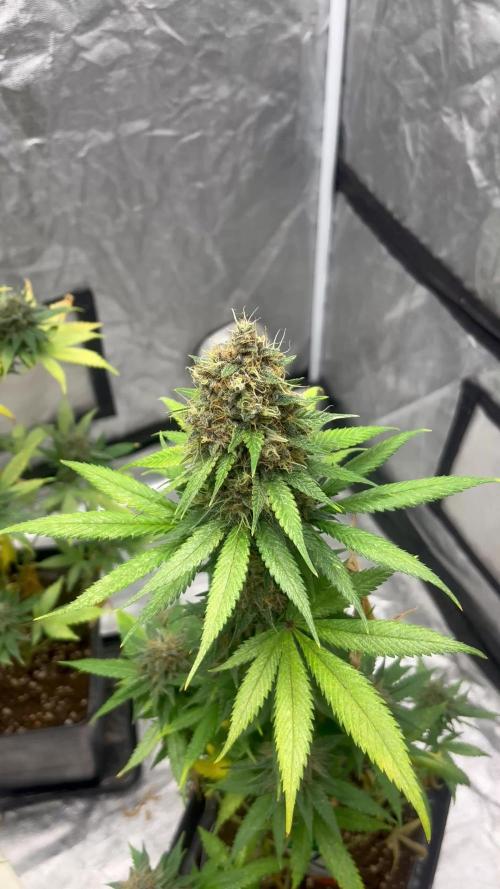
Que pasa familia, vamos con la novena semana de floración de estas Forbidden Mochi feminizadas de Seedstockers.
Vamos al lío, las plantas se trasplantaron a macetas de 7 litros.
El ph se controla en 6.5, la temperatura la tenemos entre 24/21 grados y la humedad ronda el 50%.
El ciclo de crecimiento puse 12h de luz, el foco está al 50% de potencia.
Me gustaría estar más encima este cultivo pero la salud me está impidiendo un poco estar 100% con el proyecto.
- os dejo por aquí un CÓDIGO: Eldruida
Descuento para la tienda de MARS HYDRO.
https://www.mars-hydro.com
Hasta aquí todo, Buenos humos 💨💨💨

Likes
31
Share


@MxGrow
Follow
Feliz por como van mis gorilas, todos los días hay cambios y cada semana tengo que aumentar el riego, esta semana utilice en total 18 litros, 4.5 litros para cada planta aproximadamente.
En los primeros 6 litros uso:
▪️︎4ml de Connoisseur A y B por litro de agua.
▪️︎2ml de Rhino por litro de agua.
▪️︎2ml de Bud Candy por litro de agua.
▪️︎2ml de Carboload por litro de agua.
▪️︎2ml de B-52 por litro de agua.
Espero 30 minutos y despues aplico otros 6 litros con los siguientes nutrientes:
▪️︎4ml de Connoisseur A y B por litro de agua.
▪️︎2ml de Nirvana por litro de agua.
▪️︎2ml de Big Bud por litro de agua.
▪️︎2ml de Overdrive por litro de agua.
▪️︎2ml de Voodo Juice por litro de agua.
No tengo medidor de EC, por lo tanto trato de que las mediciones en ml sean exactos con una jeringa.
☆ 1 día a la semana riego las plantas con 6 litros de agua sin nutrientes y con un PH en 6.0, hasta el momento no han presentado carencias pero tengo la duda si tienen exceso de nitrógeno por el color verde intenso de las hojas.

Likes
4
Share

@grimm420
Follow
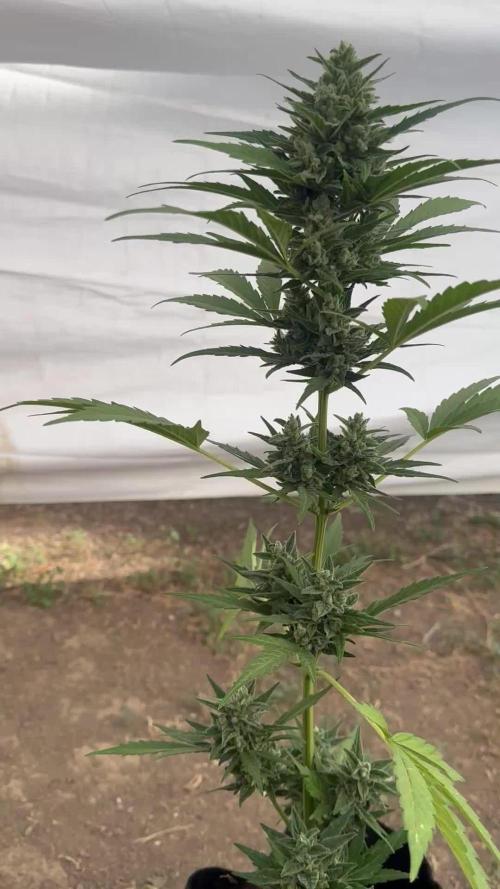
Small yield, I forget buds shrink a bit while drying even though I harvest often 😂 Overall though, beautiful strain! Next time I grow this I will lst, I loved the strong grape notes it gave during flower, a little bud fell in my trichomes! This thing is frosty as fuuck, the tiniest nugs ever but I think that was my fault, gotta reflect on what happened. I forsureee could’ve gone 2 or 3 weeks more but 11 weeks was good enough for me, almost all cloudy, few amber heads. Will update on weight and smoke report upon cure!
Dry weight stayed at 12g, dried in 5 days, 1 week curing and the sample nug came with a punch! Those trichomes are walking the talk! I feel a body and head buzz, but not couchlock-ish, could still be productive at ease. Imma cure longer and see how it smells like, dank with a slight pine smell, hoping to smell that grape note again!

Processing
Likes
20
Share


@Hawkbo
Follow
Most of them made it only 1 six shooter definitely didnt make it and a cream cookies is a lil stuck. I threw a mexican airlines in the old six shooter cup but just letting it germinate in the soil I havnt done that in a while. They are going to get another feed tmm. The medium is a 50/50 coco/soil mix since I'm using the green buzz and its organic I figured a little soil might be beneficial. Day 7 from germination they should be ready to go into their final pots in the next few days.

Likes
30
Share


@MrGoonai
Follow
11/21/24 Short facts:
- Watered: 1 x 0.75L, 1 x 0.75L, 1 x 1.5L, 1 x 1.75L — 4.75L
- VPD @ 1.4 — raised by 0.1
- Light @ 80% ~700 to 1050 PPFD
- BioBizz Bio-Bloom increased to 3ml/L
- BioBizz Bio-Grow increased to 3ml/L
- Getting colder! At night between 18 to 19°C
---------------------------------------------------------------------------------
There isn’t much to report this week. She’s doing fine, buds are getting bigger and thicker!
Since the weather is getting quite cold for the region - and we’ve already had a bit of snow - the cellar where my grow tent is set up is cooling down, with nighttime temperatures dropping to 18–19°C. Therefore, I’ve ordered some heat mats, which should arrive tomorrow. I’m aiming to stabilize the root temperature at around 22°C consistently, so the nights won’t be too cold anymore. I’ll go into more detail in next week’s update.


Likes
17
Share


@Reyden
Follow
Ho deciso che metterò un altro seme a germinare perche questa non è stata coltivata nel migliore dei modi, anche se devo dire che i fiori non sembrano male e non è sicuramente da buttare via 😅😆ma visto che i ragazzi di Super Sativa Seed Club mi hanno mangiato gentilmente i loro sticker coglierò l’occasione per fare un altro tentativo visto che ci sarà un contest nei vari social cercando di catturare degli scatti con adesivi e Auto Purple OG Punch da condividere su IG 🙌💚
La ragazza sta finendo di asciugare, avevo dato 6 litri di acqua ormai una settimana fa e oggi ho tolto le foglie 🍁 gialle ormai cadenti…la prossima settimana sarà il raccolto con aggiornamenti sul fumo!!!

Likes
82
Share


@WhiteEdge
Follow
28.04.2024
Continue into week 9
Clean nutrient tank for the last time...This is last week of flowering for almost all girls.
Electrical Conductivity (EC): 0.8 for this week..
Wedding Cheesecake: one girl finish this week, two others probably in middle of 10 week. Massive plants, tons of yelled. Creamy undertones, sticky buds. Love it!
They starve whole grow, didn't have possibility for separate line just for them. Love odor and bud structure.
Tropicana Cookies: Second phenotype will be harvested within couple off days. Insane plant, so frosty. It getting more colorful every day
Purple Lemonade: First pheno is insane! Shape, size ,color, bud hardness, appearance, frostiness' all attributes to become photo model!
Beautiful and high odor in the room!
Lighting Parameters: PAR Map: Maximum PPFD is 800, minimum PPFD is 550.
VPD: Ranges from -0.1-1.1
Daytime Temperature (DT): 23-24°C.
Nighttime Temperature (NT): 19-20°C.
Leaf Temperature: 21-22°C.
Light Distance: 45-55 cm from the plants.
CO2 Levels: 700+ ppm.
HLG Scorpion Diablo: Set at 60%, positioned at a 45-55 cm distance.
Girls drink less water, so for this week and till the end of flowering new misting timing's
Daytime: ON for 50 seconds, followed by 30 minutes OFF.
Nighttime: OFF for 50 seconds, followed by 45 minutes OFF.
Nutrient Tank (NT):
pH: Maintained between 5.80 and 6.00. Stable PH, small drifting up and downs
EC: 0.87
Temperature: 19-21°C
01.05.2024
Cruse mode , observing girls, looking trichomes under phone microscope. Still have to wait.
Purple Lemonade is almost ready all three girls. This is last week for them for sure.
Second Tropicana Cookies will be harvested in day or two..
First and second Wedding Cheesecake are finishing this week. Third still need some time.. Almost all pistils still white, only clear with some milky trichomes
Lighting Parameters: PAR Map: Maximum PPFD is 800, minimum PPFD is 550.
VPD: Ranges from -0.1-1.1
Daytime Temperature (DT): 23-24°C.
Nighttime Temperature (NT): 19-20°C.
Leaf Temperature: 21-22°C.
Light Distance: 45-55 cm from the plants.
CO2 Levels: 700+ ppm.
HLG Scorpion Diablo: Set at 60%, positioned at a 45-55 cm distance.
Girls drink less water, so for this week and till the end of flowering new misting timing's
Daytime: ON for 50 seconds, followed by 30 minutes OFF.
Nighttime: OFF for 45 seconds, followed by 45 minutes OFF.
Nutrient Tank (NT):
pH: Maintained between 5.80 and 6.00. Stable PH, small drifting up and downs
EC: 0.89
Temperature: 19-21°C
04.05.2024
EC start to raise slowly and PH is dropping . Low water consumption, girls finishing
Tomorrow is harvest day for second Tropicana Cookies and all three Purple Lemonade.
Last day off this week is going to be last day for Weeding Cheesecake also.
Without AC unit I'm not able to additionally control temperatures.. For drying it will be little higher temps, but it is what it is..
Water keep cool for whole week, from 18c to 20c, This week watering routine is changed to 45s ON time and 45min Off time
Every day perform one long misting cycle, 2min ON...
Nutrient tank is top-up with pure RO water + Hypochlorous [email protected]
05.04.2024
Second harvest day.. Purple Lemonade all three girls, second Tropicana Cookies also is harvested.
Lots off hard buds on this girls, frosty, fat, insanely hard buds. Odor in the room is fantastic 😋
Tomorrow on last day off week 9 , Wedding Cheesecake harvest, first Girl No.3 , then day after girl No.2.
Third Weeding Cheesecake is wait for a couple off days or full week. This girl is so massive, its a pounder in yield I think!
Likes
Comments
Share


@PersonalSmok3s
Follow
Overall was a pretty straight forward grow, had no issues through flowering until the last few weeks when she began to foxtail. This was either due to high temps or genetics, personally I think it was due to high temps and poor climate control on my end.
Although she foxtailed the buds still feel rock solid and smell of dank candy with a hint of fuel.
The bud to leaf ratio was high and there was very little to trim, I’m hoping for a minimum of 7 days to dry, il try push 10 days, but my environment for drying is not the best at the moment.
Hope this diary has been helpful 🌱
Likes
23
Share


@Seandawgemous
Follow
So looking like it's getting very close to harvest going by breeders advice and others i've sen with this variety. Mostly orange hairs nw only a few whites and they're starting to receed into the buds so i wanna flush well for a week or so and see how it go's

Likes
Comments
Share


@Weedwithwes
Follow
Day 84 from seed
Each auto is in different flowering weeks
So post is sorta confusing as my first diary
Sorry!
Everything seems to be doing good.
Just been feeding water since last update.
I will have new lights soon 4800 evo from mars hydro 2024 version planning to harvest the GDP before switching the lights out.
Day 87 swapped the light to the mars hydro 4800 evo 2024 model running 40-50 percent 12-20 inch from cannopies adjusting them slowly to new light and much higher pffd than before




Likes
346
Share


@Canna96
Follow
Hey now! This week went very well. I feel like she is finally done growing, and just starting to thicken up and ripen. I did switch from the liquid koolbloom to the dry, and within 48 hours or so I really started noticing the weight of the colas start leaning towards the floor. I did support the main colas last week, but this week I noticed several of the smaller unsupported colas started drooping to the floor, so i added a few support lines. I am thinking maybe she has two or three weeks left. I am not a big believer in an all out flush, as I do not wish to stress her out even near the end. Rather, I am gradually weaning her off the nutes over the next 2-3 weeks. She is starting to get brown tips on almost every leaf so not sure if this is just her being near the end or a bigger issue?? Any advice please hit me up! I'm still struggling with humidity issues, but she seems to be ok! Thank you so much to everyone in this community for all the love, support, and help with my first grow. Thanks and blaze on!

Likes
6
Share


@Lymegrow
Follow
Smell is starting to get very noticeable with the tent open. This is the last week of fert I'm going to do.

Processing
Likes
2
Share


@PlantGod
Follow
This thing is insane!
Rapidly growing everyday. I need to keep it under control for another for about 30 more days before I can fit it in my other tent.
Likes
8
Share

@Chubbs
Follow
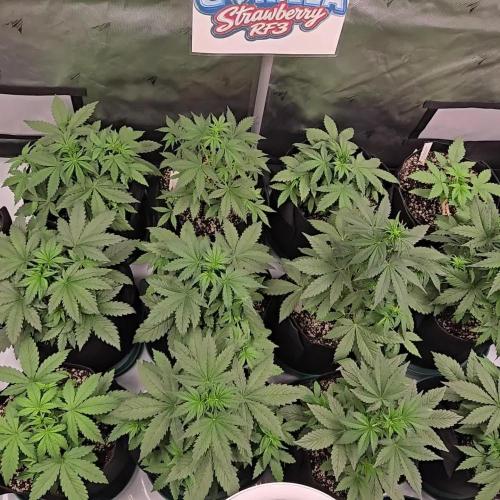
What up Fam, weekly update for these ladies. This week's pretty quite, nothing crazy happening. They getting 16oz of feed about every two days. Still just calmag and ph'd water. I will be giving them there first defoliation this coming week as well as add some bloom nutrients as I think this will be the last week of veg. All in all Happy Growing.
Processing
Likes
20
Share

@eldruida_lamota
Follow
Buenas noches familia, aquí ando fumando un plajo, actualizando esta farm cheese que no veáis cómo empieza a oler, bastante sana, acepta muy bien la alimentación , un fallo podría ser que me pidieron agua y hasta el día siguiente nanai, pero nada serio.
Ph controlado en 6.2 la temperatura no sube nunca de 26 grados con el led de mars hydro y la humedad se mantiene por debajo de 50%. Todo va muy bien.
Poco más que decir estoy deseando que pasen las semanas para cosechar, buenos humos fumetillas.

Likes
Comments
Share


@BalconyBoy
Follow
07.07.25 The Auto Amnesia ist taking up shape nicely. Some yellowing leafes but not many, no pests taking a hold so far on this strain, few thrips bites only.
The Lemon Kix has some leafes with powdery mildew which I'll keep watching and spraying with H2O2 solution every now and then. Maybe 4 weeks left for this one.
The cream cookies I replaced in a mini pot is about 10-14 days from finishing. Half of the trichomes appear cloudy but very few amber still. Sadly this one's has quite some pests for its size, which means it will end up in the rosin press if the ladybugs don't clean it up before harvest.
