


Likes
Comments
Share


@Ctrellis90
Follow
So I'm hoping that were all done stretching because I'm all out of room to raise my light! Lol
These ladies are huge! I'm so friggin stoked for these two, I cannot wait to see more flower production.
I increased the nutrients for transition and everything is looking lovely except for some minor calcium deficiency showing on some of the bottom leaves. Next feed I'll add 5ml of cal mag to the mix and see if that helps. It has started to go away little by little since the last feed because the nutrient solution dies gave some cal mag in it but I guess just not enough for this big bitch lol.
Until next week.


Likes
20
Share


@Xabii
Follow
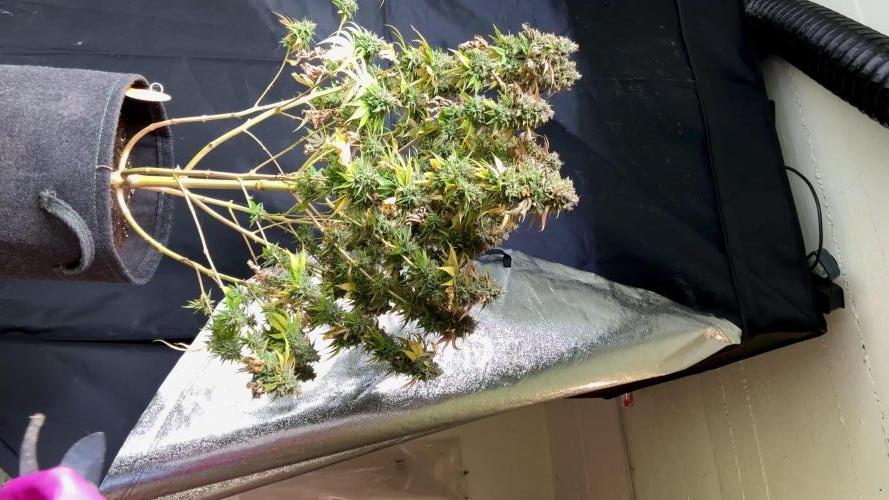
Did defoliation as usual and a little lollipoping.
Did 2 complete refills of the reservoir, ph stayed stable for 1 day after the exchange but then super unstable again.
Dropped the EC with the second refill to 1000 to see if it stays stable.
Ori is going good, already looking frosty, NL#2 is comming aswell, NL#1 not so much.



Likes
Comments
Share

@gaucho420
Follow
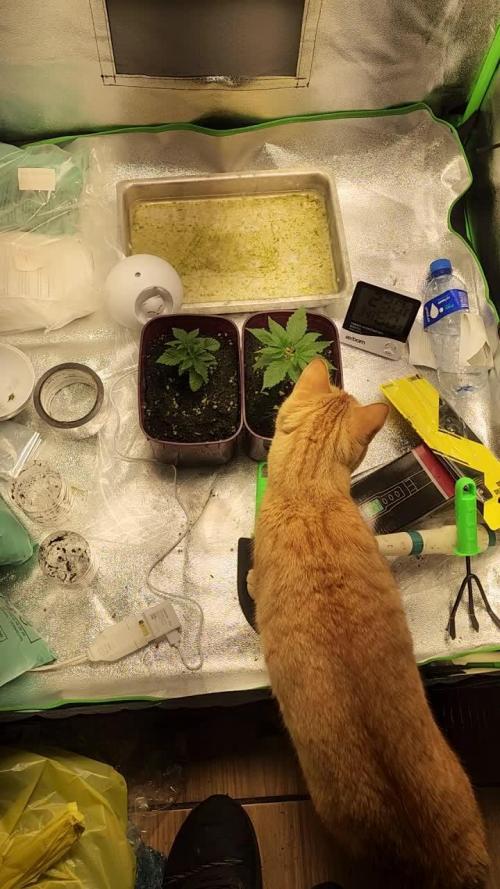
Na primeira semana pós transplante, as plantas começaram a reagir e ficaram com folhas bem escuras. Acho que passei um pouco do ponto com os nutrientes, porque as bordas das folhas queimaram um pouco. Depois que vi as plantas estáveis, parti para a primeira poda do topo principal, no terceiro nó.
Likes
10
Share


@Lazuli
Follow
What a fat dense buds she got, i switch to overdrive now and some calmag, no more nitrogen so she is faded at week 12 and ready for harvest


Likes
45
Share


@masterofsmeagol
Follow
9/17 Didn't know this was a new week or I would've taken more pictures. I'm glad I took those two plants. As it dries and I start to trim I could see where it could've turned to rot real easy. It rained enough last night to soak all the girls. The two bottoms I harvest look like the have pm on them. If so I'll wash it or through it in the concentrate bag. Found a few colas a dropped which will go in the concentrate bag. Scoping the toasted toffy and the event horizon and the both look AMAZING! I've scoped the others and I'm extremely impressed. They may be difficult to grow strains but they have high cannabinoid content. The sherb cream pie has really come to life and turned totally purple with beautiful flowers. The girl in the 50 has several soda can sized buds. I hope this weather holds up. I don't like flowers this size getting wet. The sativa leaning hydrid us the only one I may have trouble with. It's only in a 10 gal but it's enormous! If needed I coyld bring it inside at night. The buds look like cat tails. I'm used to growing indica dominant strains. Plant us super healthy though. I'll be intrigued jail for a while and I've gotta make contact with whoever is going to do my extracts. I'll keep this updated. It's a lot of work bur it's worth it.
9/18 WATERED EVERYTHING I GALLON BUT THE BOTTOMS OF THE 2ND EV AND THE TT WHICH EACH GOT A HALF. Since harvest I've noticed some pm spring up on the toasted toffy. Looking at the other event horizon through a scope the trichs are all milky with some amber. I'm just waiting for A LITTLE more amber. And for me to have time and or room. I decided to harvest the tops and majority of one of my event horizon and toasted toffy. Today during an inspection I found a couple grey mold branches and some botrytis on my big GMO on the back. This plant is done. It's by far the furyhest ahead. Septoria effected the yield a little but pistols were retracted and amber was at like 10%. I thought about it and I watched the plant next to it with the pm have a branch I supported just "slough off". Right in my face. I figured if there was a sign tjis was it. I cut that rot off and put the buds from the branch in a bag and froze them then I went around and harvested the limbs on the other plant that were furyhest along. I took about half of it. I could've taken more and maybe I should've but I'm tired. I also noticed a couple spots of grey mold on the plant in the 50. All the leaves were falling off. I finally scoped it and it was right whetr I wanted it to be. Looking at the colors I'm glad I spent so much time the past few days. That one I hung whole. The sherb cream pie has something eating the fresy shoots (probably ear wigs. But the buds are fattening and the trichs aren't quite there. I'm going to let the rest of this stuff go ad long as possible. With the exception of the other event horizon. I finally tried it. It's fucking killer. I could take that plant now. The only reason I'm not is because I have to much work on my husband's as is. I'll do some videos amd pictures but I'm tired as fuck. Got to try event horizon. Very fucking impressed!
9/19 The past 3 days I've been working 5 a.m. to dark. I went back and harvested the bottoms of the toasted toffy and event horizon 1. After injury from harvest they contracted wpm. I used this as a learning experience and put some away in the freezer for concentrates and used a peroxide and water bucket. That's what kills the p.m. anyway. I hung them and they spun in the wind. I blew them lightly with a leaf blower before putting them ok strings I had previously setup with a fan in front of it. I kicked ass today. Toasted toffy got sampled and did NOT disappoint. I had it in a jar though and it was green so I'm not counting this. I do have some dry. I have indoor left too. Like in the video that one GMO looks like it's fucking dying or something. I'd rather cut it and use it for concentrates if it effects my healthy plants. I just checked on that plant in the 50 I hung. It looks amazing under the scope and smells better. Decisions, decisions. I do have a few calls I should make sooner rather than later. We are supposed to be getting rain.
9/20 The past 3 days have been hard. The wife's medical stuff is acting up and I had to tend to harvesting a few. My whole body hurts. I even did my first bud wash yesterday! The ev and tt I took and left some buds on ended up covered in pm. So I decided fuck it and tried bud washing. I also froze some for extracts. Speaking of which I need to male contact with whoever I'm going with this year because I think I've reached the point of diminishing returns on that dieing GMO. When it comes to grey mold and botrytis I don't fuck around. Winds are really high today. Putting the scope to the sherb pie is making me second guess myself too. Oh well. It's not going to rain today. And if needed I can move them in the barn. If I get ahold of Mt processor I'll chop that GMO and bring it right there. The other thing is that I've got tons of weed and a lot of its hanging so I've gotta find someone that will do a batch of live rosin then like a elbow of dry. This is the best part of the year. We'll It's supposed to be. Cutting down good plants us bittersweet. I don't mind chopping that one gmo a little early though because it's close to hitting the point of no return. That little sativa dominant hybrid in the ten is HUGE! The buds are swelling like crazy too. It's got a COUPLE septoria spots but this thing is resilient and easy to move around. This will finish perfectly. So far I'm happy with what I have. I'm GRATEFUL. The two September plants I tried were GREAT. A 90/10 and an 80/20 and they both suprised me and got me exactly whete I wanted to be. I'll keep things updated. I did a video I'll upload.
9/21 Weather is still great and the buds don't even seem wet in the morning. The thing is is that something (rot or ear wigs probably both) have stripped lower interior branches. In some cases stripping them ENTIRELY or chewing the stem right off. It wasnt happening to my favorite GMO or the one in the 30 and the like on in the ten. The Sherb pie I noticed grey mold on 3 different branches. Last time I checked trichs it wasn't ready but I've got to get a handle on this mold/pests or it's going to he taken a little early. We have incliment weather coming Wednesday I think. I'll bring the 10 inside and if I have to I'll bring that perfect GMO in as well. I'm going to scope everything again today. I called a bunch of extractors for prices. I was going to do fresh rosin and just yank and drive but that is looking to be harder. I can get badder made CHEAP from a reputable lab. I think I'll do that. They prefer dry and that way I could through what's left from last year in there. I have this other one GMO that I've had the same issues with. I'm sick of removing bud rot or having to cut interior branches off due to pm. Tried toasted toffy and it was fucking amazing. I'm planning on trimmingvthe ev and if I finish I can bring the other one in. It's done. It's not getting any bigger. Trichs aren't changing. That GMO I am going to scope when I get home and it will be coming down in the next couple days. Otherwise I'll end up with half of what's there. The GMO I took the tops from is finishing up too. If I scope that and it looks decent and I have the time I'll take the remainder. I'm leaning towards doing at least a lb dry for extracts. I've got some frozen. I've got some hanging and most is still in the ground. I sleep on all major decisions. However, I know getting my nice buds soaked when I'm already losing shit to budrot and grey mold isn't the smartest thing. I'll probably take what I can and bring the others inside to keep them safe. I didn't think I'd have this much quantity. I knew quality would be good but this isn't a bad year quantity wise either. I'll keep this updated.
9/22 Busy as hell! Rain coming Tuesday. After a final check of the scope and the flowers and I took the GMO that all the leaves had fallen off of. That plant is going straight to extracts with the one in the thirty. I also "finished" harvesting that GMO that was furthest along. Trichs were getting amber. Been in trim jail. Was going to take the Sherb Pie but I'm not seeing amber yet. I did have to cut off some branches that had rotted. I'll keep an eye on it. It will come down when it's ready. It just sucks losing little bits of it. My favorite GMO is sooooo close to perfect. I should just take it but I'll wait. If we get rain I'll bring that and the sativa looking one in the ten is the barn. Back to work now. Before I forget what strain is what lol.
9/23 Still busy as fuck. I chopped the other event horizon amd hung it whole. It's DONE and it doesn't need to go through the rain storm. I also took the majority of the GMO early pheno. What's left will get plucked off and used for extracts. The big one in the 50 is getting dry. I have finished the event horizon and I'm not "finished" with the toasted toffy but I have it in 5 gal buckets with a food grade lid so u can at least cure correctly. The gmo is still hanging. I'm wondering whether I should wait it out or chop. I'm gonna take care of what I have inside first and hope that shit doesn't eat my plants or that it doesn't rot off. That perfect GMO has one branch with some grey mold. I might cut it off. I'll keep this

Likes
47
Share


@GanjaReaper
Follow
Hello Everyone 👏,
As you can see, are all Cherry Colas growing, they all have a tightrips in their pots for now, for recognition.
Will make nicer pictures of them in a few days.
They are now 4 days from germination🙏.
The humidifier had been added, so I had to adjust the room a lil bit.
Seedlings don't need much nutrients, neighter do autoflowers. with normal soil I would recommend to only give water for 1-2 weeks, since it holds nutrients in it as well.
But since I'm using Cocos for this grow, I might have to add some basic nutrients in the upcomming week.
For this week I gave/give only water turns and Startbooster turns.
Update day 5:
- Lowerd the lights to avoid stretching. they are now at 75cm distance from lamp to pots.
I want them at 40-50 cm, but I don't want to rush it.
- Added another layer of cocos to avoid the soil from drying up therefore the roots from dying.
This will happen because of lowering the lamps down, the soil will get exposed more to heat.
As you can see, the humidifier is doing his thing haha. Pictures and videos where taken without the lights + fans on.
because of that, it will look like this. Still fun thought.
Enjoy 🙌
Likes
172
Share


@SlowpokeFuegobud
Follow
DAY 66
Watering every 3 days.. 💧I always do 2L and stop when I see runoff.
Now, I can smell fruit. 🍒 See the fat trichomes, this stinks, I can tell you. 😏
DAY 68
I checked trichomes, I actually didn't expect any plant to finish "in time", but this one has all cloudy trichomes! Huh! 😳
So I took a small bud to test smoke.. it's drying now. Smells like Coke, and like something sweet from my early childhood when I didn't have a memory. It's subliminal paradise. And then it smells like weed, really pungent, yeeeesssssssss!!! 💪
HOW CAN THIS PLANT ACTUALLY SMELL LIKE ACTUAL COKE??? It's an unmistakable coke fragrance! You know, I see myself in the future, just flinging some well-smelling flowers left&right over my shoulder instead of perfume.. 😋
Getting ready for harvest!
DAY 69
Watered with BioEnhancer.. 💧 :coral: 🐚 🐡
💚
TS1000 at 50cm, running at 75%. 💡
🍒 ❤️ 🍒 ❤️ 🍒 ❤️
Have a wonderful week! 😘
🍒 🍒 🍒 🍒 🍒 🍒 🍒 🍒 🍒 🍒 🍒 🍒 🍒 🍒
_____________________________________________
SET UP
Mars Hydro LED TS1000 sponsored by @coco_pan2022 😘
https://www.mars-hydro.com/led-grow-lights/ts-1000-led-grow-light
custom exhaust fan 270/320 m³/h
3x Garden High Pro fans 5W
tap water EC 0,25 - adding Calmag to EC 0,4-0,6 - adding pH minus Bloom (AHH) to pH 6,5
50% Plantaflor organic tomato soil 🍅 50% biobizz Lightmix
Likes
5
Share


@ChiloteAnonimo
Follow
La pandemia kush es la más avanzada y se le empezará a regar solo con agua al igual q la Trimosa x mimosa_1
La Trimosa x mimosa tiene un problema con absorción de agua, pero ya está siendo solucionado

Processing
Likes
26
Share


@MG2009
Follow
02/11/2021
Calling it day #1 of veg, she will stay under 1000w MH at least through veg cycle. Going to transplant when roots coming out of bottom of her pot until then watering very little each day(50ml.) and checking pot weight. Going to get some myco for transplanting to reduce stress during transplant.
Ps.
Going to have to raise my substrate temp I think it is fine, but prefer it to be warmer around 68°-70°f
See ya next time. New pic is day #5 of veg getting bigger
Likes
28
Share


@TheHighentist
Follow
WEEK 6 and i am as impatient as i could be.
This week should be the moment of truth, when it comes to thickness of the buds!
👽👉14/11 Waterday*
I upped the BioBloom and TopMax for PK and less BioGrow for nitrogen.
They are FROSTY as ever! Very satisfied
BioHeaven 4
BioGrow 2
BioBloom 4
TopMax 4
Rootjuice 1
👽👉 15/11
One of the ladies is very hungry and showing signs of needing PK
👽👉 16/11
Atm because the outside climate has a big influence on my indoor climate, lower temperatures at night have been occuring.
Battling the temps by having dehumidifier running with heat
👽👉 17/11 Waterday*
They got same feed as last time, but giving a bit more volume now
👽👉 18/11 Christmas coming early, frosty times
👽👉 19/11 I had some buds that got too heavy and fell over, Fixed with some natural thread to hold them up
👽👉 20/11 Close to getting another SCROG to hold them up, but i think its time for harvest soon
Likes
11
Share


@Mo_Powers
Follow
another week has passed and it is growing and thriving excellently. there has been a lot of sunshine and occasionally the necessary rain from above. no pistols to be seen yet


Likes
7
Share

@Elcogollosagrado
Follow
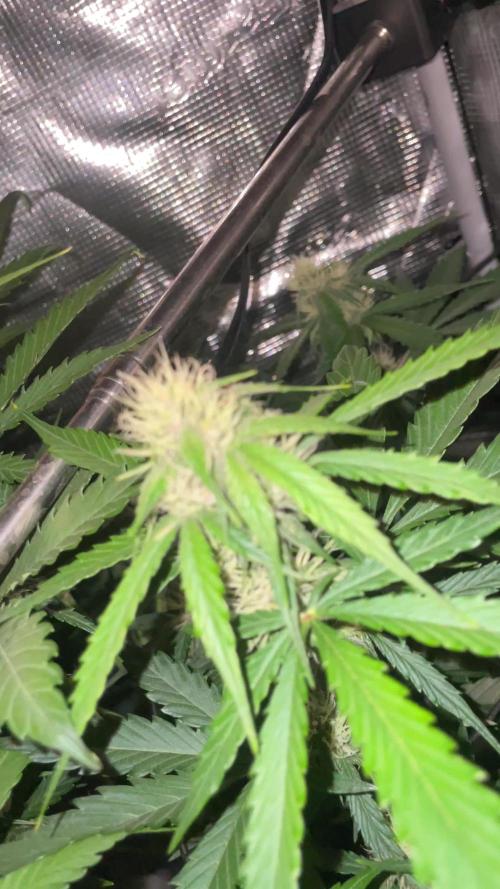
Esta semana ya ha entrado todas en floración la más lenta la Zombie kush auto y la más rápida la Radical juice


Likes
77
Share


@DogDoctorOfficial
Follow
Week 10 Flower — The Beauty Before the Finish
This week marks a very special chapter in the Eternity Grow Cup. As we approach harvest, the garden is simply glowing with beauty. Every corner, every canopy, every branch tells a story — and this week, I’ve taken the time to slow down and capture that story as best I can through the lens of my camera.
All the photos you’ll see in this update were taken with care and intention. I use my Sony camera in full manual focus mode, and I don’t just snap and go — I spend time with each plant, each angle, waiting for that perfect moment when everything aligns. These are not just photos to document — they’re my attempt to reflect the feeling of the room, the energy of the grow, and the soul of each plant.
Just like with the videos, I don’t shoot randomly and decide later. I record what matters, and what I record, I use. It keeps me focused, organized, and deeply connected to the process — and I believe it helps me tell the story more clearly, whether through stills or moving pictures.
All five Runtz phenos are finishing beautifully. Each one expressing unique traits, but all carrying the same stunning quality — dense, clean, colorful, resin-rich flowers that fill the room with pride. This garden is finishing spotless, and I couldn’t be happier.
This week’s YouTube episode will reflect that beauty. If you’re seeing this here on GrowDiaries, I highly recommend checking it out in full 4K once it’s live — there are moments that simply can’t be translated in photos alone, even though I try my best. But for those who love the details, the full spread of pictures is right here, as always.
t this point in flower, the girls are not eating — they’re just drinking clean water with nothing but System Clean in the reservoir, at a rate of 0.25 ml per liter. This is part of a gentle, prolonged flush phase I like to implement, giving the plants a chance to metabolize and fade naturally. The goal is to promote clean, vibrant flowers that finish with optimal expression, without rushing the process. No forced flush, just time and care.
Lighting-wise, the spectrum has been tuned with precision — we’re currently running 40% on the whites, with reds and UVs at 100% to drive trichome development, resin production, and color expression in these final days. The plants are loving it — they’re soaking in the deeper wavelengths that signal the end of their life cycle and responding with a final push of energy.
And yes — we’ve been running 11 hours of light and 13 hours of darkness from the very start of flower. It’s not the usual 12/12, and it comes with its pros and cons. On the upside, it helps speed up ripening slightly, encourages more compact flower formation, and mimics the natural seasonal decline in daylight. On the flip side, it slightly reduces the overall DLI (daily light integral), so you need to ensure your PPFD and spectrum are dialed in just right to avoid sacrificing yield. For me, the trade-off is worth it — the plants are expressing themselves beautifully, finishing strong, and packing on the final magic.
Now it’s your turn — I’d love to hear from you. Which phenotype is standing out the most to you in this garden? Which one is catching your eye with its colors, its fade, its structure, or just that vibe that speaks to your soul? Is it the frost? The density? The posture? Each of these girls has her own personality, and I know many of you have been following closely — so drop a comment, let me know: which one is your favorite? Which one would you take home?
This run has officially earned the Dog Doctor Official Wax-Sealed Stamp of Approval. These genetics are beautiful — expressive, vibrant, clean. It’s been a joy to grow them, and an even greater joy to share this journey with all of you. Of course, we still have the final word coming after harvest, drying, and curing — that’s when the full picture reveals itself. But until then, based on everything we’ve seen and lived in this grow… this is the real deal.
To everyone following the journey — thank you. To the sponsors, the community, the silent observers, the passionate growers, the haters, the lovers — I see you all, and I appreciate every bit of energy you send.
This cup has been about more than just growing. It’s been about sharing. Connecting. Creating something beautiful together. And we’re almost there.
Next stop: harvest? provably yes lets see !
Growers love always 🌿❤️
DD
Genetics - Runtz https://www.zamnesia.com/6000-zamnesia-seeds-runtz-feminized.html
Nutrients - Plagron https://plagron.com/en/hobby
- Aptus Holland https://aptus-holland.com/
Controls - Trol Master https://www.trolmaster.eu/
LED - https://www.futureofgrow.com/en
LED - https://www.thinkgrowled.com
Soil - https://www.promixgardening.com/en
Germination - Cannakan https://cannakan.com/?srsltid=AfmBOopXr-inLXajXu3QFgKXCXXos4F1oEvScjMKIB5MR5dk8-GJ-F49
DOGDOCTOR 15% off
Smoking Papers - https://ziggioriginal.com/
Terpene saver - https://grovebags.com/
As always thank you all for stopping by, for the love and for it all , this journey of mine wold just not be the same without you guys, the love and support is very much appreciloved and i fell honored with you all in my life
With true love comes happiness Always believe in your self and always do things expecting nothing and with an open heart , be a giver and the universe will give back to you in ways you could not even imagine so
As always, this is shared for educational purposes, aiming to spread understanding and appreciation for this plant. The journey with nature is one of discovery, creativity, and respect. Let’s celebrate it responsibly and continue to learn and grow together!
Growers Love To you All 💚
#EternityGrowCup #RuntzHunt #GrowersLove #CannabisCommunity #AptusHolland #ProMixSoil #TrolMaster #Zamnesia #Plagron #ZiggiPapers #Grovebags

Processing
Likes
Comments
Share


@Mr_nugs_lover_David
Follow
I'm having some trouble with a leaf that is showing a problem however I don't know what's going on with her because she's being fed up with the same to the other plants in this grow and she's the only one showing that,I think it's a burn leaf maybe because of the water and three sun hitting too hard,but I only water from 21:00pm every day so let's see if I can solve the problem

Likes
1
Share


@AZTERPHUNTER
Follow
Start of week eight of flowering. Wish I had more time on training these. Trichs are crazy on them. Just got to busy and need to trellis earlier first week of flower. Terps are crazy and getting better definitely some good beans to get.


