


Likes
Comments
Share


@Viccrazyweed
Follow
Shit got out of control, i had to perform an LST to keep the big sister under control and she is the biggest plant I’ve ever grown although
She is developing buds everywhere and im not really sure but for me this is bad as i think sometimes less is more, its clear that the plant just can’t distribute the same nutrients on 10 buds/20buds, so i expect them to be soft and not potent, maybe THAT xxl pheno, im sure someone else could have get even more, shame that I can’t clone her
Little sister is looking so nice tho, Perfect structure, just amazing looking and beautiful to its maximum

Likes
4
Share


@MoonFlowerOrganics
Follow
Welcome back for week 8 of life and the end of week 2 of flower. Busy week for these 3 ladies. In 16 days these girls have tripled in size. I switched to flower at 18 to 19in and 2 of these girls are slightly taller then 4ft.
This strain is definitely has not stopped stretching sense the beginning. Topping and lst couldn’t keep them down. I try to keep an even canopy little over 3ft so I can avoid light problems but these girls are going to test my tent space and light.
I added a video this week so everyone can see the difference compared to my other plant, which include 2 other royal queen seed strains.
I’m couriers to see how buds will form on these girls. Definitely about 4 to 5in in between growth noobs. I don’t expect to see a large yield but that’s definitely my fault for not training a little to keep them more compact.
Excited for the last 6 weeks of flower. Sink or swim at this point, but who doesn’t love a good challenge.
Stay Tuned!

Likes
4
Share


@eldruida_lamota
Follow
Venga familia que ya viene la cosecha de estas Runtz de ZamnesiaSeeds, que ganas que tenia ya de darles machetazo.
No veas que pinta que tienen estas plantas.
Las flores aparte de prietas se ven bien resinosas.
a sido una genética con la que disfruté bastante cultivarla, no es a mi parecer complicada cultivarla y merece la pena si eres cultivador con o sin experiencia que busque sabores exóticos de genéticas calis
Agrobeta:
https://www.agrobeta.com/agrobetatiendaonline/36-abonos-canamo
Hasta aquí es todo

Likes
7
Share

@SuparWawfflez
Follow
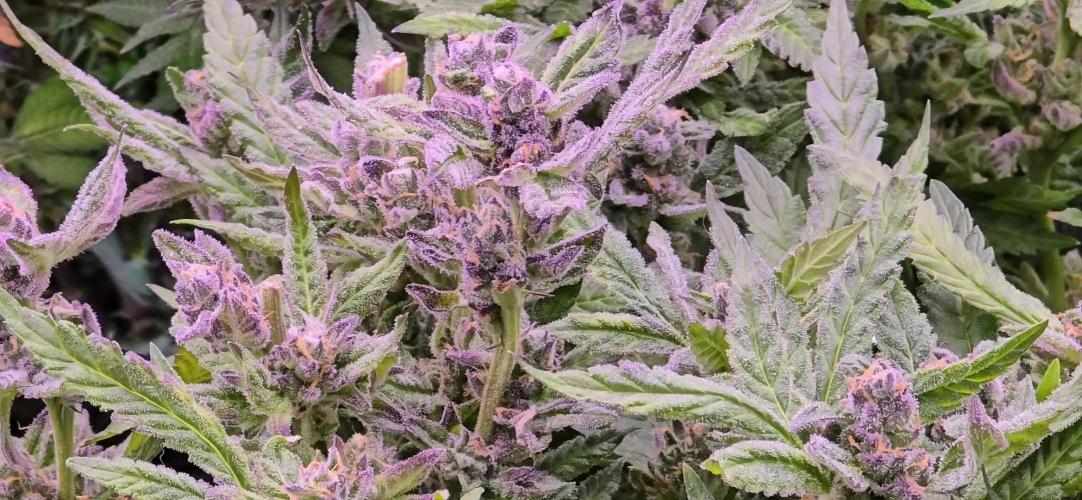
Pulled tops off Nam wah and kush mintz 3/1
3/5 I think I won't bother spreading the canopy out next time, the plants do pretty good on their own under this light, as shown by the gskz and the bbmk clone that went in and lived their whole flowering lives under this one light.


Likes
152
Share


@ThrashedTV_BakedByGlaze
Follow
VIDEO ADDED: DEC 29 2020!
--
PHOTOS ADDED: DEC 27 2020! MORE COMING
VIDEO?!
--
Smell is starting to come down from the fresh cut, definitely has a great look to the bud as the cure goes on, have two 8 gram boveda packs in there after a few days with one that was WAY too big for it 😂
Brought down my Chocolate Mint OG in my other diary right now as well, way more weight to that last plant... probably more than both these Chem Bombs combined, great genetics over @Humboldt_seed_organization 😎
--
PHOTOS ADDED: DEC 23 2020! MORE COMING!
--
DEC 19 2020 - Harvest Day
Chem-Bomb Auto .. DONE.
Step-Brothers ... CHOPPED.
Buds.. TRIMMED.
Giving them my first bud wash tomorrow! Already juiced the lemon, have the spring water, and off-brand baking soda because COVID has every place sold out of Arm&Hammer 😂
Dale: 50 Grams Wet Buds/Stem
15 Grams Trim/Larf = Total 65 Grams Wet
Brennan: 55 Grams Wet Buds/Stem
12 Grams Trim/Larf = 67 Grams Wet
Total Wet: 132 Grams (Buds/Stems/Trim)
Looks like I'm getting in and around the "1 Ounce per Auto Plant" range with my basic soil/hand feed system. The CMOG from my other diary looks like it will be my first 1OZ plant when it dries.
With my past experience of wet buds drying out to about half of bud weight, I'm hoping that they both come in JUST under an Oz a piece.
Going to update with more pictures, going to take a couple days to dry and get a good weight and hopefully get somewhere close to the 64 grams of the ONLY sized Boveda packs I have right now 😇
--
UPDATE - Dec 20 2020 - Cure Day
😵😭 i once again got my hopes up by pulling the classic male "over-exaggerating" and all the wet weight came from the main stems. After 3 days or so of drying both plants together came in just under an ounce. The smell is great and I have no doubt it's quality bud but I need to up my density game somehow for sure. New nutrients or better set up, still very low-end with all my equipment as I've just slowly been finding affordable pieces to add as I go. Maybe more light? Feel free to hit me up below with ideas short of switching to a Hydro set up 😹 I can hardly afford my bags of soil so I definitely couldnt keep up with the financial costs of a Hydro set up yet 😓
Have had a few bowls of the dried/uncured bud and it's very nice, clean, and crazy good for being uncured at this point. Just the classic flower taste from the chlorophyll but the pineapple/tropical taste is coming through nice already.
Final Stats:
26g Dried Bud
26g Trim
--
Thanks for checking in! Will be updating soon and posting more pictures! Throw down a like and/or follow so I can return the favour 🙌
--
IG: @GlazedGrow (DM and let me know you're from Grow Diaries so i can follow back!)

Likes
2
Share

@LeosLivingSoil
Follow
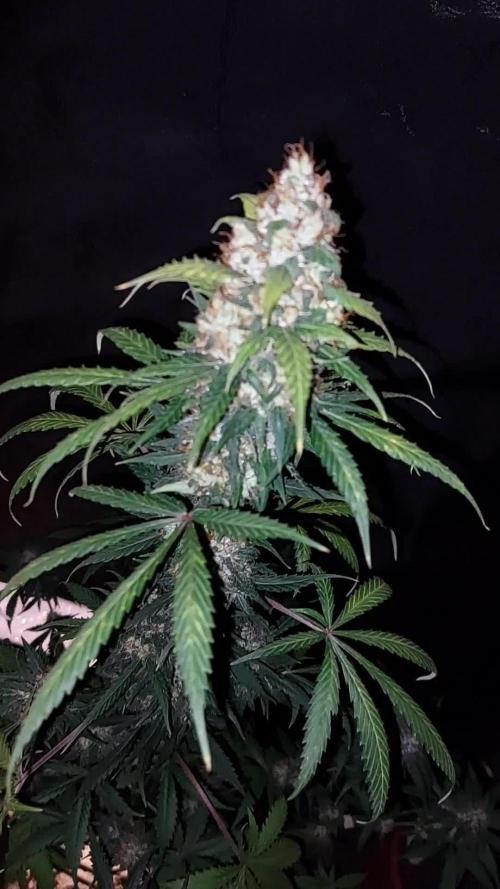
Die Knospenstruktur find ich echt klasse vorallem die Haare wirken richtig orange/rötlich anstatt bräunlich, war ein Augenschmaus.
Likes
7
Share

@CanOli95
Follow
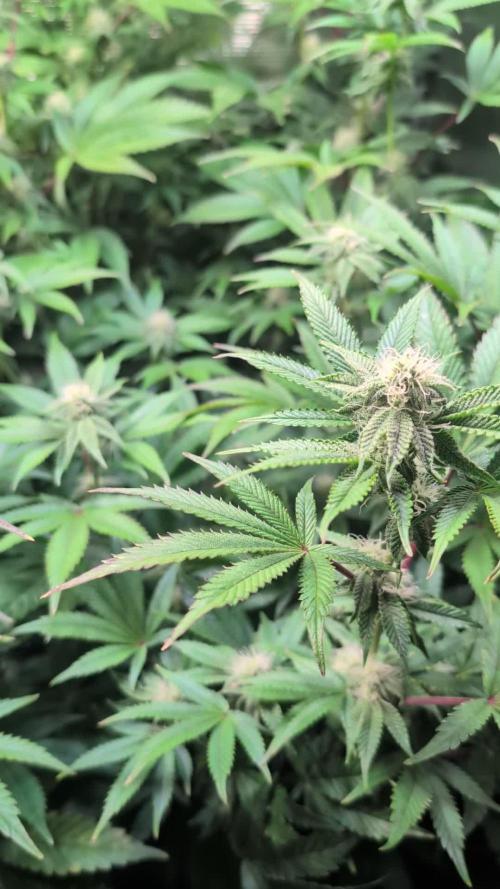
We're starting Week 4 of Flowering 🌺
Stems finally thickened and bud start growing denser.
I increased light density and switched P boost for Plagron green Sensation , because I have a sample left.
She is looking a bit thirsty for Phosphorus, which is plenty in there. Potassium is also contained , which will benefit the ladies.
In my opinion, it overall looks like I should defoliate more, but I just cut of almost all the leaves from the bottom and she somehow needs to be able to synthesize more energy 😅
Anyway, except for Phosphorus, I think the leaves look pretty healthy in Nitrogen and Potassium. Stems also thickened, so Calcium should also be enough.
I'm pretty sure, buds would have stacked more, if I had increased the light intensity a bit before, I think everything seems to be going alright for now.
As we're starting Week 4, there is a string smell of sugar in the air. I'm looking forward to how it will increase and turn out later in flower 🌺
I also added a big dehumidifier, which is capable of working for 30 square meters.
Likes
4
Share


@Gram_Solo
Follow
Forgot to take pics of last veg weeks lol
Onto flower now and these are looking quality! The main lining created a good shape to work with less stress of popcorn nugs at the bottom gettin in the way . Well easier to work with.
Will be doing this technique a lot more now.
Some white pistils coming through early flower stage 👌🌴🌴
Lowering humidity to 55 and light intensity to 70

Likes
12
Share


@Tmasm
Follow
obrigado Royal Queen Seeds por fornecer a genéticas, hipérion F1 e bolo de casamento.
Entrega segura, dentro do prazo e muito discreta, entrega prevista em 5 a 10 dias, recebi em 5 dias, por serviço de entrega não trabalha ao fim de semana, senão recebia em 3 dias.
Experiência para possível plantio em massa, dependendo dos resolvidos.
1/5 hipérion F1 estará germinado, nos próximos dias.
1/5 bolo de casamento estará germinado, nos próximos dias.
Restantes hipérion F1 e bolo de casamento, germinarão assim que estás, terminar seu ciclo de vida, devido organização de esposo, e com isso estudo diferentes épocas do ano.
O diário será atualizado toda semana, espero que gostem (eu também)


Processing
Likes
14
Share


@TegridyCal
Follow
The Pineapple Express is very pretty and in our opinion it is growing well, we are almost ready for the first topping we can't wait to structure it as we like it.
Likes
3
Share


@ChunkeyMunkey420
Follow
See orange sherbet well ahead of the strawberry pie even though they were started on same day. Got rid of some of the lower branches that won't produce much on strawberry

Processing
Likes
6
Share


Likes
9
Share


@masterofsmeagol
Follow
6/15 Everything was dry this morning but the bags STILL had some heft. Much lighter though so I decided to water. I didn't realize how cold the hose is so I'll have to usecthe water inside or premix it. I watered everything at least a half gallon. Things are going great. I'll update as I go.
UPDATE: IM GLAD I WATERED. ITS 73° OUT AND NICE AND SUNNY.
6/16 Foggy morning has turned into a sunny day! Plants are doing amazing. So glad I watered. I took a shit ton of pictures but they don't seem to be uploading. VERY FRUSTRATING TO TAKE THE TIME TO TAKE PICS AND VIDEO ONLY TO HAVE IT NOT UPLOAD. It's working now. I canceled out after I uploaded everything. Trying to upload again now.
EDIT: EVERYTHING IS FIXED. I UPLOADED A BUNCH OF STUFF. PLANTS IN THE BACK AND THE FRONT SEEMED DRY AND LIGHT. I GAVE THE TWO 10'S AT LEAST A HALF GALLON. I GAVE THE THIRTY A GALLON AND SPLIT THE REMAINDER WITH THE 20'S. I MIXED UP 5 GALLONS. EVEN THOUGH THE PLANTS IN THE MIDDLE WERE DRY THEY STILL WERE FAIRLY HEAVY. IT IS SUNNY AND 80° WITH STRONG WIND. I'LL WATER THE OTHERS IF NEEDED BEFORE WE GET SOME RAIN. WE HAVE RAIN IN THE FORECAST SO ILL KEEP AN EYE OUT. IM VERY IMPRESSED WITH THE GROWTH IM SEEING. I NEED TO DO SOME MORE LST SOON AND PUT UP A TRELLIS.
6/17 I'm glad I watered those plants. Everything is looking GREAT! I didn't get pictures as I was in a hurry. The 3 plants in tje middle are dry on top bit about as heavy as the others. The wind doesn't go through them like the others. I would've watered but they looked happy and we are supposed to be getting rain. I'll be back over later and re-evaluate.
EDIT: I GAVE THE THREE IN THE MIDDLE ABOUT A HALF GALLON EACH. EVERUTHING IS LOOKING FANTASTIC. I LSTED SOME. ITS SUPPOSED TO RAIN TONIGHT AND A LITTLE BIT WITHIN THE DEW DAYS BUT NOT WHAT THEY NEED. IM JUST TRYING TO NOT OVER WATER. IM REALLY HAPPY WITH WHAT IM SEEING.
6/18 It's overcast with showers. Rained hard last night and it's been raining off and on this morning. I probably could've made it without watering the three in the middle but I didn't want to chance it. Plus the rain doesn't add up to much anyway. Plants were soaked this morning. Soaked me just shaking them off. I'll update later. This year has been really good so far.
6/19 Overcast and Maineing out (tiny sprinkles tuat appear intermittently). Plants love it. Apparently I've reached my photo limit. At least that's what the app says. AT least I got SOME of these pictures and the video up. I can't belueve the increase in size both vertically, laterally and width. Branches are long and thick. This rain, sun, rain, sun type weather is creating some monsters. Can't wait to see the result. Still on the fence about light depoing. One thing I DO need to do is put up trellises. It sucks if I can't upload anymore pictures or videos. If I see something great I'll just delete a dfferent picture.
6/20 Not raining but still overcast. 71° at 9:15. Plants are still doing amazing. I've dedoliated some damaged old leaves. I can see some plants have shot a few pistols but I don't think reveg will be a big problem. Some have no signs of reveg. A couple spit out a few three finger leaves but that could be from the environmental stressor. I kept my second mk ultra without topping or fimmed. It's stalk is enormous and just the LEAFLETS are bigger than my wrist. ENORMOUS fan leaves. I think this is going to be a great year.
6/21 It's about 80° and clear skies. Bags are a little warm. They still have some heft to them and it's going to rain tonight with showers tomorrow. Those 10's dry out quick so I split a gallon between the two as they were light as fuck. The rest of the front row was a LITTLE lighter than the rest (the big mk ultra in the 30 looked like it wanted some water) so I gave the other three in the front about a half gallon each. It's noontime. I know it's not the best time for watering but sometimes you need to do things when "you're" able to. Plants are looking amazing. Tried to stick a 10th planet branch under a support buf I took it back out. It wad way to kuchvof an angle and the plants will stretch during flower. I pulled it out and there's still a little bend in the stem but nothing that won't return to normal on its own.


Likes
114
Share


@Natrona
Follow
Lemon Cake & Lemon Drizzle
Week 5 This week 5/5-5/11
Germination April 6.
Vegetation
Week 1 water only
Week 2 water only
Week 3 added recharge and TPS1 increased ppm to 570.
Week 4 continues with recharge and TPS1. I added Fox Cal mag increasing ppm to 685 - 805.
Week 5
TPS1 9ml/gal
Recharge 5 ml/gal
Fox Cal-mag 5 ml/gal
This was an exciting week for my ladies. It started out with the usual feed and defoliation and training. With my upcoming vacation, I am going to be hardening off these ladies to relocate to their outside location. I checked the expected weather forecast for the week. Looks good to start hardening off. Partly cloudy with temps in the low to mid 80s just like in their tent. So that’s good. Night temperatures were in the 50-60s. This is much cooler than what they are used to as our house is at 73. Our summers are hot and humid with frequent thunderstorms. They need to get used to what mother nature will provide.
I had planned to bring the plants back in the sunroom but since conditions were similar, I let them stay outside every night. And every night but 2 it rained. I did not water or feed nutrients this week.
I am attempting the scrog technique on all plants. I am using a peony cage as the support structure. The cages are about 2 feet high. This may not be enough side or top support as she grows and may have to resort to tomato cages.
Took pics May 6,9, & 11 Lemon girls both had mutations at germination. Lemon Drizzle split ot topped herself. This creates two main plant stalks. The primary and a smaller secondary stalk.
Lemon drizzle has stretched above the scrog top opening up her structure. Today she has an erratic top canopy in multiple levels with multiple bud sites. Interesting her nodes have for this week started to develop off set from each other.
Does that mean she is going into flower sooner than expected?
Thanks for the visits, likes and comment, I appreciate all the plant love💚.
Have fun & love what you grow 💚
Sending you good vibes of love, light, and healing 💫
💫Natrona 💫
BARNEYS FARM- LEMON DRIZZLE
Lemon Drizzle Cannabis Seeds
Type: Feminized Weed Strain
Lemon Drizzle Strain by Barneys Farm
Indulge yourself in the tantalizing aroma of our Lemon Drizzle strain, a sensually crafted cannabis strain that is sure to tantalize your senses and leave you in a state of blissful euphoria. Bred from a seductive blend of Super Lemon Haze and OG Kush, this sativa-dominant weed strain will transport you to another plane of existence.
With a flowering time of 60-65 days, Lemon Drizzle's exquisite buds are bursting with a potent THC percentage of 20-25%, ensuring an unparalleled and satisfying high. The complex terpene profile of this alluring strain is sure to captivate your senses with notes of zesty lemon and a hint of earthy Kush undertones, providing a flavor explosion that you won't forget.
This tempting beauty grows to a height of 1m - 1.2m indoors and 1.5m - 2m outdoors. You'll be impressed by the generous indoor yield of 550g/m2, while the outdoor yield of up to 1.5 - 2kg is beyond substantial. Experience the ultimate in relaxation with Lemon Drizzle's outdoor flowering time, which begins in early October, allowing you to bask in the sweet sunshine and savor the heady effects of this tantalizing strain. Succumb to the charms of our Lemon Drizzle strain and discover a world of unadulterated pleasure that will leave you in awe.
Is Lemon Drizzle Indica or Sativa?
The Lemon Drizzle strain by Barneys Farm is 85% Sativa 15% Indica.
What is the best way to store my Lemon Drizzle strain seeds?
To properly store Lemon Drizzle seeds, it is recommended to keep them cool and dark in an airtight container ideally in a refrigerator with proper labeling and dating, avoiding freezing.
Lemon Drizzle Cannabis Seeds Strain Specifications
Type: Feminised
Genetics: Super Lemon Haze Strain x OG Kush Strain
Photoperiod: Normal
Sativa %: 85%
Indica %: 15%
Flowering Time (days): 60 - 65
Feminised Outdoor Harvest Month Week: 1st-2nd week - October
Indoor Height (cm): 100-120cm
Indoor Yield (g): up to 550-650 gr/m²
Outdoor Height (cm): up to 150-200cm
Outdoor Yield (g): up to 1500 gr/plant
Taste: Sour, Lemon, Sweet, Citrus Fruits
Aroma: Sweet, Sour, Citrus, Pine, Earthy
Effect: Energizing, Uplifting, Focused, Motivated
PREMIUN CULTIVARS LEMON CAKE
Lemon Cake Seeds
Lemon Cake strain seeds generate typical Sativa buds known for their heavy trichome covering against a bright green background. Let's look at this great strain and learn about its genetics, growing information, and how to obtain it.
Cultivar Profile
Terpenes Caryophyllene, Myrcene, Terpinolene
Strain Type Sativa
Difficulty Moderate
Height 30 in – 78 in
Yield (oz/ft2) 1 – 3
Flowering Time 9 – 10 weeks
Harvest Month October
Pack Size 3, 6, 12, 24
Seed Type Feminized
Brand Premium Cultivars
The History of Lemon Cake Strain Seeds
Lemon Cake by the European-based firm Heavyweight Seeds is a strong Sativa-dominant hybrid of Lemon Skunk and Cheese. Lemon Cake seeds are easy to cultivate, especially outdoors, with a 9-10 week flowering cycle, squat shape, and large output.
How to Germinate Lemon Cake Strain Seeds
There are several ways to sprout your Lemon Cake strain seeds, but they are more complex, inexpensive, and efficient than the paper towel technique. Premium Cultivars suggests this method since it is simple to implement, involves commonly available tools, and ensures germination. Here’s a 9-step process for geminating Lemon Cake seeds:
1. Collect your essential tools: Lemon Cake seeds, dinner plates, distilled or bottled water, tweezers, and a working table.
2. Wet your paper towel sheets and gently squeeze the excess water.
3. Set one of the paper towels on the dinner plate and the other aside for later usage.
4. Pick your Lemon Cake strain seeds with tweezers and spread them on the towel sheet, allowing an inch between them.
5. Cover your cannabis seeds using the second paper towel. Check if the towel is moist, and if not, add water.
6. Lift the towel sheets and ensure no standing water is present. Return the paper towel and your Lemon Cake seeds carefully.
7. Place the setup in warm, dark areas, particularly a cupboard or drawer (20-120 hours).
8. Check to determine whether your Lemon Cake cannabis seeds are sprouting regularly, and if the paper towel remains moist, add water if it does not.
9. Once taproots have emerged from your Lemon Cake seeds, transplant them to your ideal growing medium.
Why are Feminized Seeds Better than Regs?
Feminized cannabis seeds yield only female plants (or around 99.9% female). Conversely, regular seeds generate a mix of male and female plants. Each seed strain has advantages and cons, with the grower’s specific needs ultimately determining the best. Gardeners mostly use regular cannabis seeds to create their strains, but feminized cannabis seeds are great for farmers looking for a cannabinoid-rich, bud-producing crop. Male cannabis plants generate just pollen sacs and no resinous blooms.
This resin contains cannabinoids and terpenes, which are responsible for cannabis’ desirable properties. If male plants pollinate female plants, their blooms will cease releasing resin and begin producing seeds. In short, male cannabis plants do not aid in pursuing massive, powerful harvests. Nonetheless, male plants are critical to the survival of the species as well as the breeding and improvement of cannabis strains. So don’t dismiss them right away!
Growing Lemon Cake Strain Seeds
The Lemon Cake cannabis strain has grown in popularity due to its ease of cultivation and high yields. It’s a medium-sized plant with long branches that can use some assistance toward the end. It is rather ordinary in terms of temperature and disease resistance since it is not overly prone to unfavorable circumstances or pests. However, if you grow with hydroponics, you won’t have to bother with any of that.
Should I Grow Lemon Cake Strain Seeds Indoors or Outdoors?
Lemon Cake thrives in both indoor and outdoor environments. The height of this cannabis strain is one factor to consider: it can reach heights of 200cm, requiring either a large grow space or a yard to attain its full potential.
Growing Lemon Cake Strain Indoors
If you want to cultivate your Lemon Cake seeds (you can buy these finest seeds from Premium Cultivars) inside, you should invest in exhaust fans or carbon air filters due to the room’s strong odor. Also, if conditions are ideal, growers should expect a large yield after 9-10 weeks of flowering.
Growing Lemon Cake Strain Seeds Outdoors
Outdoor growers can harvest their Lemon Cake buds around the middle of October.
How Much Do Lemon Cake Strain Seeds Yield?
Lemon Cake can produce roughly 25 ounces per plant outdoors and 21-25 ounces per square meter when grown inside. Although you might be tempted to cut it down right away, waiting as long as possible before harvesting it and curing it correctly to enhance the quality is recommended.
How to Get Better Yields from Your Lemon Cake Strain Seeds
Harvest rewards are frequently a mirror of cultivation care, so be kind to your Lemon Cake plants, and they will be gentle with you. However, growers should regularly top and prune their Lemon Cake plants to improve airflow and light exposure, thus raising yields.
The Best Grow Medium for Lemon Cake Strain Seeds
Cultivators can grow Lemon Cake seeds in hydroponic or soil systems. However, experts propose using a precise hydroponic arrangement to achieve optimal production and control its occasionally unpredictable growth rates.
The Best Climate for Lemon Cake Strain Seeds
Lemon Cake strain enjoys warm, semi-humid areas and is inherently resilient, having excellent mold and disease resistance. Growing outside is only acceptable in warmer climates, as this cannabis strain needs sunlight.
Problems to Look Out For When Growing Lemon Cake Strain Seeds
When cultivating Lemon Cake cannabis seeds, the primary issue to watch out for is dehydration and overwatering when the crops are little and susceptible. If the leaves of your Lemon Cake plant turn yellow, this indicates that the plant isn’t receiving enough oxygen to the roots.
How Difficult is it to Grow Lemon Cake Strain?
One of Lemon Cake’s noteworthy characteristics is its simplicity of cultivation.
Are Lemon Cake Strain Seeds Suitable for Beginners?
Yes, these cannabis stain seeds are great for novice growers, and they will obtain outstanding results.
The Best Grow Techniques for Lemon Cake Strain
Topping
Topping encourages the plant to grow horizontally rather than vertically, but when it does so is determined by soil condition, plant health, light, plant size and age, and growth goals. Topping cannabis reshapes the crop in a way that improves light dispersion significantly. Cutting one tall branch to make multiple new ones at the same height guarantees that lower (buds on lower branches) also receive more light.
Another essential reason to top your cannabis crop is for better height management. Logically, the two new branches develop slower than the one branch. Topping a cannabis plant separates its development into several branches. Making the plant grow less in height while putting more energy into expanding broader. This is incredibly convenient for growers, especially for limited indoor plants.
Trimming
Trimming can be an excellent technique for cannabis producers who have been cultivating a plant for a long time to connect with it while boosting the quality and form of the buds. There are two methods for trimming cannabis plants: wet and dry. Wet trimming, as the name implies, happens when the cannabis plant is still wet. This means you harvest your plants and immediately begin the trimming procedure. Conversely, dry trimming will necessitate drying your crops out for a few days before you start trimming the bud.
If you’re cultivating cannabis at home, you’ll almost certainly have to perform all this by hand. For devoted producers, machine trimmers are available, making the operation considerably less labor-intensive. However, due to their high cost, commercial farmers mainly utilize them. Trimming can be time-consuming for many growers, but it’s also thrilling since the growth process is almost complete, and your cannabis is almost ready to have. After you’ve completed trimming, there’s one more step left until you have a great bud: curing.
Pruning
Pruning is the practice of eliminating extraneous shoots, branches, and leaves from a plant to push it to redirect its limited energy into its present and established development. When left to its own devices, a cannabis plant will frequently grow too large to sustain itself properly with the quantity of energy it generates. If left untreated, this can lead to several minor bud sites as the plant strains to survive while creating bud during flowering. By eliminating unneeded and weak growth, you push the cannabis plant to focus on what remains, resulting in a stronger plant capable of producing a few huge buds rather than many little ones. This frequently leads to higher total yields.
Equipment and nutrients
Pots: 5gallon Air pots
Soil Fox Farm Happy Frog Amended with worm castings, dolomite lime and mychorihiza Recharge
=================================
Equipment: AC Infinity
CLOUDLAB 844 – Advance Grow Tent 48”x48”x80”
CONTROLLER 69 PRO – Grow Tent Controller
CLOUDLINE LITE 6 - Inline Fan 6"
IONBOARD S44 – LED Grow Light Board 400W
CLOUDRAY S6 – Oscillating Circulation Clip Fan
Carbon Filter 6”


Likes
29
Share


@Lazuli
Follow
The pistils are still white
Shes very fat now and i think 2 weeks before harvest, i feed less now at 400ppm and starting ripen feed when half of her pustils turned brown
August 18 (mid this week)
I flushed her completely and fed ripen untill runoff got in the 200ppm.
Now she is ready to finish
Harvest will be at august 28th

Likes
10
Share


@Bigbombbudz
Follow
Another week closer....
Well its coming to an end and the girls are going into there last 10 days, the flush will begin tomorrow, with 5 days of PH water with Sweet Raw added, then last 5 days straight PH Water.
It was a great crop, very easy to grow and no problems at all just feed and watch them grow.
Until next week, smoke a fatty, help out your fellow grower.

Likes
13
Share


@3lementa1
Follow
March 08 I left the air purifier on by accident again last night so there was a blue light overnight. The buds look good though. I taped the window up so I'm no longer having a humidity issue at night. I alternate between having the light on at 100% and 75% and recently 50% as well.
March 10 I just fed them Ph'd water with molasses. Runoff pH 6.2-6.5, ppm 200-600. I'm having trouble getting good shots of the trichromes but I'm starting to see more amber ones. Less than 5%.
Likes
4
Share


@Staffedition
Follow
Хочу обратить особое внимание на качество семян и генетику!
У меня все кустики один в один.
Всем мира и добра а так хороших добрых всходов!
За качество семян 10 звёзд
За качество всходов 9 звёзд
За качество роста 10 звёзд
За устойчевость 10 звёзд
Не забудь поставить лайк❤️, если понравилась как прошла неделя
И читайте наш TELEGRAM: https://t.me/smail_seeds
#Smail_Seeds 😀
Likes
95
Share


@Tonino
Follow
This one is doing great this week and then we bush but still very compact also going to flip that one next week but before that would be a major defoliation also going to starter on the nutrient regime can wait to see her in flower Supposed to have some purple colour
Smooth Smoke Feminised Seeds by the cannabis seeds breeder Tropical Seeds, is a Photoperiod Feminised marijuana strain. This Feminised seed grows well in Indoors, Outdoors conditions. This strain has (Pakistan Chitral Kush x Nepal Highland P3 ) x Pakistan Chitral Kush Genetics. It has a Unknown THC Content. The CBD content of the strain is Unknown. This strain can be used to treat a variety of medical conditions including, Pain.
BREEDER Tropical Seeds
GENETICS (Pakistan Chitral Kush x Nepal Highland P3 ) x Pakistan Chitral Kush
VARIETY Mostly Indica
FLOWERING TYPE Photoperiod
SEX Feminised
GROWS Indoors, Outdoors
FLOWERING TIME 55 - 60 days
MEDICAL CONDITIONS Pain
MEDICINAL PROPERTIES Especially good for pain relief.
TASTE / FLAVOUR Berry, Candy, Sweet, Vanilla
EFFECT Powerful, Relaxing

Likes
128
Share


@Tropicannibis_Todd
Follow
💩Holy Crap We Are Back At It And Loving It💩
Growing in a 11 ounce pot 👈 👀 👀 👈
Growmies we are at DAY 49 and she's just killing💀it👌 TALK ABOUT FROSTY 👈 Amazing results thus far for the Tiny Pot 😀
👉Added straws within the Tiny pot to help watering in week 4 👈
So I'm starting to see she needs watering every single day and now need nutrients 🙃
Lights being readjusted and chart updated .........👍rain water to be used entire growth👈
WATERING SINGLE TO TWICE DAILY 😋
👉I used NutriNPK for nutrients for my grows and welcome anyone to give them a try .👈
👉 www.nutrinpk.com 👈
NutriNPK Cal MAG 14-0-14
NutriNPK Grow 28-14-14
NutriNPK Bloom 8-20-30
NutriNPK Bloom Booster 0-52-34
I GOT MULTIPLE DIARIES ON THE GO 😱 please check them out 😎
👉THANKS FOR TAKING THE TIME TO GO OVER MY DIARIES 👈