


Likes
Comments
Share


@Herbangardener671
Follow
Last day chopping at 56 days of flower. Gonna trim some of the leaves then set in the dry tent

Likes
31
Share


@MadeInGermany
Follow
Info:
Unfortunately, I had to find out that my account is used for fake pages in social media.
I am only active here on growdiaries.
I am not on facebook instagram twitter etc All accounts except this one are fake.
Flowering day 29
since time change
to 12/12 h.
Hi everyone :-) .
This week the growth was very strong :-).
The buds are developing well.
it was poured twice, everything was cleaned and filled up.
1 g GHSC Powder Feeding was added per l coco.
stay healthy 🙏🏻
You can buy this Strain at :
www.Zamnesia.com
Type:
Runtz
☝️🏼
Genetics:
Zkittlez x Gelato
👍
Vega lamp: 2 x Todogrow Led
Quantum Board 100 W
💡
Bloom Lamp : 2 x Todogrow Led
Cxb 3590 COB 3500 K 205 W
💡💡☝️🏼
Soil : Bio Bizz Coco
☝️🏼
Nutrients : Green House Seeds Company Powder Feeding Bio
☝️🏼🌱
Water: Osmosis water mixed with normal water (24 hours stale that the chlorine evaporates) to 0.2 EC. Add Cal / Mag to 0.4 Ec Ph with Organic Ph - to 5.8


Likes
33
Share


@burnerac
Follow
Day 22: First day after transplanted
Day 23: Added 1 gallon water at pH 7
Day 24: No picture
Day 25: Looking healthy
Day 26: Humidity is good. I need to check on that temperature. 3 inches.
Day 27: Nothing spectacular to report. Beginning to ponder training.
Day 28: Still going.

Likes
44
Share

@MadeInGermany
Follow
Info:
Unfortunately, I had to find out that my account is used for fake pages in social media.
I am only active here on growdiaries.
I am not on facebook instagram twitter etc All accounts except this one are fake.
Harvest day 71
since the time
change to 12/12 hrs.
Hey guys :-)
Finally the time has come .
The lady was harvested.
After the trichomes have been checked (70% milky 30% amber) as always, it was left in complete darkness for 48 hours before it was neatly trimmed by hand.
After trimming, she was put back in the drying tent on nets.
There they are allowed to dry for the next 8-12 days at 62% humidity before they are put into the jar to ferment with 62% boveda packs.
After about 4-6 weeks in the jar I will swap the 62% boveda pack for a 58% boveda pack where it can be ready for another 4-6 weeks to enjoy :-).
As always, the remains of the leaves are used to make Ice o Lator and oil.
Of course, as always, there is a final update during the fermentation process.
Until then, I wish you all a lot of fun with this update.
Stay healthy 🙏🏻 and let it grow 👍.
You can buy this Nutrients at :
https://greenbuzzliquids.com/en/shop/
With the discount code: Made_in_Germany you get a discount of 15% on all products from an order value of 100 euros.
You can buy this Strain at
https://www.amsterdamgenetics.com/product/super-silver-haze/
Type:
Super Silver Haze
☝️🏼
Genetics:
Haze x Skunk #1 x Northern Lights
Type:
70% Sativa – 30% Indica
👍
Vega lamp:
2 x Todogrow Led
Quantum Board 100 W
💡
Bloom Lamp :
2 x Todogrow Led
Cxb 3590 COB 3500 K 205W
💡💡☝️🏼
Soil :
Canna Coco Professional +
☝️🏼
Nutrients :
Green Buzz Liquids :
Organic Grow Liquid
Organic Bloom Liquid
Organic more PK
More Roots
Fast Buds
Humic Acid Plus
Growzyme Big Fruits
Clean Fruits
Cal / Mag
Organic Ph - Pulver
☝️🏼🌱
Water: Osmosis water mixed with normal water (24 hours stale that the chlorine evaporates) to 0.2 EC. Add Cal / Mag to 0.4 Ec Ph with Organic Ph - to 5.8 - 6.4

Likes
14
Share


@BushDoctor740
Follow
Almost to the finish line for most of these girls.Everytime I get near the tent it just smells so great and wow are they building up some trichomes.The buds are chunky and super dense now and finishing up in the coming days except for one plant that has been lagging along the whole grow.It is smaller with a massive center cola so I’ll let her grow as long as needed.
Day 66 placing two of the Papaya cookies in the dark in another tent for 24-48 hours before I cut and hang them.
Likes
6
Share


@GoldenWeedGrower
Follow
Legend
Timestamp: 📅
EC - pH: ⚗️
Temp - Hum: 🌡️
Water: 🌊
Food: 🍗
pH Correction: 💧
Actions: 💼
Thoughts: 🧠
Events: 🚀
Media: 🎬
D: DAY, G: GERMINATION, V: VEGETATIVE, B: BLOOMING, R: RIPENING, D: DRYING, C: CURING
______________
📅 D50/B13 - 04/06/24
⚗️ EC: 1.0 pH: 6.0
🌡️ T: 24°C H: 60%
🌊
🍗
💧
💼
🧠
🚀
🎬 1 TL video
______________
📅 D51/B14 - 05/06/24
⚗️ EC: 1.0 pH: 6.0
🌡️ T: 25°C H: 60%
🌊 15L
🍗 CalMag, Bloom A-B, Bud Candy, B-52, Big Bud
💧
💼
🧠
🚀
🎬 1 TL video
______________
📅 D52/B15 - 06/06/24
⚗️ EC: 1.0 pH: 6.0
🌡️ T: 25°C H: 60%
🌊
🍗
💧
💼
🧠
🚀
🎬 1 TL video
______________
📅 D53/B16 - 07/06/24
⚗️ EC: 1.0 pH: 6.1
🌡️ T: 25°C H: 80%
🌊 4L
🍗 CalMag, Bloom A-B, Bud Candy, B-52, Big Bud
💧 pH-
💼 Added pH- in order to keep the water on the lower side for a while
🧠
🚀
🎬 1 TL video
______________
📅 D54/B17 - 08/06/24
⚗️ EC: 1.0 pH: 6.1
🌡️ T: 25°C H: 80%
🌊
🍗
💧
💼
🧠
🚀
🎬 1 TL video
______________
📅 D55/B18 - 09/06/24
⚗️ EC: 1.0 pH: 6.1
🌡️ T: 25°C H: 70%
🌊15L
🍗 CalMag, Bloom A-B, Big Bud
💧
💼
🧠
🚀
🎬 1 TL video
______________
📅 D56/B19 - 10/06/24
⚗️ EC: 1.0 pH: 6.1
🌡️ T: 25°C H: 70%
🌊
🍗
💼
🧠
🚀
🎬 1 TL video

Likes
36
Share


@ReeLeaf
Follow
Very easy to grow in hydro, I did what I have done before, and did minimal defoliation. The plant drops some lower leaves herself as we go along anyway, as they begin to receive minimal light penetration. Northern lights had a shape that made it easy to grow with my light setup. The bigger buds were produced in the areas of the side lights, and let it also be known my harvest could have become a tad bigger if I hadn't picked off small buds and smoked them in the very end - must account for at least 30-40g or so, dunno precisely tho. The weed works like the usual homemade jazz, top notch. Top shelf. Northern lights did not disappoint, but I have pulled bigger yields of a White Rhino for example, made in the same manner. This is why it only get 8/10 stars. It simply lose two stars on yield, but the Rhino would also only have gotten eight stars, because it had deficiency problems on its own for example where this northern lights lady had zero deficiency probs - very stable plant.
Recommended for both beginners and seasoned growers who are on the lookout for stable strains.


Likes
27
Share


@eldruida_lamota
Follow
Vamos actualizar la segunda semana de floración de estas Biscotti de RoyalQueenSeeds.
Un SOG que empezó mal pero que se ven con un buen color y avanzan progresivamente, así que a estar atentos.
La humedad es perfecta, la temperatura la e podido corregir y ya la tenemos entre 24/25 grados.
Añadi la base,Blue line B de Agrobeta.
Esta semana añadí tucán, gold joker, silver, beta shark y génesis también de Agrobeta.
Estoy controlando el ph está alrededor de 6- 6,5.
Mars hydro:
Code discount: EL420
https://www.mars-hydro.com/
Agrobeta:
https://www.agrobeta.com/agrobetatiendaonline/36-abonos-canamo
Hasta aquí todo, veremos como progresan pronto. Buenos humos 💨💨💨

Likes
1
Share

@ChronicNerve
Follow
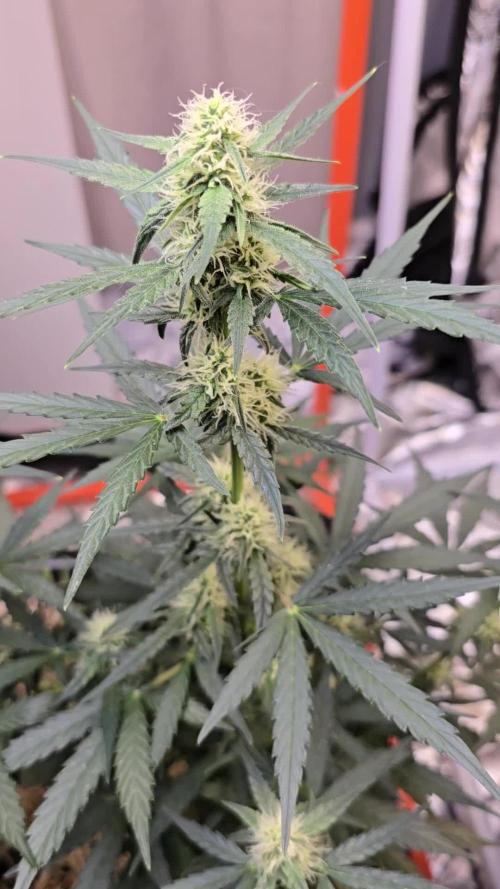
A very low-maintenance plant, I've simply watered it when needed, with no other intervention. As expected, this Epsilon is smaller than the first due to the lack of aeration in this worm casting mix, however, the uniformity remains the same, and it is still on course to produce some fantastic bud.


Likes
12
Share


@QueenBZA
Follow
This is a flush week, next week we shall be introducing EHG Ripener for the very first time in our grows,does it work? Does it not? We'll find out soon enough boys and girls.


Likes
8
Share

@GERGrowDesigns
Follow
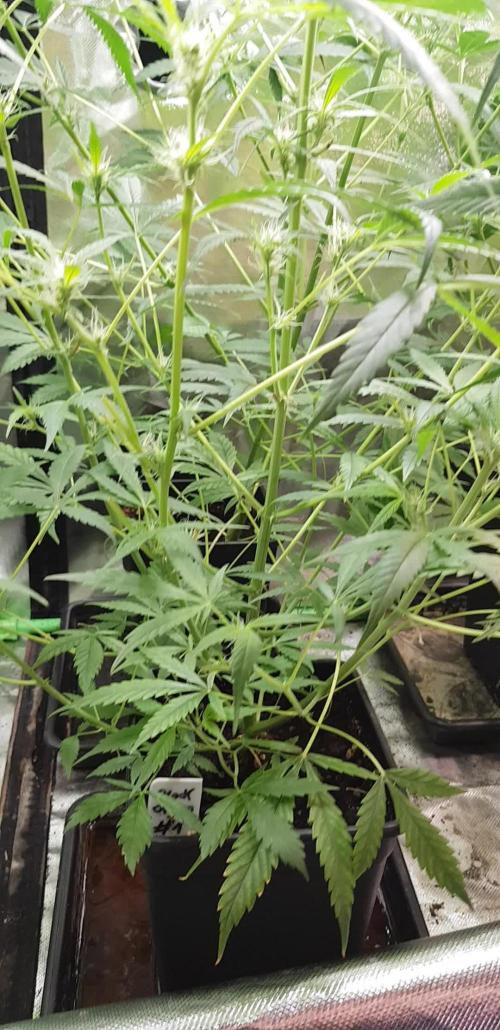
Welcome to Flower Week 1 of Divine Seeds Auto Black Opium
I'm excited to share my grow journey with you all as part of the Divine Seeds Autoflowering Competition 2025. It's going to be an incredible ride, full of learning, growing, and connecting with fellow growers from all around the world!
For this competition, I’ve chosen the Feminized Automatic strain: Auto Black Opium
Here’s what I’m working with:
• 🌱 Tent: 120x60x80
• 🧑🌾 Breeder Company: Divine Seeds
• 💧 Humidity Range: 50
• ⏳ Flowering Time: 60-63 Days
• Strain Info: 25%THC
• 🌡️ Temperature: 26
• 🍵 Pot Size: 0.5l
• Nutrient Brand: Narcos
• ⚡ Lights : 200W x 2
A huge thank you to Divine Seeds for allowing me to be a part of this amazing competition and Sponsoring the Strains. Big thanks for supporting the grower community worldwide! Your genetics and passion speak for themselves!
I would truly appreciate every bit of feedback, help, questions, or discussions – and of course, your likes and interactions mean the world to me as I try to stand out in this exciting competition!
Let’s grow together – and don’t forget to stop by again to see the latest updates!
Happy growing!
Stay lifted and stay curious!
Peace & Buds!


Likes
62
Share


@Santica_Garden
Follow
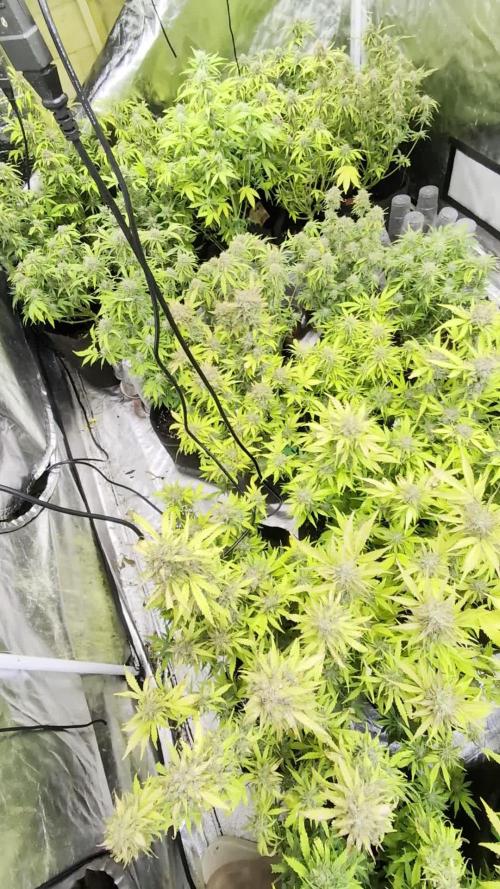
This is how things are looking for the Cheese, going really well, just need to keep on top of things and everything should go smoothly! I have uploaded a video for you guys with all the information you need 👍🏾🌱💚

Likes
285
Share


@Tropicannibis_Todd
Follow
👉Alrighty Then👈
( 👉Bonus Video Showcases Everything I Have Going on in TropiCannibis HQ 👈)
So we are at DAY 63 of Flowering with the Sugar Larry 👈 And she's doing fantastic 👍
😀 decided to showcase pheno #2 , definitely has different traits then #1 very interesting 😀 thoe both are killing it 👈
So just waiting on alittle more amber to show before we do the chop 👌
👉I had to Top her during the middle of 4th week 👍 Happy Growing
👉Soil Provided by ProMix.ca
👉Nutrients Provided by Agrogardens
👉Lighting Provided by MarsHydro.ca
Thanks my friends for the great support over the years 🙏 Happy Growing

Likes
200
Share


@Ferenc
Follow
Day 72, 21st of November 2020:
Hi! Wao this is what I can say and luckily stoppe streching....
All LST has been removed as the plants remain the same so no need to keep them in "chains".
Those Original Sensible girls 3 of them (Gelato, Runtz Gum, Do-Si-Dos OG)went crazy, except Black Ghost OG she did not strech much typical little indica lady. And the THC crystals alrady on the leaves on the Runtz Gum and Do-Si-Dos OG just simply beautiful.
Buds are coming getting thick they are gorgeous only I can see some some sort of deficiency on Do-Si-Dos OG a bit on some leaves.
The fertilization schedula isnthe same every 2nd day and happens with the mix and ratio above.
Wedding Gelato is beautiful also I hope the nice purple colour will come out as well in late flowering stage. :)
The lamp is on 11.30 min and off 12.30 min.
Last week was 15 min longer light cycle....
So every week 15 min shorter light cycle until the 5th week. So far -30 min. It switches on at 6 am and off at 17.30 pm.

Likes
18
Share


@Koekie90
Follow
Even problemen gehad met de ph-waarde, waardoor er waarschijnlijk geen correcte voedingsopname was.
Mijn planten werden lichter van kleur en sommige bladeren werden zelfs duidelijk geel tussen de nerven.😕
Ik ga er althans vanuit dat dit het probleem was, aangezien ik eventjes kraantjeswater gaf voor de cal en mag maar dit niet afzuurde.
Vandaag testte ik de ph-waarde van het kraantjeswater met mijn nieuwe ph meter en kwam ik uit op 7.2, niet goed voor kokos dus.
Ik schakelde meteen weer over naar regenwater, wat met voedingsstoffen in mooi uitkwam op ph 5.8👌
Hopend dat ze zich herstellen, update volgt.
De groei gaat gelukkig mooi door!💚
Update 11 mei:
2 planten toonden magnesiumtekort door vorige ph problemen met kapotte meter.
Je kan dit nog zien op de foto's tussen de nerven.
Zwaar aangetaste blaadjes weggehaald.
Intussen kokos verbetert met kieseriet (magnesium) en geen Epsomzout omdat ik dit een lapmiddel vind en liever op lange termijn werk.
Na problemen met de ph en substraat gespoeld te hebben, nu ook weer voeding aan het opbouwen👊
Planten voor buiten in een kas, maar hier kreeg ik de luchtvochtigheid niet onder controle (bleef boven de 80 zitten).
Ze zijn nu verhuisd naar hun nieuwe verblijf, mijn schuur waar ik altijd kweekte.
Buitenkas was een test, maar is dus geen goede optie👎
Op de foto's en video kan je zien dat ze nu veel beter wonen🌱
Update 14/05 : Eerst laten herstellen van magnesiumtekort.
Fimmen + LST gestart.
Ik leg mijn planten graag plat💚


Likes
18
Share


@Green_Blood
Follow
Some nice branching.
I can tell these girls are about to explode and bush out.
We should be seeing some nice big bushy plants in a couple weeks.
