


Likes
Comments
Share


@Hustle786
Follow
Biscotti Is The Tallest One From All
This Week Moved Them To 20litter Coco
And Started Training Today 420 💨

Likes
9
Share


@BLAZED
Follow
Week 11 (26-8 to 1-9)
26-8
Temps: 20.5 to 26.1 degrees
Humidity: 50% to 56%
27-8
Temps: 20.7 to 27.3 degrees
Humidity: 50% to 56%
Watering: Both 1500 ml. (Only Calcium) EC: 0.4 PH: 5.6
Defoliated both plants
Dry Weight: Both 2.6 kg.
28-8
Temps: 21.5 to 28 degrees
Humidity: 51% to 56%
29-8
Temps: 23.3 to 27.4 degrees
Humidity: 55% to 62%
30-8
Temps: 19.9 to 27.7 degrees
Humidity: 50% to 60%
31-8
Temps: 20.2 to 26.6 degrees
Humidity: 50% to 55%
1-9
Temps: 21.1 to 29.1 degrees
Humidity: 49% to 55%
Watering: Both 1000 ml. EC: 1.4 PH: 5.6
Dry Weight #1: 2.5 kg. #2: 2.3 kg.
Recalibrated my PH pen and it was only 0.1 off, so i dont think the leaf problems are PH related.


Processing
Likes
7
Share


@Mrg7667
Follow
(Week 34)Realized that my plants looked a little phos deficient. BioGrow has plenty so i adjusted my ph back down to 5.8 plants looking allot happier.
Using baking soda as ph up, very little needed.

Likes
9
Share


@High_Grade_Dadli
Follow
Weather been a bit bi-polar wet conditions cause a bit of bud rot( dense n sticky)....remove those rest of the tree seem good.....gonna treat for some of these pest that came about from wet condition....n she should be good for the nxt 400 sprint once weather don't get bi-polar or might have to settle for an early harvest..let's see lol
..#happy growing
Likes
45
Share

@JaramnieJazz
Follow
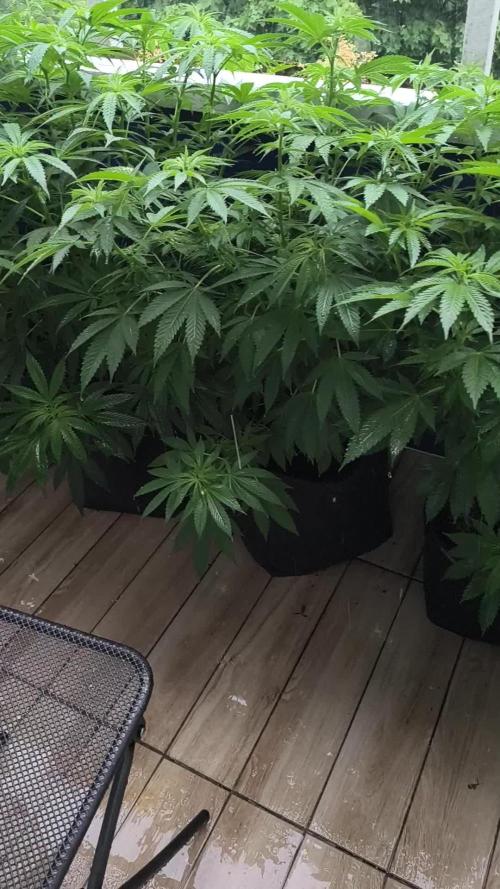
17.06.26 So Woche 21 Veg startet alles sieht top aus
Die Dünger gabe gestern und heute hat echt was gebracht sind sofort dunkler geworden mit mineralischen Dünger geht das fix mit bio Dünger würde das min 1 Woche dauern bis man eine Verbesserung feststellt
18.06.26 Top nur das verfluchte Wetter
19.06.26 Regen und die Dünger gabe hat was gebracht sehen jetzt noch besser aus als vorher
20.06.26 Mehr Regen und heiß ist es Pflanzen sehen bombe aus die mögen den Regen guter PH die sehen so vital aus schönes Grün nur GDP sie ist eine hungrige und groß ist sie in ihren 15L mit ein bisschen mehr Dünger kann man die bestimmt noch weiter pushen wenn das so weiter geht und im September Mal mehr die Sonne raus kommt wird das eine Bomben Ernte Peace 🏻
21.06.26 Läuft
22.06.26 Wetter ist mal Bombe und soll noch heißer werden Morgens gegossen und nachmittags nachhause gekommen und alles hing hoffe nur das bleibt jetzt so
23.06.26 Letzter Tag der Woche alles super Wetter ist Bombe was will man mehr hab die ganzen kleinen Triebe die nicht genug Licht abbekommen haben und nicht mit dem canopy mithalten entfernt und entblättert kurz vor der blühte werde ich nochmals entblättern damit das Licht tiefer in die Pflanze kommt damit die nodien Licht bekommen und die Pflanzen Zeit haben sich zu regenerieren die sollen kein Stress in der blühte haben.Achso 1-2 kleine Triebe wurden gelassen die später bestäubt werden sollen falls ich ein Männchen finde bis jetzt hatte ich Pech 5 von 5 sind weiblich aber ich bin guter Dinge


Likes
15
Share


@Waveform
Follow
Not much to say about this real first grow week’s start. Everything looks ok, steady growth at 40% light.
I had to restart the control app a few times, therefore the broken graphs.
At night times, the control software tries to attain optimum humidity rather than optimum VPD. That’s why VPD is dropping when the lights are out. CO2 is back to baseline – really wonder what the reliable values are …
I found I have to silence the blowers when a timelapse photo is being taken. The shaking you see at the beginning of the grow video should not appear, or to a much less degree, in the future.
Day 13 (July 30th) shows good, steady growth. Leaves are a bit spotty, although less then the processed images show. Something to be worried about? I would not currently …
All are developing their 3rd nodes now.
The controlling Raspberry Pi crashed last night when I tried to access it remotely … ;( – looks like the Connect software is in need of an update.
The leaf temperature sensor is now really aimed at lady-to-be nr. 1’s leaves.
Nothing to change that I see. I won’t cut the top yet, just watered the outer circle of the big pots slightly to encourage root growth.
Day 14: Nice growth. First plant is now at 11 cm, and at 12 cm on day 15. Nothing special to report so far, except for I had to move the internal camera a bit upwards to keep little lady #1 in focus.
Day 16 and last day of this week (Aug 2nd): The young ladies are now at about 14 cm tall. Growth looks very compact though. I think the two inside girls will lose their heads next week; I’d still prefer to have one or two more nodes available. Pictures of this day are taken at the end of the plants’ day. Notice their leaves are pointing upwards, which should be a sign that they want more light. I turned the lights up by another 20% for a total of 60 W now. Weather was pretty hot the last days so it wasn’t possible to stay in optimum VPD range but as long as growth is this satisfying I don’t mind.
I will water them slightly at their next day start. Outside plant’s soil humidity might still be at around 58% officially, but drying starts at around 40% with this measurement and the sensors are placed quite closely to the stems so outer soil is dryer. I am preparing the plant water with some additions and a frequency imprint suing some Solfeggio and Schumann frequencies.

Likes
9
Share


@my420experiment
Follow
Realized when I setup the soil that I forgot to give it a good soak and allow to sit for 24 hours.
It's just straight out of the bag and I feel like I'm not watering them enough.

Likes
16
Share


@valiotoro
Follow
Hello everyone 😎
Week 5 of flower for the Tropi🌴🍪
The top buds are ready✂️
Harvest in 2-3 times…
Amazing buds solid as a diamond 💎
It’s not easy to get this result with an autoflower.
Exactly what I’m looking for and this is why I love so much Fast Buds🤩
And when you get this result the trim is easier😁

Likes
19
Share


@Black_Widow
Follow
Привет садоводы
Началась пятая неделя
вроде все впорядке , вот только верхние листики начали портиться
не знаю с чем это связано
либо лампа была слишком близко , либо недостаток или переизбыток питательных веществ


Likes
12
Share


@SamDo
Follow
Hello, semaine 6 de croissance.
Les plantes se portent bien. Les 2 plus petites on finis par rattraper les autres,, elles sont presque toutes a la même hauteur.
Elles arrivent juste sous le filet. je vais donc pouvoir commencer à faire mon scrog!👍
J’ai aussi réalisé une défoliation des parties basses pour optimiser la circulation de l’air.
C’est tout pour cette semaine.
Happy grow...😎

Likes
4
Share


Likes
2
Share


@Capt_Chungus
Follow
My first grow has turned in to a science project.
Switched from AN pH perfect Grow/Micro/Bloom to AN pH Connesseur, still giving 50% dose. Had rain Monday maybe, didn't water for 3 days, hit her up last night with the Connesseur and just a tad of Big Bud, looks really good this morning. Yesterday I had mini buds with white pistils, that's why the Big Bud. Everything else is normal- watering 32 oz of water/nutrients at night, MAYBE mist the top soil but haven't really needed it. Will most likely switch to AN Connesseur bloom next week. Very satisfied with Fast Buds and Advanced Nutrients products. It is all on the grower!
Likes
32
Share


@High_And_Hydro
Follow
An Tag 50 sieht die Tropicana Cookies schon fast "erntereif" aus. Sie bekommt noch locker eine bis zwei Wochen, aber nach 50 Tagen vom Samen bis in diesen Zustand zu kommen ist für mich beeindruckend. Das ist wirklich schnell 💪
Die anderen beiden trödeln so vor sich hin, die eine blass, die andere klein, aber sie machen ihren Job. Vielleicht lässt die Tropicana die anderen beiden aufgrund ihrer Geschwindigkeit auch einfach nur etwas langsam aussehen. Wenn die also noch abliefern, hätte ich nichts dagegen 😅
An Tag 53 sieht alles soweit gut aus.
Die Tropicana Cookies scheint schon langsam ihrem Ende entgegen zu gehen. Verdammt schnell würde ich sagen. Ich gebe ihr aber noch ein paar Tage, auch wenn ich den Platz den anderen beiden gönnen würde und später auch werde.
Die Mimosa hat sich eingegrooved und man hat endlich das Gefühl Fortschritt zu sehen. Sie bekommt überall schöne, weiße Igel.
Die MAC#1 ist scheinbar ein wenig lichtempfindlich. Ich hab versuchsweise den EC bis 4,0 hochgedrückt, aber sie bekommt die Farbe nicht zurück, solange ich ihr über 700 µmol/s/m² an Licht gebe.
Gestern hab ich das Licht ein wenig reduziert und ich habe das Gefühl, dass sie wieder mehr Druck in den Blättern aufbaut.
Leider bekam die Mimosa dadurch nur noch 580 µmol/s/m², also habe ich die vordere Lampe seitlich gehangen. So konnte ich genug Licht rein bekommen, da der seitliche Unterschied zur Tropicana Cookies bei Weitem nicht so groß ist, wie der Höhenunterschied.

Likes
3
Share


@Qaggy
Follow
Gave them all a defol as they was getting to bushy at the bottom.
They all look great apart from number 3. I can’t seem to perk her up. Tried straight water for a week, ph is 6.3. Then tried her with nutes but nothing’s making her happy. Think she’s just 1 of them doom and gloom girls, we all have known them haha.


Likes
44
Share


@MadeInGermany
Follow
Info :
Unfortunately, I had to find out that my account is used for fake pages in social media.
I am only active here on growdiaries.
I am not on facebook instagram twitter etc All accounts except this one are fake.
Flowering day 37
since time change
to 12/12 h.
Hey guys :-)
Fortunately, she stopped her stretch this week 😅.
The lamps would soon not have gone up any further 😂.
Now she can concentrate completely on the production of the flowers, which makes her beautiful 👍.
I went down with the Ec to 1.2 because I am on the road for two days and it rises well after one day with a slightly higher Ec value.
By the time I get back we should be 1.4 - 1.6 Ec :-).
PK 13/14 was added to the water which will be completely changed again next week.
Otherwise it was cleaned and the health of the plant checked as always.
Have fun with the update and stay healthy 🙏🏻
You can buy this Strain at
www.Zamnesia.com
Type:
Runtz
☝️🏼
Genetics:
Zkittlez
X
Gelato
👍
Vega lamp: 2 x Todogrow LED CXB3590 COB 55 W
1 x Sanlight S2W 62 W
💡
Flower lamp : 2 x Todogrow LED CXB3590 COB 55 W
1 x Sanlight S2W 62 W
💡 ☝️
Grow Aero System : Growtool 0.8
☝️
Fertilizer:
Canna Aqua Vega A + B , Canna Aqua Flores A + B , Rizotonic, Cannazym, CANNA Boost, Pk 13/14, Canna Cal / Mag, Canna Ph - Grow, Canna Ph-Bloom
☝️🌱
Water:
Osmosis water mixed with normal water (24 hours stale that the chlorine evaporates) to 0.2 EG. Add Cal / Mag to 0.4 Ec Ph with ph- to 5.2- 6.2
💦 💧

Likes
11
Share


@GrowerGaz
Follow
Girls are looking a little better now they are settling into flower , Exodus cheese seems fast and smelly. Blackberry gum is really stacking on weight , the double kush cake seems a little slower.


Likes
Comments
Share

@GERGrowDesigns
Follow
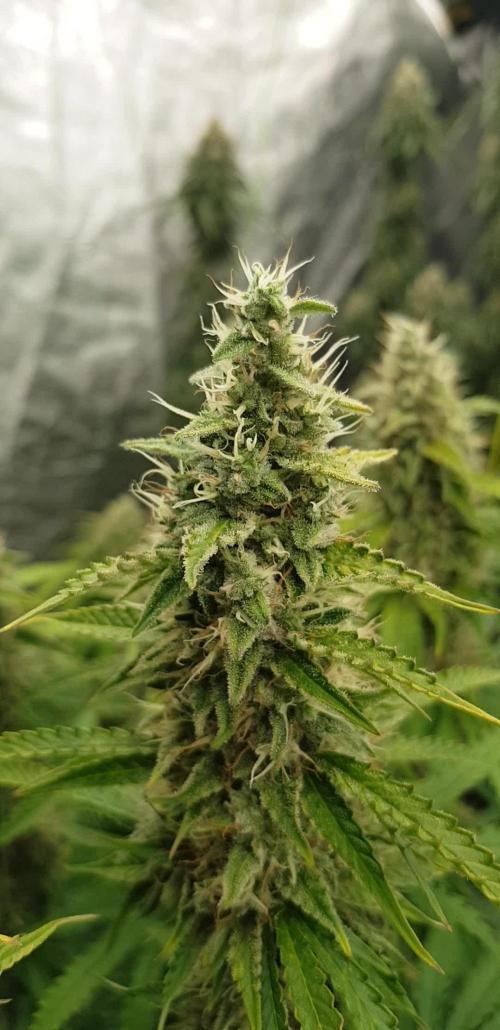
Welcome to Flower Week 8 of Divine Seeds Auto White Widow
I'm excited to share my grow journey with you all as part of the Divine Seeds Autoflowering Competition 2025. It's going to be an incredible ride, full of learning, growing, and connecting with fellow growers from all around the world!
For this competition, I’ve chosen the Feminized Automatic strain: Auto White Widow
Here’s what I’m working with:
• 🌱 Tent: 120x60x80
• 🧑🌾 Breeder Company: Divine Seeds
• 💧 Humidity Range: 50
• ⏳ Flowering Time: 58 Days
• Strain Info: 20%THC
• 🌡️ Temperature: 26
• 🍵 Pot Size: 3
• Nutrient Brand: Narcos
• ⚡ Lights : 200W x 2
A huge thank you to Divine Seeds for allowing me to be a part of this amazing competition and Sponsoring the Strains. Big thanks for supporting the grower community worldwide! Your genetics and passion speak for themselves!
I would truly appreciate every bit of feedback, help, questions, or discussions – and of course, your likes and interactions mean the world to me as I try to stand out in this exciting competition!
Let’s grow together – and don’t forget to stop by again to see the latest updates!
Happy growing!
Stay lifted and stay curious!
Peace & Buds!
Likes
21
Share


@Wrongholn519
Follow
It's been another easy week in the Fastbuds tent. I've spent most my energy preparing my outdoor grow space for a wild summer. At this point, there's not much I can do except water and watch my plants grow. I've added videos of other plants in relations to the mimosa cake just for visual aid. I also added a photo of my cheese auto.. it's still drying!
With the Mimosa cake auto I've been taking fan leaves off slowly for weeks now. This is a very busy plant. She is also going to run later than I expected. She's on day 76 and I suspect 95 to 100 days to finish time. I'll have to keel feeding her bloom nutes for the next few weeks; her 3 gallon bucket ran out of nutrients already.
Feeding schedule: water, feed, water, feed
Step 1- I'll take an aeration stone and use it to remove the chlorine residual in the water... this only takes 8 - 12 hours depending on water temperature. (I'm a water treatment process operator, I have checked several times in the past with my own Cl2 meters).
Step 2 - add Calmag
Step 3- add bloom nutes
Final step - pH the water accordingly (very important that this is final step)
A TDS residual of 500 ppm equals roughly 1 E.C. (I just double it)