Likes
8
Share
@Rinna
Follow
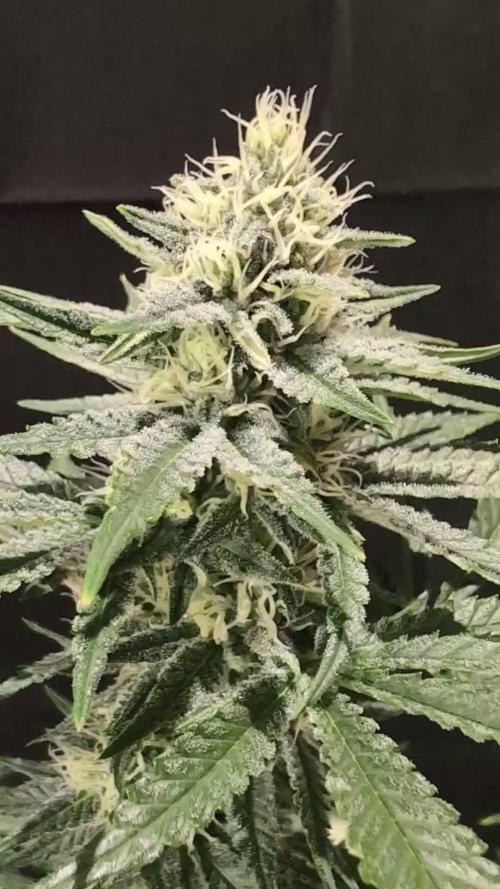
Overal I’m very happy. The weight’s looking insane. Obviously imma update you after drying and curing. Can’t say to much at this point, apart from the fact that everything is looking very nice!
Likes
34
Share
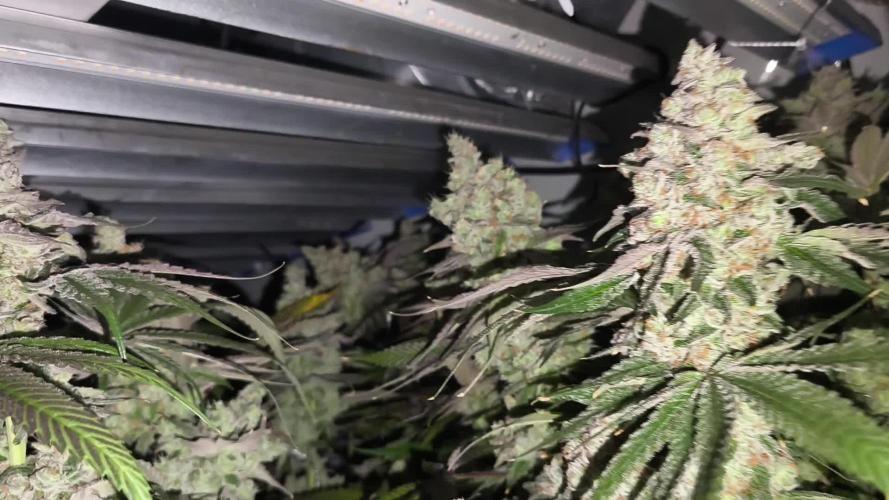
Another strong week. Away for a few days and he heat was back upto 28-30 so was a bit concerned but they came through fine with a heavy dowsing. Still stretching and lots of preflowers. Very happy that my first grow is still going and this decent!
Likes
41
Share
@Mother
Follow
Kaiydaan started showing signs of Flowering early last week. A few stigmas, Pre-Flowering, but still more Vegetative. So I decided to consider this week "Flowering". She was popping stigmas before 21 days. So far these WeedSeedsExpress genetics have shown to be exceptional. I will be slowly reducing her Veg feedings and slowly working in Bloom nutrients. I feed very sparingly as the soil has been amended with all the good stuff, organically. I think my light may have been too close, so I raised it a couple of inches to 20". I'm not 100% sure it was too close, but it's better to be safe than sorry. July 1, 2021 Little calyxes have started showing all over Kaiydaan. Kaiydaan has really breezed into Flowering without any hiccups *knock on wood. July 2, 2021 I did some tucking-of-the-leaves and some mild LST on the entire crop. I had to tuck one of Kaiydaan's taller tops. I snapped one of her other tops, but quickly got her into 🚑Urgent Care and she's as right as rain. July 3, 2021 That main top, I tucked on Kaiydaan, has turned right back up and has put on some height. Trichomes are starting to pop and the leaves are sticky. She still has no smell or none that I've noticed. July 5, 2021 I'm still dialing back the Veg nutrients on Kaiydaan and Freeman. J is still vegging strong, very light defoliation as she is ALL tops. We're only 1 month away until My Freeman's birthday! July 6, 2021 I just watered the girls, they're not big drinkers yet, a liter every 3 days. J seems to be a different Pheno from the rest. Her leaves have more texture and she appears to be all tops (likely due to the FIM'ing she underwent) and she is over a week behind Kaiydaan and Freeman.
Likes
2
Share
@Takeaims
Follow
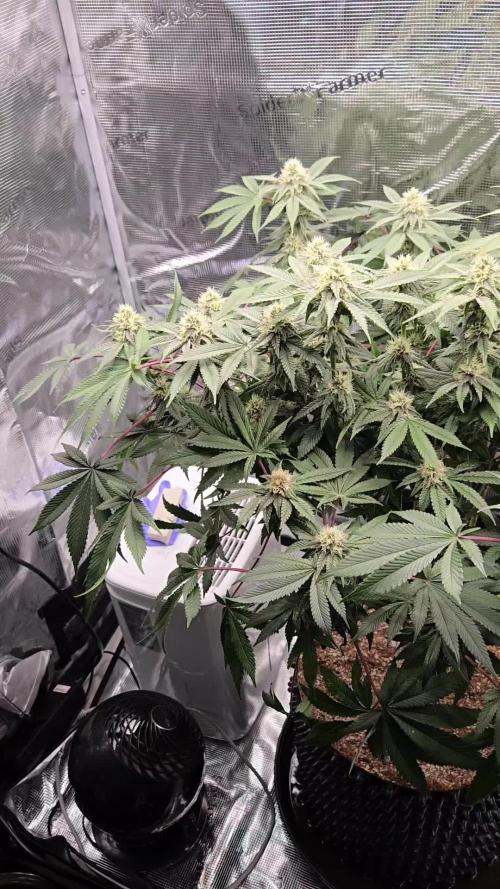
Coming into flower nicely a few are still a few weeks behind the others but I expect a full tent in a couple weeks
Likes
17
Share
Welcome back at week 2 of White Label White Skunk Automatic. This week was not much going on. The plant is getting new leafs and so far, I can’t see any mutation according to newer leafs. But it’s still very tiny and grow speed is slow for an automatic strain. Maybe it’s still an issue with my setup ? Growing progress is slow but steady. First leafs have a yellowish Color but the plant seem to be healthy. Keep in touch ! Cheers, HighZenBerg
Likes
5
Share
Here we grow! These are clones of Mandarin Cookies, rooted in peat plugs, under low light T5 Sunblaster 24w, inside a dome, keeping humidity levels high.
Likes
4
Share
@Trinidad
Follow
Day 135 (4.5 months) Day 72 since 12/12 ( for badazz og cheese) Reservoir change out today. 2 gals of water. 16 grams of full tilt.
Likes
45
Share
My homework. Rubisco regeneration is intrinsically linked to nitrogen supply because Rubisco is a major sink for nitrogen in plants, typically accounting for 15% to over 25% of total leaf nitrogen. The regeneration phase itself consumes nitrogen through the synthesis of the Rubisco enzyme and associated proteins (like Rubisco activase), and overall nitrogen status heavily influences the efficiency of RuBP regeneration.Structural Component: Nitrogen is an essential building block for all proteins, and the sheer abundance of the Rubisco protein makes it the single largest storage of nitrogen in the leaf. Synthesis and Activity: Adequate nitrogen supply is crucial for the synthesis and maintenance of sufficient Rubisco enzyme and Rubisco activase (Rca), the regulatory protein responsible for maintaining Rubisco's active state. Nitrogen deficiency leads to a decrease in the content and activity of both Rubisco and Rca, which in turn limits the maximum carboxylation rate, Vmax, and the rate of RuBP regeneration Jmax, thus reducing overall photosynthetic capacity. Nitrogen Storage and Remobilization: Rubisco can act as a temporary nitrogen storage protein, which is degraded to remobilize nitrogen to other growing parts of the plant, especially under conditions of nitrogen deficiency or senescence. Nitrogen Use Efficiency (NUE): The allocation of nitrogen to Rubisco is a key determinant of a plant's photosynthetic nitrogen use efficiency (PNUE). In high-nitrogen conditions, plants may accumulate a surplus of Rubisco, which may not be fully activated, leading to a lower PNUE. Optimizing the amount and activity of Rubisco relative to nitrogen availability is a target for improving crop NUE. Photorespiration and Nitrogen Metabolism: Nitrogen metabolism is also linked to the photorespiration pathway (which competes with carboxylation at the Rubisco active site), particularly in the reassimilation of ammonia released during the process. To increase RuBisCO regeneration, which refers to the process of forming the CO2 acceptor molecule Ribulose-1,5-bisphosphate (RuBP) during photosynthesis, the primary methods involve optimizing the levels and activity of Rubisco activase (Rca) and enhancing the performance of other Calvin-Benson-Bassham (CBB) cycle enzymes. Biochemical and Environmental Approaches: Optimize Rubisco Activase (Rca) activity: Rca is a crucial chaperone protein that removes inhibitory sugar phosphates, such as CA1P (2-carboxy-D-arabinitol 1-phosphate), from the Rubisco active site, thus maintaining its catalytic competence. •Ensure optimal light conditions: Rca is light-activated via the chloroplast's redox status. Adequate light intensity ensures Rca can effectively maintain Rubisco in its active, carbamylated state. •Maintain optimal temperature: Rca is highly temperature-sensitive and can become unstable at moderately high temperatures (e.g., above 35°C/95F° in many C3 plants), which decreases its ability to activate Rubisco. Maintaining temperatures within the optimal range for a specific plant species is important. •Optimize Mg2+ concentration: Mg2+ is a key cofactor for both Rubisco carbamylation and Rca activity. In the light, Mg2+ concentration in the chloroplast stroma increases, promoting activation. •Manage ATP/ADP ratio: Rca activity depends on ATP hydrolysis and is inhibited by ADP. Conditions that maintain a high ATP/ADP ratio in the chloroplast stroma favor Rca activity. Enhance Calvin-Benson-Bassham (CBB) cycle enzyme activity: The overall rate of RuBP regeneration can be limited by other enzymes in the cycle. •Increase SBPase activity: Sedoheptulose-1,7-bisphosphatase (SBPase) is a key regulatory enzyme in the regeneration pathway, and increasing its activity can enhance RuBP regeneration and overall photosynthesis. •Optimize other enzymes: Overexpression of other CBB cycle enzymes such as fructose-1,6-bisphosphate aldolase (FBA) and triose phosphate isomerase (TPI) can also help to balance the metabolic flux and improve RuBP regeneration capacity. Magnesium ions, Mg2+, are specifically required for Rubisco activation because the cation plays a critical structural and chemical role in forming the active site: A specific lysine residue in the active site must be carbamylated by a CO2 molecule to activate the enzyme. The resulting negatively charged carbamyl group then facilitates the binding of the positively charged Mg2+ion. While other divalent metal ions like Mn2+ can bind to Rubisco, they alter the enzyme's substrate specificity and lead to dramatically lower activity or a higher rate of the non-productive oxygenation reaction compared to Mg2+, making them biologically unfavorable in the context of efficient carbon fixation. The concentration of Mg2+ in the chloroplast stroma naturally increases in the light due to ion potential balancing during ATP synthesis, providing a physiological mechanism to ensure the enzyme is activated when photosynthesis is possible. At the center of the porphyrin ring, nestled within its nitrogen atoms, is a Magnesium ion (Mg2+). This magnesium ion is crucial for the function of chlorophyll, and without it, the pigment cannot effectively capture and transfer light energy. Mg acts as a cofactor: Mg2+ binds to Rubisco after an activator CO2 molecule, forming a catalytically competent complex (Enzyme-CO2-Mg2+). High light + CO2) increases demand: Under high light (60 DLI is a very high intensity, potentially saturating) and high CO2, the plant's capacity for photosynthesis is high, and thus the demand for activated Rubisco and the necessary Mg2+ cofactor increases. Mg deficiency becomes limiting: If Mg2+ is deficient under these conditions, the higher levels of Rubisco and Rubisco activase produced cannot be fully activated, leading to lower photosynthetic rates and potential photo-oxidative damage. Optimal range: Studies show that adequate Mg2+ application can enhance Rubisco activation and stabilize net photosynthetic rates under stress conditions, but the required concentration is specific to the experimental setup. Monitoring is key: The most effective approach in a controlled environment is to monitor the plant's physiological responses e.g., leaf Mg2+ concentration, photosynthetic rate, Rubisco activation state, and adjust the nutrient solution/fertilizer to maintain adequate levels, rather than supplementing a fixed "extra" amount. In practice, this means ensuring that Mg2+ is not a limiting factor in the plant's standard nutrient solution when pushing the limits with high light and CO2. Applying Mg2+ through foliar spray is beneficial to Rubisco regeneration, particularly in alleviating the negative effects of magnesium (Mg) deficiency and high-temperature stress (HTS). While Mg can be leached from soil, within the plant it is considered a mobile nutrient, particularly in the phloem. Foliar-applied Mg is quickly absorbed by the leaves and can be translocate to other plant parts, including new growth and sink organs. Foliar application of: NATURES VERY OWN MgSO4 @ 15.0g L-1 in a spray bottle. Foliar sprays are often recommended as a rapid rescue measure for existing deficiencies or as a supplement during critical growth stages, when demand for Mg is high. Application in the early morning or late evening can improve absorption and prevent leaf burn. The starting point [of creativity] is curiosity: pondering why the default exists in the first place. We’re driven to question defaults when we experience vuja de, the opposite of déjà vu. Déjà vu occurs when we encounter something new, but it feels as if we’ve seen it before. Vuja de is the reverse—we face something familiar, but we see it with a fresh perspective that enables us to gain new insights into old problems.
Likes
14
Share
@AndrewC
Follow
This week, I tried to LST them in the beginning of the week, but the stalks were flimsy and weak. I put a fan on them with a significantly more vigorous wind :) This helped, then I tried to LST train with my bending clips, the distance between the nodes was still to close. So I raised the light 2 inches, which helped, I figure by 2-3 days from now, I will be able to start the proper LST. I also flushed the res and put in new water and nutrients. Some of the plants are showing what appears to be Cal/mag deficiency. So I added an increased dosing into the res, I then took about 10ml of the mix and put it into the small res's at the bottom of the AutoPots to give a boosted dose to the plants directly. Other than that, this grow is *boomin*. I'm very happy with the progress, and these plants are thick, bushy and growing like crazy.
Likes
21
Share
This weeks update! Grow tent- so I had a buddy do my res change I talked him through the whole process couldn’t make it to the grow this week. Number and everything where perfect but!. He didn’t close the valve all the way to the blue dream res tank and left the drain pump on🤦‍♂️🏾. So when I got there this week leaves where curling and brown thought it might be a nutrient issue. Opened the res to check it. And there was only about a gallon of water in there out of the usual seven. No major harm I was planning on doing my last defoliation to her this week anyway. But that could have been bad. They are both receiving half strength nutes of the ripening mix GH recommends. Would have been a perfect week if not for that. No harm no foul tho. But def bout to start pushing them on the flower nutes and get back up to my 1000 ppm range buy adding extra bloom formula! #Staykited
Likes
24
Share
I have had a blast growing this plant inside this LEAF unit. There was very little I had to do in order to have so much plant. I cannot wait to add another diary with some more grows. The smell of the plant is incredible and will only get better. The smoke is gentle, and it actually leaves a Minty feeling in your mouth, this was surprising but really cool given the name of the plant. I will start my next grow in November, be on the lookout for that journal. Final Dry bud weight 443g! If you like this journal and would like to have a similar experience growing your own, go here. www.GetLeaf.co
Likes
25
Share
Processing
Likes
3
Share
@Blackrose
Follow
Looking good so far. Any advice? Always willing to learn.
Likes
8
Share
@Cannabot
Follow
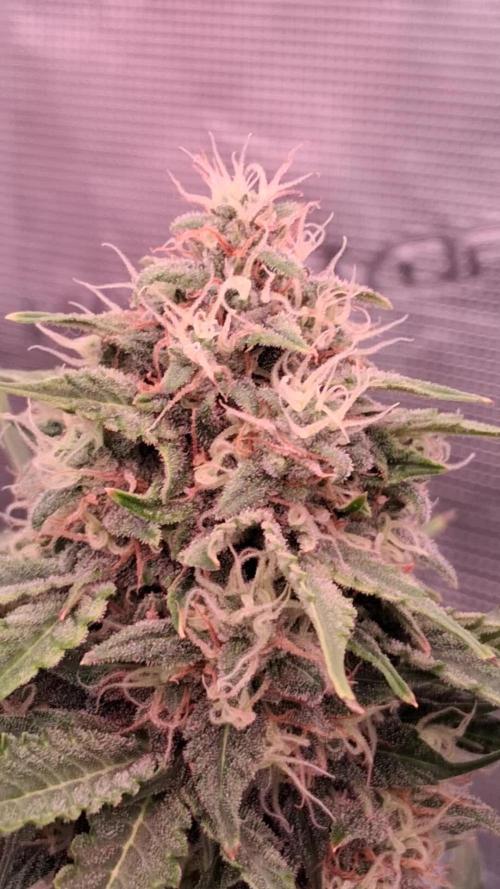
Started harvesting,flushed the past few days.Will finish chopping tmw.Almost sad to see her go,she really was the most unique strain I've ever grown and I'm confident the bud is gna be top shelf.Everything is covered in thick velvet fur man I tell u,sticky smelly u name it.Thanks Barneys Farms,awesome strain.
Likes
18
Share
700ppm ff before 3ml of calmag. City water /bubbler. Ph 6.4-6.7. Silica (0-0-1) on water only day 5-7ml per. Feed x2 x w. Water or water cal/mag 3-4 ml/gal only l, 1-2 x w when needed.
Likes
11
Share
@Skull
Follow
Good week my diesel glue is really starting to branch up after topping at the end of last week I have continued 4days ago and today moderate defoliation I need the Poppin Cherrys pheno to get growing lol, I had a cultivator mystery stain, not last grow the one before that had a decidely slow start but bloomed into an exceptional phenotype, hopefully more similarities than Early leaf structure
Likes
25
Share
@EBxAH
Follow
Well week 7 has started and 1 full week into 12-12. This time of year is perfect for winter time flowering. Basha is 26" Steffa is 36" and Wandzia is 27" so I average the height at 30". I think they look pretty damn good for 50 days old, lol. These ladies are currently taking in a gallon a piece every two days now, different from last grow. Also I've been bottom feeding these girls. That's about it for now. Happy Growing Everyone ✌️❤️😁🍀🎶👽 EB