


Likes
Comments
Share


@gottagrowsometime
Follow
Welcome to my Slurircane Diary sponsored by MSNL & Spider-Farmer
Week 7, early flip and attempt at reveg into early week 8 but decided I liked the look of her cola potential and decided to throw her into flowering. From the reveg attempt I thought a ratio on/off would be best if it leaned more on the off, so a 13-11 off / on was set for early week 8 and till fattening (when the stretch is over, 'pre flower)
This is a bit of a weird one for me, well more a 1st. I'm not 100% sure. But I do remember this getting 3 13.5hr days as did my whole tent. As my cheap timer ran for an extra hrs off when it was meant to be on. So, put it into a flip. And I tried for over a week to reveg, I'm sure if I pushed on. I would of gotten to reveg. (I'm not sure how long it takes, am very pleased though with this spectrum even without the IR that the flip time is quick. So, after a week 7 was finished. I decided to push on to a 13-11 off/on to induce her. I'll increase it to 13-11 on/off in fattening. Sadly has the pre flip and then attempt at reveg make all her nodes very stiff. And near to LST. After pre flower I'll hard defol and attemp to distance the colas. Surprisingly with her been a dom indica her leafs are very Stavia style. Very thin. Would make an ideal candidate for scrog. She is very healthy and been the most responsive with co2/heat. Although growth was stalled from my reveg attempt, I'm sure i cut a good few CM from her Height by reversing it again. I should of looked up how long it takes to reveg 1st. Lessons learnt. I still have an amazing pheno. (I'm a few weeks ahead in Real Time)
Defoliation
So, this was done lots on this girl. As my plans for her were changed due to poor attention. So, start of wk 7, what I thought was still a few weeks out from me flipping. But, after my abandoned attempt of reveggin. She was in limbo and I decided to risk it with a hard defoliation. (Looks like it was done in pre flower, it wasn't, It was just coming back into veg, but would of taken weeks to get it growing fully again, and at looking I'm happy with it so I pushed again with my Defol to get colas. You can find this on grow weed easy "full tutorial for flowering") am gonna leave her now until she's out of pre flower, she's 35cm or so tall. I don't see putting on much height. As my reveg attempt will for sure hanmer her stretch.
Diet
Was planning on taking Alga Grow off for the last 10 days r so off grow. So, I only had a few days off it, and its on Alga Bloom now.
Thanks to my sponsors from MSNL & SPIDER-FARMER. Just harvested the GranDaddyPurple Auto. (BEST AUTO I'VE EVER GROWN SO FAR, TASTE, SMELL & STRENGHT BEATS ALL PAST AUTOS, BUDS DOWN) will be uploading the weeks on that soon. I've too many diaries. I knew this. So, I plan to do 2 wk updates at a time for 70% of my diaries, so pics and info will be added as those it was a weekly update. Also, I don't put up a harvest wk for a month until the cure.
Thanks to my sponsors from MSNL & SPIDER-FARME, look forward to working with your more. And trying a lot more of your products. #convert.
Much appreciation to all ppl who stopped by and did your thing. Look forward to seen your work if I know you dropped by of course. Either way. Thanks for stopping by

Likes
19
Share
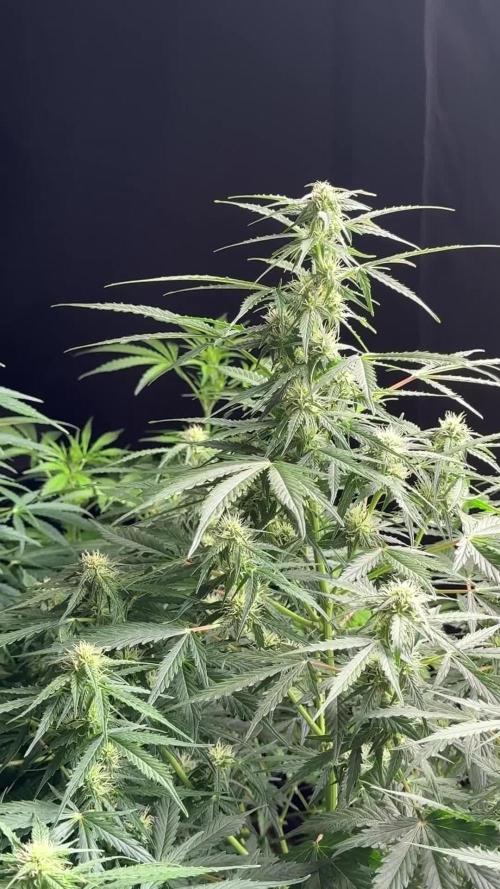

@DogDoctorOfficial
Follow
🌱 Ghost Train Haze — Week 9 From Seed
(Week 4 Flower | 12/12 From Seed — No Veg)
This week is one of those moments where you don’t guide the plant…
you observe it.
She’s not just growing — she’s expressing.
⸻
🌿 Structure & Expression
From the very beginning, this run was about letting the plant define itself under a 12/12 cycle — no artificial veg, no forced shaping.
And now we see the result:
• Strong sativa-dominant expression
• Long internodal spacing, but still stacking
• Large, beautifully structured fan leaves
• Upright, confident growth — no signs of stress
She’s currently sitting around ~1.6m, and still stretching.
Not aggressively… but purposefully.
This is what happens when a plant is:
• Not overhandled
• Not overcorrected
• Simply supported
⸻
🍃 The Leaves (Worth Stopping For)
Those leaves… honestly, they tell the whole story.
• Deep green, fully saturated
• Clean veins, no deficiencies
• Wide spread = efficient light capture
• Slight red petioles — genetic expression + intensity, not stress
You don’t touch leaves like these unless they ask you to.
And right now — they’re not asking for anything.
⸻
💡 Light & Environment
To adapt to her vertical push, the whole room was raised slightly:
• PPFD: ~1600–1700 at the top
• Still within tolerance because:
• She’s actively stretching
• Metabolism is high
• No signs of light stress
Environment holding steady:
• 🌡️ 28°C
• 💧 ~65% RH
• Outside contrast: cold + humid (10°C / 87%)
We’re not chasing numbers — we’re watching leaf response (VPD-driven).
And right now, she’s fully comfortable.
⸻
Feeding Strategy (Autopot + Support)
Reservoir (Mineral Base):
• Plagron Terra Bloom
• Green Sensation
• Power Buds
• CalMag (first in solution)
EC: ~2.9 – 3.0
→ High, but clearly within her tolerance
Top Feeding (Manual, occasional):
• Sugar Royal
• Pure Zym
Nothing complicated.
Just consistent availability + letting the plant decide uptake.
⸻
🌸 Flower Development
Week 4 flower and you can already see:
• Clear bud site definition
• Early stacking along the main stem
• Structure preparing for weight
She’s not rushing flower.
She’s building the frame first.
That usually means one thing later on:
👉 Potential for heavy, elongated colas
⸻
🌱 Why This Works (No Veg Insight)
Running 12/12 from seed on a plant like this does something interesting:
• The plant skips horizontal bush building
• It prioritizes vertical structure early
• Energy goes into:
• Stem strength
• Root establishment
• Early reproductive readiness
For genetics like Ghost Train Haze (naturally large, vigorous):
👉 This approach helps control size without suppressing expression
Outside, this would easily become a monster.
Here, we’re letting her be big —
just within a controlled ceiling.
⸻
🔮 What to Expect Next Week
• Stretch should begin to slow down
• Bud sites will start:
• Thickening
• Connecting
• Nutrient demand may stabilize or slightly increase
• Watch:
• Light distance (she’s getting close)
• Airflow through inner canopy
No major interventions planned.
We continue observing.
⸻
🤝 Gratitude
To everyone walking this path with us:
• The OGs who’ve been here from day one
• The new eyes discovering the journey
• The growers sharing knowledge openly
• The communities — inside and outside this platform
• The genetics, the gear, the support behind the scenes
And yes — even the critics.
If you’re here, you’re part of it.
From grower to growers. 🌱
📡 DELETED @ 1K Please stay tuned.we never quit https://www.youtube.com/@DOGDOGTHEDOCTOR NEW
🙏 Thank you for your patience and continued support.
FOR DISCOUNT CODES AND MORE JUST FOLLOW THE LINK https://website.beacons.ai/dogdoctorofficial
📲 Don’t forget to Subscribe and follow me on Instagram and YouTube @DogDoctorOfficial for exclusive content, real-time updates, and behind-the-scenes magic. We’ve got so much more coming, including transplanting and all the amazing techniques that go along with it. You won’t want to miss it.
GrowDiaries Journal: https://growdiaries.com/grower/dogdoctorofficial
Instagram: https://www.instagram.com/dogdoctorofficial/
YouTube: https://www.youtube.com/@dogdoctorofficial Deleted by Youtube
Vimeo : https://vimeo.com/dogdoctorofficial Under construction stay tuned ⸻
Explore the Gear that Powers My Grow
If you’re curious about the tech I’m using, check out these links:
🔆 Lighting & Environmental Control
• Future of Grow — Advanced LED lighting technology
https://www.futureofgrow.com/
DISCOUNT CODE: DOG20
• Lumiflora — Under-canopy LED lighting
https://lumiflorade.com/
• TrollMaster — Environmental controllers and automation gear (past collaboration)
⸻
Genetics
• Zamnesia Seeds — Genetics used in this project
https://www.zamnesia.com/
⸻
🌱 Soil, Substrates, Boosters & Root Support
• Plagron — Substrates, bio mixes, and supportive products
https://plagron.com/en/
⸻
🎒 Storage, Curing & Preservation
• Grove Bags — Curing and storage solutions
https://grovebags.com/
⸻
📸 Photography Equipment & Tools
(Not sponsors, but part of my creative toolkit)
• Sony A6700
• Sony full-frame macro lens + few more
• Stacking photography workflow - learning
• iPhone (for behind-the-scenes shots)
We’ve got much more coming as we move through the grow cycles. Trust me, you won’t want to miss the next steps, let’s push the boundaries of indoor horticulture together!
As always, this is shared for educational purposes, aiming to spread understanding and appreciation for this plant. Let’s celebrate it responsibly and continue to learn and grow together.
With true love comes happiness. Always believe in yourself, and always do things expecting nothing and with an open heart. Be a giver, and the universe will give back in ways you could never imagine.
💚 Growers love to all 💚
📸 P.S. – The Eye Behind the Lens
All photos in this diary (for now — except for the ones showing the camera, which I took with an iPhone) are taken with a Sony A6700 paired with a Sony full-frame macro lens and a few more.
Photography is part of the story — it’s how we share the fine textures, the glow, and the quiet details that words can’t always capture.
I’ve also started experimenting with photo stacking — a technique where multiple images, each taken at a slightly different focus point, are layered together to create one perfectly sharp image from front to back.
It’s not digital enhancement or AI; it’s pure photography — a way to reveal the plant’s beauty in microscopic depth, from trichome to petal.
You’ll even see a few shots of "ghost me" capturing the shots — camera, lens, setup — because every grow deserves not just to be cultivated, but documented like art.
FOR DISCOUNT CODES AND MORE JUST FOLLOW THE LINK https://website.beacons.ai/dogdoctorofficial
NEW DISCORD - Official Server Invite Link : https://discord.gg/ksjAkA5T74

Likes
22
Share


@Luv2Grow
Follow
Day 78 - Starting off week 12 and couldn’t be happier. Things are going good and just gave her a feeding today. This will be the last week of feed and will flush with Sledgehammer next week. Quite a few fan leaves are really starting to fade in color and die off, telling me she’s probably towards the end of life. Hopefully there’ll be some fattening these last 2 weeks before chopping. Attempted some trich pics but can’t hold steady enough so didn’t turn Putnam so well but we’re just about 100% milky from what I can tell.
Day 79 - Looks like a change in plans and most likely will chop this weekend. Overnight she popped a lot of amber trichs. Even the bottom buds with less light and are about 20-30% amber. I don’t want it going too much further than that so I’ll do a big flush tomorrow and most likely chop either Friday or Saturday.
Day 80 - Final day before chopping. Put 5 gallons of water with the Sledgehammer through for a flush and all is looking good. Put together a new drying box today so we’ll see how that works out for the drying process. Seen some videos on it and looks like it should work. Will be chopping tomorrow and so ready!

Likes
2
Share


@gdogfunk
Follow
Another week closer to harvest! She’s looking and smelling amazing!! I can’t wait to smoke this delicious plant. I grew her once when I first started indoor, so I’m excited to feel the Swiss cheese stone!!

Likes
10
Share


@CannaArchive
Follow
Things are getting serious now!🔥
#2 has developed an insanely large main bud, absolutely packed with trichomes and giving off a super pungent aroma. 🌿
Meanwhile, #1 keeps stretching and is still the biggest plant in the tent. It continues to give off that stunning sweet, tropical scent, which is just unreal!
Both plants seem to be moving fast—I have a feeling they might be ready in about two weeks. Let’s see how they finish up! 🤩
Likes
18
Share


@Ultraviolet
Follow
Green light is radiation with wavelengths between 520 and 560 nm and it affects photosynthesis, plant height, and flowering. Plants reflect green light and this is why they appear green to our eyes. As a result, some growers think that plants don’t use green wavelengths, but they actually do!
In fact, only around 5 – 10% of green light is reflected from leaves and the rest (90 – 95 %) is absorbed or transmitted to lower leaves [1].
Green wavelengths get used in photosynthesis. Chlorophyll pigments absorb small amounts of green wavelengths. Light that doesn’t get absorbed is transmitted to leaves that are shaded out from direct light. This means that leaves at the bottom of the canopy get more green light than leaves at the top. A high proportion of green wavelengths compared to other colors tells lower leaves that they are being shaded out, so they are able to react accordingly. Lower leaves may react by opening or closing their stomata or growing longer stems that help the leaves reach brighter light [1, 2, 3].
When it comes to growing cannabis, many cultivators are interested in the quality of light used for the flowering stage. In many plants, flowering is regulated by two main photoreceptors: cryptochrome and phytochrome. Both photoreceptors primarily respond to blue light but can also respond to green, although to a lesser extent. Green can accelerate the start of flowering in several species (although cannabis has yet to be tested) [1, 4, 5]. However, once flowering has begun, it’s important to provide plants with a “full spectrum” light that has high amounts of blue and red light, and moderate amounts of green, in order for photosynthesis to be optimized.
Green light mediates seed germination in some species. Seeds use green wavelengths to decide whether the environment is good for germination. Shade environments are enriched in green relative to red and blue light, so a plant can tell if it is shady or sunny. A seed that senses a shaded environment may stay dormant to avoid poor growing conditions [1]. Some examples of plant species where researchers have documented this response are: ryegrass (a grass that grows in tufts) and Chondrilla (a plant related to dandelion) [1, 6].
Although green wavelengths generally tell plants NOT to germinate, there are some exceptions! Surprisingly, green wavelengths can stimulate seed germination in some species like Aeschynomene, Tephrosia, Solidago, Cyrtopodium, and Atriplex [1, 6, 7].
Of course, light is not the only factor affecting seed germination – it’s a combination of many factors, such as soil moisture, soil type, temperature, photoperiod, and light quality.
When combined with red and blue light, green can really enhance plant growth [1, 8]. However, too much green light (more than 50% of the total light) can actually reduce plant growth [8]. Based on the most current research, the ideal ratio of green, red, and blue light is thought to be around 1:2:1 for green:blue:red [9]. When choosing a horticultural light, choose one that has high amounts of blue and red light and moderate amounts of green and other colors of light.
Not many studies can be found about the effect of green light on cannabis growth or metabolism. However, if one reads carefully, there are clues and data available even from the very early papers.
Mahlberg and Hemphill (1983) used colored filters in their study to alter the sunlight spectrum and study green light among others. They concluded that the green filter, which makes the environment green by cutting other wavelengths out, reduced the THC concentration significantly compared to the daylight control treatment. It has been demonstrated that green color can reduce secondary metabolite activity with other species as well. For example, the addition of green to a light spectrum decreases anthocyanin concentration in lettuce (Zhang and Folta 2012).
If green light only reverses the biosynthesis of some secondary metabolites, then why put green light into a growth spectrum at all? Well, there are a couple of good reasons. One is that green penetrates leaf layers effectively. Conversely red and blue light is almost completely absorbed by the first leaf layer.
Green travels through the first, second, and even third layers effectively (Figure 2). Lower leaf layers can utilize green light in photosynthesis and therefore produce yields as well.
Even though a green light-specific photoreceptor has not yet been found, it is known that green light has effects independent from the cryptochrome but then again, also cryptochrome-dependent ones, just like blue light. It is known that green light in low light intensity conditions can enhance far red stimulating secondary metabolite production in microgreens and then again, counteracts the production of these compounds in high-intensity light conditions (Kim et al. 2004). In many cases, green light promoted physiological changes in plants that are opposite to the actions of blue light. In the study by Kim et al. blue light-induced anthocyanin accumulation was inhibited by green light. In another study it has been found that blue light promotes stomatal opening whereas green light promotes stomatal closure (Frechilla et al. 2000). Blue light inhibits the early stem elongation in the seedling stage whereas green light promotes it (Folta 2004). Also, blue light results in flowering induction, and green light inhibits it (Banerjee et al., 2007). As you can see, green light works very closely with blue light, and therefore not only the amount of these two wavelengths separately is important but also the ratio (Blue: Green) between these two in the designed spectrum. Furthermore, green light has been found to affect the elongation of petioles and upward leaf reorientation with the model plant Arabidopsis thaliana both of which are a sign of shade avoidance symptoms (Zhang et al. 2011) and also gene expression in the same plant (Dhingra et al. 2006).
As mentioned before, green light produces shade avoidance symptoms which are quite intuitive if you consider the natural conditions where the plants grow. Not all the green light is reflected from the highest canopy leaves in nature but a lot of it (50-90%) has been estimated to penetrate the upper leaves at the plant level ((Terashima et al., 2009; Nishio, 2000). For the plant growing in the understory of the forest green light is a signal for the plant of being in the shade of a bigger plant. Then again, the plants growing under unobstructed sunlight can take advantage of the green photons that can more easily penetrate the upper leaves than the red and blue photons. From the photosynthetic pigments in higher plants, chlorophyll is crucial for plant growth. Dissolved chlorophyll and absorb maximally in the red (λ600–700 nm) and blue (λ400–500 nm) regions of the spectrum and not as easily in the green (λ500–600 nm) regions. Up to 80% of all green light is thought to be transmitted through the chloroplast (Terashima et al., 2009) and this allows more green photons to pass deeper into the leaf mesophyll layer than red and blue photons. When the green light is scattered in the vertical leaf profile its journey is lengthened and therefore photons have a higher chance of hitting and being absorbed by chloroplasts on their passage through the leaf to the lower leaves of the plant.
Photons of PPFD (photosynthetic photon flux density) are captured by chlorophyll causing an excitation of an electron to enter a higher energy state in which the energy is immediately passed on to the neighboring chlorophyll molecule by resonance transfer or released to the electron transport chain (PSII and PSI). Despite the low extinction coefficient of chlorophyll in the green 500–600 nm region it needs to be noted that the absorbance can be significant if the pigment (chlorophyll) concentration in the leaf is high enough.
The research available clearly shows that plants use green wavelengths to promote higher biomass and yield (photosynthetic activity), and that it is a crucial signal for long-term developmental and short-term dynamic acclimation (Blue:Green ratio) to the environment. It should not be dismissed but studied more because it brings more opportunities to control plant gene expression and physiology in plant production.
REFERENCES
Banerjee R., Schleicher E., Meier S. Viana R. M., Pokorny R., Ahmad M., Bittl R., Batschauer. 2007. The signaling state of Arabidopsis cryptochrome 2 contains flavin semiquinone. The Journal of Biological Chemistry 282, 14916–14922.
Dhingra, A., Bies, D. H., Lehner, K. R., and Folta, K. M. 2006. Green light adjusts the plastic transcriptome during early photomorphogenic development. Plant Physiol. 142, 1256-1266.
Folta, K. M. 2004. Green light stimulates early stem elongation, antagonizing light-mediated growth inhibition. Plant Physiol. 135, 1407-1416.
Frechilla, S., Talbott, L. D., Bogomolmi, R. A., and Zeiger, E. 2000. Reversal of blue light -stimulated stomatal opening by green light. Plant Cell Physiol. 41, 171-176.
Kim, H.H., Goins, G. D., Wheeler, R. M., and Sager, J. C. 2004.Green-light supplementation for enhanced lettuce growth under red- and blue-light emitting diodes. HortScience 39, 1617-1622.
Nishio, J.N. 2000. Why are higher plants green? Evolution of the higher plant photosynthetic pigment complement. Plant Cell and Environment 23, 539–548.
Terashima I., Fujita T., Inoue T., Chow W.S., Oguchi R. 2009. Green light drives leaf photosynthesis more efficiently than red light in strong white light: revisiting the enigmatic question of why leaves are green. Plant & Cell Physiology 50, 684–697.
Zhang, T., Maruhnich, S. A., and Folta, K. M. 2011. Green light induces shade avoidance symptoms. Plant Physiol. 157, 1528-156.
Wang, Y. & Folta, K. M. Contributions of green light to plant growth and development. Am. J. Bot. 100, 70–78 (2013).
Zhang, T. & Folta, K. M. Green light signaling and adaptive response. Plant Signal. Behav. 7, 75–78 (2012).
Johkan, M. et al. Blue light-emitting diode light irradiation of seedlings improves seedling quality and growth after transplanting in red leaf lettuce. HortScience 45, 1809–1814 (2010).
Kasajima, S., et al. Effect of Light Quality on Developmental Rate of Wheat under Continuous Light at a Constant Temperature. Plant Prod. Sci. 10, 286–291 (2007).
Banerjee, R. et al. The signaling state of Arabidopsis cryptochrome 2 contains flavin semiquinone. J. Biol. Chem. 282, 14916–14922 (2007).
Goggin, D. E. & Steadman, K. J. Blue and green are frequently seen: responses of seeds to short- and mid-wavelength light. Seed Sci. Res. 22, 27–35 (2012).
Mandák, B. & Pyšek, P. The effects of light quality, nitrate concentration and presence of bracteoles on germination of different fruit types in the heterocarpous Atriplex sagittata. J. Ecol. 89, 149–158 (2001).
Darko, E. et al. Photosynthesis under artificial light: the shift in primary and secondary metabolism. Philos. Trans. R. Soc. B Biol. Sci. 369 (2014).
Lu, N. et al. Effects of Supplemental Lighting with Light-Emitting Diodes (LEDs) on Tomato Yield and Quality of Single-Truss Tomato Plants Grown at High Planting Density. Environ. Control Biol. 50, 63–74 (2012).

Likes
57
Share


@Roberts
Follow
Runtz Punch is still getting slight spotting over the week. She was showing nitrogen toxicity as well. So I did a solution change. Plus my ph pen was .3 off. So she has basically had a reset button hit on nutrition. Hopefully she pulls out of it now. She got some lst and defoliation today. She should be ready to go now. Thank you Herbies seeds, Athena, and Spider Farmer.🤜🏻🤛🏻🌱🌱🌱
Thank you grow diaries community for the 👇likes👇, follows, comments, and subscriptions on my YouTube channel👇.
❄️🌱🍻 Happy Growing 🌱🌱🌱
https://youtube.com/channel/UCAhN7yRzWLpcaRHhMIQ7X4g

Likes
25
Share


@Merrymoosefamilyfarms
Follow
Hey hey my fellow growers, I hope everyone had an excellent week! It is great to be back here at the beginning of week six, let’s get into it!
Last week I had misspoke- I said I was going to train 5 of the 6 plants I have going from fastbuds, this was false…. What I meant is all 6…
Yes at the time I had only INTENDED on messing with 5 but the last one, the way it was structured with the self top, it was practically BEGGING me to get in there and play with it- and I ask you this- who would I be to deny that little strawberry pie the simple pleasure of a little training? So train I did…
Nothing crazy, but actually for all six plants (despite my best efforts, best being debatable) to not go overboard- I have been going in a doing a little bit of training and taking a leaf off here and there if it’s blocking any potential bud sites. I am trying to be really careful and not do too much at once and upset any of them- but at the same time, after stunting them a bit with the taproot incident (which I will keep referring to until I learn from that mistake) I want to do what I can to maximize yield after tripping up a bit in the beginning.
We will see how it goes, but for now, everything seems to be doing well and responding well to the bit of training I have been doing.
Right now I am seeing a range of sizes among the bunch- the forbidden runtz are both shorter and squatier coming in at about 5.5 inches in height each and I notice everything is spaced a bit tighter on these so I have had some difficulty spreading them out but not to any problematic extent, just in comparison with the rest-
Next we have the strawberry pie- the smaller one coming in at 5.5inches, is the one that I was speaking about that had topped itself. It seems to be doing well and handling the training just fine. However the other one, that one is much bigger and is about 8.5 inches tall. It wasn’t until I busted out the ruler that I saw that this was the second biggest plant of the fast buds.
That leaves the largest which of course was the gorilla cookies! The smaller of the two is coming in at 8 inches and the larger one coming in at 9.5! They are both tied down and doing great, showing growth each day after being trained and having select leaves removed.
We are getting closer and closer to flower I hope to have a bit more time with them but that is totally in their hands, so we will see what happens- the game plan now for me at this point is to keep doing what I’ve been doing- trying to balance on a delicate line.
As far as other news…
I am doing dishes the other day- I have my phone propped up with YouTube on and dude grows playing (my preferred way to do dishes) I hear the dude mention a giveaway they are doing that I had submitted an entry for recently so my ears had perked up…👀 I saw they had the contest page pulled up and on display and I thought to myself, wouldn’t it be cool if I got to see my picture right now, sure enough- I hear them start talking about my pictures! I in no way won (at this point, my fingers are crossed though haha) and I realize that this is debatably anticlimactic however, I listen to these guys everyday at work so I was stoked! I still am!
There are lots of good giveaways going on right now, all the amazing contests going on on this site, Instagram wherever! You have to be in it to win it folks and often it doesn’t take much to enter- I wish you all luck if you participate in any holiday contests and I hope you all have a fantastic holiday week and I will catch you all here at the same time in the same place hopefully with some new goodies and we can continue this fastbuds journey! Growers love and happy holidays everybody!!!
💚🤙🌱
Likes
14
Share


@Targona
Follow
Targona: 29 days since my little girl sprouted from seeds🌱
Fourth week of growth of my OG Eddy Lepp Auto 💚🌺💚🌺
Nutrients:
I use nutrients from Advanced Hydroponics Of Holland - three basic components, still according to the table for growth during the flowering period 💓 -
- Dutch fertilizer Formula 1 Grow - supplies the plant with substances necessary for the perfect development of roots, stem and leaves; intended for the growth phase 🌾
- Dutch fertilizer Formula 2 Bloom - contains a large amount of nutrients necessary for rapid growth and fruit development, supplies the plant with energy; intended for the flowering phase 🌸🌿
- Dutch fertilizer Formula 3 Micro - increases oxygen intake, improves plant immunity, ensures better absorption of nutrients; intended for the growth and flowering phase 🌴
-------------------------------------------------------------------------------------
Plagron Power Roots - Root Stimulator Plagron Roots is a biological root stimulator that supports the formation of the root system. I use it until the fifth week of growth 🍃🍃 - I fertilize for the last time in the fifth week of plant growth.
-------------------------------------------------- -------------------------------------------------- --------
BioBizz Calmag - The special Calmag supplement was designed for professional and hobby growers who need to supply their plants with calcium and magnesium in organic quality for a long time or immediately. The 100% organic 💩💩 and certified BioBizz Calmag product is made of calcium carbonate and magnesium sulfate supplemented with humic acid.
-------------------------------------------------- -------------------------------------------------- --------
BioBizz Bio pH - is an organic pH regulator. An aqueous solution of citric acid, which occurs naturally in citrus fruits 🍋🍋
------------------------------------------------------------------- ----------------------------------------------
During the flowering period, I add Advanced Nutrients stimulants:
- JUNGLE X Environ is a highly effective complex preparation for stimulating flower formation. 🌸🏵️
- Bud Candy - carbohydrates for my girls 🍭🍭🍭
⚡⚡⚡However - from the next watering I will fundamentally change the nutrients to organic with small exceptions. I will make this change carefully, so that the girls feel good, have the nutrients they need and at the same time not give them so much synthetics ⚡⚡⚡
General:
OG Eddy Lepp Auto 💚🌺💚🌺 - The girl is growing beautifully and responds well to nutrients. In the last week she switched to the flowering phase and therefore grew tall, even though it is a hybrid.🌿💚
Training:
Classic, I continuously perform defoliation and small LST - I tie up the branches that grow towards the pot just like the others so that they do not shade each other's buds. In addition, I gently pulled the large leaves closer to the stem so that I don't have to cut them 💚🌞🌞
Light: Mars Hydro TS1000 The plants respond effectively and the light is technically very well managed - I try to have 50 cm between the light and the plants, so I regularly move it up 💡💡💡
Thanks for the likes :)
See you soon 😍😍

Likes
5
Share


@Reeferpot420
Follow
I used to love skunk weed 20 years ago hope mines as good or better than that was....

Processing
Likes
Comments
Share


Likes
Comments
Share


Likes
38
Share


@Lukush
Follow
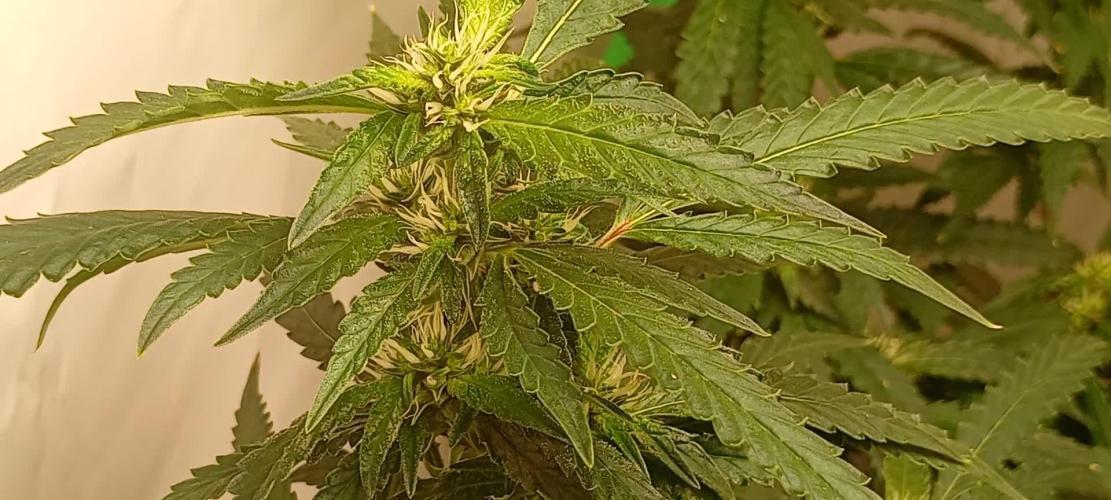
Hey growmies, happy with the results till know, this strain is a special one for me , always wanted to test a Apple 🍎 strain ! Can't wait
Hope you all enjoy mi diarie and if you do hit that like button or leave a comment below thanks very much for the support have a good one growmies
Likes
4
Share


@BirthdayBoy
Follow
The tower now has an extra floor made of pool stick
I topped two big buds that reached their 5th node
Just changed the water and i m going out for two weeks
I added some bloom nutrient into the mix as i'm probably going into flowering 12/12 next week as some girls are too tall
All the purple punch died they are fragile
I liked them tho since the girl seemed so compact and small with many buds
I will try and plant another bunch of purple punch later

Likes
3
Share

@centralflpheno
Follow
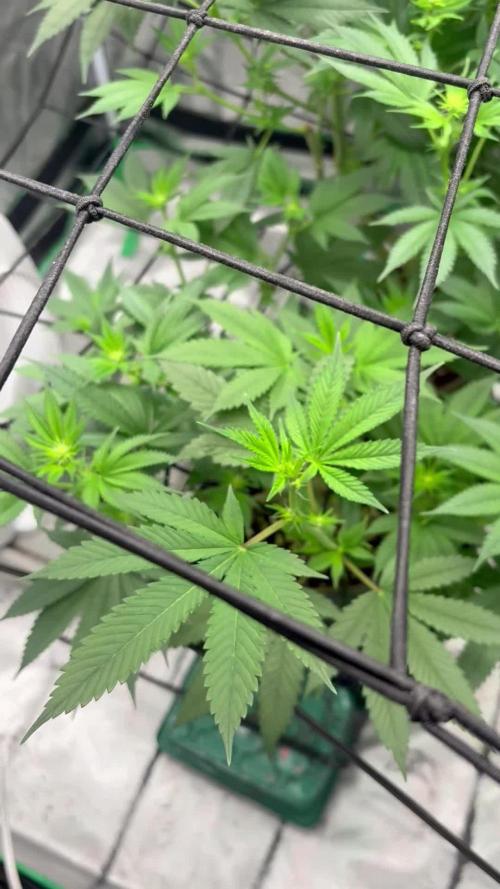
They both look great , trying to control the stretch of #2, idk if #3 is just being over taken by the big one (#2) or if it’s just a different phenotype?
Likes
23
Share


@Wazowskid
Follow
Went away for 4 days so I watered them gently before I left. Because I'm using a cheap fan to input air in the closet some mold has appeared on the soil, but it was easy to remove with a spoon.

Likes
1
Share

@Mrdub
Follow
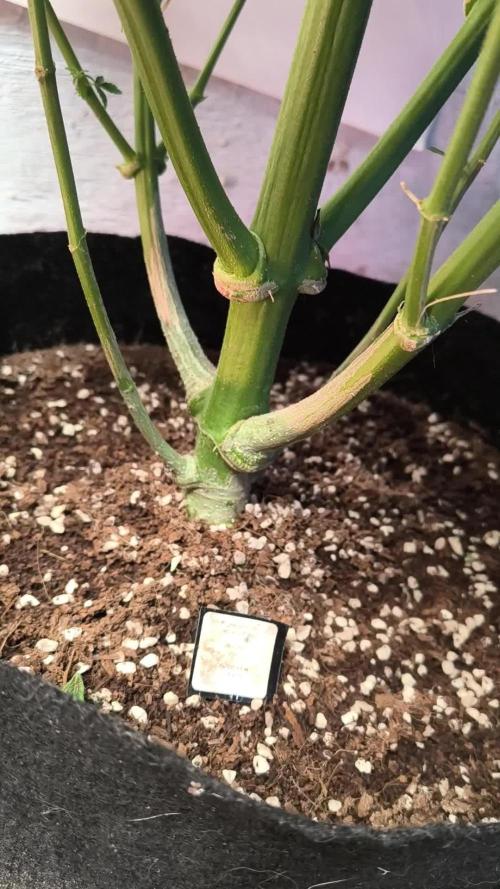
This girl is stacking nicely looks like she's gonna need another round of defoliating starting to get sweet smell to her trichomes really starting to get heavy even covering fan leaves pistols starting to turn she drinks a gallon of water every other day gonna cut the nutes down in a week running 6.2 pH lights at 100 percent looks like adding the little bit of extra calmag worked cause she has no spots not a lot of burnt tips nice thick stalk and knuckles under canopy lighting is rocking as you can tell by the fat little colas at the bottom really loving this under canopy light so here's to another week of growing lfg

Likes
5
Share


@Growjardin
Follow
Start of a new week with plenty growth, she’s flying every day. Added pk half ml on top of 2ml feed every 4 days she will probably get 3 more doses of pk at 1ml providing she reacts to the small dose well
The lower leaves that where slowly turning yellow shot to yellow almost overnight after giving her half a ml of pk. Buds are swelling up with rapid growth so I’m hoping she’s focusing more on flower as I have just gave her another dose 3 days later...
Likes
18
Share


@TheGreenLeopard
Follow
happy out again this week at the shape of things. Sweet Sweeds dominant tent was down overall because of a F up on light regime. pins out of place lol. ok so all fixed. taking their topping and training like champs. merry christmas everyone. a lot of foliar spray to help the recovery. silicate a bit, algae mix.

Likes
21
Share


@NSABND
Follow
Start of Week 9 🙌
I plan to use fertilizer for bud growth from day 64 to day 70+... depending on when the harvest time occurs 😉😄👍
Started working with fertilizer today, every 2 days a mixture of 10ml per liter as long as the buds have not properly developed trichomes 😵 I hope this works 😵😲😱
Day 68 with fertilizer again
Likes
1
Share


@Ultraviolet_
Follow
Remember that, however you are played, or by whom, your soul is in your keeping alone. Even though those who presume to play you be kings or men of power, when you stand before God, you cannot say, 'But I was told by others to do thus,' or that virtue was not convenient at the time. This will not suffice. Remember that.
Day:18
84°F and 65% RH (VPD) for the vegetative stage. Approximately 1.15kPa(assuming leaf temperature is about 2°F cooler than the air), which falls right into the ideal vegetative sweet spot (0.8kPa to 1.2kPa). At 1.15kPa, plants can draw water and nutrients efficiently without risking stress or wilting. It keeps the leaf pores (stomata) open, allowing for ideal carbon dioxide intake and maximizing vegetative growth. VPD is determined by the leaf's temperature, not just the ambient air. Because leaves usually run 1° to 3°F cooler than room air under bright grow lights, my actual VPD will be slightly lower, closer to the 1.0kPa mark. As she transitions from vegetative growth to flowering, one can gradually lower the humidity (to around 45–60%) and drop temperatures slightly to prevent disease from settling inside dense buds when they appear.
Night:6
At 70°F and 60% relative humidity, Vapor Pressure Deficit (VPD) is 0.86 kPa. This is right on the cusp of whats optimal for the vegetative stage. During the nighttime, plants generally close their stomata and undergo cellular respiration rather than photosynthesis. Transpiration slows to a near stop, making VPD less critical at night than during the day. However, maintaining a nighttime VPD between 0.8 and 1.0 kPa is highly beneficial in that it ensures the air is dry enough to prevent powdery mildew or bud rot, but moist enough to keep the plant from undergoing unnecessary stress. This range keeps the environment comfortable for cellular processes and prevents large atmospheric swings. Keeping it all flowing.
(Not pushing them yet, these are photoperiods)
The optimal soil (root zone) temperature for cellular root respiration and nutrient uptake in cannabis is between 68F & 72F This narrow range balances biological energy production (cellular respiration) with the dissolved oxygen levels in the soil, maximizing plant growth and health. Warmer soils hold significantly less dissolved oxygen. When soil temperature exceeds 74F oxygen depletion occurs, inhibiting cellular respiration almost entirely, At 68-72F root cells generate optimal adenosine triphosphate (ATP) via respiration to power root-tip elongation and the active transport of water and nutrients.
Too Hot (Above 78F) Root respiration increases, demanding more oxygen, while the water's oxygen-carrying capacity drops. This creates a prime environment for anaerobic pathogens and Pythium (root rot).
Too Cold (Below 60F) Root metabolism and cellular respiration slow to a crawl. This severely impairs nutrient and water absorption, leading to yellowing, wilting, and phosphorus deficiencies.
A lot depends on whether it's automatic or photoperiod; with photoperiod, there is not as much of a need to push "hard" as the real countdown only begins once the flower is initiated. Automatics, on the other hand, the chronological "clock" begins ticking the moment the seed germinates. It is of critical importance that the seedling growth gets off to the races, understanding that early growth is like compound interest, which will pay off come harvest. This reality is why getting autoflowers "off to the races" early on yields such exponential benefits. The "compound interest" is directly related to the surface area of the leaves. Larger, faster-growing seedlings process more light and build bigger root networks early on, which translates into an explosion of vertical and lateral growth during their short vegetative window.
The margins for error are so thin with autoflowers; this early-stage momentum depends on several critical practices. Seedlings exposed to increased atmospheric CO2 levels early in life will develop at an increased rate. To effectively "extend" or optimize the capacity of Photosystem II (PSII) for increased photosynthetic efficiency. In standard oxygenic photosynthesis, Photosystem II (PSII) is naturally limited to the red-light spectrum, peaking at 680nm. Extending its light-harvesting capacity past 700nm into the far-red region requires bypassing the natural limits of standard chlorophyll a. Adding 730 nm (far-red) LEDs alongside standard red/blue lights has been shown to increase canopy photosynthesis by 20–30% in several crops by acting synergistically with shorter wavelengths. However, the limitation is that excessive, pure IR/Far-red light (without accompanying red light) can trigger the "shade avoidance response," causing plants to grow tall, weak, and spindly rather than robust. Utilizing infrared light (specifically the 700-750 nm far-red range) is a viable method to boost photosynthetic efficiency. It acts as a bridge to allow PSII to utilize a broader spectrum of light, breaking the traditional 700 nm barrier. UVR8-mediated signaling (often in conjunction with CRY proteins) triggers protective mechanisms that maintain the stability of the photosynthetic apparatus (including LHCII and reaction center proteins), thus ensuring that the efficiency of Photosystem II remains higher in UV-B-exposed plants compared to plants lacking this receptor. ΦPSII indictates the rate of electron transfer from water to plastoquinone, which drives the production of ATP and NADPH. There is a close link between ΦPSII and the true rate of CO2 fixation (Φ*co2).
ETR stands for Electron Transport Rate. It measures the speed at which electrons are moved through the thylakoid membranes in a plant's chloroplasts during the light-dependent reactions of photosynthesis. Infrared light (particularly Near-Infrared or NIR) improves cellular energy by interacting directly with the electron transport chain (ETC) in mitochondria. This process boosts adenosine triphosphate production, which acts as a metabolic coefficient multiplier by accelerating enzyme activity dramatically.
Extend then multiply.
Far-Red photons interact with plant photoreceptors to accelerate the plant’s biological "clock" or trigger a shade-avoidance response. Autoflowers don't use the plant's biological clock, although the IR will initiate a shade avoidance and make them stretchy. You can just add equal measures of 660nm-680nm to negate the shade avoidance effect. Replacing nights' "darkness" with a combination of IR+ and 660nm. Because autoflowers don't require a dark period to flower, many growers just blast them with light. 18/6 24/0. However, this ignores the plant's metabolic rhythms, where daytime photosynthesis (light reactions) must be perfectly balanced with nighttime carbon fixation and assimilation (Calvin cycle) to avoid bottlenecking plant development. Cellular respiration is a 24/7 process, but it can only function while the plant has the free oxidative capacity to do so. A 100% photosynthetically active leaf cannot perform cellular respiration. The viral trend of defoliation of every leaf that isn't "getting enough light" is of great detriment overall, putting 100% of the cellular respiratory "workload" and responsibility on the 0/4/6 hours of darkness in sub-optimal conditions for enzymatic activity. Photosynthesis captures nearly 100% of the initial energy as carbon, while cellular respiration is the process that unlocks 90% of that captured energy into usable ATP so the plant can use it. Respiration is considered roughly 30% to 40% efficient. It captures enough of the potential energy in glucose to synthesize around 30 to 38 ATP molecules per glucose molecule. The remaining 60% to 70% of the energy in the sugar is not captured in ATP; instead, it naturally escapes into the environment as heat, which helps regulate plant temperature. In plants, the primary enzymes of the Electron Transport Chain (ETC) and the ATP synthase complexes are typically adapted to function optimally in warmer temperatures (roughly 25°C to 35°C depending on the specific plant strain). As temperatures rise within this physiological range, molecular collisions increase, speeding up respiration and ATP production. The cannabis plant has a branched respiratory pathway. During heat or cold stress, plants activate Alternative Oxidase (AOX). AOX burns sugars to dissipate energy as heat rather than coupling it to ATP production. This pathway actually functions optimally at elevated temperatures to help protect the cell from the damaging build-up of Reactive Oxygen Species (ROS) during heat stress. Enzyme activity generally scales with heat; there is a strict biological limit. If canopy temperatures in a grow room exceed 40°C, the enzymes and their supporting lipid membranes lose stability. Not saying you need to go crazy, just optimize nights the same as we optimize days.
Phosphorus is the driving force behind early seedling development. It acts as the "energy hub" of the plant, directly driving cell division, robust root growth, and the creation of DNA. Without an adequate, easily accessible supply early on, the plant's overall growth potential and final yield can suffer permanently.
E=MC2 looks like a simple multiplication problem; it describes a fundamental physical truth: mass and energy are the same thing. The equation doesn't just calculate a value; it reveals that mass is effectively "congealed" energy. Energy is just numbers. Energy isn't a physical "substance" you can hold or touch. It is essentially an abstract, calculated number that we assign to a system to predict how it will change, interact, or move. A numerical label we attach to matter to track how it behaves. Because the universe runs on laws of symmetry (specifically, that the laws of physics don't change over time), a single global number must be conserved. We call that number "energy".
We don't grow; we facilitate energy conversion.
How well a seedling grows is essentially down to how much knowledge one can acquire to increase the level of conversion to occur. Applying knowledge effectively requires intuition, which comes from hands-on experience. A seasoned stoner learns to read subtle signs—like a slight change in leaf turgor (stiffness), subtle color shifts, or the specific texture of the soil—before a textbook diagnosis can be made. Ultimately, growing is the application of botanical science blended with active observation. Knowledge dictates your potential, but adaptability and attentiveness to the plant's immediate environment determine your results.
1.618 nature mathematically optimizes quantum energy transfer and light absorption efficiency within the photosynthetic machinery, as it naturally dictates energy scaling hierarchies and resonance dynamics. External vibration or electromagnetic wave that perfectly matches a plant's natural frequency directly influences plant growth. Low-frequency sound waves and targeted electromagnetic fields stimulate cellular processes and boost photosynthetic efficiency
Does it produce better yields?
How long is a piece of string? As long as you cut it. But isssss the juice worth the squeeze? The quantum framework of the IVM seems to think so. Good enough for the quantum firmware, good enough for the DNA software. Genetics are not dictated; they are expressed; the rate of that expression is dictated by the environment in which growth occurs.
Quantum Coherence in Photosynthesis occurs When a photon of sunlight strikes a leaf, the energy it carries must travel to a reaction center to be converted into chemical energy. This process operates at nearly 100% efficiency. If the energy moved in a traditional "bunching" or random hopping manner, a large portion of it would be lost as heat. Instead, plants utilize quantum superposition. The energy particle (exciton) doesn't just take one path; it exists in a wave state and explores multiple pathways simultaneously. It essentially "chooses" the most efficient route to the reaction center simultaneously. Research shows that molecular vibrations and the specific network arrangements of chlorophyll molecules (like the naturally evolved Chlorophyll A & B ratios) actively protect against energy overflow, optimizing light capture across different light intensities. Enzymes are the biological catalysts that speed up chemical reactions within a plant's cells, allowing them to grow, metabolize, and repair. Rather than relying solely on the classical kinetic energy of molecules colliding, plants use quantum tunneling. Subatomic particles like electrons and protons (hydrogen ions) can literally "teleport" through energy barriers that they normally wouldn’t have the energy to climb over. This makes vital metabolic reactions happen far faster than classical physics could ever explain.
Chloryphyll b has peak absorption at 460nm (Blue) and at 647nm(Red). If we take the blue peak wavelength 460nm and a UV-B, UVR8 peak absorption wavelength 285nm, Tryptophan-285 (W285) Sensing protein. 460/285=1.618 Φ If we take chlorypyhll b's Red absorption peak 647nm and a UV-A of 400nm, we get 647/400=1.618 Φ. "Structure of light". The cryptochrome photoreceptor (CRY) is a UV-A/blue light receptor that shares this dual sensitivity with several other biological structures and functions, including significant sequence similarity and a common evolutionary ancestor with DNA photolyase enzymes. These are light-activated enzymes that use blue/UV-A light to repair DNA damage caused by UV-B radiation in plants. Synergistic. But Shhh, it's a secret.
Effective quantum efficiency of photosystem II, often denoted as ΦPSII, represents the proportion of light absorbed by Photosystem II (ΦPSII) that is actually used in photosynthetic electron transport. It is a key indicator of how efficiently a plant is using light for photosynthesis, as opposed to losing it as heat or fluorescence. ΦPSII (effective quantum yield of photosystem II) functions primarily as a "multiplier" (a coefficient of efficiency) rather than an additive factor when estimating the overall photosynthetic electron transport rate (ETR). Multipliers are considered far more beneficial than additions because they generate exponential growth, leverage existing resources to their full potential, and create sustainable, self-multiplying capacity, rather than just incremental, linear increases. This fascinating observation is rooted in the intersection of subatomic geometry, fractal scaling, and quantum dynamics. In specific molecular arrangements—such as in conjugated polymer networks or biomolecular architectures—the Golden Ratio (PHI) naturally dictates energy scaling hierarchies and resonance dynamics. Mathematically tied to the fine-structure constant, which defines the strength of the electromagnetic interaction. The Golden Ratio can be mapped geometrically as the Golden Angle (137.5 degrees) in atomic structures, linking the charge of the electron to fundamental quantum constants like Planck's constant.
Electromagnetic.
The Golden Angle (137.5): This angle is derived from the Golden Ratio (1.618). It is the smaller of two angles created when a circle is divided such that the ratio of the arcs equals the Golden Ratio.
