Likes
Comments
Share
@Lazuli
Follow
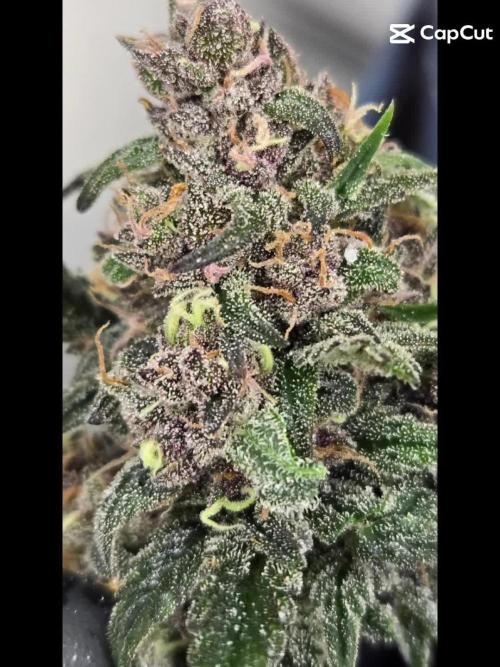
The flowers are stackiiiiing Its hard to show on camera because all the frost is reflecting but these floweres are purple just beautifull
Likes
181
Share
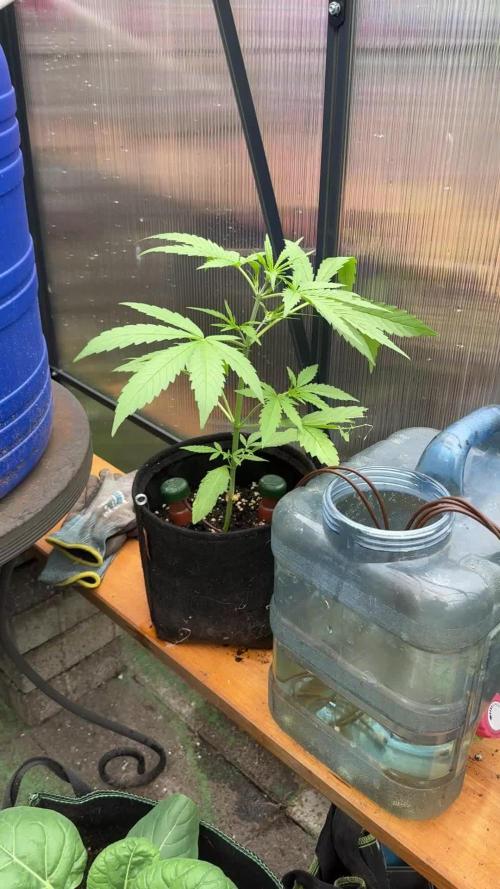
đŸŒGreenhouse Feeding BioGrow & Bio Bloom đŸŒ±GARDEN OF GREEN SEEDS â›șMARSHYDRO The â›ș has a small door đŸšȘ on the sides which is useful for mid section groom room work. đŸ€© ☀ by VIPARSPECTRA (models: P2000 & XS 2000)
Likes
4
Share
@Sadom
Follow
22.08.: Die BlĂŒtewoche 3 beginnt. Ich bin noch bis Ende der Woche im Urlaub, sodass ich vom Anfang der Woche leider kein Material hab. Sobald ich wieder zuhause bin, werde ich ein aktuelles Update geben. Ich bin schon sehr gespannt, wie sie sich entwickelt haben, aber fest steht die G41 ist nen ordentliches GerĂ€t geworden. Das NĂ€chste Update kommt dann entweder am 25. oder am 26. Höhe Pflanze: PBB = 100cm G41 = 140cm Abstand zur Lampe: PBB = 66cm G41 = 26cm 27.08.: Wo soll ich nur anfangen?! In der Zeit, in der ich abwesend war hat sich die G41 so weit gestretcht, dass sie teilweise bis an die Lampe ran bzw. sogar schon vorbei gewachsen ist. Da das natĂŒrlich sehr schlecht fĂŒr die QualitĂ€t der BlĂŒten ist, wenn die Lampe zu nah an der Pflanze ist, musste ich sie bĂ€ndigen und etwas Platz zwischen Lampe und Pflanze schaffen. DafĂŒr habe ich ein 3. Netz installiert, welches jetzt als StĂŒtze fĂŒr die Triebe dient. Da ich auf gar keinen Fall zu diesem Zeitpunkt nochmal toppen wollte, blieb nur die Möglichkeit ein Supercropping oder auch Abknicken der Trieb durchzufĂŒhren. Dabei habe ich die Triebe kurz ĂŒber dem Netz abgeknickt und dann auf dem Netz abgelegt. Dadurch werden natĂŒrlich untere Triebe verdeckt, aber das muss ich wohl in Kauf nehmen. Außerdem habe ich noch bei beiden Pflanzen einiges an BlĂ€ttern und Triebe, die zu weit unten hĂ€ngen geblieben sind, weggenommen, damit mehr Licht nach unten gelangt. Die PBB hat sich seit dem in der Höhe nur wenig verĂ€ndert, aber ist dafĂŒr schon wesentlich weiter, was die BlĂŒtenbildung angeht. Man kann schon einige Trichome auf den BlĂ€ttern erkennen und es kommen auch schon ein paar erste Terpene. Die Lampe habe ich von ca. 40% auf ca 70% hochgeregelt, damit bei der PBB auch noch ein paar Photonen ankommen. Abschließend gab es dann noch ein kleines Extra fĂŒr die G41 in Form einer HandwĂ€sserung mit etwas Acti-Vera von BioBizz und hydrolysiertem Kelp, beides nach Augenmaß. Die Höhe der G41 anzugeben macht natĂŒrlich dementsprechend nicht mehr viel Sinn.
Likes
72
Share
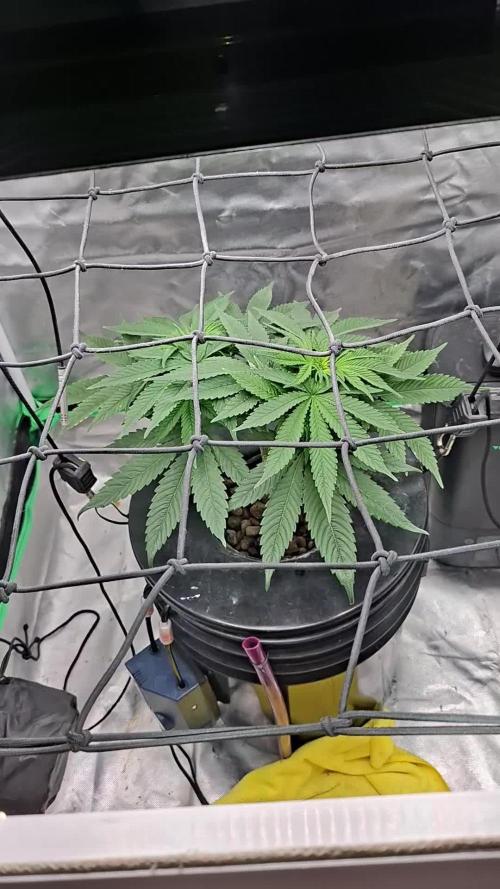
_____ Week 10 | Day 70 - 77 | 3rd week of Flower ______ Day 71 🌞 - I mounted a fan below the net for more air circulation Day 72 🌞💧 - 24 liters were mixed and distributed among the 8 plants / each plant 3 liter, at the moment I can water them every 4 days Day 76 🌞💧 - It remains every 4 days 3 liters of water each plant ____________________________________________________________________________________________ Light - 12/12 h - 560 Watt - 2x 200 Watt Toplight - 4 x 40 Watt Lightbars PPFD - 900 - 1000 ”mol Temp. avg. - 22,9° Hum. avg. - 61 % RLH
Likes
42
Share
@rhodes68
Follow
12/20 Week 6 And first in Flower Flowering nuets increased Bloom as listed Large plant veg- 20ml Grow A/B 2ml kanga small plant veg 10 ml Grow A/B 2 ml kanga seedlings 2ml/Liter Grow/A/B kind of stuck in a time warp trying to get them growing again will be using recharge anything I can think of they need to grow now. Green Crack is flipping fast FF7 and LSD progressing normally 50-50 bloom and grow for next days. Will be defol this week 12/21 Further adjusting feed will adjust based on what the plants do Want to hold it here through the stretch Plants in veg tent doing well, even the seedlings are growing again. Defoliated Octopussy(LSD) in particular on her bottom end. Did minor defol to Pussy and Plenty top ends.. 12/22 Our single growing Gold Leaf has been transplanted into a 3 gal pot. Meet Tiffany Case from Diamonds are Forever - great Bond girl Solitaire shows clearly the gnats were getting serious to even the larger plants. Watching 12/23 Gave another Neem oil treatment to growing surfaces on all plants. Just a preventative still a couple of em around Adjusted the Large plant veg feed to 24ml/gal Grow Topping day for Solitaire and Chew Mee Defoliation for the flower tent will continue Seedlings have really come around FINALLY lol growing again across the board 👍 the four remaining will go into 2 gal pots should things continue to improve. Works out as thats all the 2 gals I have 12/24 Some pics all is well or as well as it ever gets Gnats are history, broke the cycle utterly. Dont play with those things they are dangerous hit em hard on every level you can. Dink has really turned around and really growing , HisHope did an outstanding job on that plant Bambi has started her growth as well Ending knagaroots on the large plants till they go to the Flower tent for that stretch Will continue lose doses on smaller plants and Flowering plants until the stretch ends-ish Got roots sticking out all over the joint lol Its gotten to the point we need a run down of the plants in this grow since it started as four separate grows and almost ended up as zero : * denotes severely impacted # denotes marked for cloning - strictly medicinal strains plan for 8 clones two of each Pussy Galore - Fast Buds FFT-7 in flower # Octopussy - ILGM LSD in flower # Plenty O'Toole - ILGM Green Crack in flower # Solitaire - Sweet Seeds Cream Caramel late veg (lightly affected) # Chew Mee - FB FFT-2 late veg Bambi - FB FFT-6 early veg * Dink - FB FFT-2 early veg * Tiffany Case - ILGM Gold Leaf early veg * Thumper - FB FFT-8 seedling * Holly Goodhead - FB FFT-7 seedling * Mary Goodnight - ILGM Gold Leaf seedling * Kissy Suzuki - Fast Buds Wedding Cheese Cake seedling * ICU - recovery in doubt though still keeping them alive Wedding Cheese Cake Strawberry Pie This is what happens sometimes when problem hit, better than the alternative I reckon
Likes
3
Share
Seguimos creciendo con esta dulce y maravillosa banana 🍌 Seguimos suministrando los nutrientes necesarios para la formacion de resina y engorde de cogollos 👌 La punta principal está consiguiendo muchos brotes ya que hemos estado sometiendola con la malla de scrog para que no suba demasiado y cree esa producción
Likes
19
Share
Die Punch Pie steht mindestens genauso gut da wie die Hawaiian... also mega geiles Indikamonster.
Likes
23
Share
Day 35 flowering: Damn these girls are beautiful. They have been constant throughout the grow and have no issues besides their flop is starting to happen. ,need to yo-yo soon no doubt. The buds are rock solid and do not move when squeezed. Smell is so beautiful and skittles sweet too. I am so glad i went with this strain as the main grow. With so long still to go and the bud swell still to come in another weeks time ,their yield should be good. Go Gz. love them
Likes
2
Share
@DrBud420
Follow
02.11.'24 After 5 days of drying, this little girl who was a little bigger than a meter gave 950 grams and a little bit of popcorn...this picking was 870 and a little bit of popcorn, and 4-5 weeks ago during a storm, one branch broke, which yielded about 100, but let's say 80 for sure, a total of 950 grams of beautiful, huge, potent buds
Processing
Likes
2
Share
Lots of bud development, starting to stack up a bit. Thinking I will see a lot more bud growth in the coming weeks. The older PT is finishing up this week and starts our harvest for the next few weeks. I’ll be checking seeds on the buds I pollinated and trichomes on the others. There are a few random seeds isn’t he tent but so far it appears that the majority of the bud is seedless. I think I was able to minimize the pollen like I wanted to. Male plant was chopped at the beginning of this week after only a few pods opened. I only needed a few to get enough seeds to grow again in the future.
Likes
8
Share
@Aleks555
Follow
Test FBA 2503 – 42Fast Buds 68 days from seed — and we’ve reached the final stage: harvest time! Although the plant didn’t grow very big, it truly impressed us — the buds are dense, large (as big as a fist!), and absolutely drenched in sticky resin. The pinkish hue of the buds gives this beauty an extra touch of elegance — she looks stunning! But the most striking thing is the smell. It’s incredibly strong, sharp, and long-lasting. Our girl has a seriously intense chemical scent — it fills the entire grow tent instantly and lingers for hours. Not for the faint of heart! From the beginning, we focused on giving her everything she needed: a well-balanced substrate, a stable environment, and, of course, proper nutrition. Huge thanks to Xpert Nutrients for their powerful line of fertilizers — they played a key role in helping this plant reach its full potential, delivering impressive trichome production, vibrant colors, and strong structure. And special thanks to 42Fast Buds for the opportunity to test this unique and powerful autoflower — it’s been an amazing experience! Harvest results coming soon — stay tuned!
Likes
20
Share
Not particularly growing for speed or any dedicated reason this time round, just adding water and a abundande of positivity, gotta admit I do like the autoseed logo. Off we go again into the magical forest. (Arthrospira platensis) cultivated in high-alkaline, mineral-rich water in Kailua-Kona, Hawaii. It is renowned for having a higher nutrient content, including more carotenoids and essential fats, compared to other spirulina brands. It is frequently cited as a "complete food" due to its dense concentration of proteins, vitamins, minerals, and pigments. The nutritional profile of standard dried Spirulina platensis biomass. 3kg of spirulina powder has an approximate NPK ratio of 10-2-1 (or 10% Nitrogen, 2% Phosphorus, and 1% Potassium). Here is the breakdown of the nutrient content for 3kg of powder: Nitrogen (N): ~300g (10% of total mass) Phosphorus (P): ~60g (roughly 2% of total mass) Potassium (K): ~30g (roughly 1% of total mass) 3kg of spirulina powder is more than enough nitrogen for 4 cannabis plants in a 100-gallon pot—in fact, it is likely excessive and could cause severe nutrient burn or toxicity if not properly managed. Spirulina has a very high protein content (46% to 63% dry weight), which translates to a significant nitrogen source. It is often described as a 5-1-1 NPK fertilizer. 3kg (3000g) of powder in 100 gallons means 30g per gallon. General organic recommendations for potent amendments (like frass) are often around 1–3 tablespoons per gallon. 30g of powder is roughly 2-3 tablespoons, making this a very high-strength application rate if added all at once. Balance this with calcium/magnesium, and organic nutrient delivery in soil growing can lead to deficiencies in these nutrients. Not all of that 100 gallon is used, so figuring out precise measurements was ballpark, but there is about 10kg of engineered biochar in that pot. Mostly in the top half. Ideally, I'd have 25kg in a full active 100-gallon, but......... don't mess with something that is not broken. Roots do not utilize the entire 100 gallons. This has been a couple of years of trial and error, mostly error. The amount of cations you can add in grams depends entirely on the specific cation exchange capacity (CEC) of your biochar and the type of cation being added. Biochar CEC values vary widely, typically ranging from 4 to over 300cmolc/kg. Multiple Biochars in use, ranging upwards of 100cmolc/km. Different cations have different atomic weights Potassium K+ 39.1g/mol. Calcium Ca2+ 40.1g/mol. Magnesium Mg2+ 24.3g/mol. Nitrogen NH4+ 18.04g/mol. You get more nitrogen bang for your buck. It all depends on the CEC of the biochar you use, but brrrrrrrrrr roughly I'm looking at 500-600 grams worth of elemental cation exchange capacity, give or take. That's just for the biochar alone. Elemental cation exchange capacity refers to the ability of materials—such as soil, minerals, and biochar to adsorb, hold, and release positively charged ions Ca2+, Mg2+, K+, Na+, Al3+, and Zn2+. This capacity is a critical measure of nutrient availability in soil and energy density in electrochemical systems. Added calmag 2:1 to complement spirulina. Calcium (Ca): Approximately 150g - 300g of elemental calcium. Magnesium (Mg): Approximately 75g - 150g of elemental magnesium. So long as pH stays in 6.3 to 6.7 ish, the plant will unlock hydrogen. Plants will be able to cycle CEC for their own needs. Hydrogen ion pumping (proton pumping) is a fundamental mechanism used by plant roots to facilitate the cycling of nutrients within a medium's Cation Exchange Capacity (CEC), directly increasing nutrient availability. A growing medium's Cation Exchange Capacity (CEC) does not contribute directly to Electrical Conductivity (EC). CEC represents potential nutrient storage, while EC represents active nutrients in the water/soil solution. A medium with a high CEC can hold many nutrients, but if there is no water present, the EC will be low. 98% of plant nutrient uptake comes directly from the soil solution. 2% of nutrient uptake is directly from soil particles. Nutrients held on exchange sites (CEC) are not directly measured by EC until they are released into the soil solution through exchange with other ions (e.g., hydrogen ions from roots or fertilizer). Plants source the H+ ions (protons) used in cation exchange primarily by exuding carbon sugars into the rhizosphere, then microorganisms perform root respiration, which reacts with soil water to form carbonic acid H2CO3 that dissociates into H+ and bicarbonate. Roots also actively pump out H+ ions directly to acidify the rhizosphere, plants trade hydrogen produced through metabolism for essential nutrients held by the soil. In plant cells, the H+ (protons) used in proton pumping across the plasma membrane come primarily from the cytoplasm (cytosol). The protons are derived from internal cellular sources, including metabolic processes that release H+, and the regulation of intracellular pH homeostasis. Distilled water is highly useful in managing the electrical conductivity (EC) of a growing medium by allowing for precise control over nutrient concentration and assisting in the mobilization of nutrients from the cation exchange capacity (CEC) into the active, plant-available nutrient solution. Just add water & positive energy. Potential hydrogen. pH. + - , potential charge balance for hydrogen. So long as there is adequate oxygen in the soil and air and water moves at a decent interval, its practically impossible for the pH to skew in a soil that is taking in oxygen and releasing CO2 and nitrogen, I say practically, but meh, even with plenty of oxygen, the process of converting ammonium NH4+ to nitrate NO3- by bacteria releases hydrogen ions H+, which directly causes acidification (lowering pH). While water movement is necessary, consistent water moving through the soil can leach away basic cations Ca2+, Mg2+, K+, Na+, leaving behind acidic hydrogen and aluminum ions, causing pH to drop, especially in humid regions. High levels of CO2 in the soil (from intense respiration) dissolve in soil water to create carbonic acid, H2CO3, which lowers the pH. (barometric pumping removes that possibility) The pH in a cannabis cultivation environment, particularly in hydroponic or soilless setups, will often naturally drift towards acidic (lower pH) over time. Understand how to know when to lime the pH back up. Complex but critical. Once I understood this it helped ease the pain of understanding pH. Base saturation directly reflects the percentage of CEC occupied by base cations. Generally, as base saturation increases, soil pH increases because fewer acidic cations, H+ and Al3,+ are present on the soil colloid surfaces. At a pH of 7 or higher, the soil colloids are saturated with base cations, resulting in a base saturation of 90+%. While many sources include Sodium Na+ as a base cation, some calculations focused specifically on plant nutrients (like in some nutrient management contexts) may focus solely on the "Big 3": Ca2+, Mg2+, and K+. However, in soil science and CEC (Cation Exchange Capacity) measurements, sodium is usually included in the definition of total base cations, making it the "Big 4" base cations. At a pH around 5.5, soils often have a 45–55% base saturation, while a soil with a pH between 6.5 and 6.8 generally has an 80–90% base saturation. Base saturation is considered a reliable, albeit complex, indicator of soil fertility and the degree of soil weathering, acting as a crucial metric in soil classification and management. Once you take full control of the pH, so long as there is oxygen, and one keeps tabs on base saturation levels. Its near impossible for anything to go wrong. All you are essentially doing is adding water and waiting for any sign of deficiency. Not so much growing as eliminating the possibilities of things going sideways. Can't over or under water, can't skew pH, can't go anaerobic. Everything runs in optimal cycles, watering every 2 to 3 days or as required, depending on the rate of combined ET. A little warmer, a little drier, but never short on water. All the nutrients are already there in the medium, we still focus on the water, just not adding salts, but to mobilize nutrients held in the Cation Exchange Capacity (CEC) and move them into the active soil solution for plant uptake, the best supplements to add to water are fulvic acid, humic acid, or seaweed/kelp extract. Liquid solutions with high concentrations of essential trace elements. Distilled water has no alkalinity or minerals to help buffer or release nutrients. Adding these supplements turns the "empty" water into an active agent that forces nutrients off the CEC colloids into the solution for plant uptake. When to water? When Electrical Conductivity of soil gets low. No water, no conductivity.
Likes
36
Share
The flush week! Seemed ok - def had nitrogen toxicity in one purple berry kush - maybe too much ripener before. But we’re here - will give them the 24 now and chop. We’re out of time on this run. 90^% of the crop are where I want them to be however I thought I would have more droopy leaves. Will do the harvests on Monday anyways. Have a great week. Tried to edit best j could to do them justice. We were taking pics for the v1 so I brought them all out for a dance. Aroma strong 😂. Take care everyone. Just keep going and keep on bloomin
Likes
Comments
Share
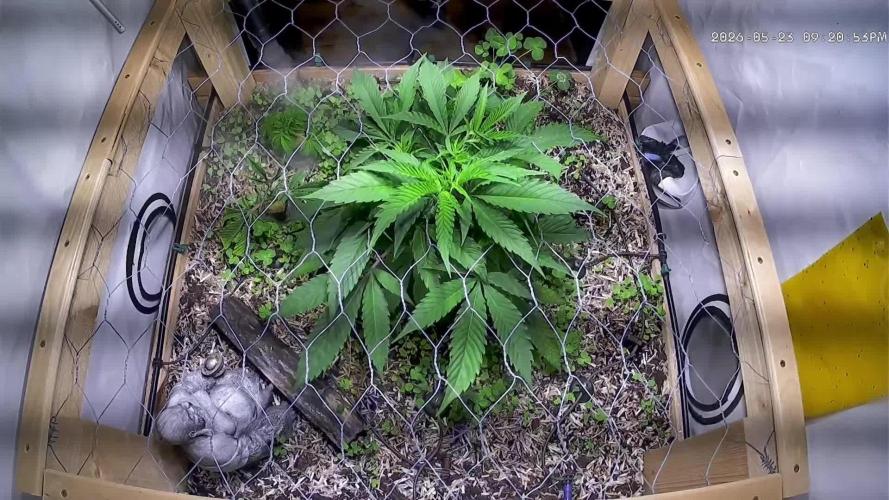
Blueberry Muffin – Pheno B | Week 4 Finding Her Own Rhythm Welcome back to another chapter of the 8×8 Adventure, where twelve cultivars are being documented individually from seed to harvest under a strict 12/12-from-seed schedule. Every phenotype follows its own diary, allowing each plant to develop independently and reveal the subtle differences that make every seed a unique expression of its genetics. Week 4 has been another exciting chapter across the entire room. The explosive growth that began last week has continued, and every day the garden feels a little more alive. Canopies are becoming denser, branches are reaching outward with confidence, and the room is slowly transforming into the miniature forest I imagined when this project first began. One thing that couldn’t go unnoticed this week was the environmental reading. 33.3°C and 63% humidity. Apparently the grow room has developed a strange obsession with the number three. 😄 Although temperatures climbed higher than I’d normally like, the relatively high humidity helped soften the impact, and the plants rewarded the stable environment by continuing to grow with impressive vigor. Sometimes nature reminds us that consistency is just as important as chasing perfect numbers. âž» Week 4 Environment đŸŒĄïž Temperature: 33.3°C 💧 Relative Humidity: 63% 💡 PPFD: 700–800 ”mol/mÂČ/s đŸŒ± Medium: Plagron Lightmix ? Growing Method: 12/12 From Seed As the room continues to develop, another interesting difference is appearing naturally. The lighting itself hasn’t been increased significantly this week. Instead, some phenotypes are simply growing faster and moving closer to the fixtures. Those taller plants are now receiving around 800 PPFD, while the shorter individuals remain closer to 700 PPFD. It’s another reminder that no two phenotypes read the same instruction manual. Even under identical conditions, every plant follows its own pace. âž» Feeding Strategy The feeding program has also continued evolving alongside the plants. During the first weeks the nutrient solution stayed around pH 5.8, maximizing nutrient availability while young root systems became established inside the containers. Now those root systems have expanded considerably, allowing a slight shift in strategy. Throughout this week the solution gradually moved toward pH 6.1, while nutrient strength steadily increased, finishing around EC 1.8. The recipe itself hasn’t changed dramatically. No major adjustments. No sudden jumps. Simply a gentle increase in concentration to match the plants’ increasing appetite. Sometimes the smallest adjustments create the biggest improvements, and this week’s growth has been a great example of that philosophy. Allowing the pH to drift slightly higher also gives the roots access to a broader spectrum of nutrients available within the substrate, helping support the increasing demands of this new stage of growth. As always, the goal remains the same: Listen to the plants, not the feeding chart. âž» Blueberry Muffin – Pheno B This young lady has been quietly writing one of my favourite stories inside the tent. Unlike her sister, who seemed determined to impress from almost the very beginning, Pheno B decided to keep everyone guessing. Her first weeks were
 let’s call them creative. The leaf structure wasn’t quite what I expected, growth was a little unusual, and every new set of leaves felt like another clue in a mystery I hadn’t solved yet. Fast forward to Week 4
 The mystery is starting to make sense. She’s finding her own rhythm. Looking at her now, it’s hard not to appreciate just how much progress she’s made over the course of a single week. The unusual appearance that once caught my attention is fading into the background as healthy, vigorous new growth begins taking over the canopy. She’s still not trying to imitate her sister—and honestly, I hope she never does. Every phenotype deserves to express itself. The structure is becoming noticeably fuller, with side branches beginning to establish themselves beneath the canopy while the main stem continues building upward with confidence. Internodal spacing remains compact, creating a nicely stacked framework that should provide plenty of future flowering sites. One detail I particularly enjoy is the contrast between the older and newer growth. Fresh leaves emerge in a bright lime-green colour full of energy before gradually darkening as they mature, giving the plant a vibrant appearance that changes almost daily. Looking deeper into the canopy, more secondary shoots are beginning to appear than I expected only a week ago. She seems to be quietly building herself from the inside out, strengthening her framework before making any dramatic moves upward. There’s something very satisfying about watching a plant overcome an uncertain beginning. She may not possess the textbook symmetry of Pheno A, but she’s developing a character entirely her own. And sometimes, those are the phenotypes that end up becoming unforgettable. âž» Looking Ahead Week 5 should be another exciting milestone. With nutrient demand increasing, root development well established, and the first signs of flowering beginning to appear throughout the room, I’m expecting another noticeable leap in development. Over the coming week I’ll be watching closely for: ‱ Stretch progression as flowering begins. ‱ Continued branch development. ‱ Response to the higher EC. ‱ Structural differences compared to her sister phenotype. ‱ How her unique architecture evolves as the canopy continues to fill. The slow start now feels like a distant memory. This week wasn’t about catching up anymore. It was about proving that she has every intention of writing her own story. âž» Thank You A huge thank you to everyone following this 8×8 Adventure and taking the time to visit these weekly updates. Thank you to the entire GrowDiaries community for providing a place where growers from around the world can learn, share experiences, and inspire one another every single day. A special thank you to Plagron for providing the nutrients and cultivation support that keep this project moving forward. Thank you to Zamnesia for the incredible genetics, equipment, and the opportunity to document each phenotype from seed to harvest. And finally, thank you to every grower who leaves a comment, shares advice, asks questions, or simply enjoys following these plants as they write their own stories. Every phenotype has its own personality. Watching those personalities emerge is one of the greatest joys of growing. đŸŒ±đŸ’šđŸ‡ Growers Love, and I’ll see you all next week.