


Likes
Comments
Share


@Grow_for_Happiness
Follow
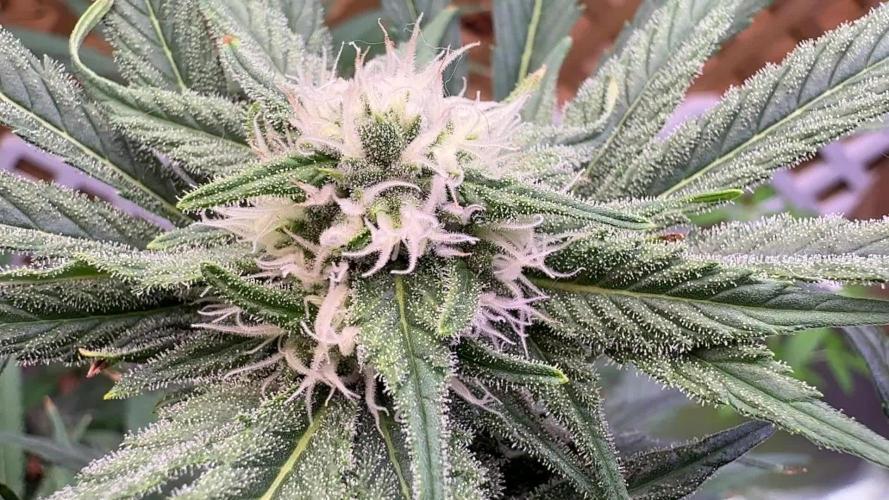
Week 8 of flower is at a close and these girls are really starting to express themselves. They're slowly putting on their colours and getting ready to really shine. Some of the close up pics looks like a red trichome here and there, will have to break out the scope soon and keep an eye, aiming for the 5-10% range. They're smelling delicious and quite strong. Not as strong as the Pink Lemonade I did last run, but they're close! Nice fruity smell and a heavy dankness hahaha. Carbon filter on the 6" fan , don't even notice the tent smell being in the same room. Dropping humidity to 45%, will have the VPD between 1.1-1.3 for the remainder of the grow.
Let's keep these girls healthy and cruise to that finish line!

Likes
17
Share


@Naujas
Follow
it's amazing, this growth looks much better than my first attempt, my decision was to put a smaller pot and change the light - the girl really liked it, FastBuds goriilla cookies with a small space manage perfectly:).

Likes
8
Share


@Greenthumb2021
Follow
My tallest plant has some really thick dense white pistols. She's still growing. But slowing down now. My other plant is still slow to flower. May be due to the cat eating half the plant in week one of flowering.
Likes
39
Share


@MrSpooky882
Follow
Die Woche ist sehr gut verlaufen, ich habe gestern die überschüssigen sonnensegel entfernt das mehr Licht an die unteren Triebe kommt, die Lampen auf 60cm Entfernung gehalten bei 40 Prozent Licht Leistung. Am Sonntag leite ich die Blüte ein! Bisher super Genetik, nach dem beschneiden kein Wachstums stop null Stress Zeichen, ich bin sehr zufrieden bisher mit Purple City Genetics 😘😊
Schöne Woche euch allen 👾
The week went very well. Yesterday I removed the excess awnings so that more light could reach the lower shoots and kept the lamps at a distance of 60cm with 40 percent light output. I'll start flowering on Sunday! Great genetics so far, no growth stop after pruning, zero stress signs, I'm very happy with Purple City Genetics so far 😘😊
Have a nice week everyone 👾

Likes
101
Share


@WhiteEdge
Follow
23.04.2024
Continue into week 8
Replaced all filters in the system and cleaned them.
Mixed a new batch with the following components:
20+25ml AN Connoisseur Bloom A+B
Total volume: 34 liters
Electrical Conductivity (EC): 1.0
Target EC for this week: 0.8-1.0. Adjustments will be based on plant observations.
Performed one long misting session (3 minutes).
Environmental Conditions:
Outside temperatures going up, today is raining but this week start higher temps and humidity
Wedding Cheesecake: One girl is gonna finish in this week, Two others probably in next. Frutti terps in this, Two pheno in total from 3 girls'
Tropicana Cookies: Phenomenal strain; One girl is going to finish this week and second couple days after . Two pheno in Tropicana's girls
Purple Lemonade: Tall plants, massive producer, all three girls will be in 9 week provably. Here so far all three girl share same characteristics and bud structure
Beautiful and high odor in the room!
Lighting Parameters: PAR Map: Maximum PPFD is 950, minimum PPFD is 650.
VPD: Ranges from -1.1 to -1.2.
Daytime Temperature (DT): 23-24°C.
Nighttime Temperature (NT): 19-20°C.
Leaf Temperature: 21-22°C.
Light Distance: 45-55 cm from the plants.
CO2 Levels: 700+ ppm.
HLG Scorpion Diablo: Set at 70%, positioned at a 45-55 cm distance.
Girls drink less water, so for this week and till the end of flowering new misting timing's
Daytime: ON for 70 seconds, followed by 30 minutes OFF.
Nighttime: OFF for 70 seconds, followed by 35 minutes OFF.
Nutrient Tank (NT):
pH: Maintained between 5.80 and 6.00. Stable PH, small drifting up and downs
EC: 1.05.
Temperature: 19-21°C
25.04.2024
TrolMaster toys arrived! Purchase new DST2E, DSP2E, DSH2E, AMP3+probes. Another DSH2E and DSP2E ordered to complete this grow box!
Replaced all filters in the system and cleaned them.
Mixed a new batch with the following components:
25+30ml AN Connoisseur Bloom A+B. Total volume: 17 liters
Electrical Conductivity (EC): 1.05
Tomorrow Tropicana Cookies harvest! Put bucket with this girl on separate line for flushing
Wedding Cheesecake also finish soon, probably in next week, Wednesday think...
Purple Lemonade still need full week or more...Exceptional odors
Temps and humidity outside start to raises, hope i will finish this run before Tropical heat
Lighting Parameters: PAR Map: Maximum PPFD is 950, minimum PPFD is 650.
VPD: Ranges from -1.0 to -1.1.
Daytime Temperature (DT): 23-24°C.
Nighttime Temperature (NT): 19-20°C.
Leaf Temperature: 21-22°C.
Light Distance: 45-55 cm from the plants.
CO2 Levels: 700+ ppm.
HLG Scorpion Diablo: Set at 70%, positioned at a 45-55 cm distance.
Daytime: ON for 70 seconds, followed by 30 minutes OFF.
Nighttime: OFF for 70 seconds, followed by 35 minutes OFF.
Nutrient Tank (NT):
pH: Maintained between 5.80 and 5.95. Stable PH...
EC: 1.05.
Temperature: 19-21°C
26.04.2024
Connect TrolMaster components into the Tent-X system. Program DSP2E, Temperature DST2E, Humidity DSH2E, as well as the AMP3 sensor with PH and EC probes, are all in place.
After calibrating the probes, AMP3 module works perfectly! It has a quick response in measurements, is accurate, and I am very happy about the possibility of online monitoring of liquid values.
After day off use i can tell that all readings are very consistent, compared with Milwaukee, totally without all over the place measurements. Perfectly steady and on spot receding!
The Program device runs flawlessly all day, and I hope it has solved all the problems I had with DH48-S timers.
The humidity control operates without errors throughout the day, and it’s nice to see in the app when the module is active.
Raise light as much as i can..50-55cm from canopy. Set off misting time from 30min to 35min @ day time , and from 35min to 45min @ night time
Flush Tropicana Cookies' for one more day, tomorrow harvest, prepared tent for drying with humidifier , ventilation and temperature and humidity controllers
PAR Map: Maximum PPFD is 850, minimum PPFD is 500.
VPD: Ranges from 1.0 to 1.1.
Daytime Temperature (DT): 23-24°C.
Nighttime Temperature (NT): 19-20°C.
Leaf Temperature: 21-22°C.
Light Distance: 45-55 cm from the plants.
CO2 Levels: 700+ ppm.
HLG Scorpion Diablo: Set at 65%, positioned at a 50-55 cm distance.
Daytime: ON for 70 seconds, followed by 35 minutes OFF.
Nighttime: OFF for 70 seconds, followed by 45 minutes OFF.
Nutrient Tank (NT):
pH: Maintained between 5.80 and 5.95. Stable PH...
EC: 1.05.
Temperature: 19-21°C
28.04.2024
First harvest in this run! Tropicana Cookies No1 is a winner.) First Tropicana Cookies is harvested on 89 day from seed. Total 55 days off flowering.
Fast flowering indeed as fast in vegetative stage. Cut this girl in branches and hang upside-down in smaller tent for drying
Set RH @ 55% , temperatures not able to control so they will be something around 20-21 in drying tent
Second Tropicana will be chopped within a couple off days. Checking trichomes with microscopes can tell that one Purple Lemonade is also going to finish in next days
Somme lady's will take full 9 weeks or so..
Lowering light intensity, EC in tank start to raise slowly so i will start to adjust according to condition. Currently 0.85EC is perfect strength i think
PAR Map: Maximum PPFD is 850, minimum PPFD is 550.
VPD: Ranges from - 0.9-1.0
Daytime Temperature (DT): 23-24°C.
Nighttime Temperature (NT): 19-20°C.
Leaf Temperature: 21-22°C.
Light Distance: 45-55 cm from the plants.
CO2 Levels: 700+ ppm.
HLG Scorpion Diablo: Set at 65%, positioned at a 45-55 cm distance.
Daytime: ON for 60 seconds, followed by 30 minutes OFF.
Nighttime: OFF for 60 seconds, followed by 35 minutes OFF.
Nutrient Tank (NT):
pH: Maintained between 5.80 and 5.95. Stable PH...
EC: 0.85.
Temperature: 19-21°C
28.04.2024
First harvest in this run! Tropicana Cookies No1 is a winner.) First Tropicana Cookies is harvested on 89 day from seed. Total 55 days off flowering.
Fast flowering indeed as fast in vegetative stage. Cut this girl in branches and hang upside-down in smaller tent for drying
Set RH @ 55% , temperatures not able to control so they will be something around 20-21 in drying tent
Second Tropicana will be chopped within a couple off days. Checking trichomes with microscopes can tell that one Purple Lemonade is also going to finish in next days
Somme lady's will take full 9 weeks or so..
Lowering light intensity, EC in tank start to raise slowly so i will start to adjust according to condition. Currently 0.85EC is perfect strength i think
PAR Map: Maximum PPFD is 850, minimum PPFD is 550.
VPD: Ranges from - 0.9-1.0
Daytime Temperature (DT): 23-24°C.
Nighttime Temperature (NT): 19-20°C.
Leaf Temperature: 21-22°C.
Light Distance: 45-55 cm from the plants.
CO2 Levels: 700+ ppm.
HLG Scorpion Diablo: Set at 65%, positioned at a 45-55 cm distance.
Daytime: ON for 60 seconds, followed by 30 minutes OFF.
Nighttime: OFF for 60 seconds, followed by 35 minutes OFF.
Nutrient Tank (NT):
pH: Maintained between 5.80 and 5.95. Stable PH...
EC: 0.85.
Temperature: 19-21°C
Week 8 off Flowering in Summary
80 litter off RO water,
120ml+150ml AN connoisseur A+B
45kW electricity in total for light, Pumps and AC Infinity Fans. 42kW for Light + 2kW Dehumidification + AC Infinity ventilation
Week start @ 1.1EC, nutrient strength., week finish with 0,87EC
Tropicana Cookies is first harvested on day 89 from sprouting , week 8 off flowering
Purple Lemonade is on second place with harvest on day 91, last day off 8 week off flowering
PH was stabile and move from 5.70 min to 5,9 max.
Light distance for this week - 50-55cm from tallest top , PPFD levels around 900 in center, trough whole week. Lowest reading 500 @ corner
Temperature are from 20c at start off day to 24.5c max at some points.
Night temps around 19.5-20c. Outside humidity is generally low
This week i have install TrolMaster AMP3 sensor and humidity, temp and program devices
Day RH is moved from 45% to 55% max, at night times drop to 45-48%
Lighting Parameters: PAR Map: Maximum PPFD is 900, minimum PPFD is 650.
VPD: Ranges from -1.0-1.1.
Daytime Temperature (DT): 24.5°C.
Nighttime Temperature (NT): 20°C.
Leaf Temperature: 22°C.
Light Distance: 45-55 cm from the plants.
CO2 Levels: 700+ ppm.
HLG Scorpion Diablo: Set at 65%, positioned at a 45-55 cm distance.
Daytime: ON for 70 seconds, followed by 25 minutes OFF.
Nighttime: OFF for 70 seconds, followed by 35 minutes OFF.
Nutrient Tank (NT):
pH: Maintained between 5.8 and 6.1
EC: 0.87-1,1.
Temperature: 20-21°C




Processing
Likes
66
Share


@JieGrow
Follow
Girls are still growing smoothly 👍🏼 had zero issues this grow except crazy growth although I don't think that's a bad thing👌🏼 had to give another trim and gave them a tuck under just one more time! Hoping that these next couple of weeks run smoothly 🤘🏼
Nothing else to report surprisingly been a super easy grow!
Happy growing ✌️🏼️🍁

Likes
Comments
Share


@UrbanBoer
Follow
I would be lying if I knew how far her flower phase come, this couple weeks been absence only gave me results, and left me with a catalogue nightmare, but thank goodness my previous posts are dated, so it gives a rough idea, but genes differ within strains, some strain grow vigorously at certain stages, and I think this baby hit her phase. She will be my best tree when it comes bud quantity, when it comes to potency, I will have settle with what I encounter and except the outcome.


Likes
64
Share


@Prof_Weed
Follow
Der Sour Jealousy von FastBuds geht es ganz gut 👍.
In Hydroponic dauert es am Anfang immer ein wenig länger bis die Pflanze richtig durchstartet..
Ich denke mal in 2 Wochen fängt es dann richtig an.
DLI liegt bei 16.92 ( 20 h Licht bei 235 PPFD).
Heute wechsle ich das 1. Mal Wasser und gebe additiv Silicate von Terra Aquatica hinzu.
Die ersten Tage hatte ich Schwankungen im PH Wert,ich denke weil der EC Wert so niedrig ist und weil die Blähton Kugeln auch erstmal den angestrebten Ph Wert annehmen müssen.
Die Pflanze bekommt hier und da gelegentlich Streicheleinheiten von dem Mini Ventilator damit sie kräftiger wird.
Bye
Likes
16
Share


@Mrg7667
Follow
Another eventful week! Transplanted into 5 gallong pots. Its interesting to see that there hasnt been much vertical growth but allot of branchung out compared to how it was with the other lights

Likes
8
Share


@Bryankush
Follow
Giorno 1 bene le ragazze si sono riprese bene dal trapianto e stanno sviluppando bene le radici e iniziano a bere più acqua.
Giorno 2 LST e verrà già pulita con una leggera defogliazione e più che altro lollipopping( solamente 1 nodo in meno per ogni ramo e 2 nei più sviluppati) perché è già più grande della compagna e ha i rami troppo cespugliosi che rovinano il flusso di aria e il loro corretto sviluppo.
Giorno 3 annaffiata con 1L di acqua
Giorno 7 defogliazione e lollipopping

Likes
17
Share


@CanadianFillmore
Follow
Harvest time for Divine storm. Not much to say about this strain, except this is my last time growing it.
July 11 update, 84 grams dry weight. Same taste and smell as before, a wine taste with a bit of fruit.


Likes
5
Share

@GorkedOut
Follow
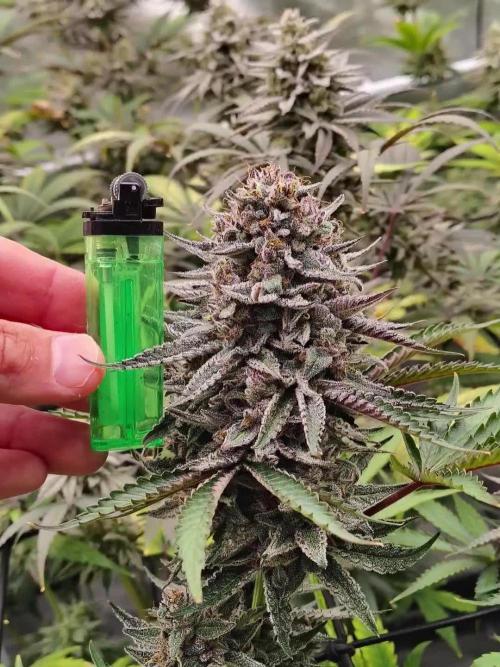
Day 91 of Life, Day 56 of Flowering. Very start of week 13. I checked the trichomes and im going to give them another week. My carbon filter is working Overtime.
Likes
2
Share

@AestheticGenetix
Follow
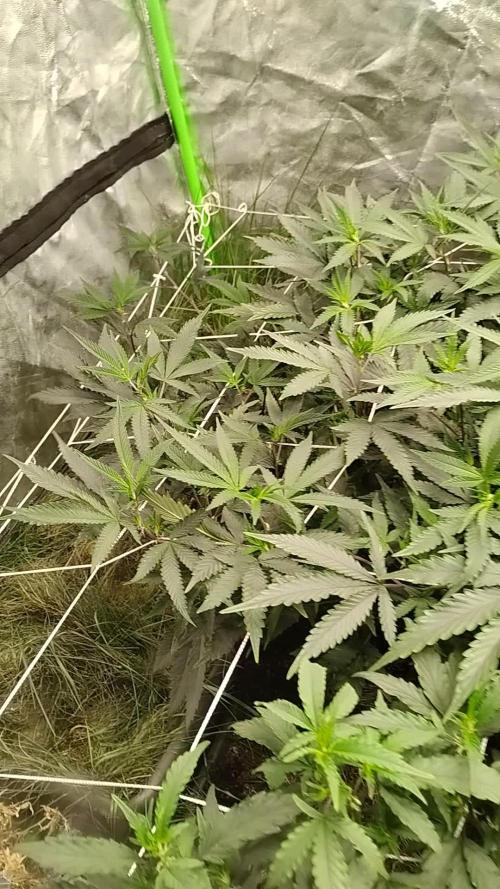
Plant is freaking everywhere. Trying to lollipop all the small branches that aren't going to make it.

Processing
Likes
9
Share


@russrahl
Follow
Girls are looking great so far! I added about 2ml/g to the reservoir and the plants responded well. Got a good explosion of growth over the last few days. I was able to start LST training the largest of the 4 today and the other 3 will be a day or 2 until they will be ready to start LST. Had some Ph issues during week 4 because my pen decided to go wonky. I tried to calibrate it again and had a hard time. So I busted out an older one and decided to calibrate it and see if it worked still... calibrated in a few min and sure enough res ph was well bellow 5. So water was changed as it was time anyway and ph’d proper just before lights out so we will see what happens tomorrow.

Likes
4
Share


@Bread_n_Buds
Follow
This is one of the strains that is doing very well in both the technical/free versions, we are talking about the Fruit Punch Automatic by Zamnesia.
Remember that we are growing a plant worked with the techniques indicated and another left to grow without pruning to preserve its speed; in the previous/next diary you will find the other plant of the same variety.
In this diary we find a plant left to grow straight with a good bit of cleaning at the bottom but essentially left to go. We can see that it is probably the fastest of all in terms of flowering, train because at a certain point you have to start the Green Sensation, not before or after the magical moment of swelling of the flower. Every booster in general except
Comparison is the salt of the experience, so the plant in the other diary will be treated very differently, go and see it to make a comparison.
We started the Plagron fertilization program, we are in 100% organic configuration, the soil is made up of recycled Promix + 1/3 fresh soil + 10% Perlite + RQS Mycorrhizae Mix (4 g in the mix, 1 g under the small fiber pot).
In the middle of the week the pre-flowering started so I decided to start the program for this phase: 1 ml/l of Power Roots - 1 ml/l of Pure Zym - 1 ml/l of Sugar Royal - 1 ml/l of Power Buds - 3 ml/l of Alga Bloom
Remember the Green Sensation from the 3rd/4th week of flowering depending on the flowering speed or how you see the calyxes composing, when the calyx is in the swelling phase it is used.
We sprayed 5 ml/l of Vita Race foliar fertilizer once a week.
-------------------------------------------------
https://plagron.com/it
We always have the excellent RQS mycorrhizae running through the soil.
https://www.zamnesia.io/it/5778-mix-micorrhiza-easy-roots.html
One of the best in recent years with a very high THC level
--------------------------------------------------------
https://www.zamnesia.io/en/10965-zamnesia-seeds-fruit-punch-automatic.html
Brief description of Zamnesia // Sativa strains are very rewarding to grow, but their long flowering times and their greater susceptibility to disease and overfertilization can make them a little more difficult to manage. Also, their imposing heights are less suitable for indoor use and can attract unwanted attention if grown outdoors. However, with the arrival of Fruit Punch Automatic, growing sativa strains at home just got a whole lot easier. Combining Skunk #1, Haze and ruderalis, Fruit Punch Auto is 70% sativa dominant and produces up to 21% THC, along with a delicious blend of terpenes. Plus, it can be grown indoors, outdoors and in greenhouses. With their bright green hues, golden pistils and thick layer of resin, Fruit Punch Auto buds always have a great appeal. When you smoke her, you will be amazed by her flavours, aromas and effects! As the name suggests, Fruit Punch Automatic boasts delicious tropical aromas reminiscent of banana, pineapple, mango and citrus. When you open the jars you will feel like you are in a tropical cocktail bar on an exotic beach. Fruit Punch Auto will delight your palate with pungent fruity notes followed by light notes of Skunk and spice on the exhale. Within minutes of your first hit, this potent sativa will stimulate your mind, leaving you in an energetic and carefree state, ideal for morning or daytime sessions, as well as social settings or creative pursuits.
The whole world of growing and much more is on Zamnesia: just take a look at the site and you will find "all the best that nature has to offer" in various shapes and colors.
---------------
www.zamnesia.com

Likes
8
Share

@PavementPunk
Follow
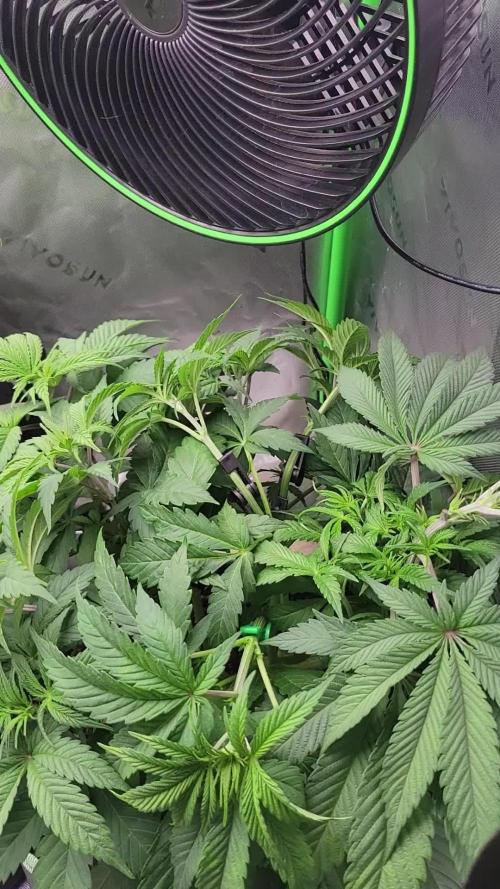
Snapped the main branch a little but its been healing ok. Besides that shes been getting bigger filling out her new pot. Also took the smaller lowest branch for my first clone attempt. Probably gonna experiment with a couple more cuttings maybe even an auto clone for laughs. Been raising the light an inch at a time as i noticed signs of light stress. All in all good week happy growing friends
Likes
31
Share


@Dunk_Junk
Follow
Day 21 - she got repotted into her 38 Litre airpot. She is not as close to the lights as I'd like, but saying that I wouldn't mind her to stretch a little bit.
